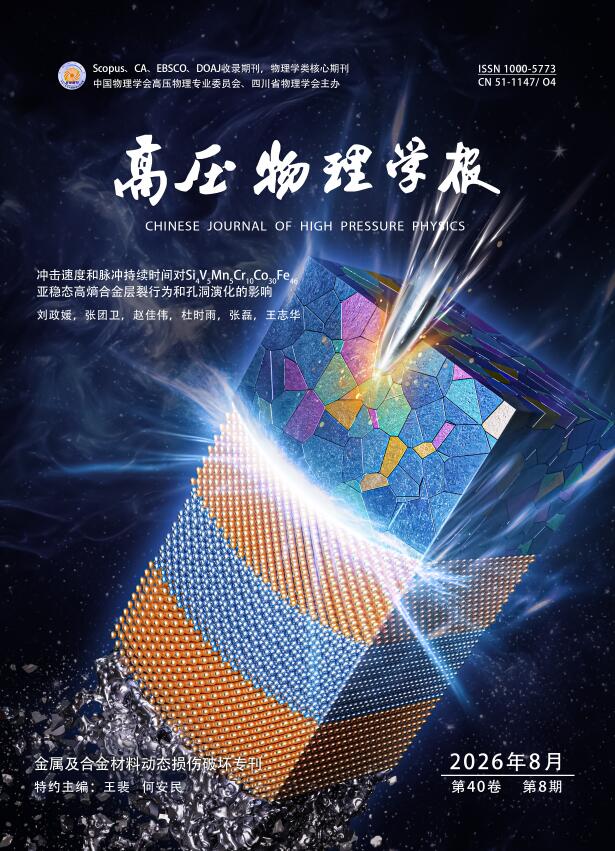



Machine Learning and High-Throughput Research on Material Properties under Dynamic Loading
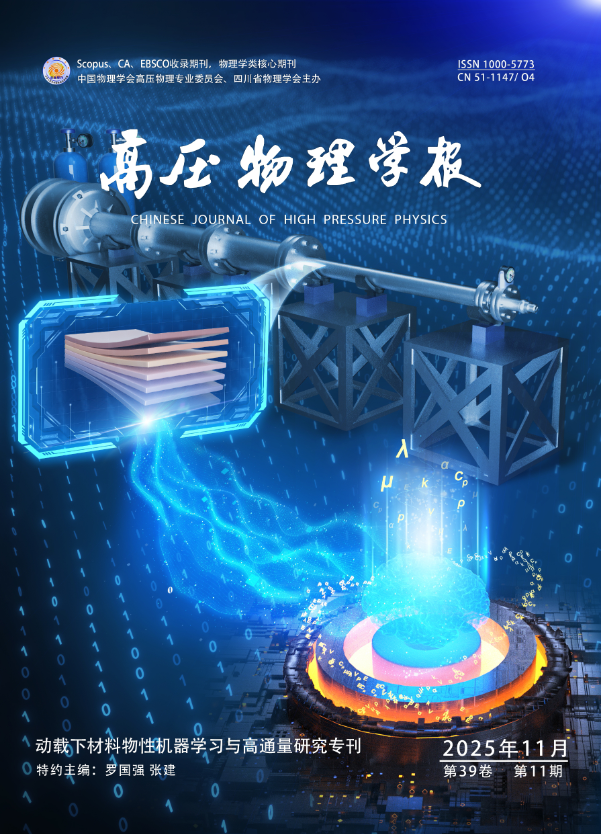
The study of material properties under dynamic loading is a key focus in both scientific and industrial communities, serving as a crucial foundation for breakthroughs in areas such as national defense and advanced manufacturing. Existing research often follows the conventional sequence of "material design – static testing – dynamic analysis," overlooking the fundamental differences in material behavior under static versus dynamic conditions. Factors such as pressure and strain rate under dynamic loading can significantly influence phase transitions, strength, and failure modes, ultimately impacting material design and application.
Traditional approaches, relying on isolated experiments and empirical models, are not only time-consuming but also limited in establishing comprehensive relationships between material composition, microstructure, and macroscopic performance under dynamic/static loading. With the rapid advancement of artificial intelligence, machine learning and high-throughput technologies are transforming research across disciplines. By integrating machine learning algorithms—such as big data analytics and advanced modeling techniques—with high-throughput methods, including high-throughput experiments, simulations, and testing, researchers can overcome traditional limitations. This synergy not only accelerates material design but also enables effective handling of multi-feature, weakly correlated, and high-dimensional data. It facilitates deep exploration of material evolution from the atomic scale to macroscopic failure under dynamic loading, gradually shaping a new research paradigm: "high-throughput simulation/experimentation – machine learning modeling – theoretical validation." This approach is driving the field toward intelligent and precise research.
This special issue aims to showcase and discuss how machine learning and high-throughput technologies are fostering innovation in the study of material properties under dynamic loading. Through the platform of the Chinese Journal of High Pressure Physics, we present recent advances in this area, hoping to inspire more researchers in high-pressure science to engage in machine learning and high-throughput studies.
Finally, we extend our sincere gratitude to all authors, reviewers, and editorial colleagues for their dedicated efforts in preparing this special issue. Their professionalism and rigorous work have been essential to its successful publication.
LUO Guoqiang, ZHANG Jian
Wuhan University of Technology
October 13, 2025
-
-
Review on Stress-Strain Rate Controllable Loading of Functionally Graded Materials
2025, 39(11): 110101. doi: 10.11858/gywlxb.20251212
-
-
-
-
-
-
-
-
Crushing Law of Rocks in the Area Near Blasting Source under Ultra-High Pressure
2025, 39(11): 110109. doi: 10.11858/gywlxb.20251113
-
Hugoniot Equation of State Model for Mixtures
2025, 39(11): 110110. doi: 10.11858/gywlxb.20251120
-
 HTML
HTML PDF
PDF- Previous: 2025专题纵览
- Next: 高压地球与行星科学专题