


Special Topic: Perovskite Oxides
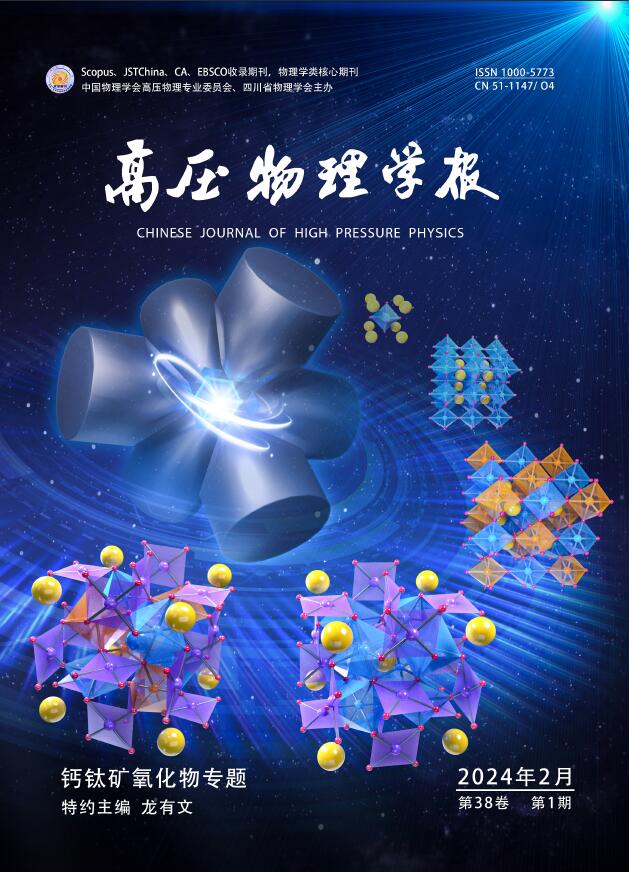
Perovskite oxides with the general formula ABO₃ rank among Earth's most abundant minerals. First discovered in 1839 by German chemist Gustav Rose within Russia's Ural Mountains as calcium titanate (CaTiO₃), these materials were later named "perovskite" in honor of Russian mineralogist Lev Perovski. The structural versatility of perovskite oxides arises from: A-site occupancy of larger cations (~90% metallic elements); B-site occupancy of smaller transition-metal cations (including magnetic ions).
This compositional flexibility enables diverse crystal structures and multifunctional properties, including piezoelectricity, ferroelectricity, optoelectronic responses, catalytic activity, superconductivity, colossal magnetoresistance, and multiferroicity. Consequently, perovskites have become pivotal research subjects across condensed matter physics, materials science, solid-state chemistry, and geoscience. Recent breakthroughs extend beyond traditional oxides to hybrid halide perovskites exhibiting exceptional photovoltaic performance.
Perovskite oxides exhibit highly tunable crystal structures that extend beyond simple ABO₃ configurations. Through B-site doping, one can engineer B-site-ordered double perovskites with the formula A₂BB'O₆. In these ordered structures, the concurrent incorporation of magnetic ions at both B and B' sites enables novel physical effects and enhanced functional properties mediated by their interactions. Advancing this design paradigm, substituting magnetic ions at 75% of the A sites yields higher-order A-site-ordered quadruple perovskites (AA'₃B₄O₁₂) or co-ordered A/B-site quadruple perovskites (AA'₃B₂B'₂O₁₂). These complex architectures host enriched magnetoelectric couplings, unlocking opportunities for unprecedented physical phenomena and functionality. These higher-order structures exhibit enhanced magnetoelectric couplings, creating opportunities for novel physics and functionalities.
This Special Topic of Chinese Journal of High Pressure Physics examines high-pressure synthesis and unique physical mechanisms in ABO₃, A₂BB'O₆, and quadruple perovskite systems. While focusing on selected research domains within the authors' expertise, we acknowledge the field's breadth and appreciate readers' understanding of this necessary scope limitation. We anticipate this collection will stimulate further research on perovskite oxides among emerging scholars.
We extend profound gratitude to all contributors for their indispensable efforts.
Youwen LONG
State Key Laboratory of Magnetism, Institute of Physics, Chinese Academy of Sciences*
 HTML
HTML PDF
PDF- Previous: 高压超导专题
- Next: 典型炸药晶体相变专题