| Citation: | QU Yunxiang, WANG Pengfei, WU Yangfan, WANG Deya, XU Songlin. Investigations on the Stick-Slip Behavior and Dynamic Interface Friction Mechanisms of Fiber Winding[J]. Chinese Journal of High Pressure Physics, 2025, 39(8): 084102. doi: 10.11858/gywlxb.20240953

|

| [1] |
CAPOZZA R, RUBINSTEIN S M, BAREL I, et al. Stabilizing stick-slip friction [J]. Physical Review Letters, 2011, 107(2): 024301. doi: 10.1103/PhysRevLett.107.024301
|
| [2] |
LU Y X, HAN D, FU Q D, et al. Experimental investigation of stick-slip behaviors in dry sliding friction [J]. Tribology International, 2025, 201: 110221. doi: 10.1016/j.triboint.2024.110221
|
| [3] |
OBERST S, LAI J C S. Nonlinear transient and chaotic interactions in disc brake squeal [J]. Journal of Sound and Vibration, 2015, 342: 272–289. doi: 10.1016/j.jsv.2015.01.005
|
| [4] |
PARK J, LEE Y. The evaluation of noise based on the frictional phenomena using automotive interior materials [J]. Tribology Transactions, 2021, 64(5): 777–783. doi: 10.1080/10402004.2020.1869359
|
| [5] |
YONGTAO M, PENGYUN G, LIN C, et al. Research on squeak noise from polypropylene in frictional contact with leather for automotive interior assembly [J]. Tribology Transactions, 2021, 64(2): 313–324. doi: 10.1080/10402004.2020.1836298
|
| [6] |
WANG Q, WANG Z W, MO J L, et al. Nonlinear behaviors of the disc brake system under the effect of wheel-rail adhesion [J]. Tribology International, 2022, 165: 107263. doi: 10.1016/j.triboint.2021.107263
|
| [7] |
SONG Y, WANG Z W, LIU Z G, et al. A spatial coupling model to study dynamic performance of pantograph-catenary with vehicle-track excitation [J]. Mechanical Systems and Signal Processing, 2021, 151: 107336. doi: 10.1016/j.ymssp.2020.107336
|
| [8] |
MARUI E, ENDO H, HASHIMOTO M, et al. Some considerations of slideway friction characteristics by observing stick-slip vibration [J]. Tribology International, 1996, 29(3): 251–262. doi: 10.1016/0301-679X(96)83204-X
|
| [9] |
SINOU J J, DEREURE O, MAZET G B, et al. Friction-induced vibration for an aircraft brake system—part 1: experimental approach and stability analysis [J]. International Journal of Mechanical Sciences, 2006, 48(5): 536–554. doi: 10.1016/j.ijmecsci.2005.12.002
|
| [10] |
LORANG X, FOY-MARGIOCCHI F, NGUYEN Q S, et al. TGV disc brake squeal [J]. Journal of Sound and Vibration, 2006, 293(3/4/5): 735–746. doi: 10.1016/j.jsv.2005.12.006
|
| [11] |
OUYANG H, MOTTERSHEAD J E, CARTMELL M P, et al. Friction-induced parametric resonances in discs: effect of a negative friction-velocity relationship [J]. Journal of Sound and Vibration, 1998, 209(2): 251–264. doi: 10.1006/jsvi.1997.1261
|
| [12] |
YAN C S, CHEN H Y, LAI P Y, et al. Statistical laws of stick-slip friction at mesoscale [J]. Nature Communications, 2023, 14(1): 6221. doi: 10.1038/s41467-023-41850-1
|
| [13] |
BEN-DAVID O, RUBINSTEIN S M, FINEBERG J. Slip-stick and the evolution of frictional strength [J]. Nature, 2010, 463(7277): 76–79. doi: 10.1038/nature08676
|
| [14] |
WON H I, LEE B, CHUNG J. Stick-slip vibration of a cantilever beam subjected to harmonic base excitation [J]. Nonlinear Dynamics, 2018, 92(4): 1815–1828. doi: 10.1007/s11071-018-4164-7
|
| [15] |
CUBILLO A, URIONDO A, PERINPANAYAGAM S. Computational mixed TEHL model and Stribeck curve of a journal bearing [J]. Tribology Transactions, 2017, 60(6): 1053–1062. doi: 10.1080/10402004.2016.1245456
|
| [16] |
LIU X B, VLAJIC N, LONG X H, et al. Nonlinear motions of a flexible rotor with a drill bit: stick-slip and delay effects [J]. Nonlinear Dynamics, 2013, 72(1): 61–77. doi: 10.1007/s11071-012-0690-x
|
| [17] |
HE Y Y, FU Y H, WANG H, et al. Inhibiting mechanism of micro dimples on the stick-slip of sliding guideway: combined numerical analysis with tribological tests [J]. Tribology International, 2021, 162: 107144. doi: 10.1016/j.triboint.2021.107144
|
| [18] |
陈美多, 张祥林, 袁良柱, 等. 岩石界面的动态剪切扩散行为 [J]. 爆炸与冲击, 2024, 44(8): 081422. doi: 10.11883/bzycj-2023-0469
CHEN M D, ZHANG X L, YUAN L Z, et al. Dynamic shear diffusion behavior at rock interfaces [J]. Explosion and Shock Waves, 2024, 44(8): 081422. doi: 10.11883/bzycj-2023-0469
|
| [19] |
LEINE R I, VAN CAMPEN D H, DE KRAKER A, et al. Stick-slip vibrations induced by alternate friction models [J]. Nonlinear Dynamics, 1998, 16(1): 41–54. doi: 10.1023/A:1008289604683
|
| [20] |
FEENY B, GURAN A, HINRICHS N, et al. A historical review on dry friction and stick-slip phenomena [J]. Applied Mechanics Reviews, 1998, 51(5): 321–341. doi: 10.1115/1.3099008
|
| [21] |
XIE Z L, JIAO J, WRONA S. The fluid-structure interaction lubrication performances of a novel bearing: experimental and numerical study [J]. Tribology International, 2023, 179: 108151. doi: 10.1016/j.triboint.2022.108151
|
| [22] |
HETZLER H, SCHWARZER D, SEEMANN W. Analytical investigation of steady-state stability and Hopf-bifurcations occurring in sliding friction oscillators with application to low-frequency disc brake noise [J]. Communications in Nonlinear Science and Numerical Simulation, 2007, 12(1): 83–99. doi: 10.1016/j.cnsns.2006.01.007
|
| [23] |
WANG P F, YANG J L, LI X, et al. Modification of the contact surfaces for improving the puncture resistance of laminar structures [J]. Scientific Reports, 2017, 7(1): 6615. doi: 10.1038/s41598-017-06007-3
|
| [24] |
WANG P F, ZHANG X, ZHANG H, et al. Energy absorption mechanisms of modified double-aluminum layers under low-velocity impact [J]. International Journal of Applied Mechanics, 2015, 7(6): 1550086. doi: 10.1142/S1758825115500866
|
| [25] |
WANG P F, JIANG H B, LIU M, et al. Toughening mechanisms for the dynamic perforation behavior of laminar aluminum alloy with lubricated frictional interfaces [J]. Materials & Design, 2022, 224: 111268. doi: 10.1016/j.matdes.2022.111268
|
| [26] |
王文帅, 王鹏飞, 田杰, 等. 双层碳纳米管薄膜的侵彻力学性能 [J]. 高压物理学报, 2022, 36(4): 044105. doi: 10.11858/gywlxb.20220508
WANG W S, WANG P F, TIAN J, et al. Penetration mechanical properties of double-layer carbon nanotube films [J]. Chinese Journal of High Pressure Physics, 2022, 36(4): 044105. doi: 10.11858/gywlxb.20220508
|
| [27] |
GWEON J H, JOO B S, JANG H. The effect of short glass fiber dispersion on the friction and vibration of brake friction materials [J]. Wear, 2016, 362/363: 61–67. doi: 10.1016/j.wear.2016.05.004
|
| [28] |
PARK J S, LEE S M, JOO B S, et al. The effect of material properties on the stick-slip behavior of polymers: a case study with PMMA, PC, PTFE, and PVC [J]. Wear, 2017, 378/379: 11–16. doi: 10.1016/j.wear.2017.01.097
|
| [29] |
YOON S W, SHIN M W, LEE W G, et al. Effect of surface contact conditions on the stick-slip behavior of brake friction material [J]. Wear, 2012, 294/295: 305–312. doi: 10.1016/j.wear.2012.07.011
|
| [30] |
WANG X C, MO J L, OUYANG H, et al. An investigation of stick-slip oscillation of Mn-Cu damping alloy as a friction material [J]. Tribology International, 2020, 146: 106024. doi: 10.1016/j.triboint.2019.106024
|
| [31] |
WANG X C, WANG R L, HUANG B, et al. A study of effect of various normal force loading forms on frictional stick-slip vibration [J]. Journal of Dynamics, Monitoring and Diagnostics, 2022, 1(1): 46–55. doi: 10.37965/jdmd.v2i2.48
|
| [32] |
GAO H, ZHAO L J, LI L, et al. Effect of wear-induced surface deformation on stick-slip friction of galvanized automotive steels [J]. Langmuir, 2022, 38(37): 11459–11467. doi: 10.1021/acs.langmuir.2c01825
|
| [33] |
YANG W F, GONG W, CHANG B Y, et al. Scale-bridging mechanics transfer enables ultrabrightmechanoluminescent fiber electronics [J]. ACS Nano, 2024, 18(35): 24404–24413. doi: 10.1021/acsnano.4c07125
|
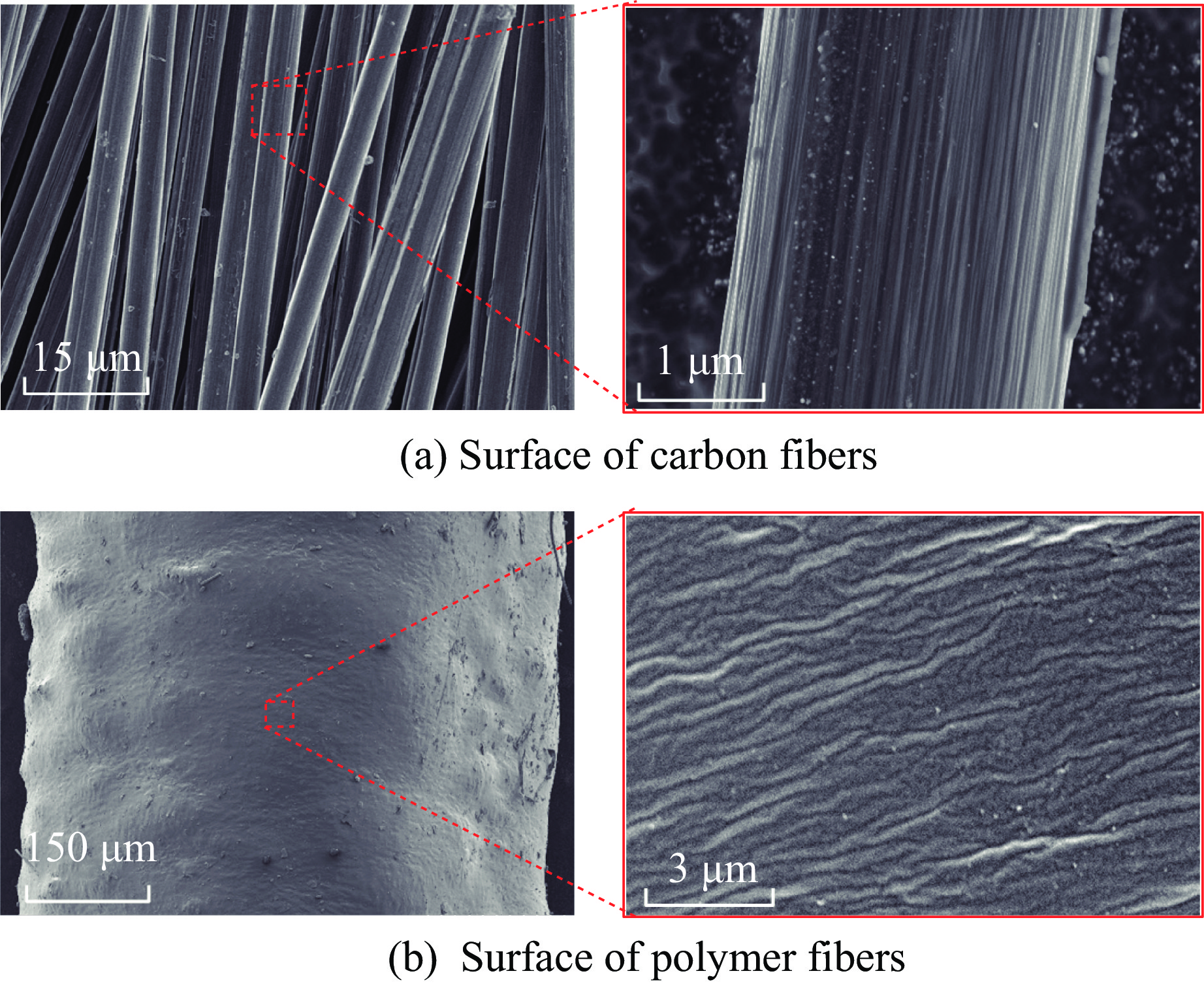
Figures(9) / Tables(1)
Website Copyright© Editorial Office of Chinese Journal of High Pressure Physics
Tel:0816-2490042 E-mail:gaoya@caep.cn
Supported by: Beijing Renhe Information Technology Co. Ltd support:
info@rhhz.net







 DownLoad: