





Statistical Characteristics of Spallation Based on Stochastic Numerical Simulation
-
摘要: 通过融合随机理论与延性金属层裂相场模型,设置初始屈服强度服从4种随机分布以表征材料缺陷的随机分布,再利用显式动力学求解,实现了层裂损伤从渐进演化到失稳贯通过程的模拟。通过平板撞击实验和三角波加载实验对模拟结果进行验证,揭示了材料屈服强度不均匀性与层裂强度及损伤数量面积的关系。结果表明:不论是延性金属材料的单层层裂还是多层层裂,其初始屈服强度标准差与层裂强度均呈负相关关系;对于单层层裂,无论初始屈服强度采用何种分布,其层裂强度均服从正态分布。对于多层层裂,初始成核时损伤区数量随着初始屈服强度标准差的增大而线性增大,损伤区大小均服从Weibull分布;而在同一初始随机分布下,损伤区数量随时间演化呈初始缓慢增长-随后加速直至饱和-饱和后再下降的趋势,对应了层裂损伤演化成核贯通的典型过程。Abstract: This work integrates stochastic theory with a phase-field model for spallation in ductile metals. By assigning four distinct random distributions to the initial yield strength to characterize the random distribution of material defects and employing an explicit dynamic solver, the entire process of spall damage—from gradual evolution to instability and coalescence—was successfully simulated. The simulation results were validated through plate impact experiments and triangular wave loading experiments. These validations revealed the relationship between the heterogeneity of material yield strength and both the spall strength and the number/area of damaged zones. The results indicate a negative correlation between the standard deviation of the initial yield strength and the spall strength, which holds for both single and multiple spall scenarios in ductile metals. For single spallation, regardless of the initial distribution of yield strength, the resulting spall strength follows a normal distribution. For multiple spallation, the number of initially nucleated damaged zones increases linearly with the standard deviation, while the size of these zones follows a Weibull distribution. Under the same initial random distribution, the number of damaged zones evolves over time, showing a trend of initial slow growth, subsequent acceleration until saturation, and a final decline after saturation. This trend corresponds to the typical process of damage evolution involving nucleation and coalescence during spallation.
-
Key words:
- ductile metal /
- spallation /
- stochastic model /
- phase-field fracture model /
- dynamic damage
-
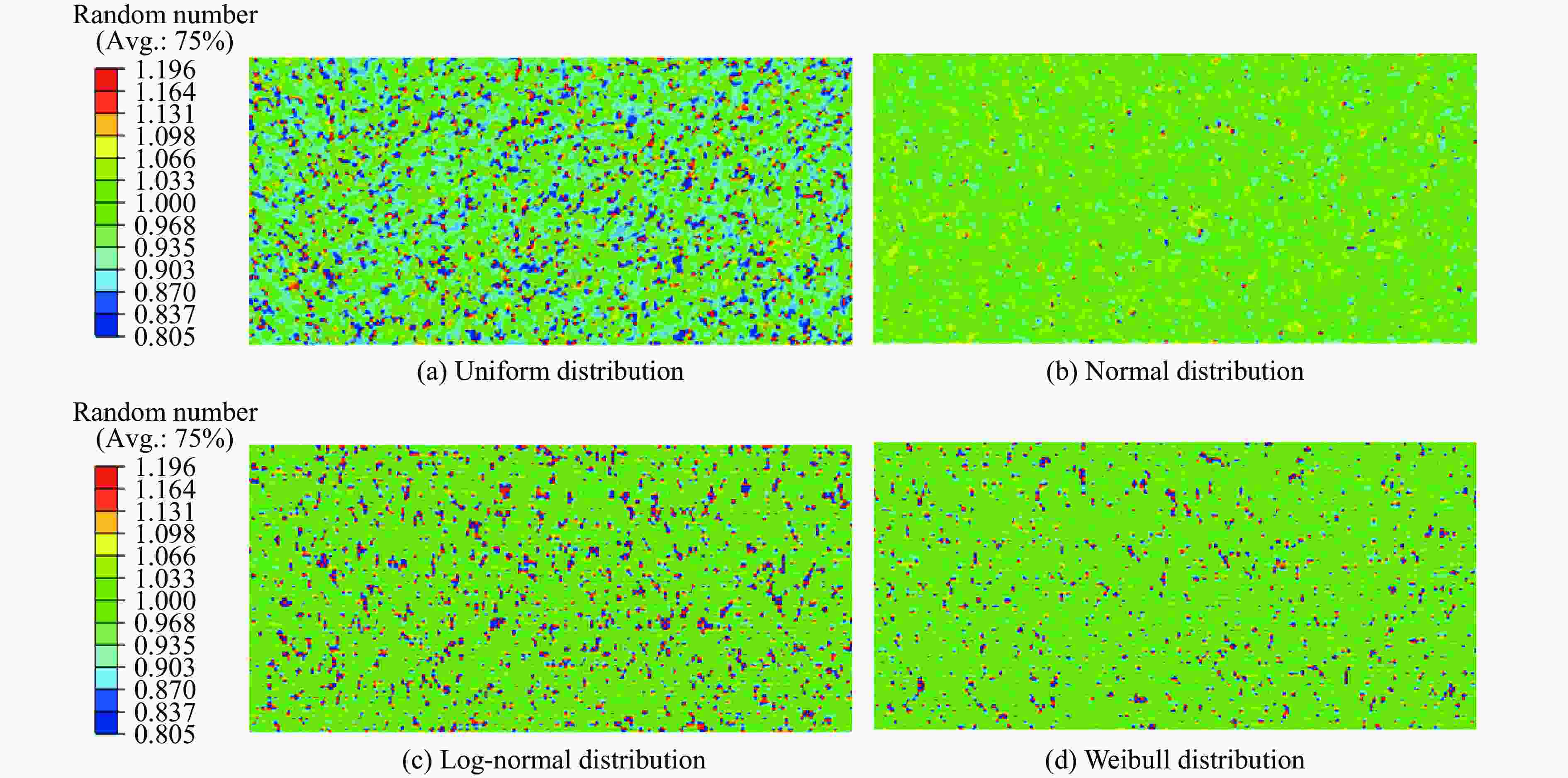
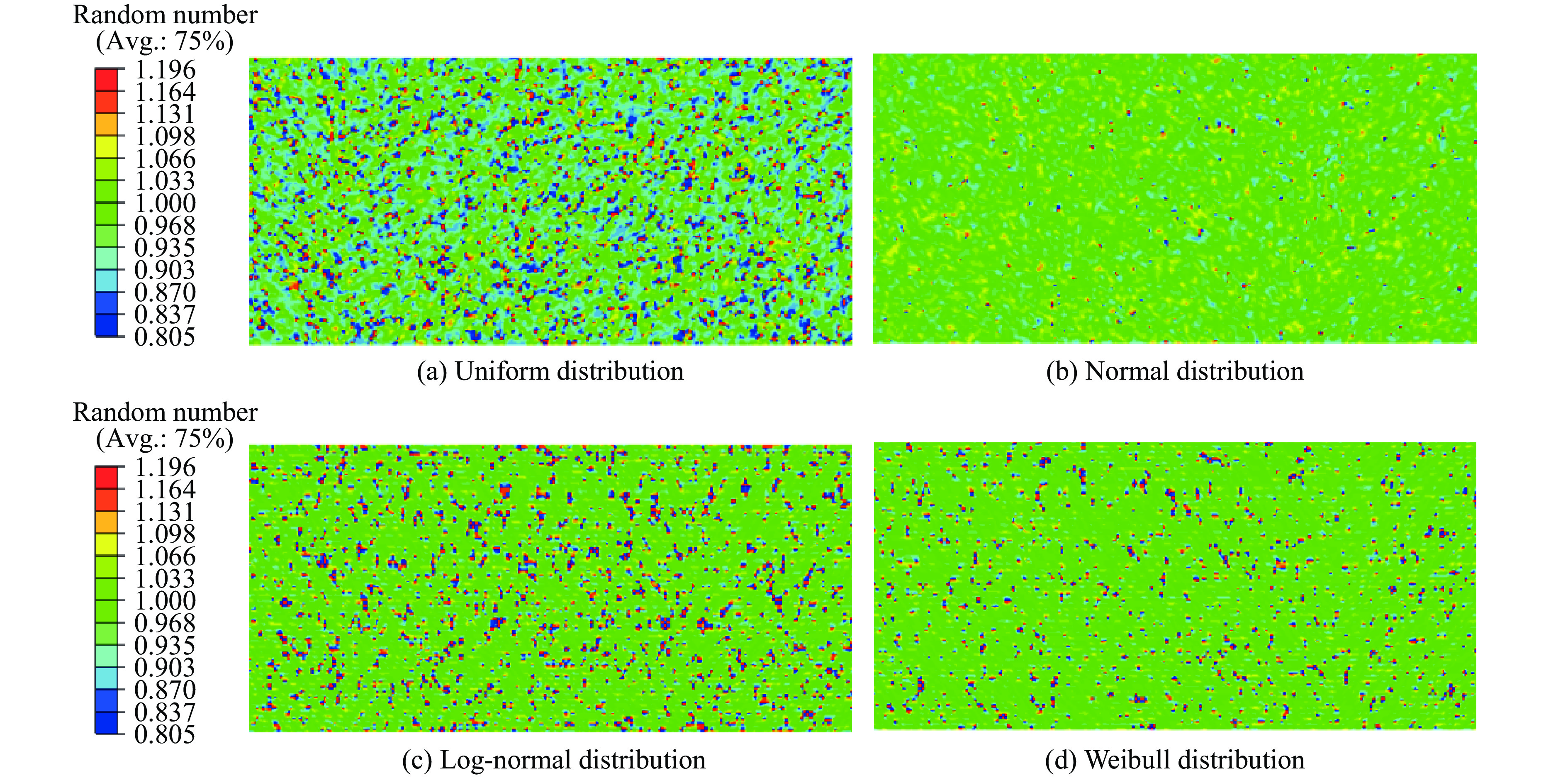
图 1 4种分布下的初始随机数云图
Figure 1. Initial random number scatter plots under four distributions
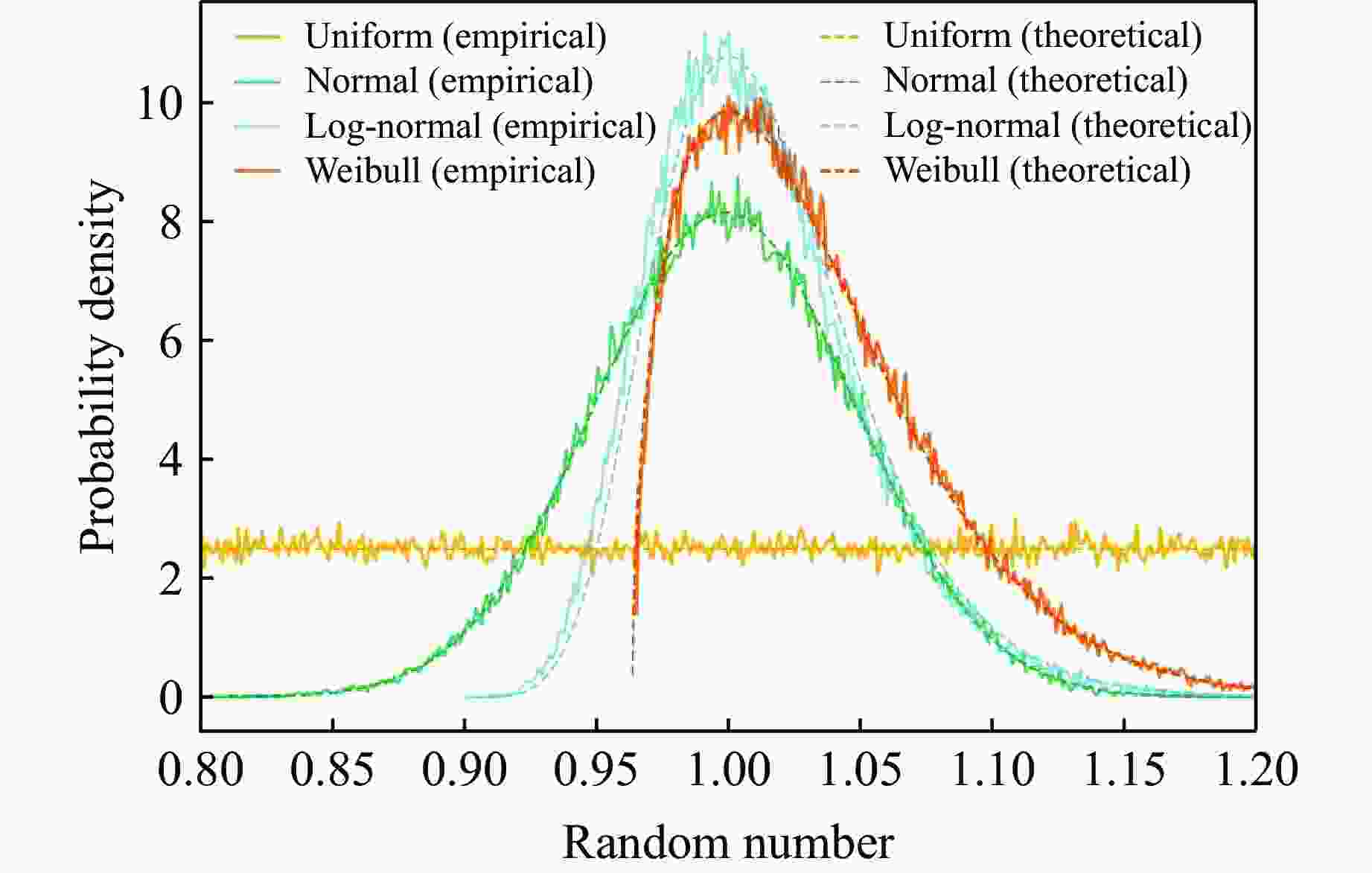
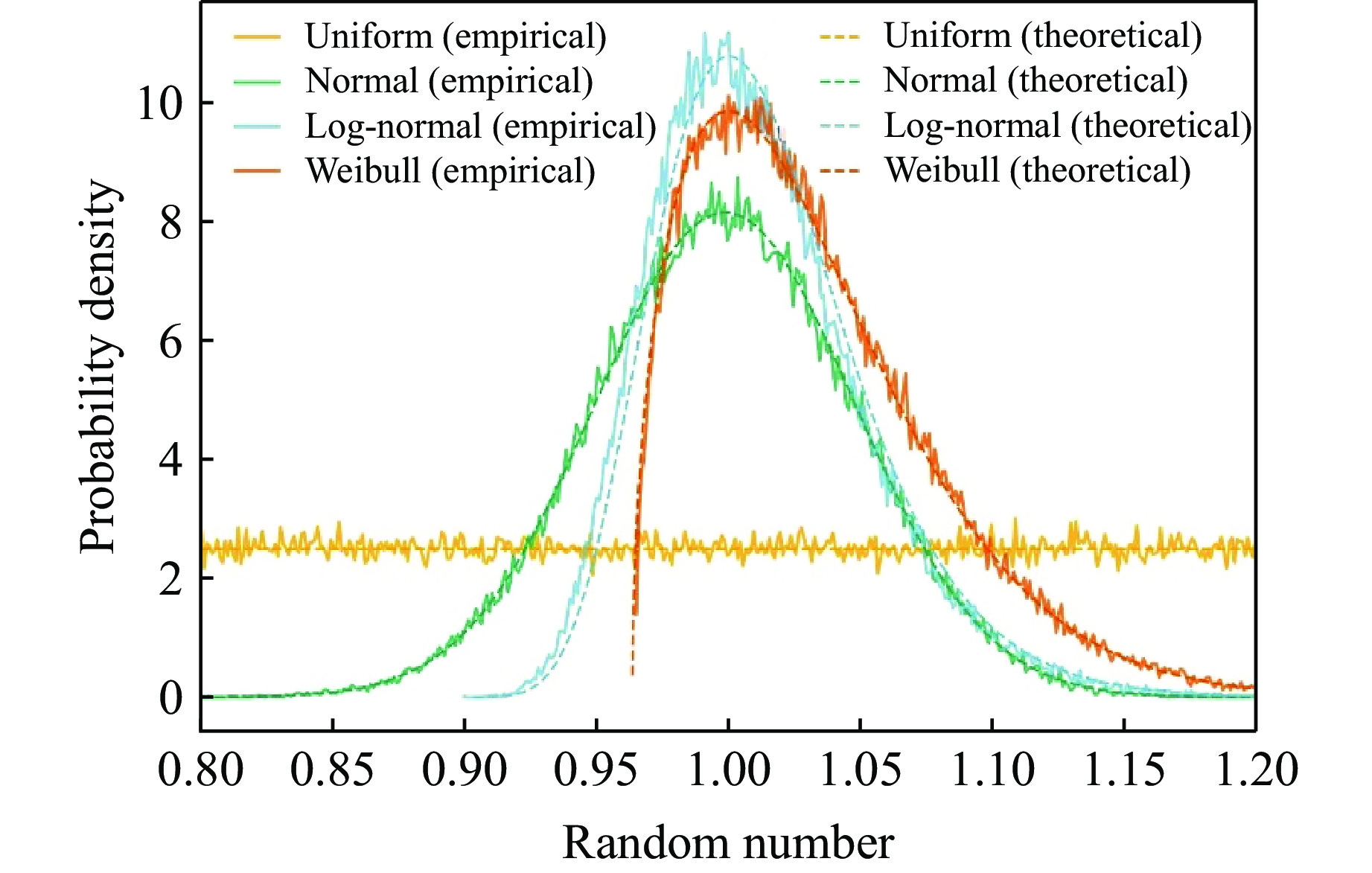
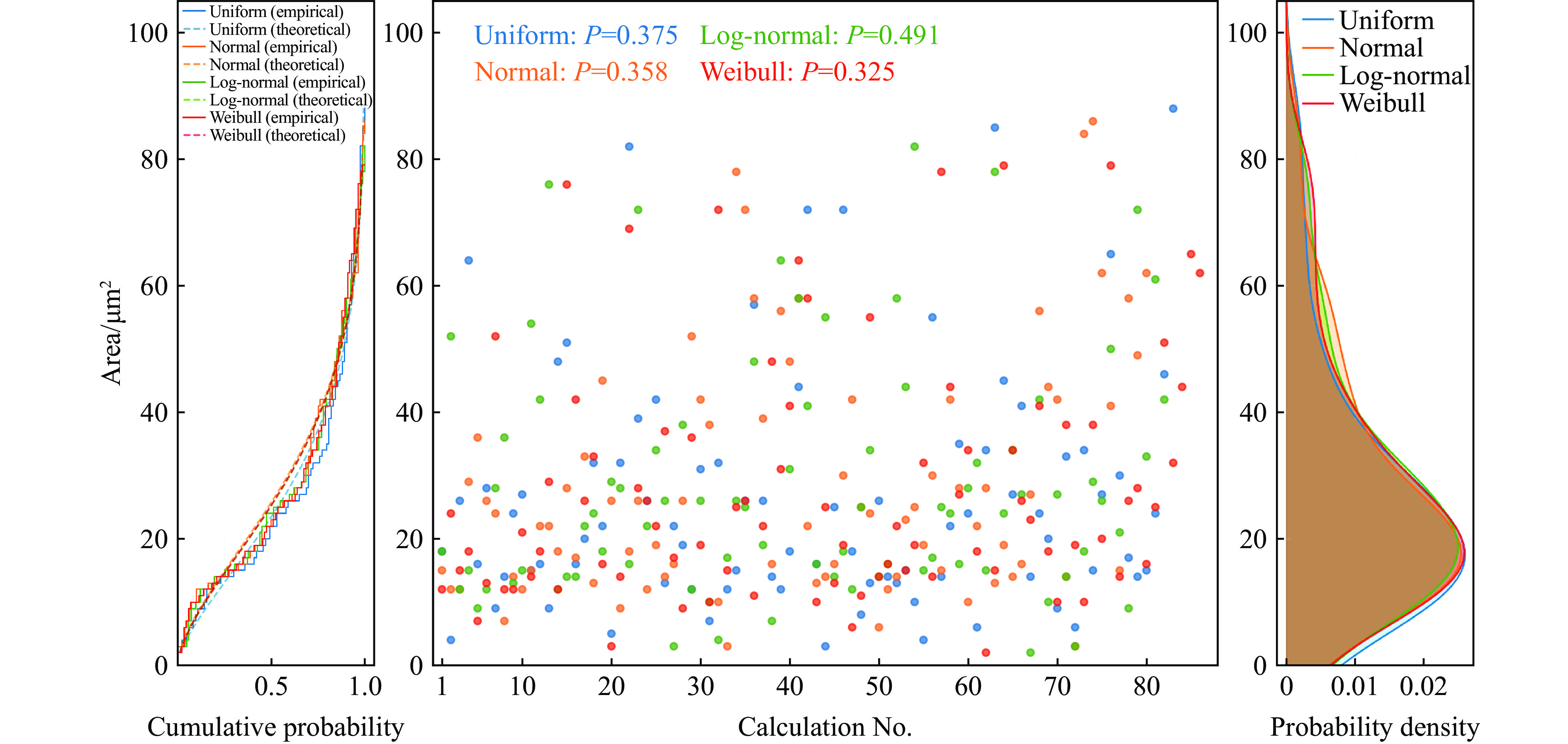
图 2 不同分布下初始随机数的经验概率密度函数
Figure 2. Empirical probability density function of initial random numbers under different distributions
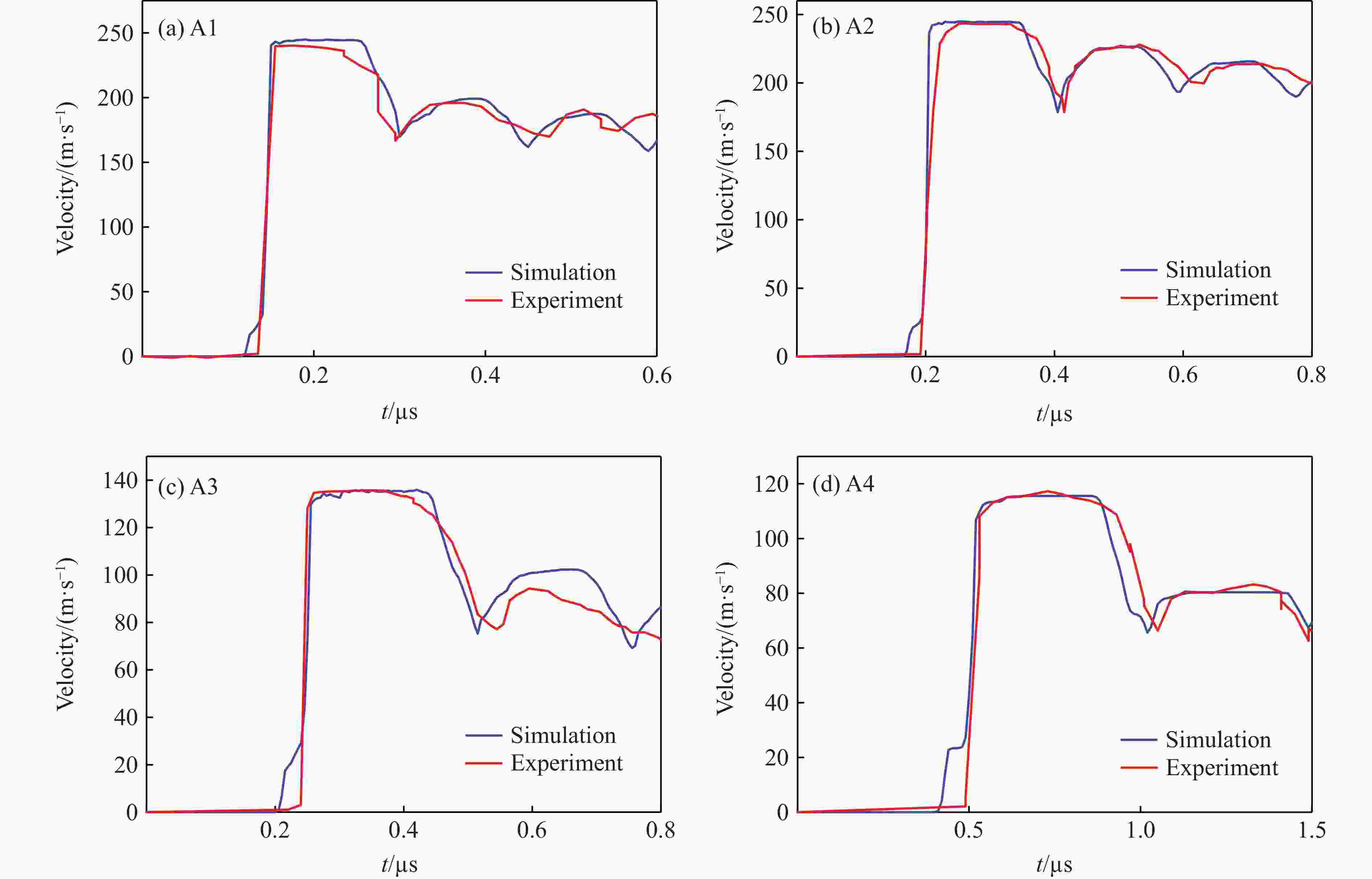
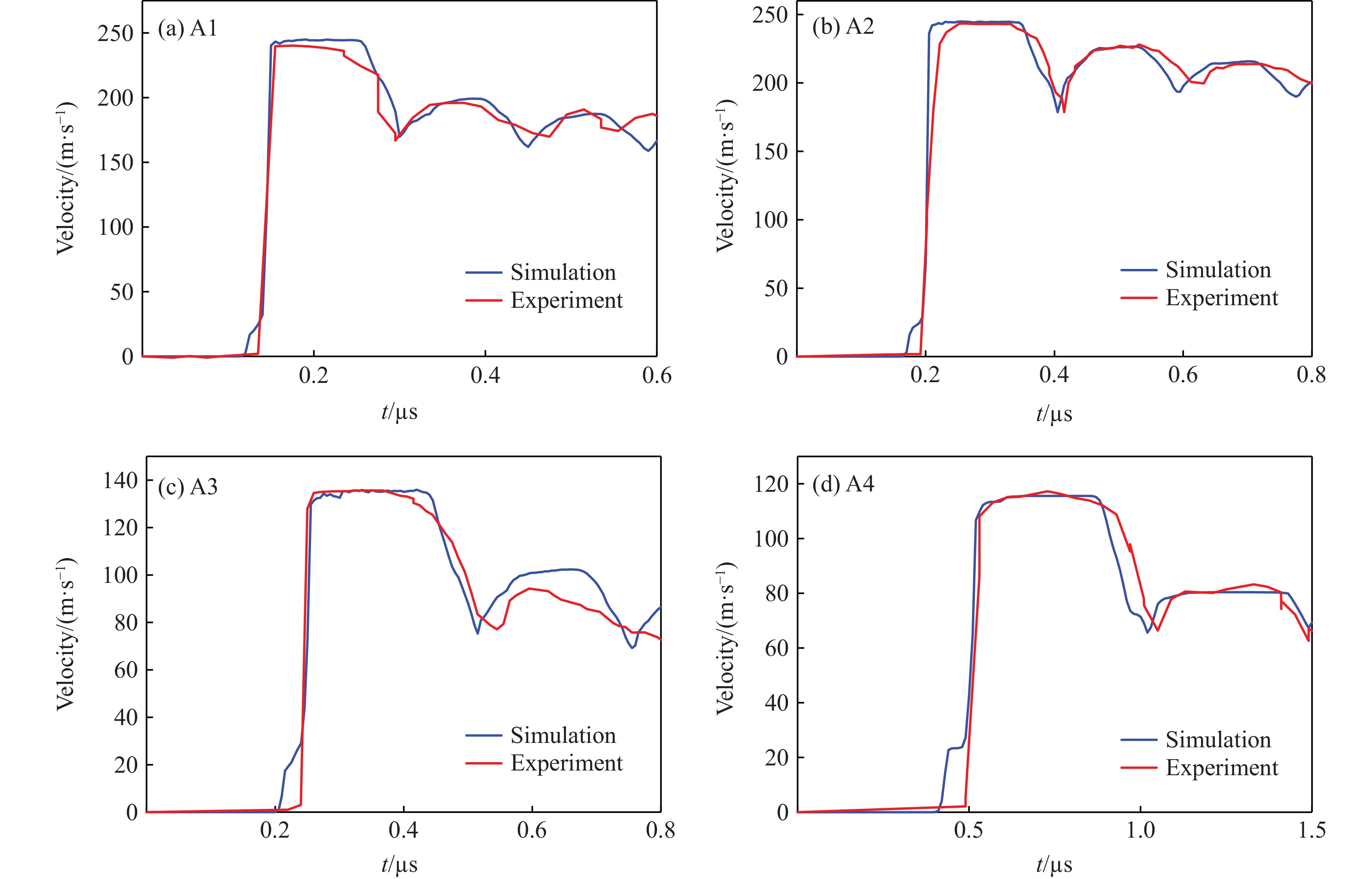
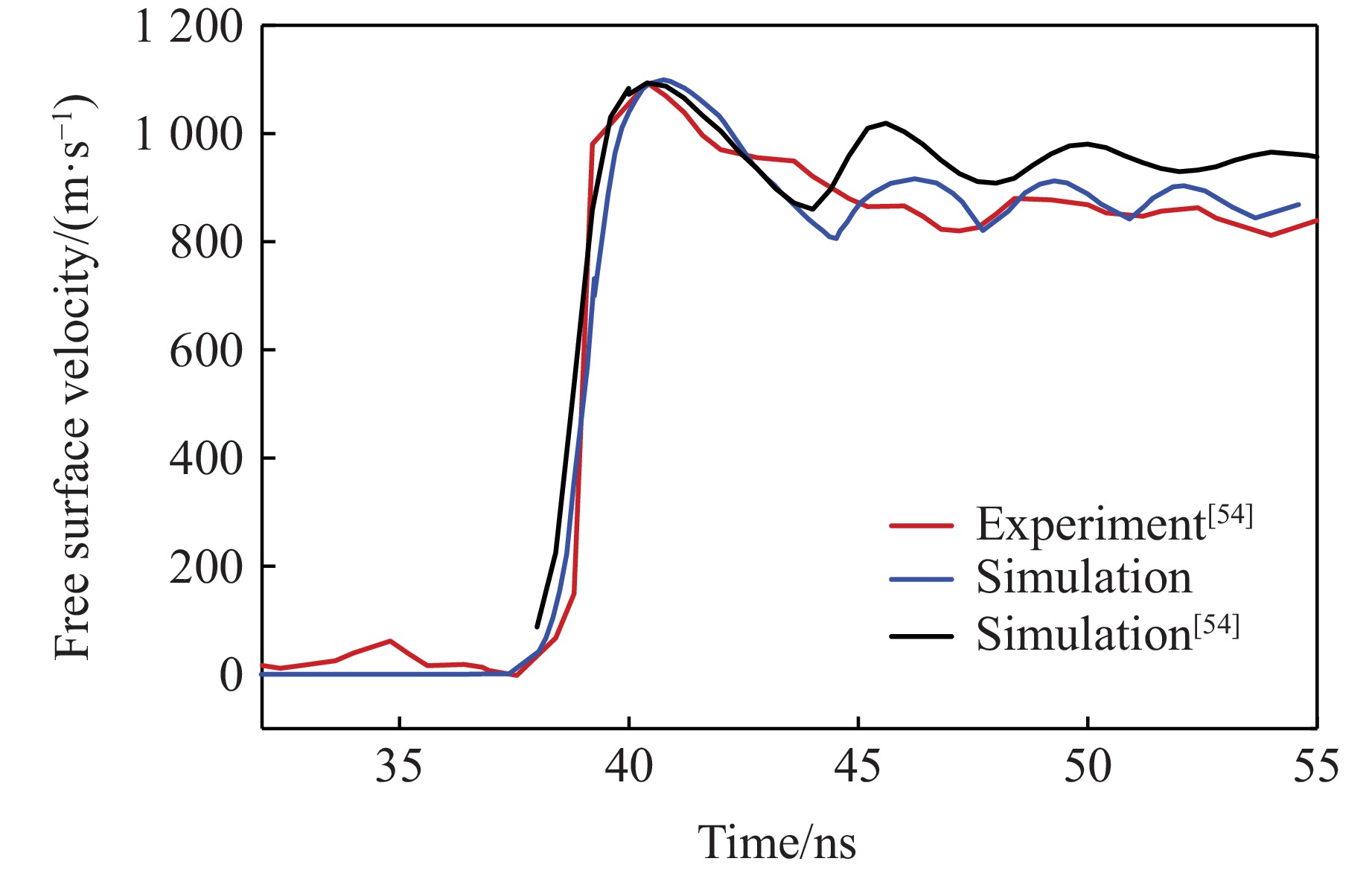
图 5 模拟与实验得到的自由面粒子速度曲线对比
Figure 5. Comparison of free surface particle velocity curves between simulation and experimental results
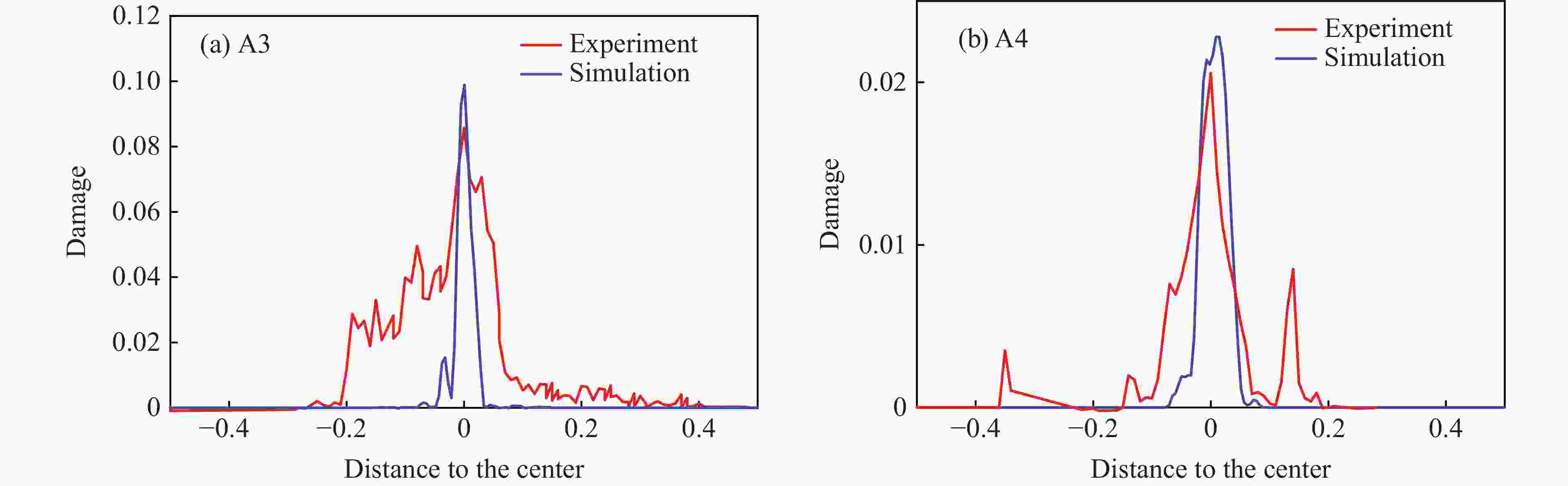
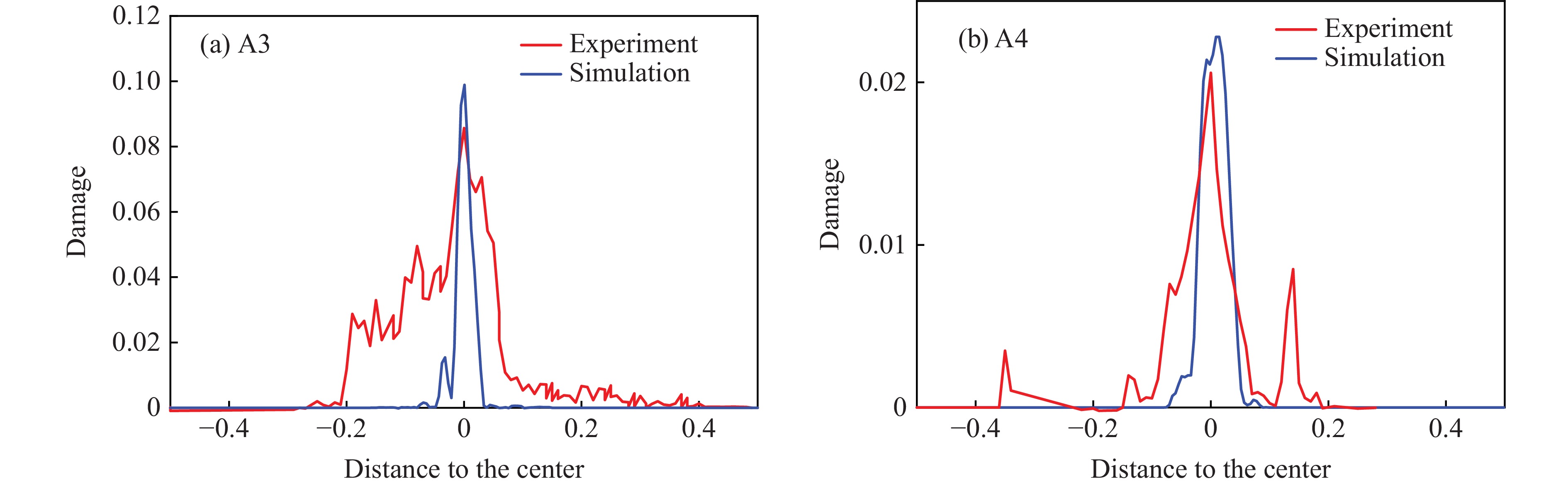
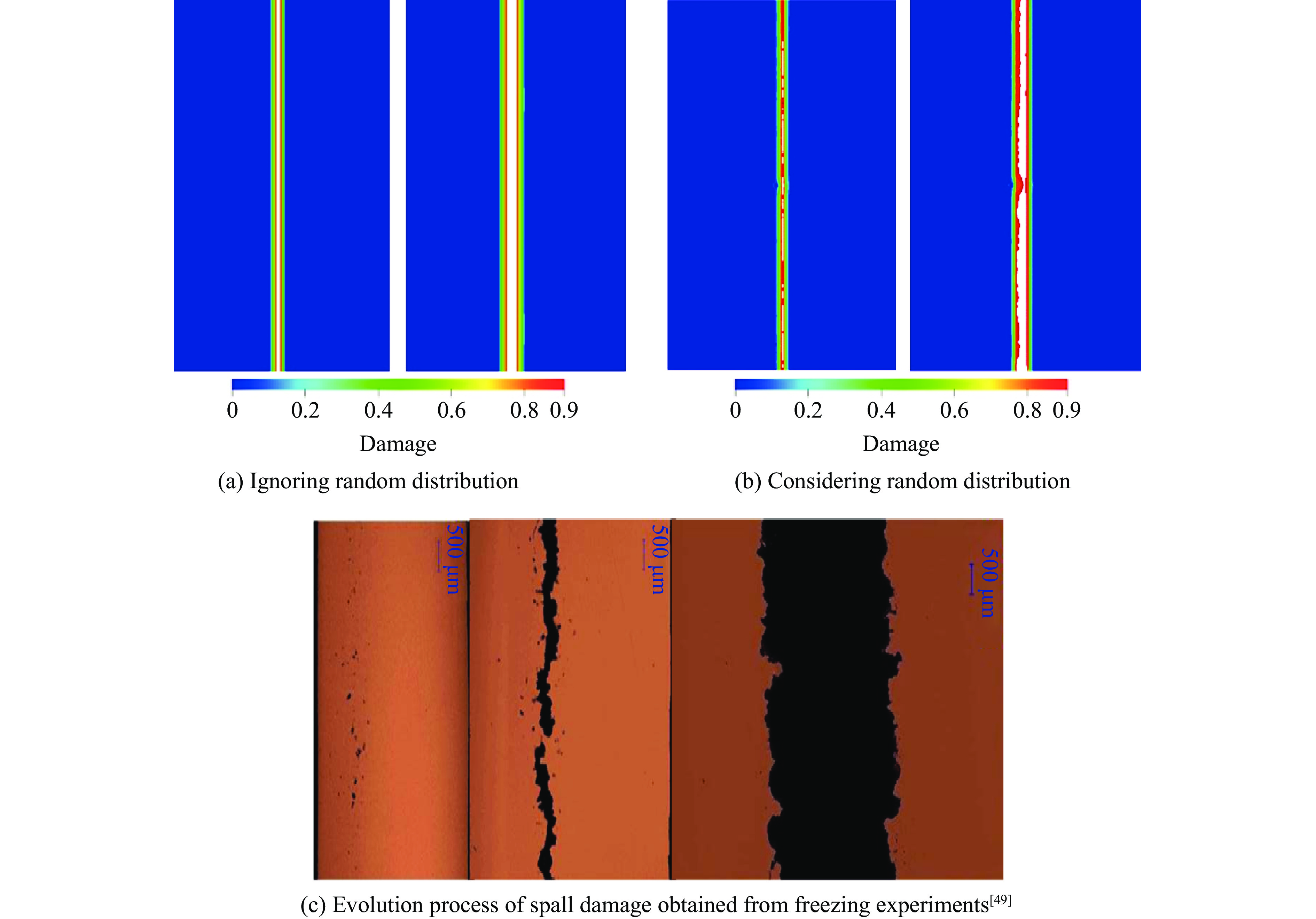
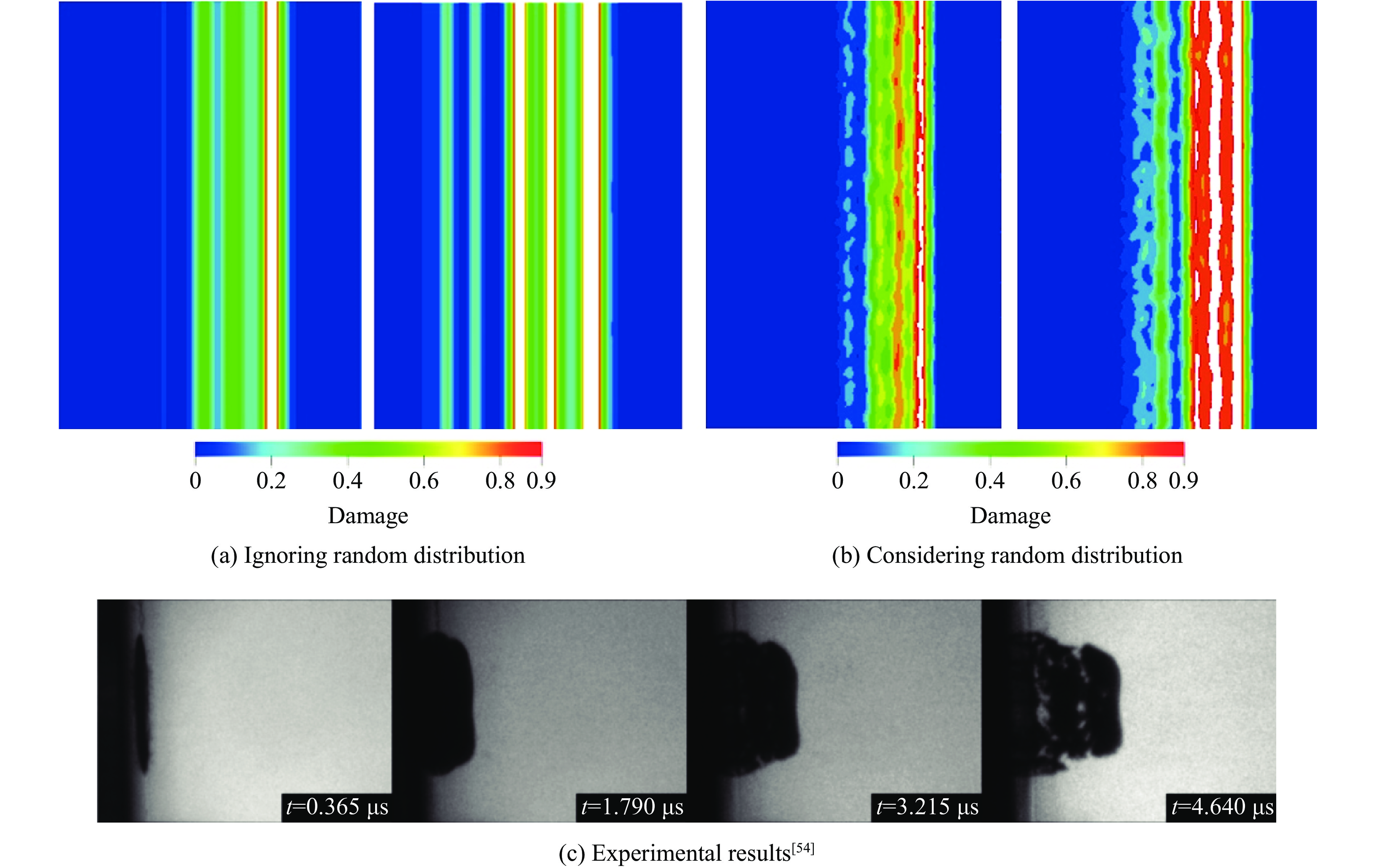
图 6 损伤分布的模拟与实验结果对比
Figure 6. Comparison of damage distribution between simulation and experimental results
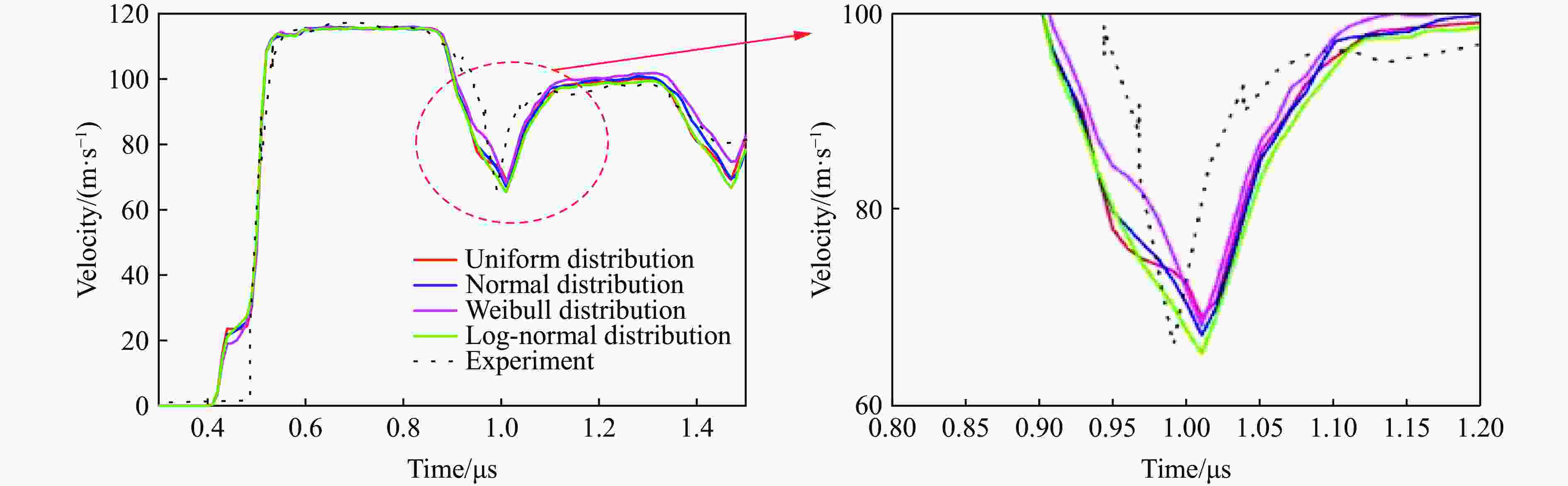
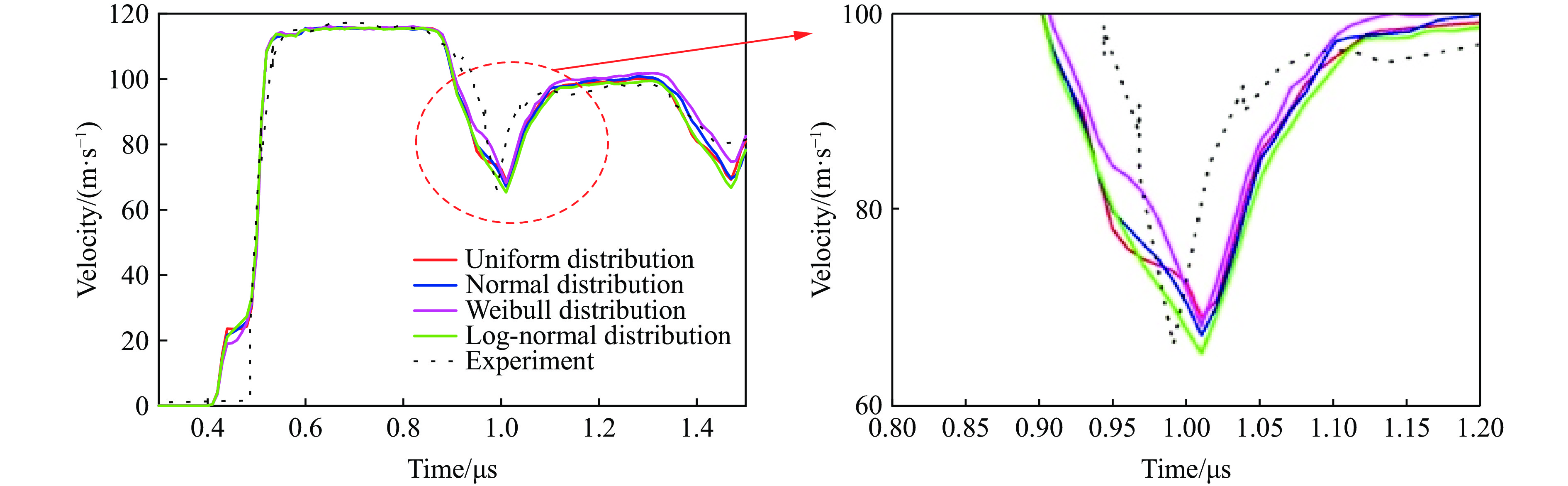
图 9 不同分布下自由面粒子速度曲线与实验结果的对比
Figure 9. Comparison of free surface particle velocity curves under different distributions with experimental results
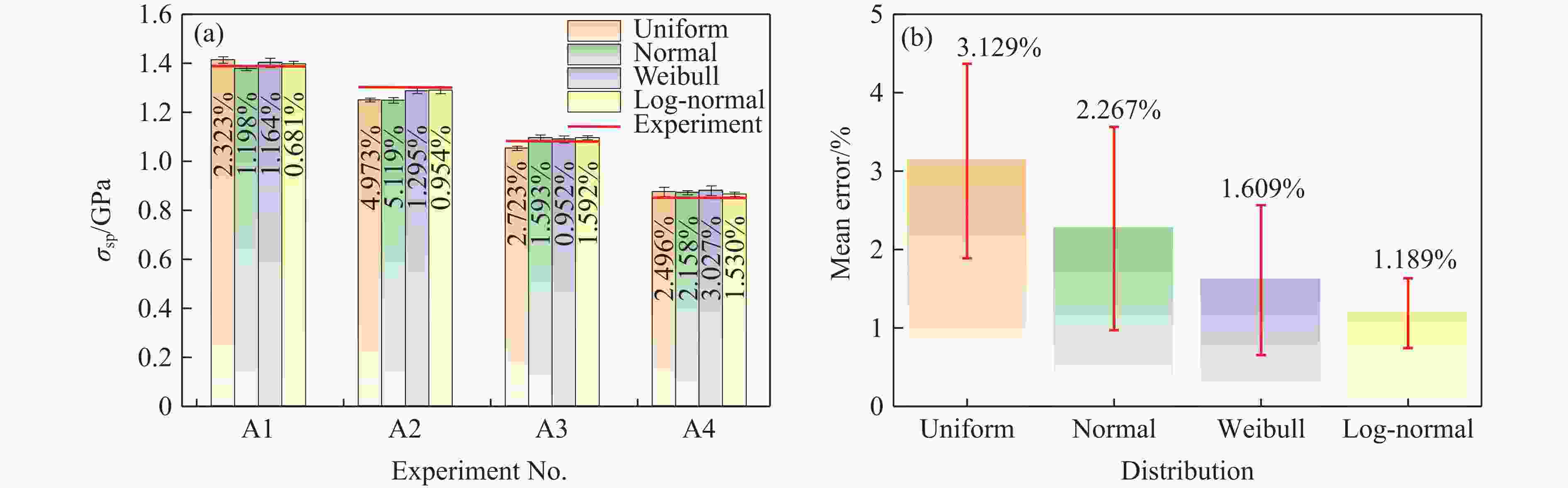
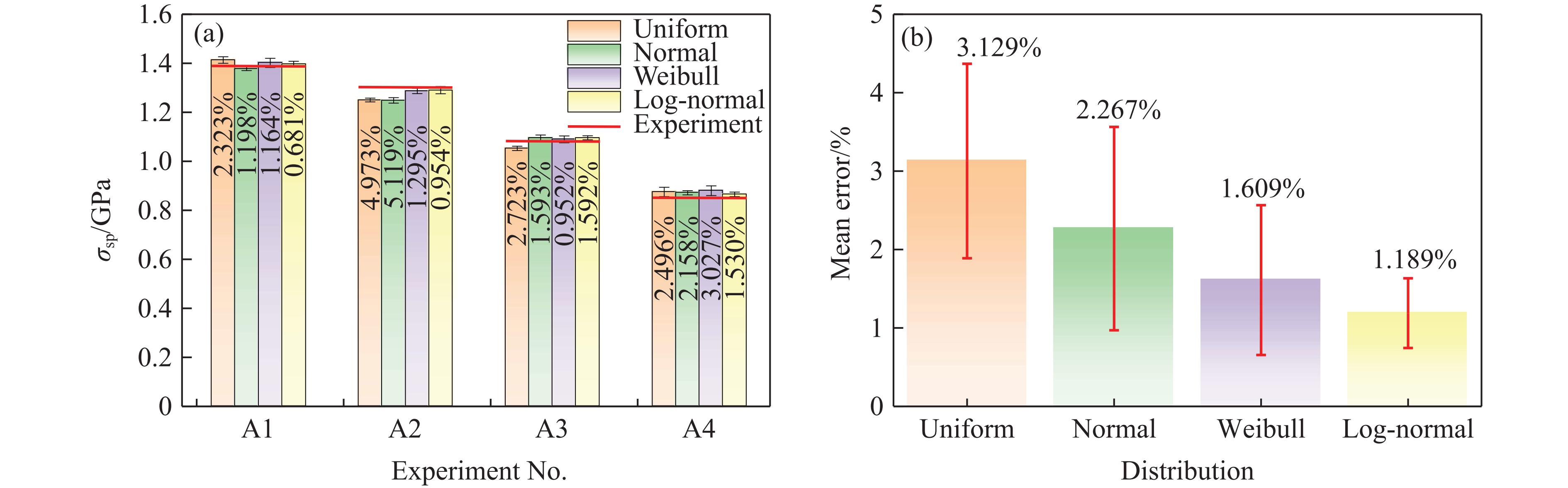
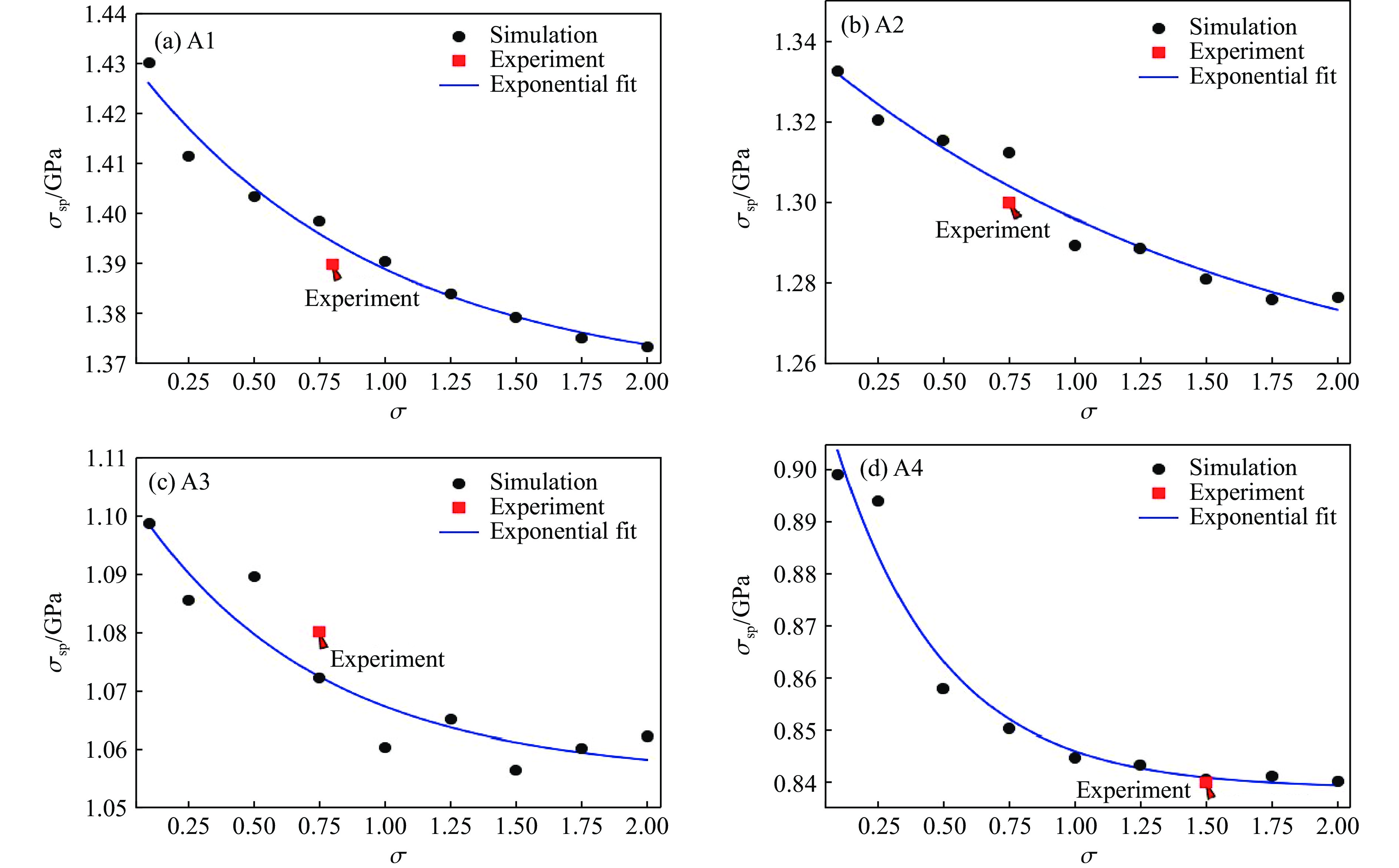
图 10 (a)不同分布下4发实验的层裂强度及其与模拟结果的对比,(b)对应的误差棒
Figure 10. (a) Comparison between experimental and simulated spall strength of the four experiments under different distributions; (b) error bar chart
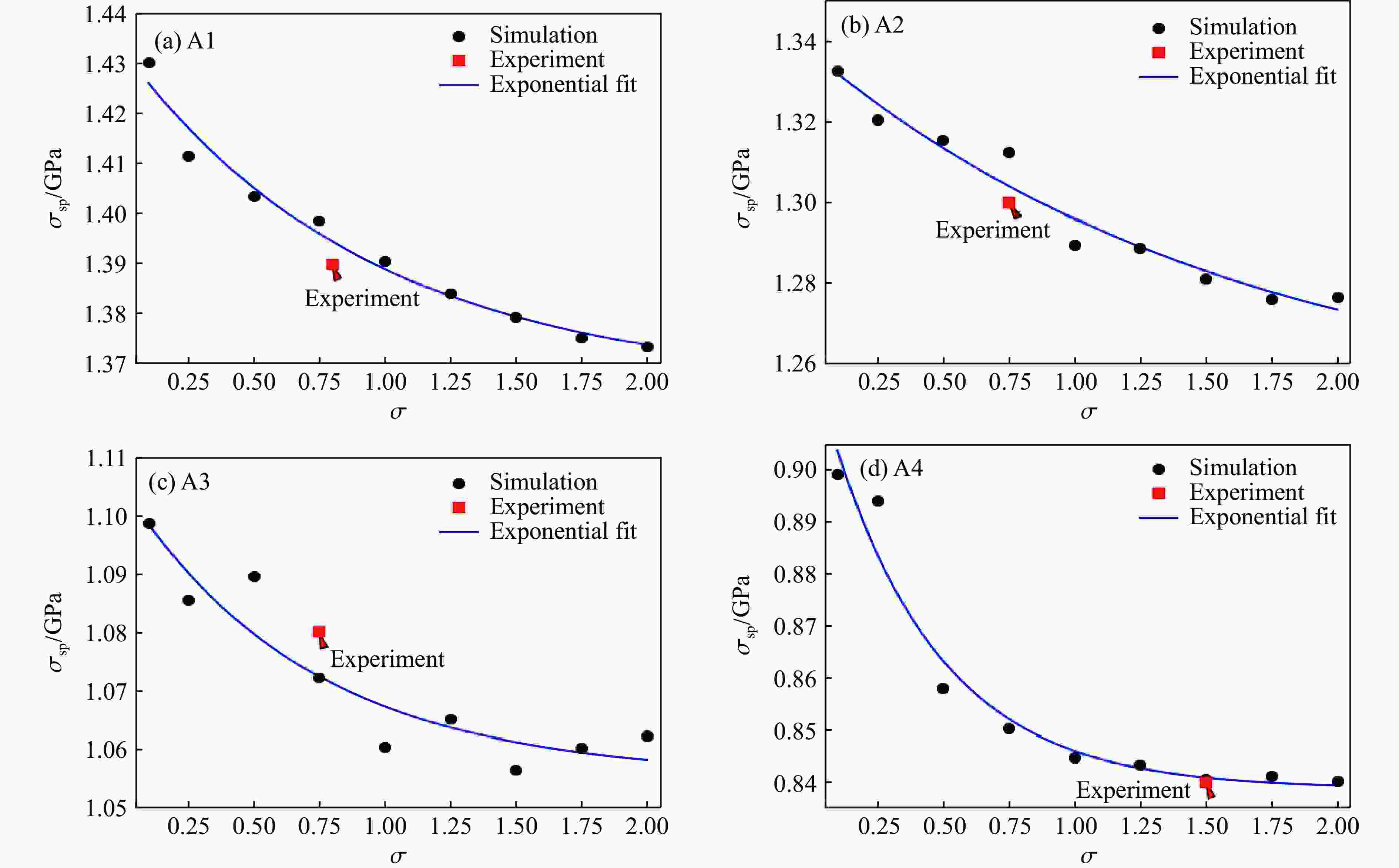
图 11 层裂强度与对数正态分布标准差的关系
Figure 11. Relationship between spall strength and the standard deviation of the log-normal distribution
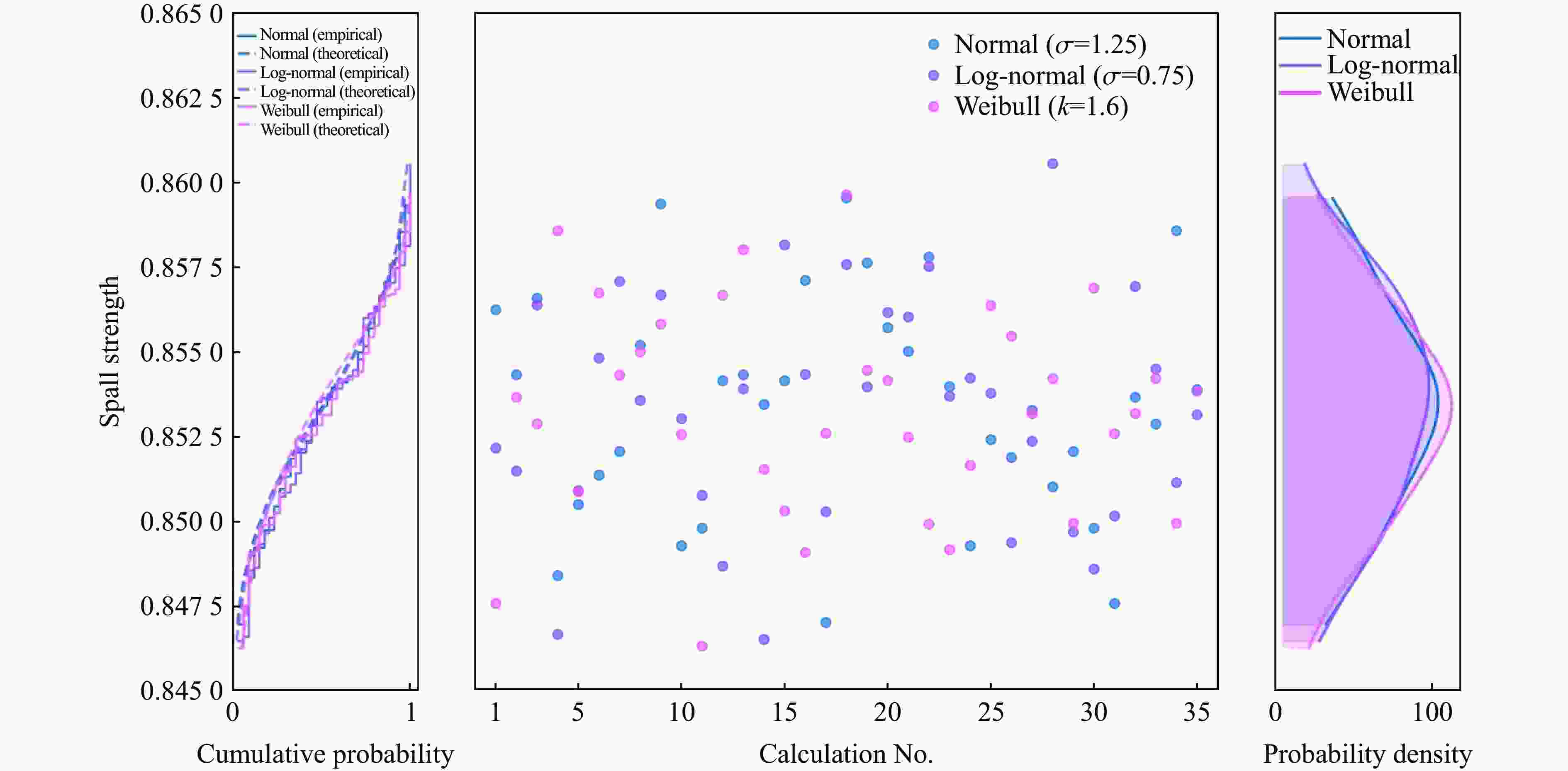
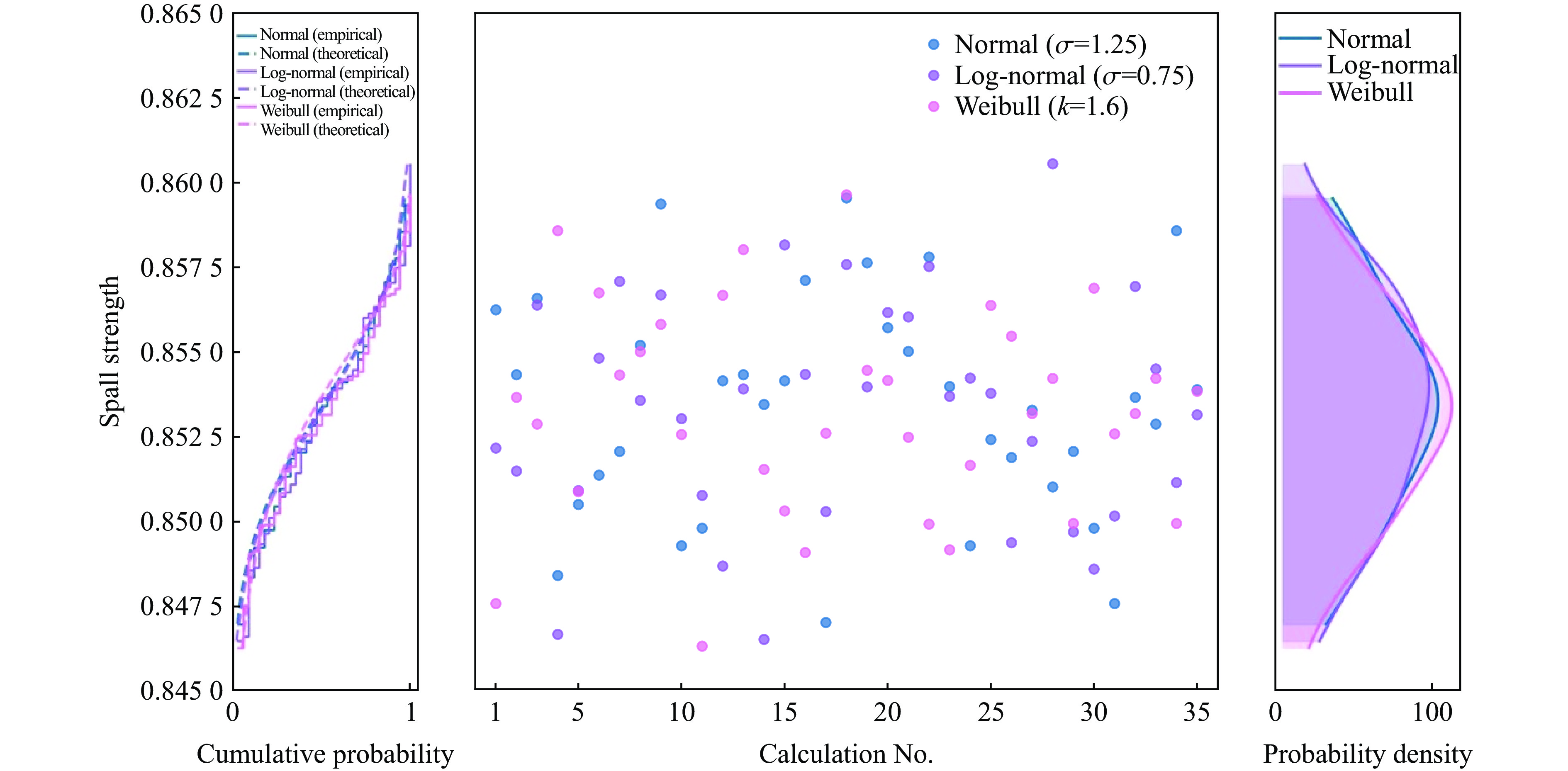
图 12 不同初始随机分布下层裂强度分布的概率密度函数和累积分布函数
Figure 12. PDF and CDF of spall strength distribution under different initial random distributions
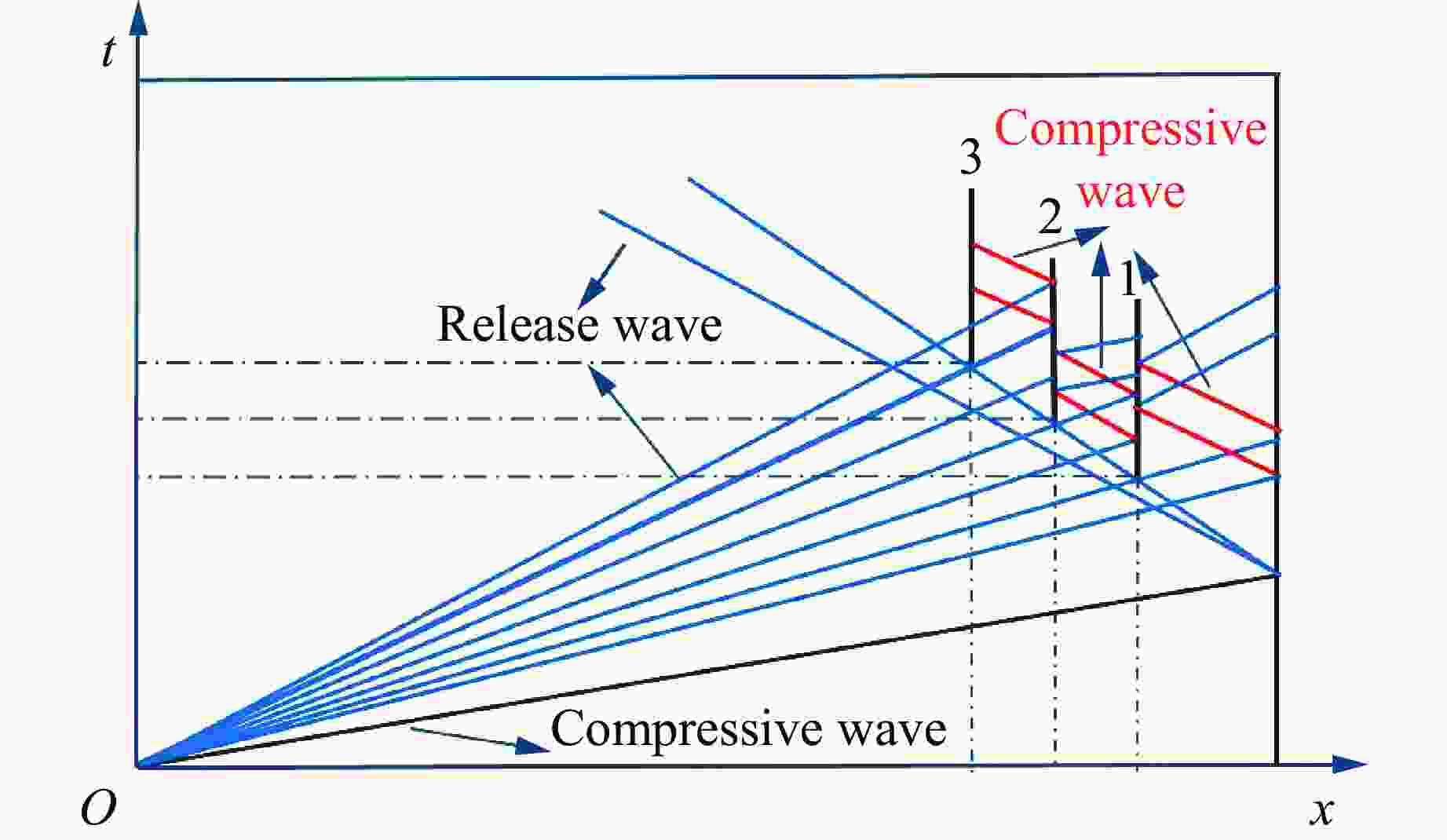
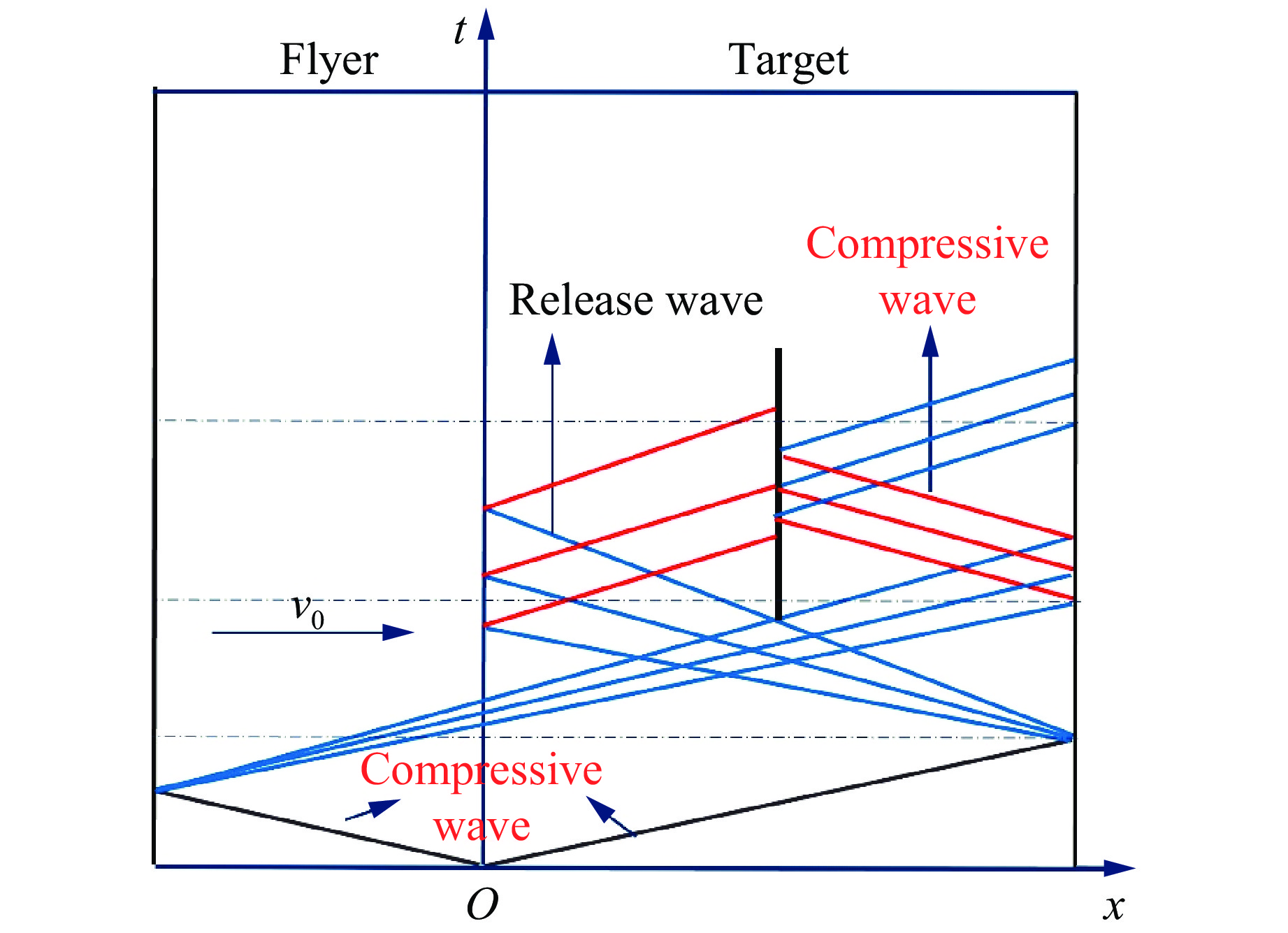
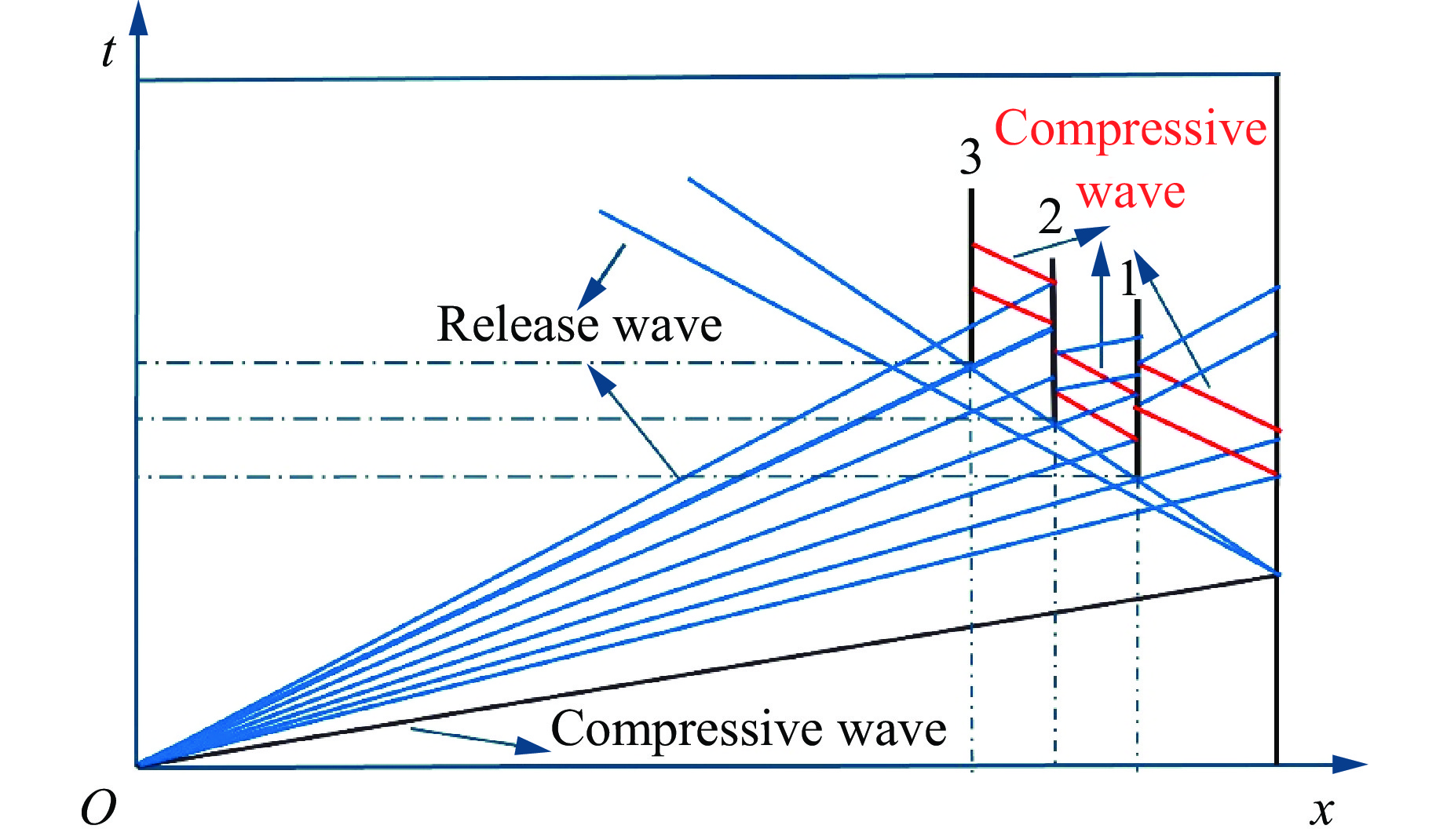
图 17 三角形脉冲加载下多层层裂波系分析图
Figure 17. Analysis diagram of wave system for multilayer delamination under triangular pulse loading
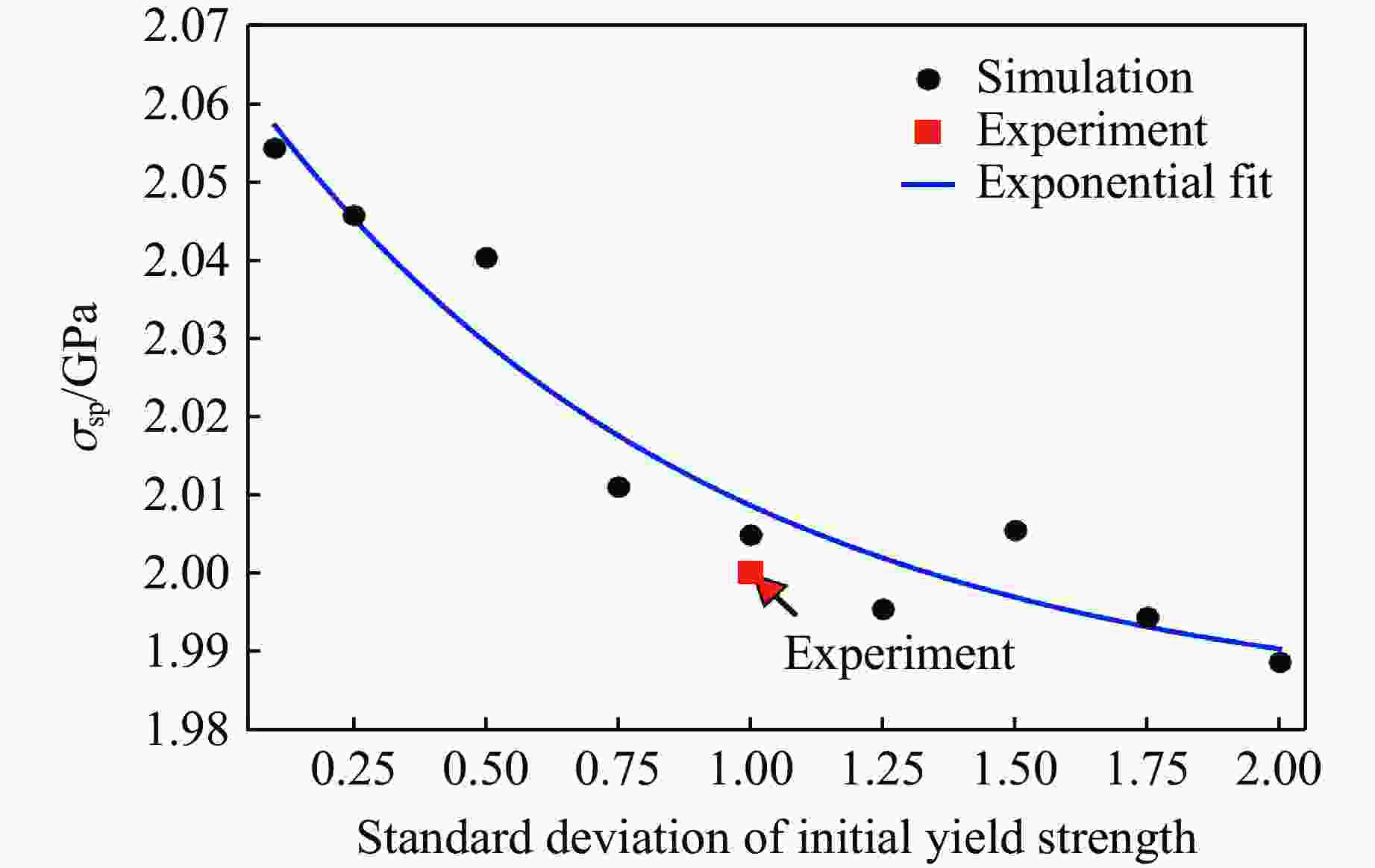
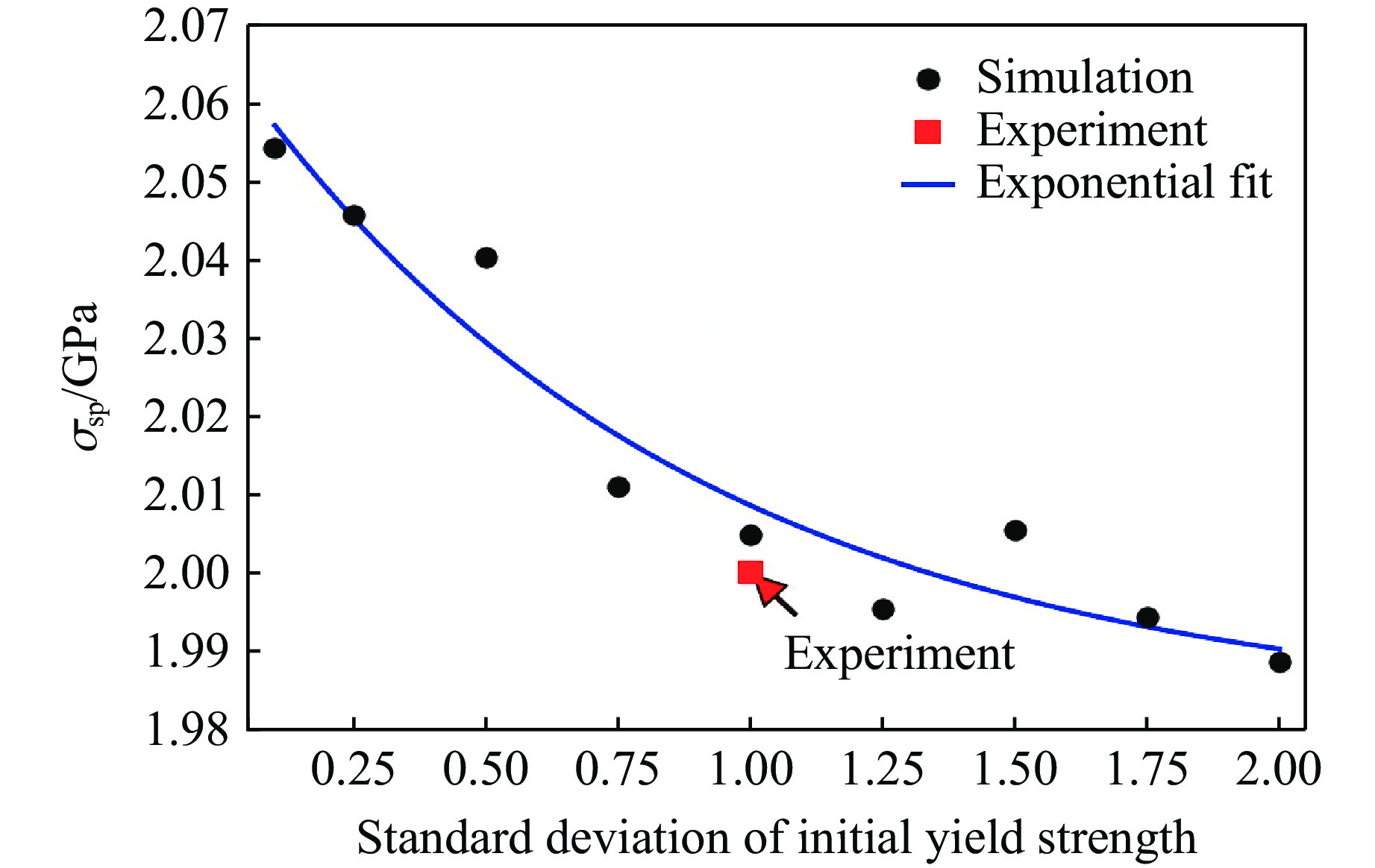
图 18 多层层裂强度与初始屈服强度对数正态分布标准差的关系
Figure 18. Relationship between multi-spall strength and log-normal distribution standard deviation of initial yield strength
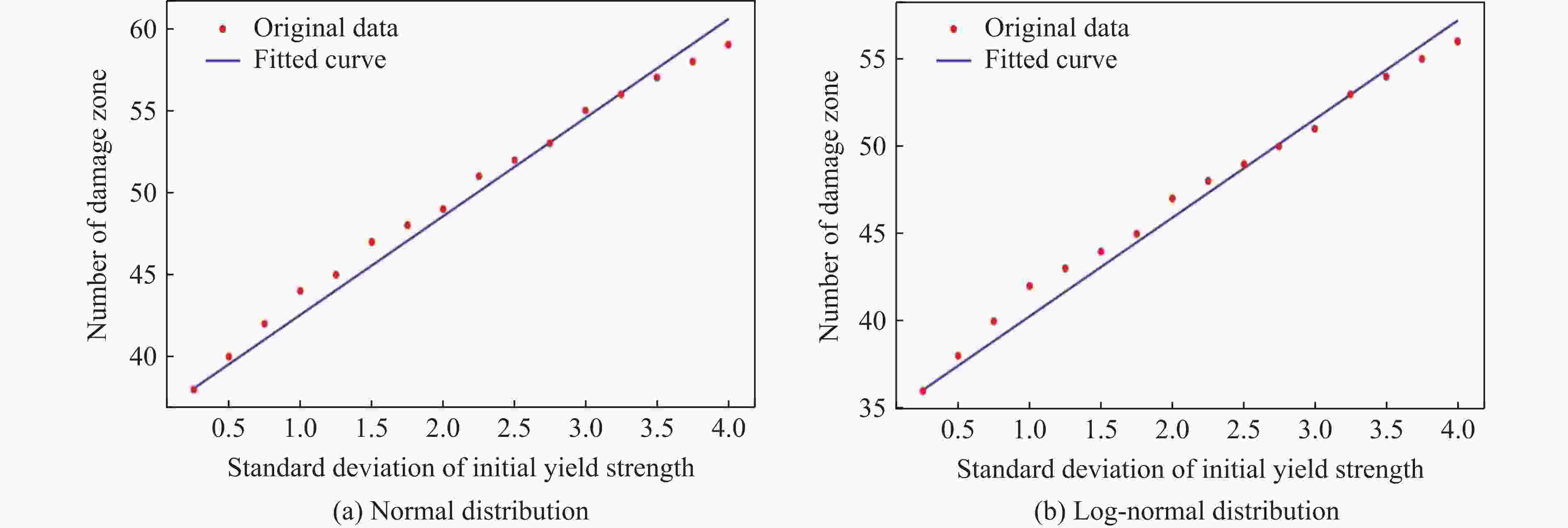
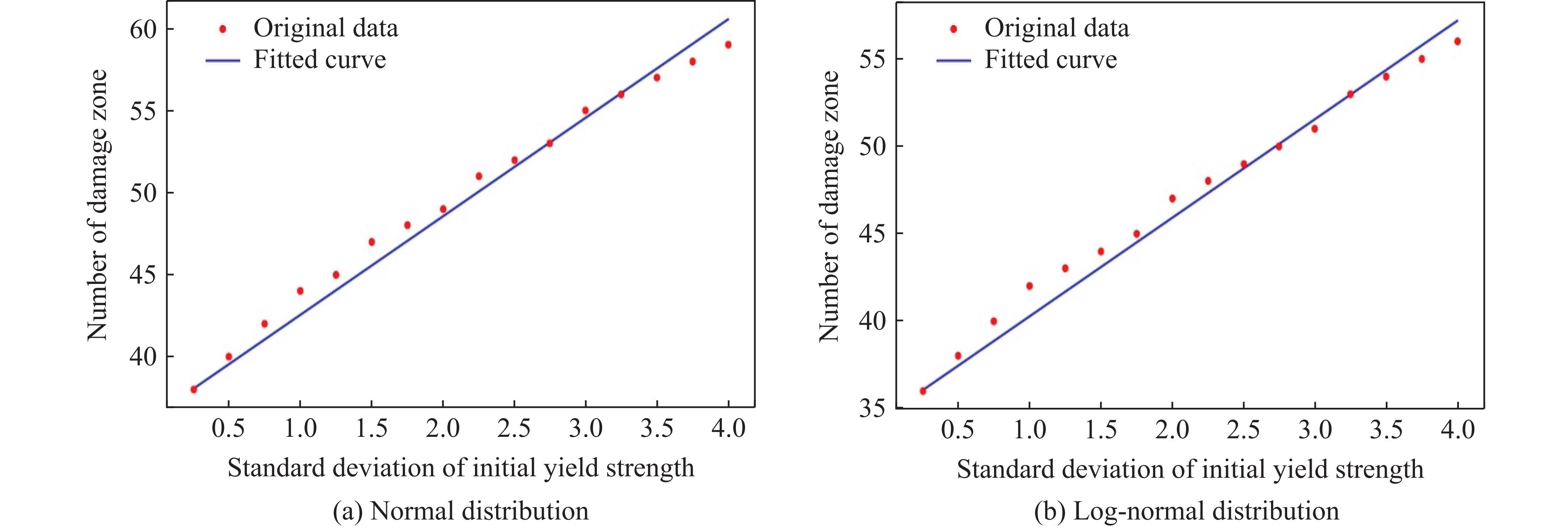
图 20 损伤区域数量与初始屈服强度标准差的关系
Figure 20. Relationship between the number of damaged zones and the standard deviation of initial yield strength
表 1 平板撞击实验条件
Table 1. Configuration of plate-impact experiments
Experiment No. Flyer thickness/mm Specimen thickness/mm v0/(m·s−1) σsp/GPa A1 0.32 0.63 247 1.39 A2 0.42 0.82 246 1.30 A3 0.53 1.03 138 1.08 A4 1.04 2.05 118 0.85  下载: 导出CSV
表 2 无氧铜的状态方程参数和本构参数
Table 2. Parameters of equation-of-state and constitutive equation for OFHC
G/GPa A/GPa B/GPa k0 C 46.6 0.23 0 0.34 0 $ {\rho }_{0}/ $(g·cm−3) $ {c} $/(m·s−1) S1 $ {\gamma }_{0} $ $ \alpha $ 8.924 3910 1.51 2.0 0
下载: 导出CSV
表 3 无氧铜的层裂相场模型参数
Table 3. Spall phase-field model parameters for OFHC
η/$ \text{μs} $ b/$ \text{μm} $ $ {G}_{\text{f}} $/(kJ·m−2) σsp/GPa 0.025 10 1 1.39, 1.30, 1.08, 0.85
下载: 导出CSV
表 4 不同初始随机分布下的Shapiro-Wilk检验结果
Table 4. Shapiro-Wilk test results under different initial random distributions
Normal distribution Log-normal distribution Weibull distribution σ W P σ W P k W P 0 0.968 0.649 0 0.956 0.414 1.1 0.967 0.636 0.25 0.954 0.385 0.25 0.962 0.524 1.2 0.950 0.330 0.50 0.965 0.606 0.50 0.961 0.506 1.3 0.971 0.765 0.75 0.968 0.678 0.75 0.981 0.824 1.4 0.957 0.489 1.00 0.955 0.364 1.00 0.970 0.714 1.5 0.963 0.615 1.25 0.982 0.819 1.25 0.957 0.439 1.6 0.990 0.986 1.50 0.972 0.747 1.50 0.953 0.372 1.7 0.963 0.615 1.75 0.961 0.514 1.75 0.964 0.567 1.8 0.937 0.214 2.00 0.965 0.621 2.00 0.950 0.324 1.9 0.937 0.210
下载: 导出CSV
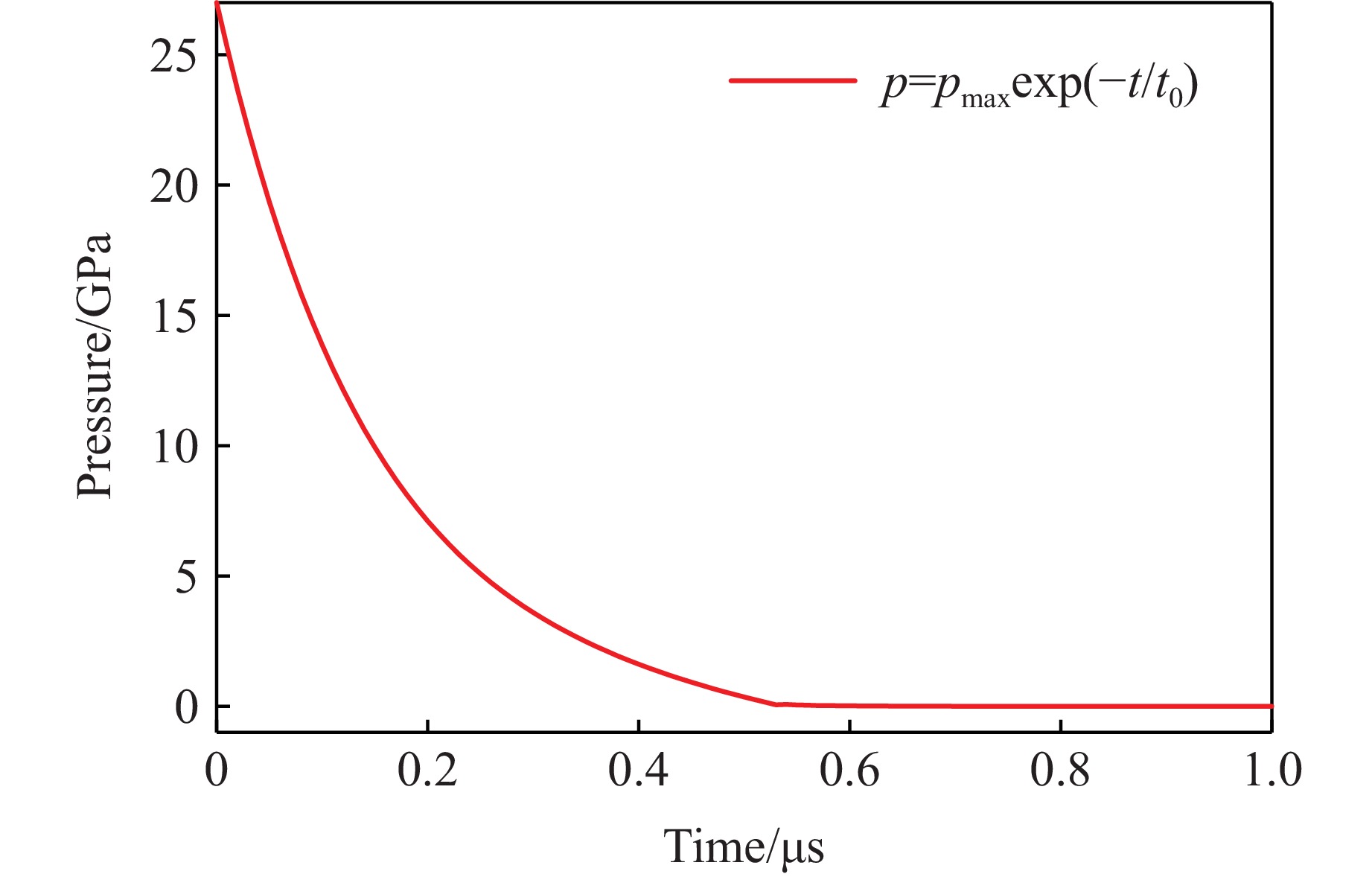
表 5 激光加载层裂实验参数
Table 5. Loading parameters for laser-driven spall experiment
Experiment No. Material $ {c} $/(m·s−1) $ {\rho }_{0} $/(g·cm−3) pmax/GPa σsp/GPa B1 Aluminum 5375 2.71 27 2.0
下载: 导出CSV
表 6 铝的本构和状态方程参数
Table 6. Constitutive and equation-of-state parameters for Al
G/GPa A/GPa B/GPa k0 C 26 1.67 3.0 0.34 0 $ {\rho }_{0}/ $(g·cm−3) $ {c} $/(m·s−1) S1 $ {\gamma }_{0} $ $ \alpha $ 2.71 5375 1.34 2.0 0
下载: 导出CSV
表 7 铝的层裂相场模型参数
Table 7. Spall phase-field model parameters for Al
η/$ \text{μs} $ b/$ \text{μm} $ $ {G}_{\text{f}} $/(kJ·m−2) σsp/GPa 0.01 6 1 2.0
下载: 导出CSV
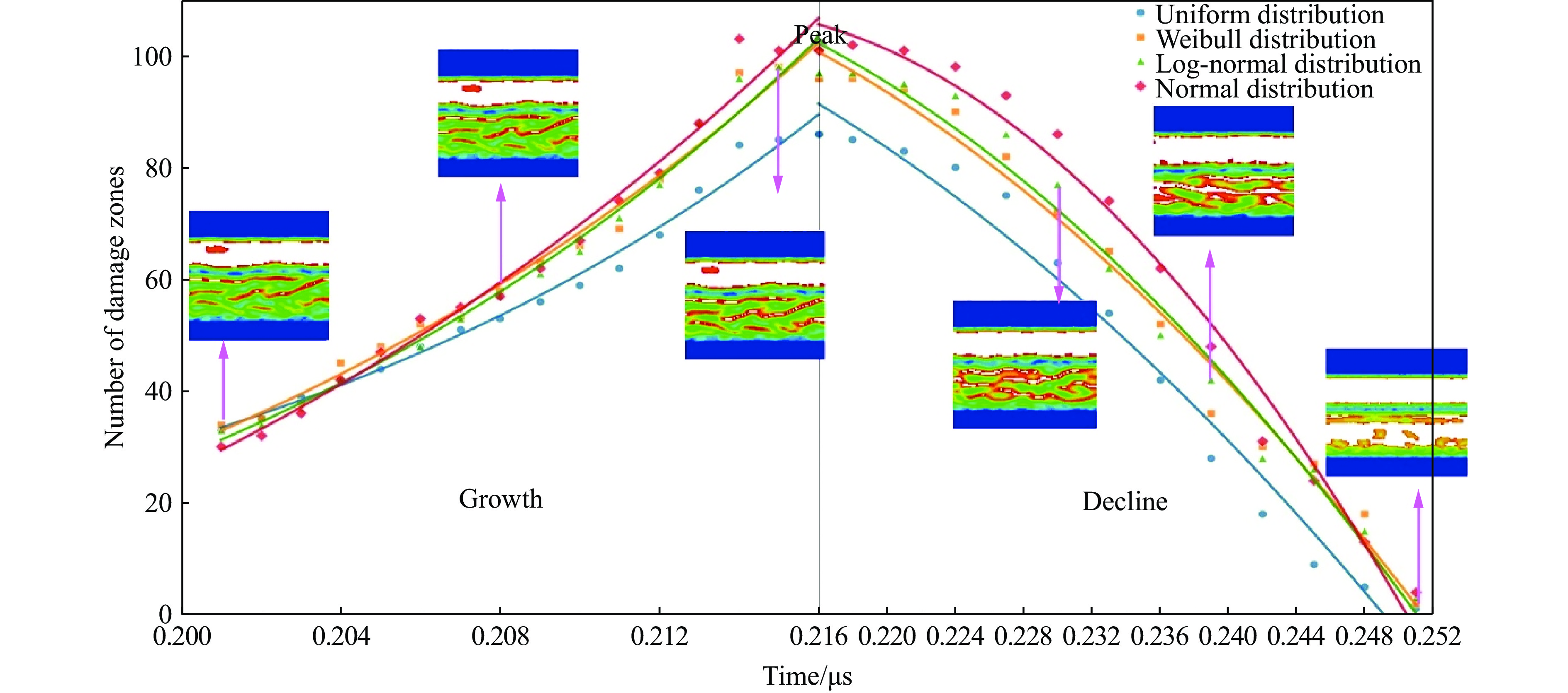
表 8 不同随机分布下损伤区域数量峰值对应的时间
Table 8. Time corresponding to the peak number of damaged zones under different random distributions
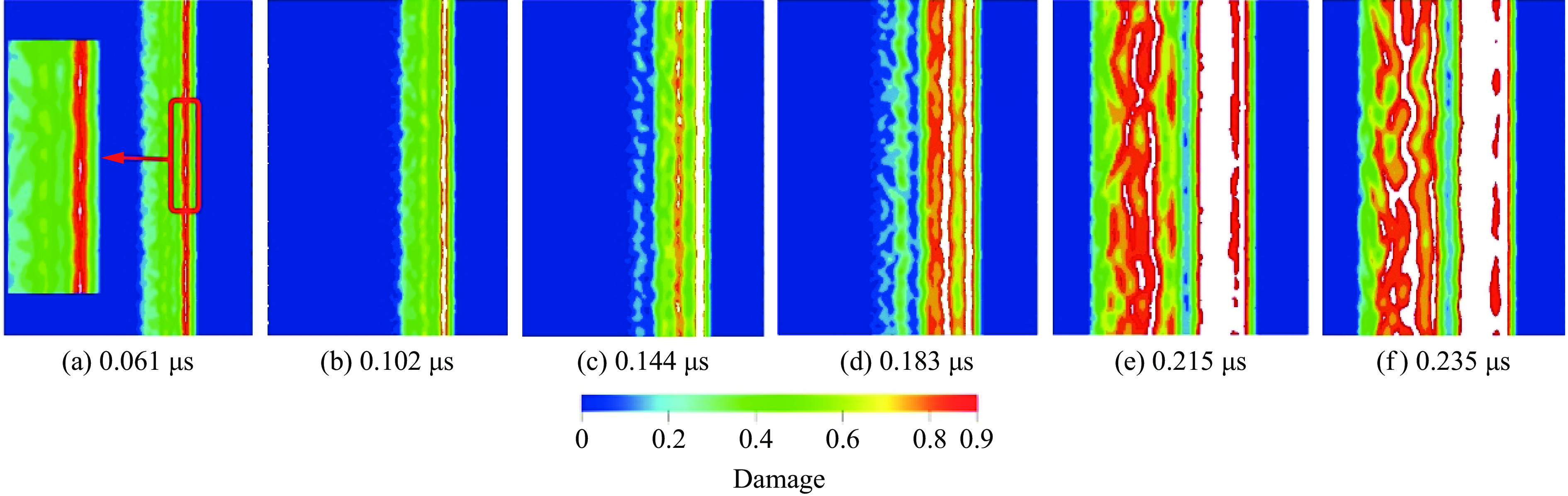
µs Uniform distribution Normal distribution Log-normal distribution Weibull distribution 0.216 0.214 0.215 0.215
下载: 导出CSV
-
[1] ANTOUN T, CURRAN D R, RAZORENOV S V, et al. Spall fracture [M]. New York: Springer, 2003. [2] CURRAN D R, SEAMAN L, SHOCKEY D A. Dynamic failure of solids [J]. Physics Reports, 1987, 147(5/6): 253–388. doi: 10.1016/0370-1573(87)90049-4 [3] NOELL P J, SILLS R B, BENZERGA A A, et al. Void nucleation during ductile rupture of metals: a review [J]. Progress in Materials Science, 2023, 135: 101085. doi: 10.1016/j.pmatsci.2023.101085 [4] DONGARE A M, RAJENDRAN A M, LAMATTINA B, et al. Atomic scale studies of spall behavior in nanocrystalline Cu [J]. Journal of Applied Physics, 2010, 108(11): 113518. doi: 10.1063/1.3517827 [5] DAS S. Effects of multiscale substructures on the effective behavior and field statistics of porous materials [J]. Journal of the Mechanics and Physics of Solids, 2026, 207: 106411. doi: 10.1016/j.jmps.2025.106411 [6] RINEHART J S. Some quantitative data bearing on the scabbing of metals under explosive attack [J]. Journal of Applied Physics, 1951, 22(5): 555–560. doi: 10.1063/1.1700005 [7] BREED B R, MADER C L, VENABLE D. Technique for the determination of dynamic-tensile-strength characteristics [J]. Journal of Applied Physics, 1967, 38(8): 3271–3275. doi: 10.1063/1.1710098 [8] TULER F R, BUTCHER B M. A criterion for the time dependence of dynamic fracture [J]. International Journal of Fracture Mechanics, 1968, 4(4): 431–437. doi: 10.1007/BF00186808 [9] JOHNSON J N. Dynamic fracture and spallation in ductile solids [J]. Journal of Applied Physics, 1981, 52(4): 2812–2825. doi: 10.1063/1.329011 [10] SEAMAN L, CURRAN D R, SHOCKEY D A. Computational models for ductile and brittle fracture [J]. Journal of Applied Physics, 1976, 47(11): 4814–4826. doi: 10.1063/1.322523 [11] JOHNSON J N, ADDESSIO F L. Tensile plasticity and ductile fracture [J]. Journal of Applied Physics, 1988, 64(12): 6699–6712. doi: 10.1063/1.342000 [12] LEE H W, BASARAN C. A review of damage, void evolution, and fatigue life prediction models [J]. Metals, 2021, 11(4): 609. doi: 10.3390/met11040609 [13] MOLINARI A, JACQUES N, MERCIER S, et al. A micromechanical model for the dynamic behavior of porous media in the void coalescence stage [J]. International Journal of Solids and Structures, 2015, 71: 1–18. doi: 10.1016/j.ijsolstr.2015.05.003 [14] ZUREK A K, THISSELL W R, JOHNSON J N, et al. Micromechanics of spall and damage in tantalum [J]. Journal of Materials Processing Technology, 1996, 60(1): 261–267. doi: 10.1016/0924-0136(96)02340-0 [15] BONORA N, RUGGIERO A, MILELLA P P. Fracture energy effect on spall signal [J]. AIP Conference Proceedings, 2004, 706(1): 439–442. doi: 10.1063/1.1780272 [16] MOLINARI A, WRIGHT T W. A physical model for nucleation and early growth of voids in ductile materials under dynamic loading [J]. Journal of the Mechanics and Physics of Solids, 2005, 53(7): 1476–1504. doi: 10.1016/j.jmps.2005.02.010 [17] THOUÉNON C, DUBOIS A, BARRAUD E, et al. Statistical modeling and generation of inertial ductile fracture surfaces [J]. Journal of the Mechanics and Physics of Solids, 2026, 206: 106406. doi: 10.1016/j.jmps.2025.106406 [18] MIEHE C, SCHÄNZEL L M, ULMER H. Phase field modeling of fracture in multi-physics problems. part Ⅰ. balance of crack surface and failure criteria for brittle crack propagation in thermo-elastic solids [J]. Computer Methods in Applied Mechanics and Engineering, 2015, 294: 449–485. doi: 10.1016/j.cma.2014.11.016 [19] 张豪, 于继东, 裴晓阳, 等. 相场断裂方法发展概况 [J]. 高压物理学报, 2019, 33(3): 030109. doi: 10.11858/gywlxb.20190777ZHANG H, YU J D, PEI X Y, et al. An overview of phase field approach to fracture [J]. Chinese Journal of High Pressure Physics, 2019, 33(3): 030109. doi: 10.11858/gywlxb.20190777 [20] WU J Y. A unified phase-field theory for the mechanics of damage and quasi-brittle failure [J]. Journal of the Mechanics and Physics of Solids, 2017, 103: 72–99. doi: 10.1016/j.jmps.2017.03.015 [21] ZHANG H, PENG H, PEI X Y, et al. A phase-field model for spall fracture [J]. Journal of Applied Physics, 2021, 129(12): 125903. doi: 10.1063/5.0043675 [22] HAN H Y, WANG T, HUANG G Y, et al. Study of the dynamic impact spalling of ductile materials based on Gurson-type phase-field model [J]. International Journal of Plasticity, 2024, 181: 104106. doi: 10.1016/j.ijplas.2024.104106 [23] MA X S, WANG G Y, WANG J. Dynamic phase field description on ductile fracture process [J]. Transactions of Nanjing University of Aeronautics & Astronautics, 2024, 41(5): 564–574. doi: 10.16356/j.1005-1120.2024.05.002 [24] AMBATI M, GERASIMOV T, DE LORENZIS L. Phase-field modeling of ductile fracture [J]. Computational Mechanics, 2015, 55(5): 1017–1040. doi: 10.1007/s00466-015-1151-4 [25] LIU Z, FAN T G, LU Q L, et al. Modeling of thermal shock-induced fracture propagation based on phase-field approach [J]. Fluid Dynamics & Materials Processing, 2025, 21(4): 851–876. doi: 10.32604/fdmp.2024.056729 [26] ZHANG H, PENG H, PEI X Y, et al. Phase-field modeling of coupled spall and adiabatic shear banding and simulation of complex cracks in ductile metals [J]. Journal of the Mechanics and Physics of Solids, 2023, 172: 105186. doi: 10.1016/j.jmps.2022.105186 [27] FARACHE D, MISHRA S, TRIPATHI S, et al. Role of dislocations on martensitic transformation temperatures and microstructure: a molecular dynamics study [J]. Journal of Applied Physics, 2024, 136(3): 035106. doi: 10.1063/5.0208406 [28] DREMOV V V, CHIRKOV P V, KARAVAEV A V. Molecular dynamics study of the effect of extended ingrain defects on grain growth kinetics in nanocrystalline copper [J]. Scientific Reports, 2021, 11(1): 934. doi: 10.1038/s41598-020-79861-3 [29] SAITOH K I, KURAMITSU K, SATO T, et al. Molecular dynamics study on deformation mechanism of grain boundaries in magnesium crystal: based on coincidence site lattice theory [J]. Journal of Materials, 2018, 2018(1): 4153464. doi: 10.1155/2018/4153464 [30] DANIELS H E. The statistical theory of the strength of bundles of threads. Ⅰ [J]. Proceedings of the Royal Society of London. Series A, Mathematical and Physical Sciences, 1945, 183(995): 405–435. doi: 10.1098/rspa.1945.0011 [31] SEKULSKI Z. Statistical properties of the yield strength of normal strength hull structural steel plates [J]. Annals of “Dunarea de Jos” University of Galati. Fascicle Ⅺ Shipbuilding, 2019, 42: 55–64. doi: 10.35219/annugalshipbuilding.2019.42.08 [32] SAKAI T, NAKAJIMA M, TOKAJI K, et al. Statistical distribution patterns in mechanical and fatigue properties of metallic materials [J]. Journal of the Society of Materials Science, 1997, 46(6): 63–74. doi: 10.2472/jsms.46.6appendix_63 [33] NUKALA P K V V, SIMUNOVIC S. Scaling of fracture strength in disordered quasi-brittle materials [J]. The European Physical Journal B: Condensed Matter and Complex Systems, 2004, 37(1): 91–100. doi: 10.1140/epjb/e2004-00033-1 [34] HAAGENSEN P J. Statistical aspects of coexisting fatigue failure mechanisms in OFHC copper: UTIAS-TN-112 [R]. UTIAS, 1967. [35] BHUIYAN M S, ANZUM T, FORHAD U H, et al. Tensile strength study of stainless-steel using Weibull distribution [J]. Mist International Journal of Science and Technology, 2020, 8(2): 1–6. doi: 10.47981/j.mijst.08(02)2020.197(01-06 [36] ONO K. A simple estimation method of weibull modulus and verification with strength data [J]. Applied Sciences, 2019, 9(8): 1575. doi: 10.3390/app9081575 [37] WU J Y, NGUYEN V P. A length scale insensitive phase-field damage model for brittle fracture [J]. Journal of the Mechanics and Physics of Solids, 2018, 119: 20–42. doi: 10.1016/j.jmps.2018.06.006 [38] FRANCFORT G A, MARIGO J J. Revisiting brittle fracture as an energy minimization problem [J]. Journal of the Mechanics and Physics of Solids, 1998, 46(8): 1319–1342. doi: 10.1016/S0022-5096(98)00034-9 [39] GRIFFITH A A. The phenomena of rupture and flow in solids [J]. Philosophical Transactions of the Royal Society A: Mathematical, Physical and Engineering Sciences, 1921, 221(582): 163–198. doi: 10.1098/rsta.1921.0006 [40] HALLQUIST J O. LS-DYNA theoretical manual [M]. USA: Livemore Software Technology Corporation, 1998. [41] SAAD F A, LEE W. Random variate generation with formal guarantees [J]. Proceedings of the ACM on Programming Languages, 2025, 9: 125–149. doi: 10.1145/3729251 [42] WEIBULL W. A statistical theory of the strength of materials [M]. Stockholm: Generalstabens Litografiska Anstalts Förlag, 1939. [43] SHAPIRO S S, WILK M B. An analysis of variance test for normality (complete samples) [J]. Biometrika, 1965, 52(3/4): 591–611. doi: 10.2307/2333709 [44] GHASEMI A, ZAHEDIASL S. Normality tests for statistical analysis: a guide for non-statisticians [J]. International Journal of Endocrinology and Metabolism, 2012, 10(2): 486–489. doi: 10.5812/ijem.3505 [45] MASSEY JR F J. The Kolmogorov-Smirnov test for goodness of fit [J]. Journal of the American Statistical Association, 1951, 46(253): 68–78. doi: 10.1080/01621459.1951.10500769 [46] KOLMOGOROV A N. Sulla determinazione empirica di una legge di distribuzione [J]. Giornale dell’ Istituto Italianodegli Attuari, 1933, 4: 83–91. [47] ROSENFELD A, PFALTZ J L. Sequential operations in digital picture processing [J]. Journal of the ACM, 1966, 13(4): 471–494. doi: 10.1145/321356.321357 [48] NOVIKOV S A. Shear stress and spall strength of materials under shock loads (review) [J]. Journal of Applied Mechanics and Technical Physics, 1981, 22(3): 385–394. doi: 10.1007/BF00907567 [49] 彭辉, 裴晓阳, 李平, 等. 高纯铜初始层裂的微损伤特性研究 [J]. 物理学报, 2015, 64(21): 216201. doi: 10.7498/aps.64.216201PENG H, PEI X Y, LI P, et al. Micro-damage characteristics of incipient spall in high-purity copper [J]. Acta Physica Sinica, 2015, 64(21): 216201. doi: 10.7498/aps.64.216201 [50] 彭辉. 延性金属动态拉伸断裂的微损伤聚集特性研究 [D]. 北京: 北京理工大学, 2015: 66–68.PENG H. Coalescence of micro-damage on dynamic tensile fracture of ductile metal [D]. Beijing: Beijing Institute of Technology, 2015: 66–68. [51] VILGE B I, VILGE B B. Statistical concept of the “weakest link” in estimating strength and defects of chemically active composite materials [J]. Model Assisted Statistics and Applications, 2016, 11(1): 81–89. doi: 10.3233/mas-150355 [52] TOL R S J, YOHE G W. The weakest link hypothesis for adaptive capacity: an empirical test [J]. Global Environmental Change, 2007, 17(2): 218–227. doi: 10.1016/j.gloenvcha.2006.08.001 [53] GREDELJ S, HALILAGIĆ R. The application of central limit theorem in determining structural reliability [C]//Proceedings of the 13th International Scientific Conference on Production Engineering: Development and Modernization of Production. 2022: 1. [54] LESCOUTE E, DE RESSÉGUIER T, CHEVALIER J M, et al. Ejection of spalled layers from laser shock-loaded metals [J]. Journal of Applied Physics, 2010, 108(9): 093510. doi: 10.1063/1.3500317 [55] 郑宇轩, 陈磊, 胡时胜, 等. 韧性材料冲击拉伸碎裂中的碎片尺寸分布规律 [J]. 力学学报, 2013, 45(4): 580–587. doi: 10.6052/0459-1879-12-338ZHENG Y X, CHEN L, HU S S, et al. Characteristics of fragment size distribution of ductile materials fragmentized under high strainrate tension [J]. Chinese Journal of Theoretical and Applied Mechanics, 2013, 45(4): 580–587. doi: 10.6052/0459-1879-12-338 [56] 汤佳妮, 徐便, 郑宇轩, 等. 脆性膨胀环动态拉伸碎裂实验研究 [J]. 爆炸与冲击, 2021, 41(1): 014101. doi: 10.11883/bzycj-2020-0049TANG J N, XU B, ZHENG Y X, et al. Experimental study for dynamic fragmentation of brittle expansion rings [J]. Explosion and Shock Waves, 2021, 41(1): 014101. doi: 10.11883/bzycj-2020-0049 -

 下载:
下载:

计量
- 文章访问数: 1380
- HTML全文浏览量: 607
- PDF下载量: 105
