| Citation: | YANG Yuhao, GUO Xianghua, ZHANG Qingming. Numerical Simulation of Damage Characteristics of Multi-Layer Protective Structure under Hypervelocity Impact of Kinetic Energy Block[J]. Chinese Journal of High Pressure Physics, 2022, 36(4): 044204. doi: 10.11858/gywlxb.20220533

|

| [1] |
张羽. 层间距对多冲击结构超高速撞击损伤特性影响研究 [D]. 哈尔滨: 哈尔滨工业大学, 2012.
ZHANG Y. Hypervelocity impact damage characteristics research on the impact of protection spacing on multi-shock shields [D]. Harbin: Harbin Institute of Technology, 2012.
|
| [2] |
江增荣, 李向荣, 李世才, 等. 预制破片对战斗部冲击起爆数值模拟 [J]. 弹道学报, 2009, 21(1): 9–13.
JIANG Z R, LI X R, LI S C, et al. Numerical simulation on shock initiation of performed fragment to warhead [J]. Journal of Ballistics, 2009, 21(1): 9–13.
|
| [3] |
梁斌, 冯高鹏, 魏雪婷. 多枚破片冲击引爆带盖板炸药数值模拟分析 [J]. 弹箭与制导学报, 2013, 33(6): 62–66, 69. doi: 10.3969/j.issn.1673-9728.2013.06.018
LIANG B, FENG G P, WEI X T. Numerical simulation on shock initiation of composition explosive of cover board subjected to multi-fragment [J]. Journal of Projectiles, Rockets, Missiles and Guidance, 2013, 33(6): 62–66, 69. doi: 10.3969/j.issn.1673-9728.2013.06.018
|
| [4] |
GUPTA N K, MADHU V. An experimental study of normal and oblique impact of hard-core projectile on single and layered plates [J]. International Journal of Impact Engineering, 1997, 19(5/6): 395–414. doi: 10.1016/S0734-743X(97)00001-8
|
| [5] |
董永香, 冯顺山, 段相杰. 弹丸斜侵彻多层金属间隔靶特性研究 [J]. 中北大学学报 (自然科学版), 2010, 31(3): 221–226. doi: 10.3969/j.issn.1673-3193.2010.03.004
DONG Y X, FENG S S, DUAN X J. Oblique penetration characteristics of multi-layered spaced targets by steel projectiles [J]. Journal of North University of China (Natural Science Edition), 2010, 31(3): 221–226. doi: 10.3969/j.issn.1673-3193.2010.03.004
|
| [6] |
吕珮毅, 张允航, 张曌. 破片形状、着靶姿态对侵彻多层靶影响的数据模拟研究 [J]. 国外电子测量技术, 2021, 40(1): 27–31. doi: 10.19652/j.cnki.femt.2002343
LYU P Y, ZHANG Y H, ZHANG Z. Numerical simulation research on the influence of fragment shape and posture on penetrating multi-layer target [J]. Foreign Electronic Measurement Technology, 2021, 40(1): 27–31. doi: 10.19652/j.cnki.femt.2002343
|
| [7] |
屈科佛, 姚勇, 邓勇军, 等. 多层靶板抗不同形状高速破片侵彻性能研究 [J]. 兵器装备工程学报, 2020, 41(2): 6–9. doi: 10.11809/bqzbgcxb2020.02.002
QU K F, YAO Y, DENG Y J, et al. Numerical study on effect of fragment shape on penetration resistance of multi-layered target [J]. Journal of Ordnance Equipment Engineering, 2020, 41(2): 6–9. doi: 10.11809/bqzbgcxb2020.02.002
|
| [8] |
DENG Y F, ZHANG W, CAO Z S. Experimental investigation on the ballistic resistance of monolithic and multi-layered plates against ogival-nosed rigid projectiles impact [J]. Materials & Design, 2013, 44: 228–239. doi: 10.1016/j.matdes.2012.06.048
|
| [9] |
赵小峰. 破片质量对钨合金破片侵彻威力的影响 [J]. 科学技术与工程, 2020, 20(10): 3967–3971. doi: 10.3969/j.issn.1671-1815.2020.10.025
ZHAO X F. Impact of fragment mass on the penetration capacity of tungsten alloy fragment [J]. Science Technology and Engineering, 2020, 20(10): 3967–3971. doi: 10.3969/j.issn.1671-1815.2020.10.025
|
| [10] |
JOHNSON G R. Linking of Lagrangian particle methods to standard finite element methods for high velocity impact computations [J]. Nuclear Engineering and Design, 1994, 150(2/3): 265–274. doi: 10.1016/0029-5493(94)90143-0
|
| [11] |
JOHNSON G R, BEISSEL S R, GERLACH C A. Another approach to a hybrid particle-finite element algorithm for high-velocity impact [J]. International Journal of Impact Engineering, 2011, 38(5): 397–405. doi: 10.1016/j.ijimpeng.2011.01.002
|
| [12] |
JOHNSON G R, BEISSEL S R, GERLACH C A. A combined particle-element method for high-velocity impact computations [J]. Procedia Engineering, 2013, 58: 269–278. doi: 10.1016/j.proeng.2013.05.031
|
| [13] |
RNÁNDEZ-MÉNDEZ S, BONET J, HUERTA A. Continuous blending of SPH with finite elements [J]. Computers and Structures, 2005, 83(17/18): 1448–1458. doi: 10.1016/j.compstruc.2004.10.019
|
| [14] |
DE VUYST T, VIGNJEVIC R, CAMPBELL J C. Coupling between meshless and finite element methods [J]. International Journal of Impact Engineering, 2005, 31(8): 1054–1064. doi: 10.1016/j.ijimpeng.2004.04.017
|
| [15] |
SAUER M. Simulation of high velocity impact in fluid-filled containers using finite elements with adaptive coupling to smoothed particle hydrodynamics [J]. International Journal of Impact Engineering, 2011, 38(6): 511–520. doi: 10.1016/j.ijimpeng.2010.10.023
|
| [16] |
王吉, 王肖钧, 卞梁. 光滑粒子法与有限元的耦合算法及其在冲击动力学中的应用 [J]. 爆炸与冲击, 2007, 27(6): 522–528. doi: 10.11883/1001-1455(2007)06-0522-07
WANG J, WANG X J, BIAN L. Linking of smoothed particle hydrodynamics method to standard finite element method and its application in impact dynamics [J]. Explosion and Shock Waves, 2007, 27(6): 522–528. doi: 10.11883/1001-1455(2007)06-0522-07
|
| [17] |
胡德安, 韩旭, 肖毅华, 等. 光滑粒子法及其与有限元耦合算法的研究进展 [J]. 力学学报, 2013, 45(5): 639–652. doi: 10.6052/0459-1879-13-092
HU D A, HAN X, XIAO Y H, et al. Research developments of smoothed particle hydrodynamics method and its coupling with finite element method [J]. Chinese Journal of Theoretical and Applied Mechanics, 2013, 45(5): 639–652. doi: 10.6052/0459-1879-13-092
|
| [18] |
胡德安, 孙占华, 朱婷. 三维自适应FE-SPH耦合算法在多层间隔金属靶侵彻问题中的应用 [J]. 爆炸与冲击, 2015, 35(3): 416–422. doi: 10.11883/1001-1455-(2015)03-0416-07
HU D A, SUN Z H, ZHU T. Application of 3D FE-SPH adaptive coupling algorithm to penetration analysis of spaced multi-layered metallic targets [J]. Explosion and Shock Waves, 2015, 35(3): 416–422. doi: 10.11883/1001-1455-(2015)03-0416-07
|
| [19] |
HE Q G, CHEN X W, CHEN J F. Finite element-smoothed particle hydrodynamics adaptive method in simulating debris cloud [J]. Acta Astronautica, 2020, 175: 99–117. doi: 10.1016/j.actaastro.2020.05.056
|
| [20] |
ROHR I, NAHME H, THOMA K, et al. Material characterisation and constitutive modelling of a tungsten-sintered alloy for a wide range of strain rates [J]. International Journal of Impact Engineering, 2008, 35(8): 811–819. doi: 10.1016/j.ijimpeng.2007.12.006
|
| [21] |
张伟, 庞宝君, 贾斌, 等. 弹丸超高速撞击防护屏碎片云数值模拟 [J]. 高压物理学报, 2004, 18(1): 47–52. doi: 10.11858/gywlxb.2004.01.009
ZHANG W, PANG B J, JIA B, et al. Numerical simulation of debris cloud produced by hypervelocity impact of projectile on bumper [J]. Chinese Journal of High Pressure Physics, 2004, 18(1): 47–52. doi: 10.11858/gywlxb.2004.01.009
|
| [22] |
郝伟江, 龙仁荣, 张庆明, 等. 球形弹丸超高速撞击靶板时背表面材料破碎的数值模拟分析 [J]. 高压物理学报, 2019, 33(2): 024102. doi: 10.11858/gywlxb.20180651
HAO W J, LONG R R, ZHANG Q M, et al. Numerical simulation analysis of back fragmentation of sphere by hypervelocity impact [J]. Chinese Journal of High Pressure Physics, 2019, 33(2): 024102. doi: 10.11858/gywlxb.20180651
|
| [23] |
汪庆桃, 吴克刚, 陈志阳. 圆柱形长杆超高速正碰撞薄板结构破碎效应 [J]. 振动与冲击, 2017, 36(5): 54–60. doi: 10.13465/j.cnki.jvs.2017.05.009
WANG Q T, WU K G, CHEN Z Y. Fragmentation effect of a long cylindrical rod with a hypervelocity normally impacting a thin plate structure [J]. Journal of Vibration and Shock, 2017, 36(5): 54–60. doi: 10.13465/j.cnki.jvs.2017.05.009
|
| [24] |
SIBEAUD J M, HÉREIL P L, ALBOUYS V. Hypervelocity impact on spaced target structures: experimental and Ouranos simulation achievements [J]. International Journal of Impact Engineering, 2003, 29(1): 647−658.
|
| [25] |
王礼立. 应力波基础 [M]. 2版. 北京: 国防工业出版社, 2005.
WANG L L. Foundation of stress waves [M]. 2nd ed. Beijing: National Defense Industry Press, 2005.
|
| [26] |
谈庆明. 量纲分析 [M]. 合肥: 中国科学技术大学出版社, 2005.
TAN Q M. Dimensional analysis [M]. Hefei: University of Science and Technology of China Press, 2005.
|
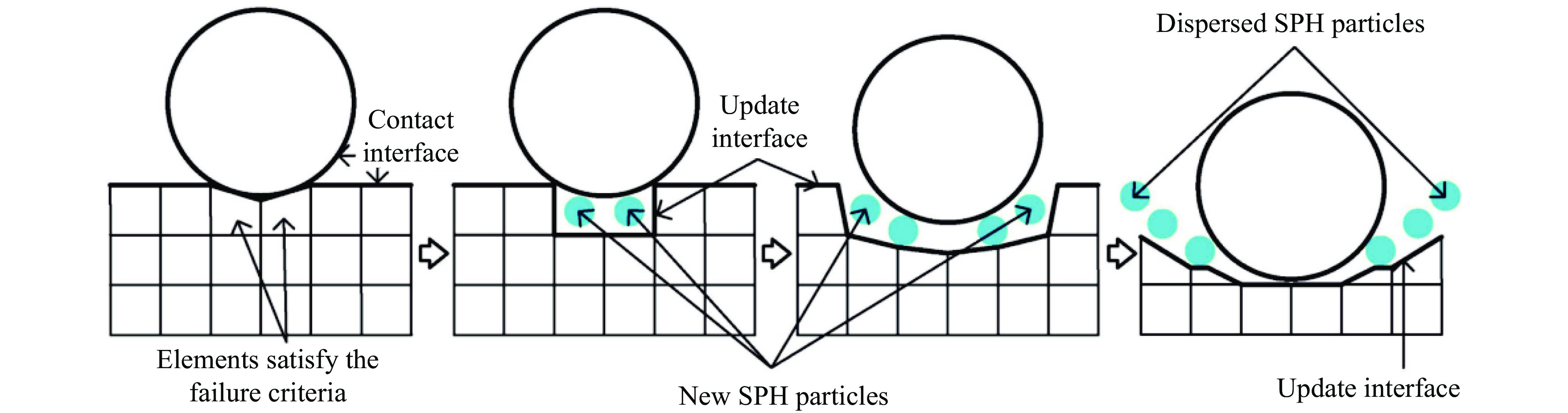
Figures(9) / Tables(7)
Website Copyright© Editorial Office of Chinese Journal of High Pressure Physics
Tel:0816-2490042 E-mail:gaoya@caep.cn
Supported by: Beijing Renhe Information Technology Co. Ltd support:
info@rhhz.net







 DownLoad: