





Structural Phase Transitions and Physical Properties of TaB4 under High Pressure
-
摘要: 采用基于粒子群优化算法的晶体结构搜索方法,结合第一性原理计算,对富硼过渡金属硼化物TaB4在高压下的晶体结构、稳定性、电子性质、力学性质及超导电性进行了系统研究,并探讨了其结构与超导电性之间的内在关联。研究结果表明,常压下稳定的C2/m-Ⅰ相在约2.5 GPa发生结构转变,形成一种新的单斜C2/m-Ⅱ相。声子谱计算表明,该新相卸压至常压后仍保持动力学稳定性,说明其有望以亚稳相形式在常压下保留。电子结构计算表明,C2/m-Ⅱ-TaB4具有金属导电特征,其常压超导转变温度可达13.5 K,超导电性主要源于Ta原子低频振动与B原子相关振动模式共同贡献的电子-声子耦合作用。此外,力学性质计算表明,该新相的理论维氏硬度约为14.5 GPa,表现出一定的抗塑性变形能力。本研究丰富了Ta-B体系富硼化合物的晶体结构类型,并为深入理解过渡金属硼化物中晶体结构、晶格振动与超导电性之间的内在联系提供了理论参考。Abstract: Crystal structure searches based on the particle swarm optimization algorithm combined with first-principles calculations were performed to systematically investigate the crystal structures, stability, electronic properties, mechanical properties, and superconductivity of the boron-rich transition-metal boride TaB4 under high pressure, with particular emphasis on the intrinsic relationship between crystal structure and superconductivity. The results show that the C2/m-Ⅰ phase, which is stable at ambient pressure, undergoes a structural phase transition at approximately 2.5 GPa, giving rise to a new monoclinic C2/m-Ⅱ phase. Phonon calculations reveal that this new phase remains dynamically stable after decompression to ambient pressure, suggesting the possibility of its metastable existence under ambient conditions. Electronic structure calculations indicate that C2/m-Ⅱ-TaB4 exhibits metallic behavior. Electron-phonon coupling calculations further demonstrate that this phase exhibits phonon-mediated superconductivity, with a superconducting transition temperature of up to 13.5 K at ambient pressure. The electron-phonon coupling is mainly associated with low-frequency phonon modes involving Ta atoms. Mechanical property calculations show that C2/m-Ⅱ-TaB4 has a Vickers hardness of approximately 14.5 GPa, indicating a moderate hardness. These results expand our understanding of the structural diversity of boron-rich compounds in the Ta-B system and provide a theoretical basis for elucidating the intrinsic relationships among crystal structure, lattice vibrations, and superconductivity in transition-metal borides.
-
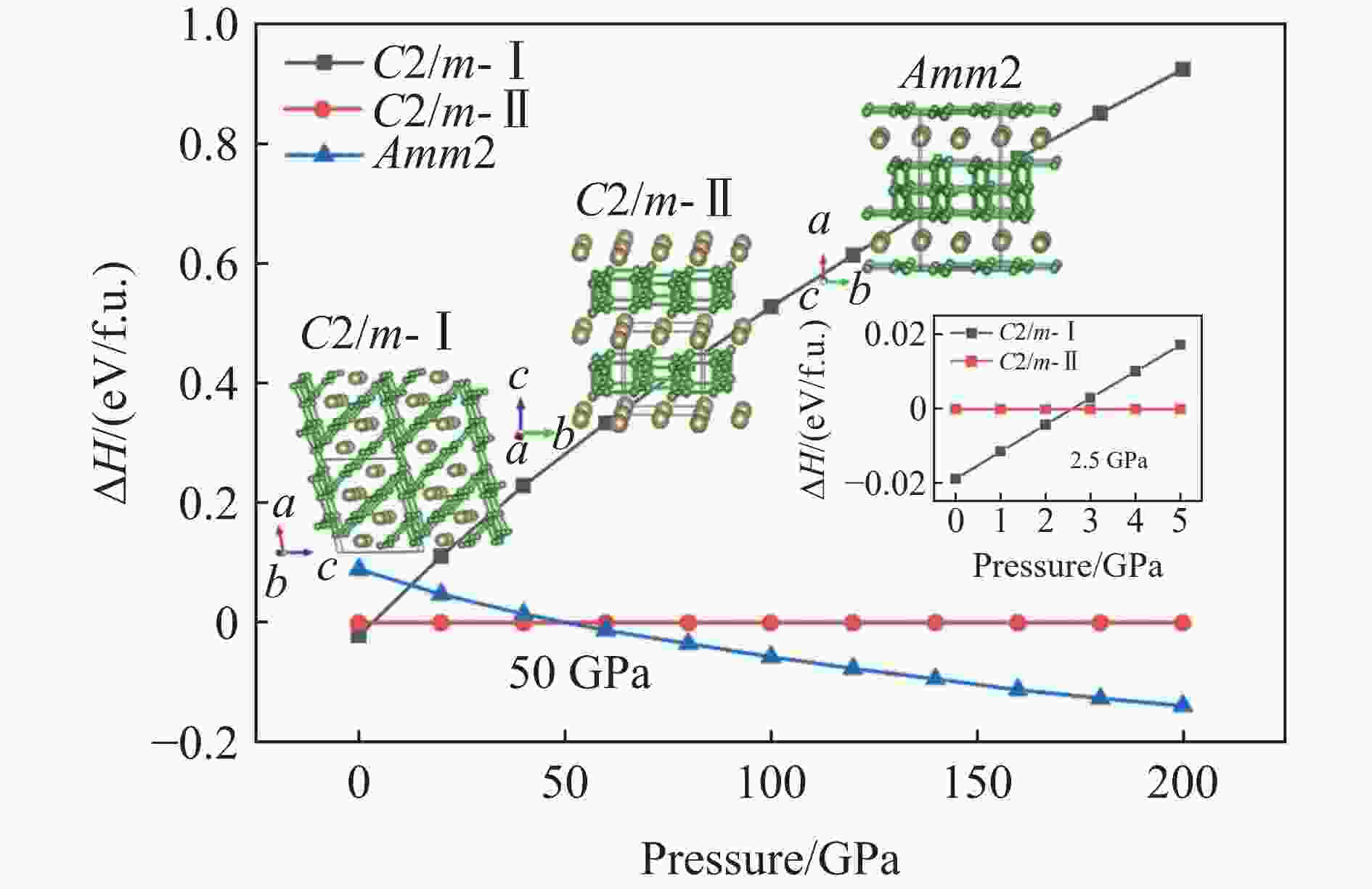
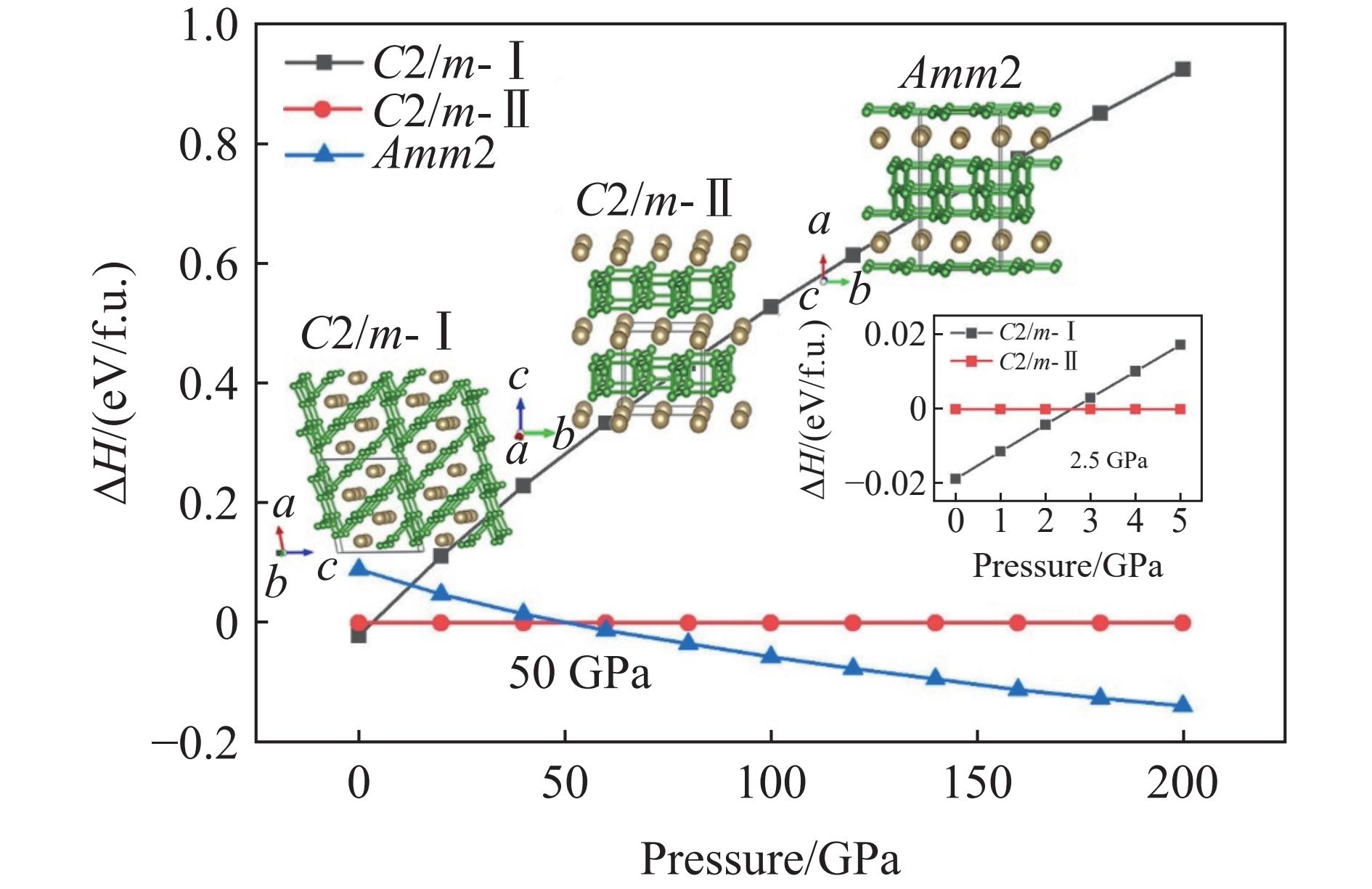
图 1 不同结构TaB4相对于C2/m-Ⅱ相的焓差随压力变化曲线
Figure 1. Enthalpy differences of various TaB4 phases relative to the C2/m-Ⅱ phase as a function of pressure
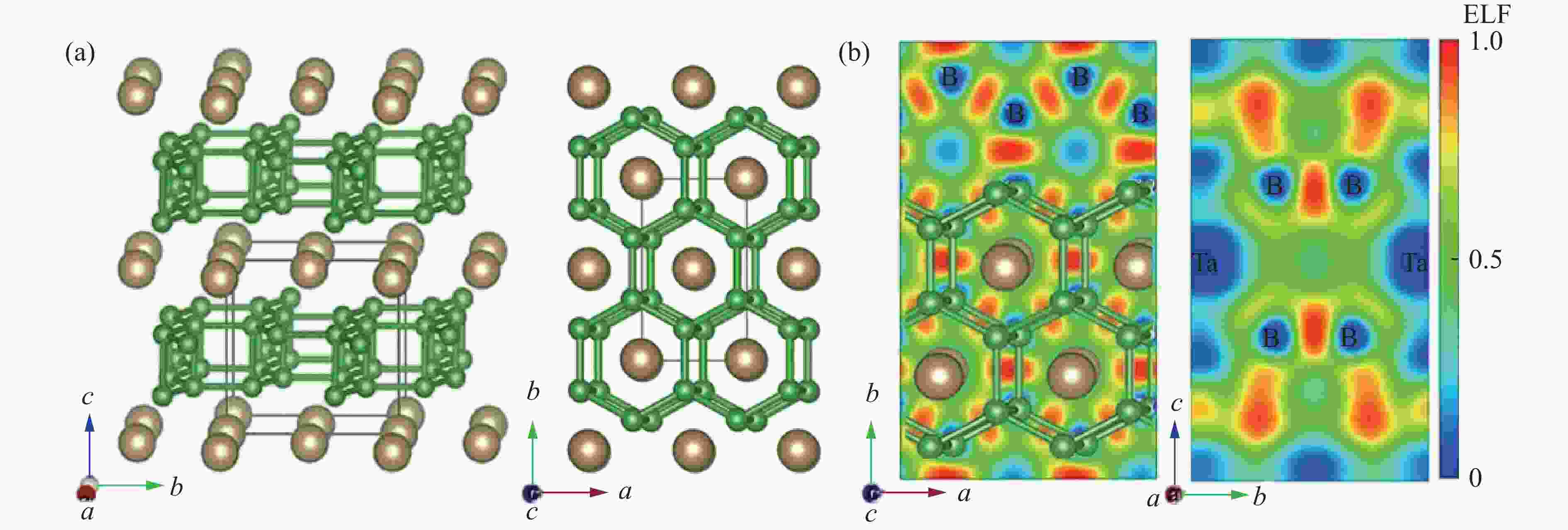
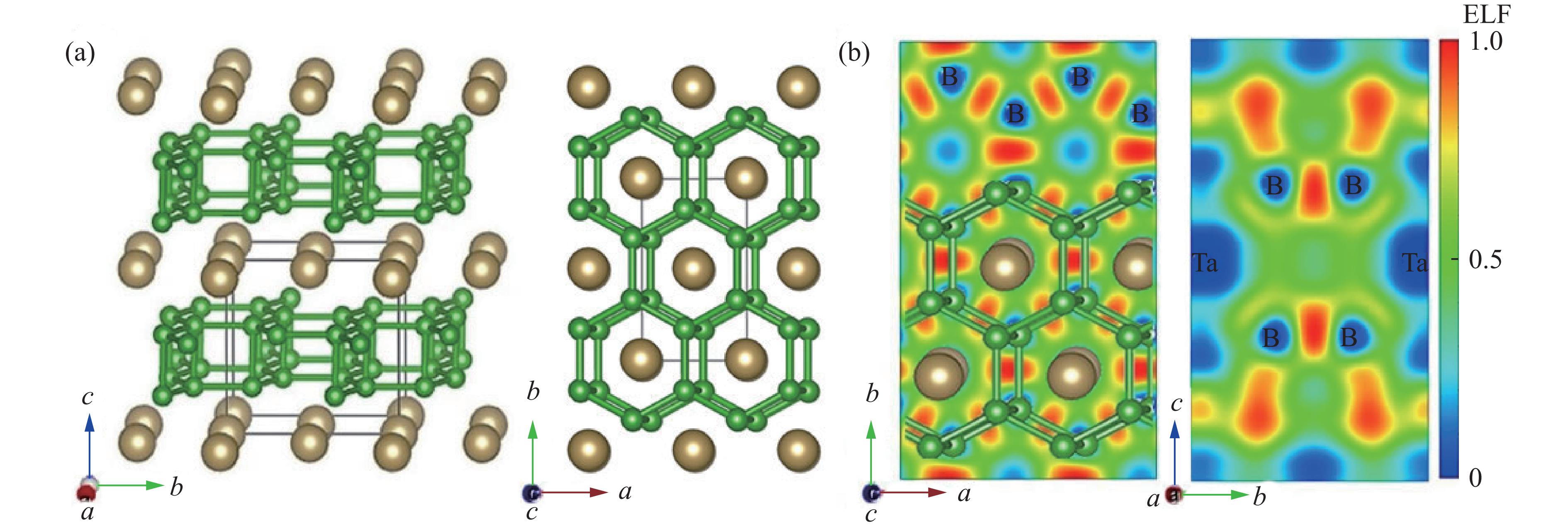
图 2 (a) C2/m-Ⅱ相TaB4的晶体结构,(b) 40 GPa压力条件下C2/m-Ⅱ相TaB4在(001)面及最临近Ta和B所在平面的电子局域函数
Figure 2. (a) Crystal structure of TaB4 C2/m-Ⅱ phase; (b) electron localization function on the (001) plane of TaB4 C2/m-Ⅱ phase and the plane containing the nearest-neighbor Ta-B pair at 40 GPa
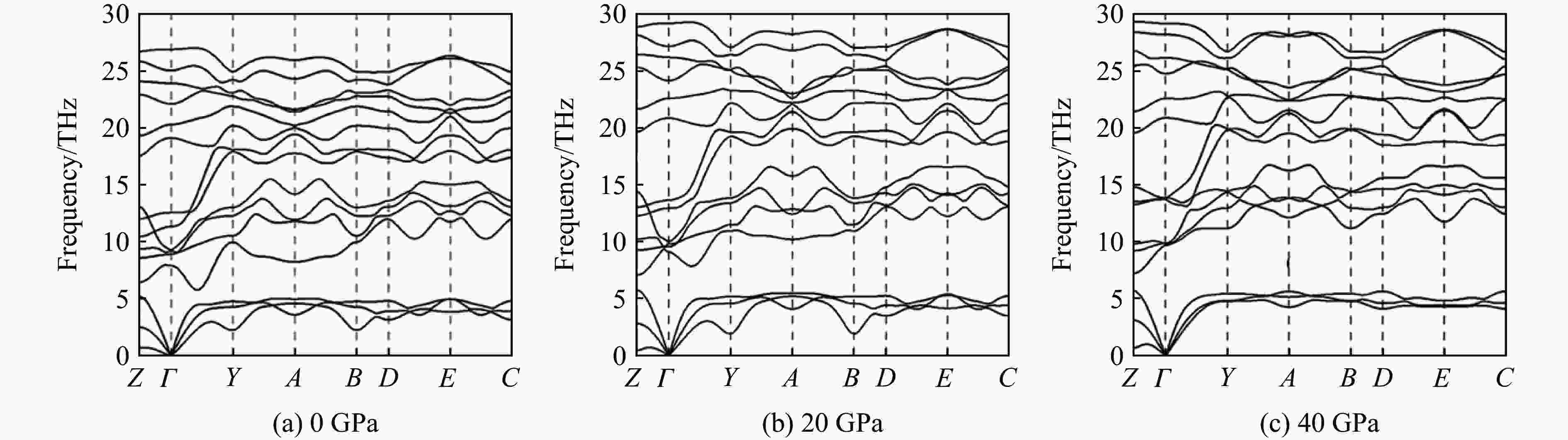
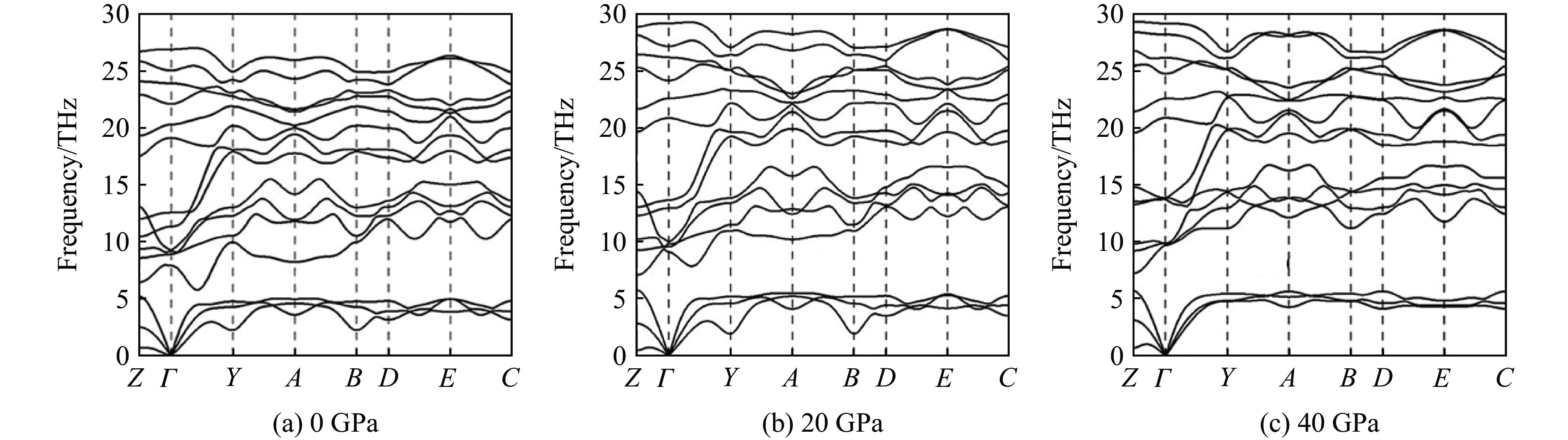
图 3 C2/m-Ⅱ相TaB4在0、20和40 GPa下的声子谱
Figure 3. Phonon spectra of C2/m-Ⅱ TaB4 at 0, 20, and 40 GPa
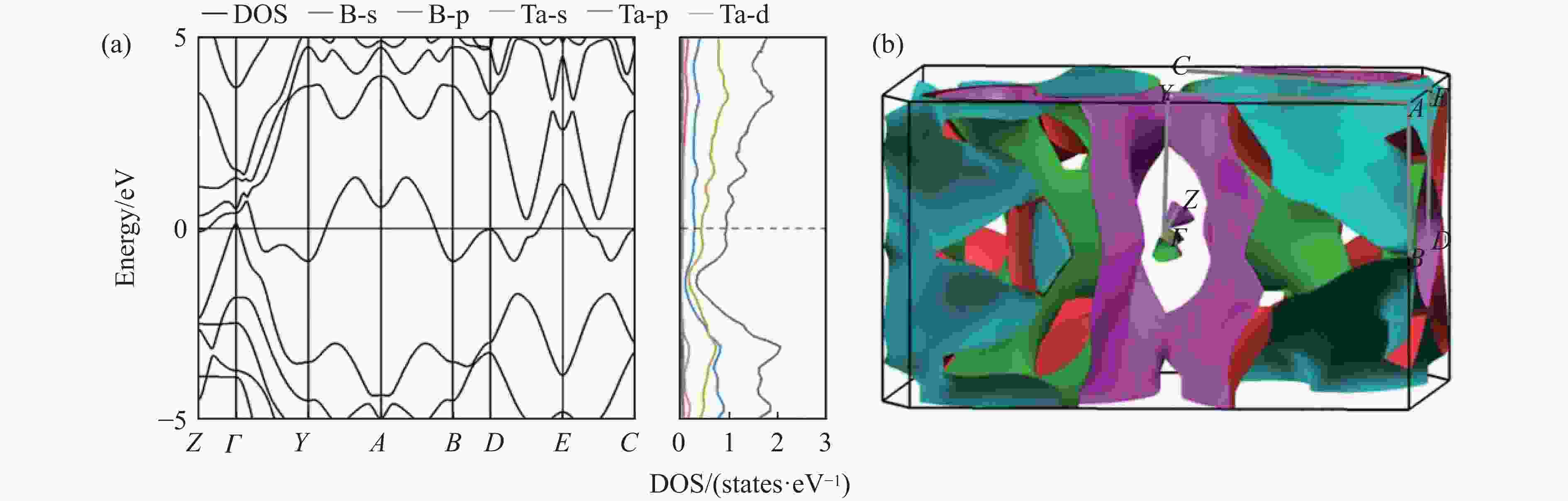
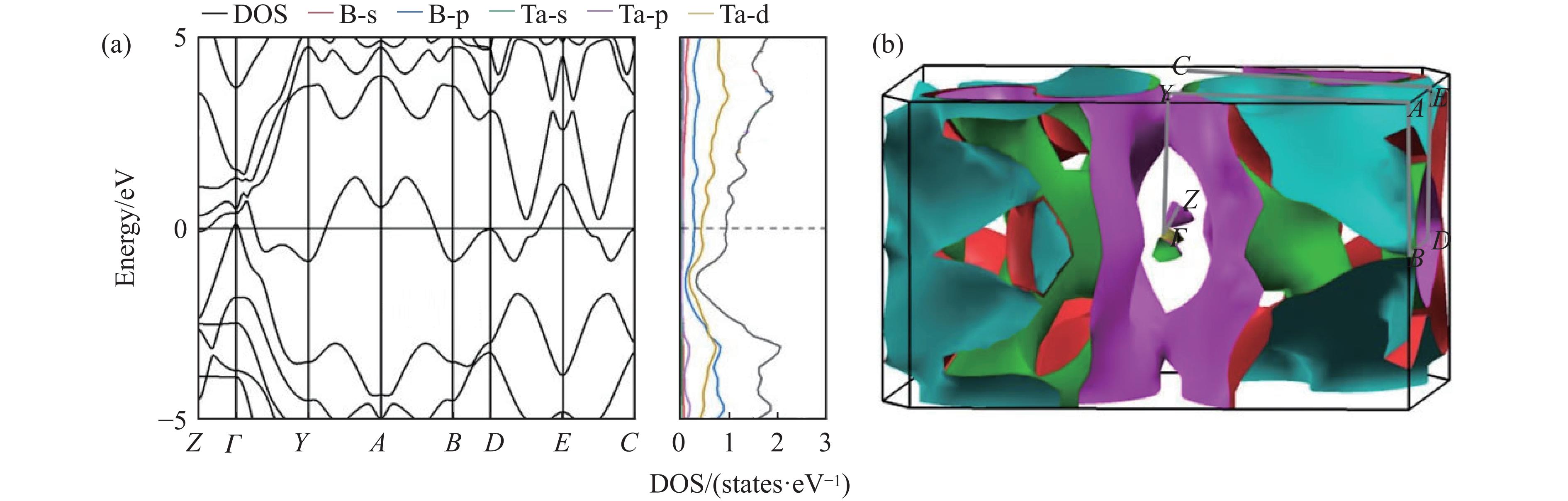
图 4 40 GPa下C2/m-Ⅱ相TaB4的(a)电子能带、态密度及(b)费米面
Figure 4. (a) Electronic band structure, density of states and (b) Fermi surface of TaB4 C2/m-Ⅱ phase at 40 GPa
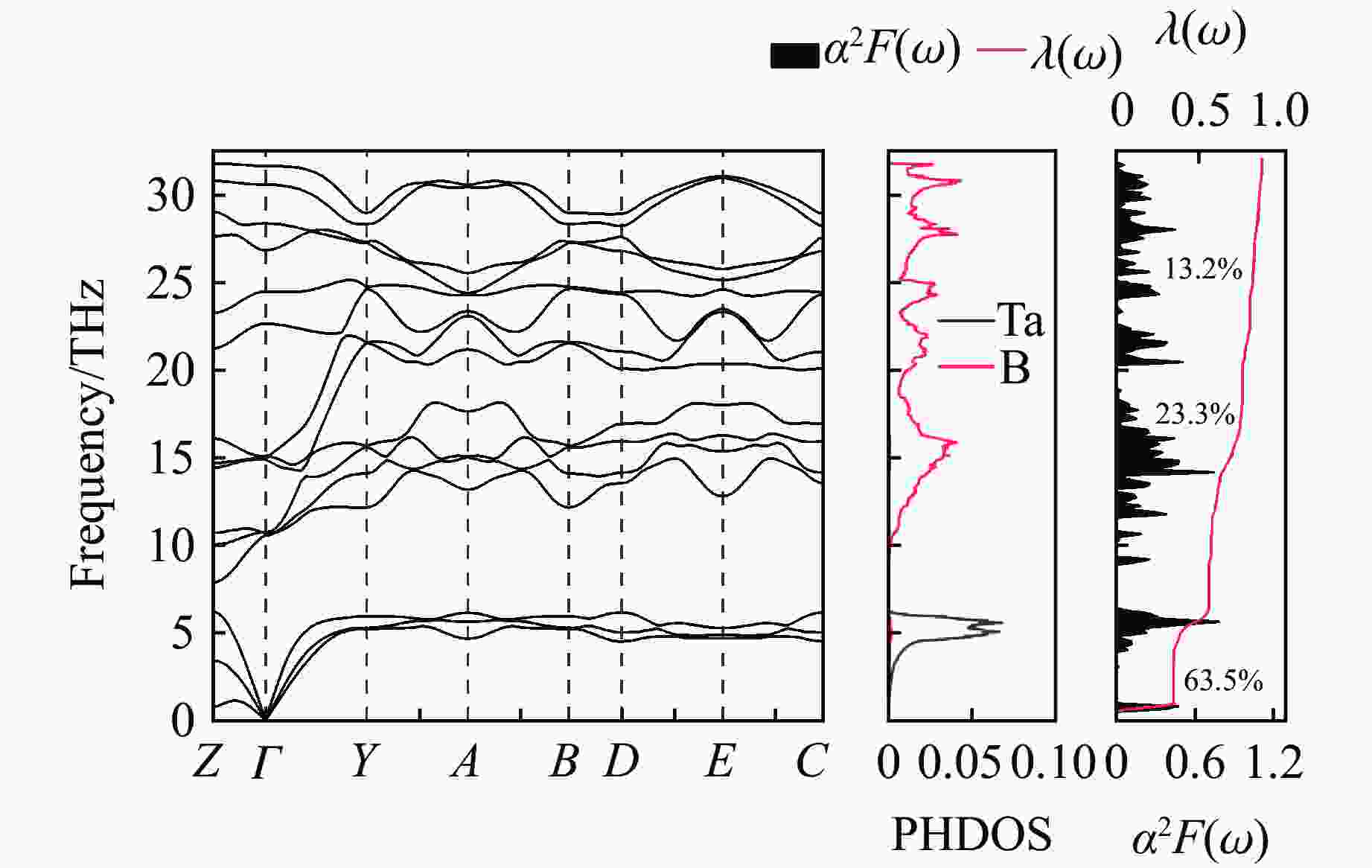
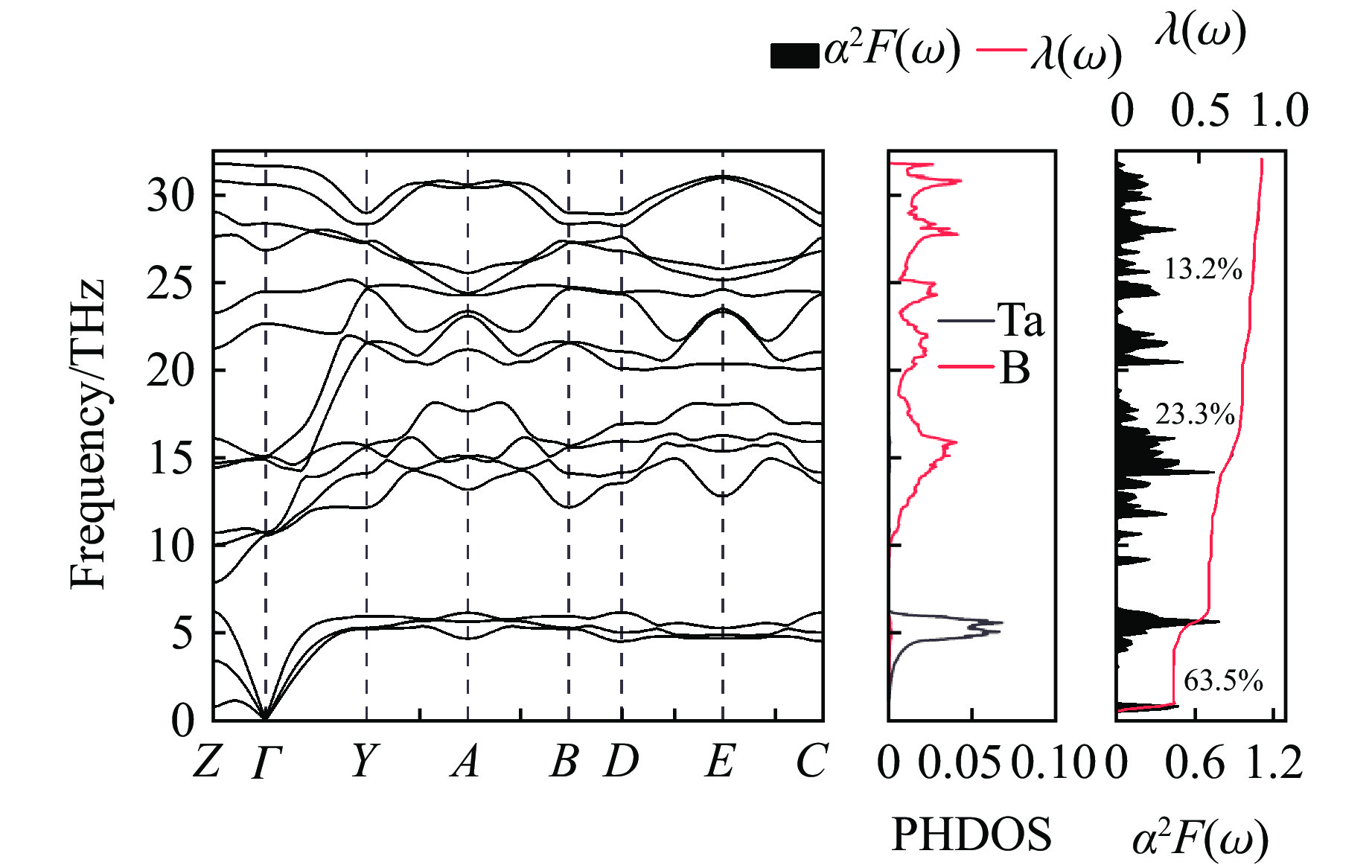
图 5 C2/m-Ⅱ相TaB4在40 GPa时的声子谱、声子态密度和Eliashberg谱函数
Figure 5. Phonon spectrum, phonon density of states, Eliashberg spectral function for C2/m-Ⅱ-TaB4 at 40 GPa
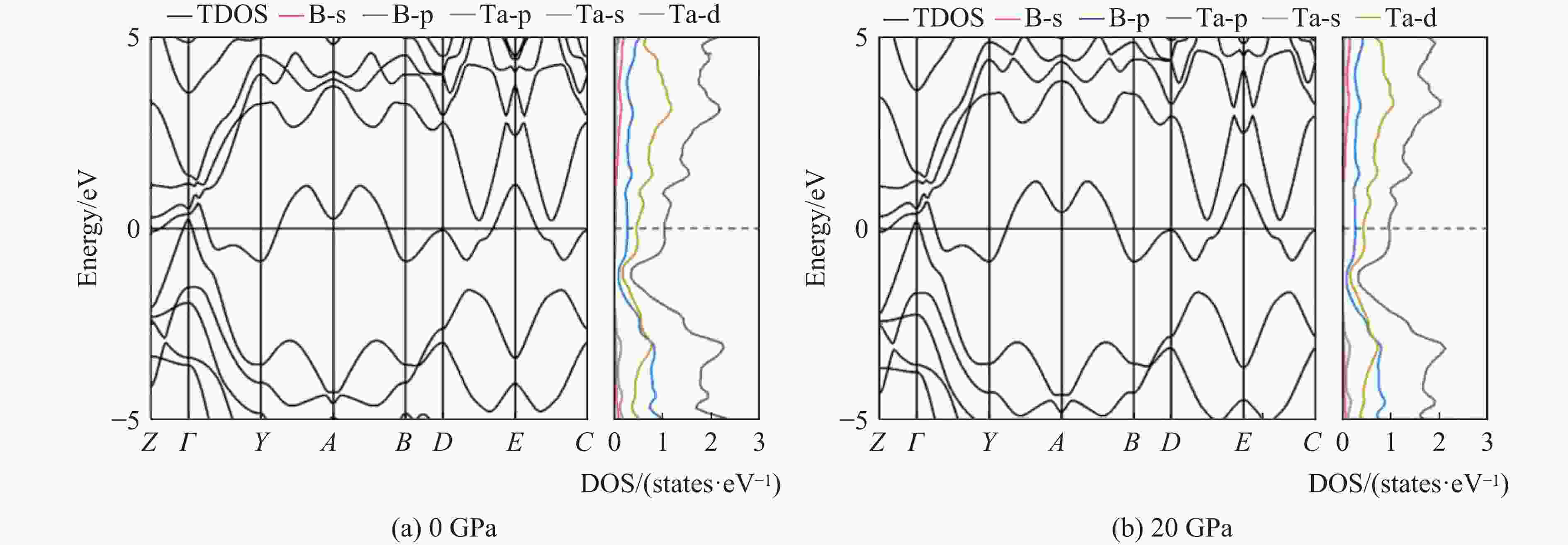
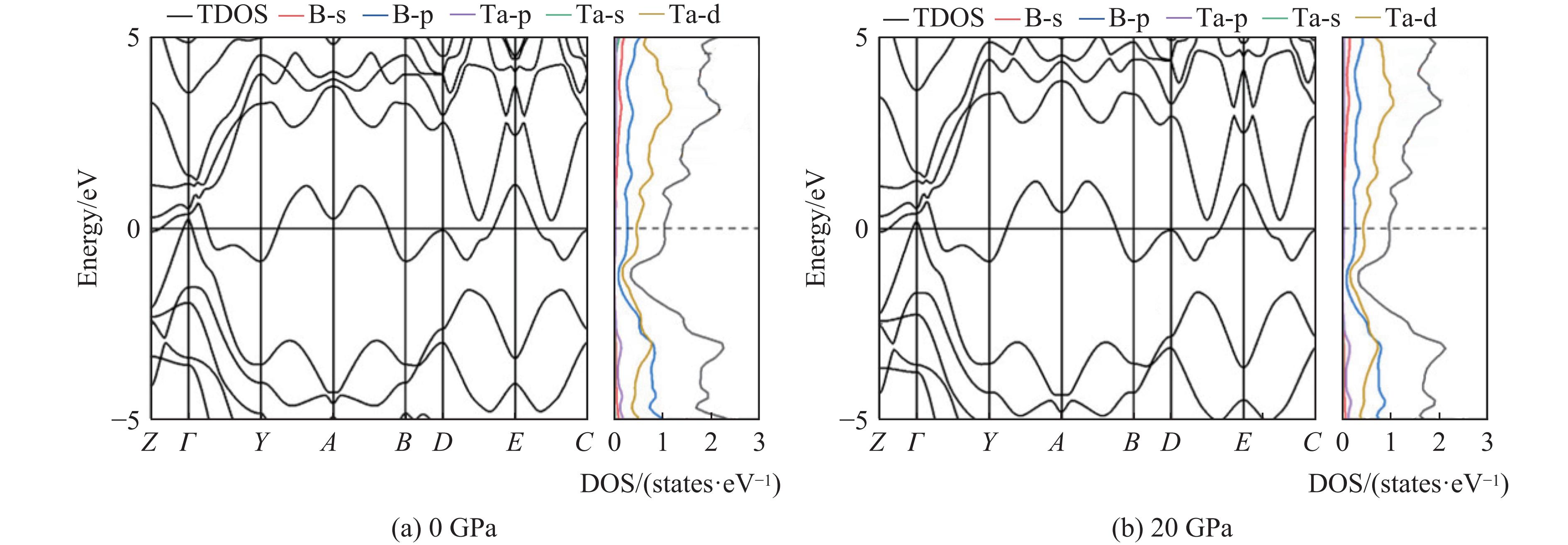
图 6 C2/m-Ⅱ相TaB4在0和20 GPa下的电子能带结构和电子态密度
Figure 6. Electronic band structure and density of states of C2/m-Ⅱ-TaB4 at 0 and 20 GPa
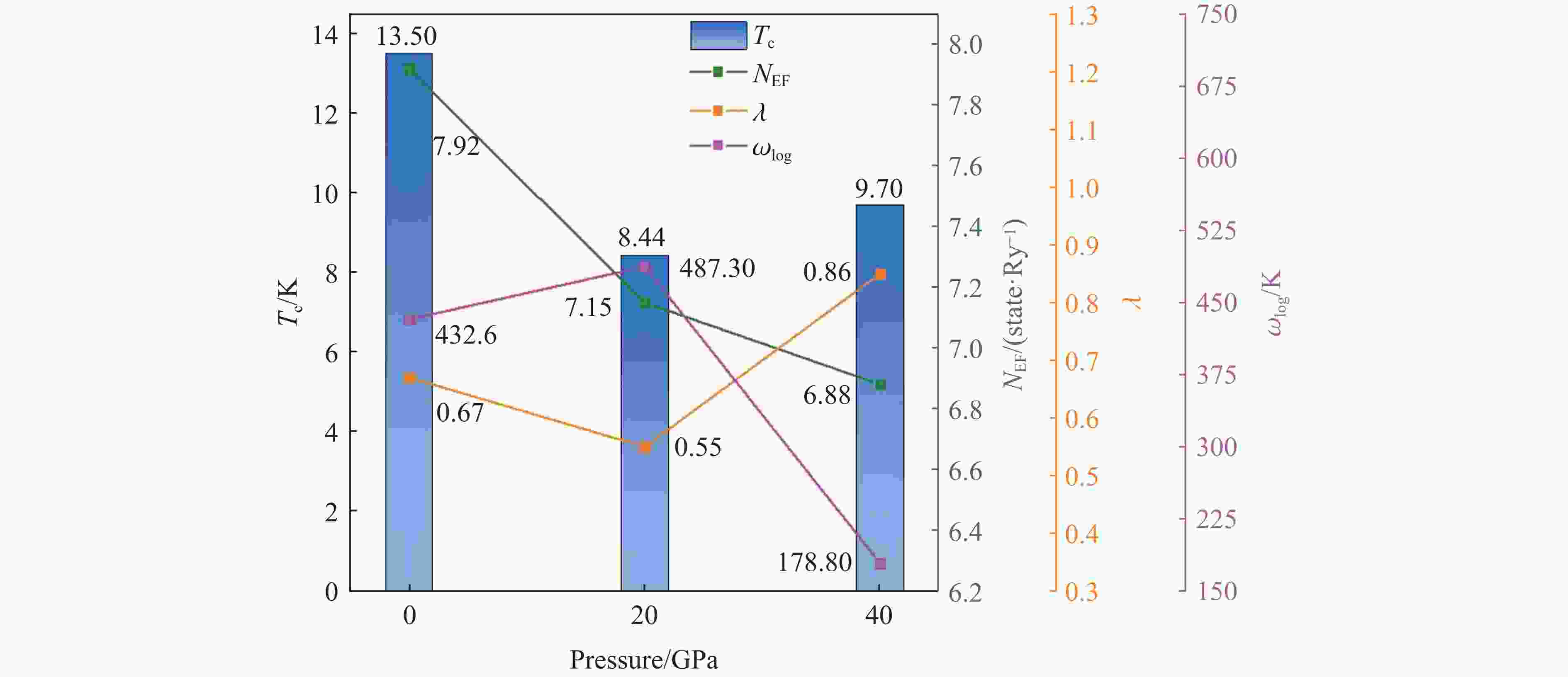
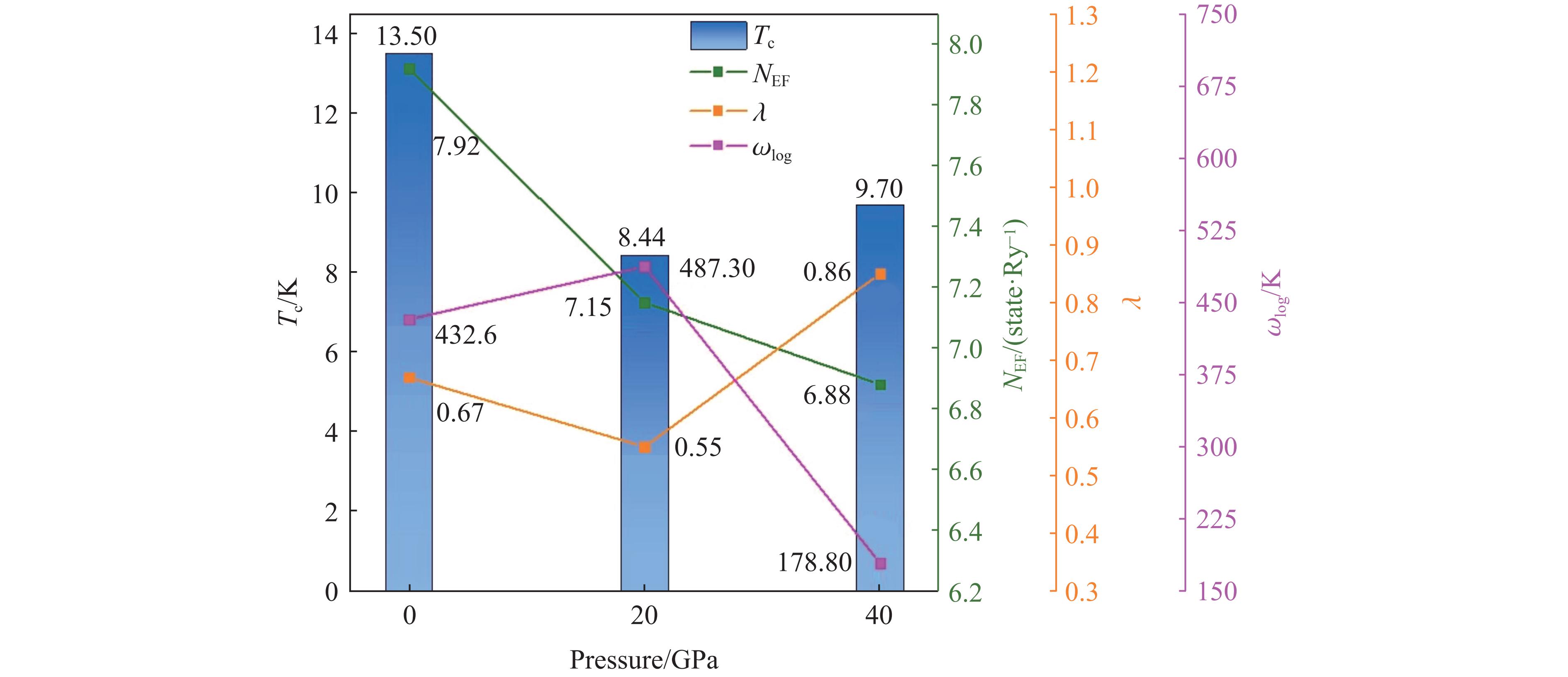
图 7 0~40 GPa压力范围内C2/m-Ⅱ相TaB4的电声耦合常数λ(橙色线)、对数平均声子频率ωlog(紫色线)、费米能级处电子态密度NEF(绿色线)及超导转变温度Tc(蓝色柱)随压力的变化
Figure 7. Pressure dependence of the electron-phonon coupling constant λ (orange line), logarithmic average phonon frequency ωlog (purple line), electronic density of states at the Fermi level NEF (green line), and superconducting transition temperature Tc (blue bars) for C2/m-Ⅱ-TaB4 from 0 to 40 GPa
表 1 TaB4的C2/m-Ⅰ相、C2/m-Ⅱ相和Amm2相在不同压力点下的晶格参数
Table 1. Structural parameters of the C2/m-Ⅰ, C2/m-Ⅱ and Amm2 phases of TaB4 at different pressures
Phase p/GPa Lattice parameters Wyckoff position (fractional) Atoms x y z C2/m-Ⅰ 0 a=8.412 Å
b=3.026 Å
c=6.776 Å
α=γ=90°
β=99.190°Ta (4i) 0.87238 0.50000 0.65741 B (4i) 0.84703 0.50000 0.28370 B (4i) 0.10152 0.50000 0.98266 B (4i) 0.19852 0 0.08029 B (4i) 0.08028 0 0.60435 C2/m-Ⅱ 0 a=3.072 Å
b=5.285 Å
c=5.131 Å
α=γ=90°
β=96.435°Ta (2a) 0 0 0 B (8j) 0.07684 0.32990 0.33232 C2/m-Ⅱ 40 a=2.968 Å
b=5.078 Å
c=4.941 Å
α=γ=90°
β=97.299°Ta (2a) 0 0 0 B (8j) 0.08531 0.32998 0.33576 Amm2 100 a=9.258 Å
b=4.901 Å
c=2.889 Å
α=β=γ=90°B (8f) 0.65853 0.17009 0.90990 B (4d) 0 0.16674 0.91985 B (4e) 0.50000 0.83264 0.19928 Ta (4c) 0.16853 0 0.42010  下载: 导出CSV
表 2 C2/m-Ⅰ相TaB4在常压下的力学常数
Table 2. Mechanical constants of C2/m-Ⅰ-TaB4 under ambient pressure
C11/GPa C22/GPa C33/GPa C44/GPa C55/GPa C66/GPa C12/GPa C13/GPa C23/GPa C15/GPa 695 605 581 29 200 251 107 107 129 −12 C25/GPa C35/GPa C46/GPa G/GPa B/GPa E/GPa v B/G Hv/GPa −58 −20 4 149 282 379 0.28 1.90 14.5
下载: 导出CSV
-
[1] COOPER L N. Microscopic quantum interference in the theory of superconductivity [J]. Science, 1973, 181(4103): 908–916. doi: 10.1126/science.181.4103.908 [2] OGANOV A R. Boron under pressure: phase diagram and novel high-pressure phase [M]//ORLOVSKAYA N, LUGOVY M. Boron Rich Solids: Sensors, Ultra High Temperature Ceramics, Thermoelectrics, Armor. Dordrecht: Springer, 2011: 207–225. [3] PANCHARATNA P D, DAR S H, CHOWDHURY U D, et al. Anatomy of classical boron-boron bonding: overlap and sp dissonance [J]. The Journal of Physical Chemistry A, 2022, 126(20): 3219–3228. doi: 10.1021/acs.jpca.2c01981 [4] SUN D, LIU H, LIANG H, et al. Unravelling the mechanical and superconducting properties in borophene with multicentered bonds [J]. The Journal of Physical Chemistry Letters, 2025, 16(2): 494–502. doi: 10.1021/acs.jpclett.4c03294 [5] NAGAMATSU J, NAKAGAWA N, MURANAKA T, et al. Superconductivity at 39 K in magnesium diboride [J]. Nature, 2001, 410(6824): 63–64. doi: 10.1038/35065039 [6] MURANAKA T, MARGADONNA S, MAURIN I, et al. Vibrational spectroscopy of superconducting MgB2 by neutron inelastic scattering [J]. Journal of the Physical Society of Japan, 2001, 70(6): 1480–1482. doi: 10.1143/JPSJ.70.1480 [7] AN J M, PICKETT W E. Superconductivity of MgB2: covalent bonds driven metallic [J]. Physical Review Letters, 2001, 86(19): 4366–4369. doi: 10.1103/PhysRevLett.86.4366 [8] BOERI L, KORTUS J, ANDERSEN O K. Three-dimensional MgB2-type superconductivity in hole-doped diamond [J]. Physical Review Letters, 2004, 93(23): 237002. doi: 10.1103/PhysRevLett.93.237002 [9] HAN S, YU L C, LIU Y X, et al. Clathrate-like alkali and alkaline-earth metal borides: a new family of superconductors with superior hardness [J]. Advanced Functional Materials, 2023, 33(14): 2213377. doi: 10.1002/adfm.202213377 [10] PEI C Y, ZHANG J F, WANG Q, et al. Pressure-induced superconductivity at 32 K in MoB2 [J]. National Science Review, 2023, 10(5): nwad034. doi: 10.1093/nsr/nwad034 [11] COHEN R W, ABELES B. Superconductivity in granular aluminum films [J]. Physical Review, 1968, 168(2): 444–450. doi: 10.1103/PhysRev.168.444 [12] ZHAO W J, WANG Y X. Structural, mechanical, and electronic properties of TaB2, TaB, IrB2, and IrB: first-principle calculations [J]. Journal of Solid State Chemistry, 2009, 182(10): 2880–2886. doi: 10.1016/j.jssc.2009.07.054 [13] HAVINGA E E, DAMSMA H, HOKKELING P. Compounds and pseudo-binary alloys with the CuAl2(C16)-type structure Ⅰ. preparation and X-ray results [J]. Journal of the Less Common Metals, 1972, 27(2): 169–186. doi: 10.1016/0022-5088(72)90028-8 [14] LIU C, GU X L, ZHANG K, et al. Superhard metallic compound TaB2 via crystal orientation resolved strain stiffening [J]. Physical Review B, 2022, 105(2): 024105. doi: 10.1103/PhysRevB.105.024105 [15] CHU B H, LI D, BAO K, et al. Ultrahard boron-rich tantalum boride: monoclinic TaB4 [J]. Journal of Alloys and Compounds, 2014, 617: 660–664. doi: 10.1016/j.jallcom.2014.06.185 [16] CHEN H H, BI Y, CHENG Y, et al. Elastic stability and electronic structure of tantalum boride investigated via first-principles density functional calculations [J]. Journal of Physics and Chemistry of Solids, 2012, 73(10): 1197–1202. doi: 10.1016/j.jpcs.2012.05.007 [17] WEI S L, LI D, LYU Y Z, et al. Ground state structures of tantalum tetraboride and triboride: an ab initio study [J]. Physical Chemistry Chemical Physics, 2016, 18(27): 18074–18080. doi: 10.1039/C6CP01649A [18] LONG H D, GUAN S X, ZHANG Z G, et al. Mechanical, thermal properties, and extreme phase stability of high-entropy diborides (V0.2Nb0.2Ta0.2Cr0.2W0.2)B2 [J]. Inorganic Chemistry, 2024, 63(28): 12721–12729. doi: 10.1021/acs.inorgchem.4c00016 [19] PETERMÜLLER B, NEUN C, WURST K, et al. High-pressure synthesis of β-Ir4B5 and determination of the compressibility of various iridium borides [J]. Inorganic Chemistry, 2018, 57(16): 10341–10351. doi: 10.1021/acs.inorgchem.8b01541 [20] WANG Y C, LYU J, ZHU L, et al. CALYPSO: a method for crystal structure prediction [J]. Computer Physics Communications, 2012, 183(10): 2063–2070. doi: 10.1016/j.cpc.2012.05.008 [21] WANG Y C, LYU J, ZHU L, et al. Crystal structure prediction via particle-swarm optimization [J]. Physical Review B, 2010, 82(9): 094116. doi: 10.1103/PhysRevB.82.094116 [22] KRESSE G, FURTHMÜLLER J. Efficient iterative schemes for ab initio total-energy calculations using a plane-wave basis set [J]. Physical Review B, 1996, 54(16): 11169–11186. doi: 10.1103/PhysRevB.54.11169 [23] PERDEW J P, BURKE K, ERNZERHOF M. Generalized gradient approximation made simple [J]. Physical Review Letters, 1996, 77(18): 3865–3868. doi: 10.1103/PhysRevLett.77.3865 [24] KRESSE G, JOUBERT D. From ultrasoft pseudopotentials to the projector augmented-wave method [J]. Physical Review B, 1999, 59(3): 1758–1775. doi: 10.1103/PhysRevB.59.1758 [25] MONKHORST H J, PACK J D. Special points for Brillouin-zone integrations [J]. Physical Review B, 1976, 13(12): 5188–5192. doi: 10.1103/PhysRevB.13.5188 [26] TOGO A, OBA F, TANAKA I. First-principles calculations of the ferroelastic transition between rutile-type and CaCl2-type SiO2 at high pressures [J]. Physical Review B, 2008, 78(13): 134106. doi: 10.1103/PhysRevB.78.134106 [27] GIANNOZZI P, BARONI S, BONINI N, et al. QUANTUM ESPRESSO: a modular and open-source software project for quantum simulations of materials [J]. Journal of Physics: Condensed Matter, 2009, 21(39): 395502. doi: 10.1088/0953-8984/21/39/395502 [28] ALLEN P B, DYNES R C. Transition temperature of strong-coupled superconductors reanalyzed [J]. Physical Review B, 1975, 12(3): 905–922. doi: 10.1103/PhysRevB.12.905 [29] CHEN X Q, NIU H Y, LI D Z, et al. Modeling hardness of polycrystalline materials and bulk metallic glasses [J]. Intermetallics, 2011, 19(9): 1275–1281. doi: 10.1016/j.intermet.2011.03.026 -

 下载:

计量
- 文章访问数: 64
- HTML全文浏览量: 17
- PDF下载量: 5
