





Advances in Impact Discharge Theory and Dynamic Phase Transition Mechanism in Ferroelectric Ceramics
-
摘要: 铁电陶瓷凭借其高剩余极化与冲击诱导相变去极化特性,成为脉冲功率器件的核心介质。系统评述了自20世纪50年代以来,特别是近20年间,钙钛矿结构铁电陶瓷(涵盖锆钛酸铅基系列及钛酸铋钠基、铌酸钾钠基、铁酸铋基、铌酸银基等无铅体系)在冲击波加载下的电响应规律、理论模型与相变机制研究进展。在材料体系演进层面,梳理了从传统高性能铅基体系主导,向兼具高能量/高功率密度与环保优势的新型无铅体系转型的脉络;在理论模型层面,剖析了铁电陶瓷放电波形随冲击压力变化的共性变化趋势,总结了从恒流源模型、相变动力学模型到弛豫模型的发展轨迹,重点评述了涵盖全压力范围的“压电-铁电”双机制放电理论模型及冲击加载下铁电材料状态方程的构建逻辑;在物理机制层面,重点论述了动态冲击与静态高压加载下相变行为的本质差异,阐释了单轴应力降低相变势垒与多晶取向统计效应导致相变窗口展宽的微观机理。最后,指出了当前压电模型仍限于唯象描述、存在多尺度非平衡模拟不足等局限,并展望了机器学习势分子动力学与织构工程调控等发展方向。Abstract: Ferroelectric ceramics have become a core medium for pulsed power devices owing to their high remanent polarization and shock-induced depolarization via structural phase transitions. This review systematically summarizes the research progress on the electrical response behaviors, theoretical models, and phase transition mechanisms of perovskite ferroelectric ceramics under shock wave loading from the 1950s to the present day, particularly over the past two decades. The reviewed material systems include the lead zirconate titanate family and lead-free systems such as bismuth sodium titanate based, potassium sodium niobate based, bismuth ferrite based, and silver niobate based systems. Regarding material evolution, the transition from traditional high-performance lead-based dominance to novel lead-free systems featuring high energy density, high power density, and environmental compatibility is outlined. In terms of theoretical models, the broad evolution trend of discharge waveforms with shock pressure is analyzed, and the development from the constant-current source model, phase transition kinetic model, to the relaxation model is summarized, with a focused review on the “piezoelectric-ferroelectric” dual-mechanism discharge framework and the construction logic of the shock ferroelectric equation of state covering the full pressure range. Concerning physical mechanisms, the essential differences in phase transition behaviors between dynamic shock and static high-pressure loading are emphasized, and the microscopic mechanisms are elucidated, specifically the lowering of phase transition barriers by uniaxial stress and the broadening of the transition window arising from polycrystalline orientation statistics. Finally, current limitations such as the phenomenological nature of piezoelectric models and the inadequacy of multiscale non-equilibrium simulations are identified, and future directions including machine-learning-potential molecular dynamics and texture engineering are discussed.
-
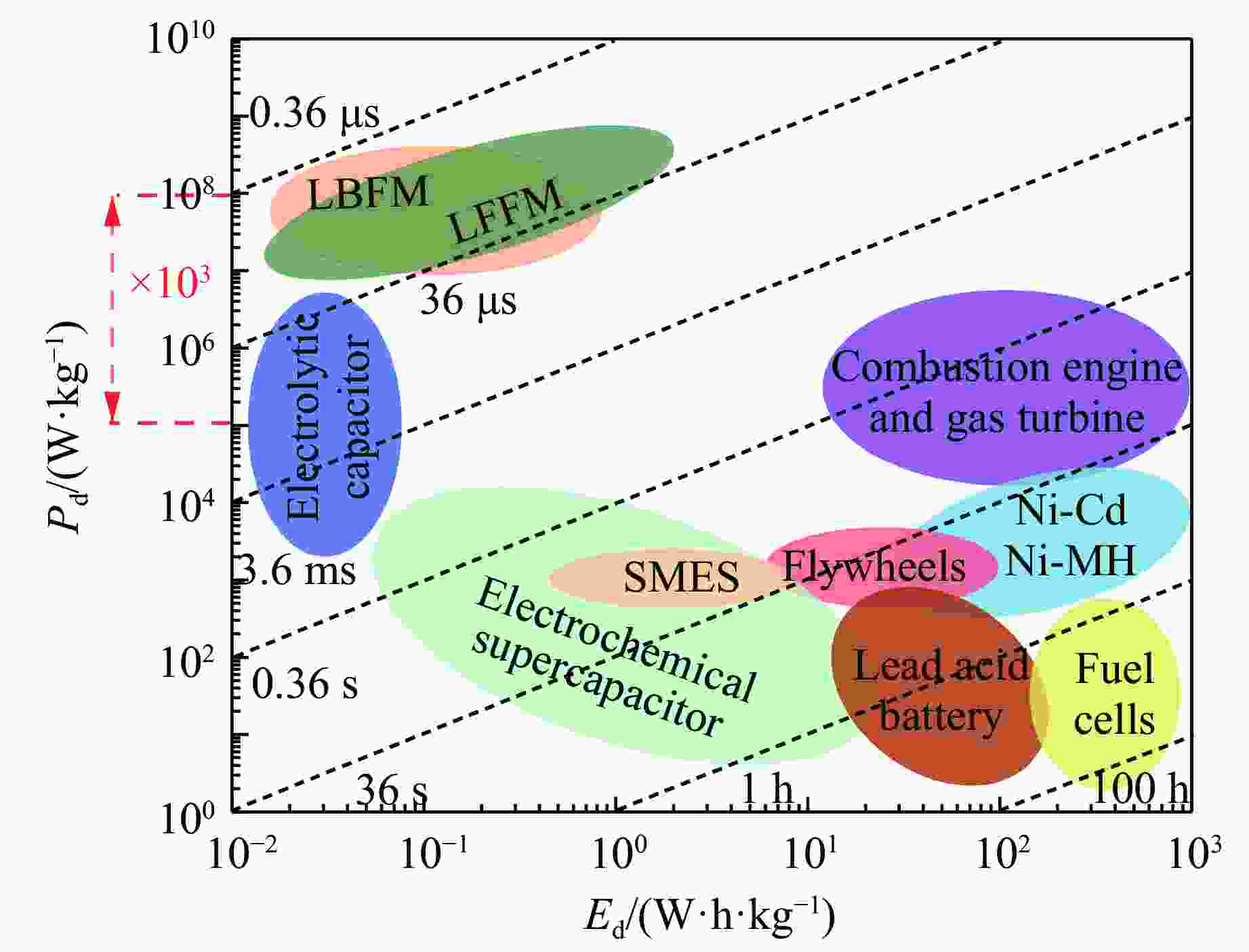
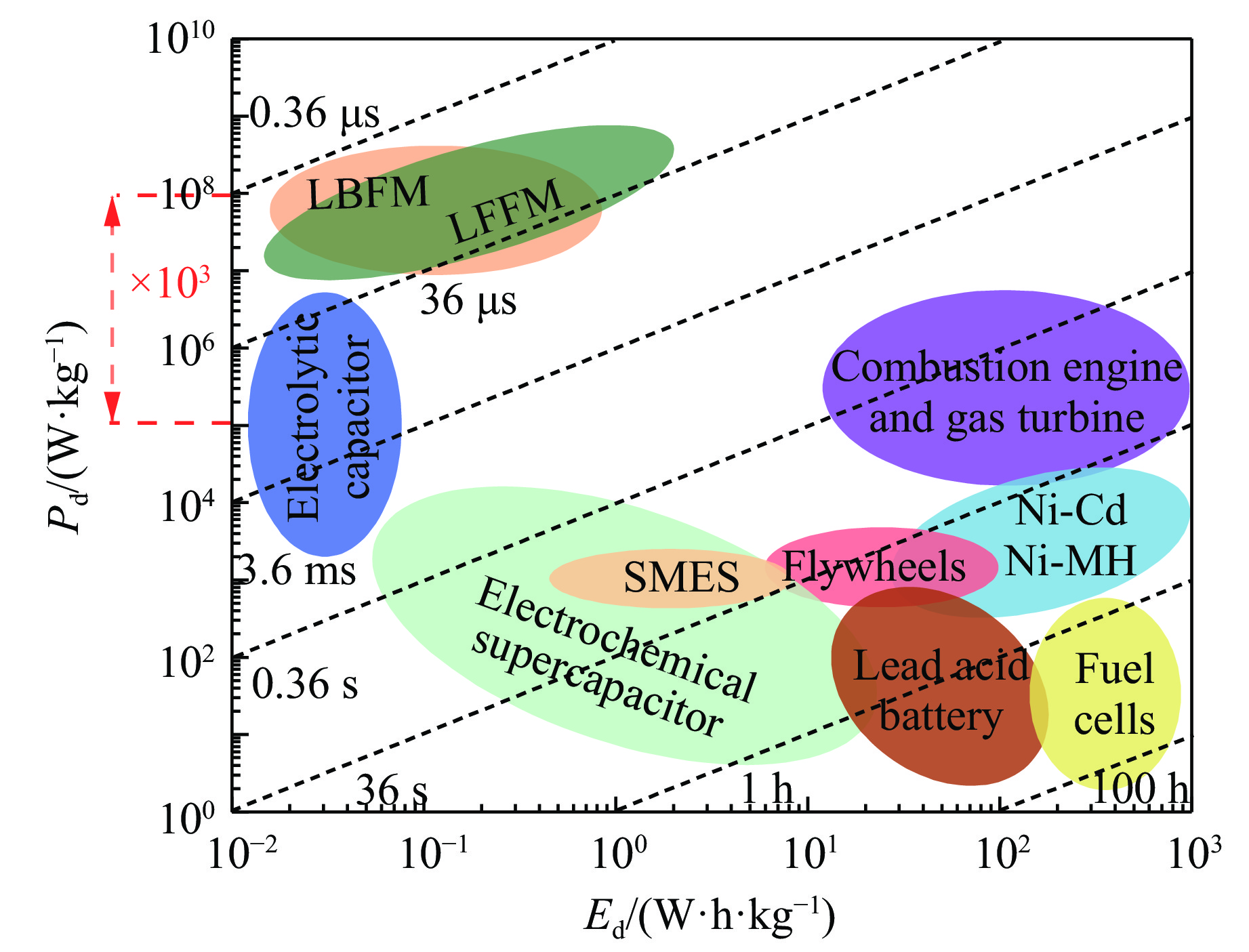
图 1 不同储能器件的功率密度(Pd)与能量密度(Ed)的对比(Ragone图,其中铅基铁电陶瓷与无铅铁电陶瓷的冲击功率源具有最高的功率密度)
Figure 1. Comparison of power density (Pd) and energy density (Ed) for different energy storage devices (Ragone plot. The shock power sources based on lead-based ferroelectric materials (LBFM) and lead-free ferroelectric materials (LFFM) exhibit the highest power densities.)
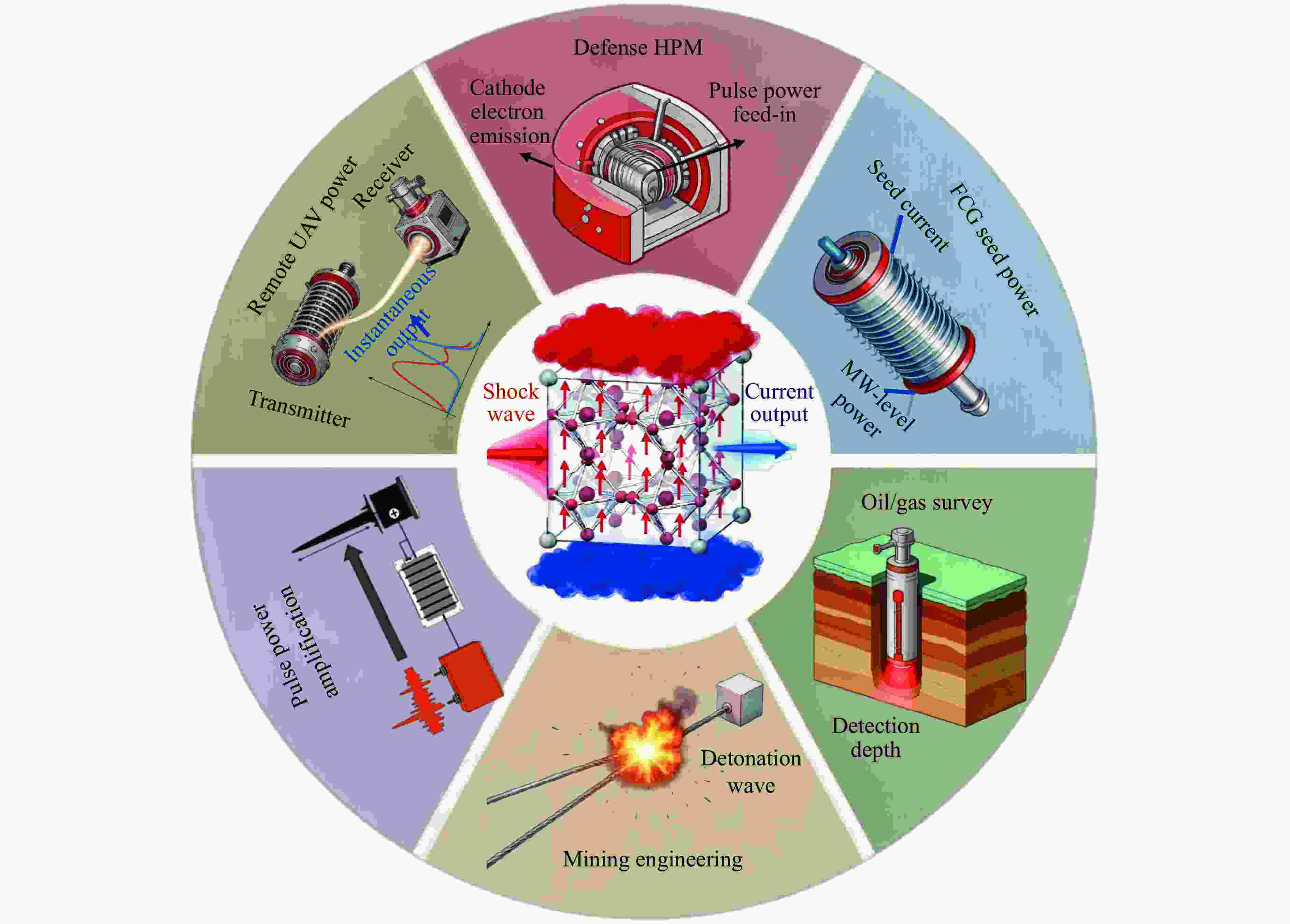
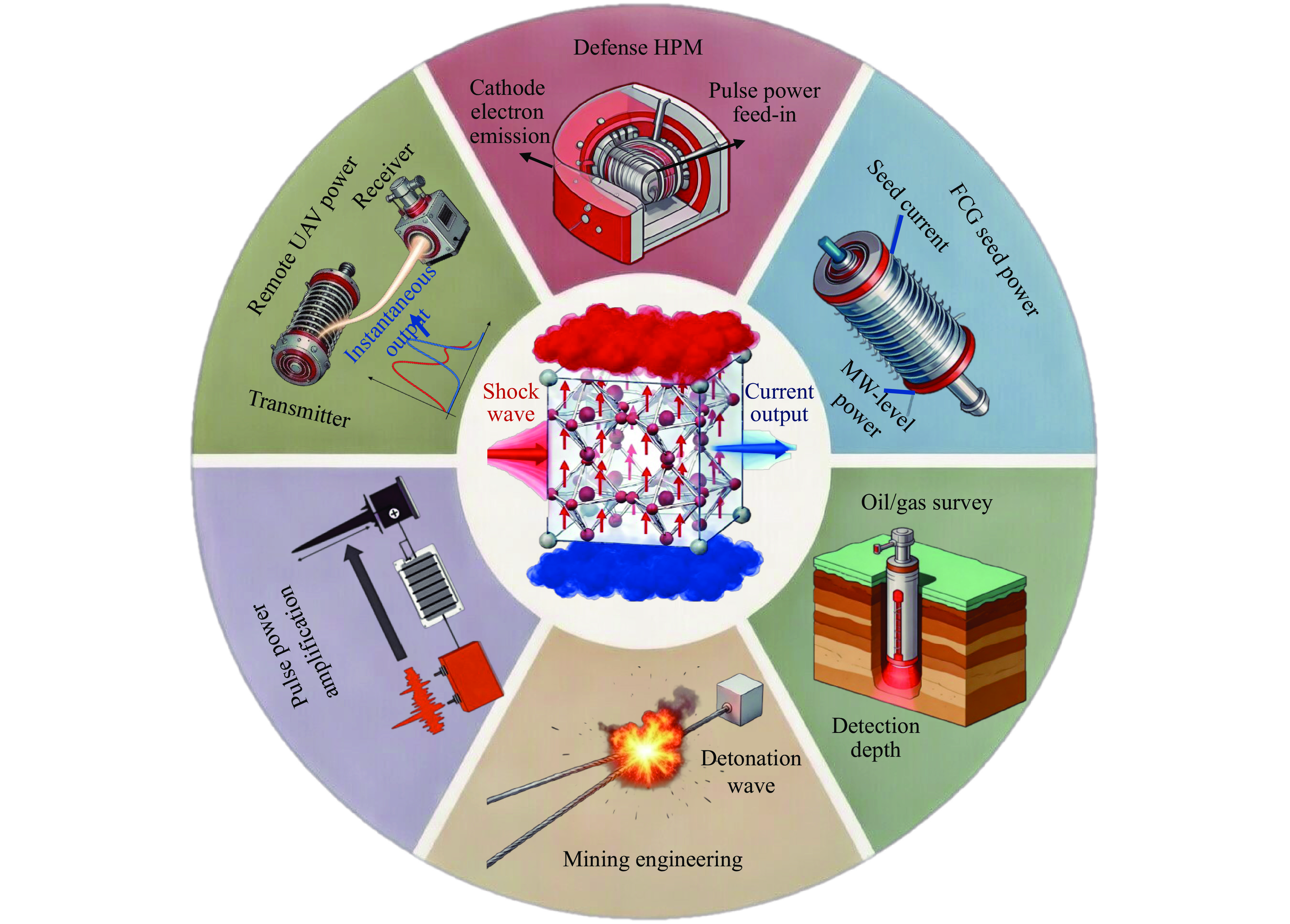
图 2 铁电脉冲电源系统的典型应用场景
Figure 2. Typical application scenarios of ferroelectric pulsed power systems
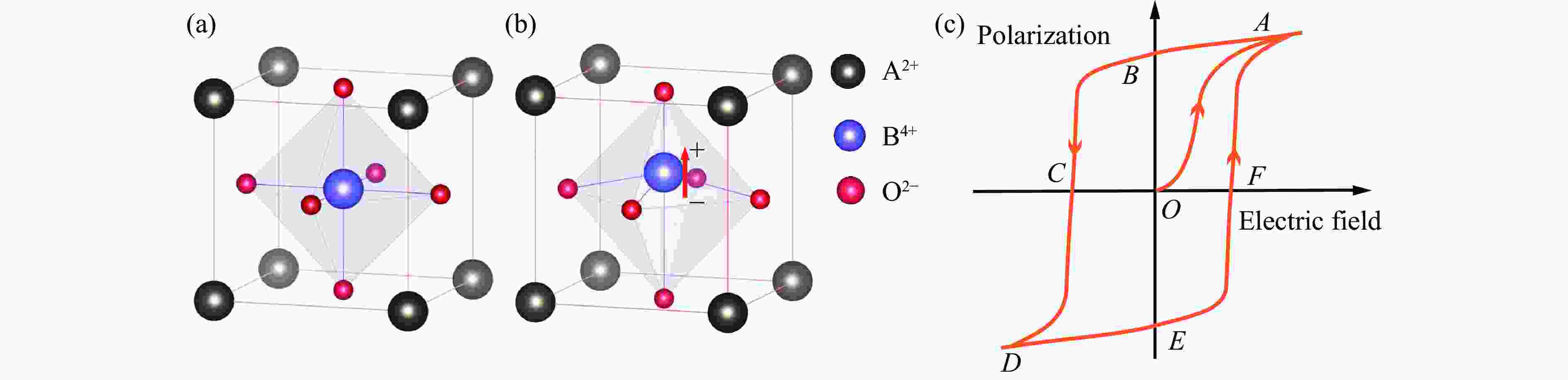
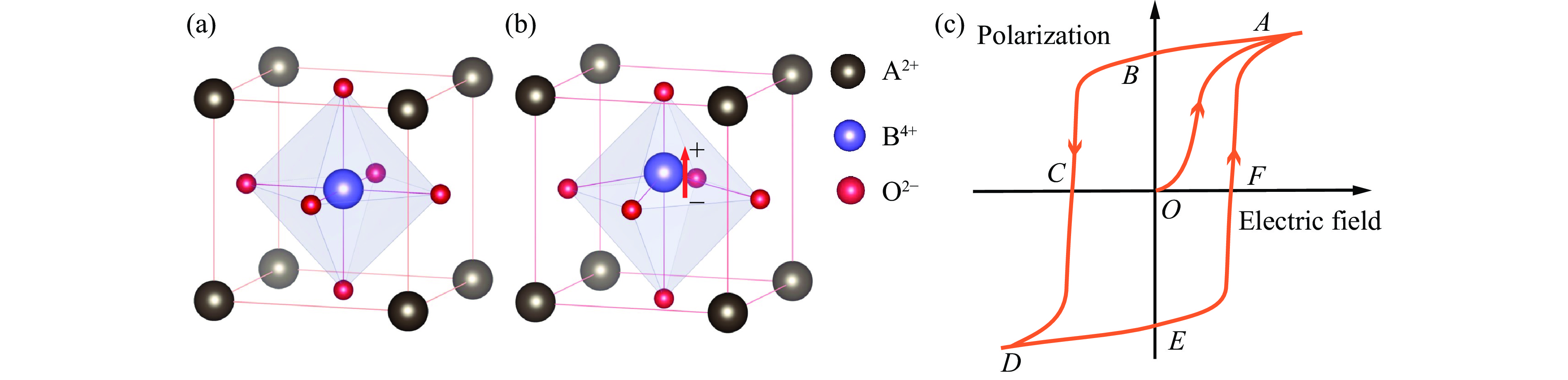
图 3 典型ABO3钙钛矿的晶体结构(a)及自发极化(b)示意图,以及铁电材料的宏观电滞回线示意图(c)
Figure 3. Schematic diagrams of the typical ABO3 perovskite crystal structure (a) and spontaneous polarization (b); schematic diagram of the macroscopic ferroelectric hysteresis loop (c)
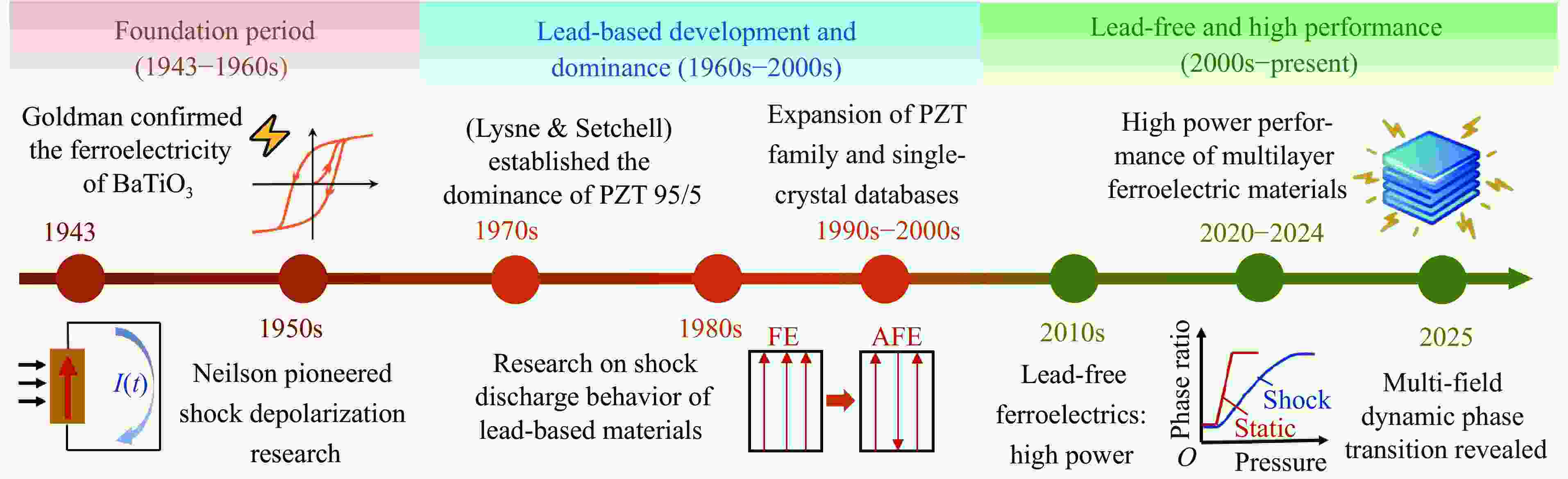
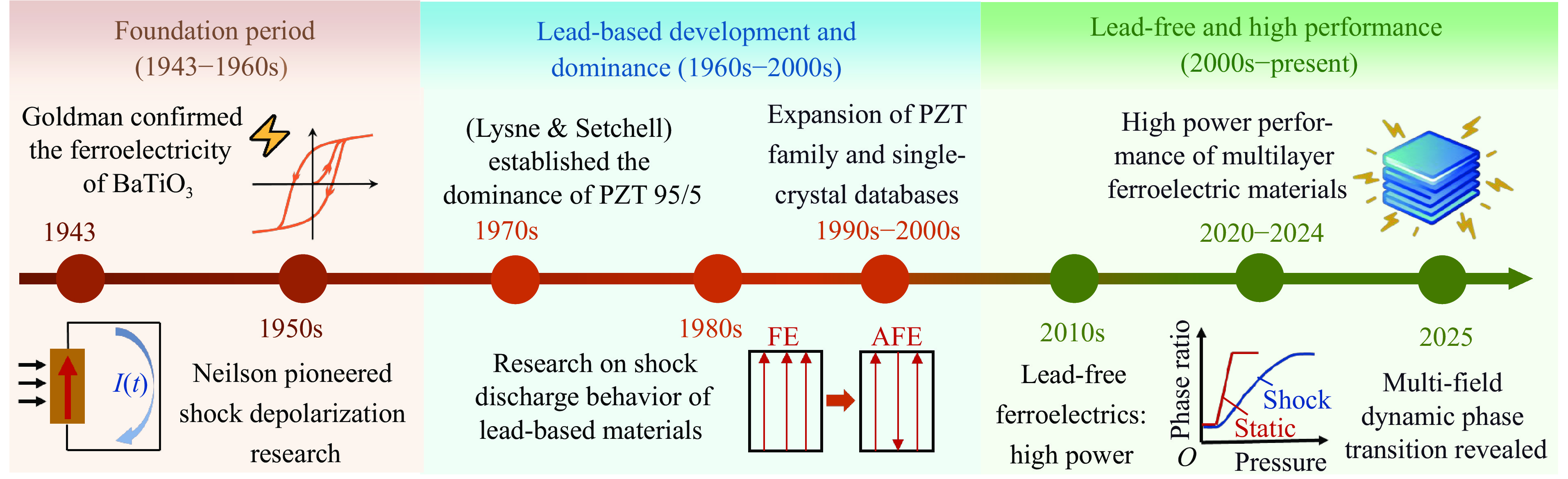
图 4 冲击波加载下铁电材料研究的发展历程与关键节点示意图
Figure 4. Schematic diagram of the development history and key milestones of ferroelectric materials research under shock wave loading
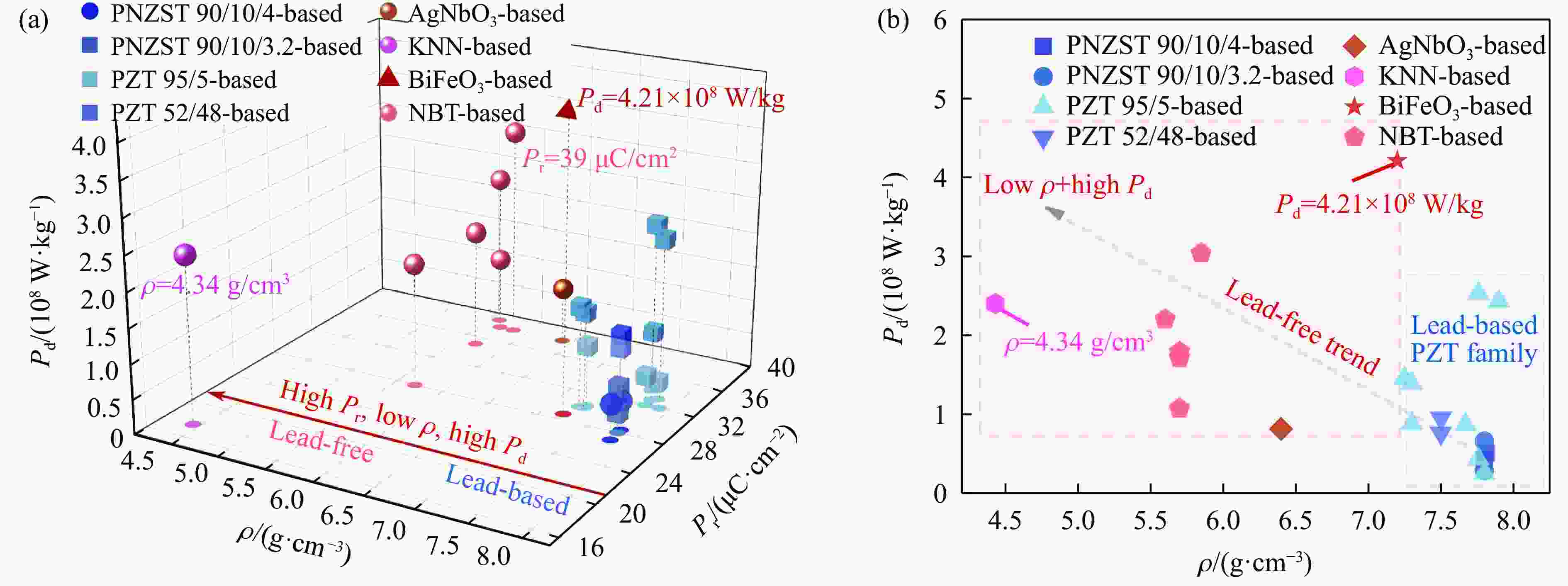
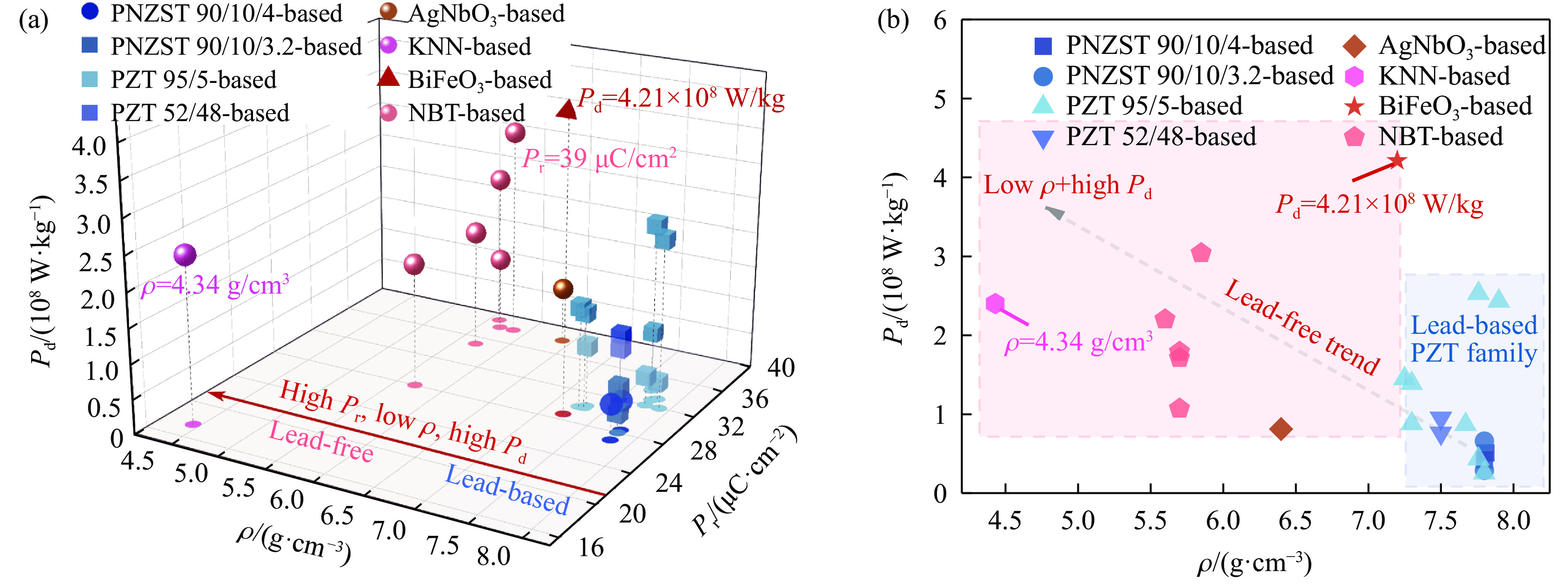
图 5 经典铁电材料的关键性能参数对比:(a) 密度、功率密度与剩余极化强度的关系,(b) 密度与功率密度的二维关系
Figure 5. Comparison of key performance parameters for classical ferroelectric materials: (a) relationship among density, power density and remanent polarization; (b) two-dimensional relationship between density and power density
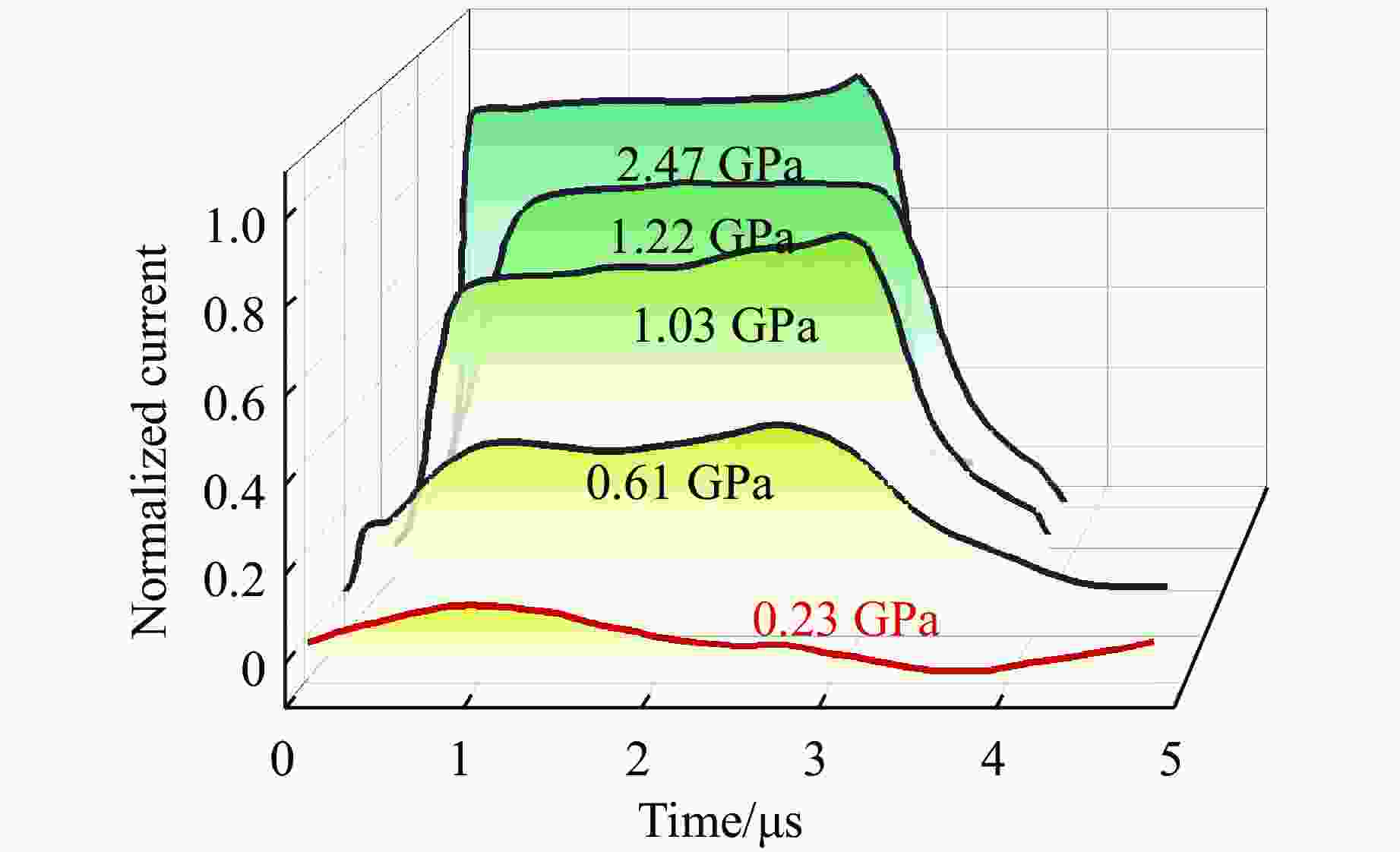
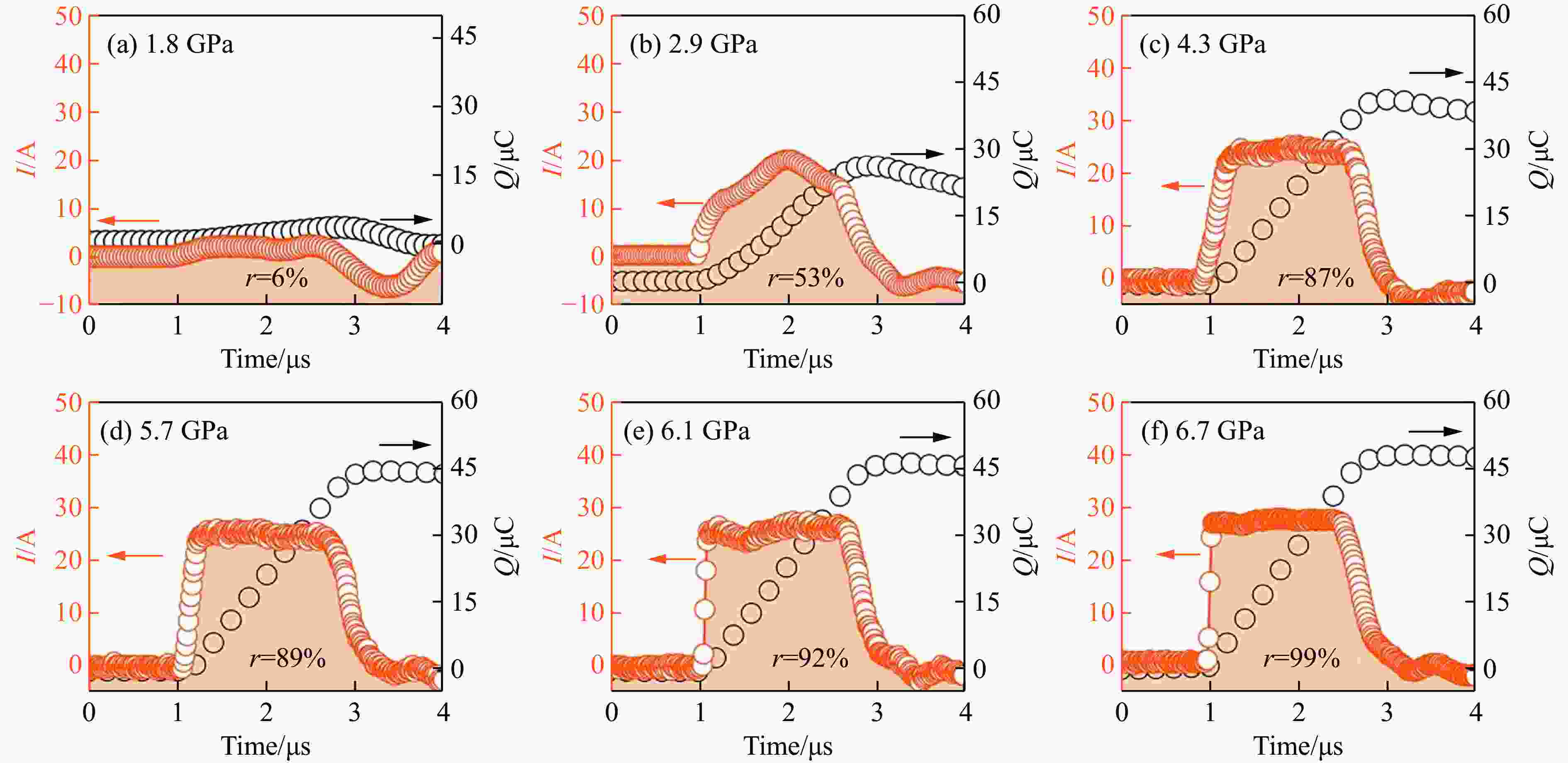
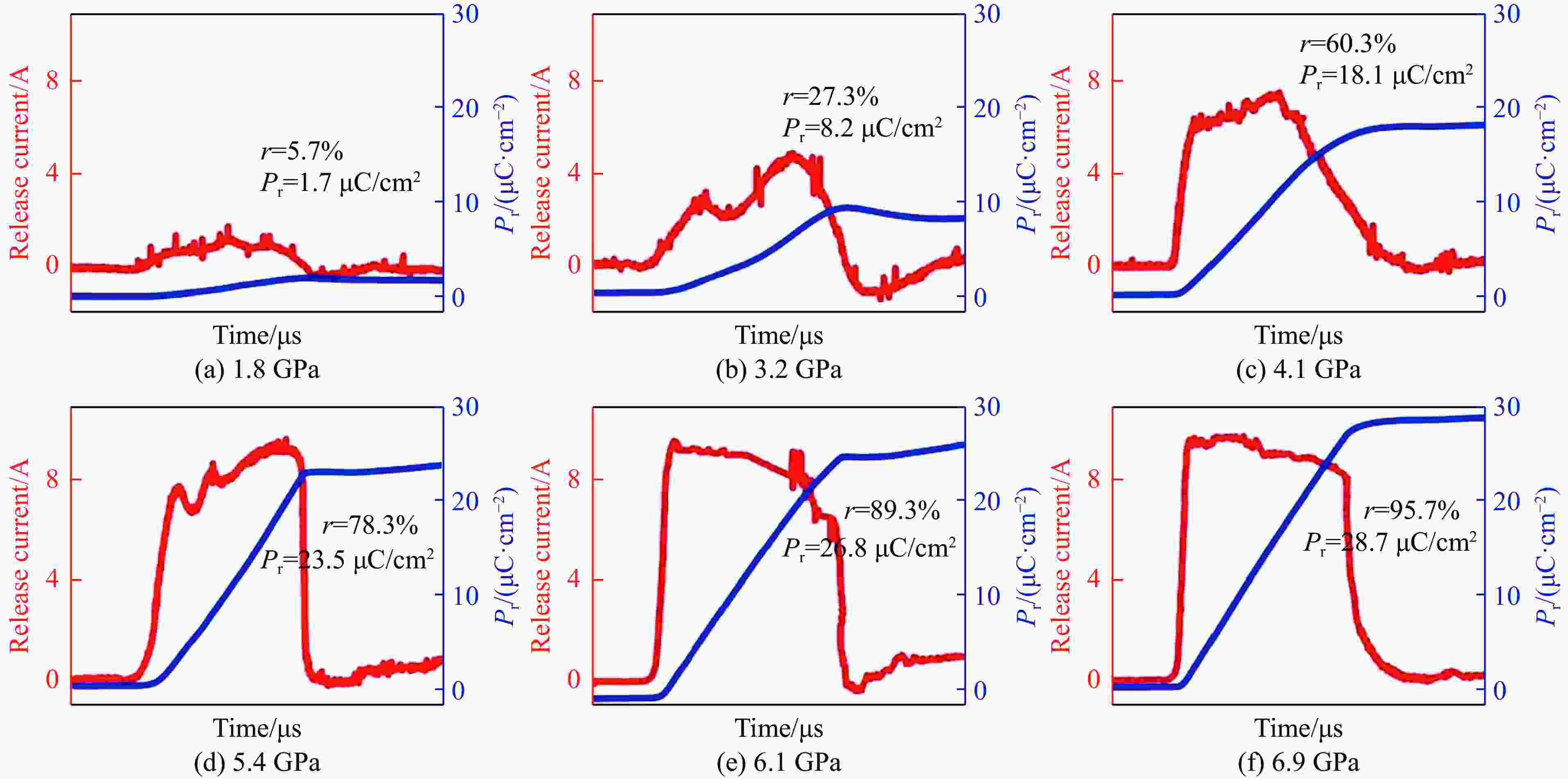
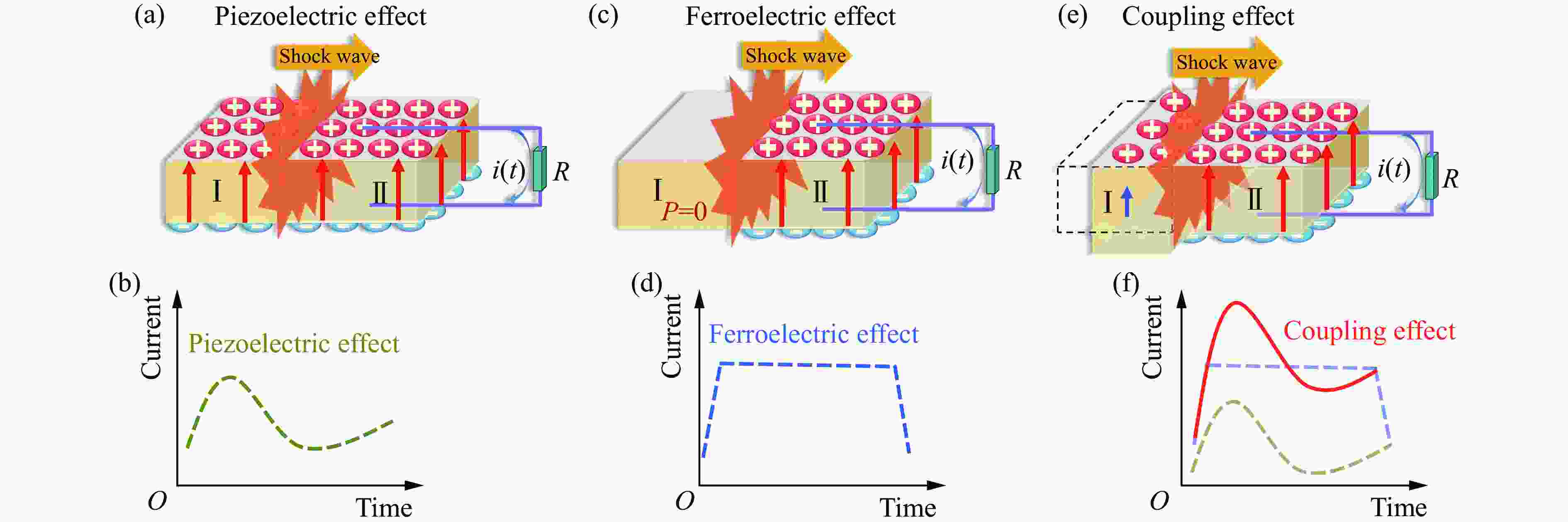
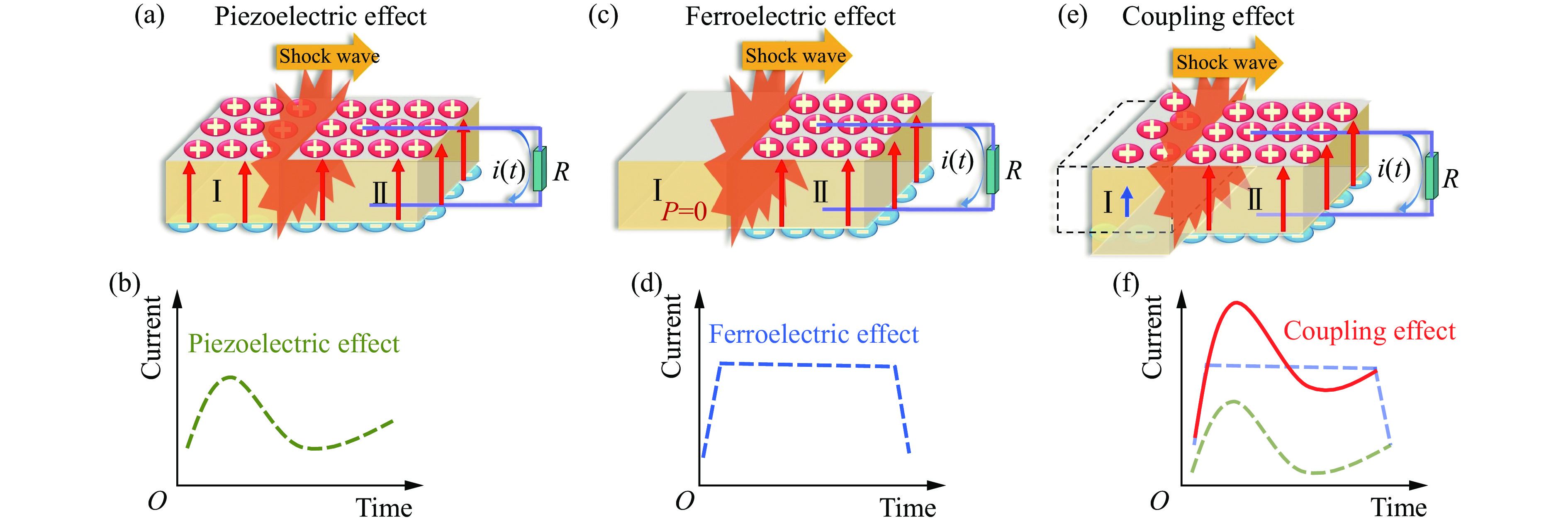
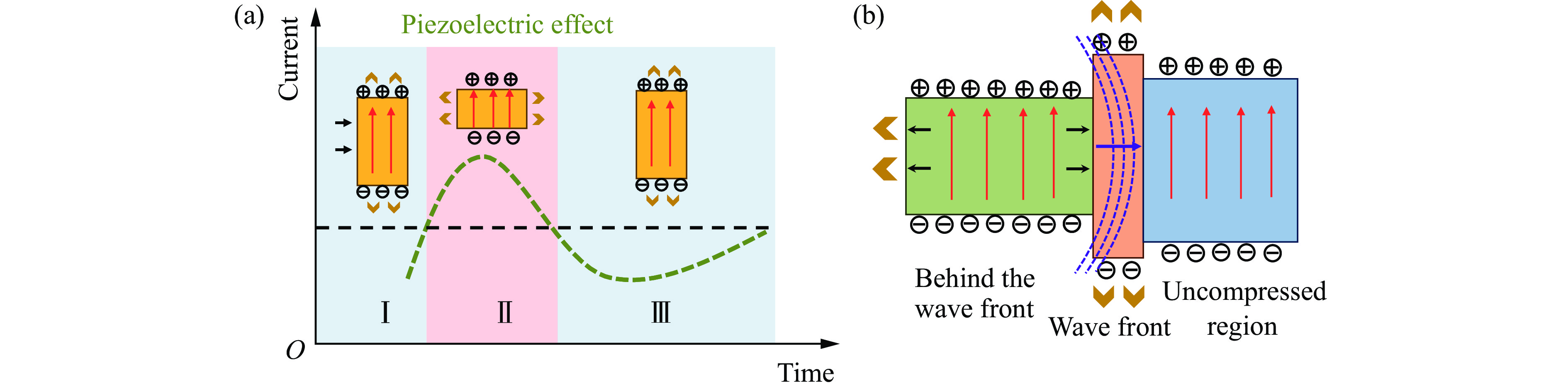
图 9 冲击压缩下的压电效应和铁电效应以及经典的电响应
Figure 9. Piezoelectric and ferroelectric effects under shock compression and the corresponding classical electrical responses
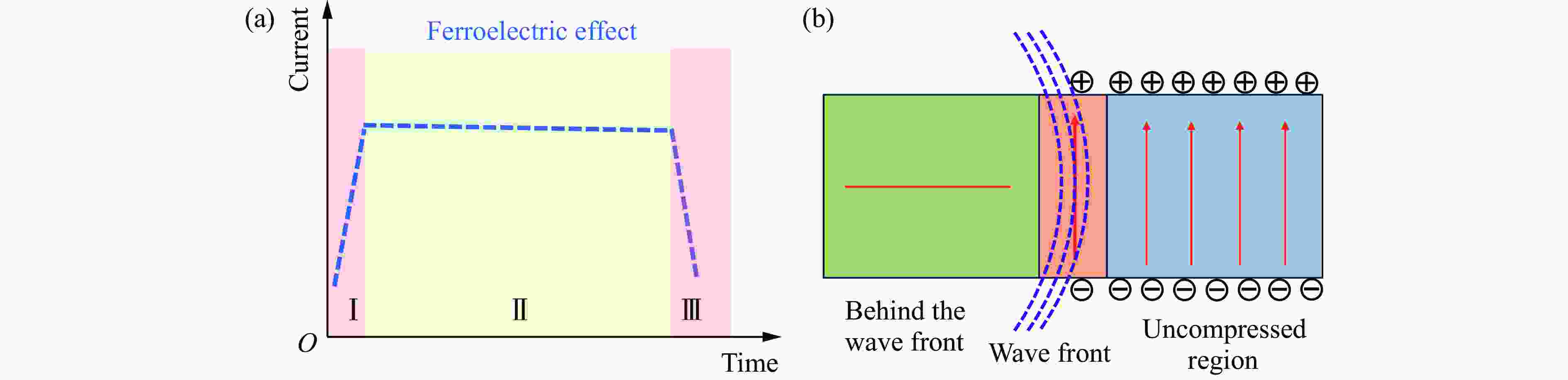
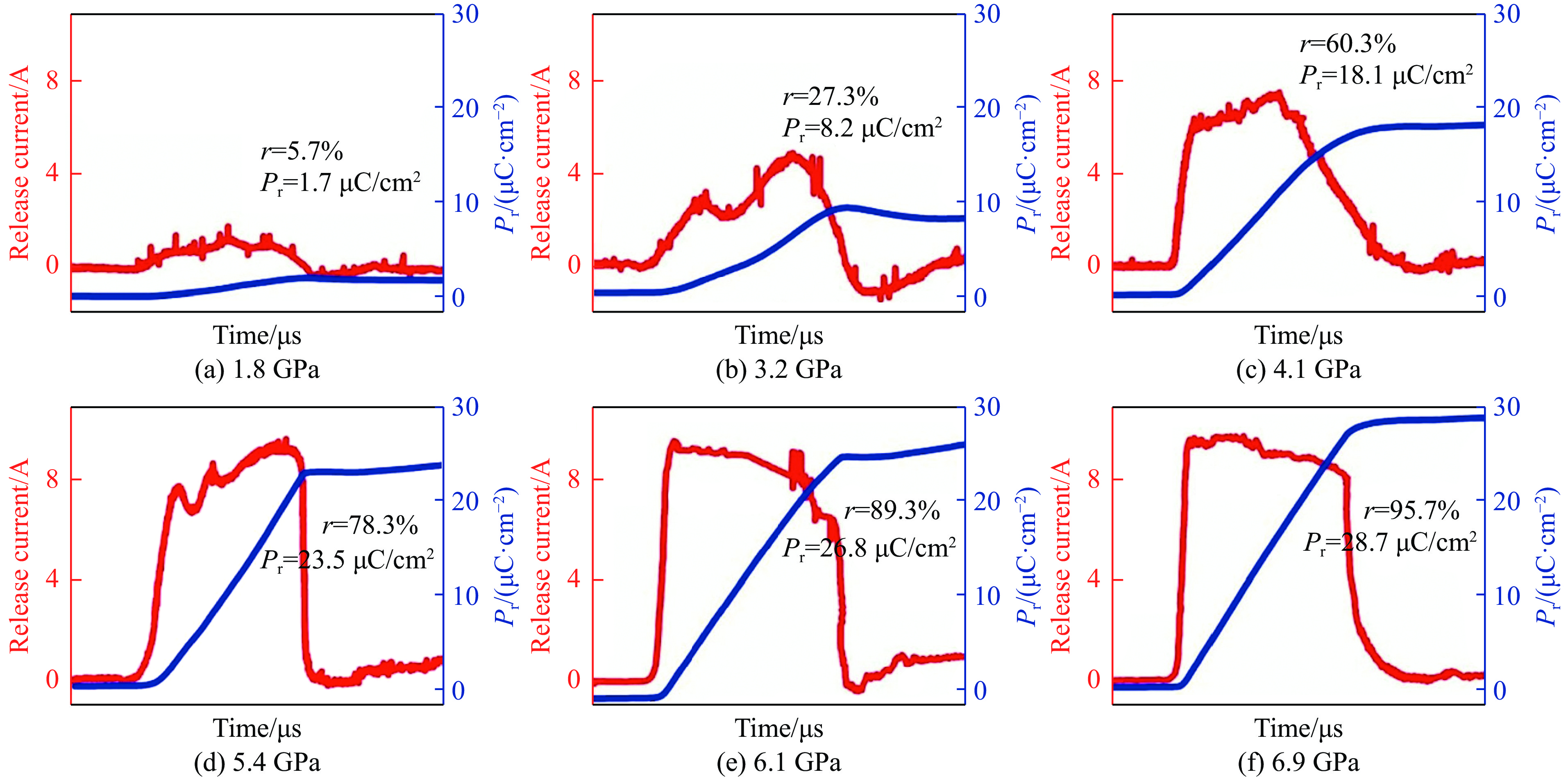
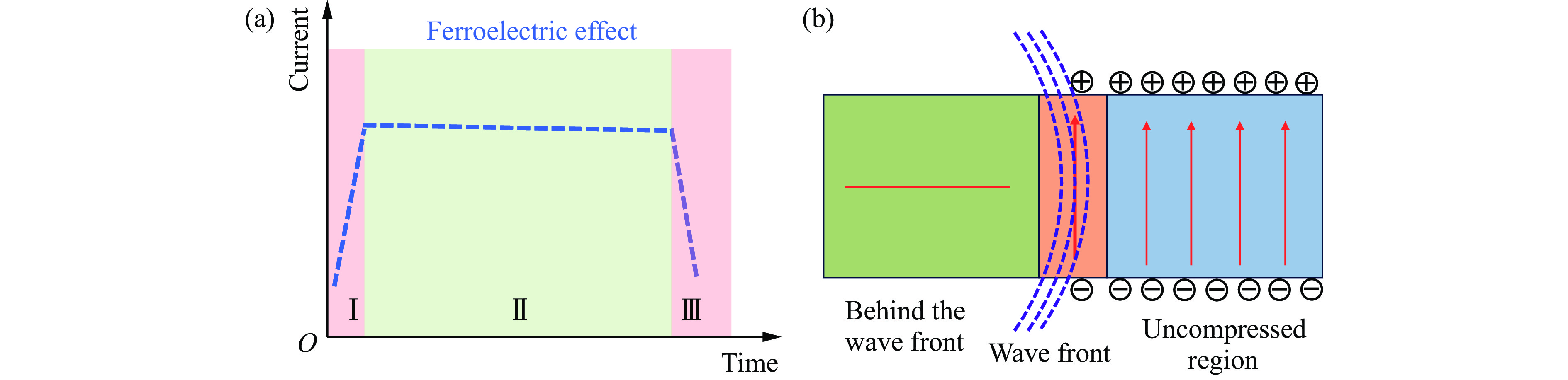
图 10 基于铁电效应的铁电陶瓷冲击电响应示意图
Figure 10. Schematic diagrams of the impact electrical response of ferroelectric ceramics based on the ferroelectric effect
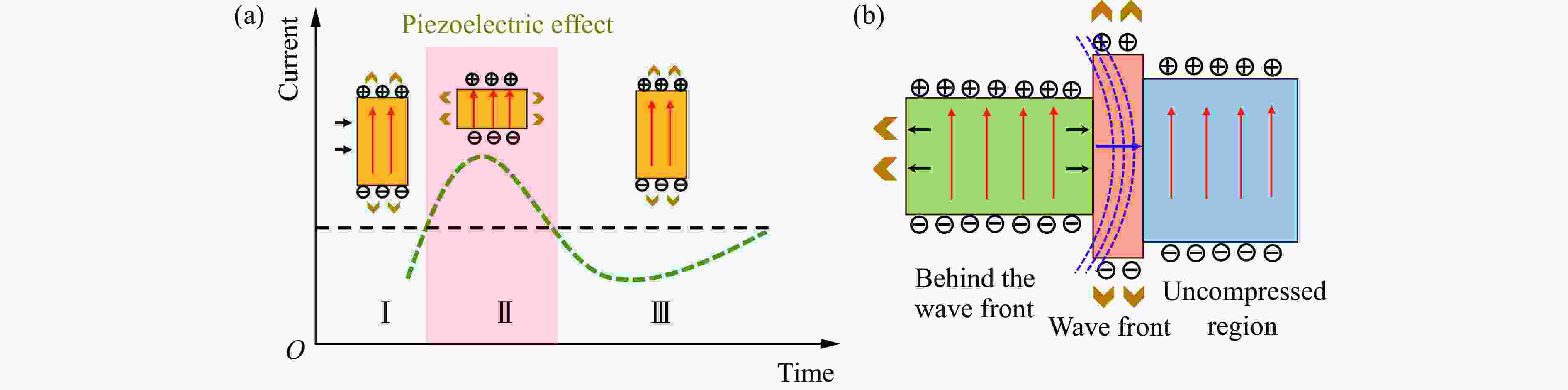
图 11 基于铁电效应的铁电陶瓷冲击电响应示意图
Figure 11. Schematic diagrams of the impact electrical response of ferroelectric ceramics based on the ferroelectric effect
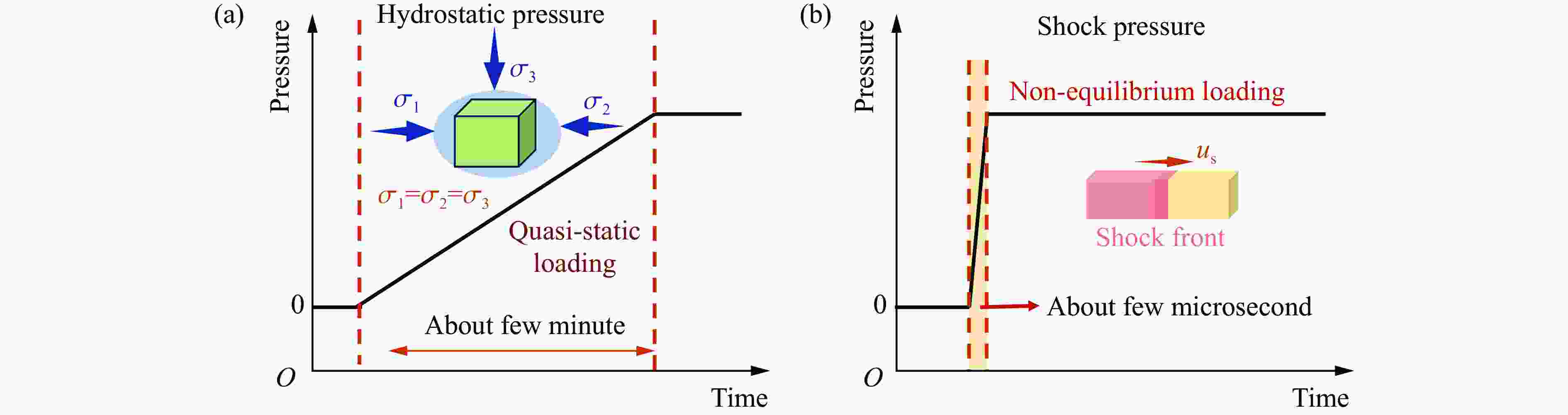
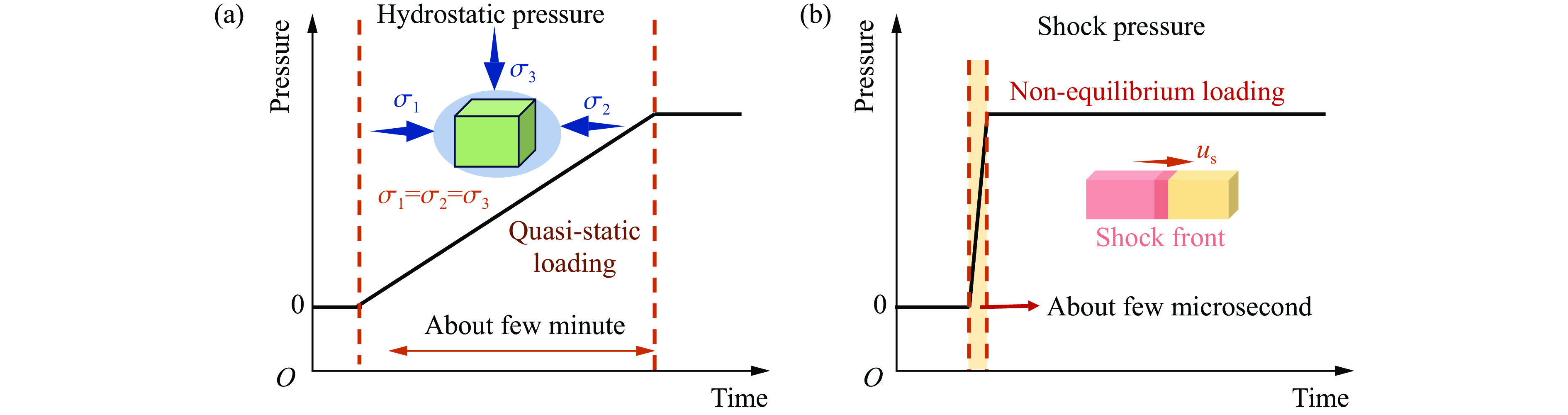
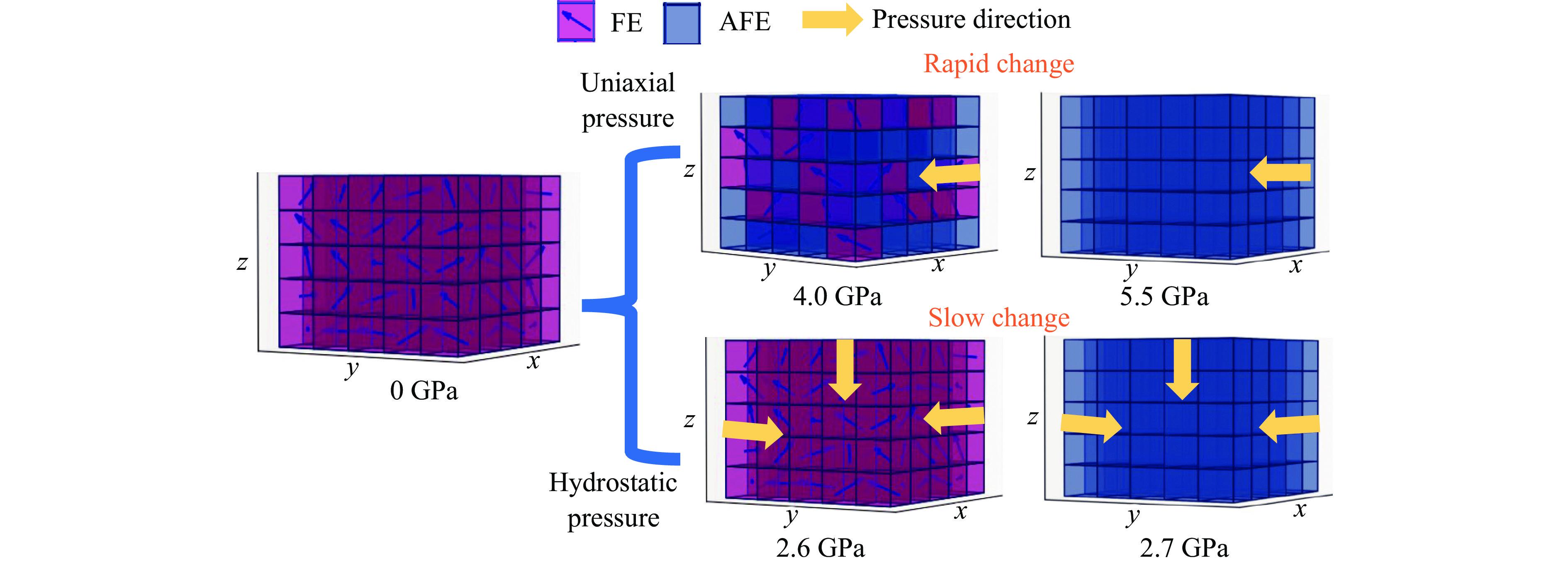
图 12 (a) 静态DAC的准静水压加载与 (b) 动态冲击波的单轴应变非平衡加载的受力状态对比
Figure 12. Comparison of loading states: (a) quasi-hydrostatic loading in a static DAC; (b) uniaxial strain non-equilibrium loading by dynamic shock waves
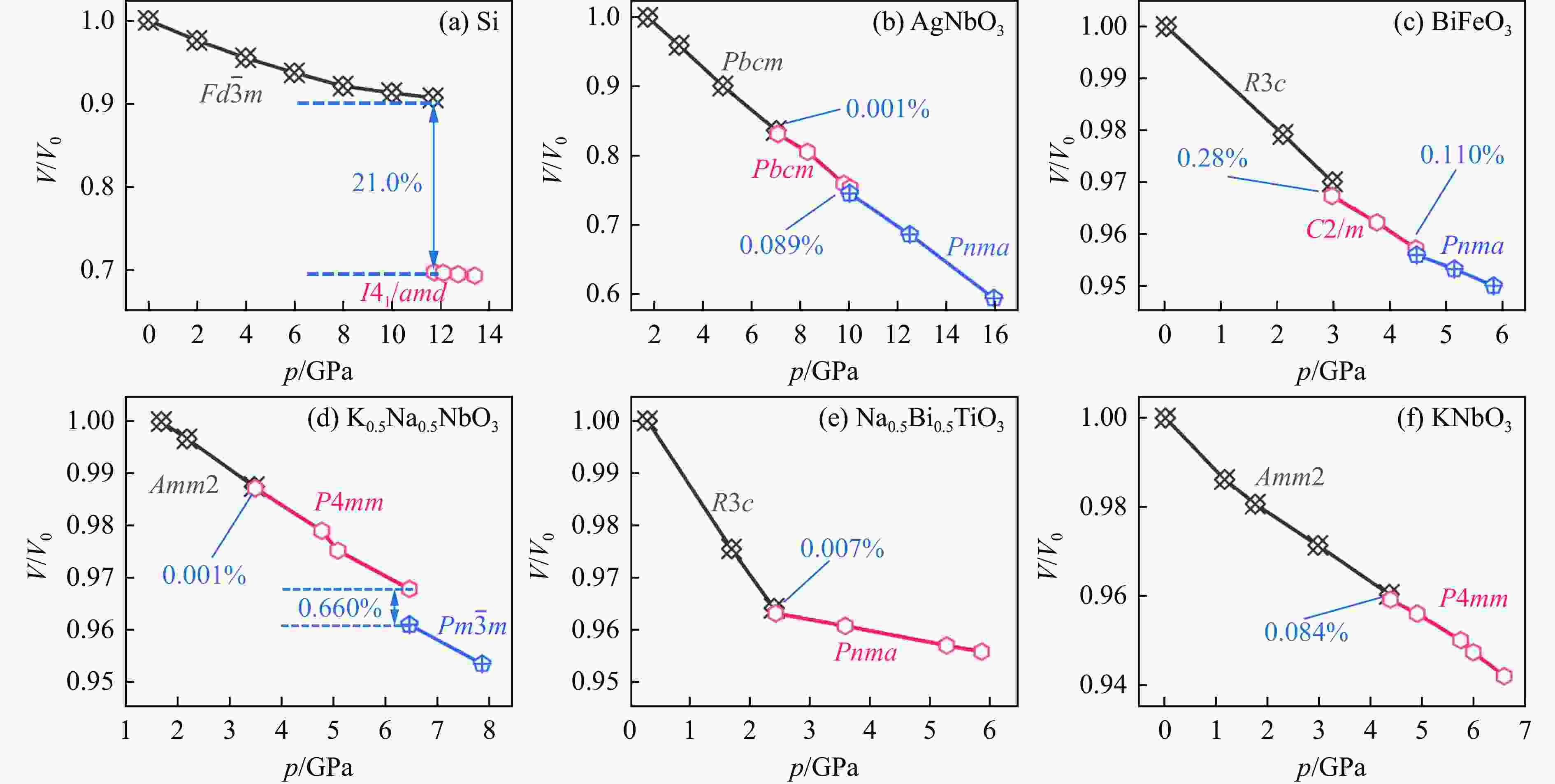
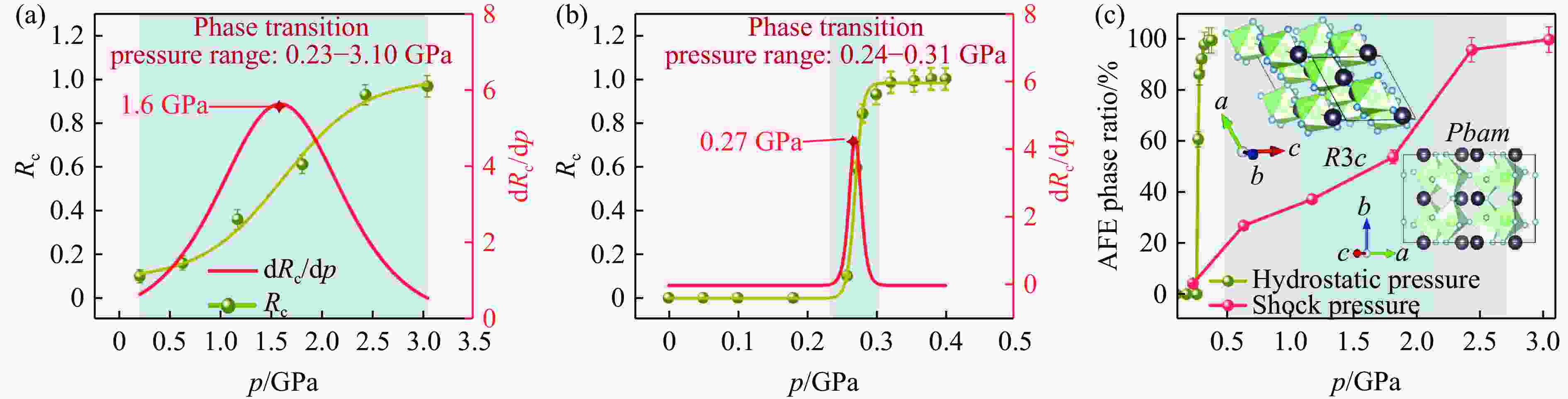
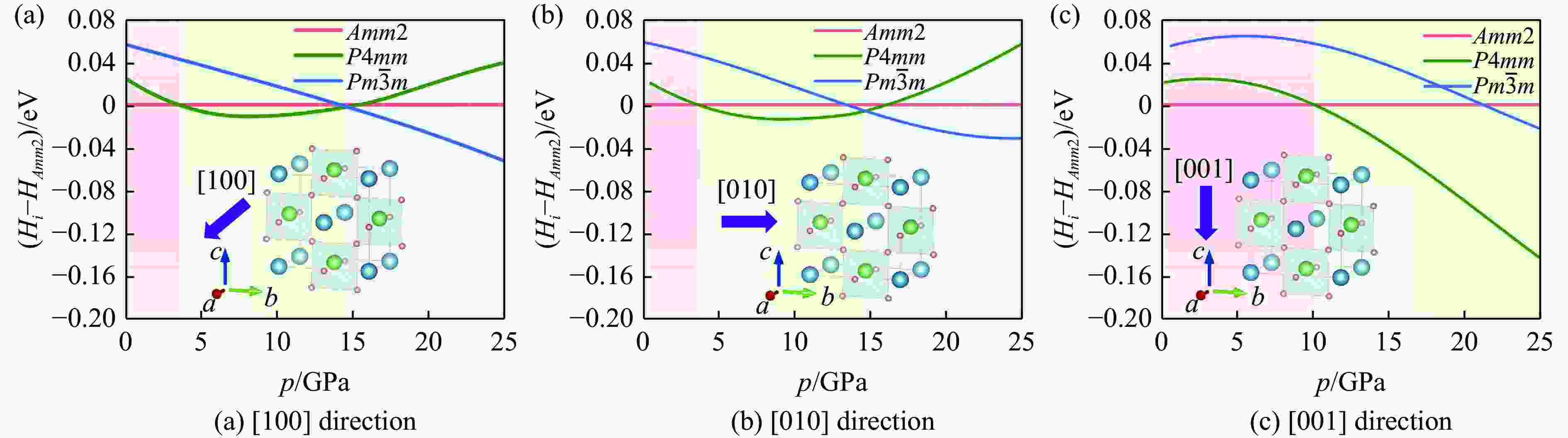
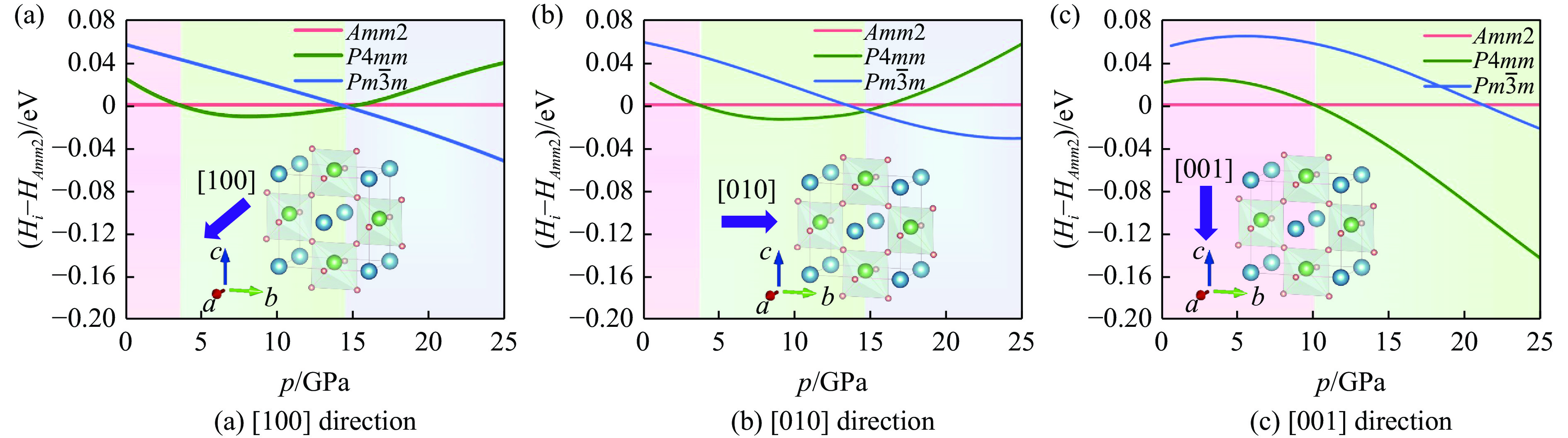
图 16 KN单轴压缩的第一性原理计算结果:(a)–(c) 分别为沿 [100]、[010]、[001] 方向单轴压缩下各相与Amm2相的焓差(Hi–HAmm2)随压力的演化,其中Amm2、P4mm、Pm$ \overline{3} $m分别对应正交铁电相(O相)、四方铁电相(T相)和立方顺电相(C相),背景色带标识各压力下焓最低的稳定相[76]
Figure 16. First-principles calculation results of KN under uniaxial compression: (a)–(c) pressure dependence of the enthalpy difference of each phase relative to the Amm2 phase (Hi–HAmm2) under uniaxial compression along the [100], [010], and [001] directions, respectively, where Amm2, P4mm and Pm$ \overline{3} $m correspond to the orthorhombic ferroelectric (O), tetragonal ferroelectric (T), and cubic paraelectric (C) phases, and the background color bands mark the stable phase with the lowest enthalpy at each pressure[76]
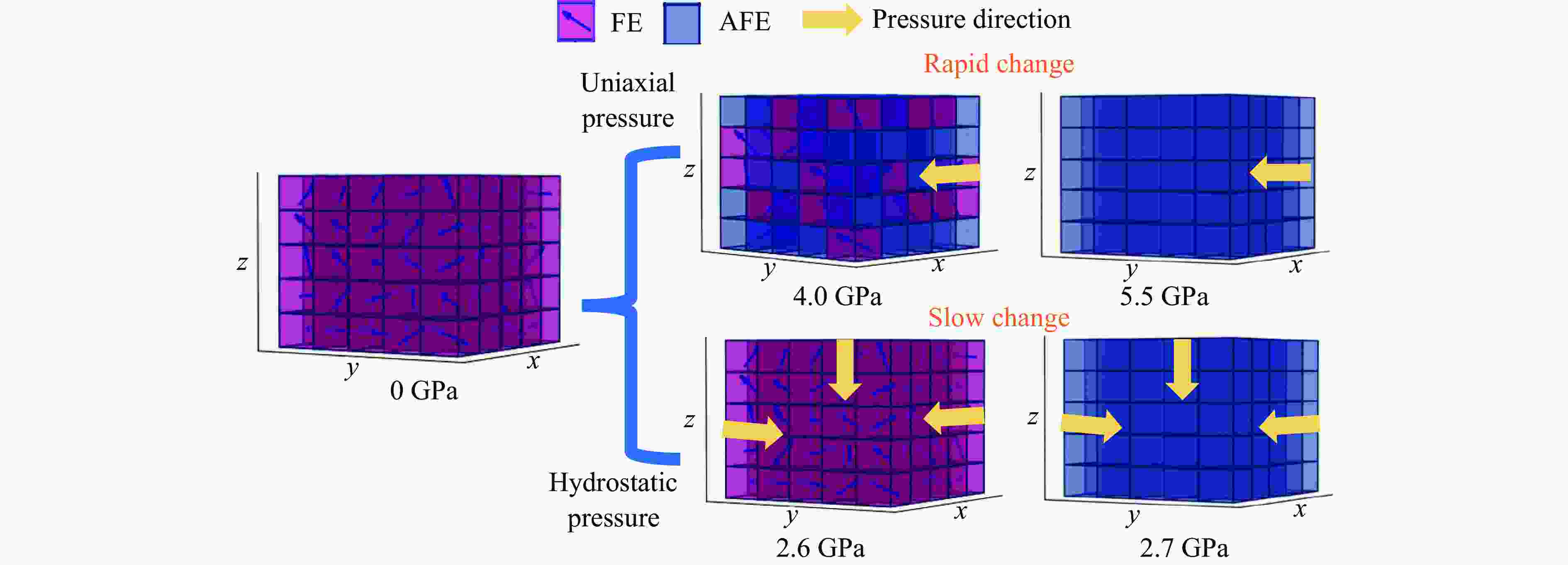
表 1 几种经典铁电陶瓷的储能性能
Table 1. Energy storage properties of several classic ferroelectric ceramics
Material ρ/(g·cm−3) Pr/(μC·cm−2) Ed/(W·h·kg−1) Pd/(108 W·kg−1) Pb(Zr0.95Ti0.05)O3[46–51] 7.67 34 0.182 0.869 Pb(Zr0.52Ti0.48)O3[59–61] 7.5 15 0.041 0.76 Pb0.993(Zr0.802Ti0.049)Nb0.016Sn0.133O3[62–64] 7.8 28 0.506 0.288 Bi0.5Na0.5TiO3-based[13] 5.85 38 1.177 3.04 AgNbO3[71] 6.4 38 1.500 0.81 BiFeO3[78] 7.2 28.7 0.513 4.21 KNbO3-based[75–76] 4.43 20 1.6  下载: 导出CSV
-
[1] WANG G, LU Z L, LI Y, et al. Electroceramics for high-energy density capacitors: current status and future perspectives [J]. Chemical Reviews, 2021, 121(10): 6124–6172. doi: 10.1021/acs.chemrev.0c01264 [2] SHKURATOV S I, LYNCH C S. A review of ferroelectric materials for high power devices [J]. Journal of Materiomics, 2022, 8(4): 739–752. doi: 10.1016/j.jmat.2022.04.002 [3] YANG L T, KONG X, LI F, et al. Perovskite lead-free dielectrics for energy storage applications [J]. Progress in Materials Science, 2019, 102: 72–108. doi: 10.1016/j.pmatsci.2018.12.005 [4] SHKURATOV S I, BAIRD J, ANTIPOV V G, et al. Multilayer PZT 95/5 antiferroelectric film energy storage devices with giant power density [J]. Advanced Materials, 2019, 31(48): 1904819. doi: 10.1002/adma.201904819 [5] LIU Z, LU T, XUE F, et al. Lead-free (Ag, K)NbO3 materials for high-performance explosive energy conversion [J]. Science Advances, 2020, 6(21): eaba0367. doi: 10.1126/sciadv.aba0367 [6] XIONG Z W, ZHOU Z Y, LIU Y, et al. Ultrahigh output energy density of explosive-energy-conversion devices assembled from multilayer ferroelectric films [J]. Journal of Materials Chemistry A, 2024, 12(45): 31127–31134. doi: 10.1039/d4ta06396a [7] KHOKHAR A, NARWAL A, YADAV K L. Dynamic behavior of polar nano regions: enhanced energy density in the low electric field region via hybrid polarization mechanism in BNT-based relaxors [J]. Chemical Engineering Journal, 2025, 515: 163751. doi: 10.1016/j.cej.2025.163751 [8] GUNEY M S, TEPE Y. Classification and assessment of energy storage systems [J]. Renewable and Sustainable Energy Reviews, 2017, 75: 1187–1197. doi: 10.1016/j.rser.2016.11.102 [9] IBRAHIM H, ILINCA A, PERRON J. Energy storage systems: characteristics and comparisons [J]. Renewable and Sustainable Energy Reviews, 2008, 12(5): 1221–1250. doi: 10.1016/j.rser.2007.01.023 [10] LIU C, LI F, MA L P, et al. Advanced materials for energy storage [J]. Advanced Materials, 2010, 22(8): E28–E62. doi: 10.1002/adma.200903328 [11] CHU B J, ZHOU X, REN K L, et al. A dielectric polymer with high electric energy density and fast discharge speed [J]. Science, 2006, 313(5785): 334–336. doi: 10.1126/science.1127798 [12] KIM J, SAREMI S, ACHARYA M, et al. Ultrahigh capacitive energy density in ion-bombarded relaxor ferroelectric films [J]. Science, 2020, 369(6499): 81–84. doi: 10.1126/science.abb0631 [13] GAO Z P, PENG W, CHEN B, et al. Giant power output in lead-free ferroelectrics by shock-induced phase transition [J]. Physical Review Materials, 2019, 3(3): 035401. doi: 10.1103/PhysRevMaterials.3.035401 [14] YAO K, CHEN S T, RAHIMABADY M, et al. Nonlinear dielectric thin films for high-power electric storage with energy density comparable with electrochemical supercapacitors [J]. IEEE Transactions on Ultrasonics, Ferroelectrics, and Frequency Control, 2011, 58(9): 1968–1974. doi: 10.1109/TUFFC.2011.2039 [15] KOUSKSOU T, BRUEL P, JAMIL A, et al. Energy storage: applications and challenges [J]. Solar Energy Materials and Solar Cells, 2014, 120: 59–80. doi: 10.1016/j.solmat.2013.08.015 [16] GROSS R, LEACH M, BAUEN A. Progress in renewable energy [J]. Environment International, 2003, 29(1): 105–122. doi: 10.1016/S0160-4120(02)00130-7 [17] DINCER I. Renewable energy and sustainable development: a crucial review [J]. Renewable and Sustainable Energy Reviews, 2000, 4(2): 157–175. doi: 10.1016/S1364-0321(99)00011-8 [18] HALL P J, BAIN E J. Energy-storage technologies and electricity generation [J]. Energy Policy, 2008, 36(12): 4352–4355. doi: 10.1016/j.enpol.2008.09.037 [19] CHEN H S, CONG T N, YANG W, et al. Progress in electrical energy storage system: a critical review [J]. Progress in Natural Science, 2009, 19(3): 291–312. doi: 10.1016/j.pnsc.2008.07.014 [20] KUSKO A, DEDAD J. Stored energy—short-term and long-term energy storage methods [J]. IEEE Industry Applications Magazine, 2007, 13(4): 66–72. doi: 10.1109/MIA.2007.4283511 [21] ALTGILBERS L L, BAIRD J, FREEMAN B L, et al. Explosive pulsed power [M]. London: Imperial College Press, 2010. [22] JAFFE B, COOK W R JR, JAFFE H. Piezoelectric ceramics [M]. London: Academic Press, 1971. [23] GARCIA V, FUSIL S, BOUZEHOUANE K, et al. Giant tunnel electroresistance for non-destructive readout of ferroelectric states [J]. Nature, 2009, 460(7251): 81–84. doi: 10.1038/nature08128 [24] GE M Y, FENG Q, XIONG Z W, et al. Difference between dynamic and hydrostatic pressure-induced phase transition behaviors of ferroelectric ceramics [J]. Applied Physics Letters, 2025, 126(7): 072902. doi: 10.1063/5.0249716 [25] DUBROVINSKY L, DUBROVINSKAIA N, BYKOVA E, et al. The most incompressible metal osmium at static pressures above 750 gigapascals [J]. Nature, 2015, 525(7568): 226–229. doi: 10.1038/nature14681 [26] HU Q W, YAN X Z, LEI L, et al. Pressure induced solid-solid reconstructive phase transition in LiGaO2 dominated by elastic strain [J]. Physical Review B, 2018, 97(1): 014106. doi: 10.1103/PhysRevB.97.014106 [27] 谭华. 实验冲击波物理[M]. 北京: 国防工业出版社, 2018.TAN H. Experimental shock wave physics [M]. Beijing: National Defense Industry Press, 2018. [28] KOLLER D D, HIXSON R S, GRAY Ⅲ G T, et al. Influence of shock-wave profile shape on dynamically induced damage in high-purity copper [J]. Journal of Applied Physics, 2005, 98(10): 103518. doi: 10.1063/1.2128493 [29] MOKRUSHIN S S, KARNAUKHOV E I, MALUGINA S N, et al. Research of dynamic properties of alloys of AMg6BM and AMg6M in shock-wave experiment on a gas gun [J]. EPJ Web of Conferences, 2015, 94: 01055. doi: 10.1051/epjconf/20159401055 [30] CHERET R, ANDRIOT P, CHAPRON P, et al. Shock-wave experiments using explosives and light-gas gun facilities [J]. AIP Conference Proceedings, 1982, 78(1): 626–630. doi: 10.1063/1.33288 [31] ANTOUN T, CURRAN D R, RAZORENOV S V, et al. Spall fracture [M]. New York: Springer, 2003. [32] ZHANG F P, HE H L, LIU G M, et al. Failure behavior of Pb(Zr0.95Ti0.05)O3 ferroelectric ceramics under shock compression [J]. Journal of Applied Physics, 2013, 113(18): 183501. doi: 10.1063/1.4803052 [33] NEEDHAM C E. The Rankine-Hugoniot relations [M]//NEEDHAM C E. Blast Waves. Berlin: Springer, 2010: 9–15. [34] SETCHELL R E. Shock wave compression of the ferroelectric ceramic Pb0.99(Zr0.95Ti0.05)0.98Nb0.02O3: depoling currents [J]. Journal of Applied Physics, 2005, 97(1): 013507. doi: 10.1063/1.1828215 [35] POCKELS F. Ueber den einfluss des elektrostatischen feldes auf das optische verhalten piëzoelektrischer krystalle [M]. Göttingen: Dieterichsche Verlags-Buchhandlung, 1894: 204. [36] WUL B M. Barium titanate: a new ferro-electric [J]. Nature, 1946, 157(3998): 808. doi: 10.1038/157808a0 [37] HAERTLING G H. Ferroelectric ceramics: history and technology [J]. Journal of the American Ceramic Society, 1999, 82(4): 797–818. doi: 10.1111/j.1151-2916.1999.tb01840.x [38] NEILSON F W. Ferromagnetic and ferroelectric one-shot explosive-electric transducers: SCTM 230B-56-51 [R]. Albuquerque: Sandia Corporation, 1956. DOI: 10.2172/4312202. [39] NEILSON F W. Effects of strong shocks in ferroelectric materials [J]. Bulletin of the American Physical Society, 1957, 2: 302. [40] REYNOLDS C E, SEAY G E. Multiple shock wave structures in polycrystalline ferroelectrics [J]. Journal of Applied Physics, 1961, 32(7): 1401–1402. doi: 10.1063/1.1736243 [41] REYNOLDS C E, SEAY G E. Two-wave shock structures in the ferroelectric ceramics barium titanate and lead zirconate titanate [J]. Journal of Applied Physics, 1962, 33(7): 2234–2241. doi: 10.1063/1.1728934 [42] MASHIMO T, TODA K, NAGAYAMA K, et al. Electrical response of BaTiO3 ceramics to the shock-induced ferroelectric-paraelectric transition [J]. Journal of Applied Physics, 1986, 59(3): 748–756. doi: 10.1063/1.336595 [43] LYSNE P C. Dielectric breakdown of shock-loaded PZT 65/35 [J]. Journal of Applied Physics, 1973, 44(2): 577–582. doi: 10.1063/1.1662227 [44] LYSNE P C, BARTEL L C. Electromechanical response of PZT 65/35 subjected to axial shock loading [J]. Journal of Applied Physics, 1975, 46(1): 222–229. doi: 10.1063/1.321325 [45] LYSNE P C. Kinetic effects in the electrical response of a shock-compressed ferroelectric ceramic [J]. Journal of Applied Physics, 1975, 46(9): 4078–4079. doi: 10.1063/1.322116 [46] LYSNE P C. Prediction of dielectric breakdown in shock-loaded ferroelectric ceramics [J]. Journal of Applied Physics, 1975, 46(1): 230–232. doi: 10.1063/1.321326 [47] LYSNE P C. Shock-induced polarization of a ferroelectric ceramic [J]. Journal of Applied Physics, 1977, 48(3): 1024–1031. doi: 10.1063/1.323802 [48] LYSNE P C. Resistivity of shock-wave-compressed PZT 95/5 [J]. Journal of Applied Physics, 1977, 48(11): 4565–4568. doi: 10.1063/1.323480 [49] LYSNE P C. Dielectric properties of shock-wave-compressed PZT 95/5 [J]. Journal of Applied Physics, 1977, 48(3): 1020–1023. doi: 10.1063/1.323801 [50] SETCHELL R E. Shock wave compression of the ferroelectric ceramic Pb0.99(Zr0.95Ti0.05)0.98Nb0.02O3: Hugoniot states and constitutive mechanical properties [J]. Journal of Applied Physics, 2003, 94(1): 573–588. doi: 10.1063/1.1578526 [51] SETCHELL R E. Shock wave compression of the ferroelectric ceramic Pb0.99(Zr0.95Ti0.05)0.98Nb0.02O3: microstructural effects [J]. Journal of Applied Physics, 2007, 101(5): 053525. doi: 10.1063/1.2697428 [52] SHKURATOV S I, BAIRD J, TALANTSEV E F. Note: utilizing Pb(Zr0.95Ti0.05)O3 ferroelectric ceramics to scale down autonomous explosive-driven shock-wave ferroelectric generators [J]. Review of Scientific Instruments, 2012, 83(7): 076104. doi: 10.1063/1.4733294 [53] SHKURATOV S I, BAIRD J, ANTIPOV V G, et al. Depolarization mechanisms of PbZr0.52Ti0.48O3 and PbZr0.95Ti0.05O3 poled ferroelectrics under high strain rate loading [J]. Applied Physics Letters, 2014, 104(21): 212901. doi: 10.1063/1.4879545 [54] SHKURATOV S I, BAIRD J, ANTIPOV V G, et al. Stress-induced depolarization of single-layer PZT 95/5 ferroelectric films [J]. Applied Physics Letters, 2019, 114(17): 172902. doi: 10.1063/1.5092632 [55] SHKURATOV S I, BAIRD J, ANTIPOV V G. Effect of shock vector/polarization vector configuration on the generation of ultrahigh voltage by adiabatically compressed ferroelectric materials [J]. Applied Physics Letters, 2021, 119(9): 092903. doi: 10.1063/5.0064562 [56] SHKURATOV S I, TALANTSEV E F, MENON L, et al. Compact high-voltage generator of primary power based on shock wave depolarization of lead zirconate titanate piezoelectric ceramics [J]. Review of Scientific Instruments, 2004, 75(8): 2766–2769. doi: 10.1063/1.1771490 [57] SHKURATOV S I, TALANTSEV E F, BAIRD J, et al. Longitudinal shock wave depolarization of Pb(Zr52Ti48)O3 polycrystalline ferroelectrics and their utilization in explosive pulsed power [C]//AIP Conference Proceedings, 2005, 845(1): 1169–1172. [58] SHKURATOV S I, BAIRD J, TALANTSEV E F, et al. High voltage charging of a capacitor bank [J]. IEEE Transactions on Plasma Science, 2008, 36(1): 44–51. doi: 10.1109/TPS.2007.913818 [59] SHKURATOV S I, TALANTSEV E F, BAIRD J. Electric breakdown of longitudinally shocked Pb(Zr0.52Ti0.48)O3 ceramics [J]. Journal of Applied Physics, 2011, 110(2): 024113. doi: 10.1063/1.3609074 [60] SHKURATOV S I, BAIRD J, ANTIPOV V G, et al. PZT 52/48 depolarization: quasi-static thermal heating versus longitudinal explosive shock [J]. IEEE Transactions on Plasma Science, 2010, 38(8): 1856–1863. doi: 10.1109/TPS.2010.2050497 [61] SHKURATOV S I, BAIRD J, TALANTSEV E F. The depolarization of Pb(Zr0.52Ti0.48)O3 ferroelectrics by cylindrical radially expanding shock waves and its utilization for miniature pulsed power [J]. Review of Scientific Instruments, 2011, 82(5): 054701. doi: 10.1063/1.3585145 [62] MOCK W JR, HOLT W H. Axial-current-mode shock depoling of PZT 56/44 ferroelectric ceramic disks [J]. Journal of Applied Physics, 1979, 50(4): 2740–2748. doi: 10.1063/1.326235 [63] BAUER F, VOLLRATH K, EYRAUD L, et al. Ferroelectric energy conversion with PZT ceramics under shock loading [J]. Journal of the American Ceramic Society, 1980, 63(5/6): 268–271. doi: 10.1111/j.1151-2916.1980.tb10717.x [64] BERLINSKY Y, ROSENBERG Z. Measurement of the Hugoniot curve of PZT 54/46 with commercial manganin stress gauges [J]. Journal of Physics D: Applied Physics, 1980, 13(5): 861–868. doi: 10.1088/0022-3727/13/5/021 [65] SHKURATOV S I, BAIRD J, ANTIPOV V G, et al. Dielectric permittivity of PZT 95/5 ferroelectric ceramics and 0.27PIN-PMN-0.26PT single crystals under pulsed high electric fields [J]. Journal of Applied Physics, 2024, 135(3): 034101. doi: 10.1063/5.0185734 [66] SHKURATOV S I, BAIRD J, ANTIPOV V G, et al. Giant power density produced by PIN-PMN-PT ferroelectric single crystals due to a pressure induced polar-to-nonpolar phase transformation [J]. Journal of Materials Chemistry A, 2021, 9(20): 12307–12319. doi: 10.1039/d1ta02290c [67] SHKURATOV S I, BAIRD J, ANTIPOV V G, et al. Generation of giant electric energy density by adiabatically compressed PIN-PMN-PT ferroelectric single crystals [J]. Applied Physics Letters, 2021, 118(12): 122902. doi: 10.1063/5.0037620 [68] SHKURATOV S I, BAIRD J, SHKURATOV A S, et al. Ultrahigh electric charge density harvested from pre-compressed ferroelectric ceramics [J]. Journal of Applied Physics, 2025, 137(14): 144103. doi: 10.1063/5.0244912 [69] SHKURATOV S I, BAIRD J, ANTIPOV V G, et al. Hybrid mechanism of electrical breakdown in ferroelectric materials under high-pressure shock loading [J]. Journal of Applied Physics, 2024, 136(2): 024102. doi: 10.1063/5.0113129 [70] PENG P, NIE H C, WANG G S, et al. Shock-driven depolarization behavior in BNT-based lead-free ceramics [J]. Applied Physics Letters, 2018, 113(8): 082901. doi: 10.1063/1.5045392 [71] ZHOU Z Y, XIONG Z W, LIU X R, et al. Phase transition in silver niobate under high pressures [J]. Physical Review B, 2024, 109(10): 104108. doi: 10.1103/PhysRevB.109.104108 [72] LIN Y Z, NIE H C, XIE M, et al. Ultrahigh polarization Bi0.5Na0.5TiO3-based relaxor ceramics for force-electric conversion [J]. Applied Physics Letters, 2023, 123(8): 083903. doi: 10.1063/5.0153889 [73] CHE C Y, BAO Y Z, HU Z M, et al. Ultrahigh-power-density BNT ferroelectric multilayer ceramic capacitors for pulse power energy conversion components [J]. Journal of Materials Chemistry C, 2024, 12(41): 16732–16740. doi: 10.1039/d4tc03279a [74] XIONG Z W, LIU G M, NIE H C, et al. Shock-driven depolarization behaviors and electrical output in BiAlO3-doped Bi0.5Na0.5TiO3 ferroelectric ceramics [J]. Journal of the American Ceramic Society, 2021, 104(2): 1169–1177. doi: 10.1111/jace.17531 [75] ZHOU Z Y, FANG L M, XIONG Z W, et al. Phase transition of potassium sodium niobate under high pressures [J]. Applied Physics Letters, 2023, 123(1): 012904. doi: 10.1063/5.0159971 [76] FENG Q, XIONG Z W, ZHOU Z Y, et al. Dynamic phase transition modeling of potassium niobate under shock compression [J]. Physical Review B, 2024, 110(17): 174102. doi: 10.1103/PhysRevB.110.174102 [77] FENG Q, XIONG Z W, SUN A W, et al. Polar-nonpolar phase competition of ferroelectric materials under coupled shock pressure and self-generated electric field [J]. Physical Review Materials, 2026, 10(2): 024401. doi: 10.1103/yddz-wddk [78] ZHOU Z Y, GAO Z P, XIONG Z W, et al. Giant power density from BiFeO3-based ferroelectric ceramics by shock compression [J]. Applied Physics Letters, 2022, 121(11): 113903. doi: 10.1063/5.0102102 [79] JIANG D D, DU J M, GU Y J, et al. Evolution of electric response of Pb0.99(Zr0.95Ti0.05)0.98Nb0.02O3 and Pb0.99[(Zr0.90Sn0.10)0.96Ti0.04]0.98Nb0.02O3 ferroelectric ceramics under shock wave compression [J]. High Pressure Research, 2012, 32(2): 280–290. doi: 10.1080/08957959.2012.673602 [80] JIANG D D, DU J M, GU Y, et al. Self-generated electric field suppressing the ferroelectric to antiferroelectric phase transition in ferroelectric ceramics under shock wave compression [J]. Journal of Applied Physics, 2012, 111(2): 024103. doi: 10.1063/1.3678005 [81] JIANG D D, FENG Y J, DU J M, et al. Shock-wave-and hydrostatic-pressure-induced depolarization of Pb(Zr, Sn, Ti)O3 for pulse power applications [J]. High Pressure Research, 2011, 31(3): 436–444. doi: 10.1080/08957959.2011.602675 [82] ZHANG F P, LIU Y S, XIE Q H, et al. Electrical response of Pb(Zr0.95Ti0.05)O3 under shock compressions [J]. Journal of Applied Physics, 2015, 117(13): 134104. doi: 10.1063/1.4916710 [83] LYSNE P C, PERCIVAL C M. Electric energy generation by shock compression of ferroelectric ceramics: normal-mode response of PZT 95/5 [J]. Journal of Applied Physics, 1975, 46(4): 1519–1525. doi: 10.1063/1.321803 [84] JIANG D, DU J M, GU Y, et al. Phenomenological description of depoling current in Pb0.99Nb0.02(Zr0.95Ti0.05)0.98O3 ferroelectric ceramics under shock wave compression: relaxation model [J]. Journal of Applied Physics, 2012, 111(10): 104102. doi: 10.1063/1.4716461 [85] GRZELAK A, GAWRACZYŃSKI J, JAROŃ T, et al. Persistence of mixed and non-intermediate valence in the high-pressure structure of silver (Ⅰ, Ⅲ) oxide, AgO: a combined Raman, X-ray diffraction (XRD), and density functional theory (DFT) study [J]. Inorganic Chemistry, 2017, 56(10): 5804–5812. doi: 10.1021/acs.inorgchem.7b00405 [86] JAYARAMAN A. Diamond anvil cell and high-pressure physical investigations [J]. Reviews of Modern Physics, 1983, 55(1): 65–108. doi: 10.1103/RevModPhys.55.65 [87] MAO H K, XU J, BELL P M. Calibration of the ruby pressure gauge to 800 kbar under quasi-hydrostatic conditions [J]. Journal of Geophysical Research: Solid Earth, 1986, 91(B5): 4673–4676. doi: 10.1029/JB091iB05p04673 [88] AHART M, SOMAYAZULU M, COHEN R E, et al. Origin of morphotropic phase boundaries in ferroelectrics [J]. Nature, 2008, 451(7178): 545–548. doi: 10.1038/nature06459 [89] MCMAHON M I, NELMES R J, WRIGHT N G, et al. Pressure dependence of the Imma phase of silicon [J]. Physical Review B, 1994, 50(2): 739–743. doi: 10.1103/PhysRevB.50.739 [90] GOURDAIN D, PRUZAN P, BESSON J M, et al. Compression of KNbO3 up to 30 GPa: transition sequence orthorhombic→tetragonal→cubic [J]. Physical Review B, 2002, 65(5): 054104. doi: 10.1103/PhysRevB.65.054104 [91] KREISEL J, GLAZER A M, BOUVIER P, et al. High-pressure Raman study of a relaxor ferroelectric: the Na0.5Bi0.5TiO3 perovskite [J]. Physical Review B, 2001, 63(17): 174106. doi: 10.1103/PhysRevB.63.174106 -

 下载:

计量
- 文章访问数: 574
- HTML全文浏览量: 112
- PDF下载量: 63
