





Thermal Conductivity of AlN/Diamond Composites Sintered under High-Pressure and High-Temperature
-
摘要: 氮化铝(AlN)陶瓷是高功率电子器件散热的重要材料,然而,传统烧结方法的温度高,制约了其进一步应用,并提高了制备成本。因此,有必要发展在较低温度条件下实现AlN陶瓷致密化的制备方法。针对多晶AlN陶瓷在较低烧结温度下难以兼顾高致密化与高热导率的问题,采用分步研究思路。首先,研究纯相AlN在高压辅助下的致密化行为和导热性能,确定优化烧结条件。在无助剂、压力为5.0 GPa、温度为
1400 ℃的条件下制备出晶界洁净、高致密的纯相AlN陶瓷,热导率达101.6 W/(m·K)。然后,在所确定的优化烧结条件下研究AlN/金刚石复合体系,系统考察金刚石含量对复合材料结构与性能的影响。结果表明,复合材料的热导率随金刚石体积分数的增加呈先降后升趋势,在金刚石体积分数为33.3%时达到112.4 W/(m·K)。机理分析表明:低金刚石含量时,界面热阻占主导;高金刚石含量时,金刚石形成的导热通路对热传导的增强作用更显著。研究工作充分发挥了高温高压技术优势,在比传统烧结技术更低的温度下实现了AlN基材料的大幅优化,为较低温制备高性能导热陶瓷提供了新途径。Abstract: Aluminum nitride (AlN) ceramics are important heat-dissipation materials for high-power electronic devices. However, the high sintering temperature required by conventional processing routes limits practical application of AlN ceramics and increases fabrication costs. Therefore, it is necessary to develop preparation method that is capable of achieving densification at relatively low temperature. To address the difficulty of simultaneously obtaining high densification and high thermal conductivity in polycrystalline AlN ceramics under reduced-temperature sintering conditions, this work adopts a stepwise research strategy. First, the densification behavior and thermal conductivity of pure AlN under high-pressure assistance were investigated to identify the optimal sintering conditions. Under additive-free conditions, pure-phase AlN ceramics with clean grain boundaries and high densification were prepared at 5.0 GPa and1400 ℃, achieving a thermal conductivity of 101.6 W/(m·K). Based on these optimized conditions, the AlN/diamond composite system was further studied, and the effects of diamond volume fraction on the structure and properties of the composites were systematically examined. The results show that the thermal conductivity of the composites first decreases and then increases with increasing diamond volume fraction, reaching 112.4 W/(m·K) at 33.3%. Mechanistic analysis indicates that interfacial thermal resistance dominates at low diamond contents, whereas at high diamond contents the enhancement of heat transport by thermally conductive diamond pathways becomes more significant. By taking full advantage of the processing benefits of high-temperature and high-pressure technology, this work achieves substantial improvement of AlN-based materials at temperatures lower than those required in conventional sintering, thereby providing a new route for the low-temperature fabrication of high-performance thermally conductive ceramics. -
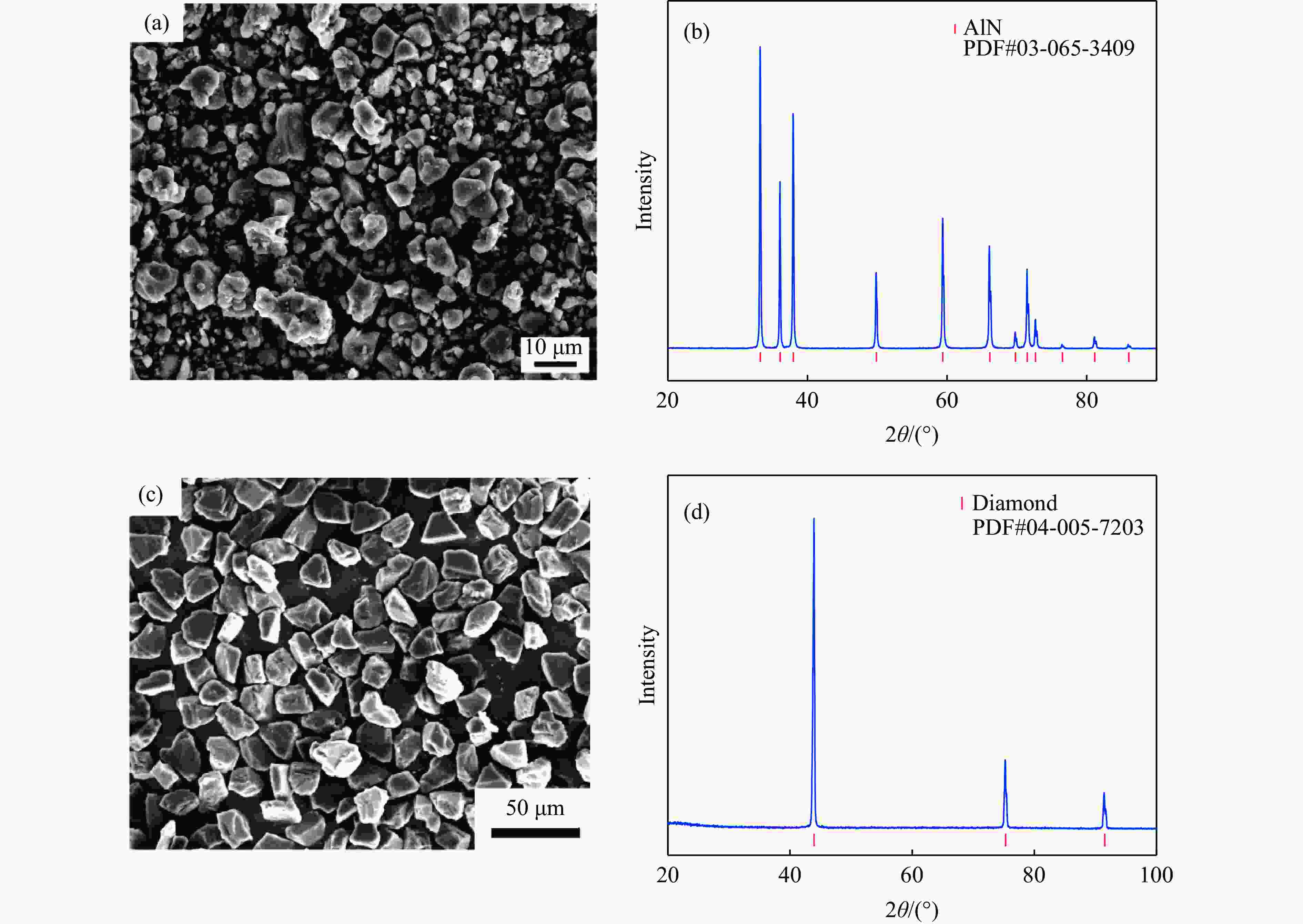
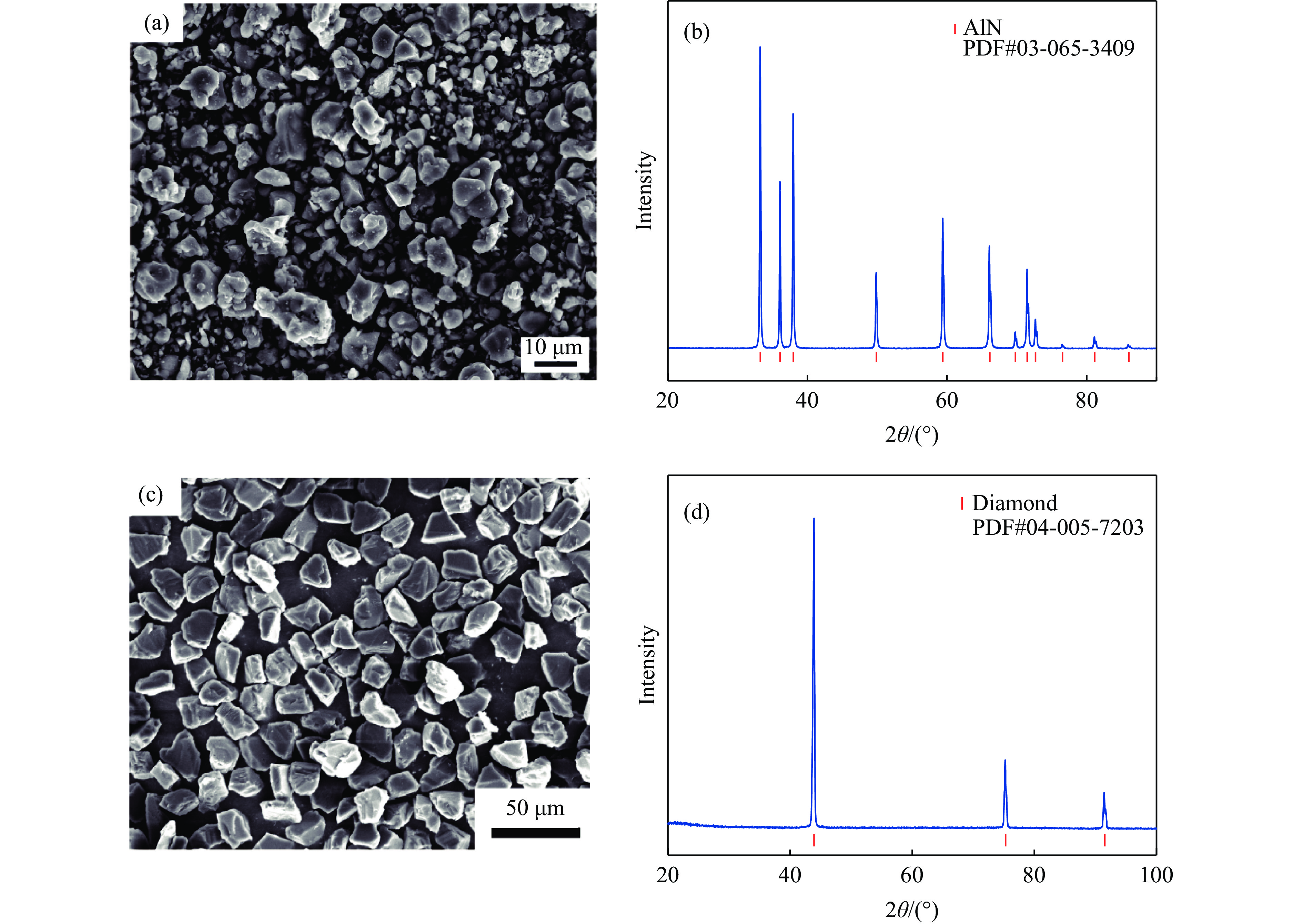
图 1 初始AlN粉末的(a)二次电子SEM图像和(b) XRD谱以及初始金刚石粉末的(c) 二次电子SEM图像和(d) XRD谱
Figure 1. (a) Secondary electron SEM (SE-SEM) image and (b) XRD pattern of the as-received AlN powder; (c) SE-SEM image and (d) XRD pattern of the as-received diamond powder
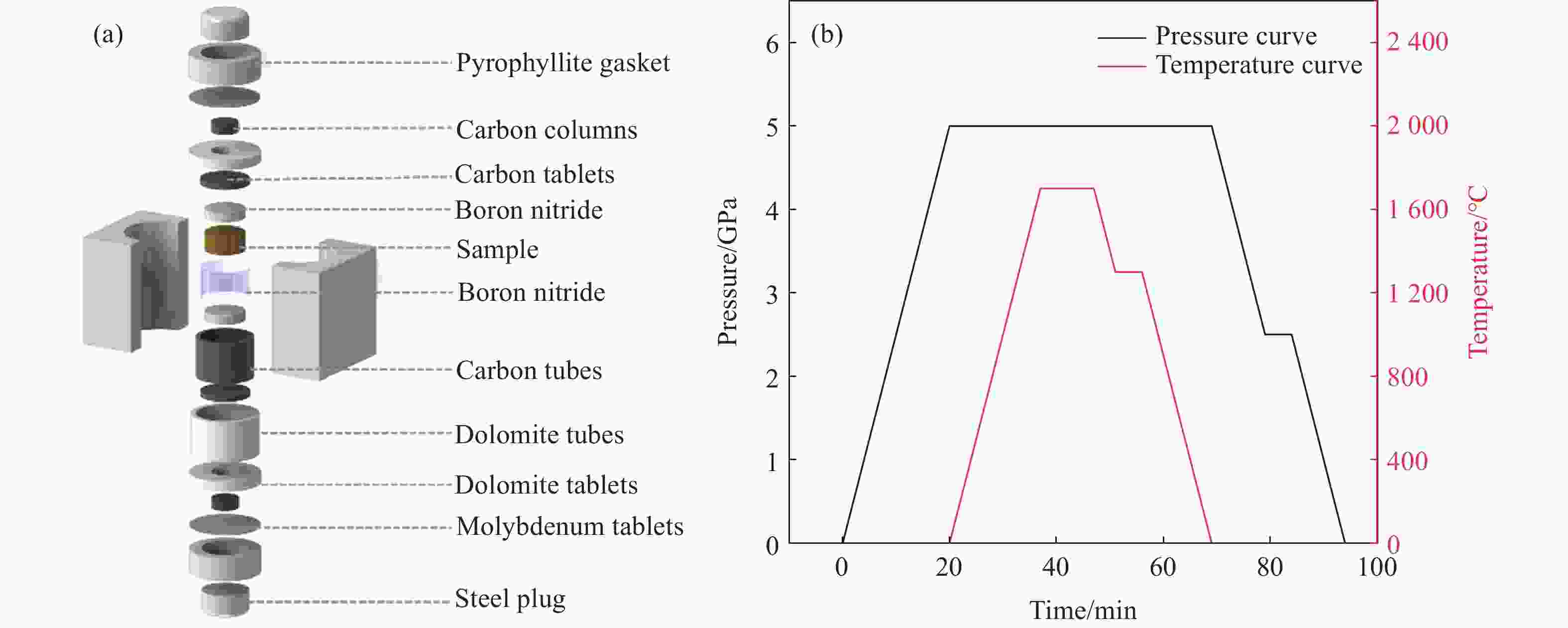
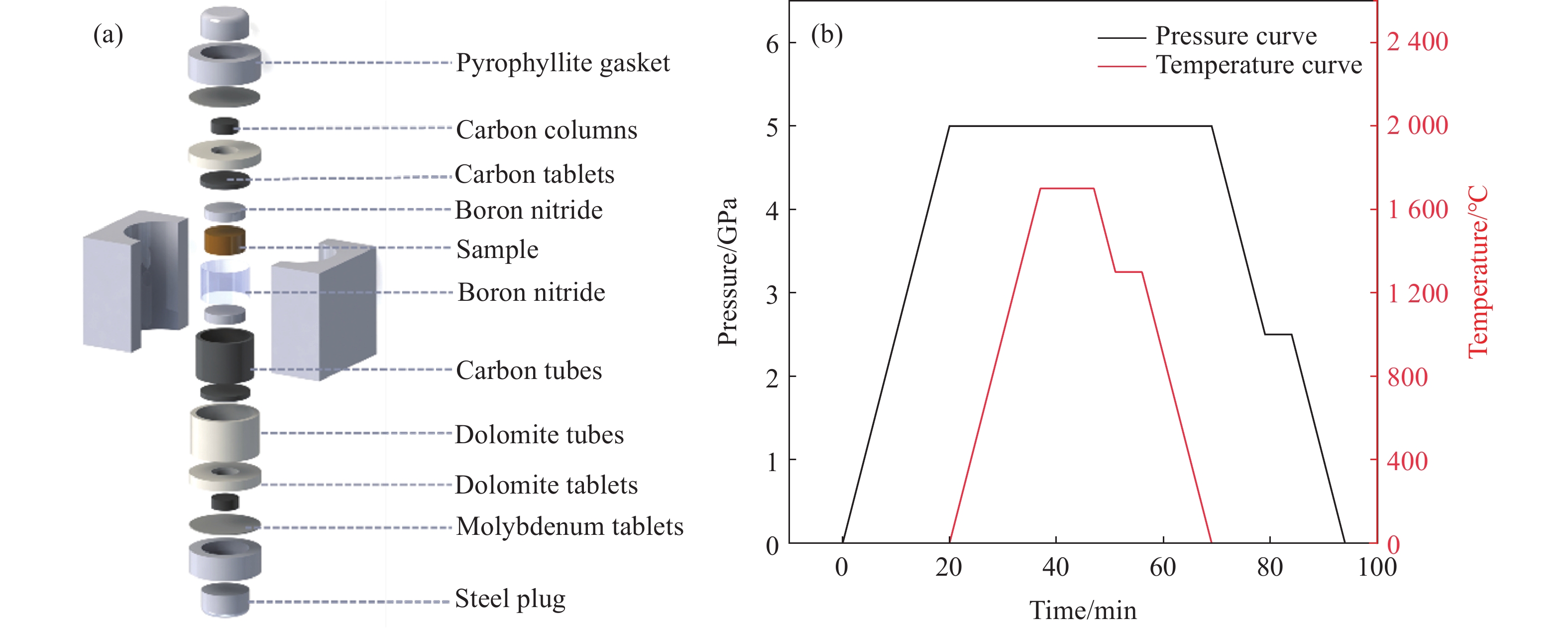
图 2 (a) 高压腔样品组装,(b) 烧结温度和烧结压力曲线
Figure 2. (a) Sample assembly of the high-pressure cell; (b) sintering temperature and pressure profiles
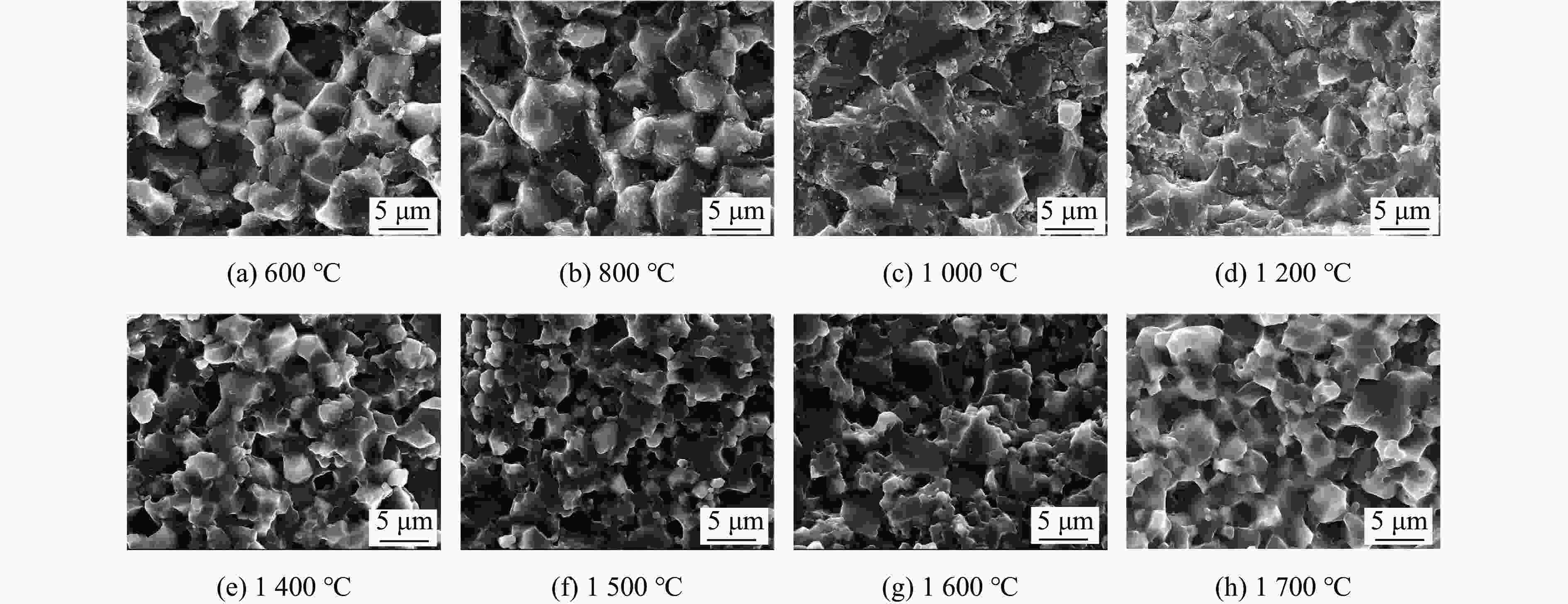
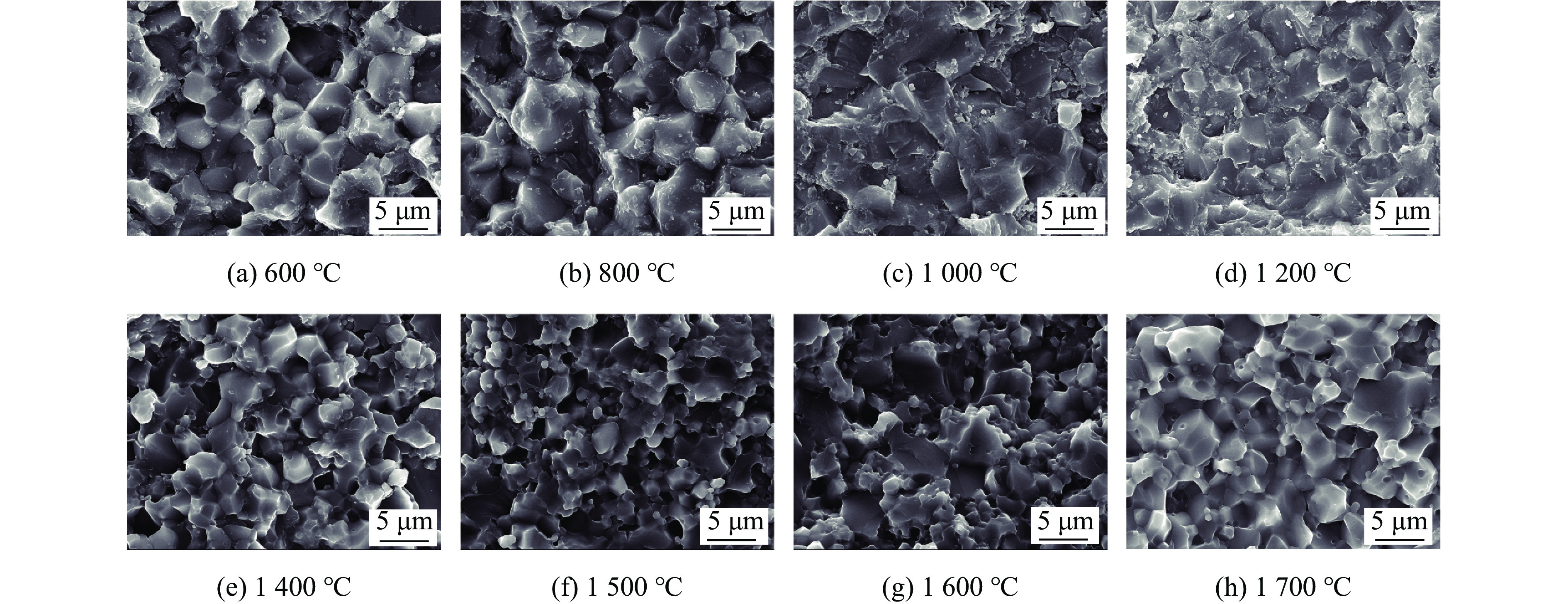
图 3 在5.0 GPa、不同烧结温度下制备的纯相AlN陶瓷断面的SEM图像
Figure 3. Fracture-surface SEM images of pure AlN ceramics prepared at 5.0 GPa and different sintering temperatures
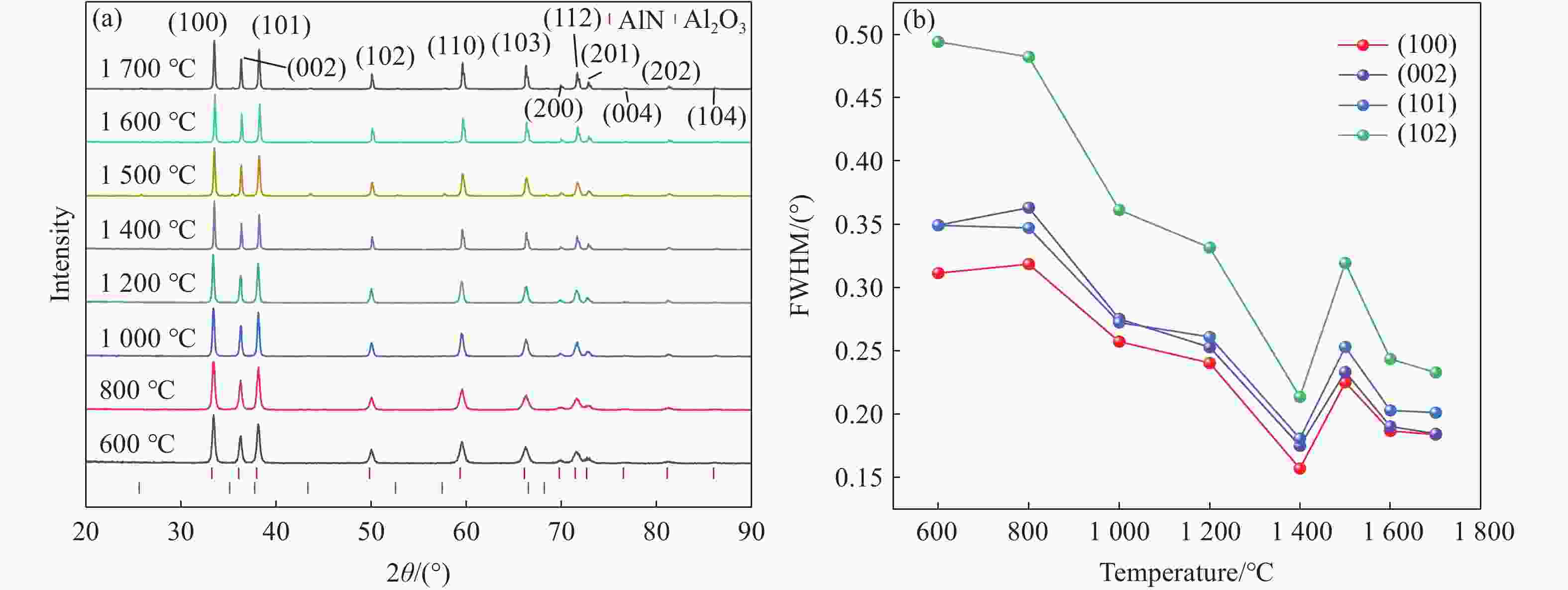
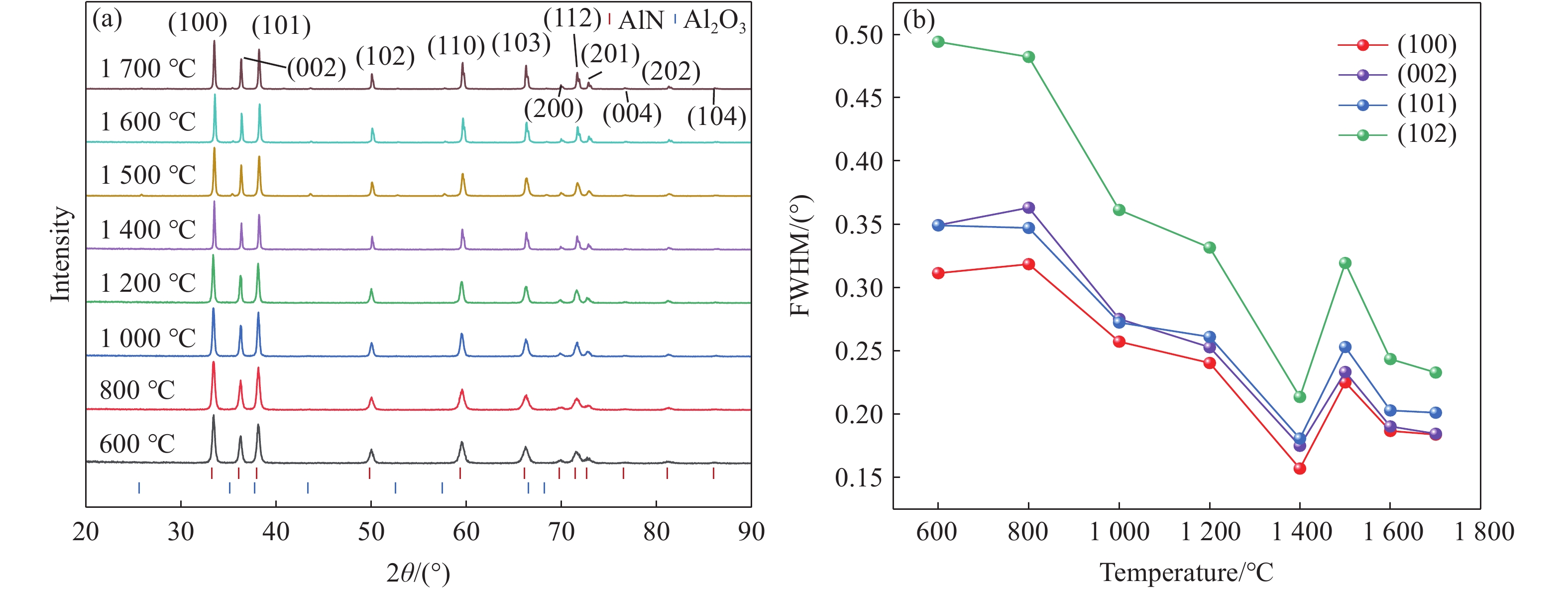
图 4 (a) 在5.0 GPa、不同烧结温度下的XRD谱,(b) AlN烧结样品代表性晶面(100)、(002)、(101)、(102)的XRD峰FWHM随烧结温度的变化
Figure 4. (a) XRD patterns obtained at 5.0 GPa and different sintering temperatures; (b) variations in FWHM of the representative AlN reflections, (100), (002), (101), and (102), as a function of sintering temperature
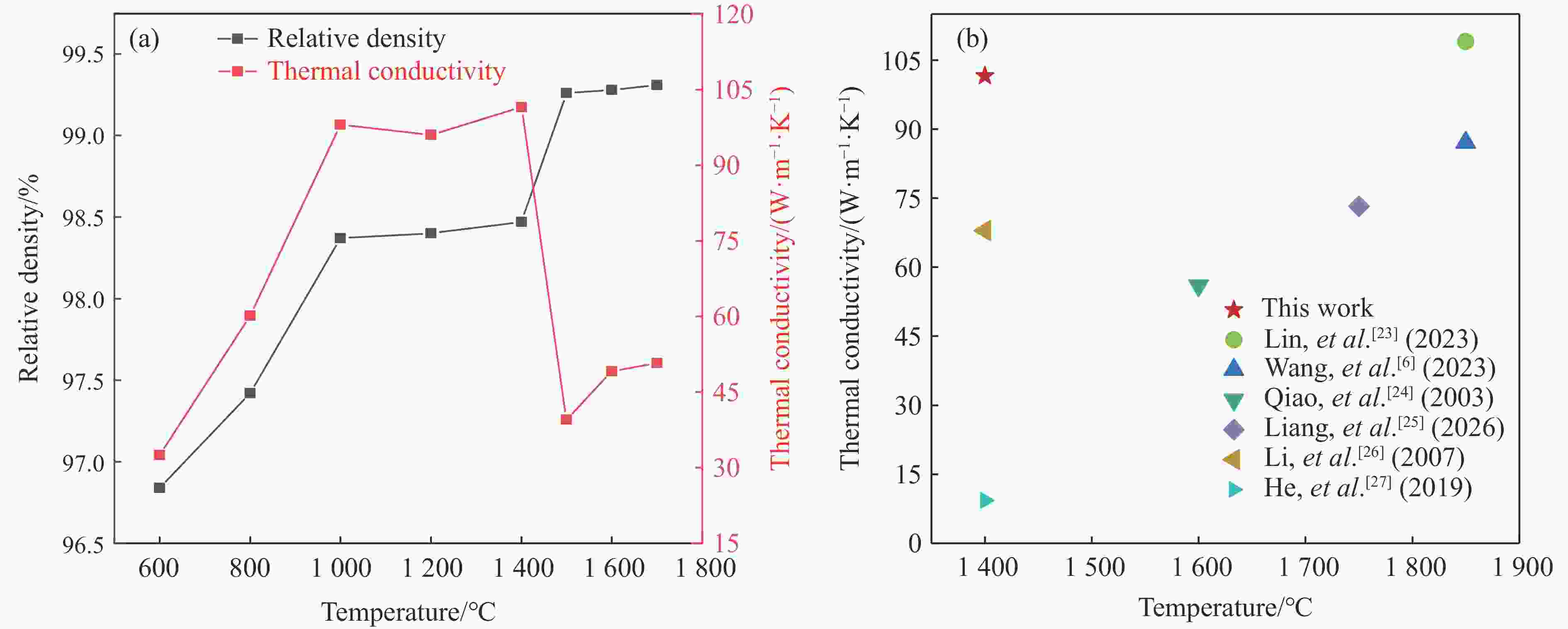
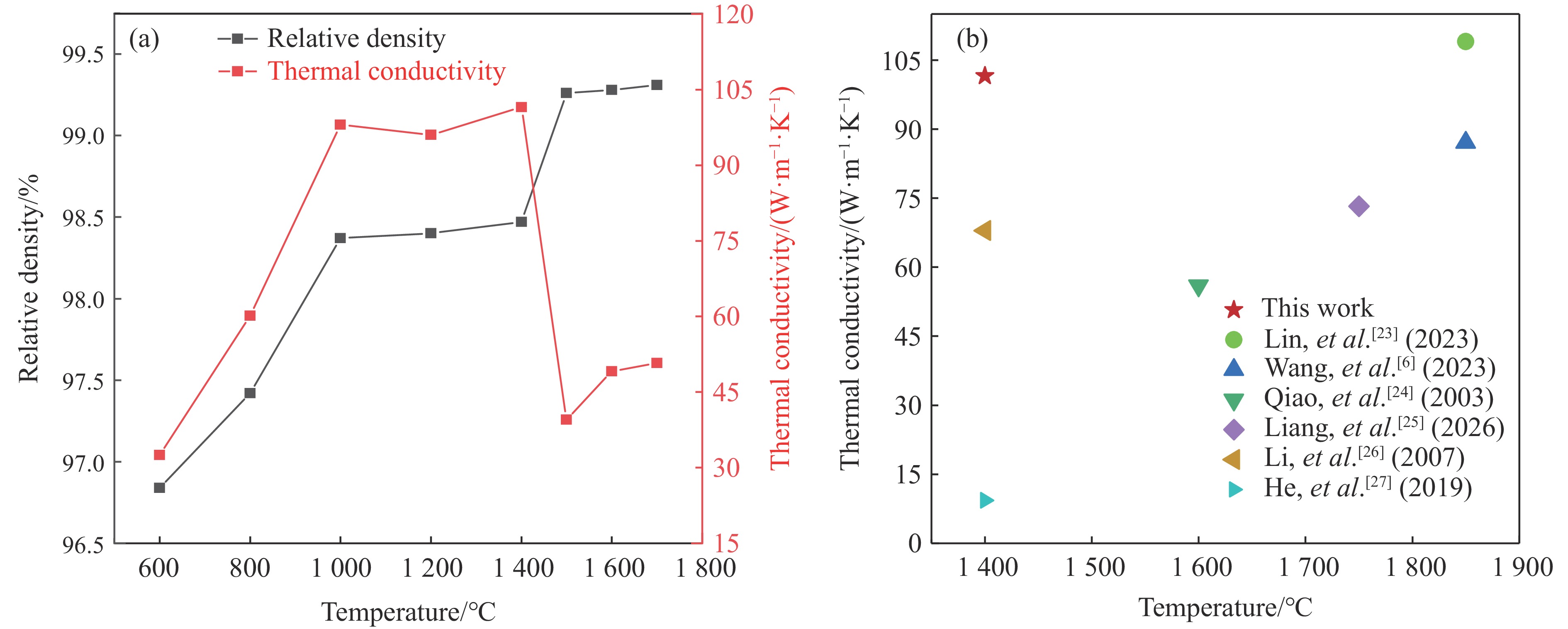
图 5 (a) AlN烧结体的相对密度及热导率与烧结温度的关系,(b) 本实验测得的热导率与先前研究的纯AlN陶瓷的热导率的对比
Figure 5. (a) Relative density and thermal conductivity of AlN sintered bodies as a function of sintering temperature; (b) comparison between the thermal conductivity measured in this work and the thermal conductivity of pure AlN ceramics reported in previous studies
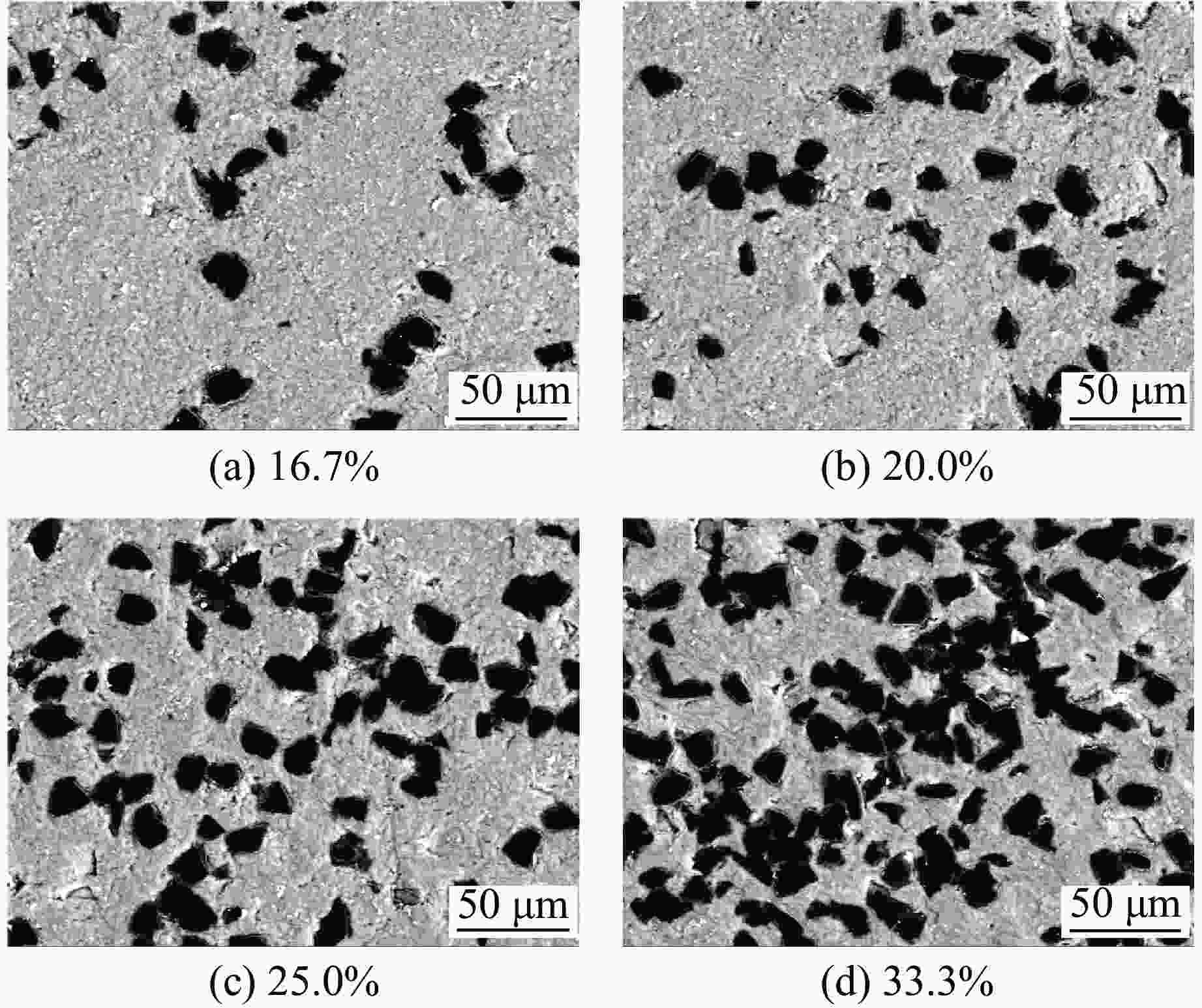
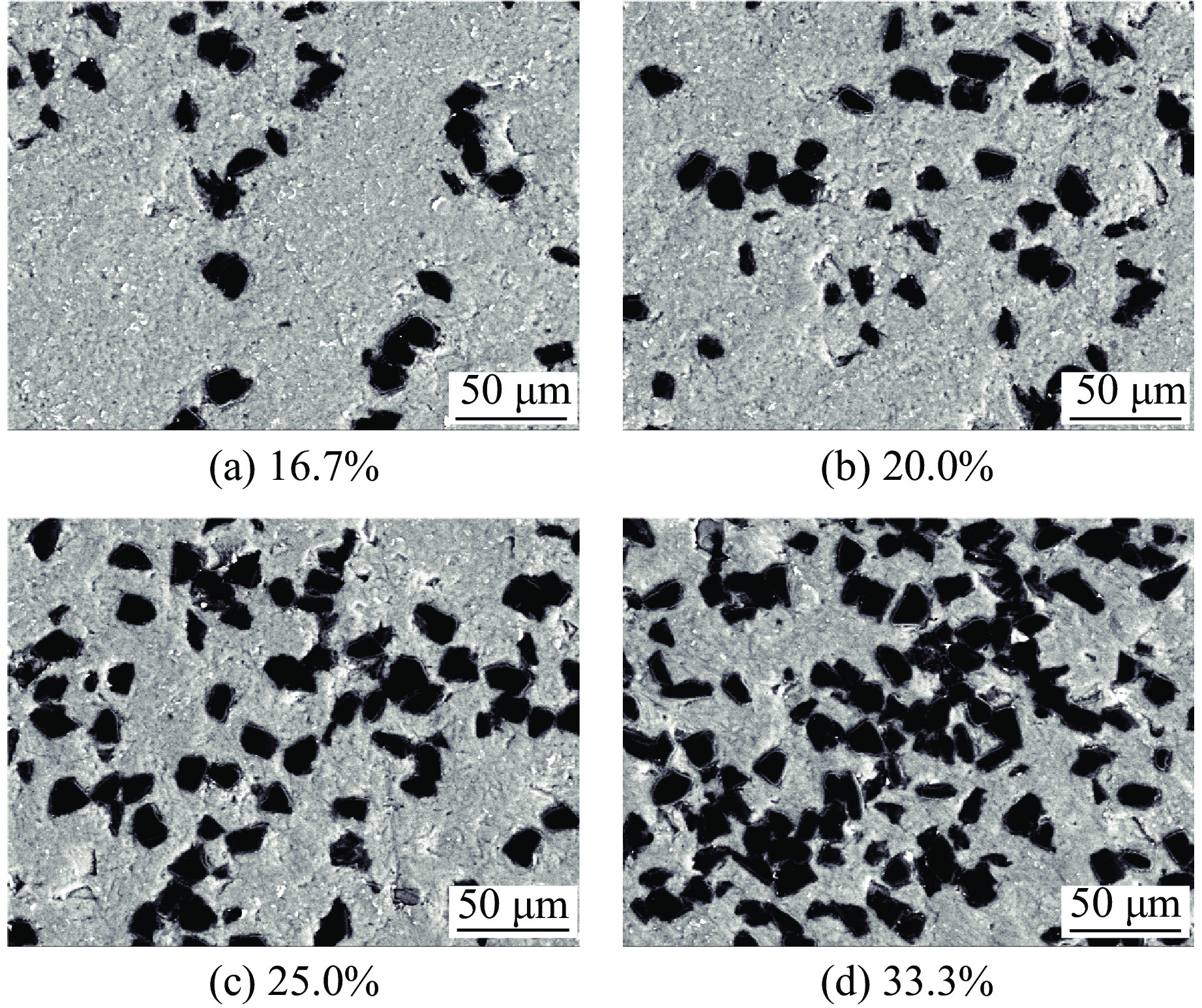
图 6 在5.0 GPa、
1400 ℃下制备的金刚石体积分数分别为16.7%、20.0%、25.0%、33.3%的复合陶瓷抛面BSE图像Figure 6. Polished cross-sectional BSE images of composite ceramics prepared at 5.0 GPa and
1400 ℃ with diamond volume fractions of 16.7%, 20.0%, 25.0%, and 33.3%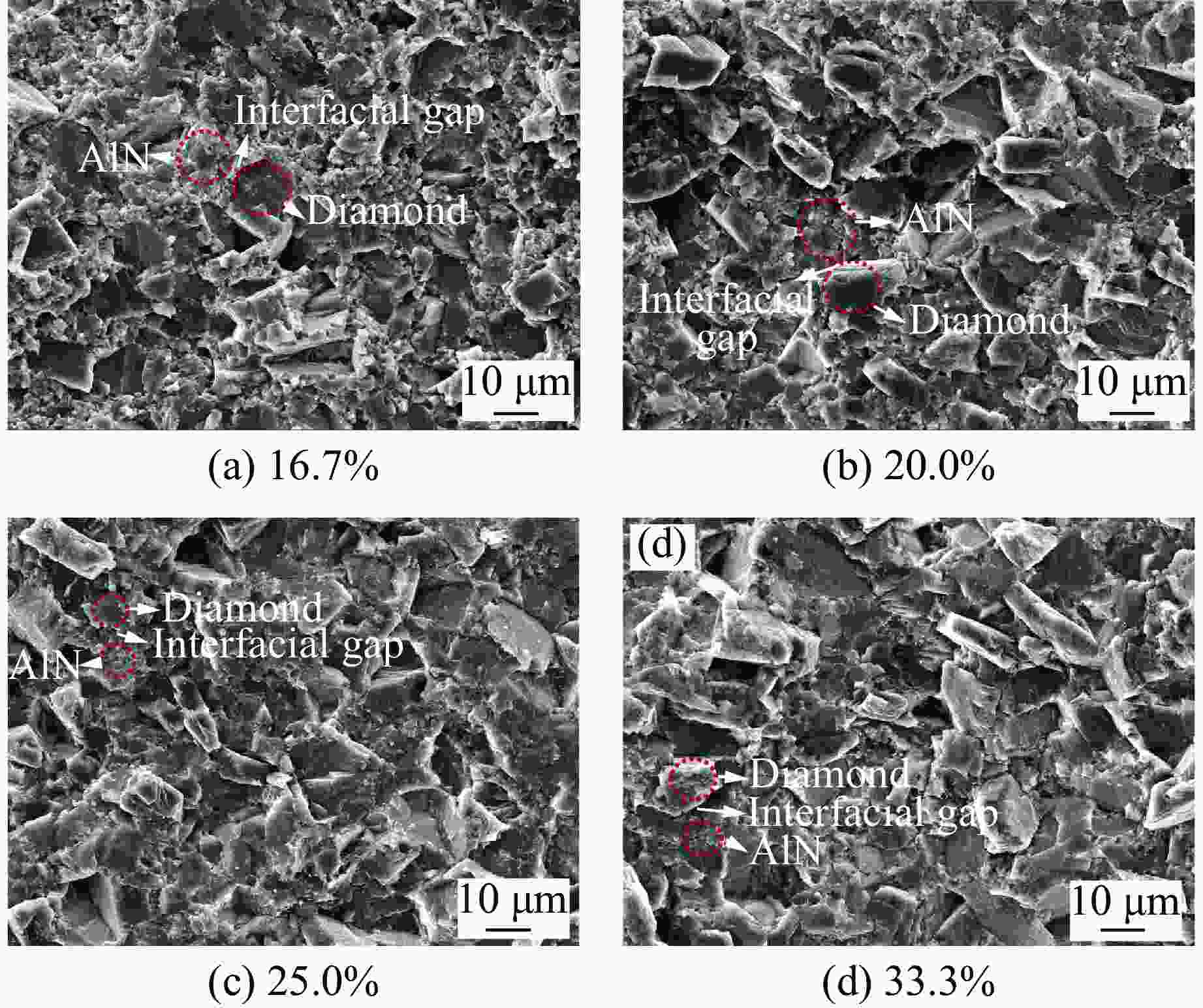
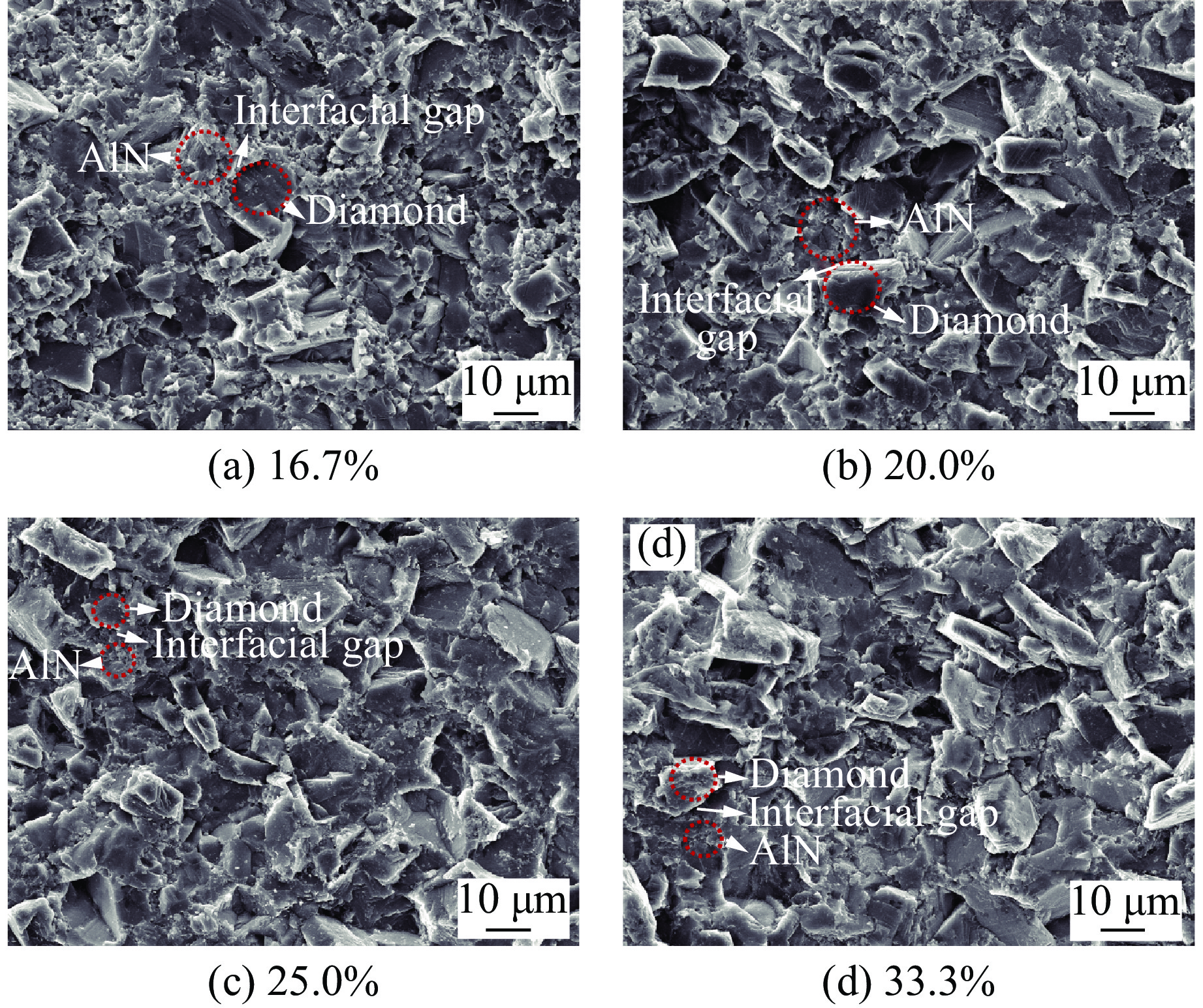
图 7 在5.0 GPa、
1400 ℃下制备的金刚石体积分数分别为16.7%、20.0%、25.0%、33.3%的复合陶瓷断面SE-SEM图像Figure 7. Fracture-surface SE-SEM images of composite ceramics prepared at 5.0 GPa and
1400 ℃ with diamond volume fractions of 16.7%, 20.0%, 25.0%, and 33.3%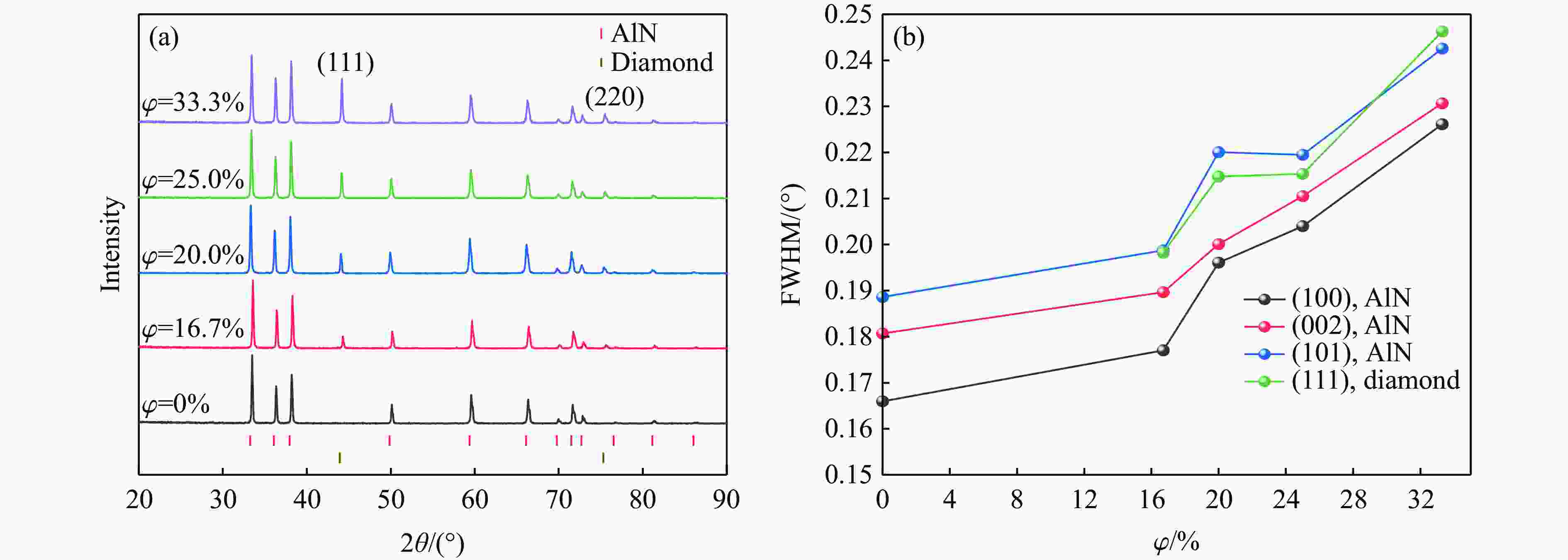
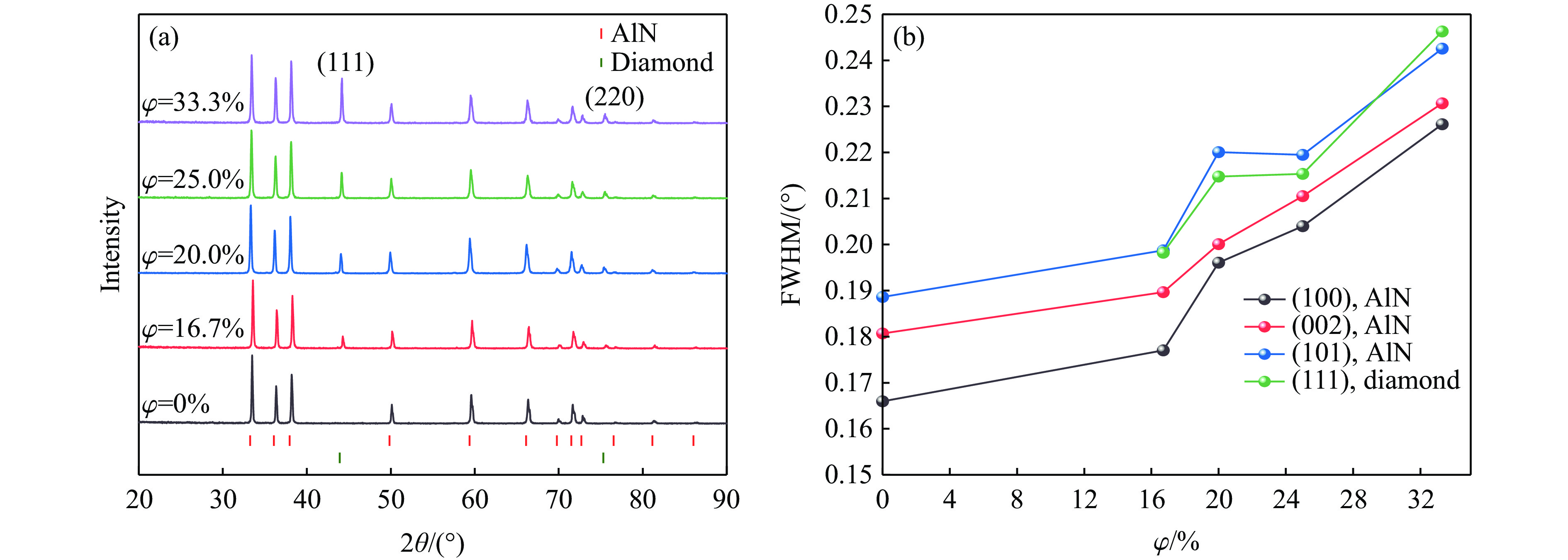
图 8 (a) AlN与金刚石混合粉末烧结样品的XRD谱,(b) AlN烧结样品代表性晶面(100)、(002)、(101)以及金刚石代表性晶面(111)衍射峰的FWHM随金刚石体积分数的变化
Figure 8. (a) XRD patterns of sintered samples prepared from AlN/diamond mixed powders; (b) variation in the FWHM of the representative AlN reflections, (100), (002), and (101), and the representative diamond reflection, (111), with diamond volume fraction
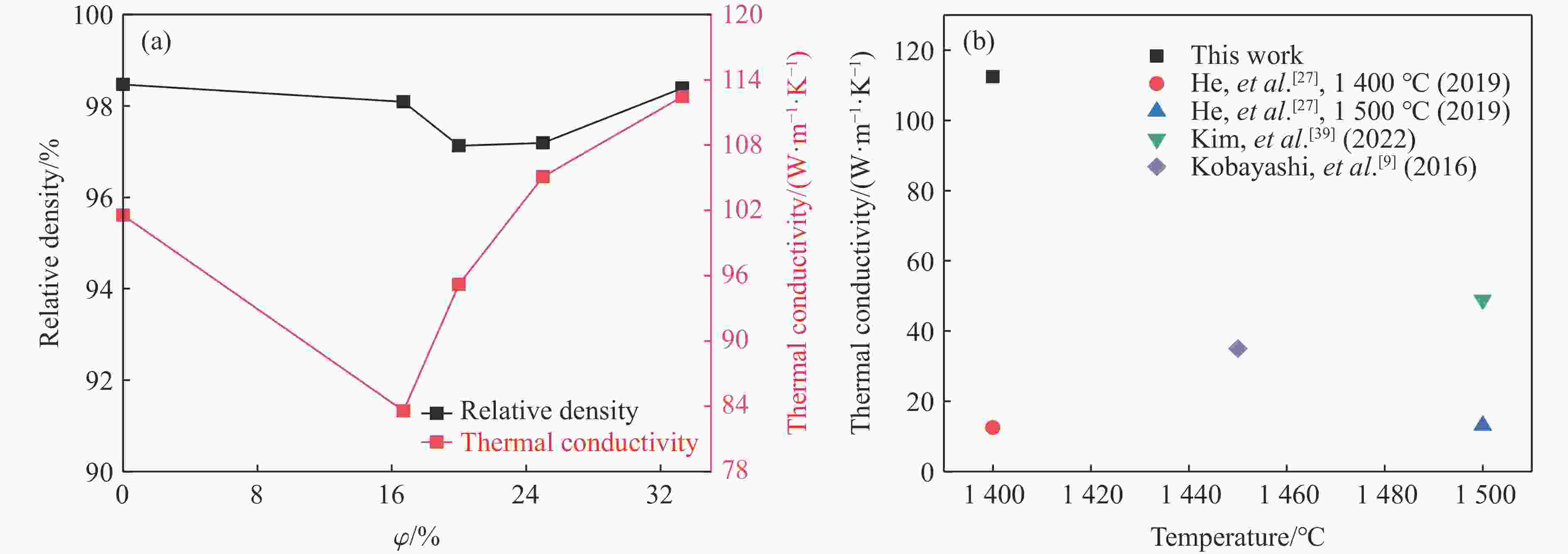
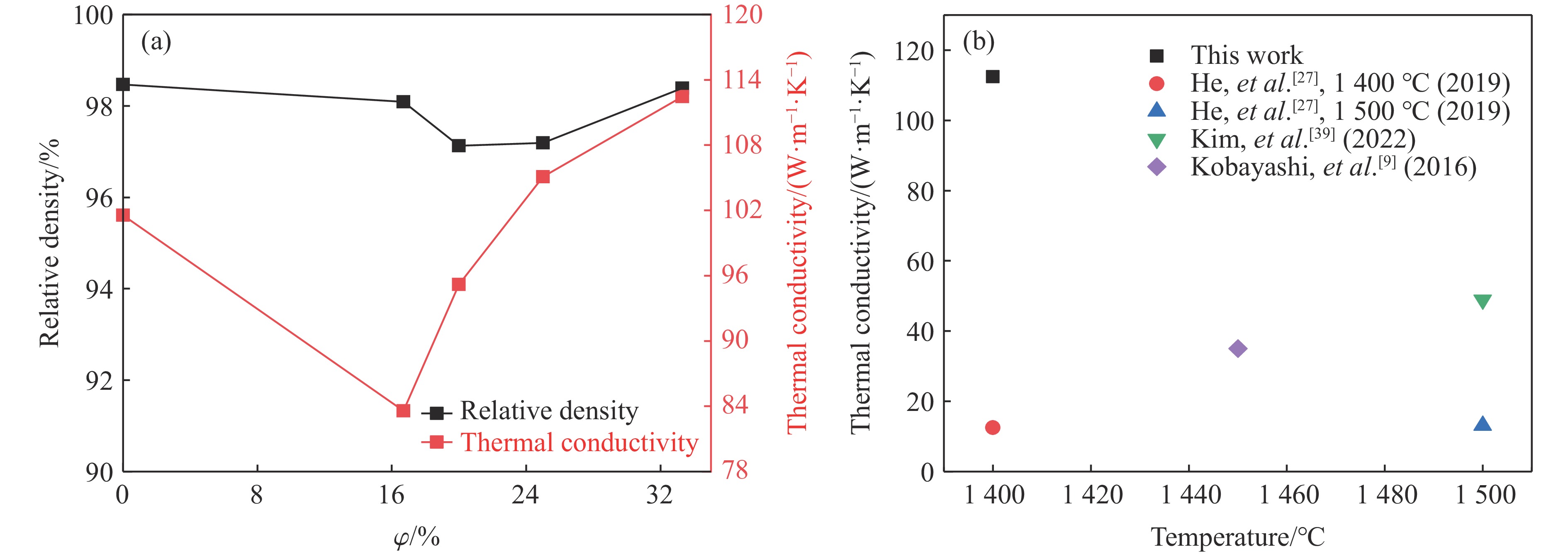
图 9 (a) 不同金刚石体积分数下AlN/金刚石复合陶瓷的相对密度与热导率,(b) 本研究所得最佳样品与文献报道的低温助剂烧结AlN陶瓷热导率的比较
Figure 9. (a) Relative density and thermal conductivity of AlN/diamond composite sintered bodies with different diamond volume fractions; (b) comparison of the thermal conductivity of the best-performing sample in this work with those of low-temperature additive-assisted sintered AlN ceramics reported in the literature
表 1 氮化铝与金刚石的配比
Table 1. Compositions of AlN/diamond mixtures
Group No. AlN/diamond ratio (by vol.) ϕ/% 1 5∶1 16.7 2 4∶1 20.0 3 3∶1 25.0 4 2∶1 33.3  下载: 导出CSV
表 2
1500 ~1700 ℃样品中晶界亮点颗粒的SEM-EDS原子组成分析结果(以1400 ℃样品为参考)Table 2. SEM-EDS quantitative atomic compositions of the bright particles at grain boundaries in samples sintered at
1500− 1700 ℃, with the1400 ℃ sample included as a referenceTemperature/℃ Atom fraction of N/% Atom fraction of O/% Atom fraction of Al/% 1400 44.07±5.74 5.16±1.71 50.77±6.30 1500 33.63±3.93 28.43±4.96 37.93±2.85 1600 35.30±5.05 29.19±2.07 35.51±3.26 1700 29.83±2.36 32.94±3.85 37.23±4.84
下载: 导出CSV
-
[1] LUO Q, LI C H, ZHOU N Y, et al. Electrical properties, microstructure, and thermal conductivity of hot-pressed CaO-doped AlN ceramics [J]. Ceramics International, 2024, 50(9): 14200–14208. doi: 10.1016/j.ceramint.2024.01.326 [2] HASSAN N, LEE J, KIM M, et al. Enhanced mechanical properties of aluminum nitride-yttria ceramics through grain refinement by pressure assisted two-step sintering [J]. Journal of the European Ceramic Society, 2024, 44(2): 831–840. doi: 10.1016/j.jeurceramsoc.2023.09.039 [3] TANG Y X, XUE Z H, ZHOU G H, et al. Fabrication of high thermal conductivity aluminum nitride ceramics via digital light processing 3D printing [J]. Materials, 2024, 17(9): 2010. doi: 10.3390/ma17092010 [4] PARK S, KIM M, KIM S G, et al. Numerical investigation of heat transfer in aluminum nitride ceramics with engineered microstructures [J]. Materials Letters, 2024, 356: 135554. doi: 10.1016/j.matlet.2023.135554 [5] ZHANG Z R, WU H Y, ZHANG S T, et al. The quantitative investigation of the lattice oxygen and grain edge oxygen on the thermal conductivity of aluminum nitride ceramics [J]. Journal of the European Ceramic Society, 2023, 43(2): 313–320. doi: 10.1016/j.jeurceramsoc.2022.10.023 [6] WANG L, GUO W M, SHENG P F, et al. Effects of YH2 addition on pressureless sintered AlN ceramics [J]. Journal of the European Ceramic Society, 2023, 43(3): 862–870. doi: 10.1016/j.jeurceramsoc.2022.11.009 [7] TANG D Q, WANG Z H, YIN C H, et al. Effects of samarium oxide and graphene addition on the properties of AlN ceramics produced via spark plasma sintering [J]. Ceramics International, 2024, 50(20): 37919–37931. doi: 10.1016/j.ceramint.2024.07.154 [8] HUANG D, TIAN Z B, CUI W, et al. Effects of Y2O3 and yttrium aluminates as sintering additives on the thermal conductivity of AlN ceramic substrates [J]. Ceramics International, 2018, 44(16): 20556–20559. doi: 10.1016/j.ceramint.2018.07.178 [9] KOBAYASHI R, NAKAJIMA Y, MOCHIZUKI K, et al. Densification of AlN ceramics by spark plasma sintering under 1550 ℃ [J]. Advanced Powder Technology, 2016, 27(3): 860–863. doi: 10.1016/j.apt.2015.12.014[10] LIM S B, SONG T S, PEE J H, et al. Relocation of secondary phases and oxygen-related defect of AlN ceramics [J]. Ceramics International, 2025, 51(25): 44071–44078. doi: 10.1016/j.ceramint.2025.07.139 [11] KIM J, KIM J Y, AHN H, et al. Direct evidence on effect of oxygen dissolution on thermal and electrical conductivity of AlN ceramics using Al solid-state NMR analysis [J]. Materials, 2022, 15(22): 8125. doi: 10.3390/ma15228125 [12] ZHAO F Y, HE Y J, HUANG B, et al. A review of diamond materials and applications in power semiconductor devices [J]. Materials, 2024, 17(14): 3437. doi: 10.3390/ma17143437 [13] FAN K K, GUO J C, HUANG Z H, et al. GaN-on-diamond technology for next-generation power devices [J]. Moore and More, 2025, 2(1): 8. doi: 10.1007/s44275-024-00022-z [14] YAN X Z, REN X T, HE D W. Pressure calibration in solid pressure transmitting medium in large volume press [J]. Review of Scientific Instruments, 2016, 87(12): 125006. doi: 10.1063/1.4973448 [15] YIN X S, KOU Z L, WANG Z W, et al. Micro-sized polycrystalline cubic boron nitride with properties comparable to nanocrystalline counterparts [J]. Ceramics International, 2020, 46(7): 8806–8810. doi: 10.1016/j.ceramint.2019.12.120 [16] YEH C T, TUAN W H. Oxidation mechanism of aluminum nitride revisited [J]. Journal of Advanced Ceramics, 2017, 6(1): 27–32. doi: 10.1007/s40145-016-0213-1 [17] DOLABELLA S, BORZÌ A, DOMMANN A, et al. Lattice strain and defects analysis in nanostructured semiconductor materials and devices by high-resolution X-ray diffraction: theoretical and practical aspects [J]. Small Methods, 2022, 6(2): 2100932. doi: 10.1002/smtd.202100932 [18] LASKA A, SZKODO M, CAVALIERE P, et al. Analysis of residual stresses and dislocation density of AA6082 butt welds produced by friction sir welding [J]. Metallurgical and Materials Transactions A, 2023, 54(1): 211–225. doi: 10.1007/s11661-022-06862-4 [19] 韩巍, 卢芳云. 应用XRD方法研究AlN粉体的冲击波改性 [J]. 高压物理学报, 1997, 11(1): 75–80. doi: 10.11858/gywlxb.1997.01.014HAN W, LU F Y. Research of modification on shocked aluminium nitride powder through X-ray diffraction [J]. Chinese Journal of High Pressure Physics, 1997, 11(1): 75–80. doi: 10.11858/gywlxb.1997.01.014 [20] KIM J, AHN H, KIM S J, et al. Effect of residual oxygen concentration on the lattice parameters of aluminum nitride powder prepared via carbothermal reduction nitridation reaction [J]. Materials, 2022, 15(24): 8926. doi: 10.3390/ma15248926 [21] DUAN W Y, LI S, WANG G, et al. Thermal conductivities and mechanical properties of AlN ceramics fabricated by three dimensional printing [J]. Journal of the European Ceramic Society, 2020, 40(10): 3535–3540. doi: 10.1016/j.jeurceramsoc.2020.04.004 [22] PADUANO Q S, WEYBURNE D W, DREHMAN A J. An X-ray diffraction technique for analyzing structural defects including microstrain in nitride materials [J]. Journal of Crystal Growth, 2011, 318(1): 418–422. doi: 10.1016/j.jcrysgro.2010.10.019 [23] LIN K J, ZONG X, SHENG P F, et al. Effects of SmF3 addition on aluminum nitride ceramics via pressureless sintering [J]. Journal of the European Ceramic Society, 2023, 43(15): 6804–6814. doi: 10.1016/j.jeurceramsoc.2023.07.051 [24] QIAO L, ZHOU H P, LI C W. Microstructure and thermal conductivity of spark plasma sintering AlN ceramics [J]. Materials Science and Engineering: B, 2003, 99(1/2/3): 102–105. doi: 10.1016/S0921-5107(02)00429-4 [25] LIANG D Y, LI X Q, YIN W L, et al. Synergistic enhancement of thermal conductivity, dielectric properties, and flexural strength in AlN ceramics via Y2O3-LiF sintering and annealing [J]. Journal of the European Ceramic Society, 2026, 46(3): 117895. doi: 10.1016/j.jeurceramsoc.2025.117895 [26] LI X L, MA H A, ZUO G H, et al. Low-temperature sintering of high-density aluminium nitride ceramics without additives at high pressure [J]. Scripta Materialia, 2007, 56(12): 1015–1018. doi: 10.1016/j.scriptamat.2007.03.009 [27] HE Y L, WU H M. Investigation on low-temperature sintered AlN nanoceramics with high thermal conductivity [J]. International Journal of Applied Ceramic Technology, 2019, 16(5): 2101–2106. doi: 10.1111/ijac.13208 [28] ZAGO I P, VARGAS R, SCIUTI V F, et al. DIC to evaluate a model composite system cracking due to CTE mismatch [J]. Theoretical and Applied Fracture Mechanics, 2024, 131: 104330. doi: 10.1016/j.tafmec.2024.104330 [29] LI G J, HUANG M J, FENG W J, et al. Effects of the Cu coating thickness on the interfacial mechanical behavior of the AlN/Ag-Cu composite structure [J]. Journal of the American Ceramic Society, 2025, 108(8): e20554. doi: 10.1111/jace.20554 [30] FAN K Y, RUIZ-HERVIAS J, PASTOR J Y, et al. Residual stress and diffraction line-broadening analysis of Al2O3/Y-TZP ceramic composites by neutron diffraction measurement [J]. International Journal of Refractory Metals and Hard Materials, 2017, 64: 122–134. doi: 10.1016/j.ijrmhm.2017.01.011 [31] BALOKHONOV R, ZEMLIANOV A, GATIYATULLINA D, et al. Computational analysis of the influence of residual stress on the strength of composites with different aluminum matrices and carbide particles [J]. Metals, 2023, 13(4): 724. doi: 10.3390/met13040724 [32] SWARTZ E T, POHL R O. Thermal boundary resistance [J]. Reviews of Modern Physics, 1989, 61(3): 605–668. doi: 10.1103/RevModPhys.61.605 [33] ZHOU H Y, RAN M R, LI Y Q, et al. Improvement of thermal conductivity of diamond/Al composites by optimization of liquid-solid separation process [J]. Journal of Materials Processing Technology, 2021, 297: 117267. doi: 10.1016/j.jmatprotec.2021.117267 [34] HASSELMAN D P H, JOHNSON L F. Effective thermal conductivity of composites with interfacial thermal barrier resistance [J]. Journal of Composite Materials, 1987, 21(6): 508–515. doi: 10.1177/002199838702100602 [35] LIU C H, WU C, ZHAO Y S, et al. Actively and reversibly controlling thermal conductivity in solid materials [J]. Physics Reports, 2024, 1058: 1–32. doi: 10.1016/j.physrep.2024.01.001 [36] ZHANG W H, DU L, ZHU J W, et al. Preparation and thermal properties of special-shaped diamond/Cu composites [J]. Journal of Alloys and Compounds, 2025, 1020: 179559. doi: 10.1016/j.jallcom.2025.179559 [37] MCLACHLAN D S. The percolation exponents for electrical and thermal conductivities and the permittivity and permeability of binary composites [J]. Physica B: Condensed Matter, 2021, 606: 412658. doi: 10.1016/j.physb.2020.412658 [38] KIM B W, PARK S H, KAPADIA R S, et al. Evidence of percolation related power law behavior in the thermal conductivity of nanotube/polymer composites [J]. Applied Physics Letters, 2013, 102(24): 243105. doi: 10.1063/1.4811497 [39] KIM J I, KIM J, LEE S M, et al. Low-temperature hot-press sintering of AlN ceramics with MgO-CaO-Al2O3-SiO2 glass additives for ceramic heater applications [J]. Ceramics International, 2022, 48(18): 26022–26027. doi: 10.1016/j.ceramint.2022.05.284 -

 下载:
下载:

计量
- 文章访问数: 977
- HTML全文浏览量: 357
- PDF下载量: 85
