





Simulation Study on the Physical Properties of Ultrahigh-Pressure Hydrous Magnesium Silicate Phases at High Temperatures and Pressures: Exploring the Possibility of Water Presence in the Deep Interior in Terrestrial Super-Earths
-
摘要: 含水硅酸镁作为早期地球内部极可能存在的富水储库,研究其在超高温高压条件下的赋存形式,对于了解超级地球内部结构模型和含水可能性具有重要意义。基于第一性原理分子动力学模拟,系统探究了β-Mg2SiO5H2在
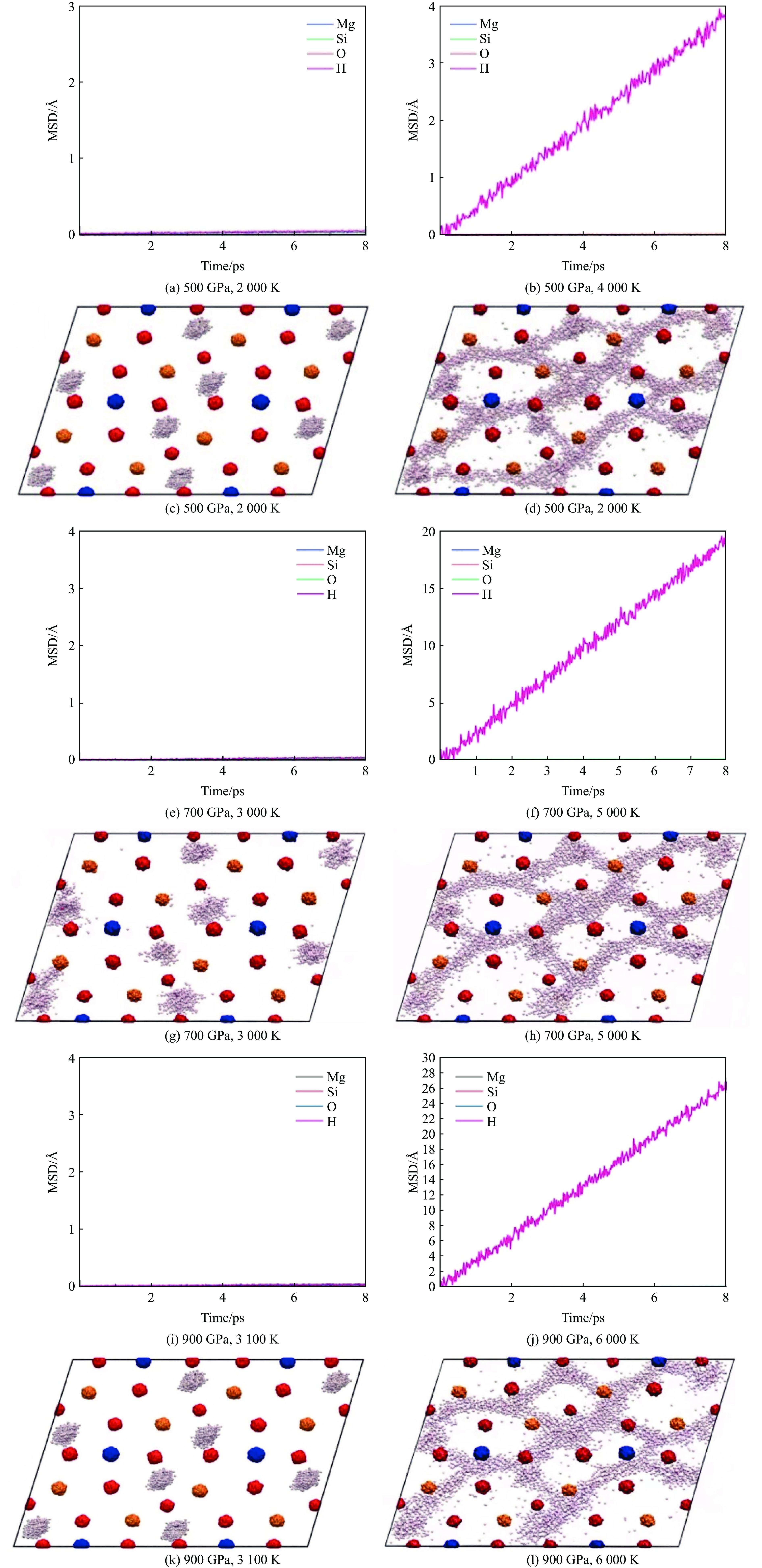
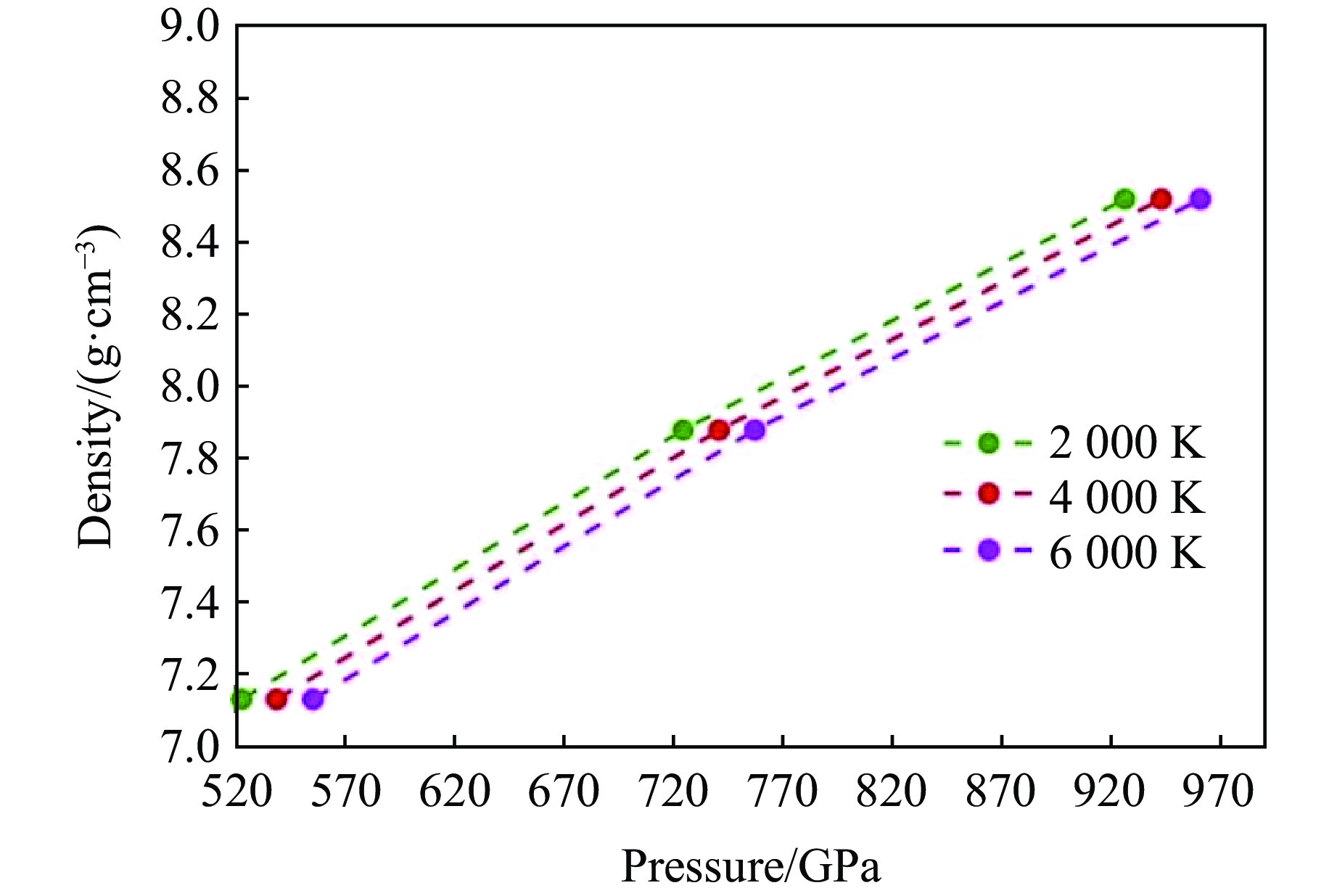
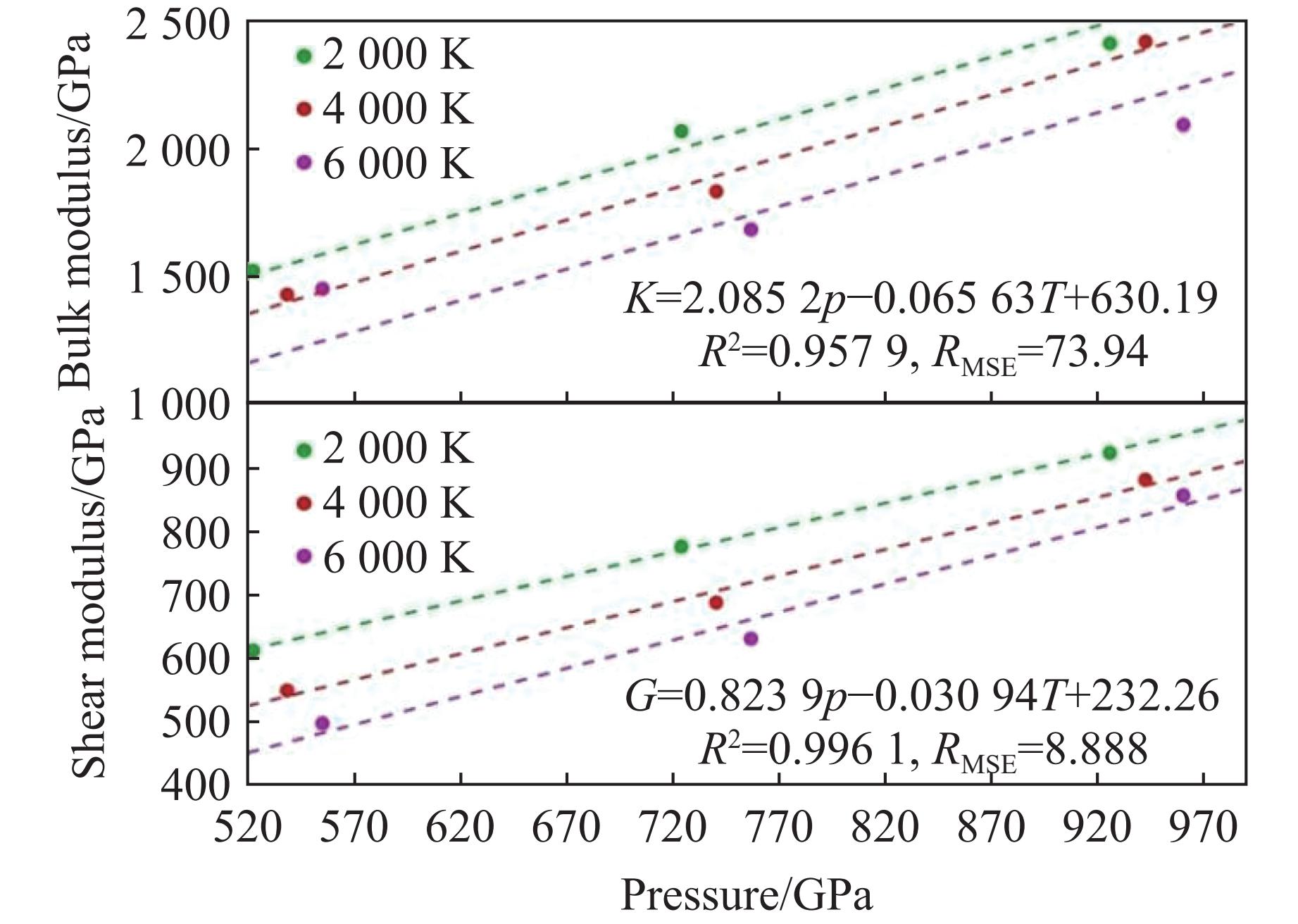
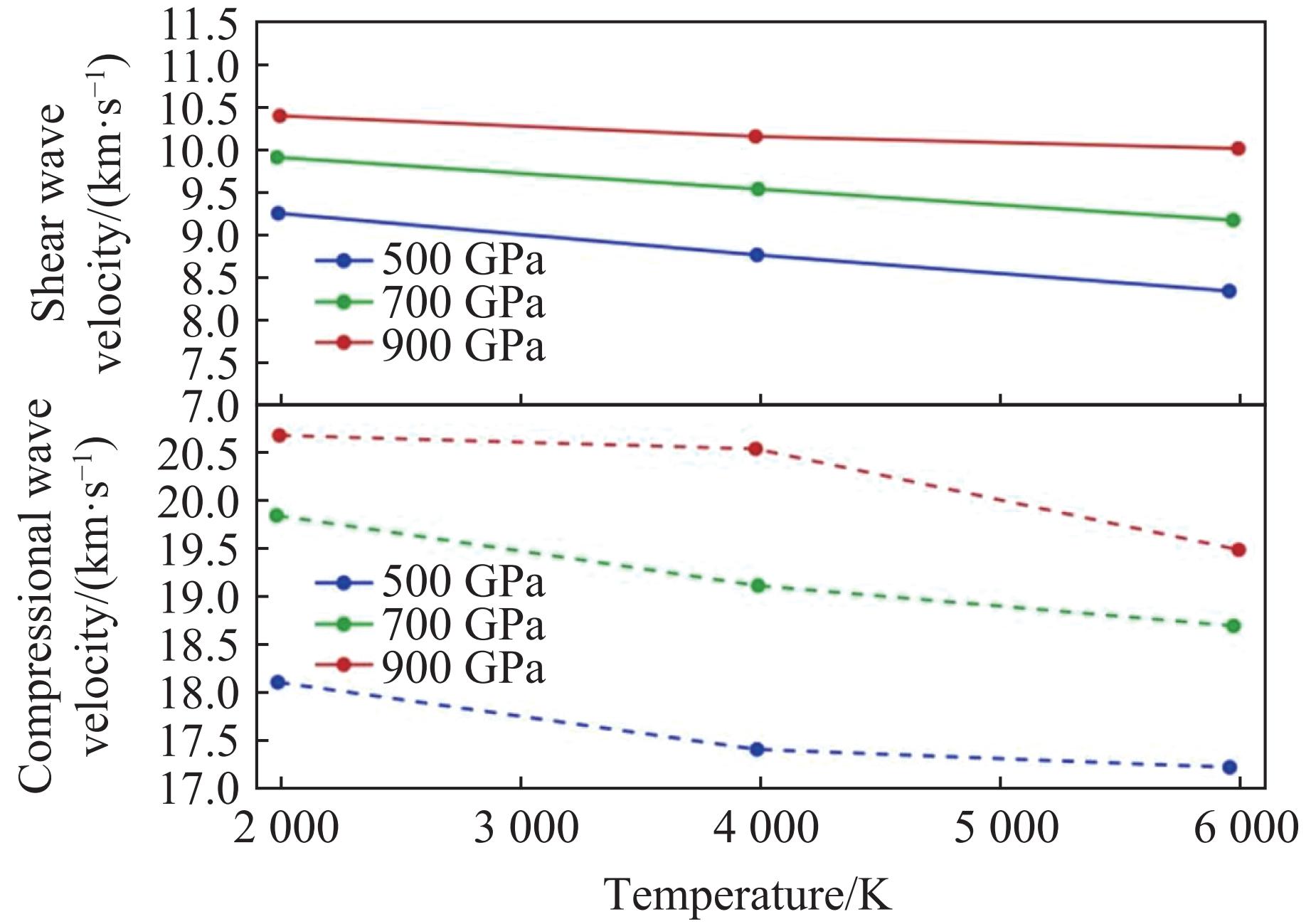
2000 ~6000 K、500~900 GPa温压范围内的稳定性和弹性特征。结果表明,体系在规定温度、压力区间内保持热力学稳定。均方位移计算明确了超离子态转变区间:在2000 K和500 GPa、3000 K和700 GPa、3100 K和900 GPa的温压条件下,所有原子被束缚在晶格内,体系处于正常态;当温压分别升至4000 K和500 GPa、5000 K和700 GPa、6000 K和900 GPa时,H原子均方位移呈线性增长,Mg、Si、O骨架原子保持局域化,H质子轨迹形成弥散网络,呈现“固态骨架+液态离子”的超离子态特征。模拟结果显示,β-Mg2SiO5H2的密度随压力的升高呈线性增加,剪切模量随温度升高近似线性下降,体积模量在900 GPa、6000 K时显著降低,可能影响超离子态转变。剪切波速和压缩波速的变化趋势主要受温压控制,即随着压力的升高而增加,随着温度的升高而降低;而900 GPa压力下超离子态使得β-Mg2SiO5H2的压缩波速明显降低,推测超离子态转变导致结构软化。研究结果表明,β-Mg2SiO5H2在符合5~8 倍地球质量的超级地球地幔深部条件下可以稳定存在,并在一定的温压条件下转变为超离子态,其高达11.4%的含水量与高效质子输运能力对类地行星深部水循环与宜居性具有潜在的重要影响,为理解行星内部动力学提供了关键的理论依据。-
关键词:
- β-Mg2SiO5H2 /
- 弹性特征 /
- 第一性原理计算 /
- 超离子态 /
- 类地超级地球
Abstract: Hydrous magnesium silicate is considered as a potential water-rich reservoir in the early Earth’s interior. Investigating its behavior under extreme high-temperature and high-pressure conditions is crucial for understanding the internal structure models and water presence potential of super-Earths. By using first-principles molecular dynamics simulations, this study systematically investigates the stability and elastic properties of β-Mg2SiO5H2 within the pressure range of 500–900 GPa and temperature range of2000 –6000 K. The results indicate that the system remains thermodynamically stable across the entire studied pressure-temperature range, with no structural phase transitions observed. Calculations of the mean square displacement reveal the transition interval for the superionic state: at 500 GPa and2000 K, 700 GPa and3000 K, and 900 GPa and3100 K, all atoms remain confined within the lattice, with the system in a normal state; when the temperature increases to4000 K at 500 GPa,5000 K at 700 GPa, and6000 K at 900 GPa, the mean square displacement of H atoms exhibits a linear increase, while the framework atoms (Mg, Si, O) remain localized. The proton trajectories form a diffuse network, exhibiting the characteristics of a superionic state with a “solid framework+liquid-like ions”. Simulation results show that the density of β-Mg2SiO5H2 increases linearly with pressure. The shear modulus decreases nearly linearly with increasing temperature, while the bulk modulus shows a significant reduction at 900 GPa and6000 K, likely in response to the superionic state transition. The variations in shear and compressional wave velocity are primarily controlled by pressure and temperature, increasing with pressure and decreasing with temperature. Under high pressure (900 GPa), the superionic state leads to a notable decrease in the compressional wave velocity of β-Mg2SiO5H2, suggesting that the superionic transition induces structural softening. This study confirms that β-Mg2SiO5H2 can remain stable under the deep mantle pressure-temperature conditions of super-Earths with masses 5–8 times that of Earth and can transition to a superionic state under specific conditions. Its high water mass fraction of up to 11.4% and efficient proton transport capability have significant implications for deep water cycles and the habitability of terrestrial planets, providing key theoretical insights for understanding planetary interior dynamics. -

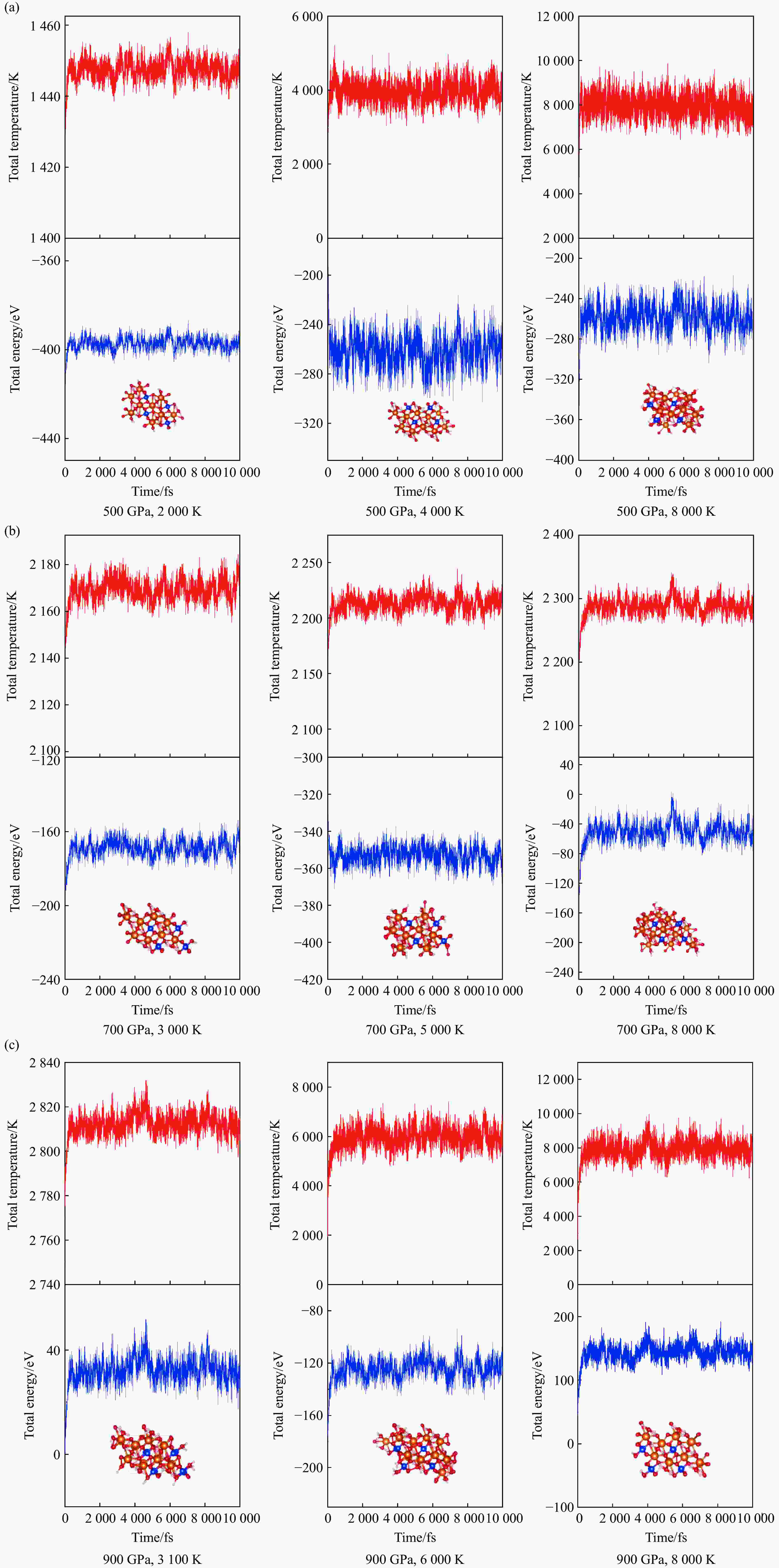
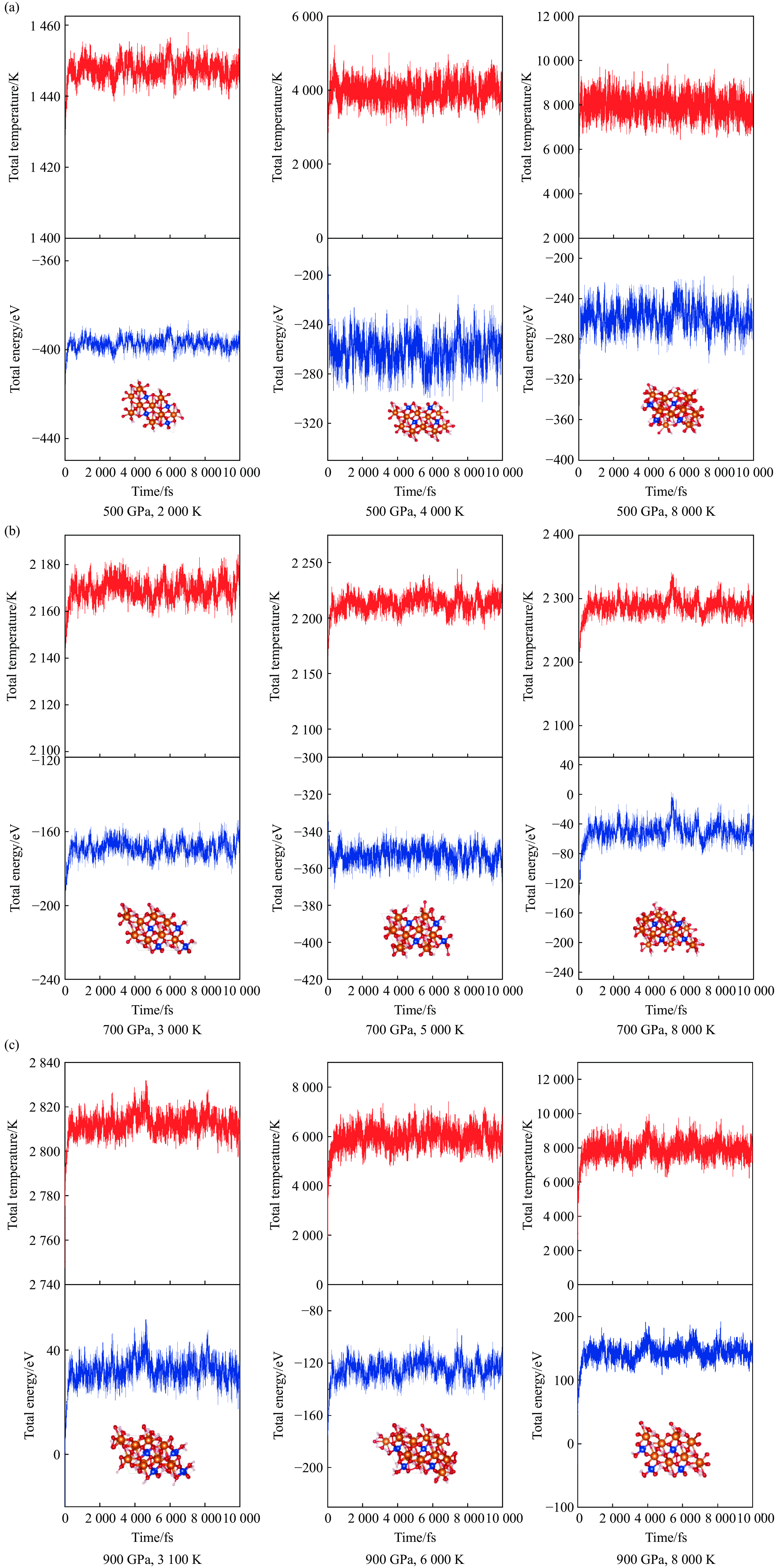
图 2 500、700、900 GPa达到超离子态前后的能量和温度变化趋势
Figure 2. Energy and temperature variation trend before and after reaching the superionic state under pressures of 500, 700, and 900 GPa
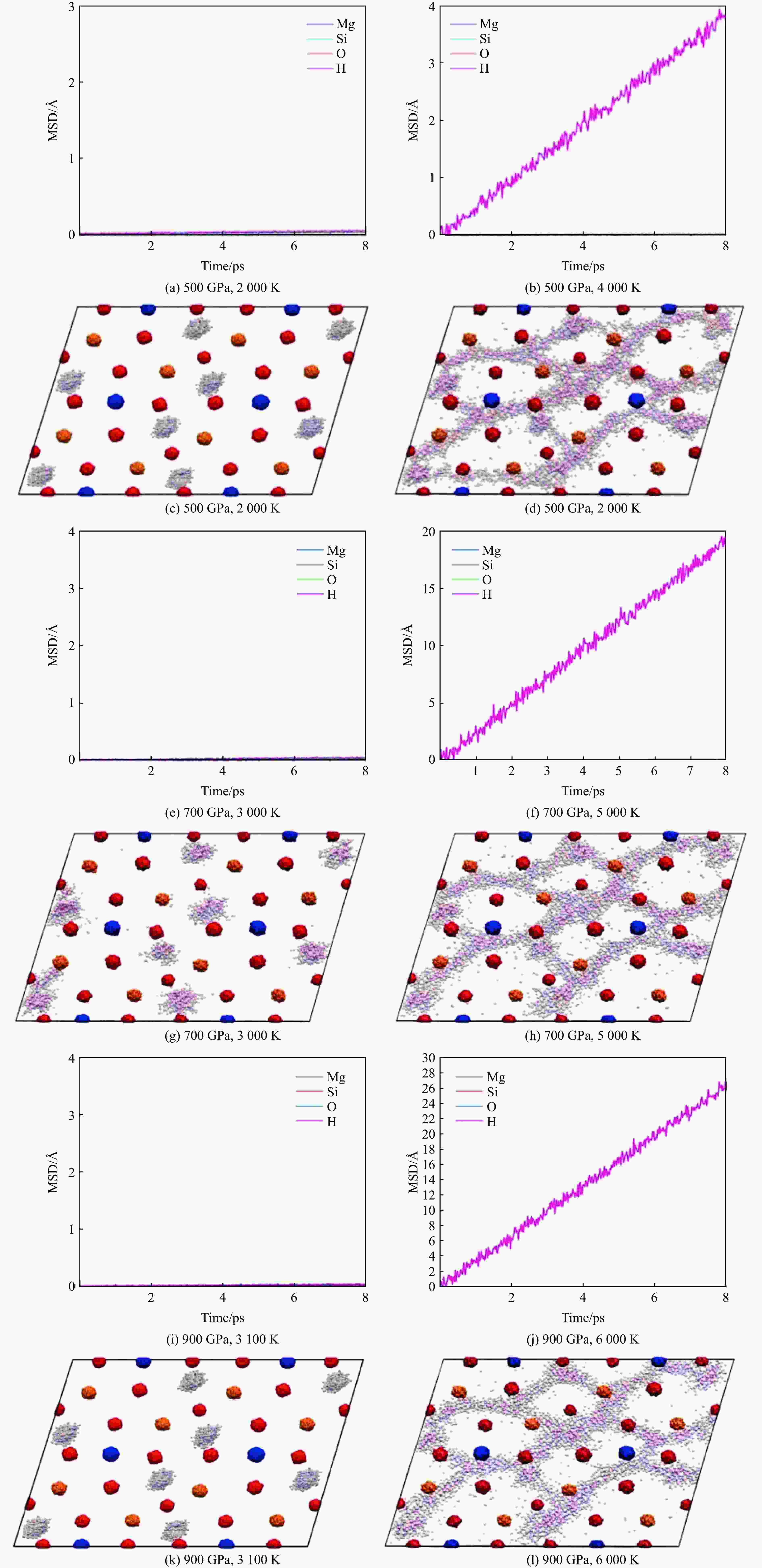
图 3 (a)~(b) (e)~(f) (i)~(j)不同温度、压力条件下达到超离子态前后β-Mg2SiO5H2的原子均方位移,(c)~(d) (g)~(h) (k)~(l)为对应温度压力条件下[010]晶面的原子轨迹投影(红色球体为O原子,白色球体为H原子,黄色球体为Mg原子,蓝色球体为Si原子)
Figure 3. (a)–(b) (e)–(f) (i)–(j) MSD of β-Mg2SiO5H2 before and after reaching the superionic state under different temperature and pressure conditions; (c)–(d) (g)–(h) (k)–(l) projection of atomic trajectories on the [010] crystal plane under corresponding temperature and pressure conditions (Red, white, yellow, and blue spheres represent O, H, Mg, and Si atom, respectively.)
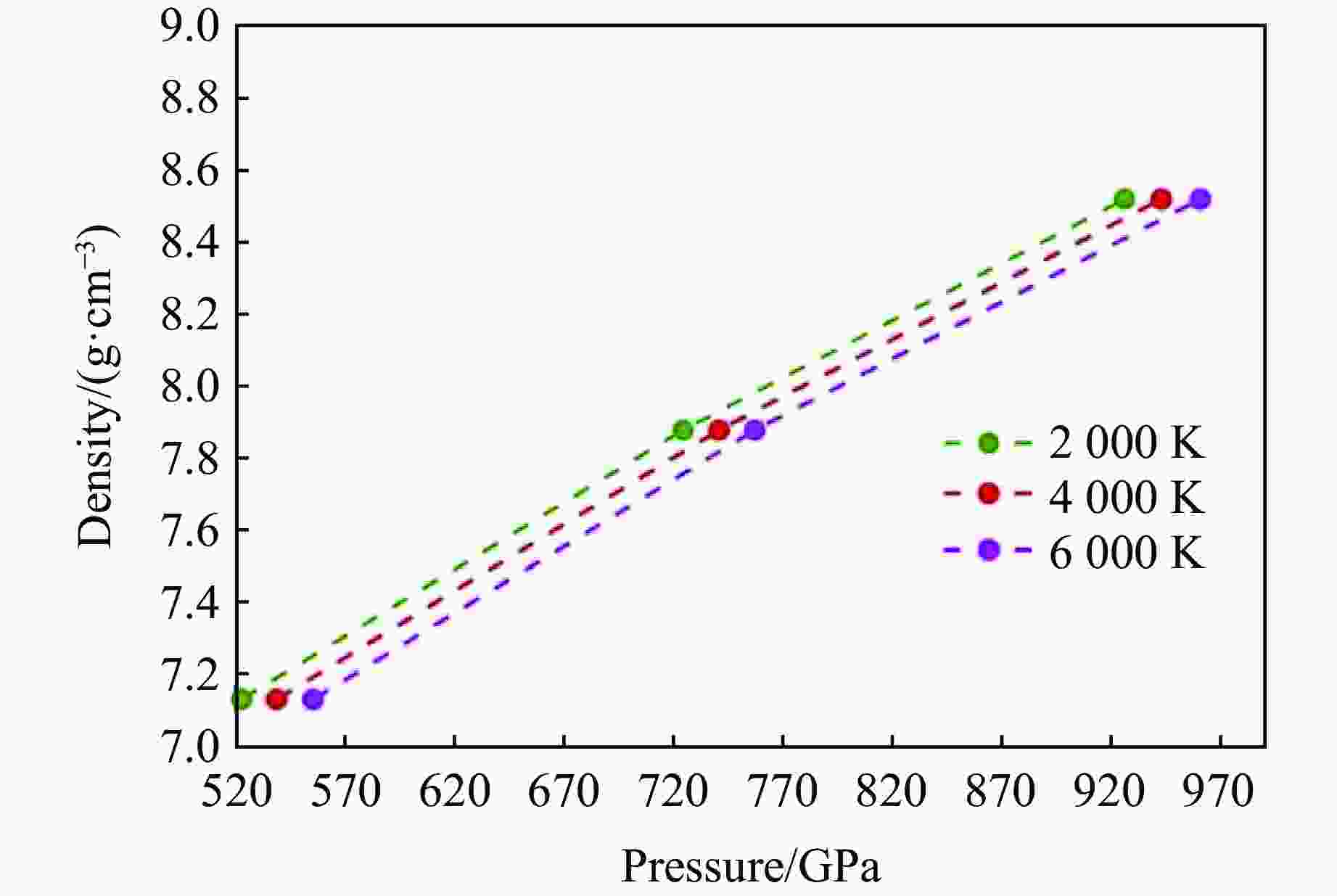
图 4 β-Mg2SiO5H2的密度随温度和压力变化
Figure 4. Density variations of β-Mg2SiO5H2 with temperature and pressure
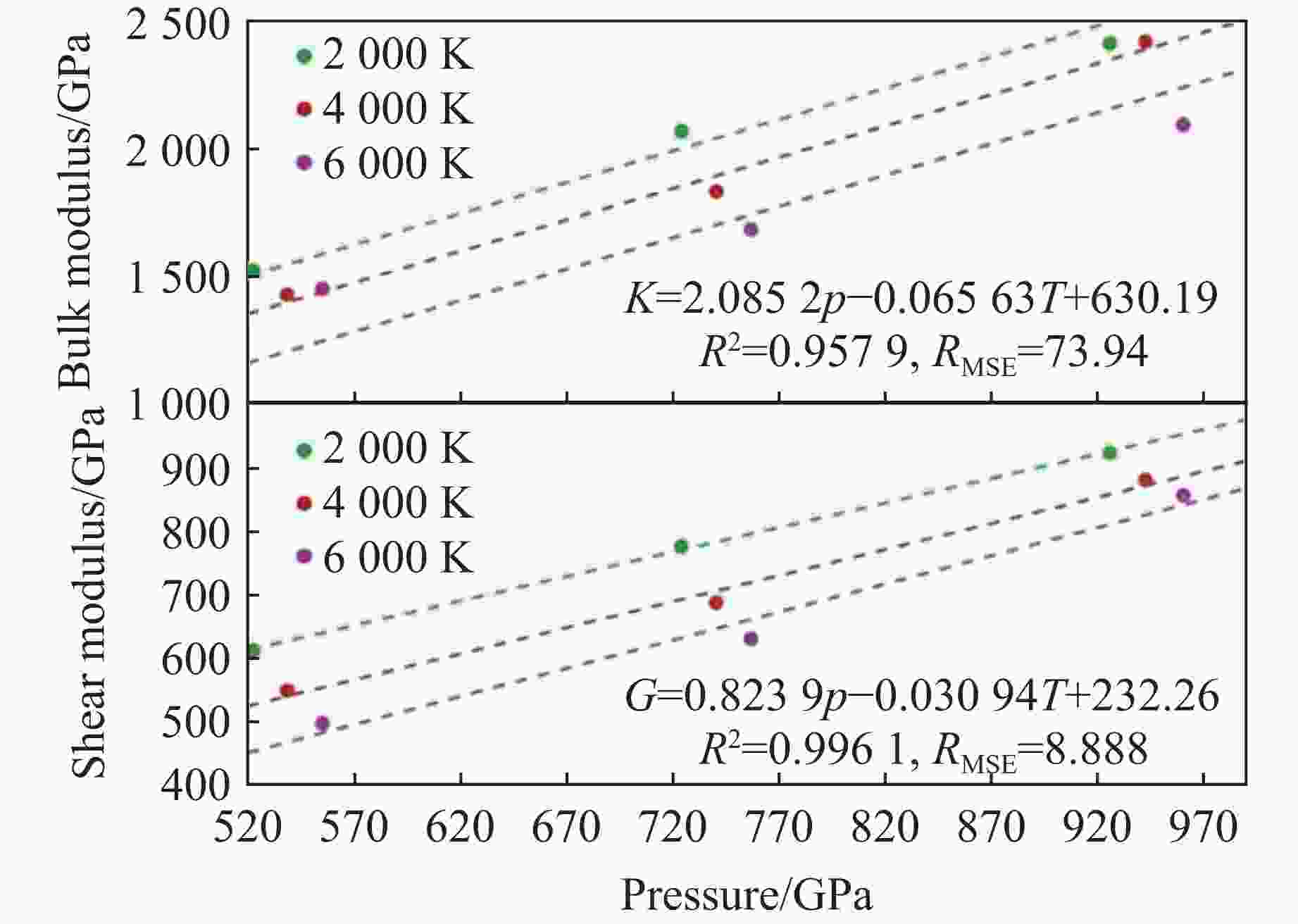
图 5 β-Mg2SiO5H2的弹性模量随温度和压力的变化
Figure 5. Variation of the elastic modulus of β-Mg2SiO5H2 with temperature and pressure
-
[1] DUFFY T, MADHUSUDHAN N, LEE K K M. Mineralogy of super-Earth planets [J]. Treatise on Geophysics (Second Edition), 2015, 2: 149–178. doi: 10.1016/B978-0-444-53802-4.00053-1 [2] HOWARD A W, MARCY G W, BRYSON S T, et al. Planet occurrence within 0.25 Au of solar-type stars from Kepler [J]. The Astrophysical Journal Supplement Series, 2012, 201(2): 15. doi: 10.1088/0067-0049/201/2/15 [3] FRESSIN F, TORRES G, CHARBONNEAU D, et al. The false positive rate of Kepler and the occurrence of planets [J]. The Astrophysical Journal, 2013, 766(2): 81. doi: 10.1088/0004-637X/766/2/81 [4] VALENCIA D, O’CONNELL R J, SASSELOV D D. Inevitability of plate tectonics on super-Earths [J]. The Astrophysical Journal, 2007, 670(1): L45–L48. doi: 10.1086/524012 [5] VALENCIA D, SASSELOV D D, O’CONNELL R J. Radius and structure models of the first super-Earth planet [J]. The Astrophysical Journal, 2007, 656(1): 545–551. doi: 10.1086/509800 [6] SWIFT D C, EGGERT J H, HICKS D G, et al. Mass-radius relationships for exoplanets [J]. The Astrophysical Journal, 2012, 744(1): 59. doi: 10.1088/0004-637X/744/1/59 [7] GONG Y X, ZHOU J L. The silicate and carbon-rich models of CoRoT-7b, Kepler-9d and Kepler-10b [J]. Research in Astronomy and Astrophysics, 2012, 12(6): 678–692. doi: 10.1088/1674-4527/12/6/008 [8] MADHUSUDHAN N, HARRINGTON J, STEVENSON K B, et al. A high C/O ratio and weak thermal inversion in the atmosphere of exoplanet WASP-12b [J]. Nature, 2011, 469(7328): 64–67. doi: 10.1038/nature09602 [9] ROGERS L A, SEAGER S. A framework for quantifying the degeneracies of exoplanet interior compositions [J]. The Astrophysical Journal, 2010, 712(2): 974–991. doi: 10.1088/0004-637X/712/2/974 [10] SEAGER S, KUCHNER M, HIER-MAJUMDER C A, et al. Mass-radius relationships for solid exoplanets [J]. The Astrophysical Journal, 2007, 669(2): 1279–1297. doi: 10.1086/521346 [11] SOTIN C, GRASSET O, MOCQUET A. Mass-radius curve for extrasolar Earth-like planets and ocean planets [J]. Icarus, 2007, 191(1): 337–351. doi: 10.1016/j.icarus.2007.04.006 [12] WAGNER F W, TOSI N, SOHL F, et al. Rocky super-Earth interiors: structure and internal dynamics of CoRoT-7b and Kepler-10b [J]. Astronomy & Astrophysics, 2012, 541: A103. doi: 10.1051/0004-6361/201118441 [13] VALENCIA D, O’CONNELL R J, SASSELOV D. Internal structure of massive terrestrial planets [J]. Icarus, 2006, 181(2): 545–554. doi: 10.1016/j.icarus.2005.11.021 [14] VALENCIA D, O’CONNELL R J. Convection scaling and subduction on Earth and super-Earths [J]. Earth and Planetary Science Letters, 2009, 286(3/4): 492–502. doi: 10.1016/j.epsl.2009.07.015 [15] GRASSET O, SCHNEIDER J, SOTIN C. A study of the accuracy of mass-radius relationships for silicate-rich and ice-rich planets up to 100 Earth masses [J]. The Astrophysical Journal, 2009, 693(1): 722–733. doi: 10.1088/0004-637X/693/1/722 [16] SEAGER S. Exoplanet habitability [J]. Science, 2013, 340(6132): 577–581. doi: 10.1126/science.1232226 [17] ZHANG Y Y, GU Y J, LAN Y S, et al. Explore the fluid-to-superionic phase transition of water at giant planetary interior conditions [J]. Physics Letters A, 2025, 557: 130857. doi: 10.1016/j.physleta.2025.130857 [18] KORENAGA J. On the likelihood of plate tectonics on super-Earths: does size matter? [J]. The Astrophysical Journal Letters, 2010, 725(1): L43–L46. doi: 10.1088/2041-8205/725/1/L43 [19] CARTER-BOND J C, O’BRIEN D P, RAYMOND S N. The compositional diversity of extrasolar terrestrial planets. Ⅱ. migration simulations [J]. The Astrophysical Journal, 2012, 760(1): 44. doi: 10.1088/0004-637X/760/1/44 [20] LI H F, OGANOV A R, CUI H X, et al. Ultrahigh-pressure magnesium hydrosilicates as reservoirs of water in early Earth [J]. Physical Review Letters, 2022, 128(3): 035703. doi: 10.1103/PhysRevLett.128.035703 [21] GASPARIK T. Phase relations in the transition zone [J]. Journal of Geophysical Research: Solid Earth, 1990, 95(B10): 15751–15769. doi: 10.1029/JB095iB10p15751 [22] GHOSH S, SCHMIDT M W. Stability of phase D at high pressure and temperature: implications for the role of fluids in the deep mantle [C]//AGU Fall Meeting Abstracts. San Francisco: AGU, 2011: MR21A-2116. [23] OHTANI E, AMAIKE Y, KAMADA S, et al. Stability of hydrous phase H MgSiO4H2 under lower mantle conditions [J]. Geophysical Research Letters, 2014, 41(23): 8283–8287. doi: 10.1002/2014GL061690 [24] TSUCHIYA J, UMEMOTO K. First-principles determination of the dissociation phase boundary of phase H MgSiO4H2 [J]. Geophysical Research Letters, 2019, 46(13): 7333–7336. doi: 10.1029/2019GL083472 [25] NISHI M, IRIFUNE T, TSUCHIYA J, et al. Stability of hydrous silicate at high pressures and water transport to the deep lower mantle [J]. Nature Geoscience, 2014, 7(3): 224–227. doi: 10.1038/ngeo2074 [26] EGGLETON R A, BOLAND J N, RINGWOOD A E. High pressure synthesis of a new aluminium silicate: Al5Si5O17(OH) [J]. Geochemical Journal, 1978, 12(3): 191–194. doi: 10.2343/geochemj.12.191 [27] OHIRA I, OHTANI E, SAKAI T, et al. Stability of a hydrous δ-phase, AlOOH-MgSiO2(OH)2, and a mechanism for water transport into the base of lower mantle [J]. Earth and Planetary Science Letters, 2014, 401: 12–17. doi: 10.1016/j.epsl.2014.05.059 [28] SUZUKI A, OHTANI E, KAMADA T. A new hydrous phase δ-AlOOH synthesized at 21 GPa and 1000 °C [J]. Physics and Chemistry of Minerals, 2000, 27(10): 689–693. doi: 10.1007/s002690000120[29] GONCHAROV A F, STRUZHKIN V V, SOMAYAZULU M S, et al. Compression of ice to 210 gigapascals: infrared evidence for a symmetric hydrogen-bonded phase [J]. Science, 1996, 273(5272): 218–220. doi: 10.1126/science.273.5272.218 [30] FORTNEY J J, NETTELMANN N. The interior structure, composition, and evolution of giant planets [J]. Space Science Reviews, 2010, 152(1): 423–447. doi: 10.1007/s11214-009-9582-x [31] PRAKAPENKA V B, HOLTGREWE N, LOBANOV S S, et al. Polymorphism of superionic ice phases [J]. Nature Physics, 2021, 17: 1233–1238. doi: 10.1038/s41567-021-01351-8 [32] 顾小雨, 刘雷. 高压下Py-FeO2、Py-FeOOH和ε-FeOOH晶体结构与弹性特征的第一性原理研究 [J]. 高压物理学报, 2022, 36(1): 012201. doi: 10.11858/gywlxb.20210789GU X Y, LIU L. First-principles calculation on crystal structure and elastic properties of Py-FeO2, Py-FeOOH and ε-FeOOH under high pressures [J]. Chinese Journal of High Pressure Physics, 2022, 36(1): 012201. doi: 10.11858/gywlxb.20210789 [33] NISHI M, KUWAYAMA Y, TSUCHIYA J, et al. The pyrite-type high-pressure form of FeOOH [J]. Nature, 2017, 547(7662): 205–208. doi: 10.1038/nature22823 [34] MILLOT M, COPPARI F, RYGG J R, et al. Nanosecond X-ray diffraction of shock-compressed superionic water ice [J]. Nature, 2019, 569(7755): 251–255. doi: 10.1038/s41586-019-1114-6 [35] AKBER-KNUTSON S, BUKOWINSKI M S T. The energetics of aluminum solubility into MgSiO3 perovskite at lower mantle conditions [J]. Earth and Planetary Science Letters, 2004, 220(3/4): 317–330. doi: 10.1016/s0012-821x(04)00065-2 [36] LOPEZ E D, FORTNEY J J, MILLER N. How thermal evolution and mass-loss sculpt populations of super-Earths and sub-Neptunes: application to the Kepler-11 system and beyond [J]. The Astrophysical Journal, 2012, 761(1): 59. doi: 10.1088/0004-637X/761/1/59 [37] VAN HOOLST T, NOACK L, RIVOLDINI A. Exoplanet interiors and habitability [J]. Advances in Physics: X, 2019, 4(1): 1630316. doi: 10.1080/23746149.2019.1630316 [38] ASTUDILLO-DEFRU N, FORVEILLE T, BONFILS X, et al. The HARPS search for southern extra-solar planets. XLI. a dozen planets around the M dwarfs GJ 3138, GJ 3323, GJ 273, GJ 628, and GJ 3293 [J]. Astronomy & Astrophysics, 2017, 602: A88. doi: 10.1051/0004-6361/201630153 [39] SCHNEIDER J, DEDIEU C, LE SIDANER P, et al. Defining and cataloging exoplanets: the exoplanet. eu database [J]. Astronomy & Astrophysics, 2011, 532: A79. doi: 10.1051/0004-6361/201116713 [40] ZHANG Z B, LI J F, LYU Y, et al. Discovery of Ag+ superionic state in delafossite AgAlO2 [J]. Physica B: Condensed Matter, 2025, 717: 417830. doi: 10.1016/j.physb.2025.417830 [41] JINNOUCHI R, KARSAI F, KRESSE G. On-the-fly machine learning force field generation: application to melting points [J]. Physical Review B, 2019, 100(1): 014105. doi: 10.1103/PhysRevB.100.014105 [42] JINNOUCHI R, LAHNSTEINER J, KARSAI F, et al. Phase transitions of hybrid perovskites simulated by machine-learning force fields trained on the fly with Bayesian inference [J]. Physical Review Letters, 2019, 122(22): 225701. doi: 10.1103/PhysRevLett.122.225701 [43] KRESSE G, FURTHMÜLLER J. Efficiency of ab-initio total energy calculations for metals and semiconductors using a plane-wave basis set [J]. Computational Materials Science, 1996, 6(1): 15–50. doi: 10.1016/0927-0256(96)00008-0 [44] KARKI B B, STIXRUDE L, WENTZCOVITCH R M. High-pressure elastic properties of major materials of Earth’s mantle from first principles [J]. Reviews of Geophysics, 2001, 39(4): 507–534. doi: 10.1029/2000RG000088 [45] MOMMA K, IZUMI F. VESTA: a three-dimensional visualization system for electronic and structural analysis [J]. Journal of Applied Crystallography, 2008, 41(3): 653–658. doi: 10.1107/S0021889808012016 [46] STUKOWSKI A. Visualization and analysis of atomistic simulation data with OVITO-the open visualization tool [J]. Modelling and Simulation in Materials Science and Engineering, 2010, 18(1): 015012. doi: 10.1088/0965-0393/18/1/015012 [47] SAHU C K, MAJUMDAR L, MRIDHA S, et al. Unveiling the interior structure and thermal evolution of super-Earth GJ 486b [J]. The Astrophysical Journal, 2025, 981(1): 80. doi: 10.3847/1538-4357/adabbe [48] RAKITIN A, KOBAYASHI M. Microscopic study of superionic transition [J]. Physical Review B, 1996, 53(6): 3088–3094. doi: 10.1103/PhysRevB.53.3088 [49] KOBAYASHI M, ONO S, KOHDA T, et al. p-d hybridization in superionic conductors [J]. Solid State Ionics, 2002, 154/155: 209–215. [50] HE Y, ZHANG W, HU Q Y, et al. Absence of dehydration due to superionic transition at Earth’s core-mantle boundary [J]. Science Advances, 2026, 12(5): eaeb3006. doi: 10.1126/sciadv.aeb3006 [51] HU Q Y, TANG M X. Tracing the anharmonicity and superionic phase transition of hydrous FeO2H [J]. Frontiers in Earth Science, 2022, 10: 913122. doi: 10.3389/FEART.2022.913122 [52] QIU R, ZENG Q Y, WANG H, et al. Anomalous thermal transport across the superionic transition in ice [J]. Chinese Physics Letters, 2023, 40(11): 116301. doi: 10.1088/0256-307X/40/11/116301 [53] ZHOU L X, HARDY J R, XU X. Molecular dynamics simulation of MgSiO3 perovskite [J]. Chinese Physics Letters, 1998, 15(6): 444–446. doi: 10.1088/0256-307X/15/6/020 [54] HE Y, SUN S C, LI H P. Ab initio molecular dynamics investigation of the elastic properties of superionic Li2O under high temperature and pressure [J]. Physical Review B, 2021, 103(17): 174105. doi: 10.1103/PhysRevB.103.174105 [55] HUANG Y Q, HE Y, ZHANG Y J, et al. Experimental evidence for superionic Fe-C alloy revealed by shear softening in Earth’s inner core [J]. National Science Review, 2025, 12(11): nwaf419. doi: 10.1093/nsr/nwaf419 -

 下载:


计量
- 文章访问数: 752
- HTML全文浏览量: 282
- PDF下载量: 65
