





Hierarchical Energy Absorption and Dynamic Response of Bionic Thin-Walled-Foam Composite Structures Based on Mechanical Matching Design
-
摘要: 针对轻质防护结构对稳定承载与高效能量吸收协同提升的需求,提出了一种基于力学匹配的混合仿生薄壁-泡沫复合结构设计方法。利用增材制造技术,制备了3种构型的聚乳酸(polylactic acid, PLA)仿生壳体,并通过原位发泡构建聚氨酯泡沫填充复合结构。通过拉伸试验、准静态压缩试验及动态落锤冲击试验,研究发泡过程产生的热效应对PLA壳体性能及复合结构力学响应的影响。通过峰值力、平台力、比吸能、平均压溃力、压溃力效率等指标对结构耐撞性能进行定量评价。结果表明,发泡导致的热效应降低了PLA的弹性模量和强度,并提高延展性,从而改善壳体与泡沫之间的力学匹配。复合结构的平台力和平均压溃力显著提升,压溃模式由局部失稳转变为渐进堆叠坍塌,表现出稳定的分级吸能特征。动态冲击试验进一步验证了结构在高能冲击作用下的稳定承载和吸能能力。研究结果揭示了几何构型、材料匹配与热-力耦合效应协同作用下的结构吸能机制,为轻质仿生防护结构的设计与优化提供了新的思路。Abstract: To achieve the synergistic improvement of load-bearing stability and energy absorption in lightweight protective structures, a bio-inspired thin-walled-foam composite structure based on mechanical matching design was proposed. Three configurations of polylactic acid (PLA) bio-inspired shells were fabricated via additive manufacturing, and subsequently filled with polyurethane foam through an in-situ foaming process. Tensile tests, quasi-static compression tests, and drop-weight impact tests were conducted to investigate the foaming-induced thermal effects on the mechanical properties of the PLA shells and the structural response of the composites. Crashworthiness was evaluated using peak crushing force (PCF), plateau force, specific energy absorption (SEA), mean crushing force (MCF), and crushing force efficiency (CFE). Results show that the temperature rise during foaming reduces the elastic modulus and strength of PLA while improving its ductility, thereby enhancing the mechanical compatibility between the shell and foam. Consequently, the composite structures exhibit significantly increased plateau force and MCF, and their collapse mode transforms from local instability to progressive stacked crushing, leading to stable hierarchical energy absorption. Dynamic impact tests further demonstrate the superior load-bearing and energy absorption performance of the composite structures under high-energy impact. The results highlight the synergistic role of geometric configuration, material matching, and thermal-mechanical coupling in regulating the energy absorption behavior, providing guidance for the design of lightweight bio-inspired protective structures.
-
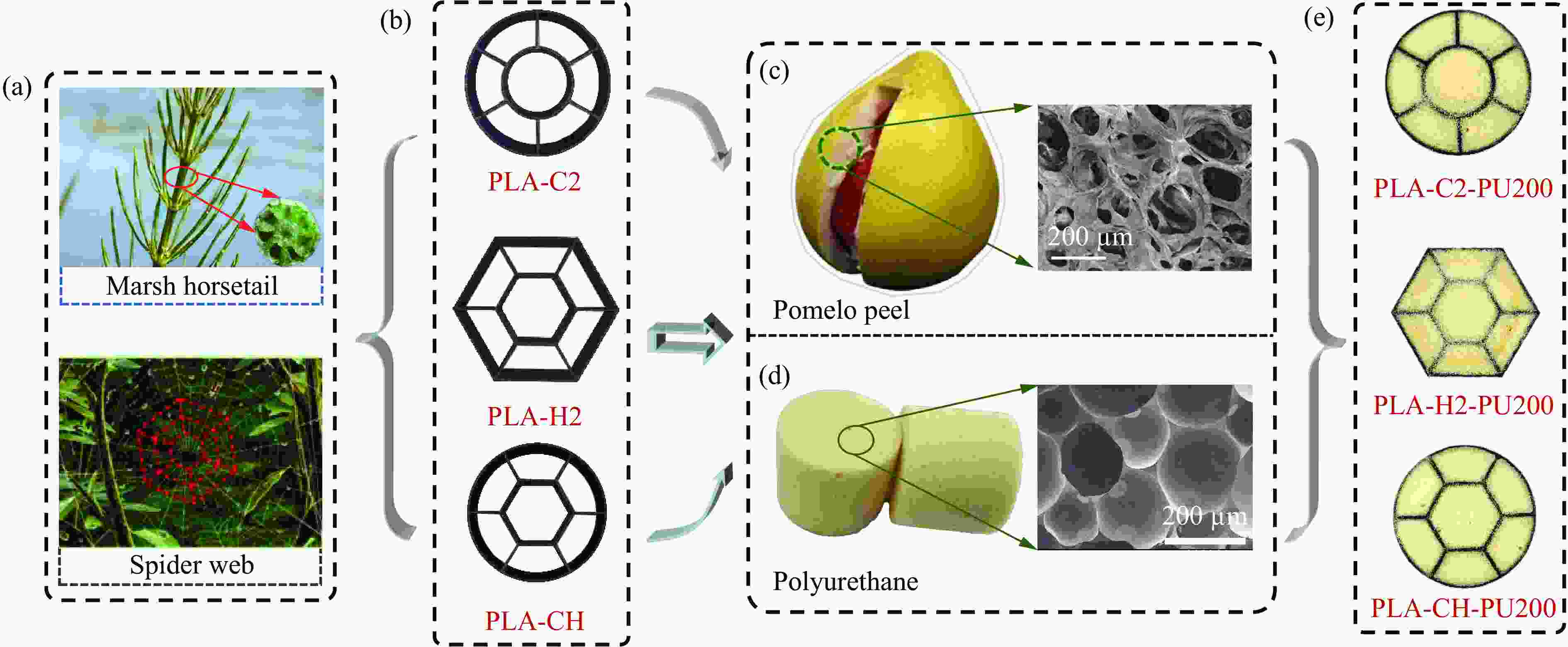
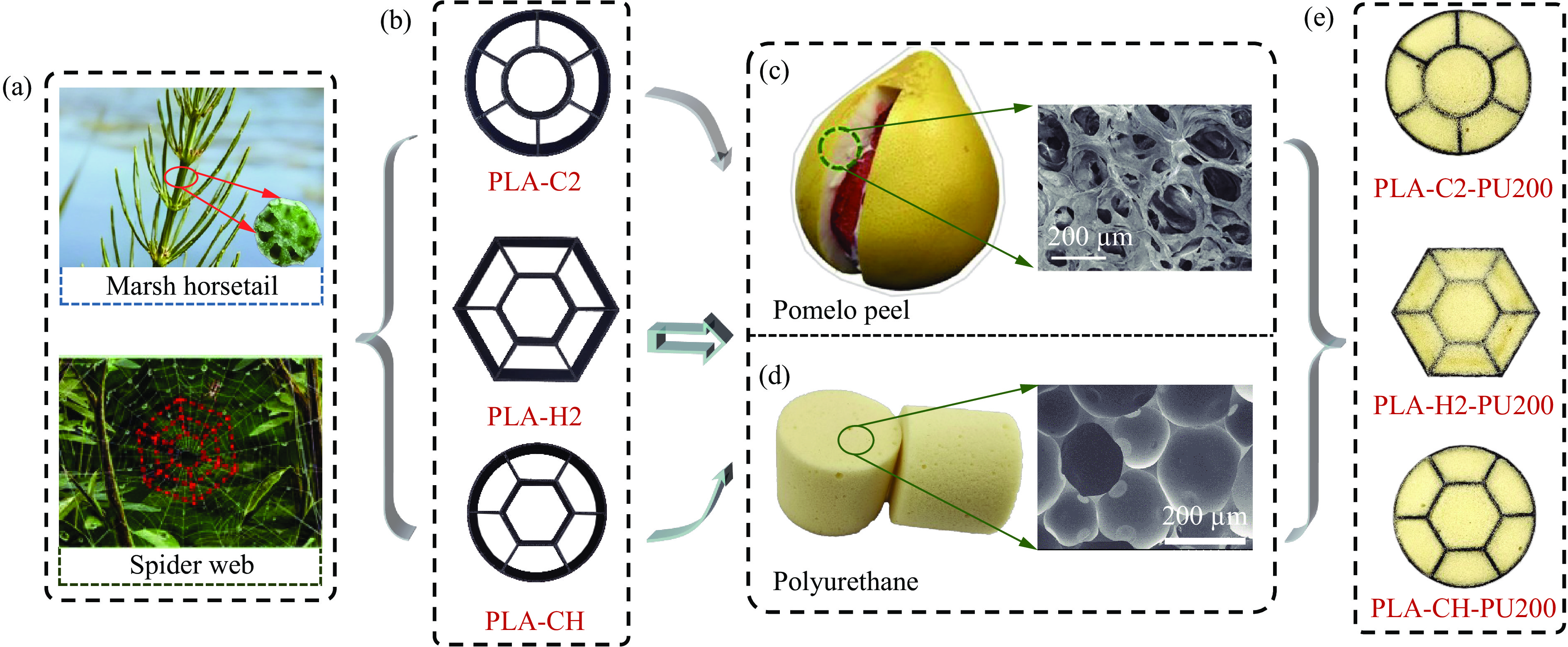
图 1 仿生复合结构设计示意图:(a) 马尾草和蜘蛛网结构[25–27],(b) 3D打印的薄壁壳体,(c) 柚子皮结构及微观示意图[28],(d) 聚氨酯试样及扫描电镜图像,(e) 基于混合仿生的复合结构实物
Figure 1. Schematic diagram of the biomimetic composite structure design: (a) marsh horsetail and spider web structures[25–27]; (b) 3D-printed thin-walled shells; (c) pomelo peel structure and microscopic schematic[28]; (d) polyurethane specimen and scanning electron microscope (SEM) images; (e) physical image of hybrid bionic composite structure
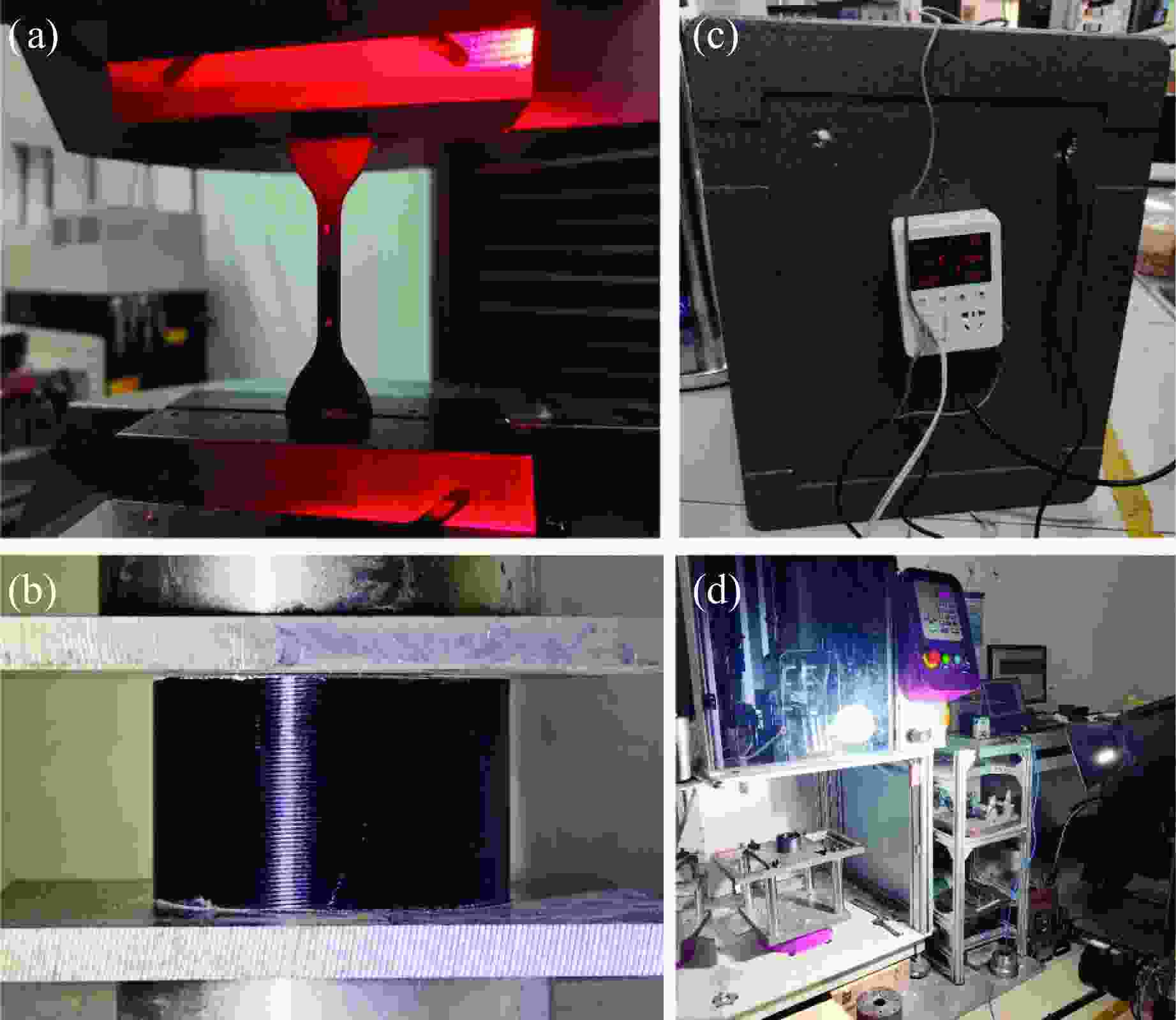
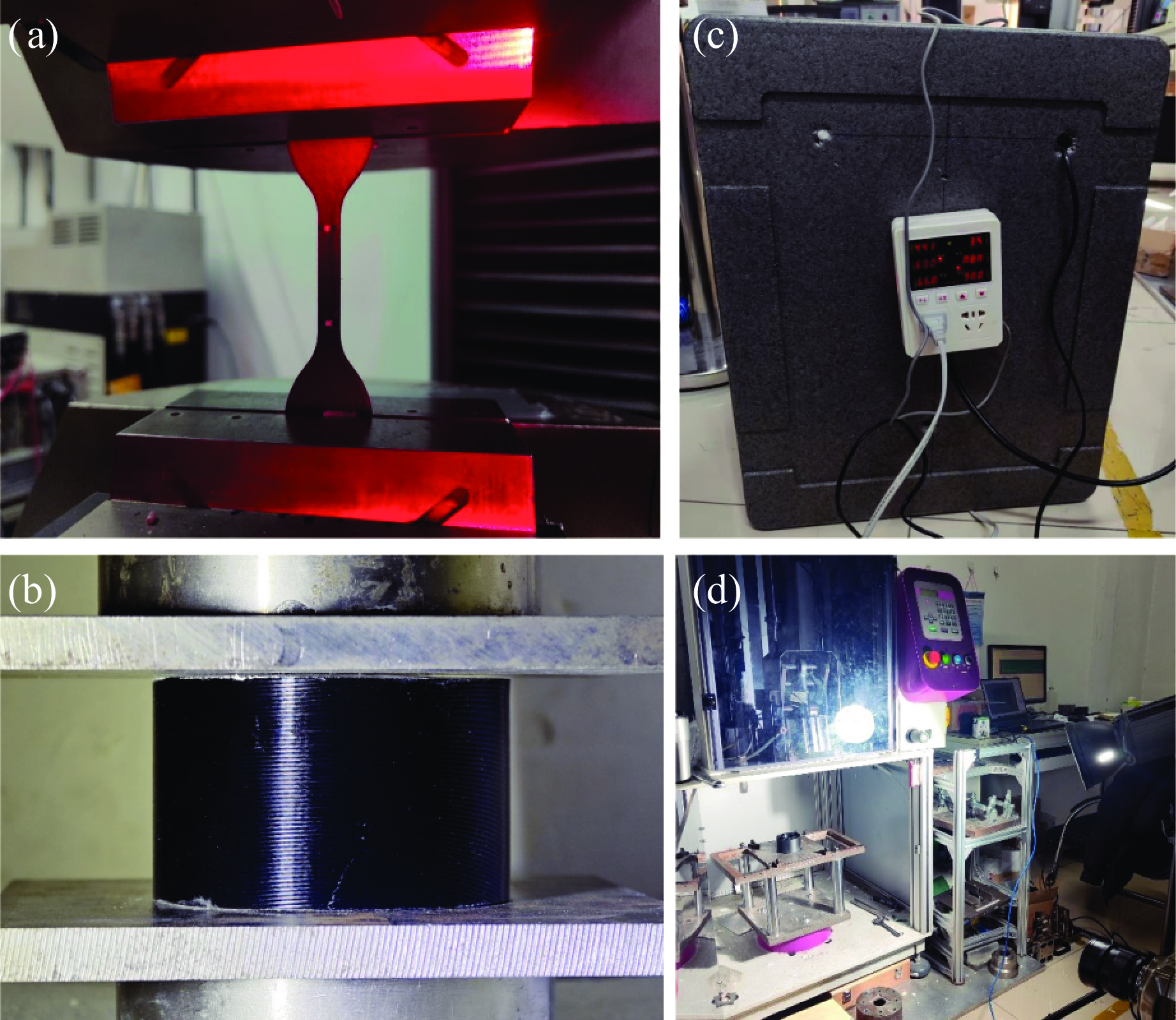
图 2 现场测试布局: (a) PLA试样的准静态拉伸测试,(b) 仿生结构的准静态压缩测试,(c)试样加热装置,(d) 动态落锤测试
Figure 2. Layout of on-site testing: (a) quasi-static tensile testing of PLA specimen; (b) quasi-static compression testing of biomimetic structures; (c) specimen heating apparatus; (d) dynamic drop-weight testing
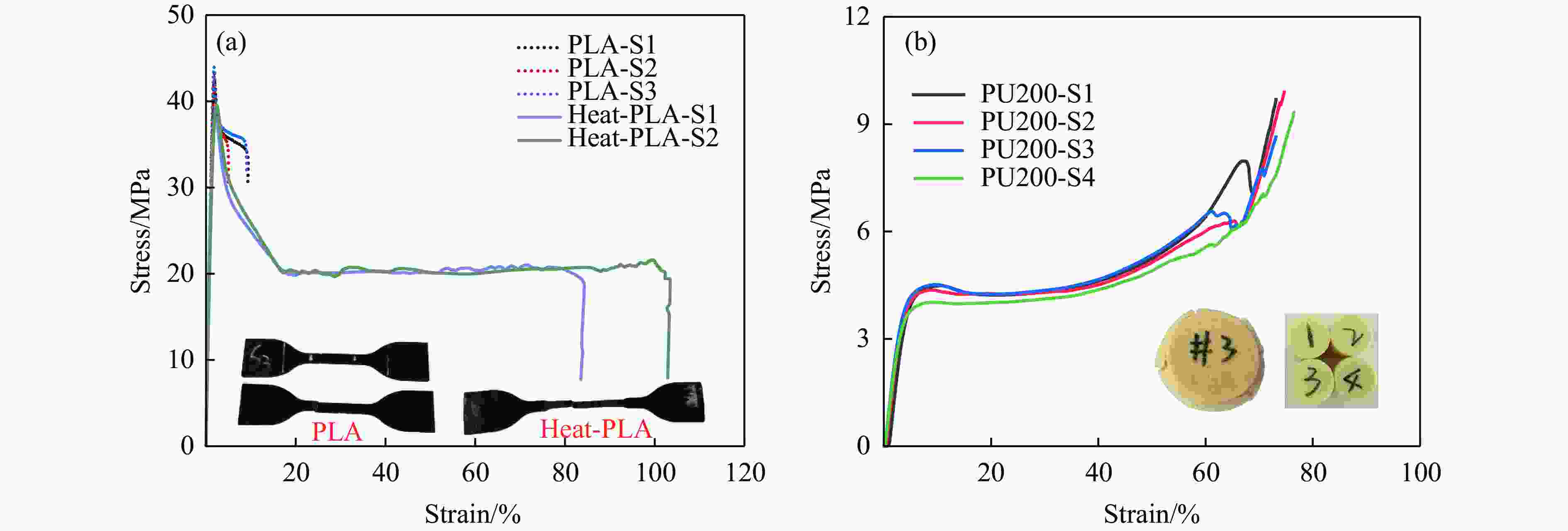
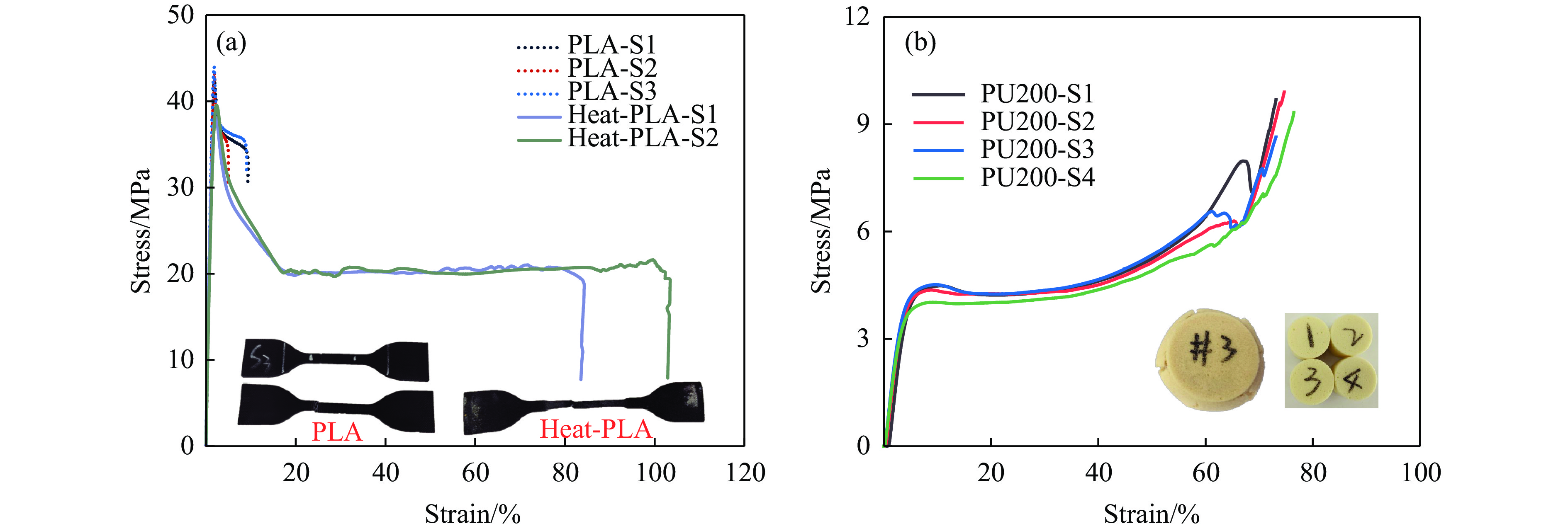
图 3 PLA和PU基础材料的应力-应变曲线: (a) PLA试样在常温和加热工况下准静态拉伸的应力-应变曲线, (b) PU试样准静态压缩的应力-应变曲线
Figure 3. Stress-strain curves for PLA and PU: (a) stress-strain curves for quasi-static tensile testing of PLA specimens under ambient and heated conditions; (b) stress-strain curves for quasi-static compression testing of PU specimens
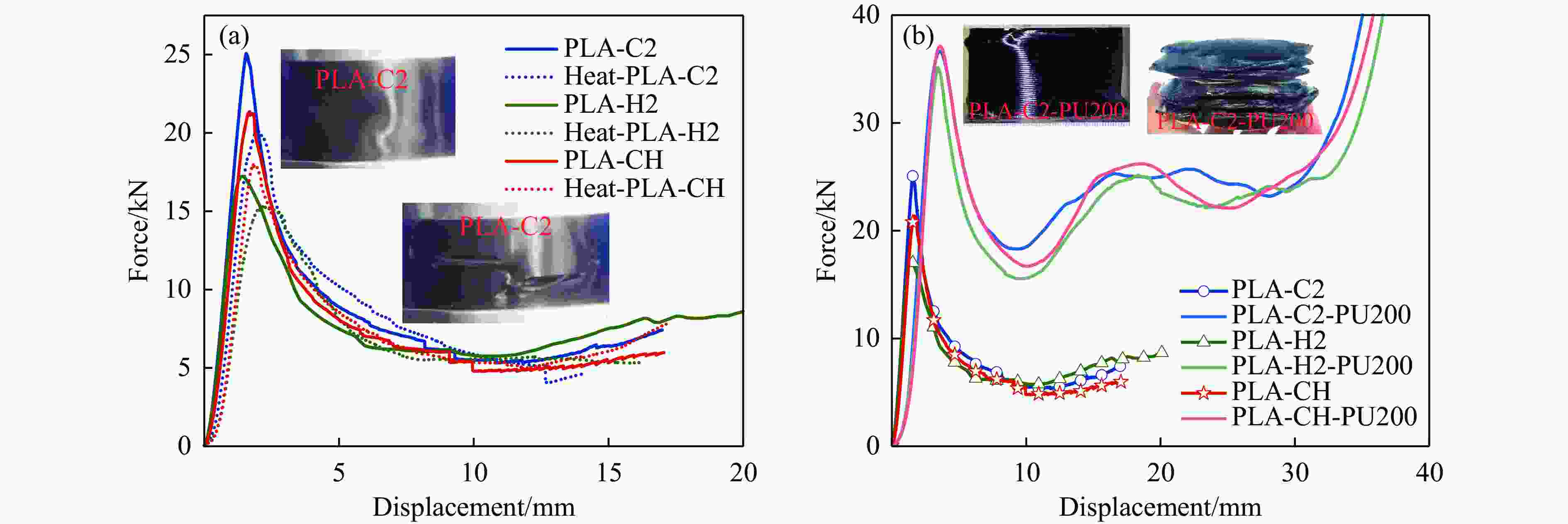
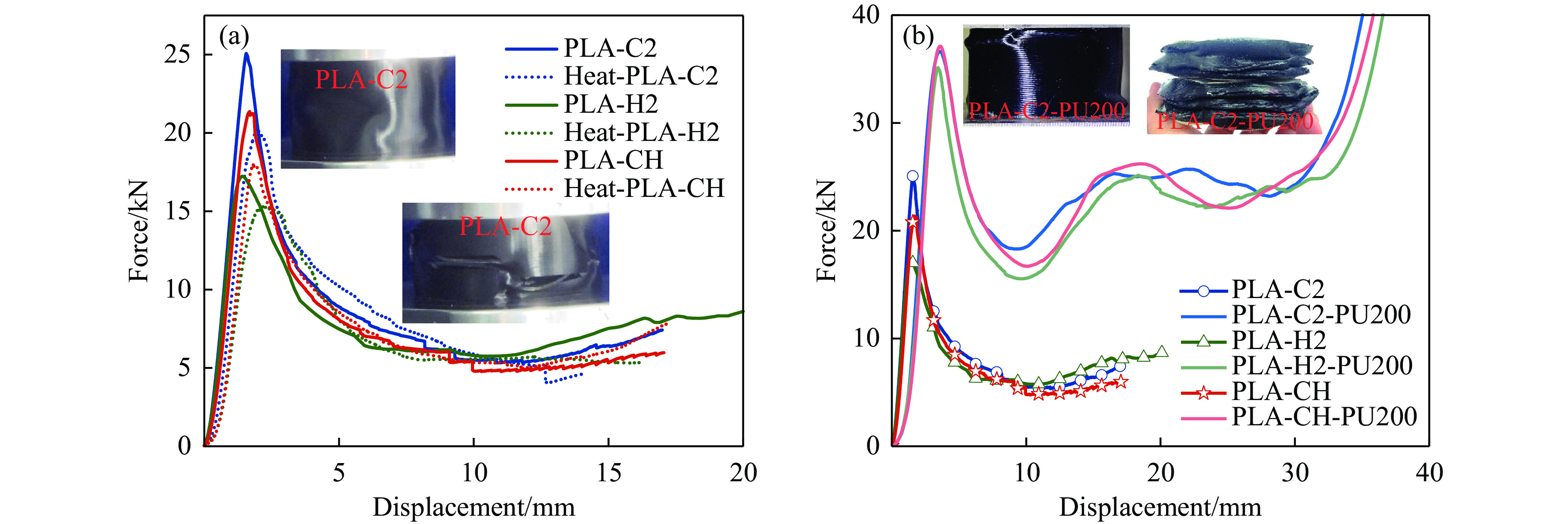
图 4 仿生结构的力-位移曲线:(a) 壳体结构在常温和加热工况下的力-位移曲线,(b) 复合结构的力-位移曲线
Figure 4. Force-displacement curves of biomimetic structures: (a) force-displacement curves of the shell structure under ambient and heated conditions; (b) force-displacement curves of the composite structures
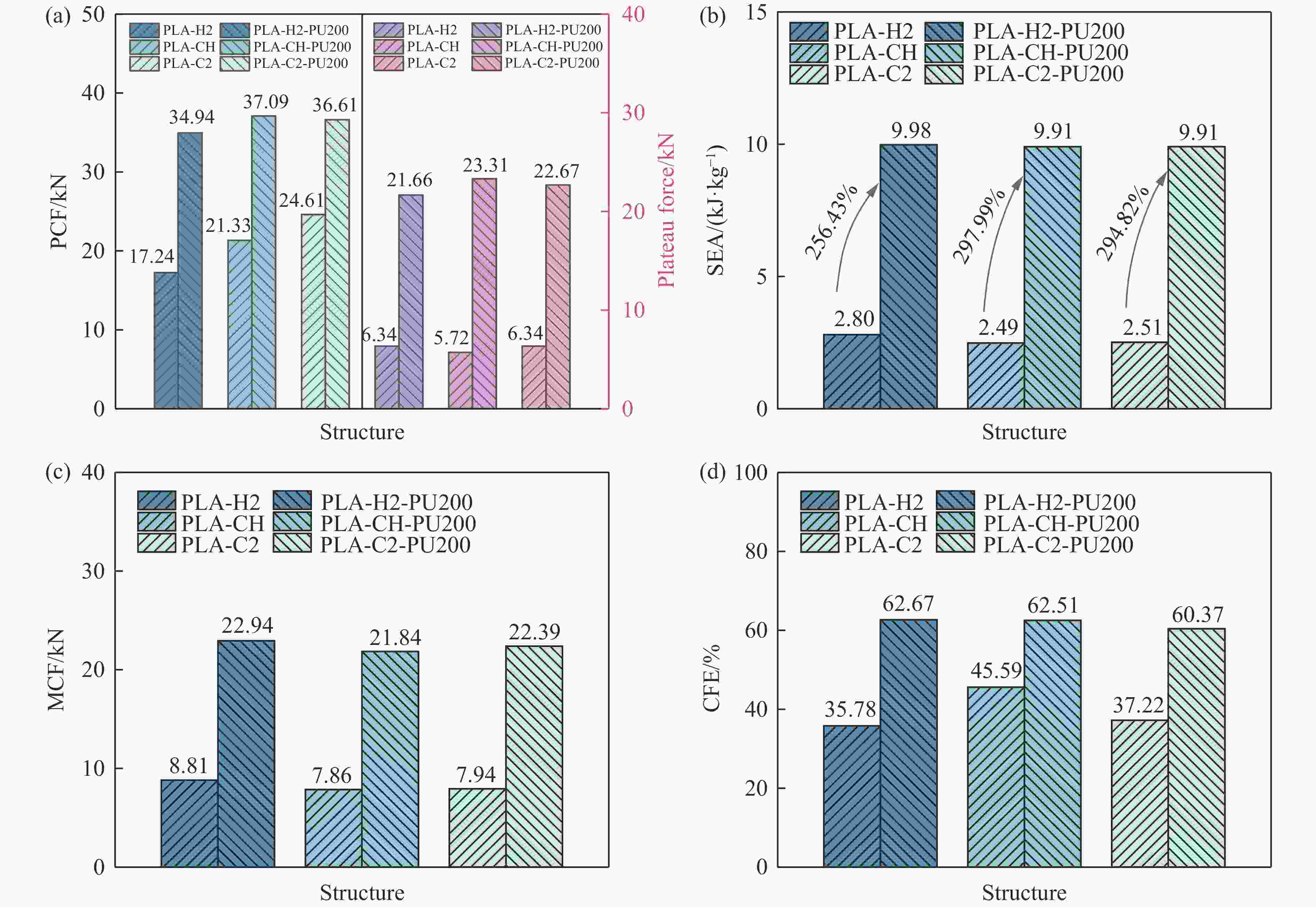
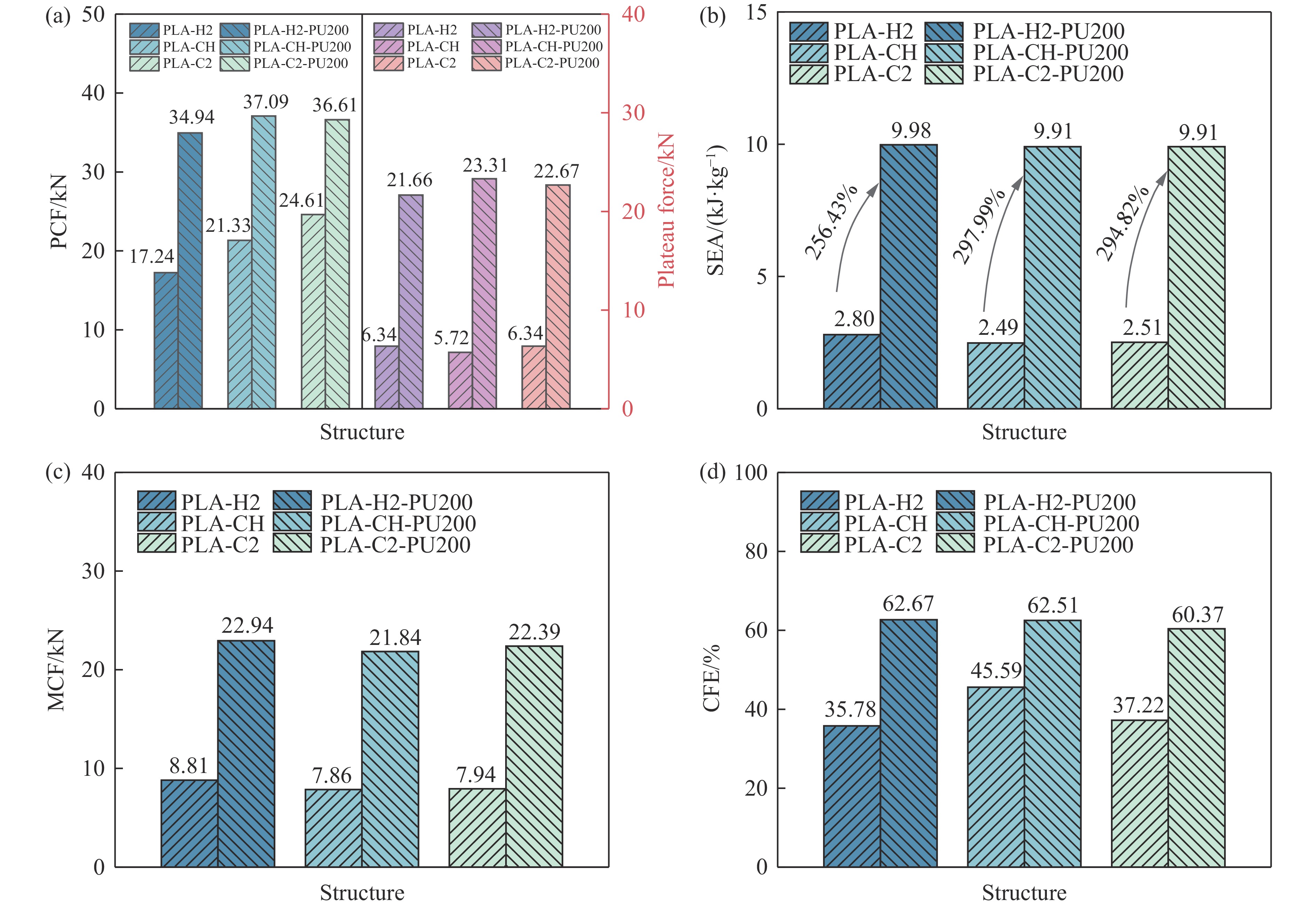
图 5 仿生结构的耐撞性分析:(a) 峰值力和平台力,(b) 比吸能,(c) 平均压溃力,(d) 压溃力效率
Figure 5. Impact resistance analysis of the biomimetic structure: (a) peak crushing force and plateau force; (b) specific energy absorption; (c) average crushing force; (d) crushing force efficiency
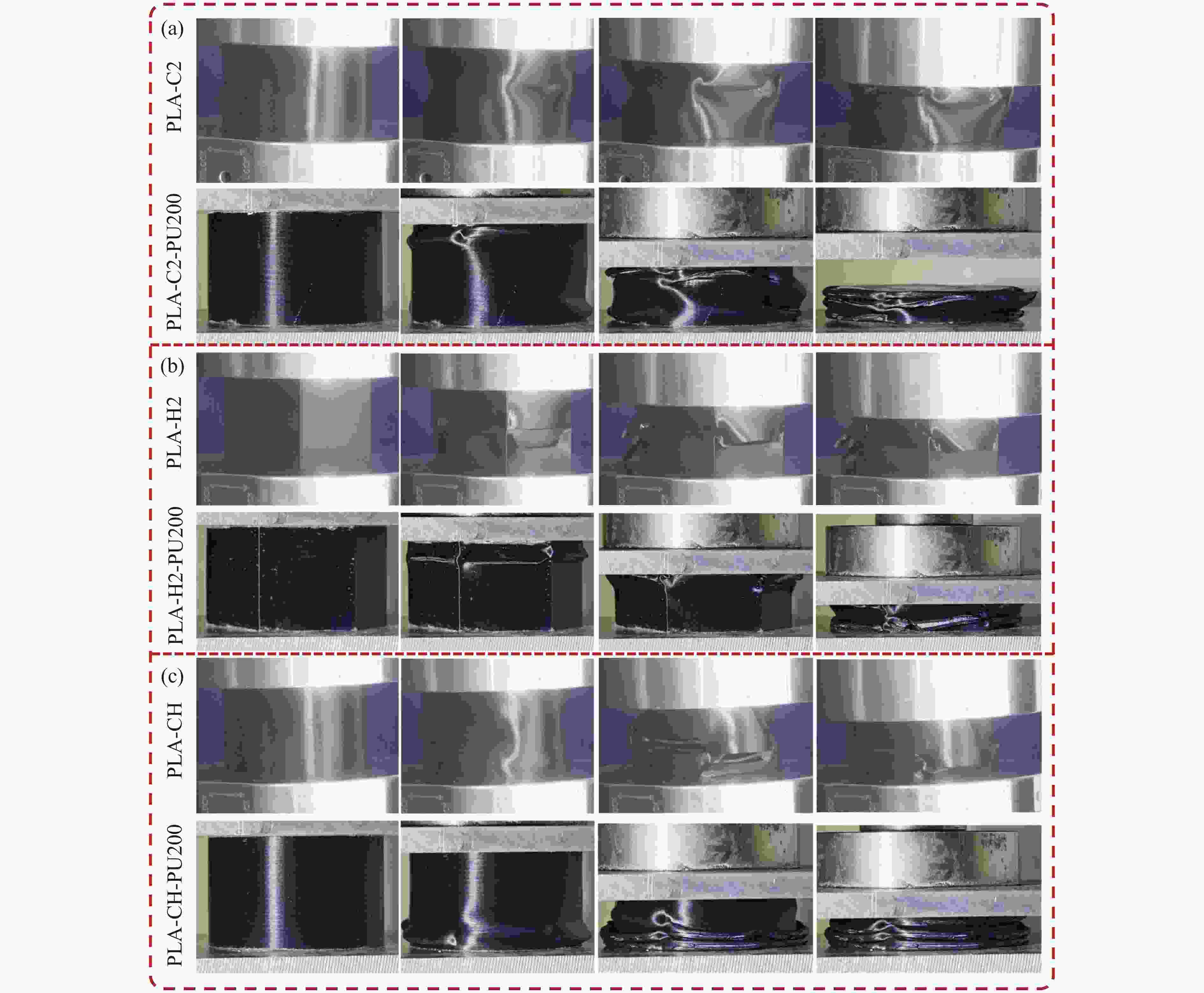
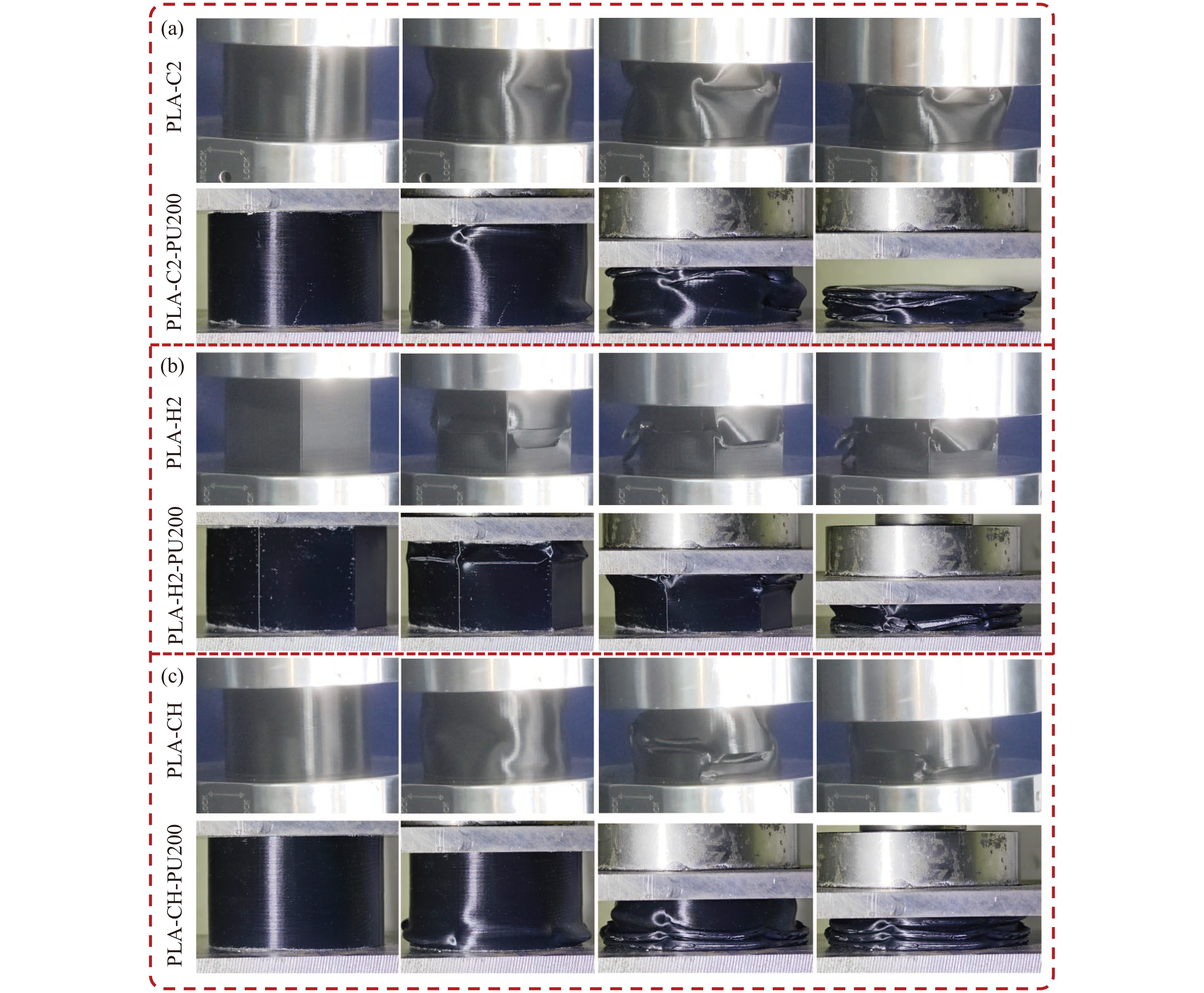
图 6 仿生结构在准静态压缩下的宏观失效形式
Figure 6. Macro-scale failure modes of biomimetic structures under quasi-static compression
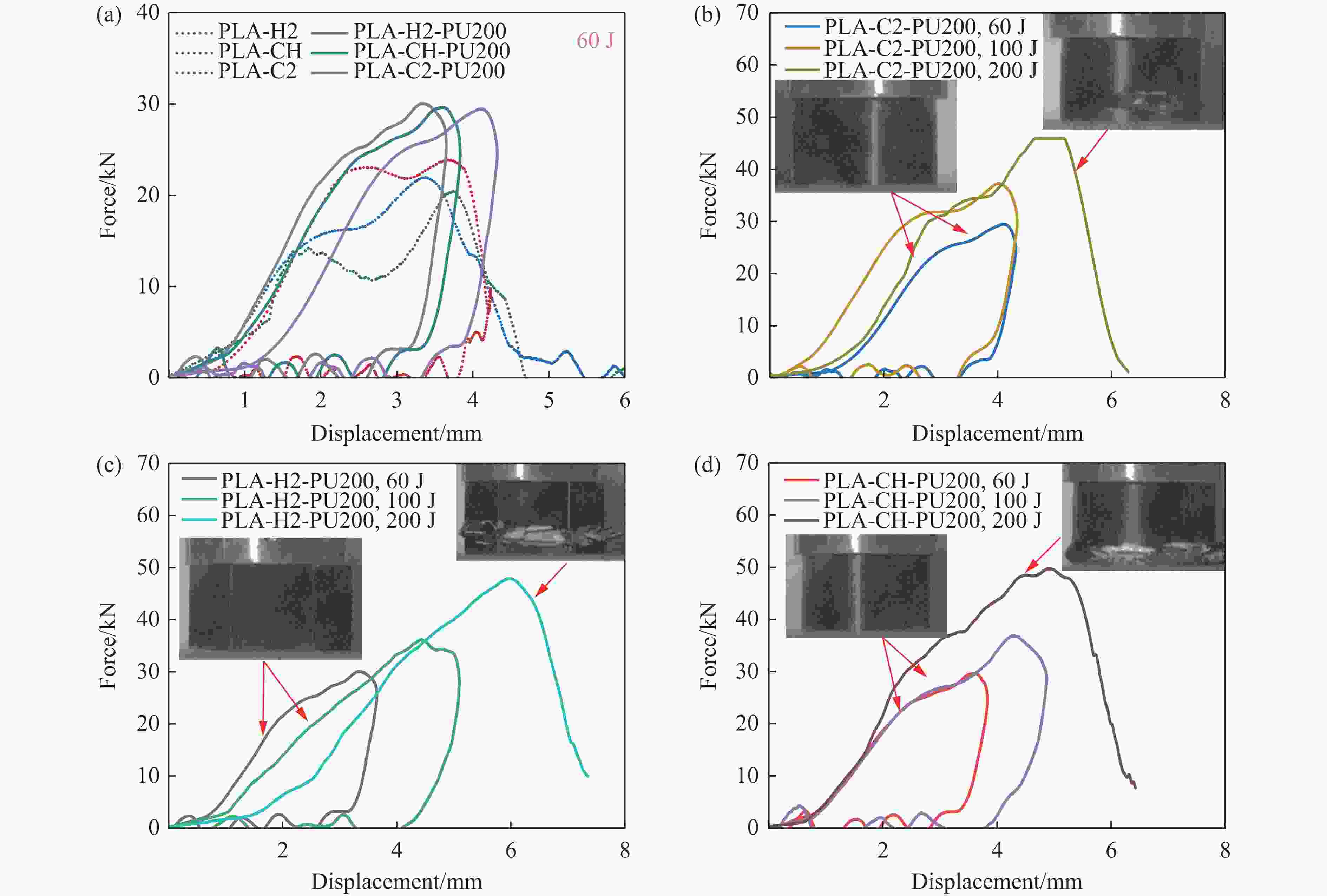
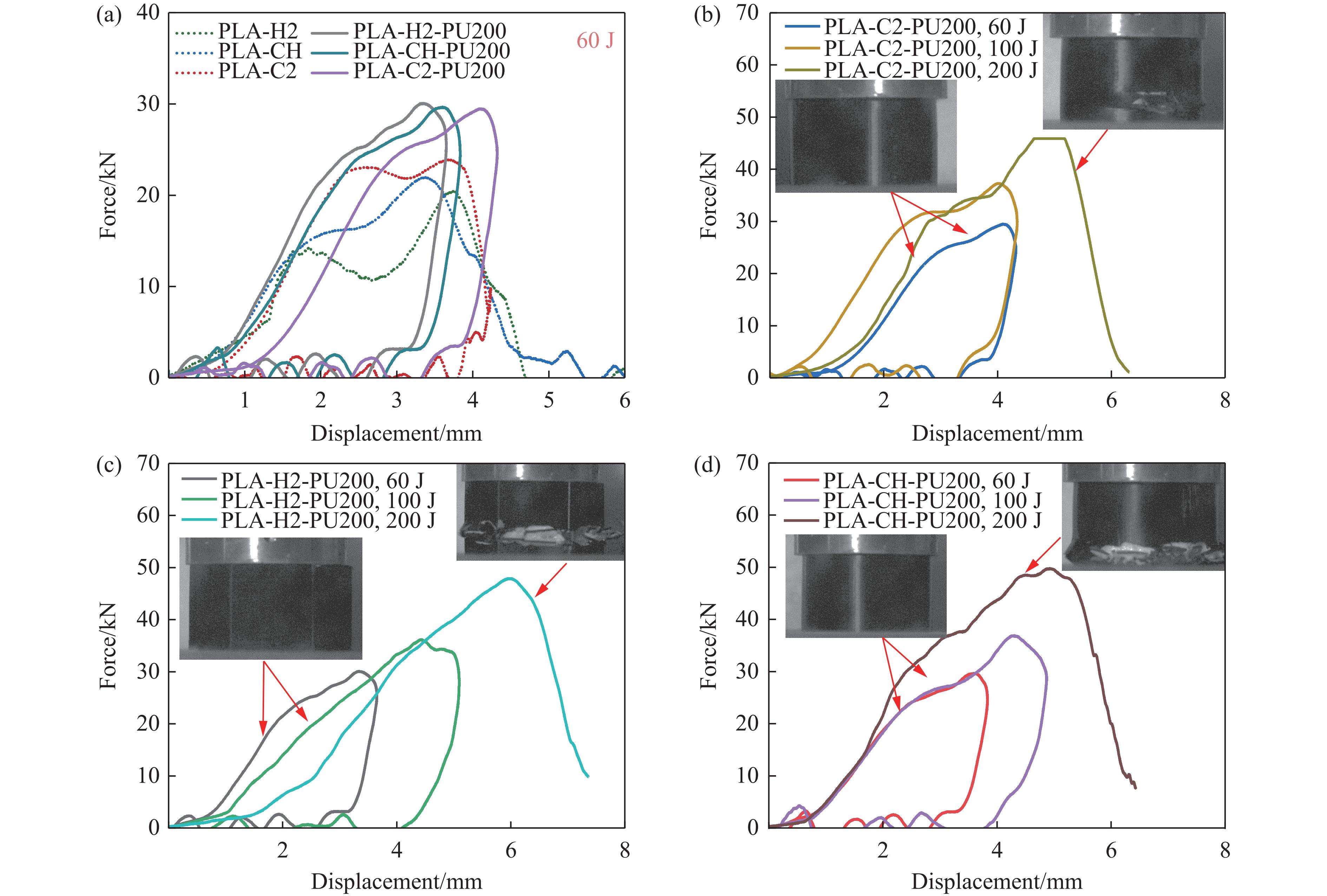
图 7 仿生结构在低速落锤冲击下的力-位移曲线
Figure 7. Force-displacement curves of the biomimetic structures under low-velocity impact
表 1 6种仿生结构及其参数
Table 1. Parameters of six bionic structures
Sample type Structure Parameters Physical mass/g PLA-C2 
R1=40.92 mm
R2=20.46 mm
t1=1.50 mm42.10±0.20 PLA-H2 
l1=45.00 mm
l2=22.50 mm
t2=1.42 mm44.90±0.25 PLA-CH 
R1=40.92 mm
l2=22.50 mm
t1=1.50 mm43.20±0.10 PLA-C2-PU200 
ρPU=200 kg/m3 70.90±0.10 PLA-H2-PU200 
ρPU=200 kg/m3 72.60±0.12 PLA-CH-PU200 
ρPU=200 kg/m3 70.70±0.35  下载: 导出CSV
-
[1] 侯泽凯, 栾云博, 雷科明, 等. 基于珍珠层和凤凰螺内部结构的混合仿生设计 [J]. 高压物理学报, 2024, 38(5): 054204. doi: 10.11858/gywlxb.20240724HOU Z K, LUAN Y B, LEI K M, et al. Hybrid bionic design based on the internal structures of nacre and strombus gigas shell [J]. Chinese Journal of High Pressure Physics, 2024, 38(5): 054204. doi: 10.11858/gywlxb.20240724 [2] JUNAEDI H, KHAN T, ABD-ELAZIEM W, et al. Optimization of circular hole patterns on crashworthiness of polyurethane foam-filled CFRP rectangular tubes [J]. Results in Engineering, 2025, 26: 104805. doi: 10.1016/j.rineng.2025.104805 [3] 李家雨, 付宇彤, 李元庆, 等. 增材制造仿生结构的力学性能优化及其功能设计研究进展 [J]. 复合材料学报, 2024, 41(9): 4435−4456.LI J Y, FU Y T, LI Y Q, et al. Research progress on mechanical performance optimization and functional design of additive manufactured biomimetic structures [J]. Acta Materiae Compositae Sinica, 2024, 41(9): 4435−4456. [4] 王志华, 李世强, 李鑫, 等. 轻质多孔金属及其夹芯结构力学行为的研究进展 [J]. 太原理工大学学报, 2017, 48(3): 492–503. doi: 10.16355/j.cnki.issn1007-9432tyut.2017.03.030WANG Z H, LI S Q, LI X, et al. Advances in studies of the mechanical behavior of cellular metallicmaterials and structures [J]. Journal of Taiyuan University of Technology, 2017, 48(3): 492–503. doi: 10.16355/j.cnki.issn1007-9432tyut.2017.03.030 [5] HUANG W, SHISHEHBOR M, GUARÍN-ZAPATA N, et al. A natural impact-resistant bicontinuous composite nanoparticle coating [J]. Nature Materials, 2020, 19(11): 1236–1243. doi: 10.1038/s41563-020-0768-7 [6] ZHUANG Z Q, QIAN Z H, WANG X, et al. Bioinspired structural composite flexible material with high cushion performance [J]. Advanced Science, 2024, 11(5): 2304947. doi: 10.1002/advs.202304947 [7] NEPAL D, KANG S, ADSTEDT K M, et al. Hierarchically structured bioinspired nanocomposites [J]. Nature Materials, 2023, 22(1): 18–35. doi: 10.1038/s41563-022-01384-1 [8] 于鹏山, 刘志芳, 李世强. 新型仿生蜂窝结构的设计与耐撞性能分析 [J]. 高压物理学报, 2022, 36(1): 014204. doi: 10.11858/gywlxb.20210817YU P S, LIU Z F, LI S Q. Design and crashworthiness analysis of new bionic honeycomb structure [J]. Chinese Journal of High Pressure Physics, 2022, 36(1): 014204. doi: 10.11858/gywlxb.20210817 [9] CHEN Y L, JIN Z Y, KANG W B, et al. 3D printed bio-inspired self-similar carbon fiber reinforced composite sandwich structures for energy absorption [J]. Composites Science and Technology, 2024, 248: 110453. doi: 10.1016/j.compscitech.2024.110453 [10] XIAO Y Y, YIN H F, FANG H B, et al. Crashworthiness design of horsetail-bionic thin-walled structures under axial dynamic loading [J]. International Journal of Mechanics and Materials in Design, 2016, 12(4): 563–576. doi: 10.1007/s10999-016-9341-6 [11] 邓敏杰, 刘志芳. 仿马尾草薄壁结构的设计与耐撞性研究 [J]. 高压物理学报, 2022, 36(3): 034202. doi: 10.11858/gywlxb.20210880DENG M J, LIU Z F. Design and crashworthiness study based on horsetail bionic thin-walled structure [J]. Chinese Journal of High Pressure Physics, 2022, 36(3): 034202. doi: 10.11858/gywlxb.20210880 [12] ZHANG Z, SONG B, FAN J X, et al. Design and 3D printing of graded bionic metamaterial inspired by pomelo peel for high energy absorption [J]. Chinese Journal of Mechanical Engineering: Additive Manufacturing Frontiers, 2023, 2(1): 100068. doi: 10.1016/j.cjmeam.2023.100068 [13] TIAN L X, ZHAN N, HE H H, et al. A bioinspired design approach for biomechanically matched tracheal stents [J]. Virtual and Physical Prototyping, 2024, 19(1): e2437510. doi: 10.1080/17452759.2024.2437510 [14] 叶建华, 徐欢, 韦铁平, 等. 复合负泊松比人工骨材料胞元结构参数与力学性能的匹配 [J]. 机械工程材料, 2024, 48(6): 93–101. doi: 10.11973/jxgccl230202YE J H, XU H, WEI T P, et al. Matching of cell structural parameters and mechanical properties of composite negative Poisson’s ratio artificial bone materials [J]. Materials for Mechanical Engineering, 2024, 48(6): 93–101. doi: 10.11973/jxgccl230202 [15] ZHANG Y H, ZHANG J M, ZHAO X L, et al. Mechanical behaviors regulation of triply periodic minimal surface structures with crystal twinning [J]. Additive Manufacturing, 2022, 58: 103036. doi: 10.1016/j.addma.2022.103036 [16] 唐鹿. 3D打印PLA复合材料的制备及其在包装领域的应用 [J]. 包装工程, 2025, 46(21): 52–58. doi: 10.19554/j.cnki.1001-3563.2025.21.006TANG L. Preparation of 3D printed PLA composites and their application in packaging field [J]. Packaging Engineering, 2025, 46(21): 52–58. doi: 10.19554/j.cnki.1001-3563.2025.21.006 [17] 李倩, 顾佳晨, 唐海原, 等. 基于拓扑优化的3D打印聚乳酸材料的轻量化结构设计 [J]. 高分子材料科学与工程, 2024, 40(7): 76–84. doi: 10.16865/j.cnki.1000-7555.2024.0141LI Q, GU J C, TANG H Y, et al. Lightweight structure design of 3D printed polylactic acid materials based on topology optimization [J]. Polymer Materials Science & Engineering, 2024, 40(7): 76–84. doi: 10.16865/j.cnki.1000-7555.2024.0141 [18] 王秦峰. 聚乳酸的热性能研究 [J]. 上海化工, 2019, 44(2): 14–16. doi: 10.16759/j.cnki.issn.1004-017x.2019.02.008WANG Q F. Study on thermal properties of poly(lactic acid) [J]. Shanghai Chemical Industry, 2019, 44(2): 14–16. doi: 10.16759/j.cnki.issn.1004-017x.2019.02.008 [19] WANG H, XIE S C, FENG Z J, et al. Mechanical properties of rigid and flexible polyurethane foam in-situ foamed Nomex honeycomb [J]. Composite Structures, 2023, 322: 117365. doi: 10.1016/j.compstruct.2023.117365 [20] 周颖, 黄广炎, 王涛, 等. 多孔聚氨酯基复合削爆屏障的防护性能 [J]. 爆炸与冲击, 2023, 43(10): 105101. doi: 10.11883/bzycj-2022-0375ZHOU Y, HUANG G Y, WANG T, et al. Blast mitigation performance of porous polyurethane-based composite explosion-proof barrier [J]. Explosion and Shock Waves, 2023, 43(10): 105101. doi: 10.11883/bzycj-2022-0375 [21] 贾时雨, 王成, 徐文龙, 等. 环形复合内衬头盔冲击波防护性能研究 [J]. 兵工学报, 2025, 46(1): 60–69. doi: 10.12382/bgxb.2023.1220JIA S Y, WANG C, XU W L, et al. Protective performance of helmet with annular composite liner [J]. Acta Armamentarii, 2025, 46(1): 60–69. doi: 10.12382/bgxb.2023.1220 [22] REN J W, ZHOU Y L, QIANG L S, et al. Enhancing impact resistance of metallic foam core sandwich constructions through encasing high-strength fibrous composites [J]. Thin-Walled Structures, 2024, 196: 111546. doi: 10.1016/j.tws.2023.111546 [23] AALA F, GHOLIPOUR Y, SAMADI D. Experimental investigation of novel reinforced composite panels made of cold-rolled galvanized sheets filled with foamed concrete and fire-resistance polyurethane foam [J]. Advances in Materials Science and Engineering, 2022: 6412974. [24] WU W, LIU Y, YAN J B, et al. Blast performance of polyurethane foam-filled auxetic honeycomb sandwich beams [J]. Composite Structures, 2024, 338: 118104. doi: 10.1016/j.compstruct.2024.118104 [25] HA N S, LU G X. A review of recent research on bio-inspired structures and materials for energy absorption applications [J]. Composites Part B: Engineering, 2020, 181: 107496. doi: 10.1016/j.compositesb.2019.107496 [26] QI C, JIANG F, YANG S. Advanced honeycomb designs for improving mechanical properties: a review [J]. Composites Part B: Engineering, 2021, 227: 109393. doi: 10.1016/j.compositesb.2021.109393 [27] GAO D D, YAN H, ZHOU Y, et al. Buckling evolution and energy dissipation of 3D-printed second-order fractal bio-inspired structures [J]. Acta Mechanica Sinica, 2026. [28] YANG B S, CHEN W H, ZHOU X H, et al. Strong and crack-resistant hydrogel derived from pomelo peel for highly sensitive wearable sensors [J]. Chemical Engineering Journal, 2022, 431: 134094. doi: 10.1016/j.cej.2021.134094 [29] HÖLTTÄ K, TANG V, SEERING W P. Modularizing product architectures using dendrograms [J]. 2000, 24: 509–534. [30] BARZIGAR S S, AHMADI H, LIAGHAT G. An analytical investigation on the crushing behavior of thin-walled tubes filled with a foam with strain hardening region [J]. Thin-Walled Structures, 2023, 182: 110169. doi: 10.1016/j.tws.2022.110169 [31] GE J, LUO T Y, QIU J. Experimental investigation of the dynamic responses of thin-walled and foam-filled steel tubes subjected to repeated impacts [J]. Materials, 2024, 17(5): 1018. doi: 10.3390/ma17051018 [32] GIBSON L J, ASHBY M F. Material properties [M]//GIBSON L J, ASHBY M F. Cellular Solids: Structure and Properties. Cambridge: Cambridge University Press, 1997: 52−92. [33] ALEXANDER J M. An approximate analysis of the collapse of thin cylindrical shells under axial loading [J]. The Quarterly Journal of Mechanics and Applied Mathematics, 1960, 13(1): 10–15. doi: 10.1093/qjmam/13.1.10 [34] HUSSEIN R D, RUAN D, LU G X, et al. Crushing response of square aluminium tubes filled with polyurethane foam and aluminium honeycomb [J]. Thin-Walled Structures, 2017, 110: 140–154. doi: 10.1016/j.tws.2016.10.023 [35] 黄翠萍, 邓小林. 圆形手性多胞管轴向冲击下的耐撞性分析 [J]. 高压物理学报, 2023, 37(3): 034107. doi: 10.11858/gywlxb.20230616HUANG C P, DENG X L. Crashworthiness analysis of circular chiral multicellular tubes under axial impact [J]. Chinese Journal of High Pressure Physics, 2023, 37(3): 034107. doi: 10.11858/gywlxb.20230616 [36] SLAVKOVIĆ V, HANŽELIČ B, PLESEC V, et al. Thermo-mechanical behavior and strain rate sensitivity of 3D-printed polylactic acid (PLA) below glass transition temperature (Tg) [J]. Polymers, 2024, 16(11): 1526. doi: 10.3390/polym16111526 [37] AMAYA J B, VACA G. Determination of time and concentration conditions affecting polylactic acid (PLA) production [J]. Polymers, 2025, 17(15): 2009. doi: 10.3390/polym17152009 [38] HA N S, LU G X. Thin-walled corrugated structures: a review of crashworthiness designs and energy absorption characteristics [J]. Thin-Walled Structures, 2020, 157: 106995. doi: 10.1016/j.tws.2020.106995 -

 下载:
下载:

计量
- 文章访问数: 948
- HTML全文浏览量: 392
- PDF下载量: 68
