




Structural Evolution, Dual Role of Hydrogen and Superconductivity in Lithium-Rich Li-N-H Compounds under High Pressure
-
摘要: 采用CALYPSO结构预测方法结合第一性原理计算,对Li-N-H体系在100~300 GPa高压条件下的晶体结构稳定性、电子结构和超导性质进行系统研究,提出了6个热力学稳定或亚稳定的富锂氮氢化合物,包括C2 Li2NH、P212121 Li2NH、I4/mmm Li3NH、Imm2 Li8NH、Cm Li9NH、P2/c Li10NH。结果表明,氢元素在不同锂化程度下呈现出显著差异的化学角色演化:在低锂含量化合物中,H 原子倾向与 N 原子形成共价键,以达到稳定的满壳层电子构型;随着锂含量的增加,H 逐渐从配位成键状态转变为占据晶格间隙位点,并作为电子受体捕获多余的间隙电子,从而有效调控体系中间隙电子数量、局域性与空间拓扑结构。相应地,C2 Li2NH、P212121 Li2NH和 I4/mmm Li3NH为绝缘性的非电子化合物,而Imm2 Li8NH、Cm Li9NH及P2/c Li10NH则表现出典型的金属性和电子化合物特征。其中,P2/c Li10NH在100 GPa下具有约4.8 K的超导转变温度,其超导电性主要来源于H的p轨道电子与Li原子主导的低频晶格振动之间的强电子-声子耦合。该工作揭示了H在高压Li-N-H体系中由共价配位向间隙电子捕获的双重功能机制,为高压条件下新型电子化合物及超导材料的理性设计提供了理论依据。Abstract: Using first-principles calculations combined with CALYPSO structure prediction method, we systematically investigated the crystal structures, electronic properties, and superconducting behavior of the Li-N-H ternary system under pressure ranging from 100 to 300 GPa. Six thermodynamically stable or metastable Li-rich compounds were identified: C2 Li2NH, P212121 Li2NH, I4/mmm Li3NH, Imm2 Li8NH, Cm Li9NH, and P2/c Li10NH. The results reveal a distinct evolution in the chemical role of hydrogen with increasing lithium content. In phases with lower Li content, H atoms tend to form covalent bonds with N atoms, thereby achieving a stable closed-shell electronic configuration. As the Li content increases, H atoms progressively occupy lattice interstitial sites, acting as electron acceptors that trap excess interstitial anionic electrons (IAEs). This transformation effectively tunes the quantity, degree of localization, and spatial topology of IAEs. Correspondingly, C2 Li2NH, P212121 Li2NH, and I4/mmm Li3NH are insulating non-electrides, while Imm2 Li8NH, Cm Li9NH, and P2/c Li10NH are electrides, which exhibit metallic behavior. Notably, P2/c Li10NH demonstrates superconductivity with a predicted transition temperature of 4.8 K at 100 GPa, mainly originating from the strong electron-phonon coupling between H-p orbital electrons and low frequency phonon modes dominated by Li atoms. This work elucidates the dual functional role of hydrogen in high-pressure Li-N-H systems—from covalent N―H bonding coordination to IAEs capturing—and provides theoretical insights for the rational design of novel high-pressure electrides and superconducting materials.
-
Key words:
- high pressure /
- electride /
- superconductivity /
- first-principles calculation /
- structure prediction
-
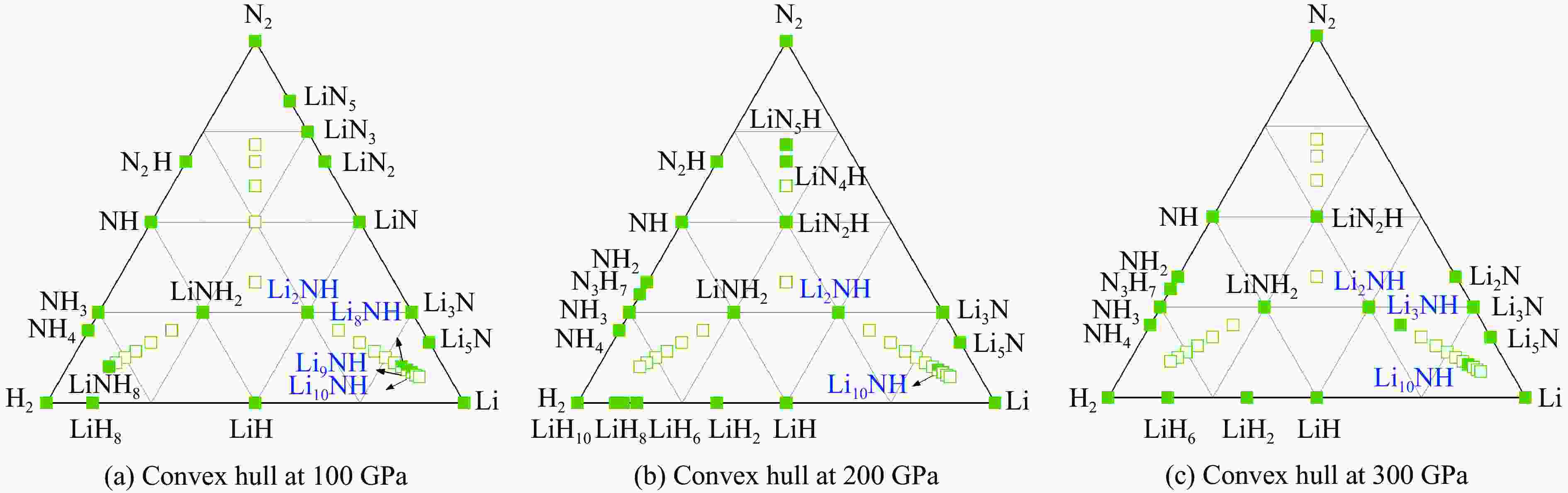
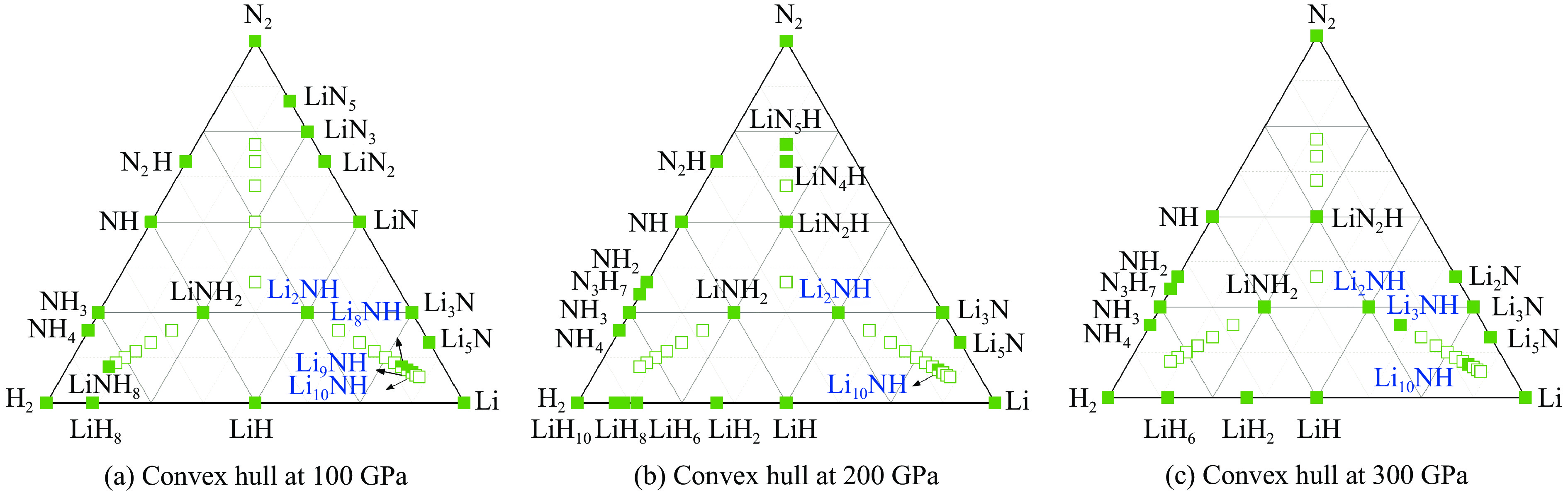
图 1 Li-N-H体系在不同压力下的热力学凸包图(绿色实心点代表落在凸包上的热力学稳定的化合物,半填充点代表偏离凸包50 meV/atom以内的亚稳化合物,空心点代表偏离凸包50 meV/atom以上的化合物)
Figure 1. Thermodynamic convex hull diagrams of Li-N-H system under different pressures (The green solid points are represented as thermodynamically stable structures on the convex hull, the semi-filled points are represented as metastable structures deviating from the convex hull within 50 meV/atom, and the hollow points are represented as compounds deviating from the convex hull by more than 50 meV/atom.)
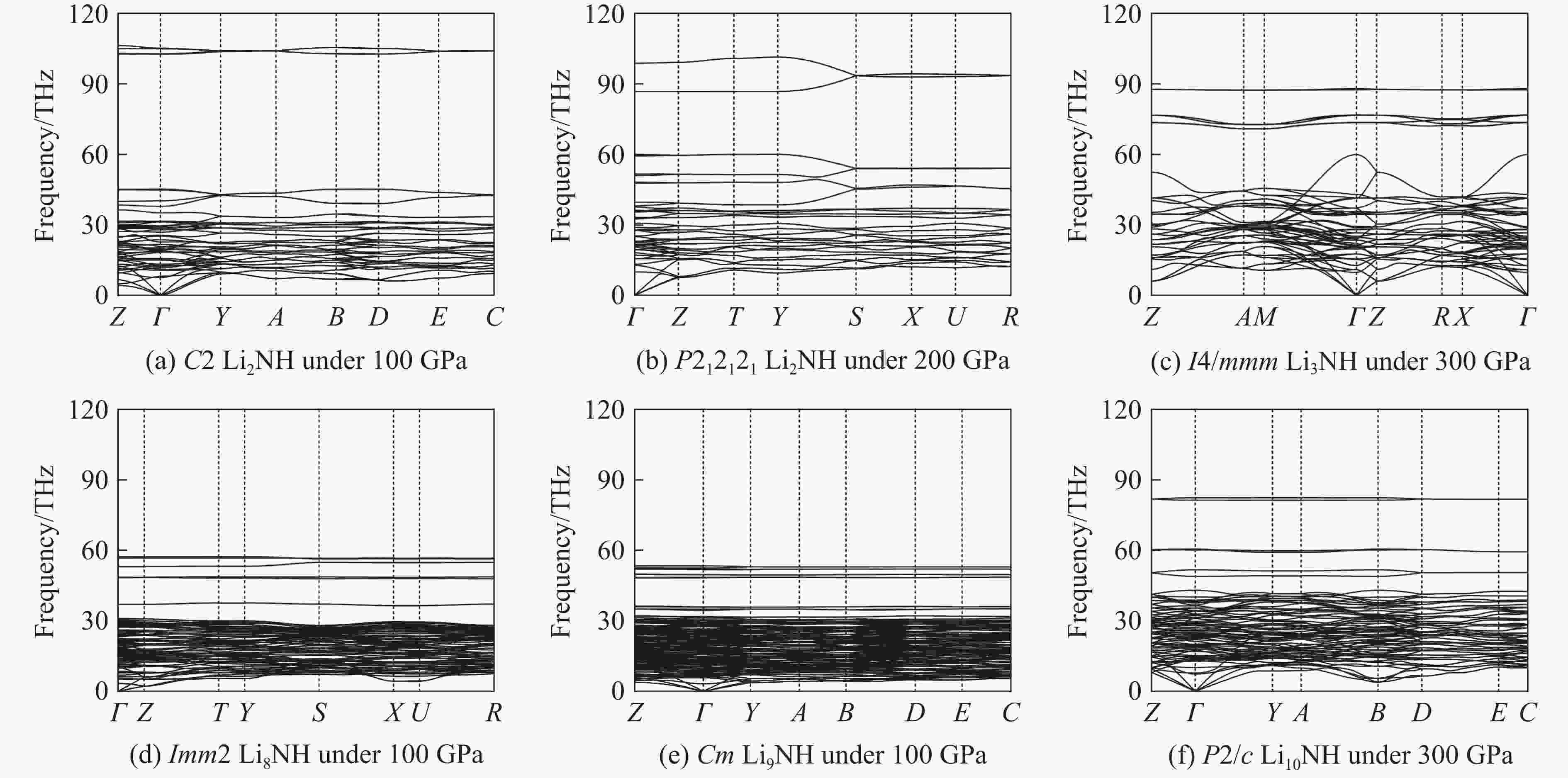
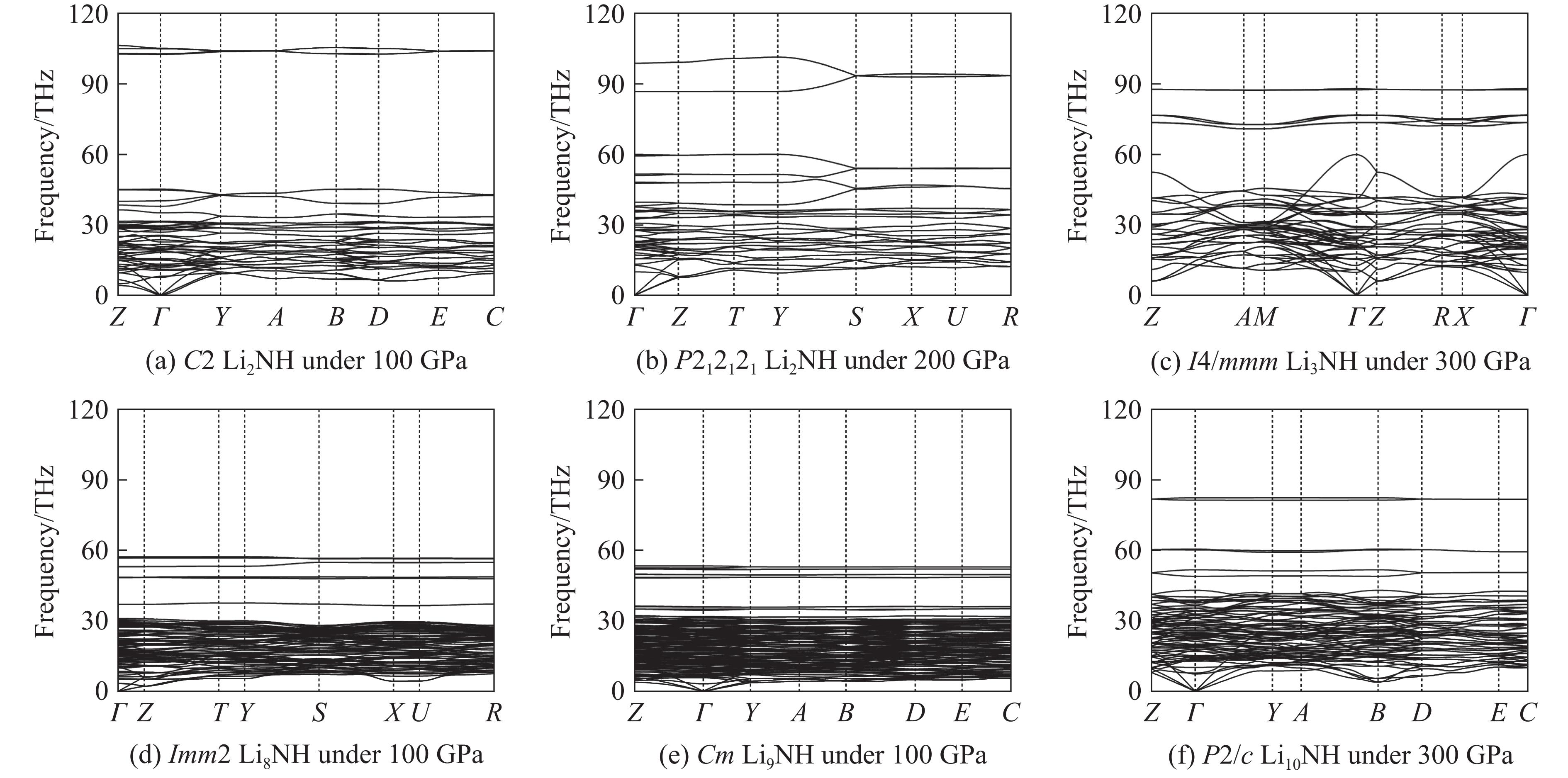
图 2 富Li三元Li-N-H化合物的声子色散关系
Figure 2. Phonon-dispersion curves for ternary Li-rich Li-N-H compounds
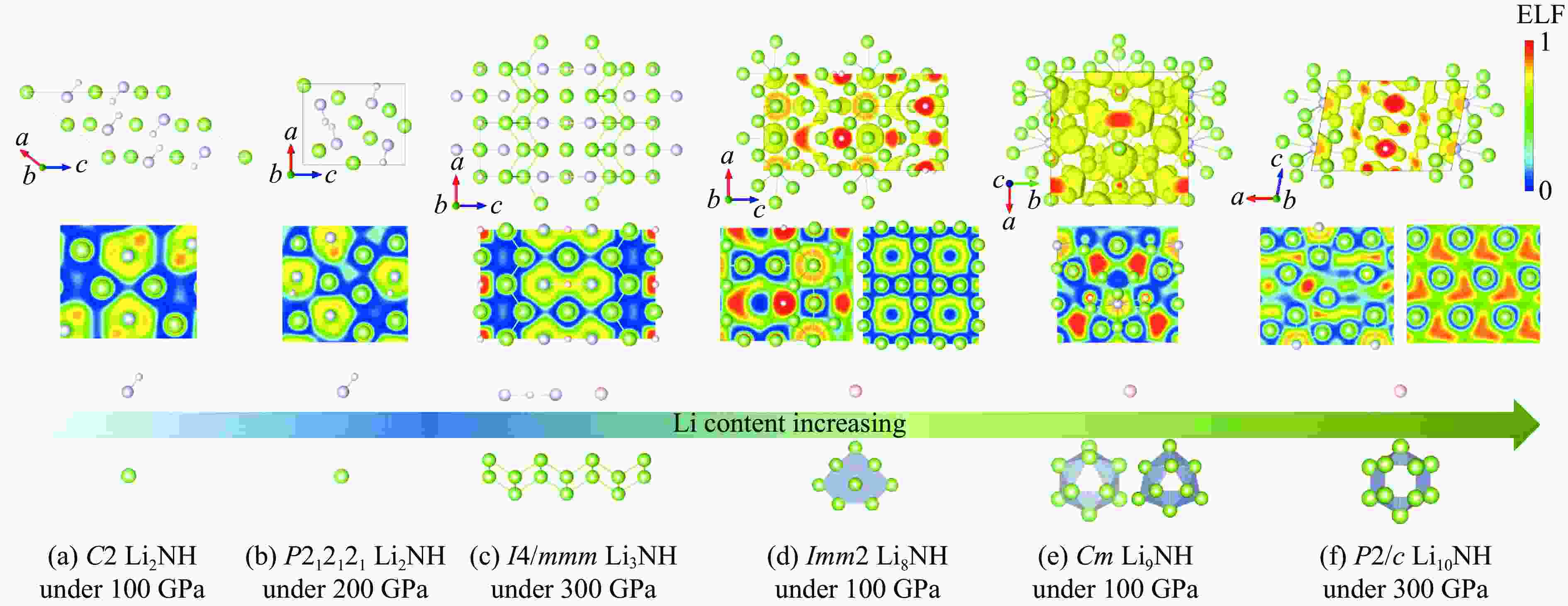
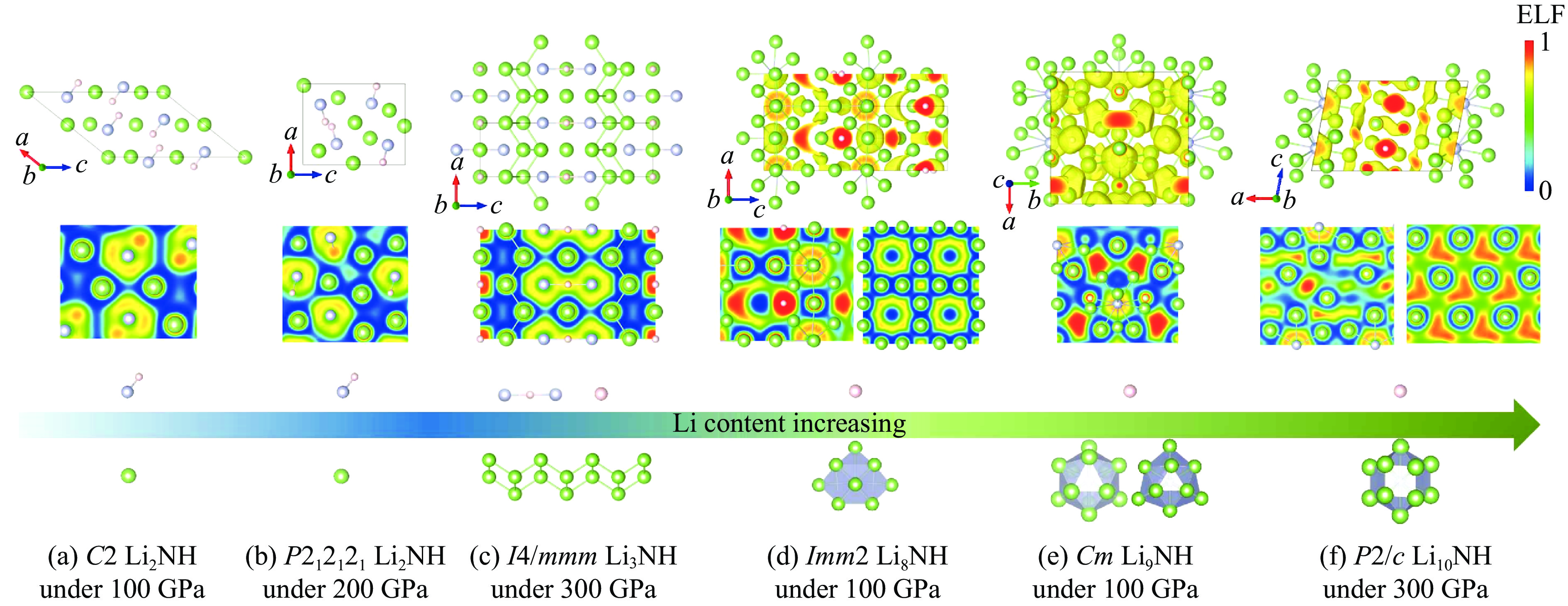
图 3 预测的热力学稳定或亚稳的富Li三元Li-N-H化合物的晶体结构和电子局域函数
Figure 3. Predicted crystal structures and electron localization function of thermodynamically stable or metastable ternary Li-rich Li-N-H compounds
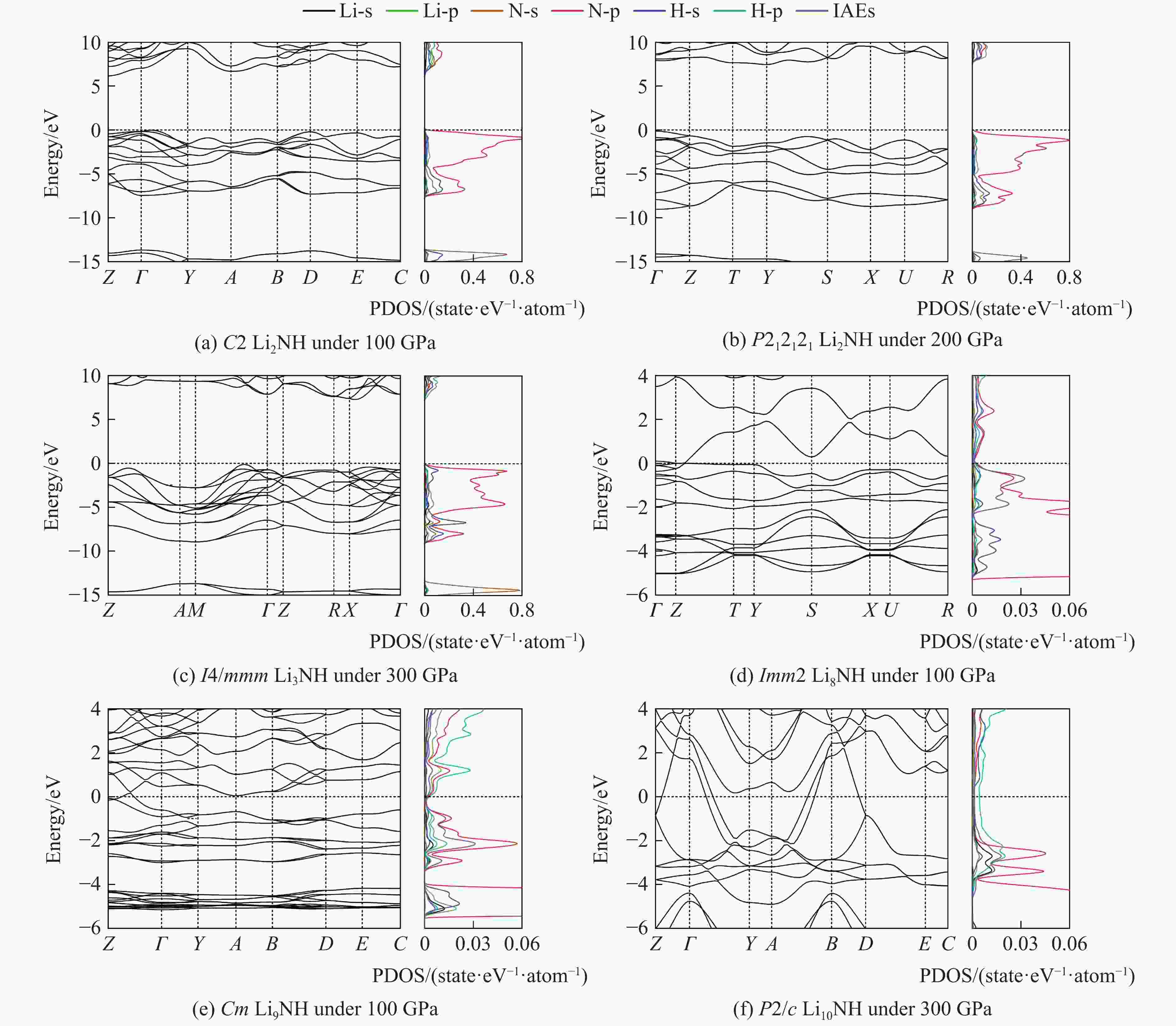
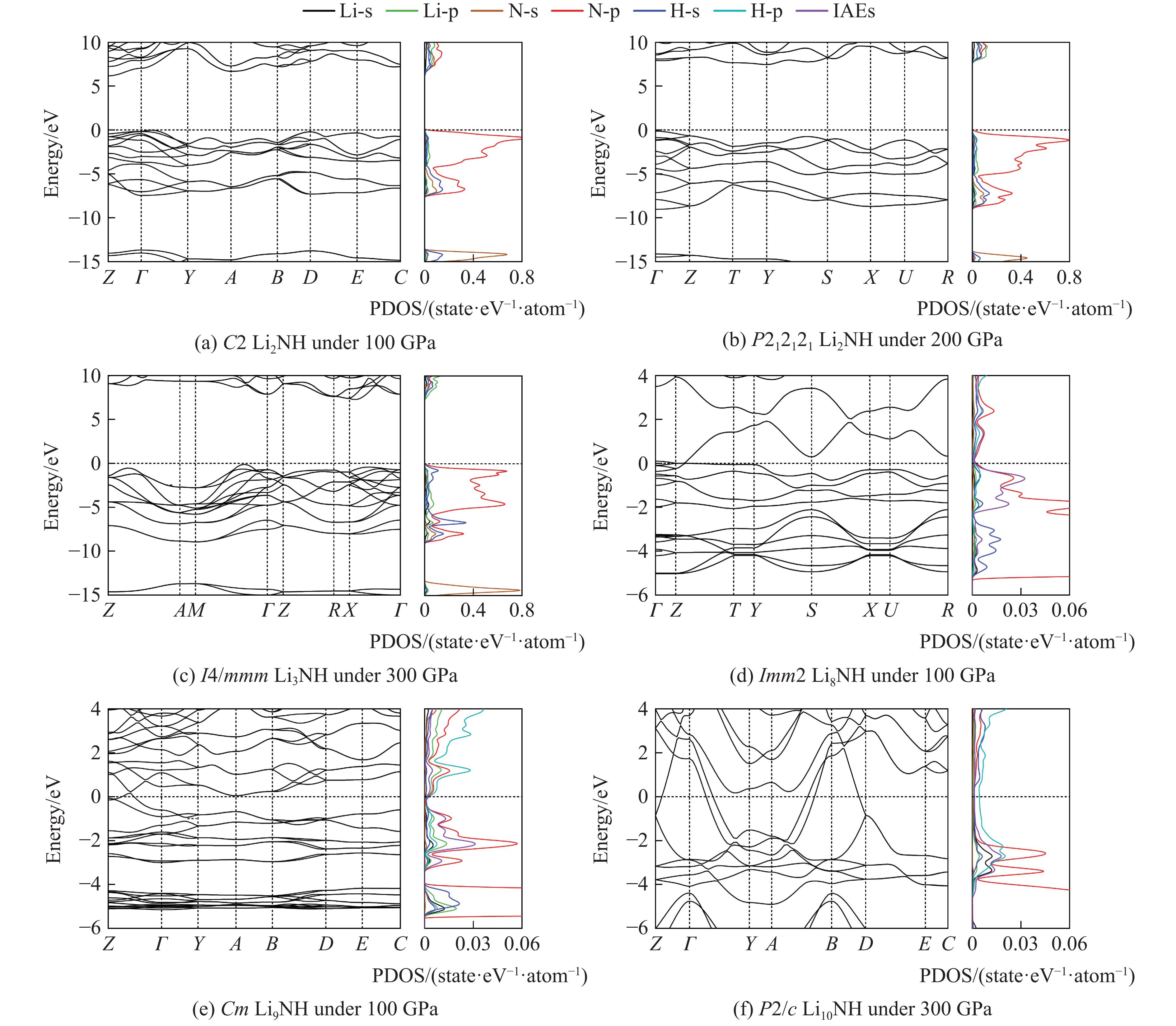
图 4 高压下富 Li 三元 Li-N-H 化合物的能带结构和分波态密度
Figure 4. Band structures and electronic density of states for ternary Li-rich Li-N-H compounds under high pressure
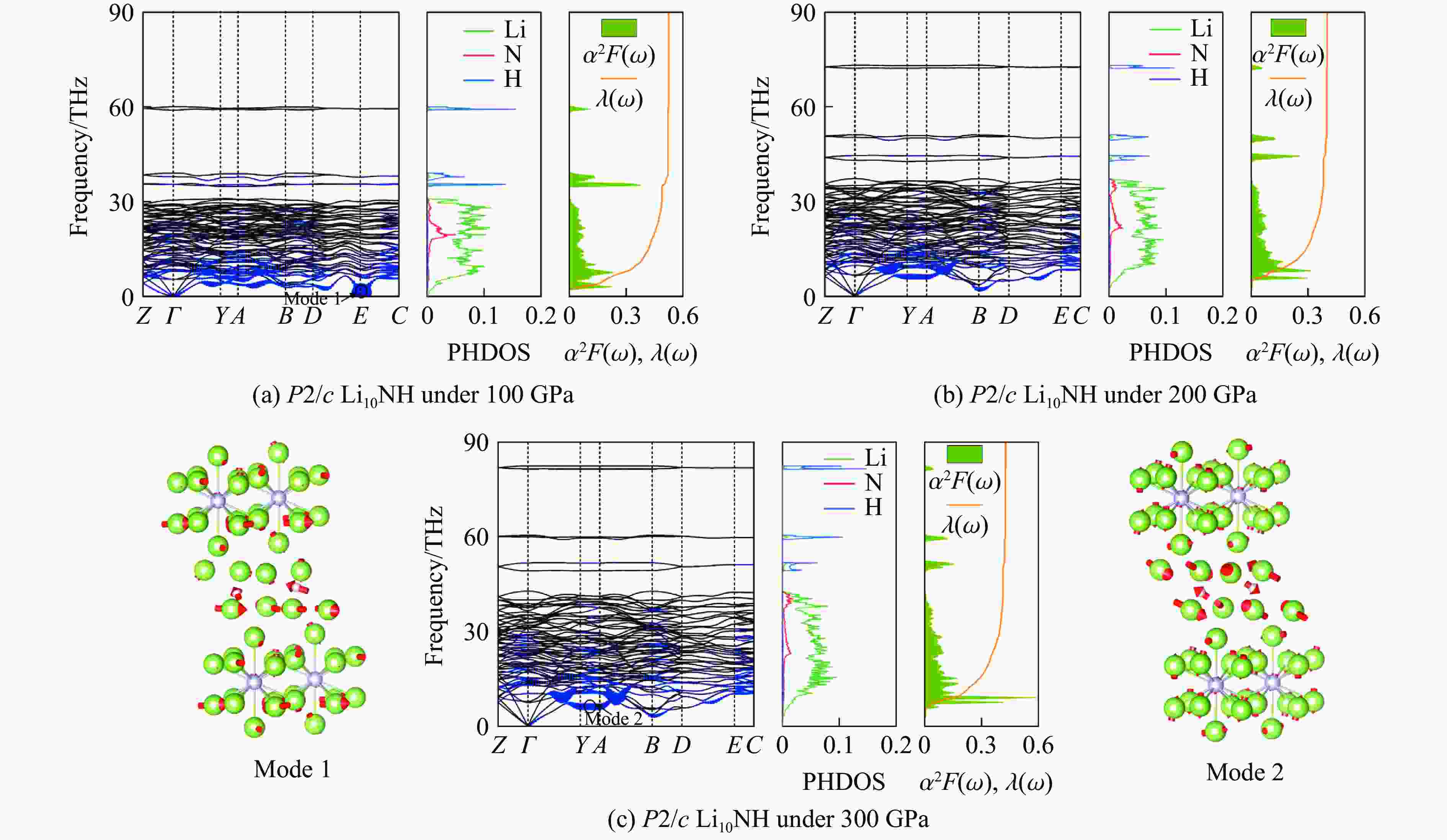
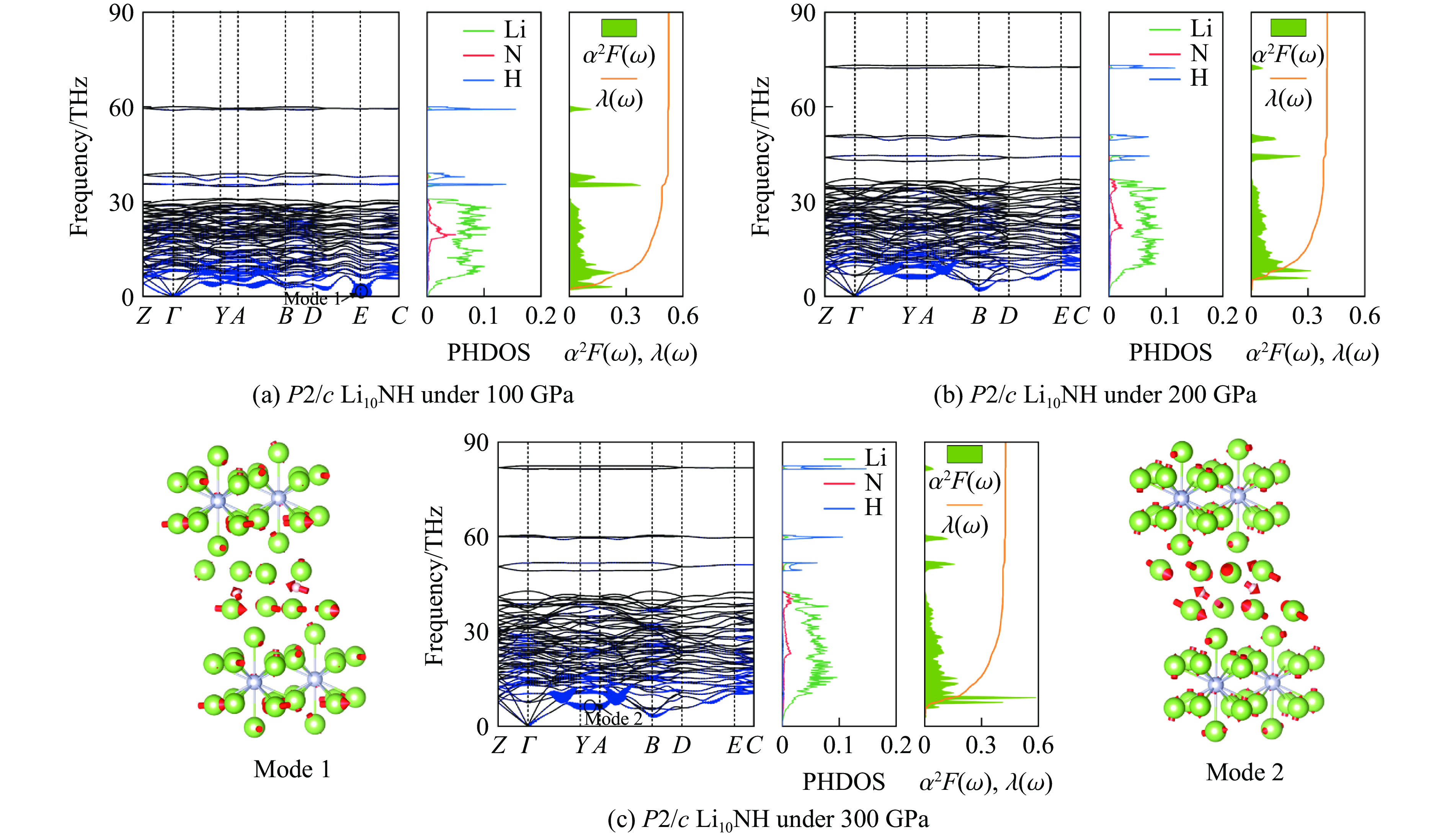
图 5 高压下 Li10NH 的声子谱、声子态密度、谱函数、电声耦合常数和相关声子振动模式
Figure 5. Phonon spectra, phonon density of states, spectral functions, electron-phonon coupling parameters and related phonon vibration modes of Li10NH under high pressure
表 1 Li10NH 在高压下的超导转变温度、声子频率的对数平均值、电声耦合常数和费米面处的态密度
Table 1. Superconducting transition temperature, logarithmic average of phonon frequency, electroacoustic coupling constant, and density of state at Fermi level for Li10NH at high pressures
Pressure/GPa Tc/K λ $ {\omega }_{\log } $/K NEf/(states·eV–1) 100 4.79 0.51 366.73 7.46 200 2.33 0.40 544.59 5.56 300 3.60 0.42 606.49 4.86  下载: 导出CSV
-
[1] UIJTTEWAAL M A, WIJS G A D, GROOT R A D. Low work function of the (1000) Ca2N surface [J]. Journal of Applied Physics, 2004, 96(3): 1751–1753. doi: 10.1063/1.1767611 [2] TODA Y, YANAGI H, IKENAGA E, et al. Work function of a room-temperature, stable electride [Ca24Al28O64]4+(e–)4 [J]. Advanced Materials, 2007, 19(21): 3564–3569. doi: 10.1002/adma.200700663 [3] KITANO M, INOUE Y, YAMAZAKI Y, et al. Ammonia synthesis using a stable electride as an electron donor and reversible hydrogen store [J]. Nature Chemistry, 2012, 4(11): 934–940. doi: 10.1038/nchem.1476 [4] HARA M, KITANO M, HOSONO H. Ru-loaded C12A7: e– electride as a catalyst for ammonia synthesis [J]. ACS Catalysis, 2017, 7(4): 2313–2324. doi: 10.1021/acscatal.6b03357 [5] MIYAKAWA M, KIM S W, HIRANO M, et al. Superconductivity in an inorganic electride 12CaO·7Al2O3: e– [J]. Journal of the American Chemical Society, 2007, 129(23): 7270–7271. doi: 10.1021/ja0724644 [6] ZHAO Z Y, ZHANG S T, YU T, et al. Predicted pressure-induced superconducting transition in electride Li6P [J]. Physical Review Letters, 2019, 122(9): 097002. doi: 10.1103/PhysRevLett.122.097002 [7] MATSUISHI S, TODA Y, MIYAKAWA M, et al. High-density electron anions in a nanoporous single crystal: [Ca24Al28O64]4+(4e–) [J]. Science, 2003, 301(5633): 626–629. doi: 10.1126/science.1083842 [8] KIM S W, MIYAKAWA M, HIRANO M, et al. Superconducting transition in electron-doped 12CaO·7Al2O3 [J]. Materials Transactions, 2008, 49(8): 1748–1752. doi: 10.2320/matertrans.MBW200717 [9] TANG H, WAN B, GAO B, et al. Metal-to-semiconductor transition and electronic dimensionality reduction of Ca2N electride under pressure [J]. Advanced Science, 2018, 5(11): 1800666. doi: 10.1002/advs.201800666 [10] MIAO M S, HOFFMANN R. High pressure electrides: a predictive chemical and physical theory [J]. Accounts of Chemical Research, 2014, 47(4): 1311–1317. doi: 10.1021/ar4002922 [11] YAO Y S, TSE J S, KLUG D D. Structures of insulating phases of dense lithium [J]. Physical Review Letters, 2009, 102(11): 115503. doi: 10.1103/PhysRevLett.102.115503 [12] MA Y M, EREMETS M, OGANOV A R, et al. Transparent dense sodium [J]. Nature, 2009, 458(7235): 182–185. doi: 10.1038/nature07786 [13] SHIMIZU K, ISHIKAWA H, TAKAO D, et al. Superconductivity in compressed lithium at 20 K [J]. Nature, 2002, 419(6907): 597–599. doi: 10.1038/nature01098 [14] WANG Q F, CUI W W, GAO K, et al. Pressure-stabilized superconducting electride Li5C [J]. Physical Review B, 2022, 106(5): 054519. doi: 10.1103/PhysRevB.106.054519 [15] LIU Z, ZHUANG Q, TIAN F B, et al. Proposed superconducting electride Li6C by sp-hybridized cage states at moderate pressures [J]. Physical Review Letters, 2021, 127(15): 157002. doi: 10.1103/PhysRevLett.127.157002 [16] WAN Z Y, ZHANG C, YANG T Y, et al. Predicted superconductivity and superionic state in the electride Li5N under high pressure [J]. New Journal of Physics, 2022, 24(11): 113012. doi: 10.1088/1367-2630/ac9cff [17] DONG X, HOU J Y, KONG J, et al. Predicted lithium oxide compounds and superconducting low-pressure LiO4 [J]. Physical Review B, 2019, 100(14): 144104. doi: 10.1103/PhysRevB.100.144104 [18] WANG Q F, CUI W W, XU W S, et al. Pressure-stabilized electride Li10Si with superconducting and superionic behavior [J]. Physical Review B, 2024, 110(13): 134114. doi: 10.1103/PhysRevB.110.134114 [19] YOU J Y, GU B, SU G, et al. Emergent Kagome electrides [J]. Journal of the American Chemical Society, 2022, 144(12): 5527–5534. doi: 10.1021/jacs.2c00177 [20] ZHAO Z Y, LIU L L, YU T, et al. Pressure-induced stable Li5P for high-performance lithium-ion batteries [J]. The Journal of Physical Chemistry C, 2017, 121(39): 21199–21205. doi: 10.1021/acs.jpcc.7b07161 [21] KOKAIL C, HEIL C, BOERI L. Search for high-Tc conventional superconductivity at megabar pressures in the lithium-sulfur system [J]. Physical Review B, 2016, 94(6): 060502. doi: 10.1103/PhysRevB.94.060502 [22] WANG X W, TANG W T, SUN X W, et al. Exploring the coexistence conditions and intrinsic relationships between electrides, superconductivity, Kagome lattice, and superionic behaviors in Li-Ge compounds [J]. ACS Materials Letters, 2024, 6(8): 3697–3704. doi: 10.1021/acsmaterialslett.4c01047 [23] WANG Q Y, WEI J H, ZHONG T, et al. Superconducting dense lithium-based germanides with electride states [J]. Physical Review B, 2024, 110(14): 144523. doi: 10.1103/PhysRevB.110.144523 [24] WAN Z Y, XU W J, YANG T Y, et al. As-Li electrides under high pressure: superconductivity, plastic, and superionic states [J]. Physical Review B, 2022, 106(6): L060506. doi: 10.1103/PhysRevB.106.L060506 [25] ZHAO Y P, BERGARA A, ZHANG X H, et al. Interstitial anionic electrons favoring superconductivity in Li-As electrides [J]. Physical Review B, 2023, 108(10): 104505. doi: 10.1103/PhysRevB.108.104505 [26] ZHANG X H, ZHAO Y P, BERGARA A, et al. Superconducting Li10Se electride under pressure [J]. The Journal of Chemical Physics, 2022, 156(19): 194112. doi: 10.1063/5.0092516 [27] GUAN Z Y, CUI T, LI D. Predicted superconductivity above 100 K in electride Li4Rh under high pressure [J]. Physical Review Research, 2025, 7(1): L012077. doi: 10.1103/PhysRevResearch.7.L012077 [28] SHAO X C, LYU J, LIU P, et al. A symmetry-orientated divide-and-conquer method for crystal structure prediction [J]. The Journal of Chemical Physics, 2022, 156(1): 014105. doi: 10.1063/5.0074677 [29] WANG Y C, LYU J, ZHU L, et al. Crystal structure prediction via particle-swarm optimization [J]. Physical Review B, 2010, 82(9): 094116. doi: 10.1103/PhysRevB.82.094116 [30] WANG Y C, LYU J, ZHU L, et al. CALYPSO: a method for crystal structure prediction [J]. Computer Physics Communications, 2012, 183(10): 2063–2070. doi: 10.1016/j.cpc.2012.05.008 [31] HOHENBERG P, KOHN W. Inhomogeneous electron gas [J]. Physical Review, 1964, 136(3B): B864–B871. doi: 10.1103/PhysRev.136.B864 [32] KRESSE G, FURTHMÜLLER J. Efficient iterative schemes for ab initio total-energy calculations using a plane-wave basis set [J]. Physical Review B, 1996, 54(16): 11169–11186. doi: 10.1103/PhysRevB.54.11169 [33] PERDEW J P, WANG Y. Pair-distribution function and its coupling-constant average for the spin-polarized electron gas [J]. Physical Review B, 1992, 46(20): 12947–12954. doi: 10.1103/PhysRevB.46.12947 [34] PERDEW J P, BURKE K, ERNZERHOF M. Generalized gradient approximation made simple [J]. Physical Review Letters, 1996, 77(18): 3865–3868. doi: 10.1103/PhysRevLett.77.3865 [35] KRESSE G, HAFNER J. Ab initio molecular dynamics for open-shell transition metals [J]. Physical Review B, 1993, 48(17): 13115–13118. doi: 10.1103/PhysRevB.48.13115 [36] BLÖCHL P E. Projector augmented-wave method [J]. Physical Review B, 1994, 50(24): 17953–17979. doi: 10.1103/PhysRevB.50.17953 [37] GIANNOZZI P, BARONI S, BONINI N, et al. Quantum ESPRESSO: a modular and open-source software project for quantum simulations of materials [J]. Journal of Physics: Condensed Matter, 2009, 21(39): 395502. doi: 10.1088/0953-8984/21/39/395502 [38] LYU J, WANG Y C, ZHU L, et al. Predicted novel high-pressure phases of lithium [J]. Physical Review Letters, 2011, 106(1): 015503. doi: 10.1103/PhysRevLett.106.015503 [39] WANG X L, WANG Y C, MIAO M S, et al. Cagelike diamondoid nitrogen at high pressures [J]. Physical Review Letters, 2012, 109(17): 175502. doi: 10.1103/PhysRevLett.109.175502 [40] PICKARD C J, NEEDS R J. Structure of phase Ⅲ of solid hydrogen [J]. Nature Physics, 2007, 3(7): 473–476. doi: 10.1038/nphys625 [41] SHEN Y Q, OGANOV A R, QIAN G R, et al. Novel lithium-nitrogen compounds at ambient and high pressures [J]. Scientific Reports, 2015, 5: 14204. doi: 10.1038/srep14204 [42] ZUREK E, HOFFMANN R, ASHCROFT N W, et al. A little bit of lithium does a lot for hydrogen [J]. Proceedings of the National Academy of Sciences of the United States of America, 2009, 106(42): 17640–17643. doi: 10.1073/pnas.0908262106 [43] CHEN Y M, GENG H Y, YAN X Z, et al. Prediction of stable ground-state lithium polyhydrides under high pressures [J]. Inorganic Chemistry, 2017, 56(7): 3867–3874. doi: 10.1021/acs.inorgchem.6b02709 [44] QIAN G R, NIU H Y, HU C H, et al. Diverse chemistry of stable hydronitrogens, and implications for planetary and materials sciences [J]. Scientific Reports, 2016, 6: 25947. doi: 10.1038/srep25947 [45] LI Q Y, HAN S, ZHANG X H, et al. Extended hydrogen frameworks in nonmetallic superhydrides enabling 190 K superconductivity [J]. Superconductivity, 2025, 15: 100196. doi: 10.1016/j.supcon.2025.100196 [46] SUN W H, DACEK S T, ONG S P, et al. The thermodynamic scale of inorganic crystalline metastability [J]. Science Advances, 2016, 2(11): e1600225. doi: 10.1126/sciadv.1600225 [47] ZHANG X H, LI F, BERGARA A, et al. Pressure-induced superconductivity in Li-Te electrides [J]. Physical Review B, 2021, 104(13): 134505. doi: 10.1103/PhysRevB.104.134505 [48] WANG H, YAO Y S, PENG F, et al. Quantum and classical proton diffusion in superconducting clathrate hydrides [J]. Physical Review Letters, 2021, 126(11): 117002. doi: 10.1103/PhysRevLett.126.117002 [49] ALLEN P B, DYNES R C. Transition temperature of strong-coupled superconductors reanalyzed [J]. Physical Review B, 1975, 12(3): 905–922. doi: 10.1103/PhysRevB.12.905 [50] ZHANG X H, WANG S, BERGARA A, et al. Li-F polarity-driven stabilization of —Ⅶ oxidation state of gold at high pressure [J]. Nature Communications, 2025, 16(1): 11566. doi: 10.1038/s41467-025-67973-1 [51] LIU Y, CUI T, LI D. Leading role of satellite interstitial electrons in superconductivity in ternary superlithide Li14CP [J]. Matter and Radiation at Extremes, 2025, 10(2): 027802. doi: 10.1063/5.0252519 -

 下载:

计量
- 文章访问数: 1308
- HTML全文浏览量: 396
- PDF下载量: 93
