





Structure and Optical Properties of Inorganic Metal Halide Perovskite CsMnCl3 under High Pressure
-
摘要: 金属卤化物钙钛矿因其卓越的光电转换效率与低成本制备优势而备受瞩目。锰(Mn)基金属卤化物钙钛矿CsMnCl3在自旋电子学、磁效应等方面具有较高的应用价值,受到广泛关注,深入理解其结构-性能关系,尤其是在极端条件下的演化行为,对于开发稳定高效的新型钙钛矿材料及拓展其应用场景至关重要。为此,采用金刚石压砧技术,结合高压原位光致发光光谱、吸收光谱、拉曼光谱、X射线衍射以及第一性原理计算,对锰基金属卤化物钙钛矿CsMnCl3的结构和光学性质进行了系统研究。结果表明,常压下CsMnCl3晶体为R$ \overline{3} $m空间群,在约0.9 GPa时发生结构相变,CsMnCl3的光致发光强度显著增强约8.4倍。在0~32.2 GPa的压力范围内,光学带隙随压力升高逐渐减小约28%。研究结果为优化锰基钙钛矿材料的高压稳定性、拓展其在极端条件下的功能应用提供了理论支撑与实验依据,同时丰富了对高压下金属卤化物钙钛矿的基础认知。Abstract: Manganese-based metal halide perovskites have attracted significant attention due to their excellent photoelectric conversion efficiency and low-cost preparation advantages. Among them, cesium manganese chloride (CsMnCl3) has emerged as a promising candidate for spintronics and magnetic applications. Understanding the structure-property relationship of CsMnCl3, particularly its behavior under extreme conditions, is crucial for developing stable and efficient manganese-based perovskite materials and expanding their application scenarios. In this study, we systematically investigated the structural and optical properties of CsMnCl3 using diamond anvil cell (DAC) technology combined with in-situ high-pressure photoluminescence (PL) spectroscopy, absorption spectroscopy, Raman spectroscopy, X-ray diffraction (XRD), and first-principles calculations. At ambient pressure, CsMnCl3 crystallized in the R$ \overline{3} $m space group. During compression, we observed a structural transition at approximately 0.9 GPa, accompanied by a significant enhancement about 8.4 times in the photoluminescence intensity of CsMnCl3. Within the experimental pressure range from 0 to 32.2 GPa, the optical bandgap gradually decreases by about 28% with increasing pressure. Our findings provide theoretical support and experimental evidence for optimizing the high-pressure stability of manganese-based perovskite materials and expanding their functional applications under extreme conditions. Additionally, the fundamental understanding of metal halide perovskites under high pressure is enriched.
-

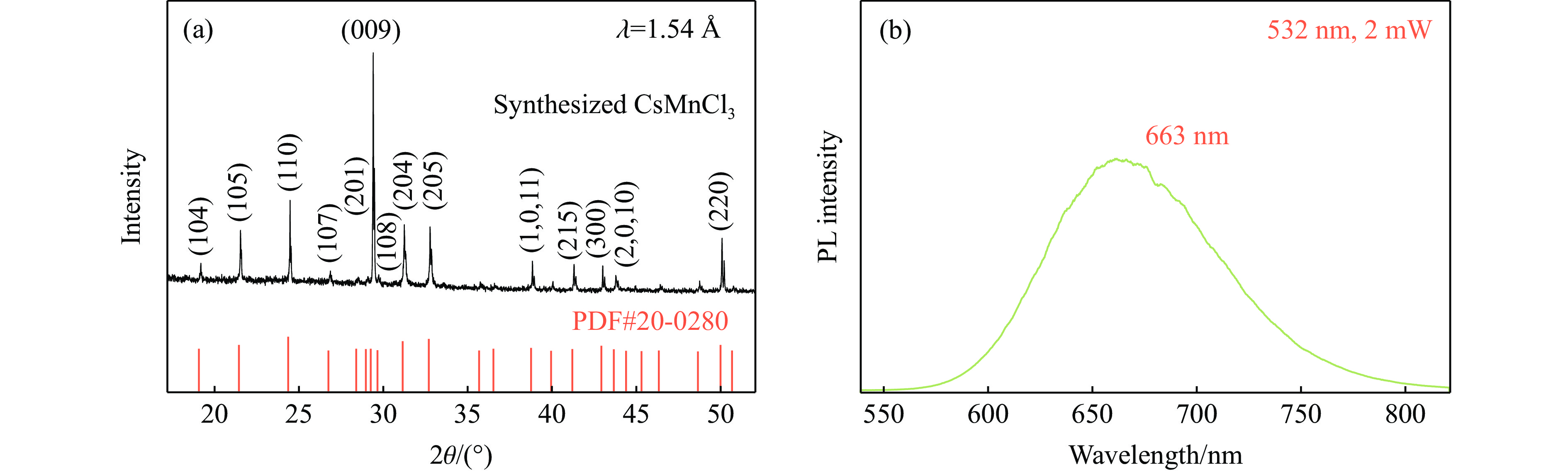
图 1 常压下CsMnCl3的(a) XRD谱和(b) PL光谱
Figure 1. (a) XRD pattern and (b) PL spectrum of CsMnCl3 under ambient conditions

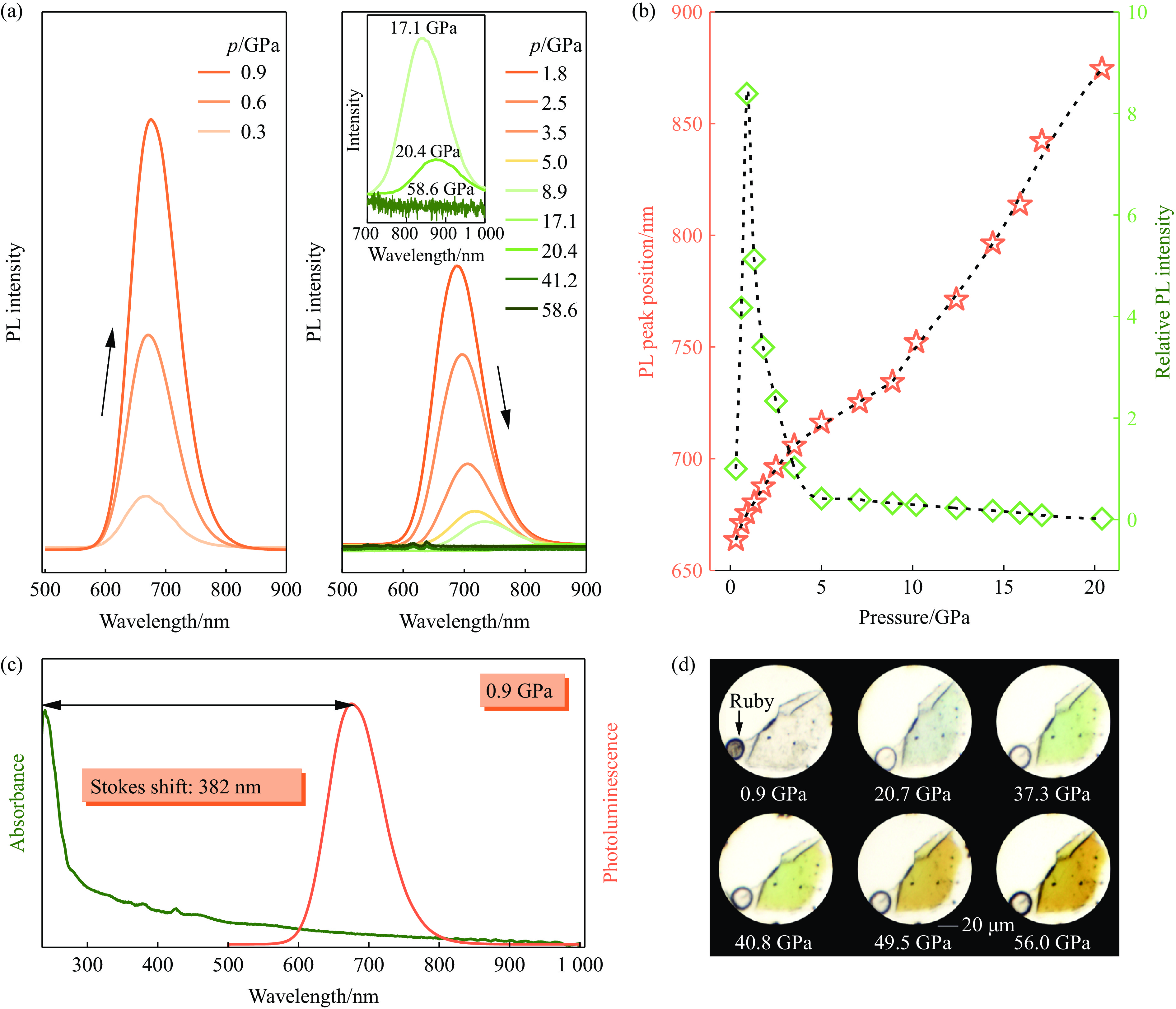
图 2 (a) 不同压力下CsMnCl3的原位PL光谱,(b) PL峰位置(橙色星形)和相对PL强度(绿色菱形)随压力的变化,(c) CsMnCl3在0.9 GPa下的吸收谱和PL光谱(显示出较大的斯托克斯位移,约为382 nm),(d) 选定压力下DAC中CsMnCl3的光学显微照片(显示出显著的压致变色)
Figure 2. (a) In situ PL spectra of CsMnCl3 at different pressures; (b) evolution of PL peak position (orange star shaped) and relative PL intensity (green rhombus shaped) under high pressures; (c) absorption and PL spectra of CsMnCl3 at 0.9 GPa, showing significant Stokes shift about 382 nm; (d) optical micrographs of CsMnCl3 in diamond anvil cell at selected pressures, showing significant piezochromism

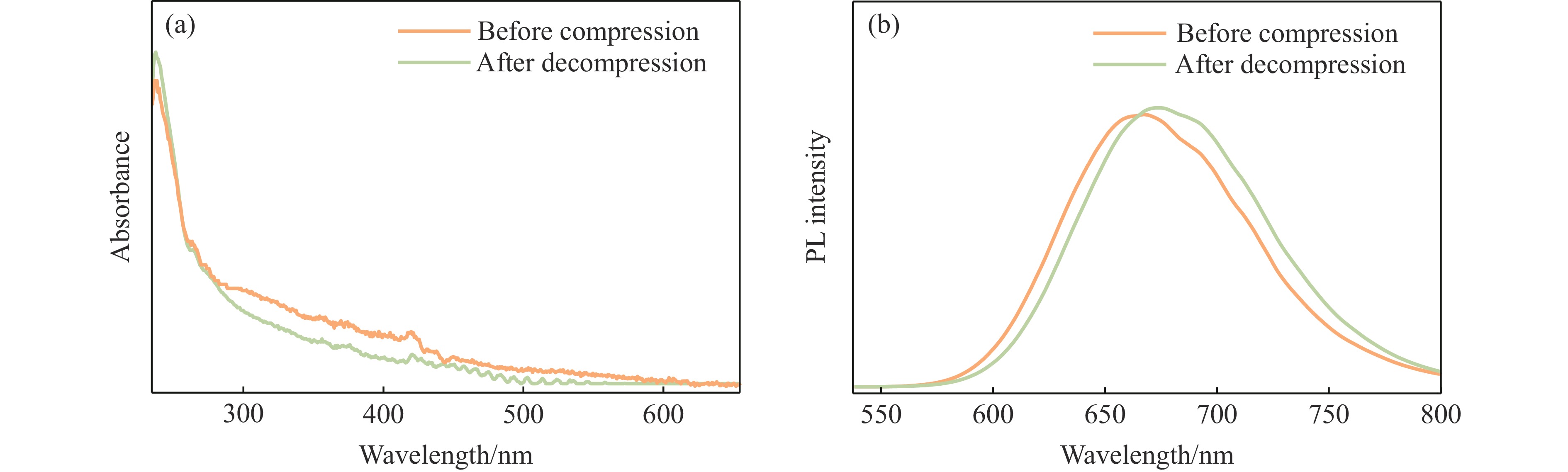
图 3 加压前和卸压后CsMnCl3的 (a) 吸收光谱和 (b) PL光谱对比
Figure 3. Comparison of (a) absorption spectra and (b) PL spectra before compression and after decompression of CsMnCl3

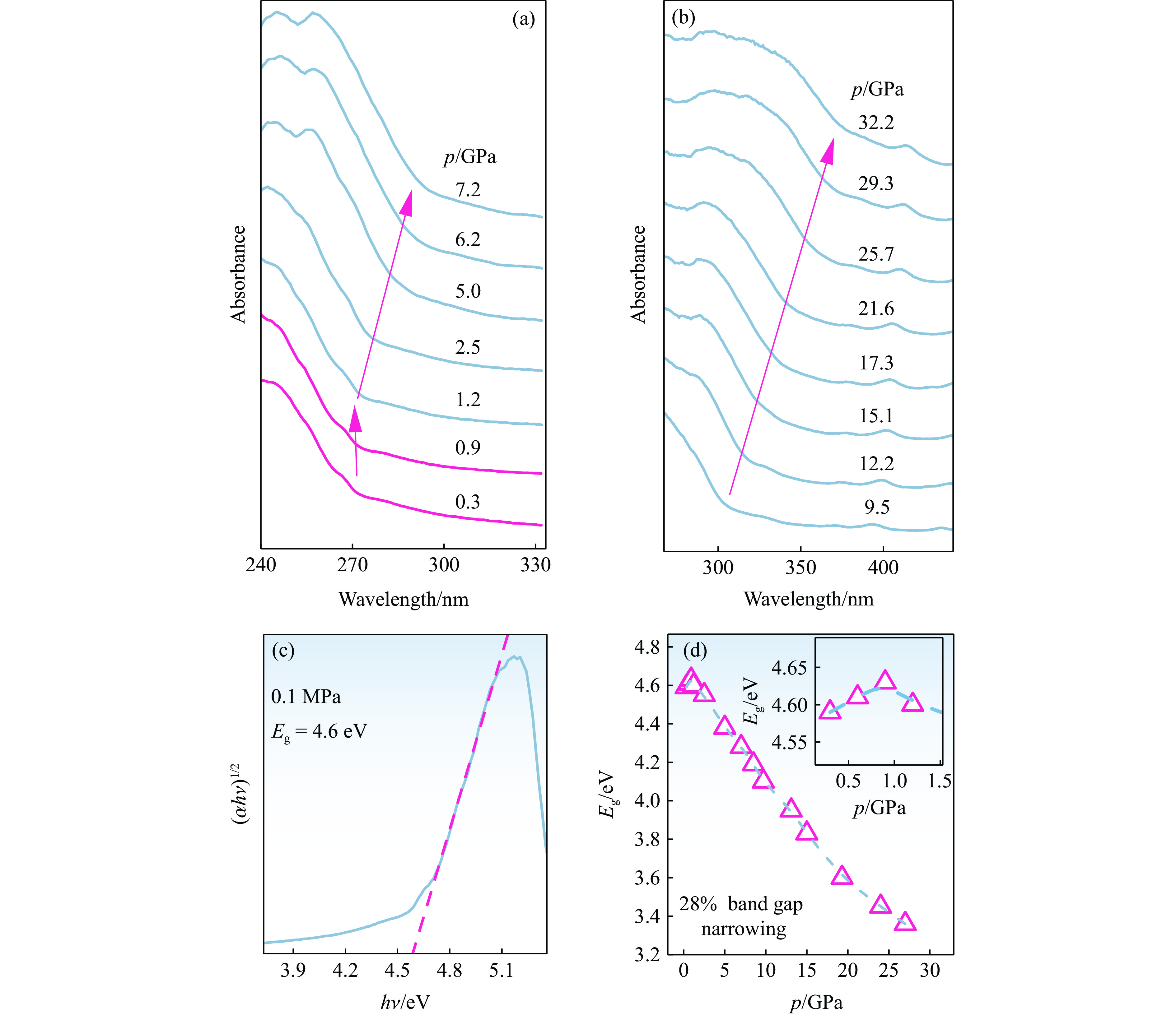
图 4 (a)~(b)加压过程中CsMnCl3的原位吸收光谱,(c) 常压条件下CsMnCl3的Tauc plot计算结果(约4.6 eV),(d)加压过程中CsMnCl3的带隙变化
Figure 4. (a)−(b) In situ absorption spectra of CsMnCl3 during pressurization; (c) Tauc plot results of CsMnCl3 at atmospheric pressure, approximately 4.6 eV; (d) band gap evolution of CsMnCl3 during pressurization

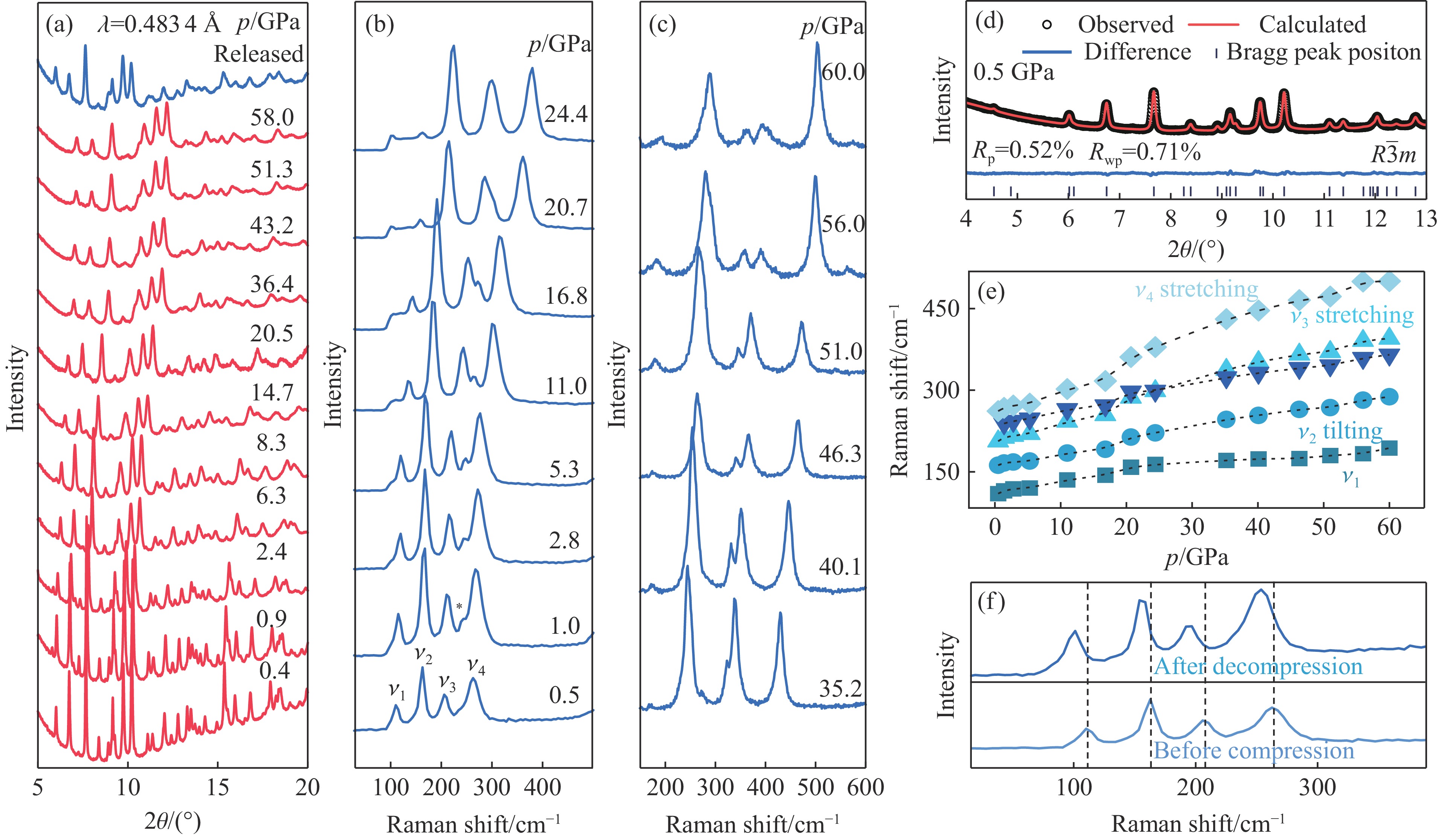
图 5 (a) 加压过程中CsMnCl3的原位XRD谱,(b)~(c) 加压过程中CsMnCl3的原位拉曼散射光谱(压力最高至60.0 GPa),(d) 0.5 GPa时XRD的Rietveld精修结果,(e) 拉曼峰位置随压力的变化曲线,(f) 加压前和卸压后CsMnCl3的拉曼峰位置对比(经过压力处理的样品的拉曼峰位置均向低波数方向偏移)
Figure 5. (a) In-situ XRD spectra of CsMnCl3 during the pressurization process; (b)−(c) in-situ Raman spectra of CsMnCl3 during the pressurization process up to 60.0 GPa; (d) Rietveld refinement result of XRD at 0.5 GPa; (e) Raman peak position variation as a function of pressure; (f) comparison of Raman peak positions before compression and after decompression of CsMnCl3, showing that the Raman peak positions of the pressure treated samples are all shifted towards lower wavenumbers

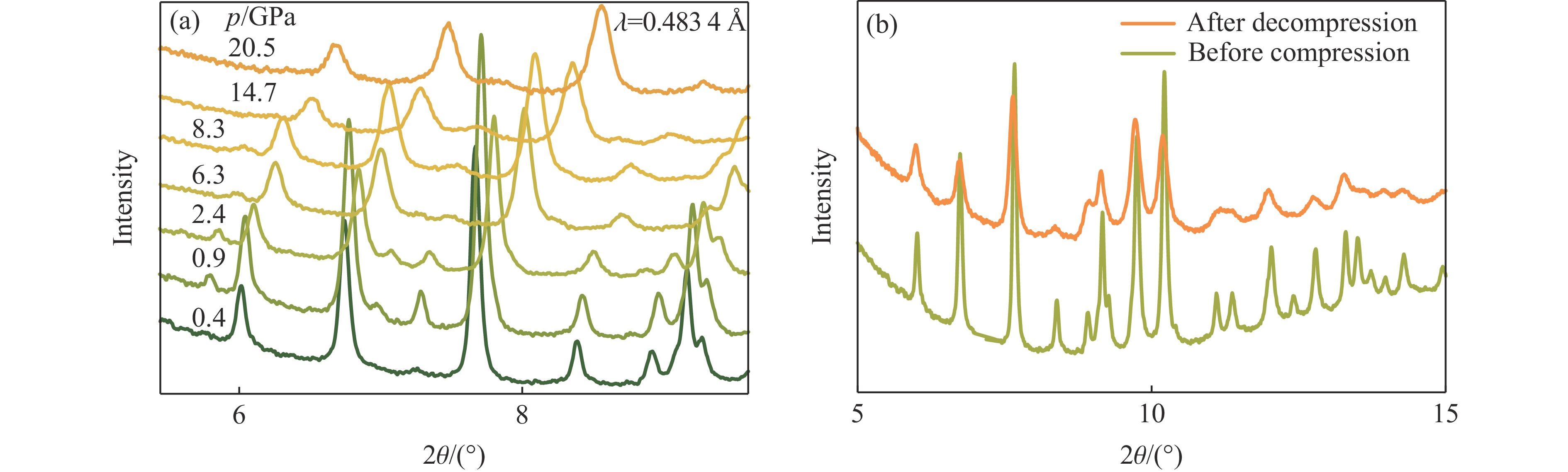
图 6 (a) 低角度下CsMnCl3的XRD谱,(b) 加压前和卸压后CsMnCl3的XRD谱对比
Figure 6. (a) XRD spectra of CsMnCl3 at low angles, (b) comparison of XRD spectra of CsMnCl3 before compression and after decompression

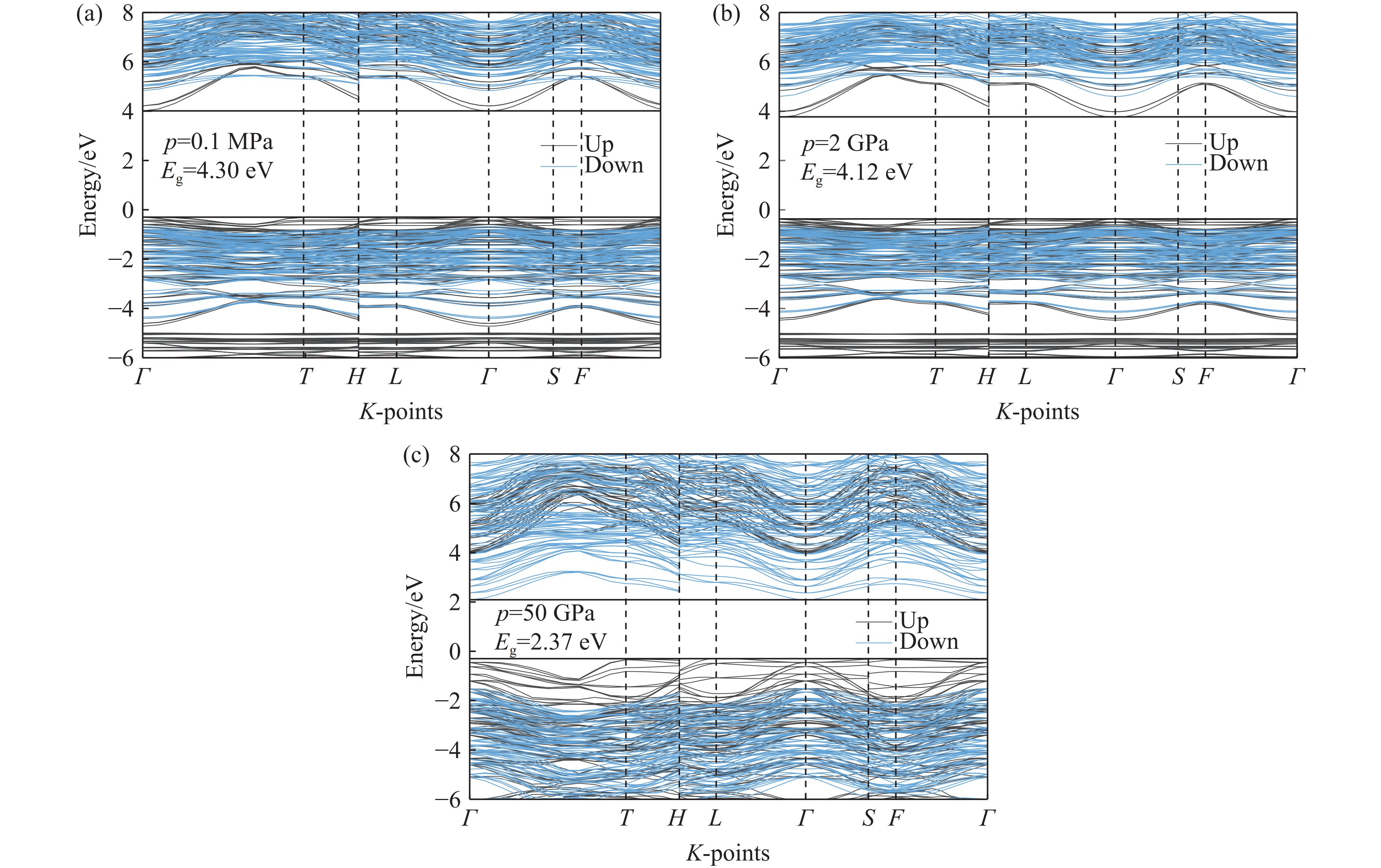
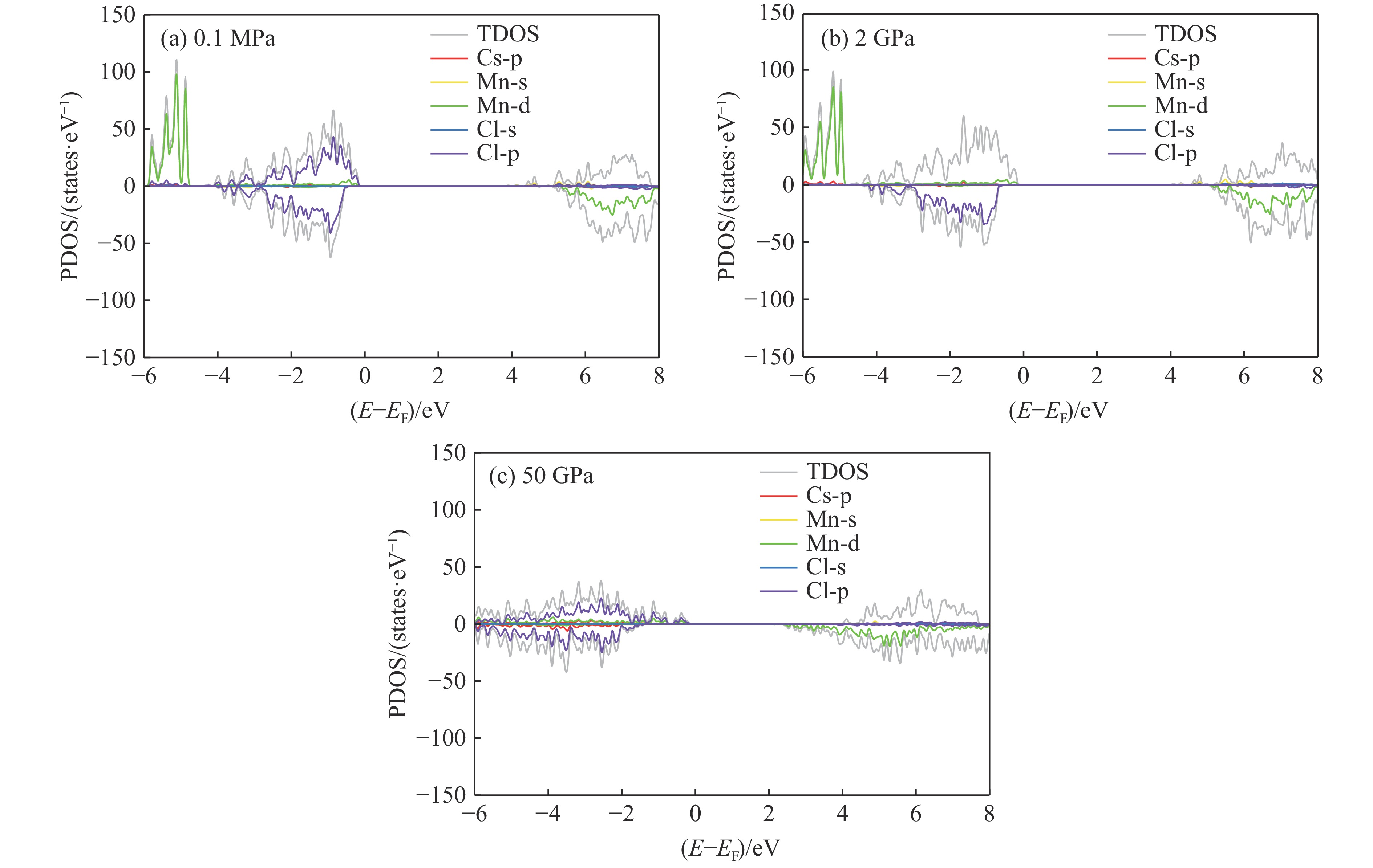
图 7 0.1 MPa (a)、2 GPa (b)、50 GPa (c)下CsMnCl3的电子能带
Figure 7. Band structures of CsMnCl3 at 0.1 MPa (a), 2 GPa (b), and 50 GPa (c)
-
[1] BATI A S R, ZHONG Y L, BURN P L, et al. Next-generation applications for integrated perovskite solar cells [J]. Communications Materials, 2023, 4(1): 2. doi: 10.1038/s43246-022-00325-4 [2] HAN J Y, PARK K, TAN S, et al. Perovskite solar cells [J]. Nature Reviews Methods Primers, 2025, 5(1): 3. doi: 10.1038/s43586-024-00373-9 [3] PAZOS-OUTÓN L M, SZUMILO M, LAMBOLL R, et al. Photon recycling in lead iodide perovskite solar cells [J]. Science, 2016, 351(6280): 1430–1433. doi: 10.1126/science.aaf1168 [4] ZHANG L, SUN C J, HE T W, et al. High-performance quasi-2D perovskite light-emitting diodes: from materials to devices [J]. Light: Science & Applications, 2021, 10: 61. [5] LIU X K, XU W D, BAI S, et al. Metal halide perovskites for light-emitting diodes [J]. Nature Materials, 2021, 20(1): 10–21. doi: 10.1038/s41563-020-0784-7 [6] LIU A, ZHU H H, BAI S, et al. High-performance metal halide perovskite transistors [J]. Nature Electronics, 2023, 6(8): 559–571. doi: 10.1038/s41928-023-01001-2 [7] LI C L, WANG H L, WANG F, et al. Ultrafast and broadband photodetectors based on a perovskite/organic bulk heterojunction for large-dynamic-range imaging [J]. Light: Science & Applications, 2020, 9(1): 31. [8] FANG Y Y, ZHANG L, WU L W, et al. Pressure-induced emission (PIE) and phase transition of a two-dimensional halide double perovskite (BA)4AgBiBr8 (BA=CH3(CH2)3 $ {\rm NH_3^+} $) [J]. Angewandte Chemie International Edition, 2019, 58(43): 15249–15253. doi: 10.1002/anie.201906311 [9] ZHANG L, ZENG Q X, WANG K. Pressure-induced structural and optical properties of inorganic halide perovskite CsPbBr3 [J]. The Journal of Physical Chemistry Letters, 2017, 8(16): 3752–3758. doi: 10.1021/acs.jpclett.7b01577 [10] MA Z W, LIU Z, LU S Y, et al. Pressure-induced emission of cesium lead halide perovskite nanocrystals [J]. Nature Communications, 2018, 9(1): 4506. doi: 10.1038/s41467-018-06840-8 [11] ZOU S H, LIU Y S, LI J H, et al. Stabilizing cesium lead halide perovskite lattice through Mn (Ⅱ) substitution for air-stable light-emitting diodes [J]. Journal of the American Chemical Society, 2017, 139(33): 11443–11450. doi: 10.1021/jacs.7b04000 [12] GOODYEAR J, KENNEDY D J. The crystal structure of CsMnCl3 [J]. Acta Crystallographica Section B, 1973, 29(4): 744–748. doi: 10.1107/s0567740873003286 [13] LIM A R, CHOH S H, JEONG S Y. The temperature dependence of 133Cs NMR and study of spin-lattice relaxation time in a CsMnCl3 single crystal [J]. Solid State Ionics, 1997, 98(1/2): 27–32. doi: 10.1016/S0167-2738(96)00622-4 [14] LIM A R, CHOH S H, JEONG S Y. Nuclear magnetic resonance of 133Cs in a CsMnCl3 single crystal [J]. Journal of Physics: Condensed Matter, 1994, 6(46): 10141–10146. doi: 10.1088/0953-8984/6/46/029 [15] KAMBLI U, GUDEL H U. Optical absorption and luminescence studies of antiferromagnetic RbMnCl3 and CsMnCl3 [J]. Journal of Physics C: Solid State Physics, 1984, 17(22): 4041–4054. doi: 10.1088/0022-3719/17/22/022 [16] GUAN L Q, SHI S, NIU X W, et al. All-inorganic manganese-based CsMnCl3 nanocrystals for X-ray imaging [J]. Advanced Science, 2022, 9(18): 2201354. doi: 10.1002/advs.202201354 [17] SHUI X L, FANG S Q, DOU B L, et al. Complementary advantages: construction of rare-earth-free sunlight conversion CsMnCl3(H2O)2/Cs3SbCl6 heterojunction for energy-saving agricultural cultivation [J]. Advanced Optical Materials, 2025, 13(21): 2500636. doi: 10.1002/adom.202500636 [18] JIA Y J, ZHAO C Y, QIANG J W, et al. Highly efficient near-infrared luminescence in Bi3+-Yb3+ Co-doped CsMnCl3 perovskite single crystals for versatile photonic applications [J]. Advanced Optical Materials, 2025, 13(18): 2500357. doi: 10.1002/adom.202500357 [19] LIANG W Q, REN S Q, HAO X, et al. Hydrochloric acid-assisted layered perovskite CsMnCl3·2H2O single crystals for sensitive and stable X-ray detection with anisotropic response [J]. ACS Applied Materials & Interfaces, 2025, 17(16): 24168–24178. doi: 10.1021/acsami.5c02253 [20] LIANG W Q, TONG H M, ZHU J W, et al. Large-area stable flexible X-ray scintillation screens with group ⅡB ions doped CsMnCl3 microcrystals [J]. Laser & Photonics Reviews, 2025, 19(14): 2402306. doi: 10.1002/lpor.202402306 [21] AIZENSHTEIN B, GARTNER R, HADAR I, et al. Lead-free CsMnCl3 nanoparticles with tunable dual fluorescence for light-emitting applications [J]. Chemistry of Materials, 2025, 37(20): 8178–8186. doi: 10.1021/acs.chemmater.5c01218 [22] SOZEN Y, OZEN S, SAHIN H. Cesium manganese chloride: stable lead-free perovskite from bulk to single layer [J]. Journal of Magnetism and Magnetic Materials, 2021, 531: 167845. doi: 10.1016/j.jmmm.2021.167845 [23] 刘云贵, 吕政星, 宋海鹏, 等. 金刚石荧光机制的研究及其对高压拉曼光谱测试的意义 [J]. 高压物理学报, 2019, 33(4): 043101. doi: 10.11858/gywlxb.20180689LIU Y G, LYU Z X, SONG H P, et al. Fluorescence mechanism of diamond and the significance in high pressure Raman spectrometry [J]. Chinese Journal of High Pressure Physics, 2019, 33(4): 043101. doi: 10.11858/gywlxb.20180689 [24] PERDEW J P, BURKE K, ERNZERHOF M. Generalized gradient approximation made simple [J]. Physical Review Letters, 1996, 77(18): 3865–3868. doi: 10.1103/PhysRevLett.77.3865 [25] DUDAREV S L, BOTTON G A, SAVRASOV S Y, et al. Electron-energy-loss spectra and the structural stability of nickel oxide: an LSDA+U study [J]. Physical Review B, 1998, 57(3): 1505–1509. doi: 10.1103/PhysRevB.57.1505 [26] GRIMME S, EHRLICH S, GOERIGK L. Effect of the damping function in dispersion corrected density functional theory [J]. Journal of Computational Chemistry, 2011, 32(7): 1456–1465. doi: 10.1002/jcc.21759 [27] GRIMME S. Semiempirical GGA-type density functional constructed with a long-range dispersion correction [J]. Journal of Computational Chemistry, 2006, 27(15): 1787–1799. doi: 10.1002/jcc.20495 [28] HAPOSAN T, ARRAMEL A, MAULIDA P Y D, et al. All-inorganic copper-halide perovskites for large-Stokes shift and ten-nanosecond-emission scintillators [J]. Journal of Materials Chemistry C, 2024, 12(7): 2398–2409. doi: 10.1039/D3TC03977C [29] SUI Q, REN X T, DAI Y X, et al. Piezochromism and hydrochromism through electron transfer: new stories for viologen materials [J]. Chemical Science, 2017, 8(4): 2758–2768. doi: 10.1039/C6SC04579K [30] XIONG S B, TIAN F Y, WANG F, et al. Reducing nonradiative recombination for highly efficient inverted perovskite solar cells via a synergistic bimolecular interface [J]. Nature Communications, 2024, 15(1): 5607. doi: 10.1038/s41467-024-50019-3 [31] MAKUŁA P, PACIA M, MACYK W. How to correctly determine the band gap energy of modified semiconductor photocatalysts based on UV-vis spectra [J]. The Journal of Physical Chemistry Letters, 2018, 9(23): 6814–6817. doi: 10.1021/acs.jpclett.8b02892 [32] DING Z J, CHEN Q L, JIANG Y Z, et al. Structure-guided approaches for enhanced spin-splitting in chiral perovskite [J]. JACS Au, 2024, 4(4): 1263–1277. doi: 10.1021/jacsau.3c00835 [33] GNEZDILOV V P, EREMENKO V V, KURNOSOV V S, et al. Raman spectroscopy in the crystal CsMnCl3·2H2O [J]. Soviet Journal of Low Temperature Physics, 1991, 17(5): 331–335. doi: 10.1063/10.0032832 [34] XIAO H, TAHIR-KHELI J, GODDARD Ⅲ W A. Accurate band gaps for semiconductors from density functional theory [J]. The Journal of Physical Chemistry Letters, 2011, 2(3): 212–217. doi: 10.1021/jz101565j -

 下载:
下载:

计量
- 文章访问数: 927
- HTML全文浏览量: 342
- PDF下载量: 108
