





Microscopic Mechanisms of Plastic Deformation in High-Entropy Carbide (Zr0.2Hf0.2Ti0.2Nb0.2Ta0.2)C under Quasi-Isentropic and Ramp Compression
-
摘要: 高熵碳化物(high-entropy carbide, HEC)因其显著的化学无序与晶格畸变,展现出优异的强-韧协同特性,有望成为冲击防护与高温结构应用领域的前沿材料。然而,在高压、高应变率等极端服役条件下,其微结构演化与动态力学响应仍缺乏系统认识。为此,基于高精度机器学习势,以 (Zr0.2Hf0.2Ti0.2Nb0.2Ta0.2)C为研究对象,开展了沿 [001]、$ [01\overline{1}] $和[111] 3个典型晶向的准等熵压缩以及斜波加载分子动力学模拟。从晶向与加载路径角度,系统地揭示了多重“高熵”效应如何影响高熵碳化物在原子尺度下的塑性变形机制。研究发现,引入多主元金属的高熵碳化物显著改善了陶瓷材料的塑性激活方式、滑移系竞争关系及局域变形模式。局域应力扰动与晶格畸变不仅强化了金属子晶格Bain型瞬态堆垛重排,提高了材料的承载能力和延展性,还促进了多滑移系协同激活,使剪切带由单向延伸转变为多向、网络化扩展。第一性原理计算结果表明,高熵碳化物中的碳空位形成能较单组分过渡金属碳化物显著降低,因此,在压缩过程中,碳原子更易先发生大位移,形成碳空位并参与剪切带成核。Abstract: High-entropy carbides (HECs), which are characterized by pronounced chemical disorder and lattice distortion, exhibit exceptional strength-toughness synergy and are promising candidates for impact protection and high-temperature structural applications. However, their microstructural evolution and stress response under extreme conditions, such as high stress and strain rates, remains poorly understood. In this work, a high-accuracy machine-learning interatomic potential is employed to investigate the representative multi-principal carbide (Zr0.2Hf0.2Ti0.2Nb0.2Ta0.2)C (HEC) through large-scale molecular dynamics (MD) simulations. To elucidate how multiple “high-entropy” effects govern atomic-scale plasticity in HECs, large-scale MD simulations are carried out to explore their response under quasi-isentropic compression and ramp-wave loading along three principal crystallographic orientations: [001], $ [01\overline{1}] $, and [111]. The results demonstrate that the high-entropy effects profoundly reshape the initiation of plasticity, the competition among slip systems, and the localized deformation modes in HEC. Local stress fluctuations and lattice distortions enhance transient Bain-type stacking rearrangements within the sublattice and promote the synergistic activation of multiple slip systems. This leads to a transformation of shear band formation from isolated nucleation to a network-like propagation. Complementary first-principles calculations reveal that the carbon vacancy formation energy in high-entropy ceramics is significantly reduced compared to their single-component carbides. This reduction of vacancy formation energy facilitates preferential displacement of carbon atoms and their participation in shear band nucleation during compression. Furthermore, the comparison between different loading paths highlights the complexity of the high-entropy effects’ response. The quasi-isentropic loading path helps to unveil the intrinsic deformation mechanisms governed by the high-entropy effect itself, whereas the stress gradients inherent in ramp-wave loading couple with the high-entropy effect, leading to a premature triggering and intensification of plastic localization.
-
Key words:
- high-entropy carbides /
- high-entropy effect /
- quasi-isentropic compression /
- ramp compression /
- anisotropy /
- slip /
- carbon vacancy
-
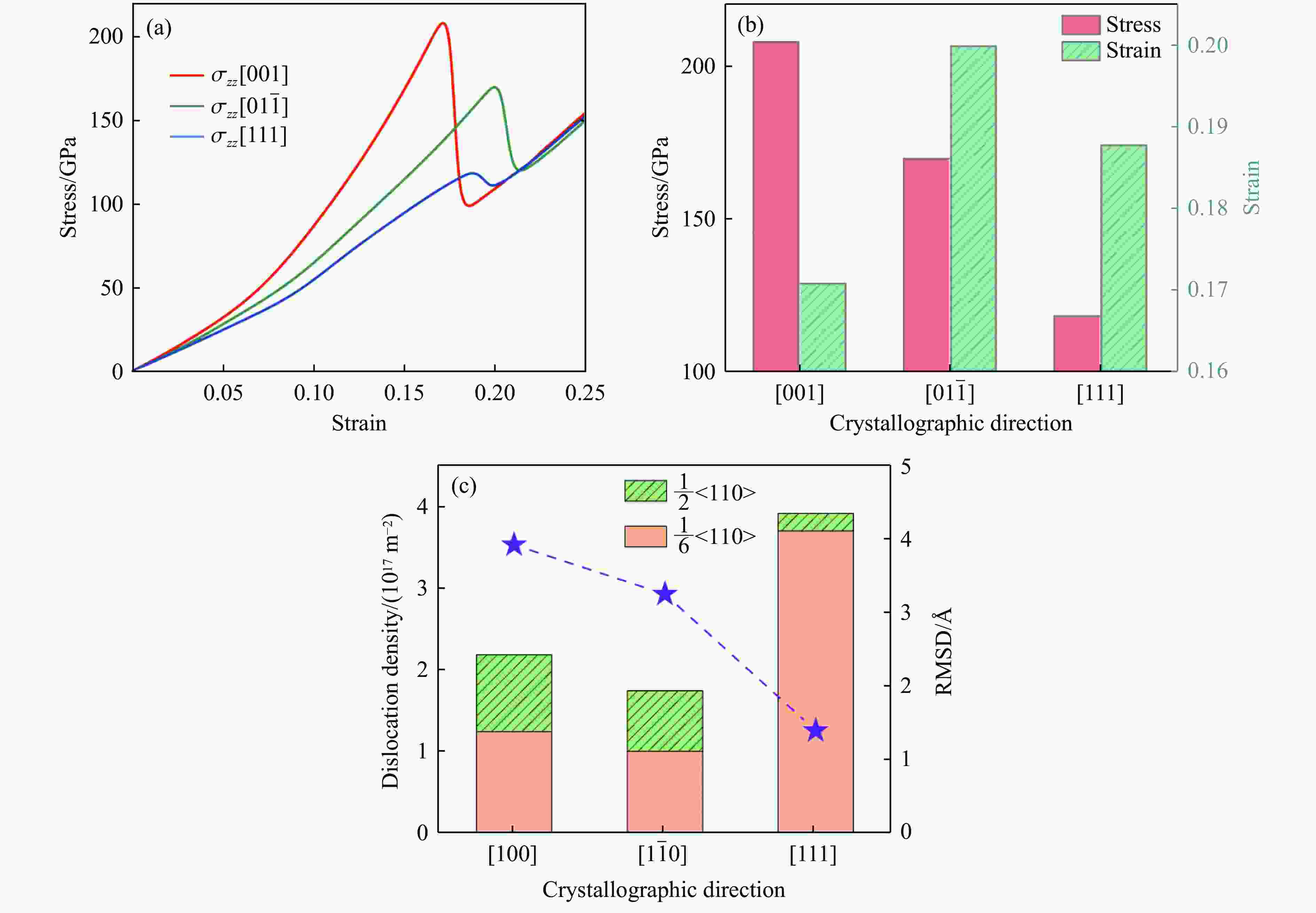
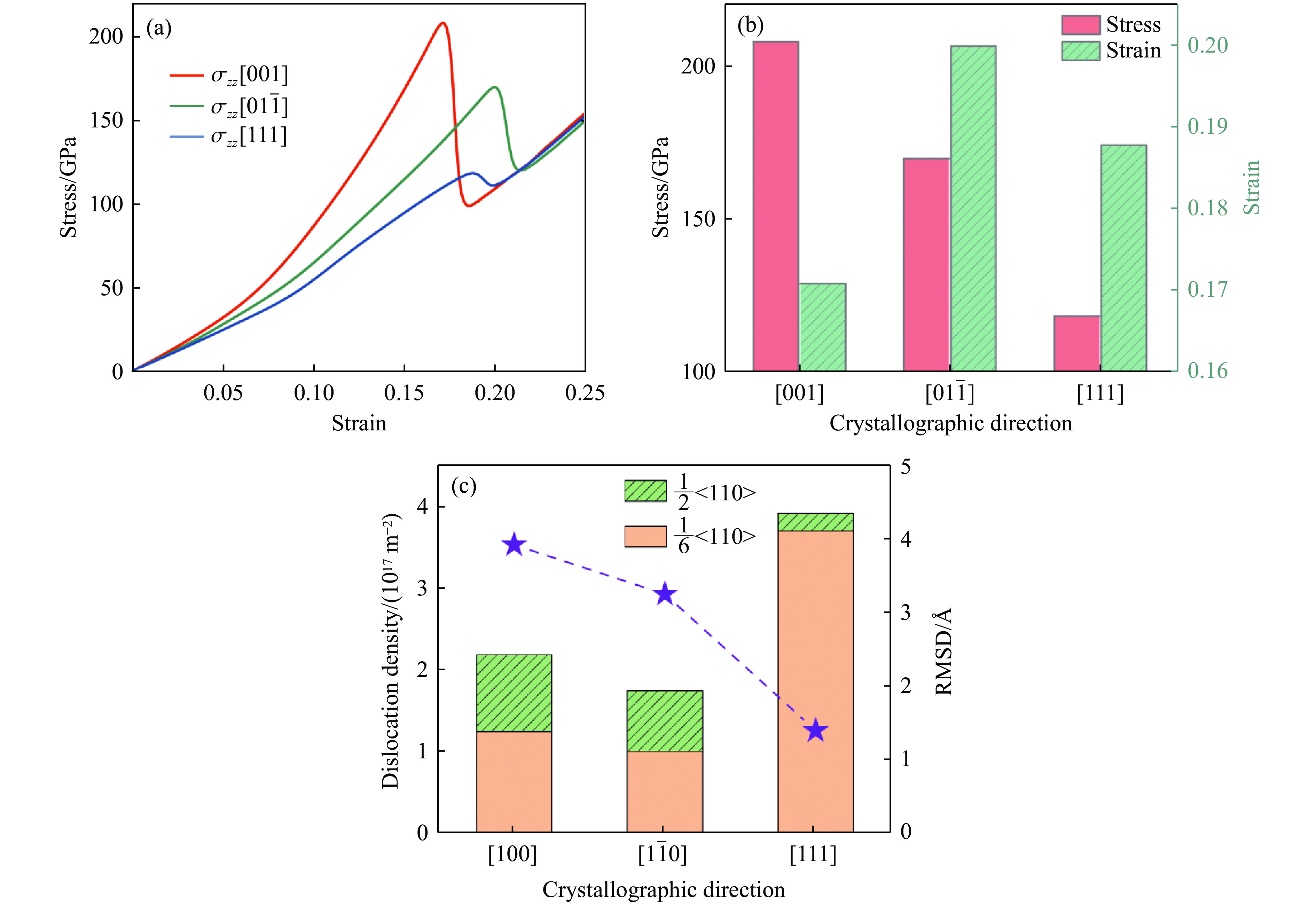
图 1 (a) [001]、$ [01\overline{1}] $以及[111]晶向在准等熵加载下的应力-应变曲线,(b) 图1(a)中3条曲线的最大应力及对应的应变,(c) 3个晶向在最高应力时刻所对应的金属原子所在的FCC结构的位错密度以及均方根位移柱状图
Figure 1. (a) Stress-strain curves of the [001], $ [01\overline{1}] $, and [111] crystallographic directions under quasi-isentropic loading; (b) maximum stress and the corresponding strains of the three curves in Fig.1(a); (c) dislocation density and root mean square displacement histograms of the FCC structure of metal atoms at the moment of maximum stress for the three crystallographic directions
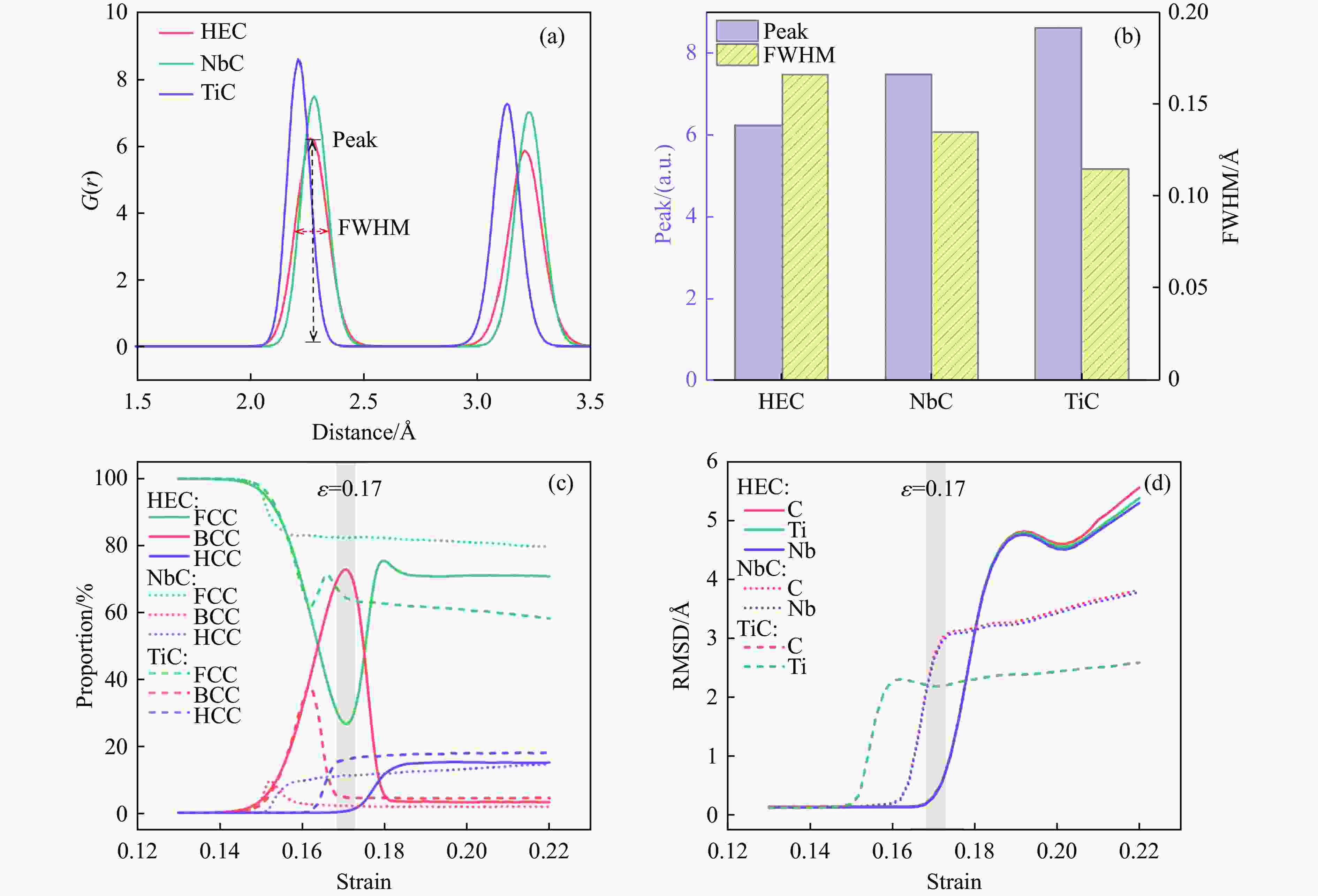
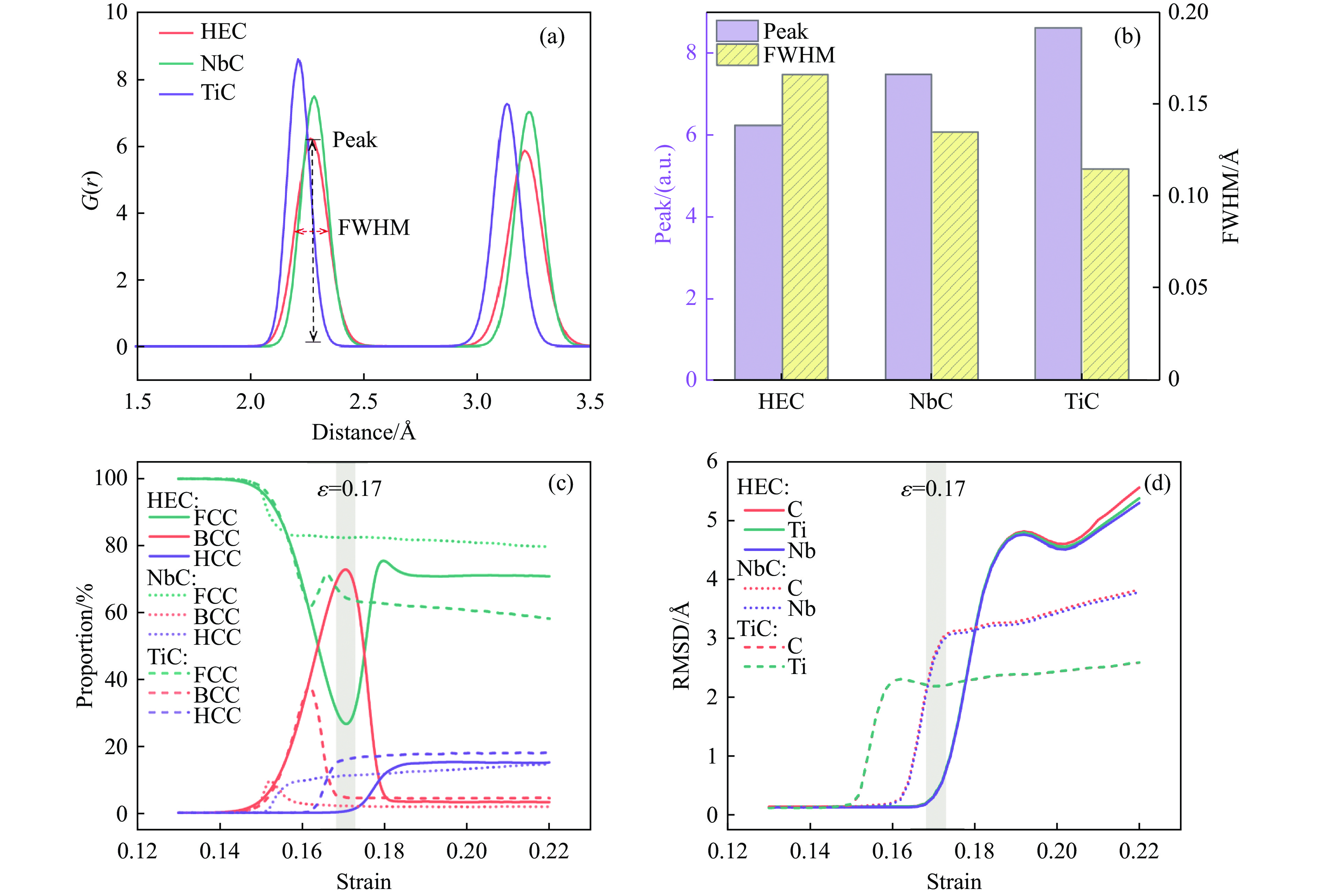
图 2 (a) HEC、NbC和TiC充分弛豫后的径向分布函数,(b) 3种材料在图2(a)中的峰值以及半高全宽,(c) 3种材料在压缩程度不断增加时,仅包含金属原子的结构中不同原子结构所占比例随应变变化的关系曲线,(d) HEC中C、Ti、Nb原子以及NbC中C、Nb 原子和TiC中C、Ti原子的均方根位移随压缩应变的演化
Figure 2. (a) Radial distribution functions of HEC, NbC, and TiC after full relaxation; (b) peaks and full width at half maximum (FWHM) of the three materials in Fig.2(a); (c) relationship curves of the proportions of different atomic structures in the structures containing only metal atoms as a function of strain for the three materials under increasing compression; (d) evolution of the RMSD with compressive strain for C, Ti, and Nb atoms in the HEC, for C and Nb atoms in NbC, and for C and Ti atoms in TiC
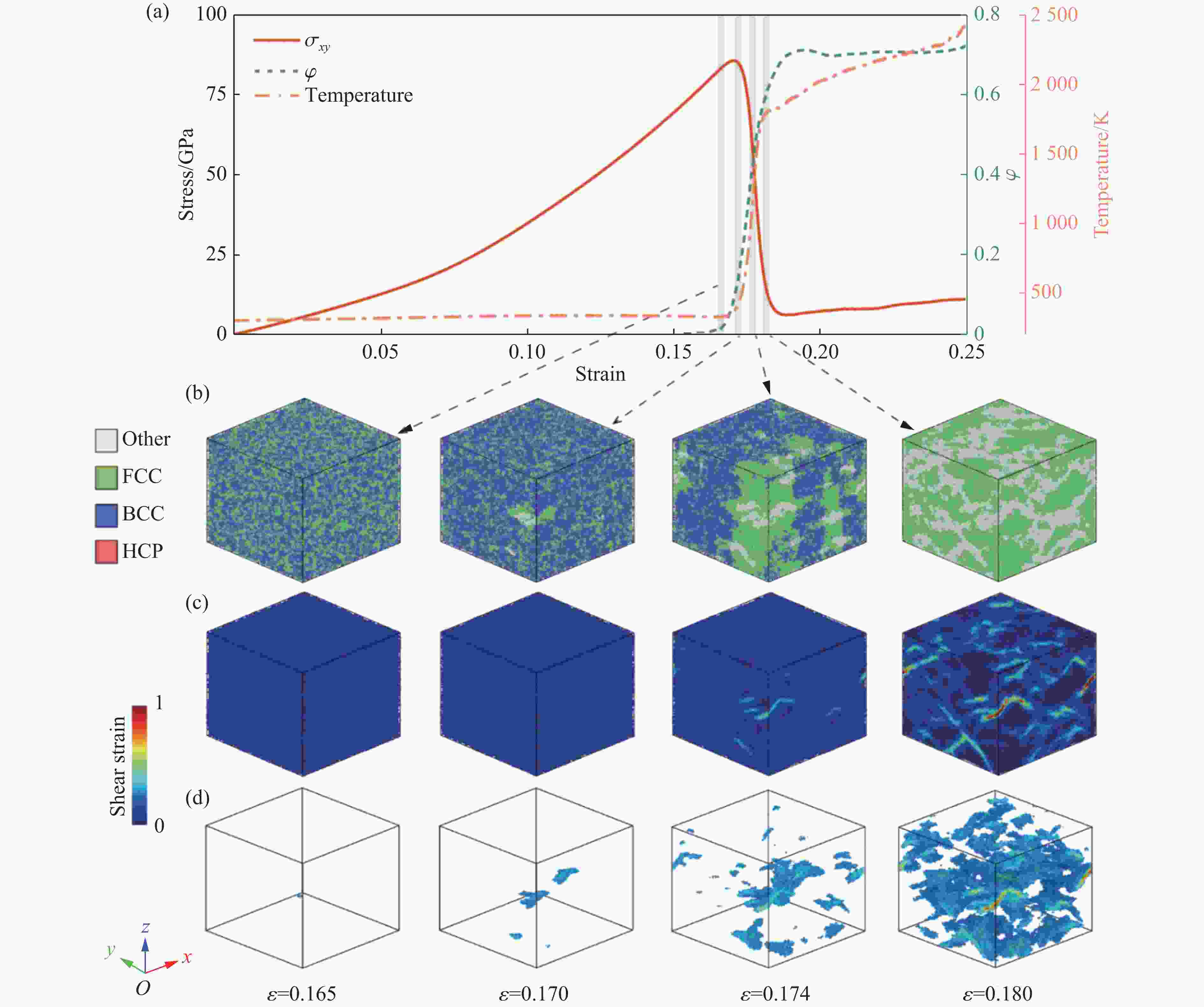
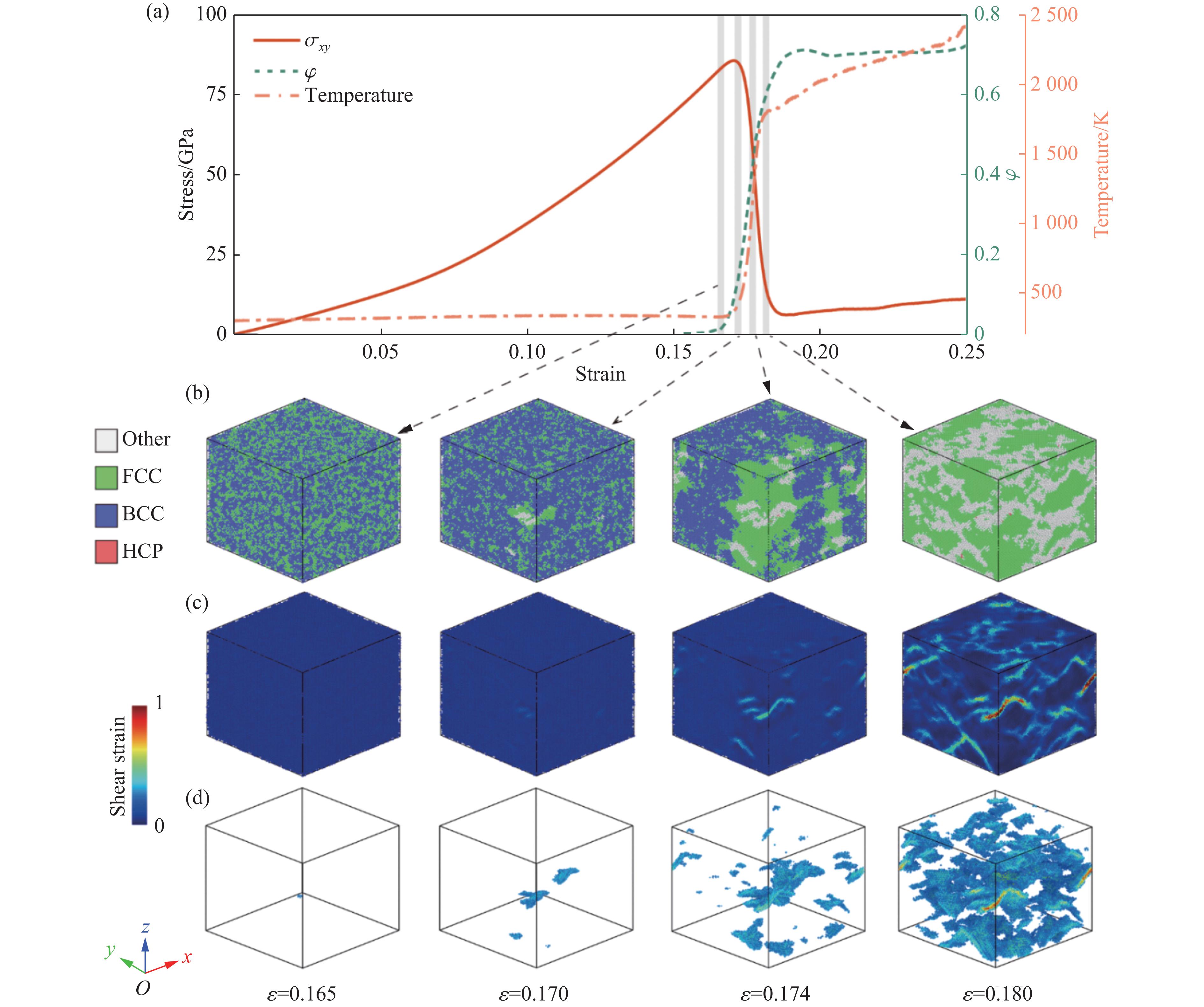
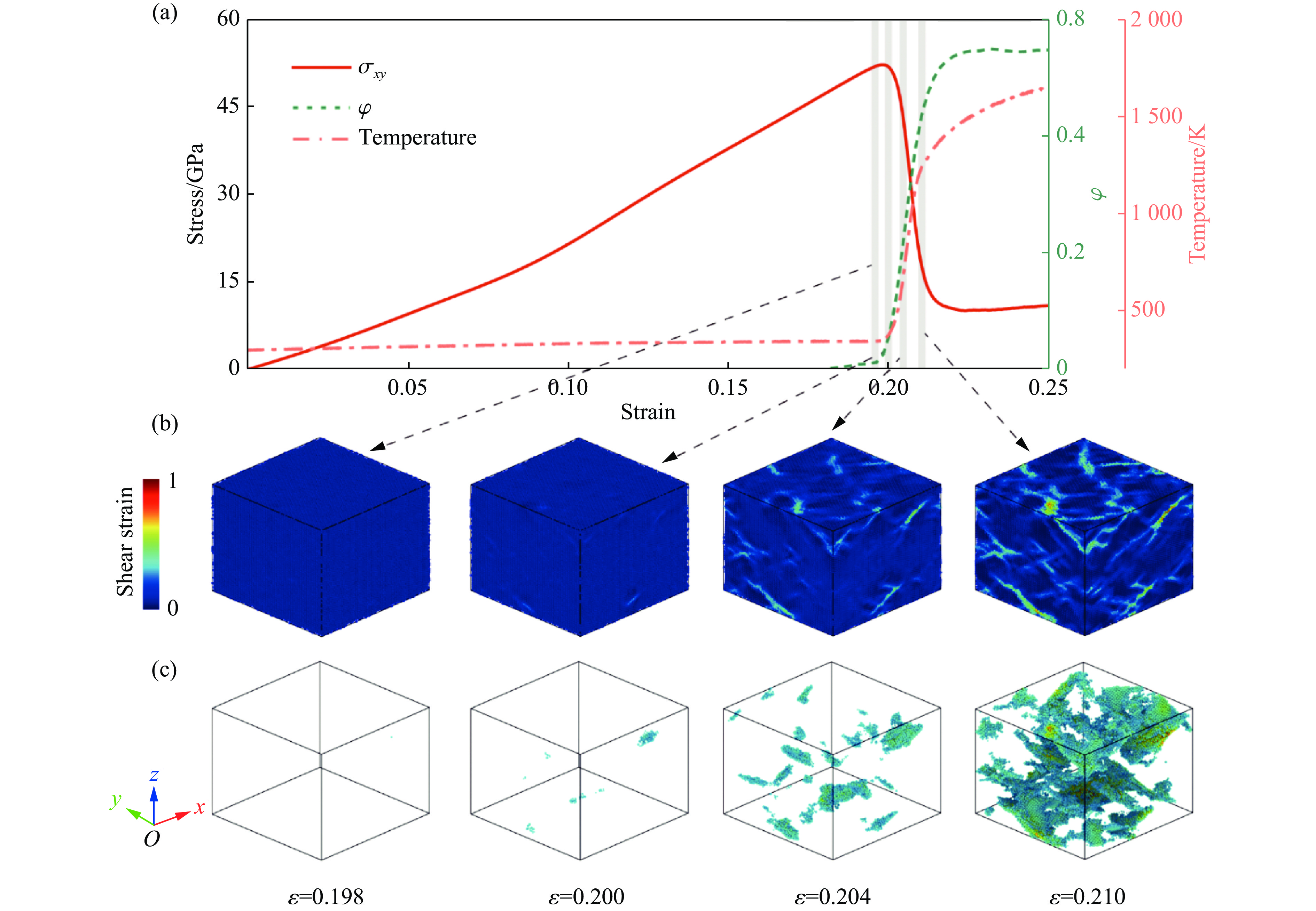
图 3 (a) 沿[001]晶向加载时HEC的剪应力/温度/局域化变形参数-应变曲线,其中灰色标记应变下的(b) 金属原子结构云图、(c) 剪应变云图、(d) 剪应变大于0.200的原子剪应变云图
Figure 3. (a) Stress/temperature/localization deformation parameter-strain curves of HEC in the [001] crystallographic direction; correspond to (b) structural cloud maps of metal atoms, (c) shear strain cloud maps, and (d) shear strain cloud maps with atoms having shear strain larger than 0.200, respectively, at the strains marked by the gray lines in Fig. 3(a)
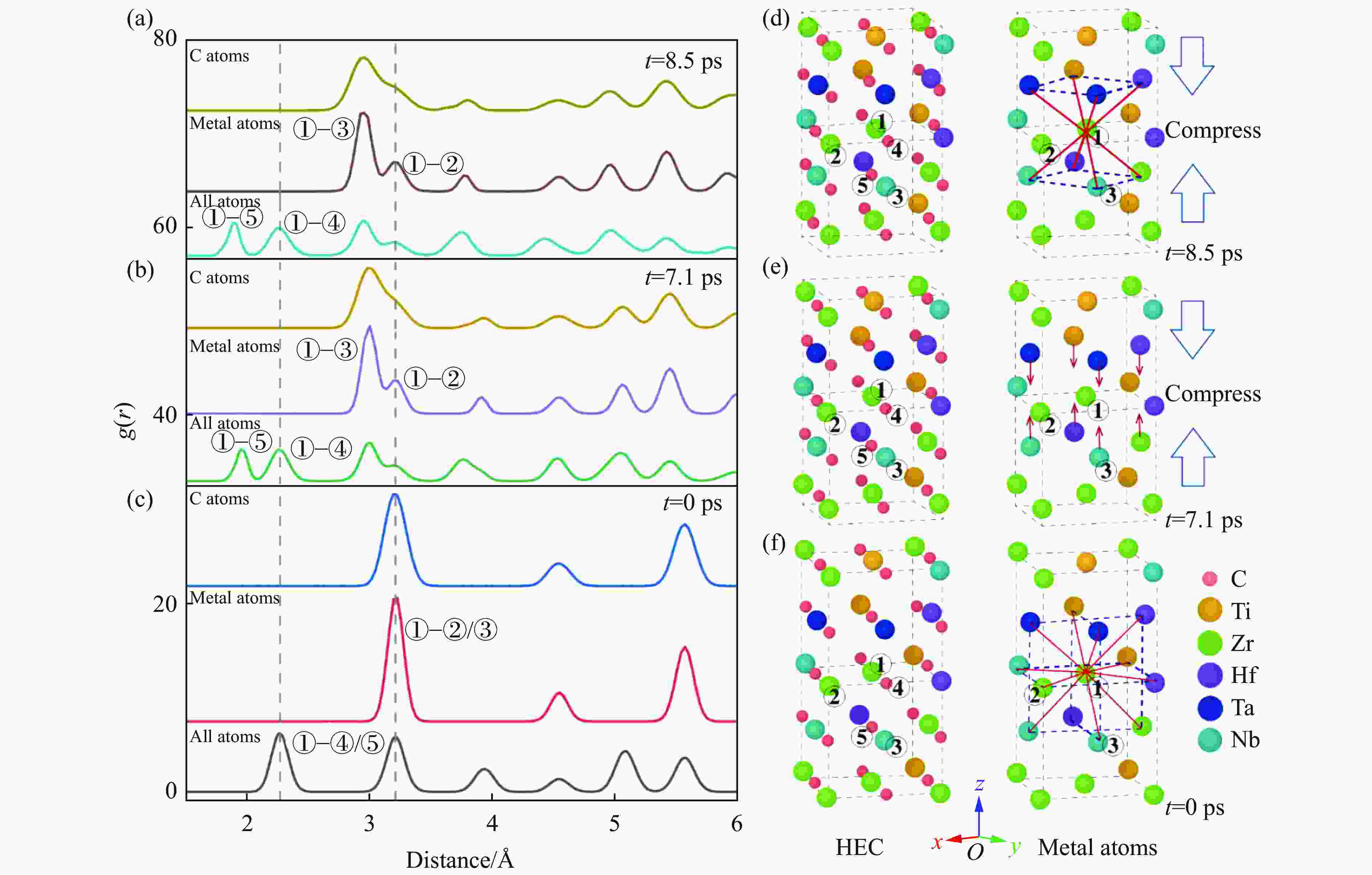
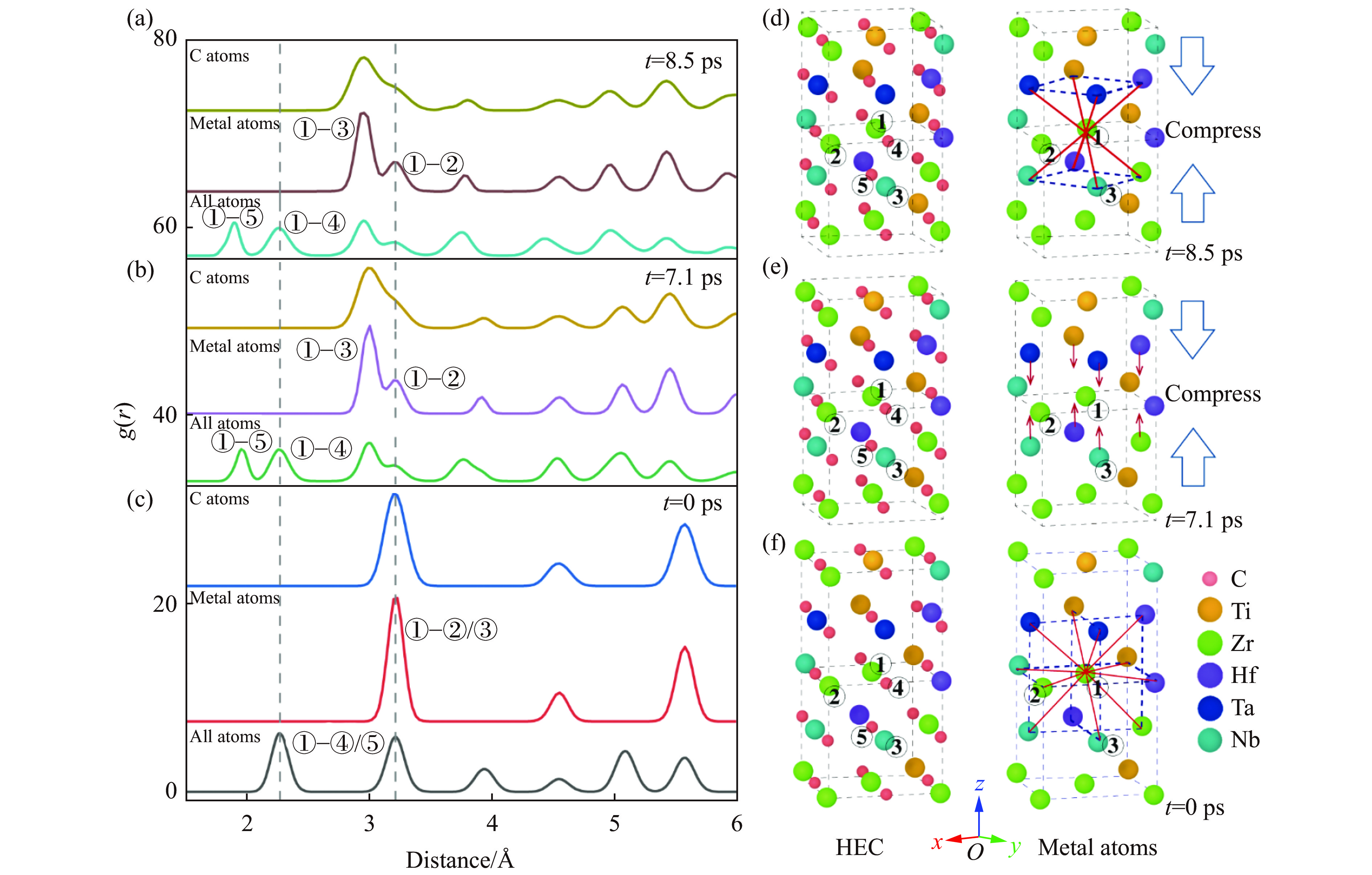
图 4 (a)~(c) 不同加载时刻下所有原子、金属原子以及碳原子的径向分布函数;(d)~(f) 对应时刻下的局部原子排列(左列为整个体系,右列仅金属原子的结构)
Figure 4. (a)−(c) Radial distribution functions of all atoms, metal atoms, and carbon atoms at different loading times; (d)−(f) atomic arrangement diagrams for corresponding moments, with the left column showing the entire system and the right column showing the structure containing only metal atoms
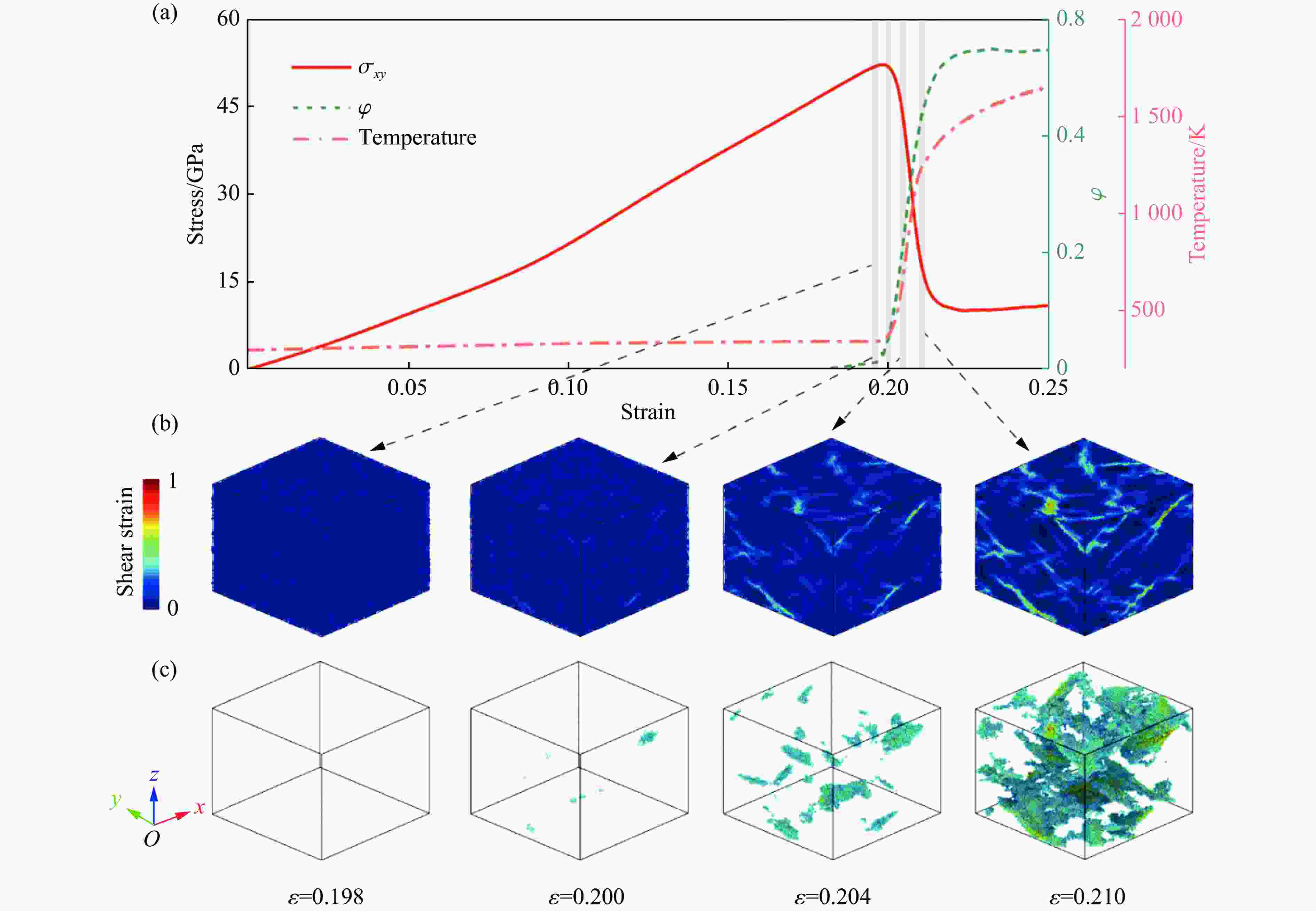
图 5 (a) $ [01\overline{1}] $晶向下HEC的应力/温度/局域化变形参数-应变曲线,(b) 图5(a)中的灰色线所标记的4个应变下的剪应变云图,(c) 剪应变大于0.200时原子的剪应变云图
Figure 5. (a) Stress, temperature, localization deformation parameter-strain curves of HEC in the $ [01\overline{1}] $ crystallographic direction; (b) and (c) correspond to the shear strain cloud maps, and shear strain cloud maps with atoms having shear strain larger than 0.200, respectively, at the four strains marked by the gray lines in Fig. 5(a)
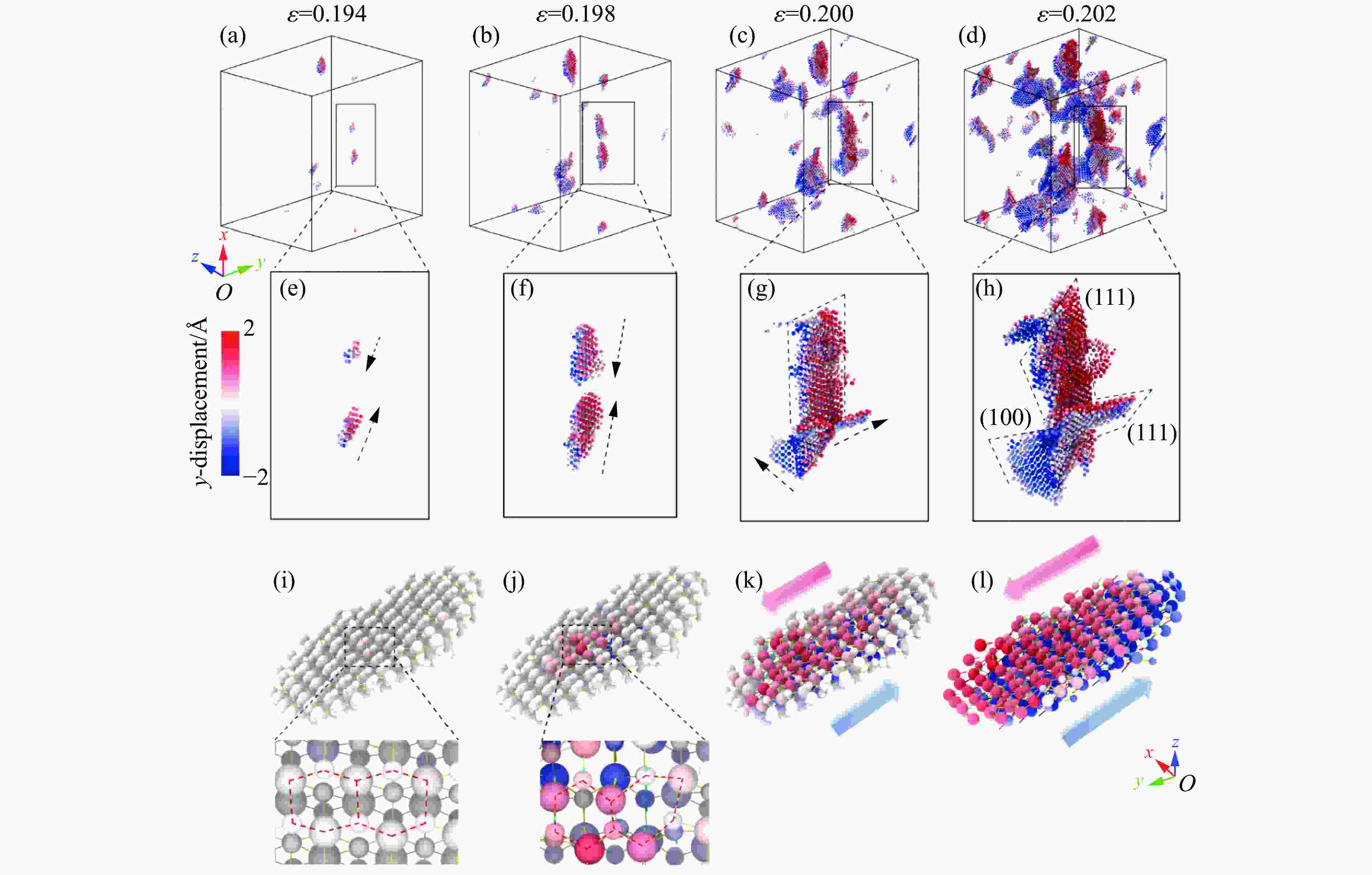
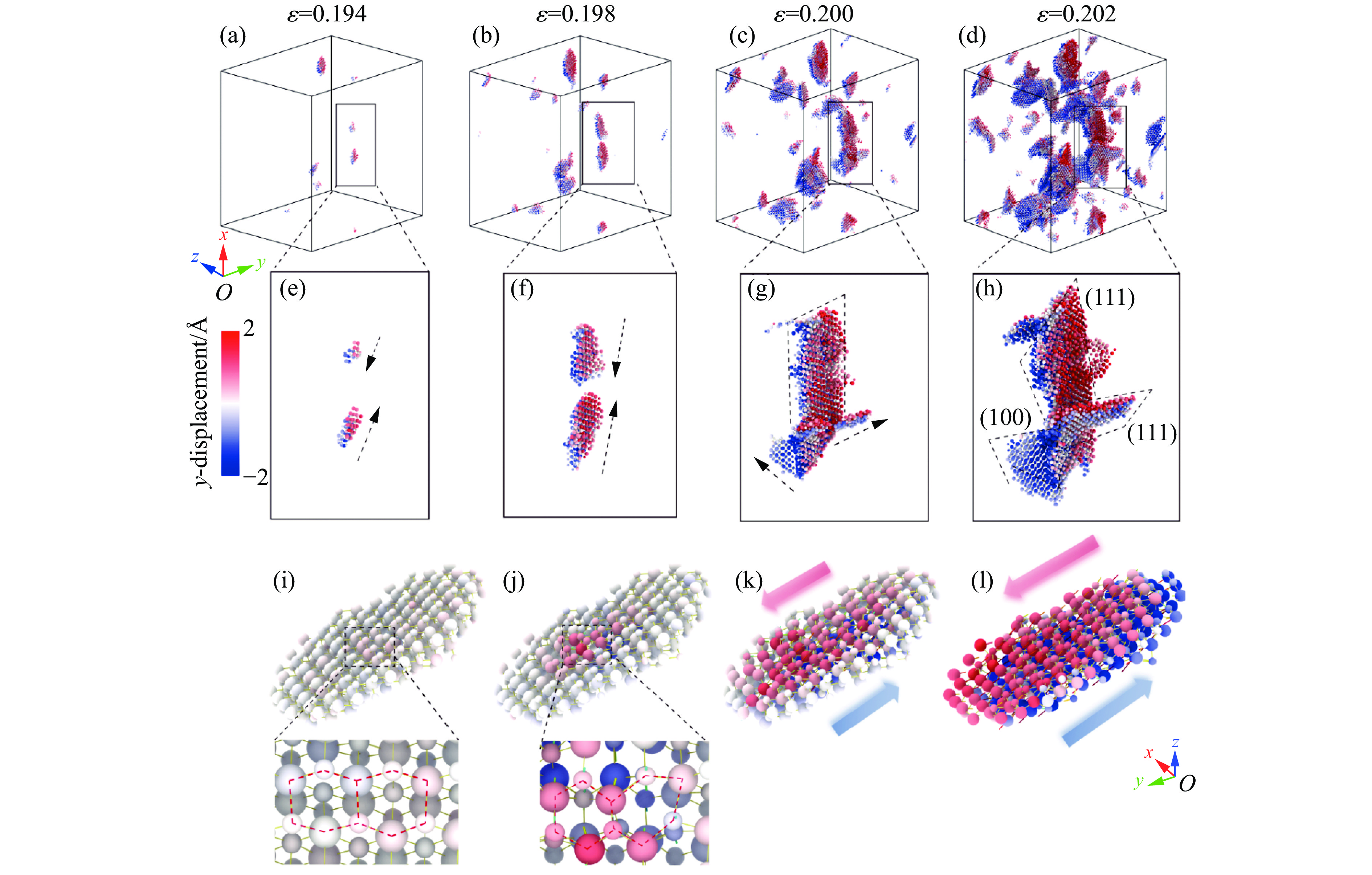
图 6 (a)~(d) 不同压缩应变下沿y方向的位移云图(去除了剪应变小于0.150的原子),(e)~(h) 图6(a)~图6(d)中的局部放大云图,(i)~(l) 沿(111)平面的2层原子在与图图6(a)~图6(d)对应时刻沿y方向的位移云图
Figure 6. (a)–(d) Displacement cloud maps along the y-direction under various compressive strains (with atoms having shear strain less than 0.150 removed); (e)–(h) zoomed-in cloud maps corresponding to Fig. 6(a)–Fig. 6(d); (i)–(l) displacement cloud maps of a pair of atomic layers along the (111) plane at the moments corresponding to Fig. 6(a)–Fig. 6(d)
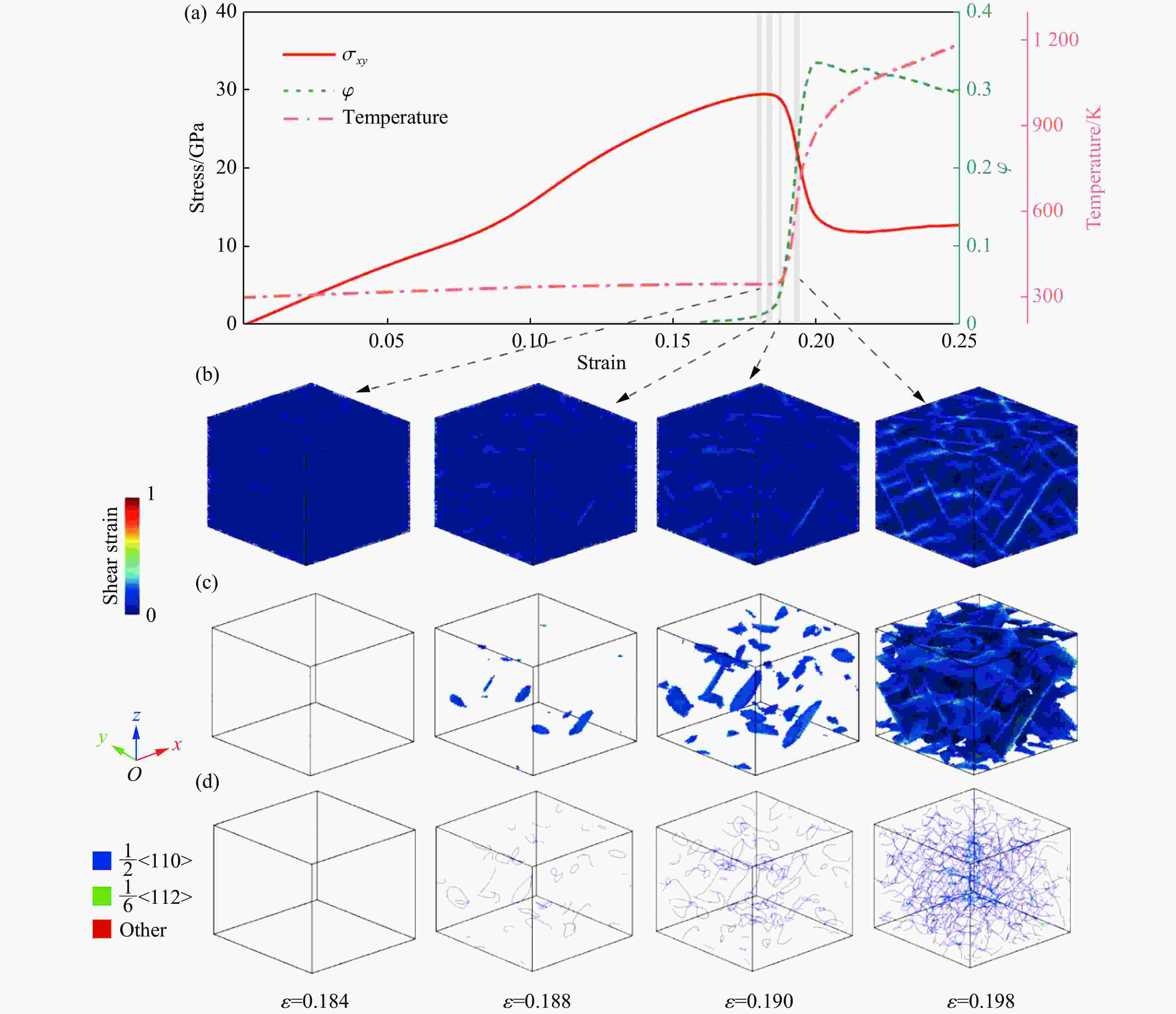
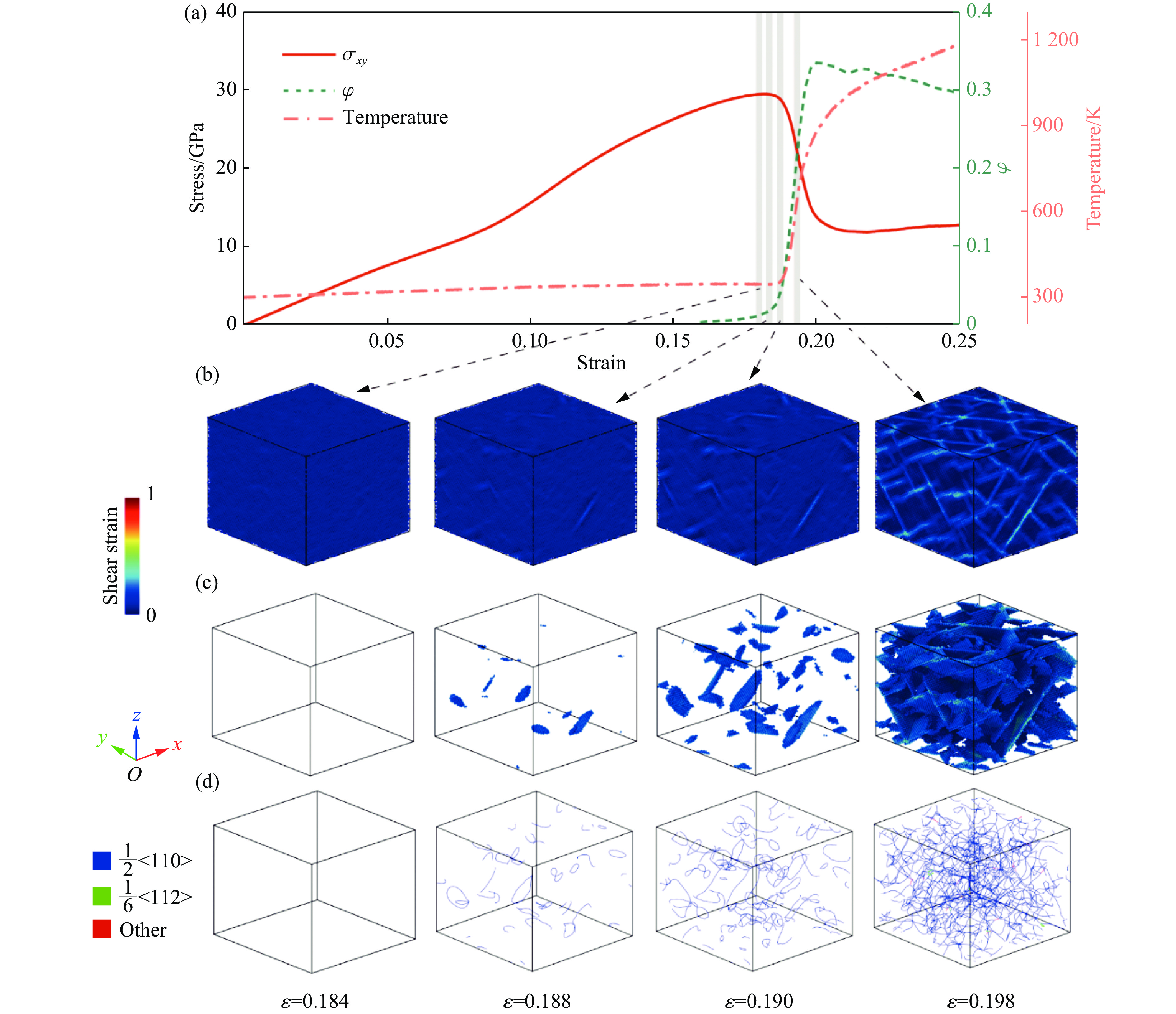
图 7 (a) [111]晶向下HEC的应力/温度/局域化变形参数-应变曲线,(b) 图7(a)中灰色线所标记的4个应变下的剪应变云图,(c) 剪应变大于0.200的原子剪应变云图以及仅金属原子的位错云图
Figure 7. (a) Stress/temperature/localization deformation parameter-strain curves of HEC in the [111] crystallographic direction; (b) shear strain cloud maps, and (c) shear strain cloud maps with atoms having shear strain larger than 0.200 and dislocation clouds with analyzing only metal atoms, respectively, at the four strains marked by the gray lines in Fig. 7(a)
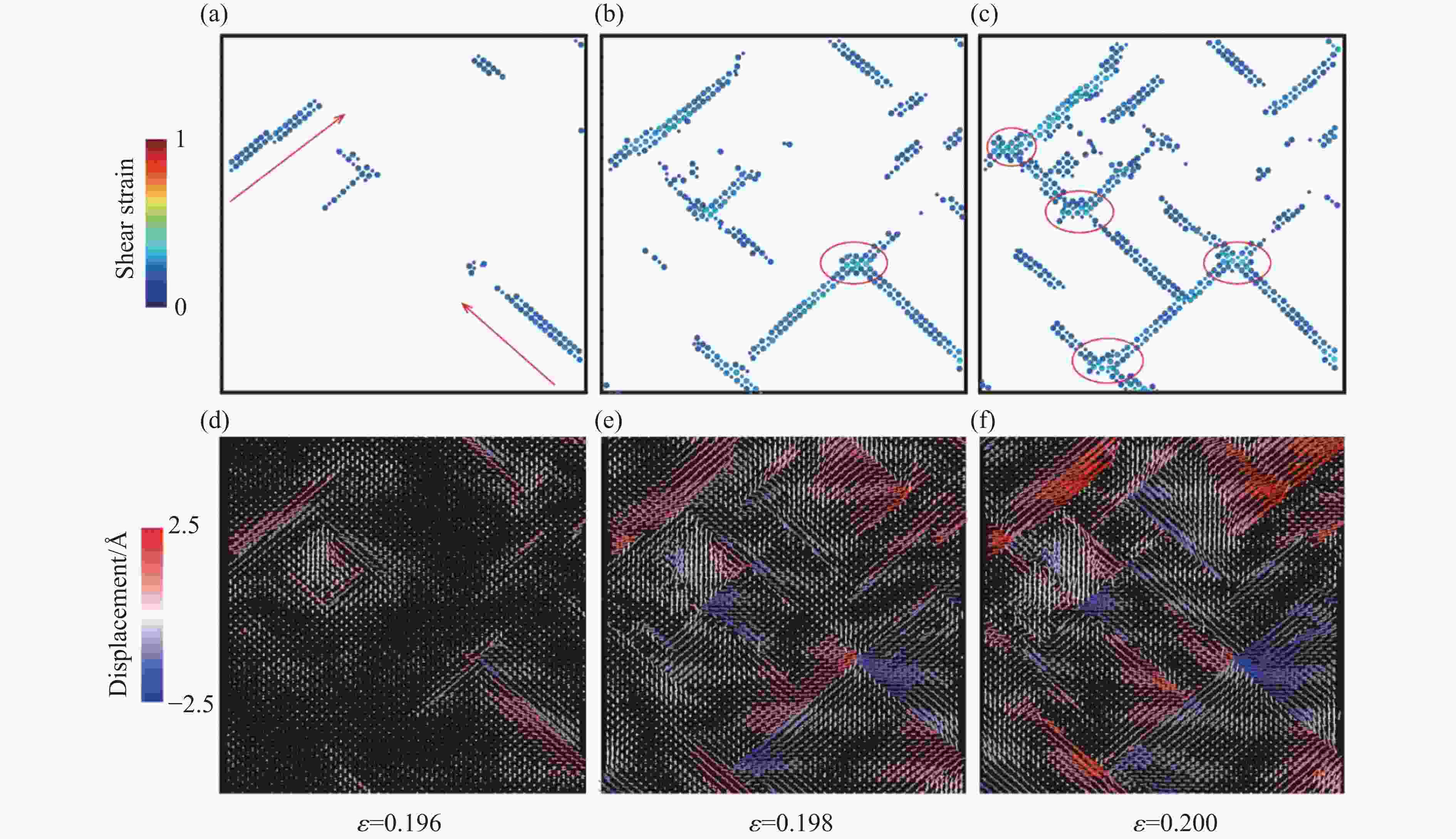
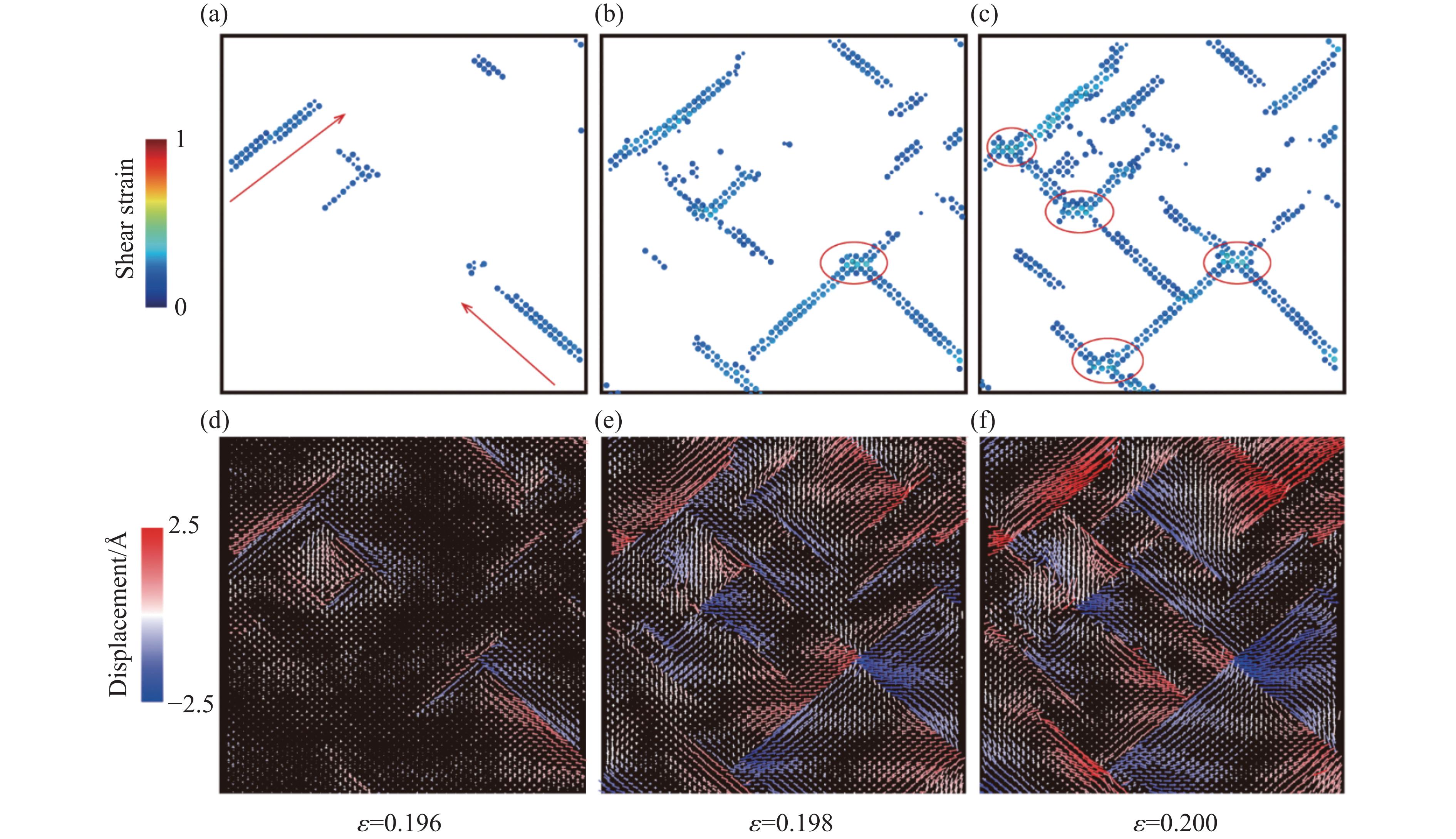
图 8 (a)~(c) (100)平面上不同压缩应变下去除剪应变小于0.100后材料的原子剪应变云图,(d)~(f) 与图8(a)~图 8(c)相对应的平面以该平面原子位移着色的轨迹云图
Figure 8. (a)−(c) Atomic shear strain cloud maps of the material on the (100) plane under different compressive strains after removing atoms with shear strain less than 0.100; (d)−(f) trajectory cloud maps of the corresponding planes in Fig. 8(a)−Fig. 8(c), colored by the displacement of the atoms in those planes
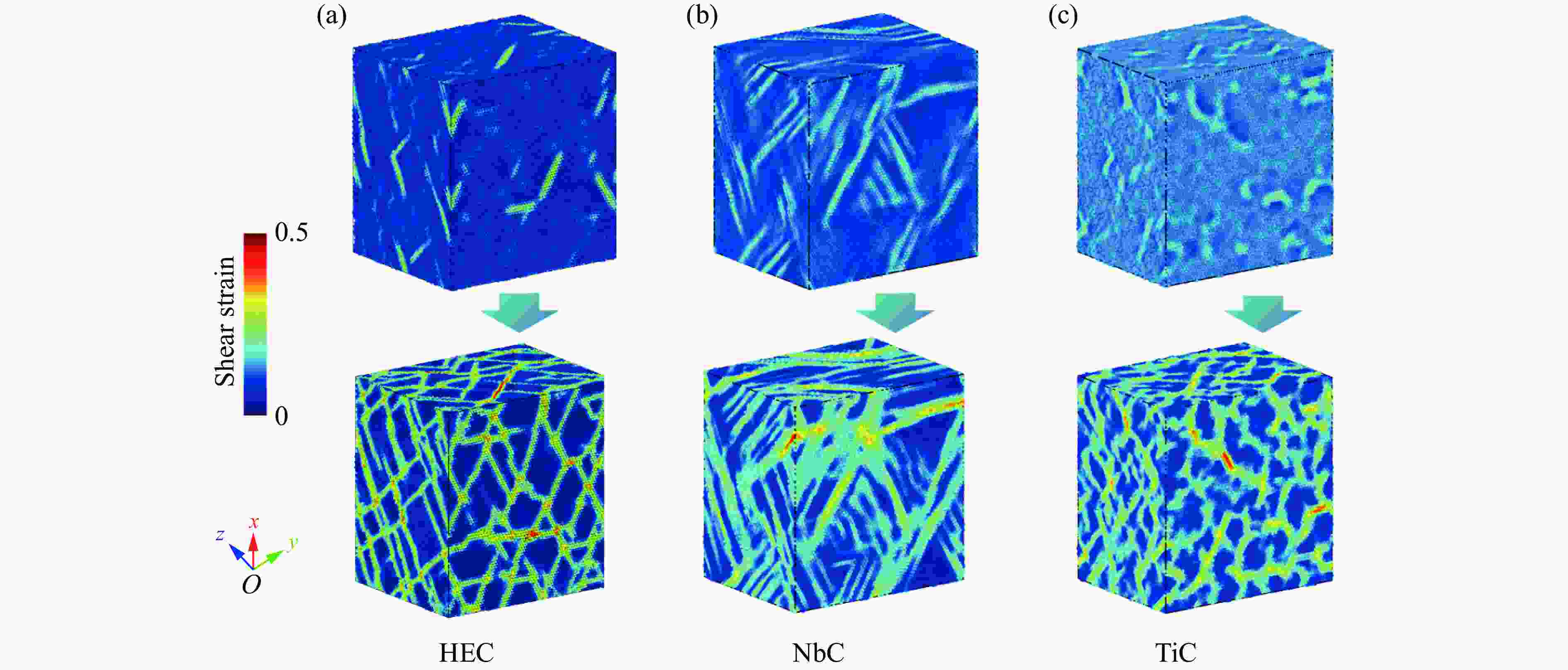
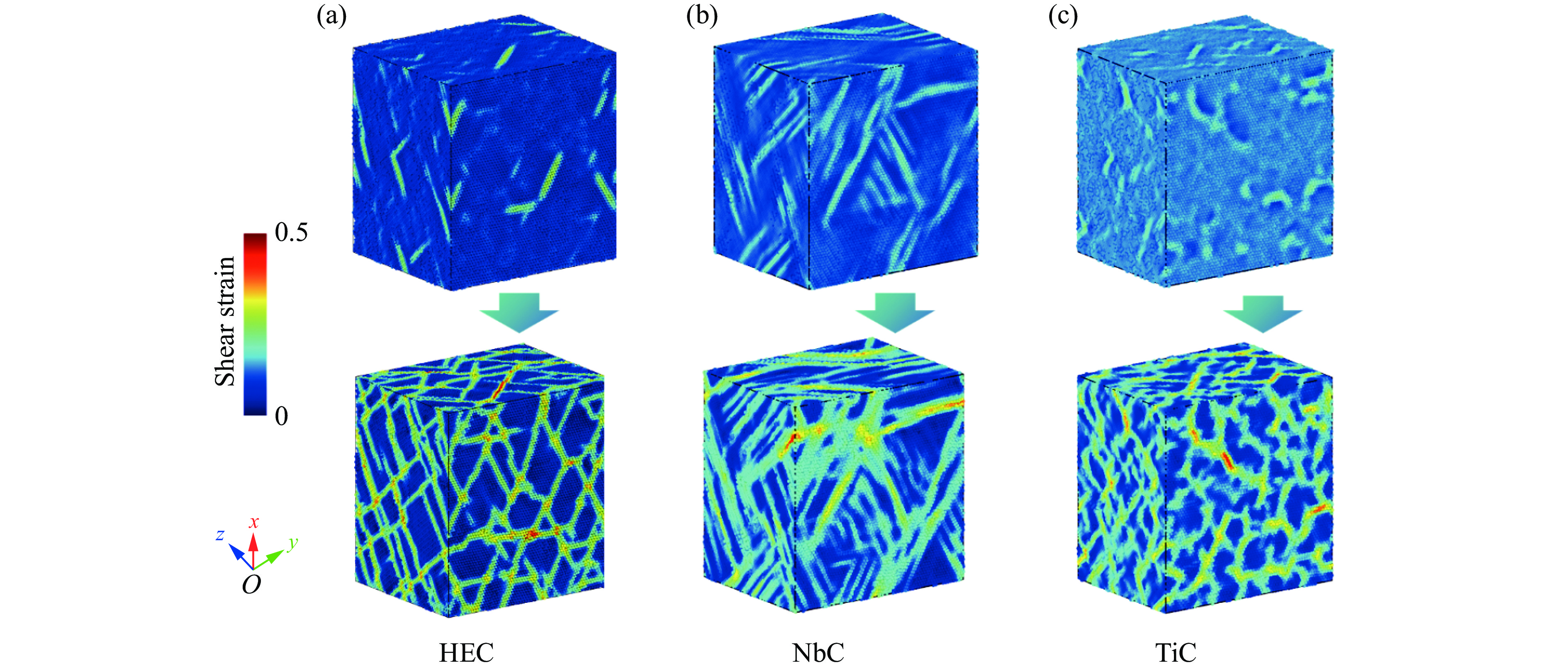
图 9 (a) HEC、(b) NbC和(c) TiC在[111]晶向下的压缩变形模式(第1行和第2行分别对应塑性变形前期和后期)
Figure 9. Evolution of compressive deformation in (a) HEC, (b) NbC, and (c) TiC along the [111] orientation, showing the early (top row) and late (bottom row) stages of plasticity
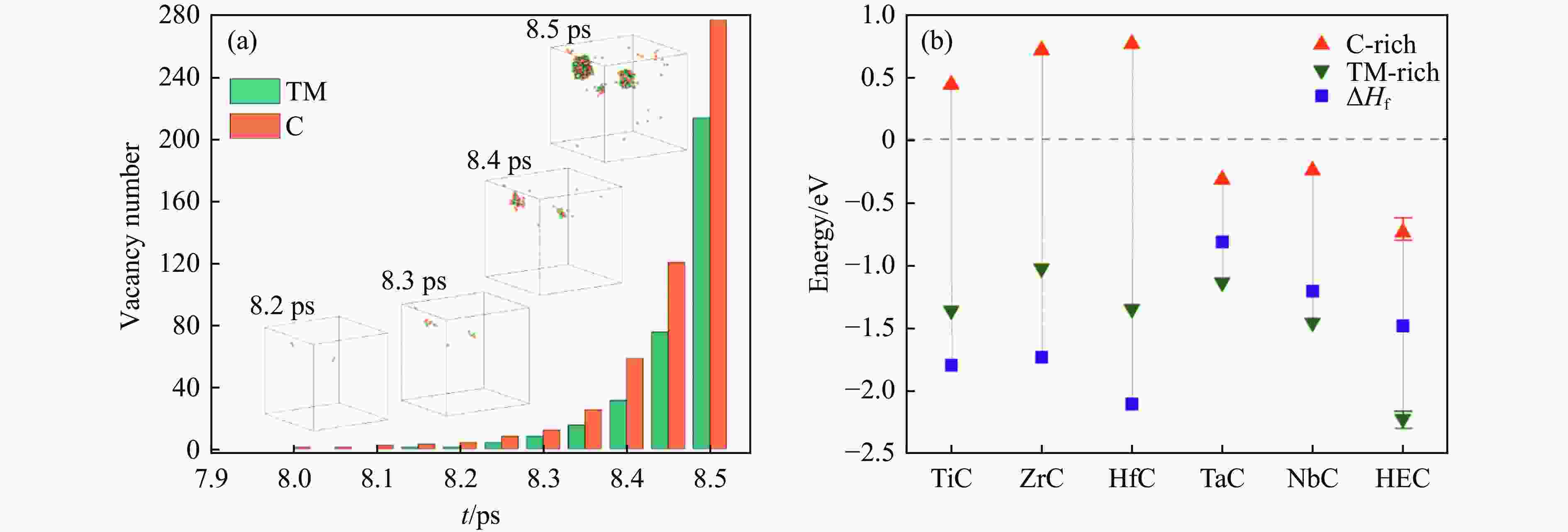
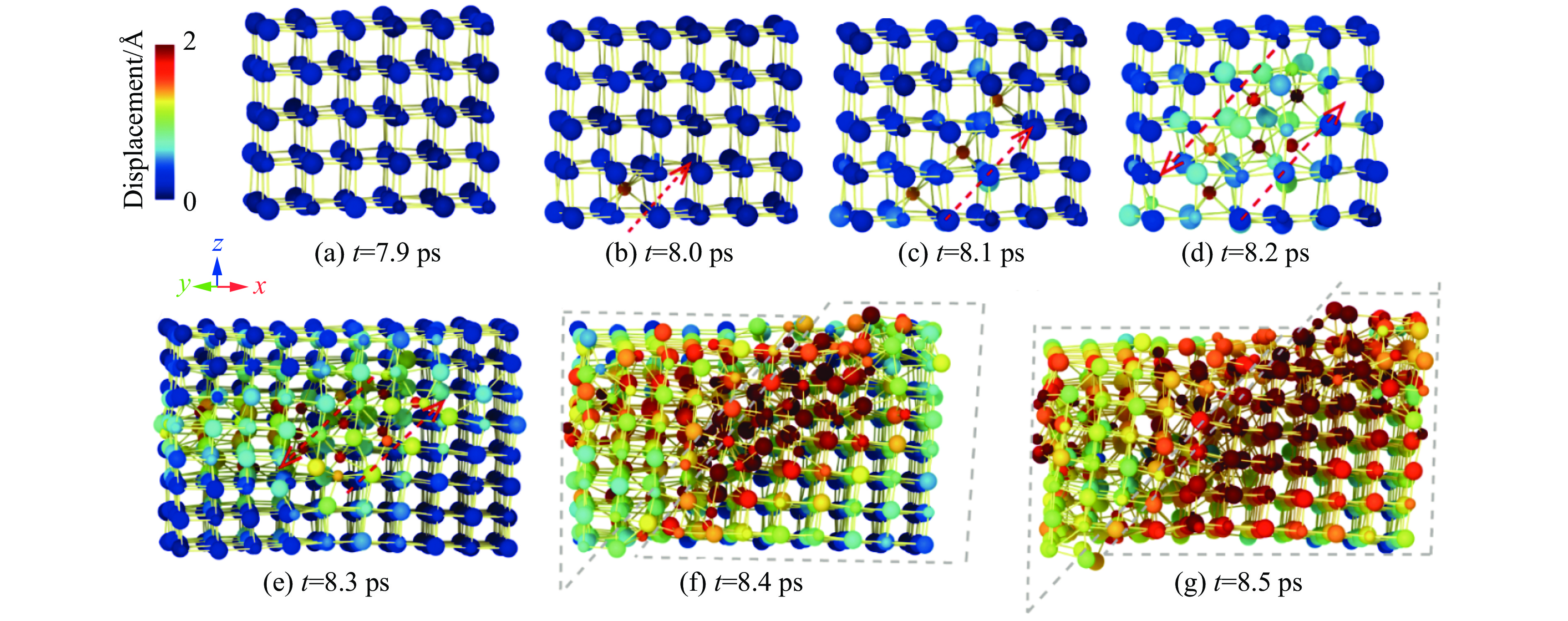
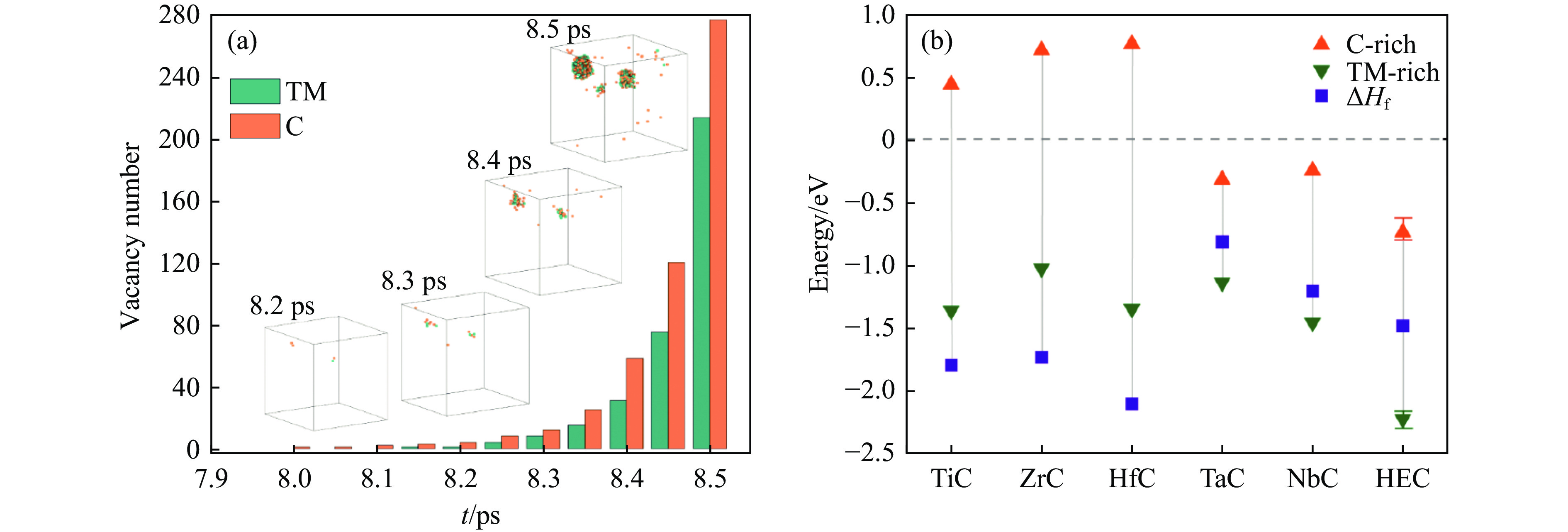
图 11 (a) 7.9~8.5 ps内金属(TM)与碳(C)空位数量的演化及分布云图,(b) HEC及其单组分碳化物在富碳和富金属环境下的C空位形成能
Figure 11. (a) Evolution of the number of metal (TM) and carbon (C) vacancies and their distribution cloud maps within the time range of 7.9−8.5 ps; (b) C-vacancy formation energies of HEC and its monocarbides under both carbon-rich (C-rich) and metal-rich (TM-rich) conditions
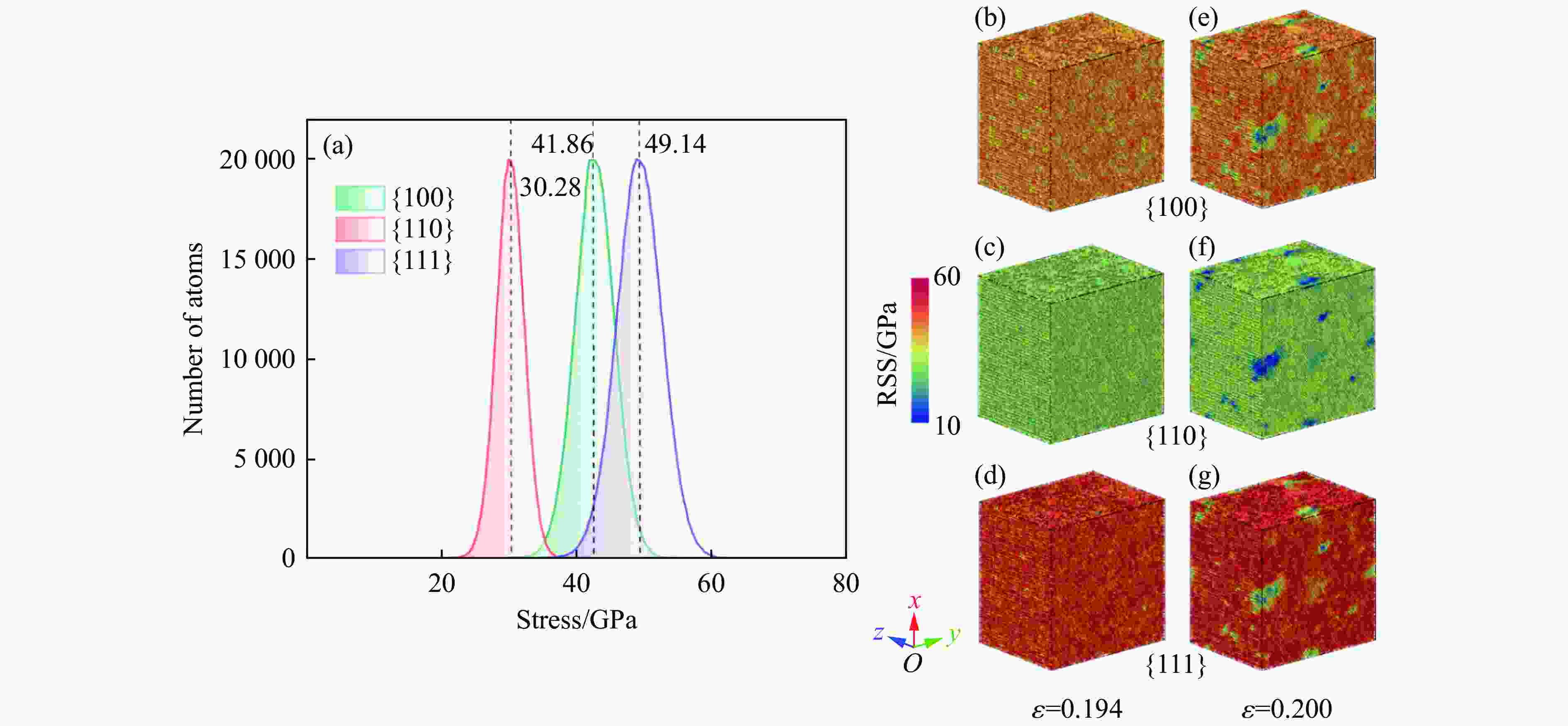
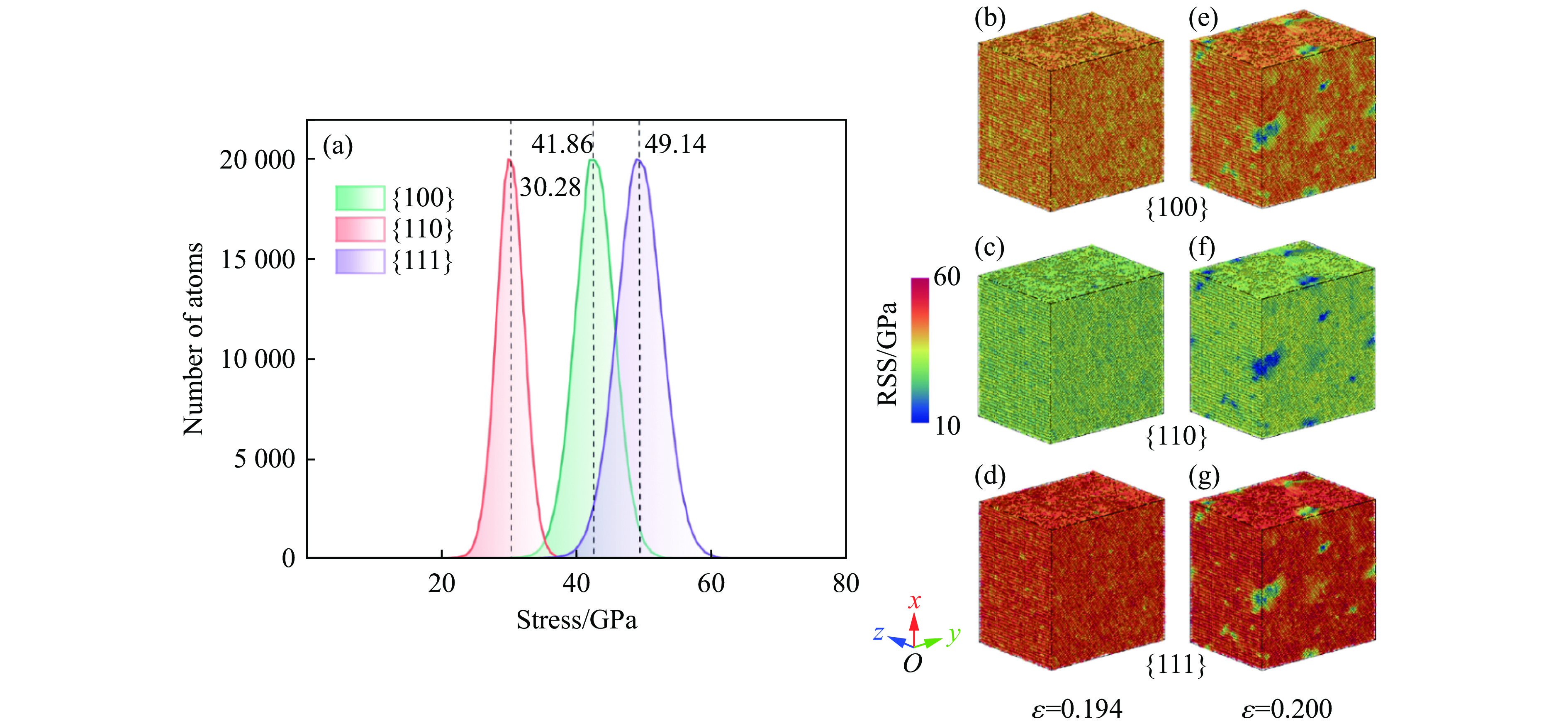
图 12 (a) HEC在压缩应变ε=0.200时,原子沿<110>{100}、<110>{110}以及<110>{111}滑移系下的每个原子的分解剪应力(RSS)分布;(b)~(g) 不同滑移系下的分解剪应力云图
Figure 12. (a) Distribution of resolved shear stress (RSS) for each atom of HEC under ε=0.200, along the <110>{100}, <110>{110} and <110>{111} slip systems; (b)−(g) RSS distribution maps for different slip systems
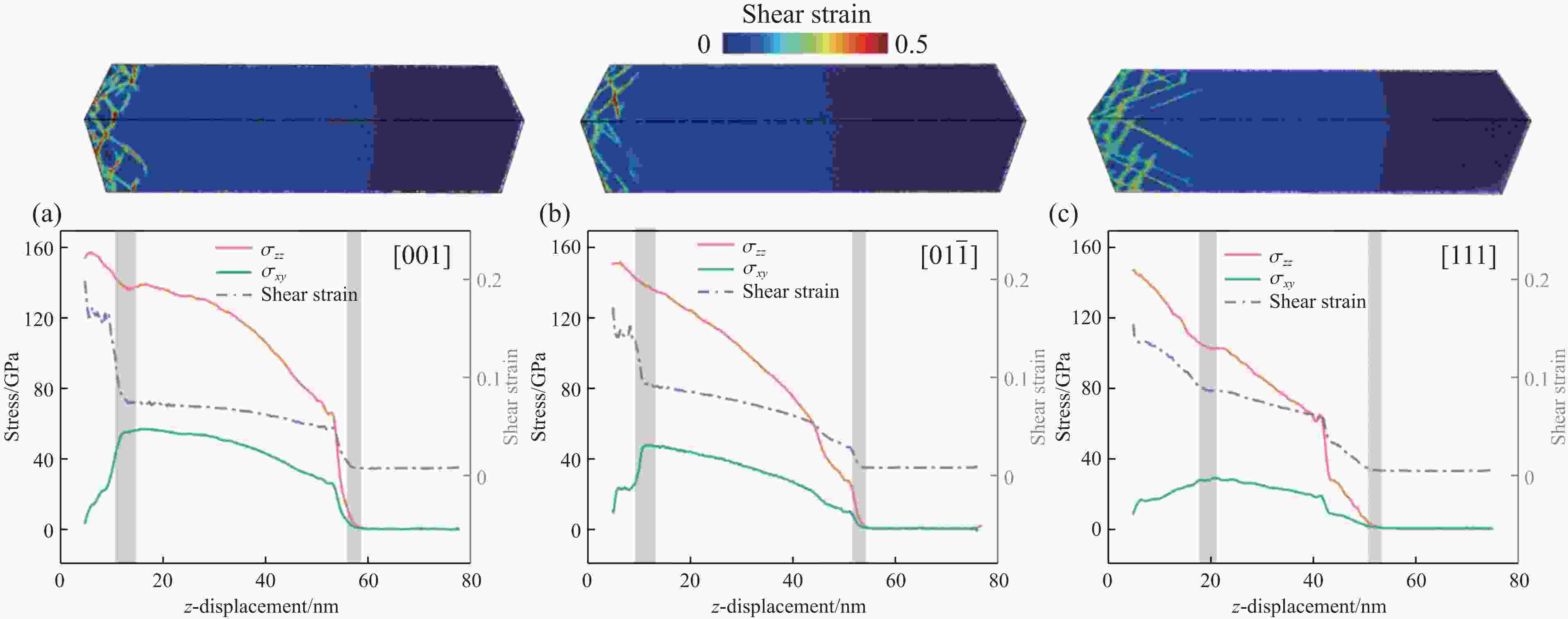
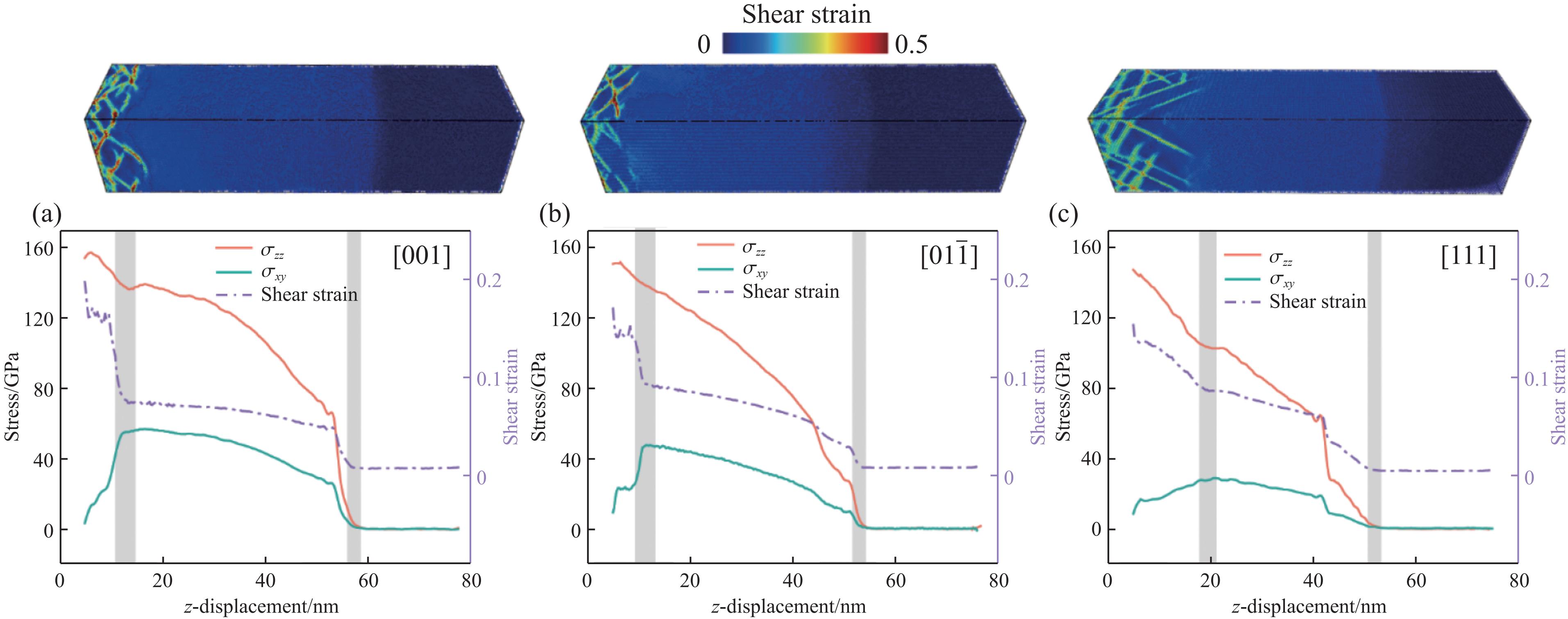
图 13 沿(a) [001]、(b) $ [01\overline{1}] $ 和(c) [111]晶向斜波加载下,t=10 ps时剪应变云图以及正应力-剪应力-剪应变波剖面曲线
Figure 13. Shear strain snapshots and normal stress-shear stress-shear strain wave profiles under ramp wave loading along the (a) [001], (b) $ [01\overline{1}] $, and (c) [111] directions at t=10 ps, respectively
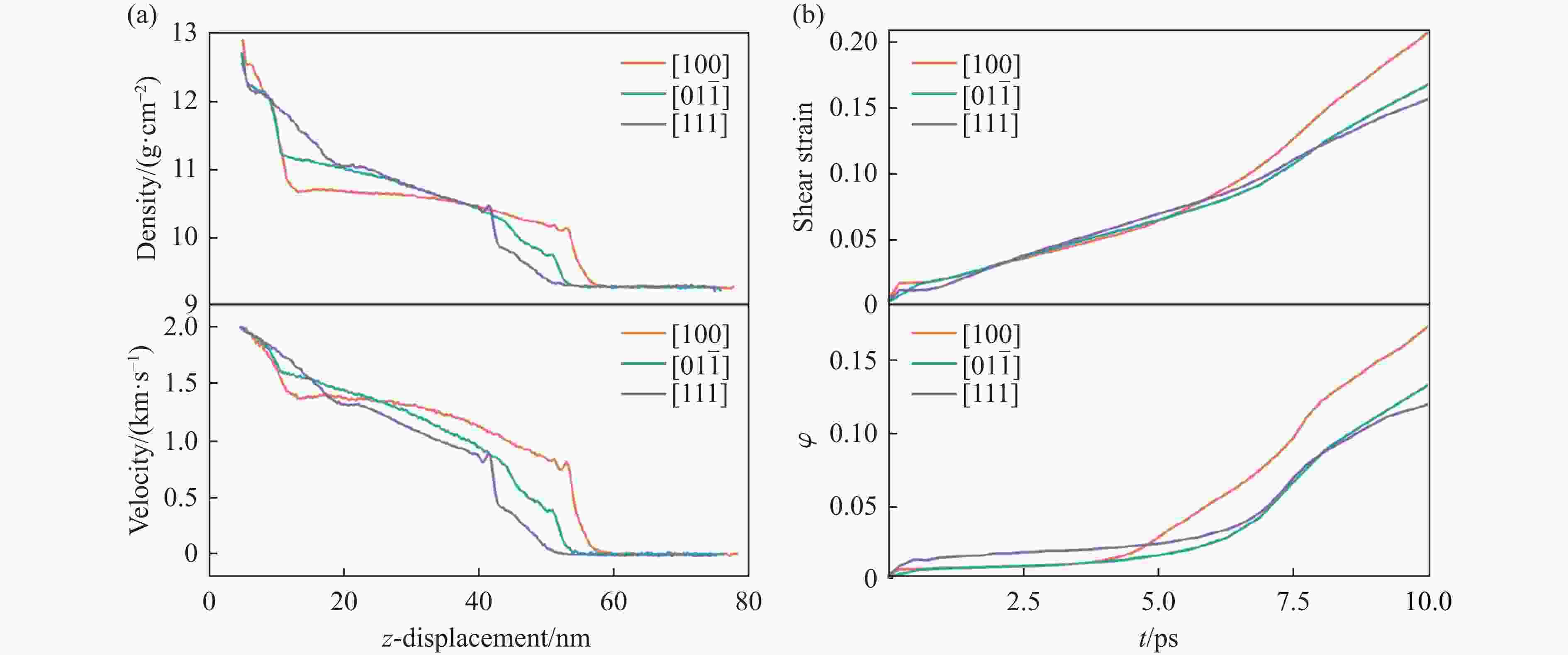
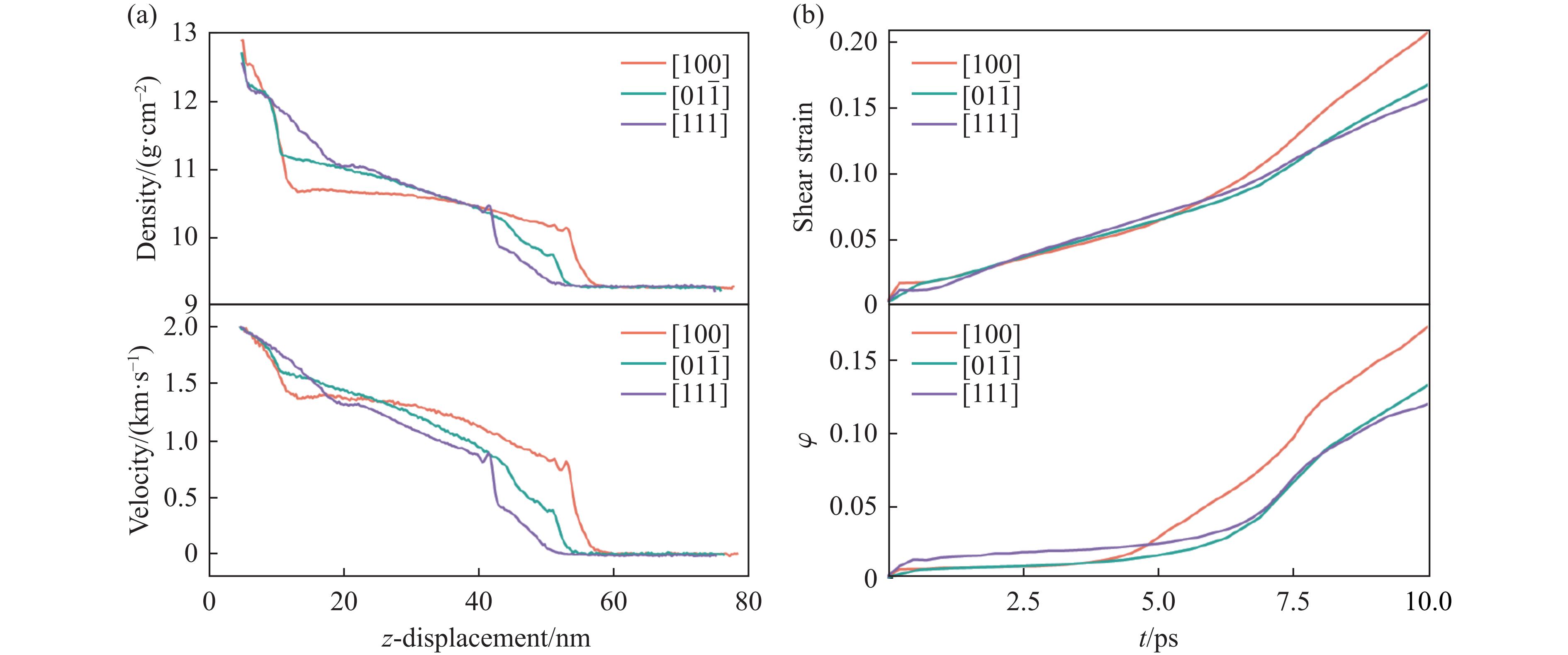
图 14 t=10 ps时(a) [001]、$ [01\overline{1}] $以及[111] 3个晶向的粒子速度以及密度波剖面曲线,(b) 3个晶向下切片内的平均剪应变以及局域变形参数随时间的演化曲线
Figure 14. (a) Profiles of particle velocity and density waves at t=10 ps for the [001], $ [01\overline{1}] $, and [111] crystallographic directions; (b) evolution of average shear strain and local deformation parameters over time for the three crystallographic directions
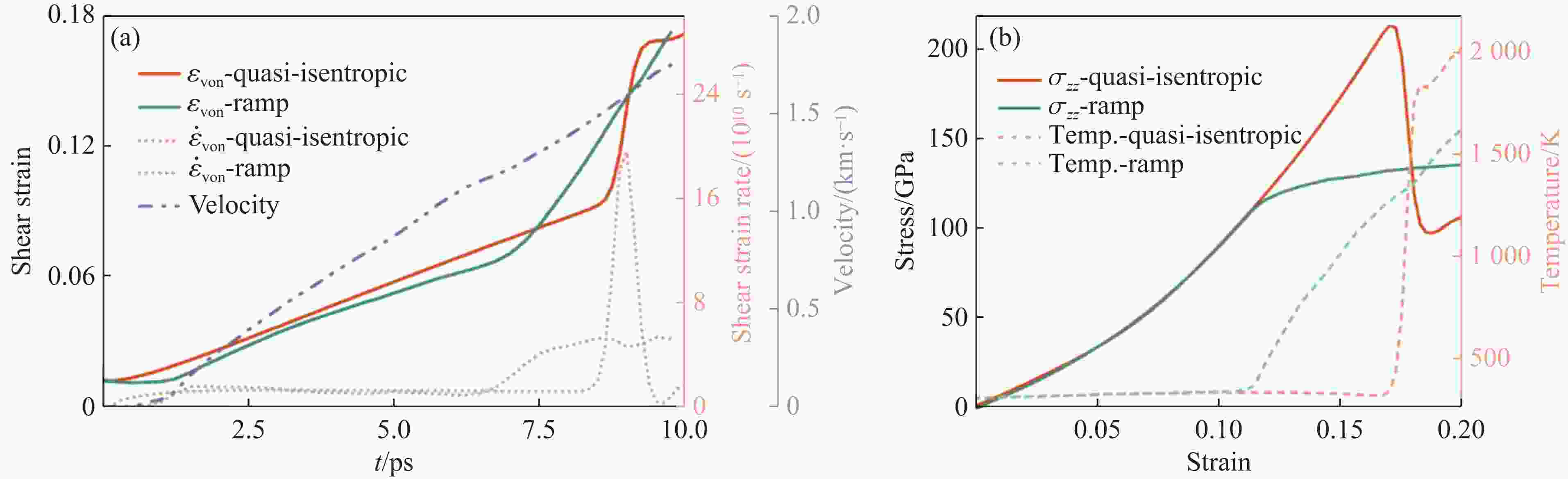
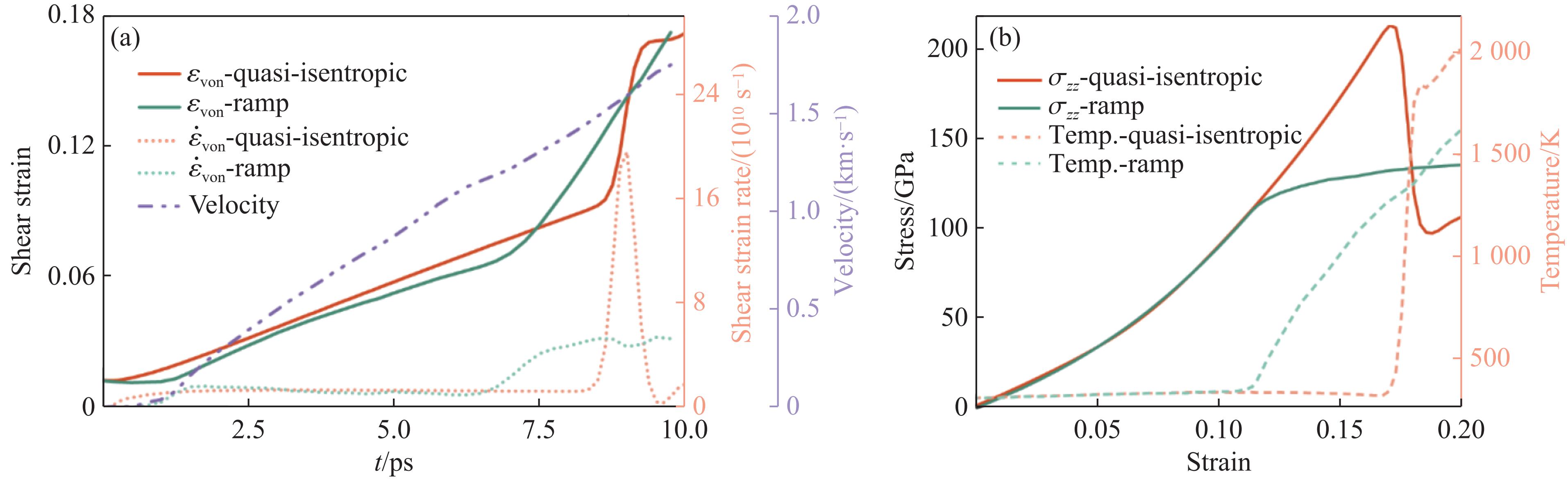
图 15 斜波加载和准等熵压缩加载下(a) 剪应变、剪应变率以及粒子速度随时间的演化曲线,(b) 应力-应变和温度-应变曲线
Figure 15. (a) Evolution curves of shear strain, shear strain rate, and particle velocity over time, and (b) stress-strain and temperature-strain curves under ramp wave impact and quasi-isentropic compression loading conditions
-
[1] ANWAR M S, BUKHARI S Z A, HA J H, et al. Controlling the electrical resistivity of porous silicon carbide ceramics and their applications: a review [J]. International Journal of Applied Ceramic Technology, 2022, 19(4): 1814–1840. doi: 10.1111/ijac.14034 [2] LI J C, ZHANG Y L, ZHAO Y X, et al. A novel (Hf1/3Zr1/3Ti1/3)C medium-entropy carbide coating with excellent long-life ablation resistance applied above 2 100 ℃ [J]. Composites Part B: Engineering, 2023, 251: 110467. doi: 10.1016/j.compositesb.2022.110467 [3] WARD T Z, WILKERSON R P, MUSICÓ B L, et al. High entropy ceramics for applications in extreme environments [J]. Journal of Physics: Materials, 2024, 7(2): 021001. doi: 10.1088/2515-7639/ad2ec5 [4] WU Y J, ZHANG Y, ZHANG S S, et al. The rise of plastic deformation in boron nitride ceramics [J]. Science China Materials, 2021, 64(1): 46–51. doi: 10.1007/s40843-020-1466-0 [5] WANG J L, WANG S H, YANG Y K, et al. Nanostructured amorphous Al2O3-ZrO2 (La2O3) ceramics with plastic deformation via interface inducing hierarchical shear bands [J]. International Journal of Plasticity, 2024, 181: 104103. doi: 10.1016/j.ijplas.2024.104103 [6] 何瑞琦, 曾莹莹, 冷浩杰, 等. 典型过渡金属碳化物(ⅣB~ⅥB族)的超高压制备研究进展 [J]. 高压物理学报, 2025, 39(9): 090202. doi: 10.11858/gywlxb.20251039HE R Q, ZENG Y Y, LENG H J, et al. Research progress on the ultra-high pressure preparation of typical transition metal carbides (group ⅣB–ⅥB) [J]. Chinese Journal of High Pressure Physics, 2025, 39(9): 090202. doi: 10.11858/gywlxb.20251039 [7] LI J, CHO J, DING J, et al. Nanoscale stacking fault-assisted room temperature plasticity in flash-sintered TiO2 [J]. Science Advances, 2019, 5(9): eaaw5519. doi: 10.1126/sciadv.aaw5519 [8] ZHANG J, LIU G H, CUI W, et al. Plastic deformation in silicon nitride ceramics via bond switching at coherent interfaces [J]. Science, 2022, 378(6618): 371–376. doi: 10.1126/science.abq7490 [9] PORZ L, KLOMP A J, FANG X F, et al. Dislocation-toughened ceramics [J]. Materials Horizons, 2021, 8(5): 1528–1537. doi: 10.1039/d0mh02033h [10] FANG X F, LU W J, ZHANG J W, et al. Harvesting room-temperature plasticity in ceramics by mechanically seeded dislocations [J]. Materials Today, 2025, 82: 81–91. doi: 10.1016/j.mattod.2024.11.014 [11] DONG L R, ZHANG J, LI Y Z, et al. Borrowed dislocations for ductility in ceramics [J]. Science, 2024, 385(6707): 422–427. doi: 10.1126/science.adp0559 [12] WU Y J, ZHANG Y, WANG X Y, et al. Twisted-layer boron nitride ceramic with high deformability and strength [J]. Nature, 2024, 626(8000): 779–784. doi: 10.1038/s41586-024-07036-5 [13] MIRACLE D B, SENKOV O N. A critical review of high entropy alloys and related concepts [J]. Acta Materialia, 2017, 122: 448–511. doi: 10.1016/j.actamat.2016.08.081 [14] CAO F H, LI H Y, CHEN Y, et al. Atomic mechanisms for the fracture of AlMo0.5NbTa0.5TiZr refractory high entropy superalloy [J]. International Journal of Plasticity, 2024, 183: 104176. doi: 10.1016/j.ijplas.2024.104176 [15] GAO M C, YEH J W, LIAW P K, et al. High-entropy alloys [M]. Cham: Springer, 2016. [16] DING N, JIANG H H, XU C R, et al. Lattice distortion and the influence on mechanical and thermodynamic properties of high entropy (HfZrTaNbTi)X (X=C, N, NC) by ab initio investigation [J]. Ceramics International, 2022, 48(23): 35353–35364. doi: 10.1016/j.ceramint.2022.08.137 [17] WANG Y C, CSANÁDI T, ZHANG H F, et al. Enhanced hardness in high-entropy carbides through atomic randomness [J]. Advanced Theory and Simulations, 2020, 3(9): 2000111. doi: 10.1002/adts.202000111 [18] HAN Y, LIU X Y, ZHANG Q Q, et al. Ultra-dense dislocations stabilized in high entropy oxide ceramics [J]. Nature Communications, 2022, 13(1): 2871. doi: 10.1038/s41467-022-30260-4 [19] HARRINGTON T J, GILD J, SARKER P, et al. Phase stability and mechanical properties of novel high entropy transition metal carbides [J]. Acta Materialia, 2019, 166: 271–280. doi: 10.1016/j.actamat.2018.12.054 [20] ZHANG J, HE L, XIONG Y X, et al. Local-distortion-informed exceptional multicomponent transition-metal carbides uncovered by machine learning [J]. npj Computational Materials, 2024, 10(1): 162. doi: 10.1038/s41524-024-01351-1 [21] LU K, LIU J X, WEI X F, et al. Microstructures and mechanical properties of high-entropy (Ti0.2Zr0.2Hf0.2Nb0.2Ta0.2)C ceramics with the addition of SiC secondary phase [J]. Journal of the European Ceramic Society, 2020, 40(5): 1839–1847. doi: 10.1016/j.jeurceramsoc.2019.12.056 [22] WANG F, ZHANG X, YAN X L, et al. The effect of submicron grain size on thermal stability and mechanical properties of high-entropy carbide ceramics [J]. Journal of the American Ceramic Society, 2020, 103(8): 4463–4472. doi: 10.1111/jace.17103 [23] YU H, BAHADORI M, THOMPSON G B, et al. Understanding dislocation slip in stoichiometric rocksalt transition metal carbides and nitrides [J]. Journal of Materials Science, 2017, 52(11): 6235–6248. doi: 10.1007/s10853-017-0857-4 [24] DE LEON N, YU X X, YU H, et al. Bonding effects on the slip differences in the B1 monocarbides [J]. Physical Review Letters, 2015, 114(16): 165502. doi: 10.1103/PhysRevLett.114.165502 [25] RÅSANDER M, DELIN A. Carbon vacancy formation in binary transition metal carbides from density functional theory [EB/OL]. arXiv: 1808.07114. (2018-08-21)[2026-01-09]. https://arxiv.org/abs/1808.07114. DOI: 10.48550/arXiv.1808.07114. [26] CSANÁDI T, CASTLE E, REECE M J, et al. Strength enhancement and slip behaviour of high-entropy carbide grains during micro-compression [J]. Scientific Reports, 2019, 9(1): 10200. doi: 10.1038/s41598-019-46614-w [27] WANG C Y, LUO K Y, WANG J, et al. Carbide-facilitated nanocrystallization of martensitic laths and carbide deformation in AISI 420 stainless steel during laser shock peening [J]. International Journal of Plasticity, 2022, 150: 103191. doi: 10.1016/j.ijplas.2021.103191 [28] FENG L X, LI W H, TANG W X, et al. Shock-induced hierarchical plastic deformations in high entropy (Zr0.2Hf0.2Ti0.2Nb0.2Ta0.2)C at high strain rate [J]. International Journal of Plasticity, 2026, 196: 104543. doi: 10.1016/j.ijplas.2025.104543 [29] XUE Y, ZHAO X Q, AN Y L, et al. High-entropy (La0.2Nd0.2Sm0.2Eu0.2Gd0.2)2Ce2O7: a potential thermal barrier material with improved thermo-physical properties [J]. Journal of Advanced Ceramics, 2022, 11(4): 615–628. doi: 10.1007/s40145-021-0563-1 [30] WANG H, ZHANG L F, HAN J Q, et al. DeePMD-kit: a deep learning package for many-body potential energy representation and molecular dynamics [J]. Computer Physics Communications, 2018, 228: 178–184. doi: 10.1016/j.cpc.2018.03.016 [31] ZHANG L F, HAN J Q, WANG H, et al. Deep potential molecular dynamics: a scalable model with the accuracy of quantum mechanics [J]. Physical Review Letters, 2018, 120(14): 143001. doi: 10.1103/PhysRevLett.120.143001 [32] KIM Y M, LEE B J. Modified embedded-atom method interatomic potentials for the Ti-C and Ti-N binary systems [J]. Acta Materialia, 2008, 56(14): 3481–3489. doi: 10.1016/j.actamat.2008.03.027 [33] KIM H K, JUNG W S, LEE B J. Modified embedded-atom method interatomic potentials for the Nb-C, Nb-N, Fe-Nb-C, and Fe-Nb-N systems [J]. Journal of Materials Research, 2010, 25(7): 1288–1297. doi: 10.1557/JMR.2010.0182 [34] THOMPSON A P, AKTULGA H M, BERGER R, et al. LAMMPS—a flexible simulation tool for particle-based materials modeling at the atomic, meso, and continuum scales [J]. Computer Physics Communications, 2022, 271: 108171. doi: 10.1016/j.cpc.2021.108171 [35] KRESSE G, FURTHMÜLLER J. Efficient iterative schemes for ab initio total-energy calculations using a plane-wave basis set [J]. Physical Review B, 1996, 54(16): 11169–11186. doi: 10.1103/PhysRevB.54.11169 [36] STUKOWSKI A. Visualization and analysis of atomistic simulation data with OVITO—the open visualization tool [J]. Modelling and Simulation in Materials Science and Engineering, 2010, 18(1): 015012. doi: 10.1088/0965-0393/18/1/015012 [37] LI W H, HAHN E N, BRANICIO P S, et al. Rate dependence and anisotropy of SiC response to ramp and wave-free quasi-isentropic compression [J]. International Journal of Plasticity, 2021, 138: 102923. doi: 10.1016/j.ijplas.2020.102923 [38] FENG L X, ZHANG X Q, LI W H, et al. Multiple structural phase transitions in single crystal silicon subjected to dynamic loading [J]. Scripta Materialia, 2024, 241: 115890. doi: 10.1016/j.scriptamat.2023.115890 [39] LI W H, CHEN S, AITKEN Z, et al. Shock-induced deformation and spallation in CoCrFeMnNi high-entropy alloys at high strain-rates [J]. International Journal of Plasticity, 2023, 168: 103691. doi: 10.1016/j.ijplas.2023.103691 [40] PIERSON H O. Handbook of refractory carbides and nitrides: properties, characteristics, processing and applications [M]. Westwood: Noyes Publications, 1996. [41] JIAN W R, XIE Z C, XU S Z, et al. Effects of lattice distortion and chemical short-range order on the mechanisms of deformation in medium entropy alloy CoCrNi [J]. Acta Materialia, 2020, 199: 352–369. doi: 10.1016/j.actamat.2020.08.044 [42] ZHANG X K, YAN J, CHEN Y H, et al. Effects of lattice distortion and chemical short-range ordering on the incipient behavior of Ti-based multi-principal element alloys: MD simulations and DFT calculations [J]. International Journal of Plasticity, 2023, 166: 103643. doi: 10.1016/j.ijplas.2023.103643 [43] YADAV S K, RAMPRASAD R, MISRA A, et al. Core structure and Peierls stress of edge and screw dislocations in TiN: a density functional theory study [J]. Acta Materialia, 2014, 74: 268–277. doi: 10.1016/j.actamat.2014.04.047 [44] ABDULHAMEED M, BEELER B, CLAISSE A. Atomistic investigation of plastic deformation and dislocation motion in uranium mononitride [J]. Applied Sciences, 2025, 15(5): 2666. doi: 10.3390/app15052666 [45] ZHANG S H, LI Y, SUZUKI S, et al. Neural network potential for dislocation plasticity in ceramics [J]. NPJ Computational Materials, 2024, 10(1): 266. doi: 10.1038/s41524-024-01456-7 [46] SENKOV O N, CROSSMAN B, RAO S I, et al. Mechanical properties of an Al10Nb20Ta15Ti30V5Zr20 A2/B2 refractory superalloy and its constituent phases [J]. Acta Materialia, 2023, 254: 119017. doi: 10.1016/j.actamat.2023.119017 [47] FANG J Z, LI R, YAO S L, et al. Role of lattice distortion on spallation of CoCrCuFeNi high-entropy alloy [J]. Journal of Applied Physics, 2024, 136(24): 245901. doi: 10.1063/5.0241905 [48] HE Q F, YANG Y. On lattice distortion in high entropy alloys [J]. Frontiers in Materials, 2018, 5: 42. doi: 10.3389/fmats.2018.00042 [49] LARSEN P M, SCHMIDT S, SCHIØTZ J. Robust structural identification via polyhedral template matching [J]. Modelling and Simulation in Materials Science and Engineering, 2016, 24(5): 055007. doi: 10.1088/0965-0393/24/5/055007 [50] WECHSLER M S, LIEBERMAN D S, READ T A. On the theory of the formation of martensite [J]. Transaction of American Institute of Mining, Metallurgical, and Petroleum Engineers, 1953, 197: 1503–1515. [51] YANG X S, SUN S, ZHANG T Y. The mechanism of bcc α′ nucleation in single hcp ε laths in the fcc γ→ hcp ε→ bcc α′ martensitic phase transformation [J]. Acta Materialia, 2015, 95: 264–273. doi: 10.1016/j.actamat.2015.05.034 [52] LI C Y, FU T, HU H, et al. Designing the mechanical behavior of (HfTiZr)1–x(NbTa)xC high-entropy carbide ceramics [J]. Physical Review B, 2024, 109(13): 134110. doi: 10.1103/PhysRevB.109.134110 [53] KIANI S, RATSCH C, MINOR A M, et al. Orientation- and size-dependent room-temperature plasticity in ZrC crystals [J]. Philosophical Magazine, 2015, 95(9): 985–997. doi: 10.1080/14786435.2015.1012568 [54] ALEMAN A, ZAID H, CRUZ B M, et al. Room-temperature plasticity and size-dependent mechanical responses in small-scale B1-NbC(001) single-crystals [J]. Acta Materialia, 2021, 221: 117384. doi: 10.1016/j.actamat.2021.117384 [55] DING H M, FAN X L, CHU K Y, et al. The influence of carbon vacancies on the stacking fault energy of TiC [J]. Journal of the European Ceramic Society, 2014, 34(7): 1893–1897. doi: 10.1016/j.jeurceramsoc.2014.01.013 [56] PETERSSON C L M, FREDRIKSSON A, MELIN S, et al. A molecular dynamics study on the influence of vacancies and interstitial helium on mechanical properties of tungsten [J]. Journal of Nuclear Materials, 2023, 580: 154378. doi: 10.1016/j.jnucmat.2023.154378 [57] GUO J M, ZHANG Z D, YANG B, et al. Oxygen vacancy-induced strengthening and toughening in (K, Na)NbO3-based piezoceramics revealed via nanoindentation [J]. Nature Communications, 2025, 16(1): 7015. doi: 10.1038/s41467-025-62424-3 [58] FENG L X, TANG W X, CHEN Z C, et al. Atomistic insights into hydrogen-enhanced strain-induced vacancy in α-iron across varied strain rates [J]. Scripta Materialia, 2024, 252: 116246. doi: 10.1016/j.scriptamat.2024.116246 [59] SHI T, SU Z X, LI J, et al. Distinct point defect behaviours in body-centered cubic medium-entropy alloy NbZrTi induced by severe lattice distortion [J]. Acta Materialia, 2022, 229: 117806. doi: 10.1016/j.actamat.2022.117806 [60] KALIDINDI S R, BRONKHORST C A, ANAND L. Crystallographic texture evolution in bulk deformation processing of FCC metals [J]. Journal of the Mechanics and Physics of Solids, 1992, 40(3): 537–569. doi: 10.1016/0022-5096(92)80003-9 [61] WANG H, YANG P Y, ZHAO W J, et al. Lattice distortion enabling enhanced strength and plasticity in high entropy intermetallic alloy [J]. Nature Communications, 2024, 15(1): 6782. doi: 10.1038/s41467-024-51204-0 [62] FENG L X, LI W H, HAHN E N, et al. Structural phase transition and amorphization in hexagonal SiC subjected to dynamic loading [J]. Mechanics of Materials, 2022, 164: 104139. doi: 10.1016/j.mechmat.2021.104139 -

 下载:
下载:

计量
- 文章访问数: 963
- HTML全文浏览量: 315
- PDF下载量: 87
