





Elastic Wave Velocities of Lawsonite and Its Implications for Seismic Velocity Anomalies in Subduction Zones
-
摘要: 硬柱石(lawsonite)是俯冲带洋壳中的关键含水矿物,其含水量可高达11.5%,体积分数可达50%,且有较宽的稳定区间。因此,研究硬柱石的高压弹性性质对认识俯冲带速度结构和深部水循环具有重要意义。以天然硬柱石矿物粉末为初始材料,在7 GPa、
1073 K条件下热压2 h,得到了致密的多晶硬柱石。同时,采用超声干涉法测量了硬柱石高达8 GPa的弹性波速和模量及其对压力的导数。研究发现,硬柱石的弹性波速和模量随压力的增加而增大,常温常压下的绝热体积模量和剪切模量分别为120(1)和51(1) GPa,其对压力的导数分别为5.7(1)和0.9(1)。利用硬柱石的弹性特性,结合前人的研究结果,建立了硬柱石榴辉岩模型,结果表明,硬柱石的存在可为中等地温俯冲板片(如Nicaragua)内部在60~90 km的速度异常提供合理解释。Abstract: Lawsonite is a key hydrous mineral in subducting oceanic crust, with an H2O mass fraction of up to 11.5% and volume fractions that can reach 50%, and is stable over a wide pressure-temperature range. Constraining the high-pressure elastic properties of lawsonite is therefore essential for understanding seismic velocity structures in subduction zones and the deep-water cycle. In this study, dense polycrystalline lawsonite was synthesized by hot-pressing natural lawsonite powder at 7 GPa and 1 073 K for 2 h. Ultrasonic interferometry was then used to measure P- and S-wave velocities of lawsonite up to 8 GPa at room temperature, from which the elastic moduli and their pressure derivatives were determined. The results show that both elastic wave velocities and moduli increase with pressure, the adiabatic bulk modulus and shear modulus are 120(1) and 51(1) GPa at room temperature and ambient pressure, and their derivatives with respect to pressure are 5.7(1) and 0.9(1), respectively. Using these elastic properties, together with previous mineral-physics results, we constructed a lawsonite-bearing eclogite model, which indicates that the presence of lawsonite can provide a plausible explanation for the seismic velocity anomalies observed at depths of about 60–90 km within intermediate-temperature subducting slabs such as Nicaragua.-
Key words:
- lawsonite /
- elasticity /
- subduction zone /
- high pressure
-
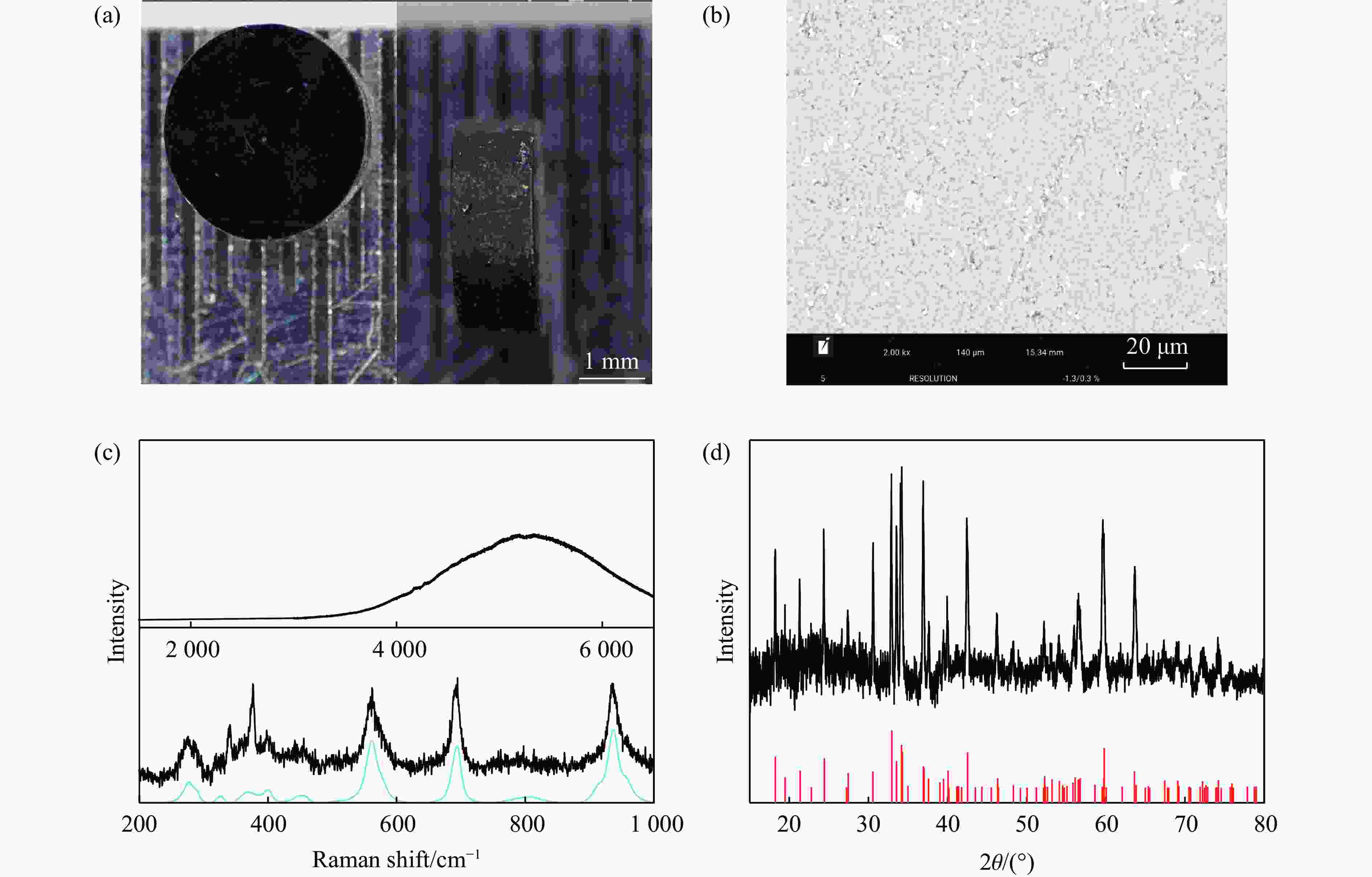
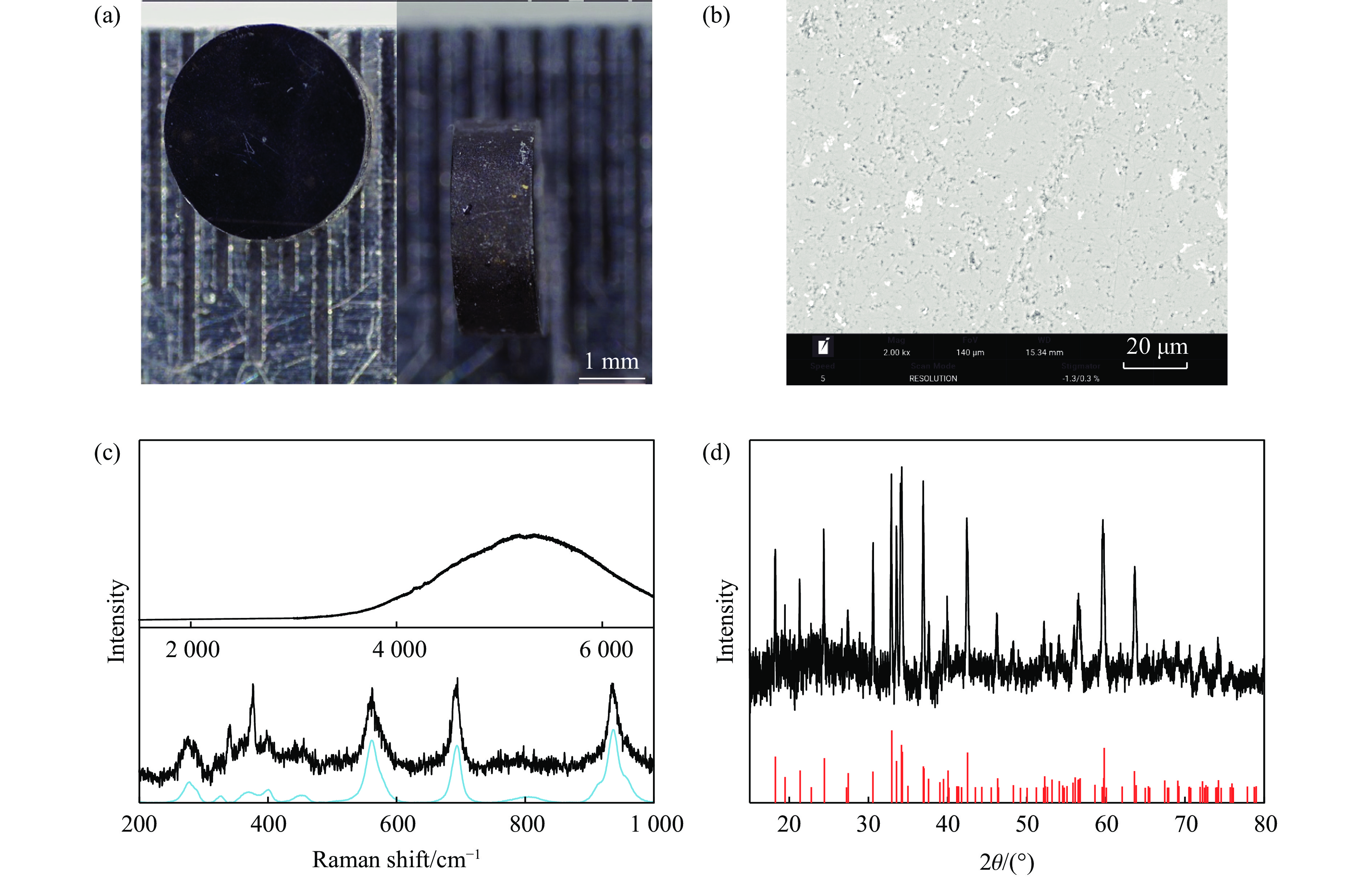
图 1 (a) 热压实验样品的几何外形展示(背景中直尺一小格代表0.5 mm长度);(b) 硬柱石背散射电子显微镜图像,图中亮点为抛光残留碎片,暗色为孔隙;(c) 硬柱石在200~1 000 cm−1、2 000~6 000 cm−1范围内的拉曼光谱(黑色)及其标准峰(蓝色)[18];(d) 硬柱石的X射线衍射谱(黑色)及标准卡片(红色)[19]
Figure 1. (a) Geometry of the hot-pressed lawsonite sample (The scale in the background has a spacing of 0.5 mm per division.); (b) backscattered electron (BSE) image of lawsonite, where bright spots correspond to residual polishing fragments and dark areas indicate pores; (c) Raman spectra of lawsonite in the ranges 200–1 000 cm−1 and 2 000–6 000 cm−1 (black) together with the standard spectrum (blue)[18]; (d) X-ray diffraction spectrum of lawsonite (black) and the corresponding reference pattern (red)[19]
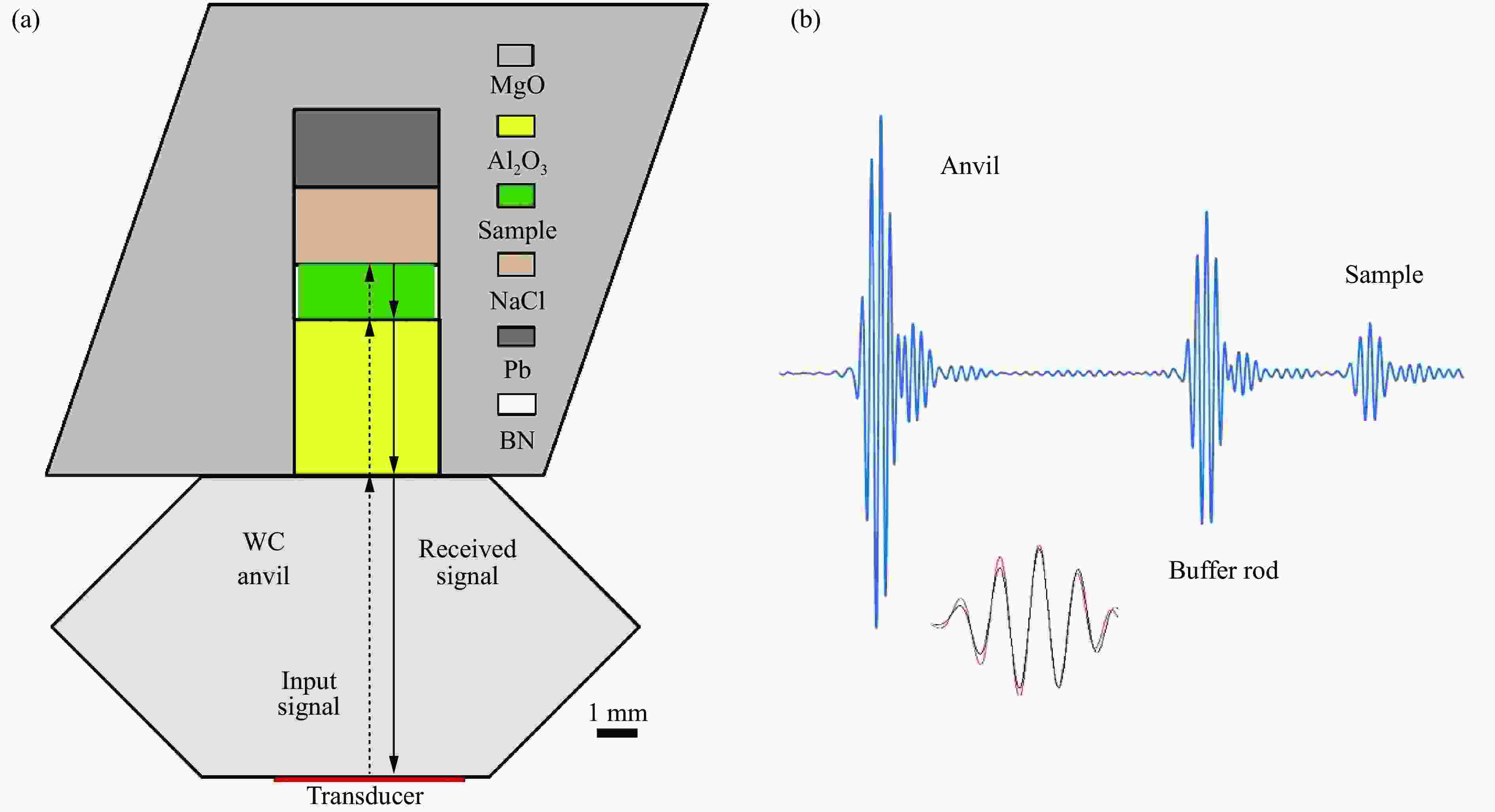
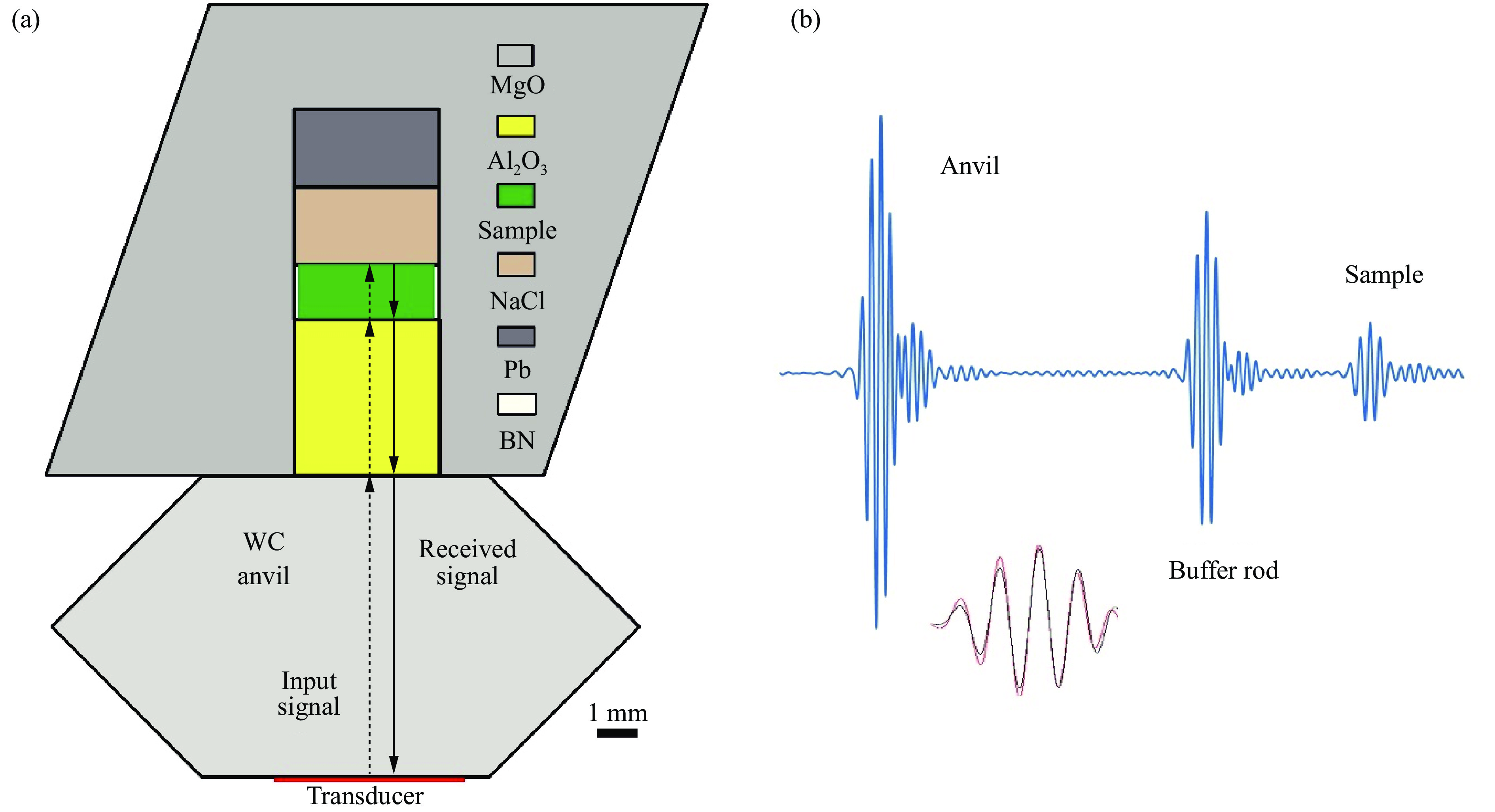
图 2 (a) 超声实验组装及超声信号传输、反射路径;(b) 观测到的超声实验横波信号(“Anvil”表示在碳化钨锤头与Al2O3缓冲棒界面的反射信号,“Buffer rod”表示Al2O3缓冲棒与样品界面的反射信号,“Sample”表示样品与NaCl界面的反射信号,插图为“Buffer rod”与“Sample”信号重叠)
Figure 2. (a) Ultrasonic experimental assembly and schematic paths of ultrasonic transmission and reflections; (b) recorded shear-wave signals from the ultrasonic experiment (“Anvil” denotes the reflection at the interface between the WC anvil and the Al2O3 buffer rod, “Buffer rod” denotes the reflection at the interface between the Al2O3 buffer rod and the sample, and “Sample” denotes the reflection at the interface between the sample and NaCl; the inset shows the overlap of the “Buffer rod” and “Sample” signals.)
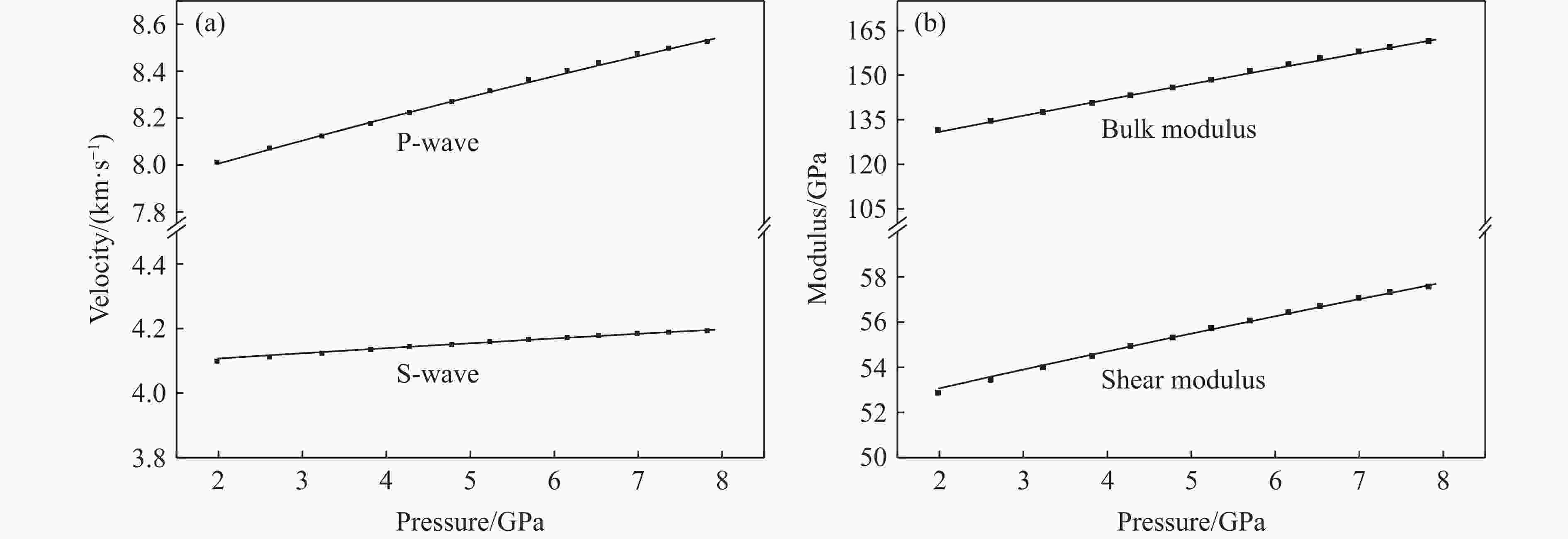
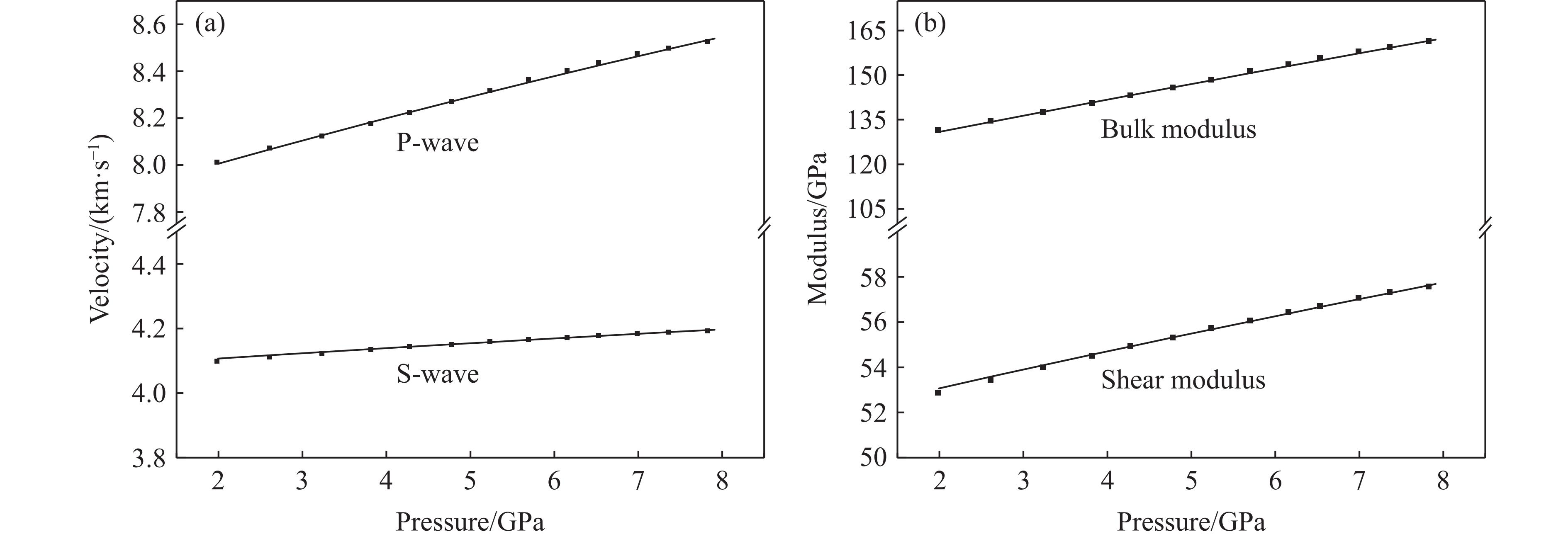
图 4 (a) 硬柱石的纵、横波速度随压力的变化,(b) 体积模量和剪切模量随压力的变化(图中黑色方块根据Cook方法得到,实线采用有限应变方程拟合得到)
Figure 4. (a) P- and S-wave velocities of lawsonite as a function of pressure; (b) bulk and shear moduli of lawsonite as a function of pressure (Black squares denote data obtained using the Cook method, while the solid line represents the fitted finite strain curve.)
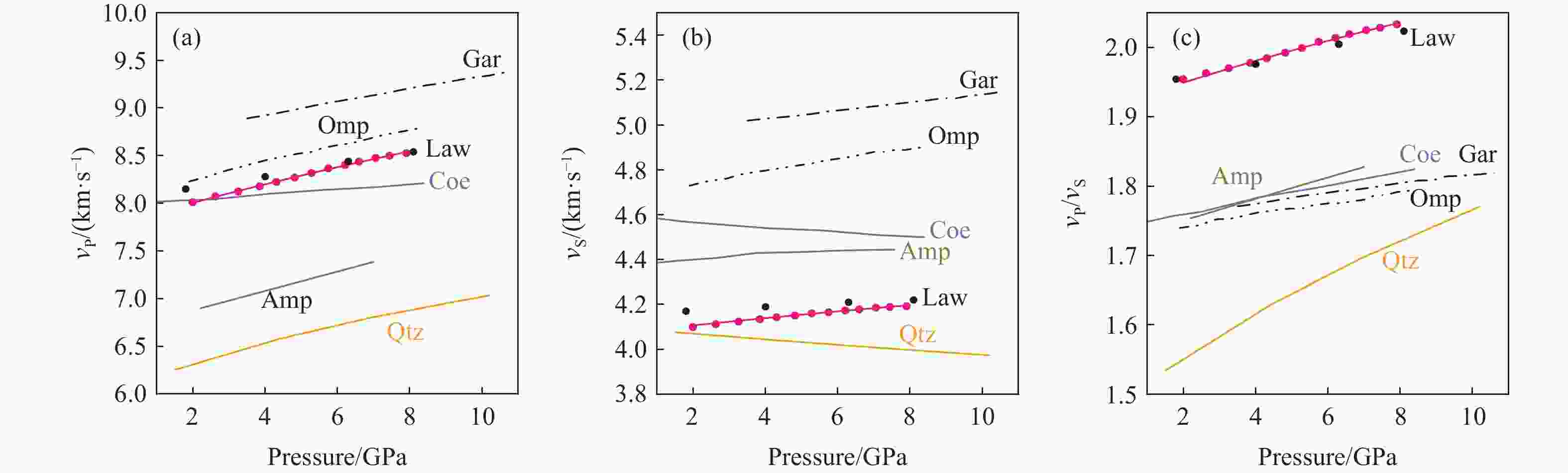
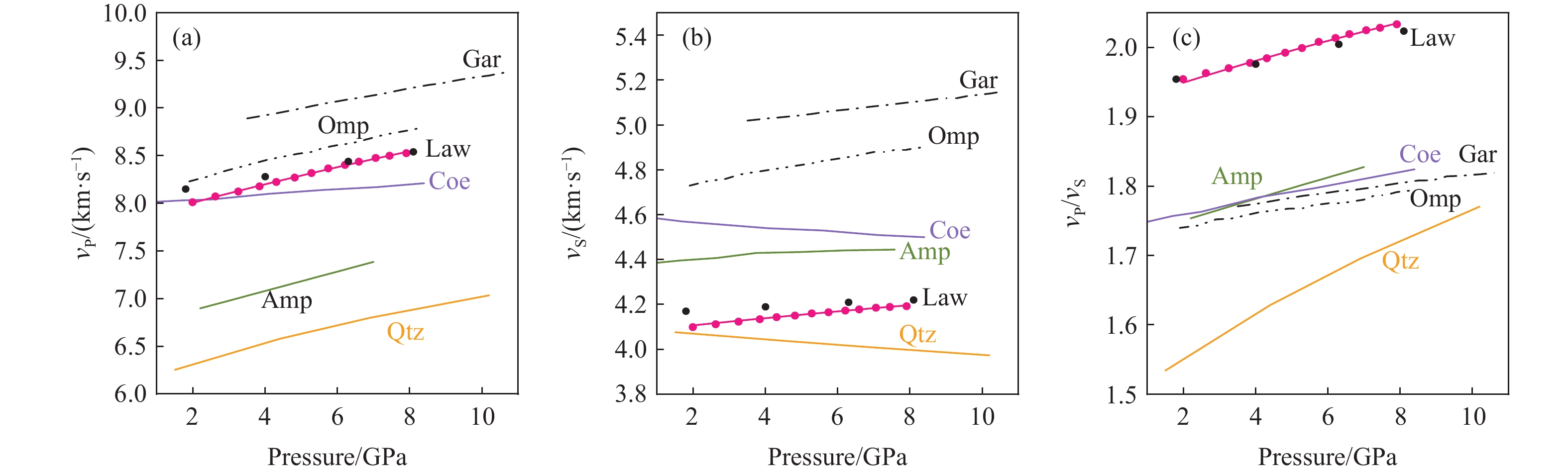
图 5 室温下硬柱石及其他矿物的(a) 纵波速度、(b) 横波速度以及(c)$ {v}_{\text{P}}/{v}_{\text{S}} $随压力的变化关系(图中红色数据来自本研究,黑色数据点为前人结果,Gar:石榴石[26],Omp:绿辉石[27],Law:硬柱石[12],Coe:柯石英[28],Qtz:石英[29],Amp:角闪石[30])
Figure 5. Pressure dependence of (a) P-wave velocity, (b) S-wave velocity, and (c) $ {v}_{\text{P}}/{v}_{\text{S}} $ for lawsonite and other minerals at room temperature (Red symbols represent data from this study. Black data points denote findings from prior research. Gar: garnet[26]; Omp: omphacite[27]; Law: lawsonite[12]; Coe: coesite[28]; Qtz: quartz[29]; Amp: amphibole[30].)
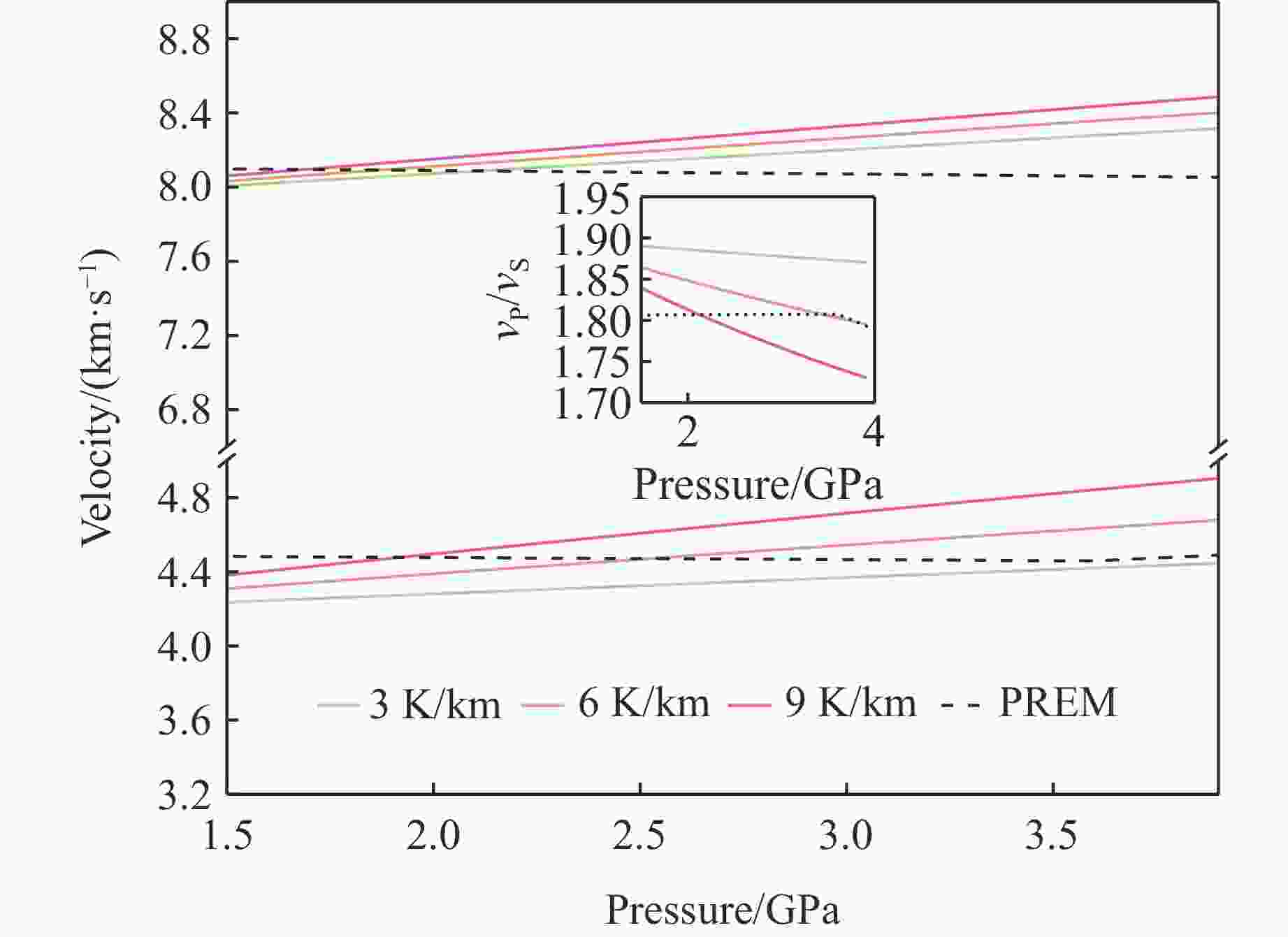
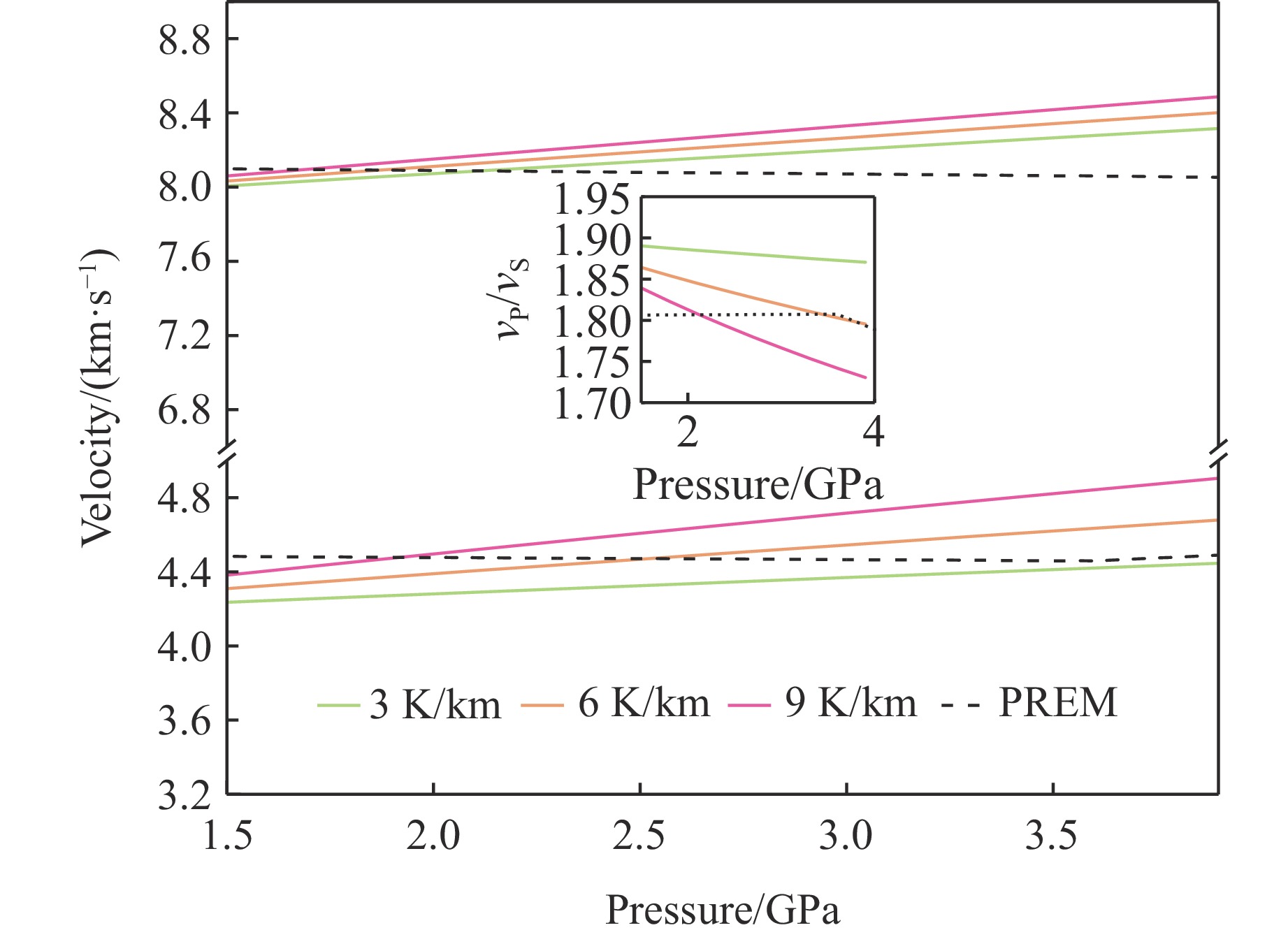
图 6 沿不同理想化地温梯度条件下硬柱石的纵波和横波速度以及$ {v}_{\text{P}}/{v}_{\text{S}} $随压力的变化(实线)及其与PREM模型的对比(虚线)
Figure 6. Pressure dependence of P-wave velocity, S-wave velocity, and $ {v}_{\text{P}}/{v}_{\text{S}} $ of lawsonite along different idealized geothermal gradients (solid lines) and their comparison with the PREM model (dashed lines)
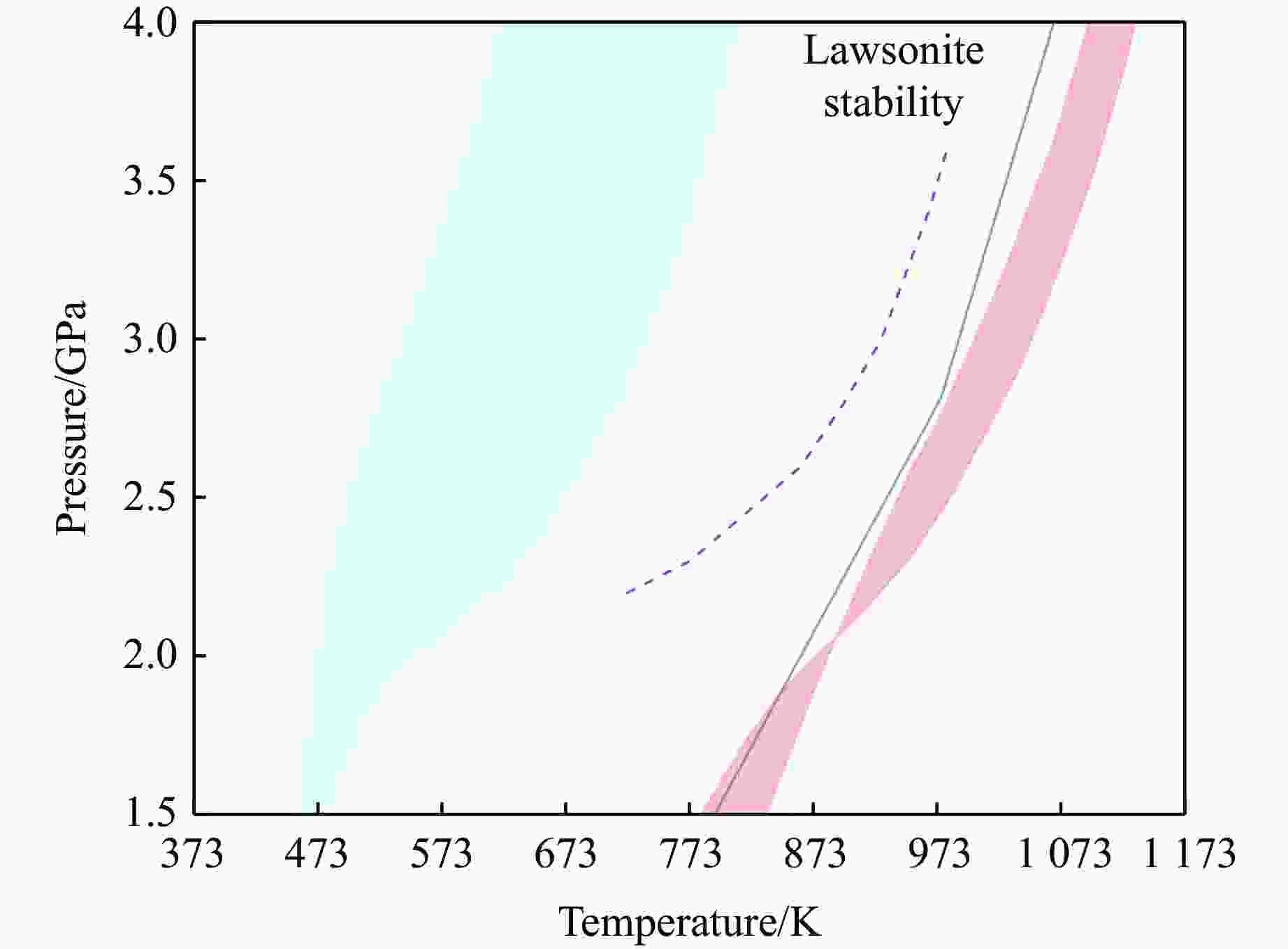
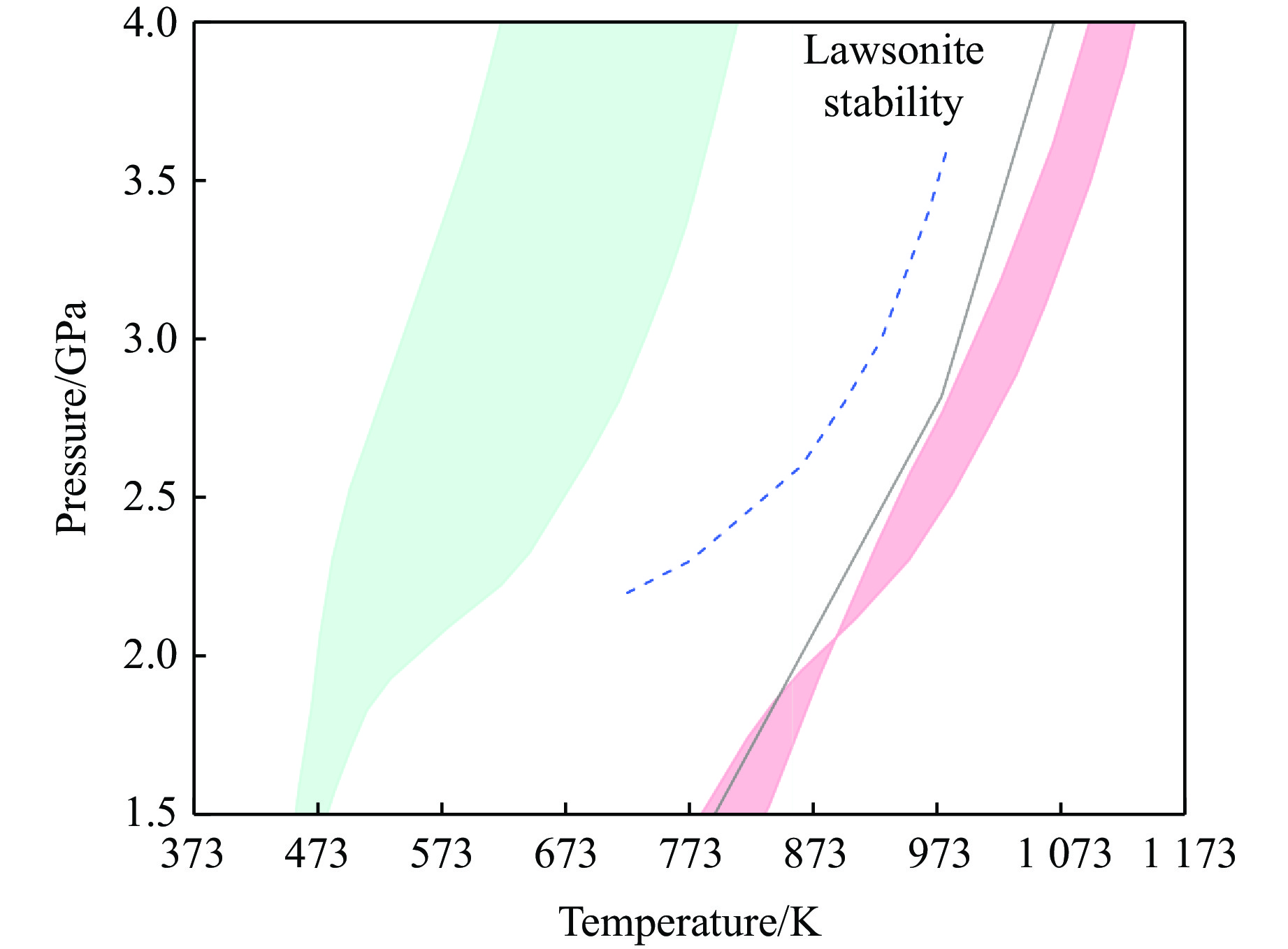
图 7 计算地温梯度与不同俯冲带热状态示意图(左右两侧蓝色以及红色区域分别对应日本东北(冷俯冲)和日本西南(暖俯冲)洋壳地温梯度范围[33],黑色实线为硬柱石的稳定域[34],蓝色曲线为本研究计算所用代表性地温梯度线[35])
Figure 7. Schematic illustration of calculated geothermal gradients and thermal states of different subduction zones (The blue and red shaded regions on the left and right represent the ranges of oceanic crust geotherms for NE Japan cold subduction and SW Japan warm subduction, respectively[33]. The black solid line denotes the stability field of lawsonite[34], and the blue curve indicates the representative geothermal gradient adopted in this study[35].)
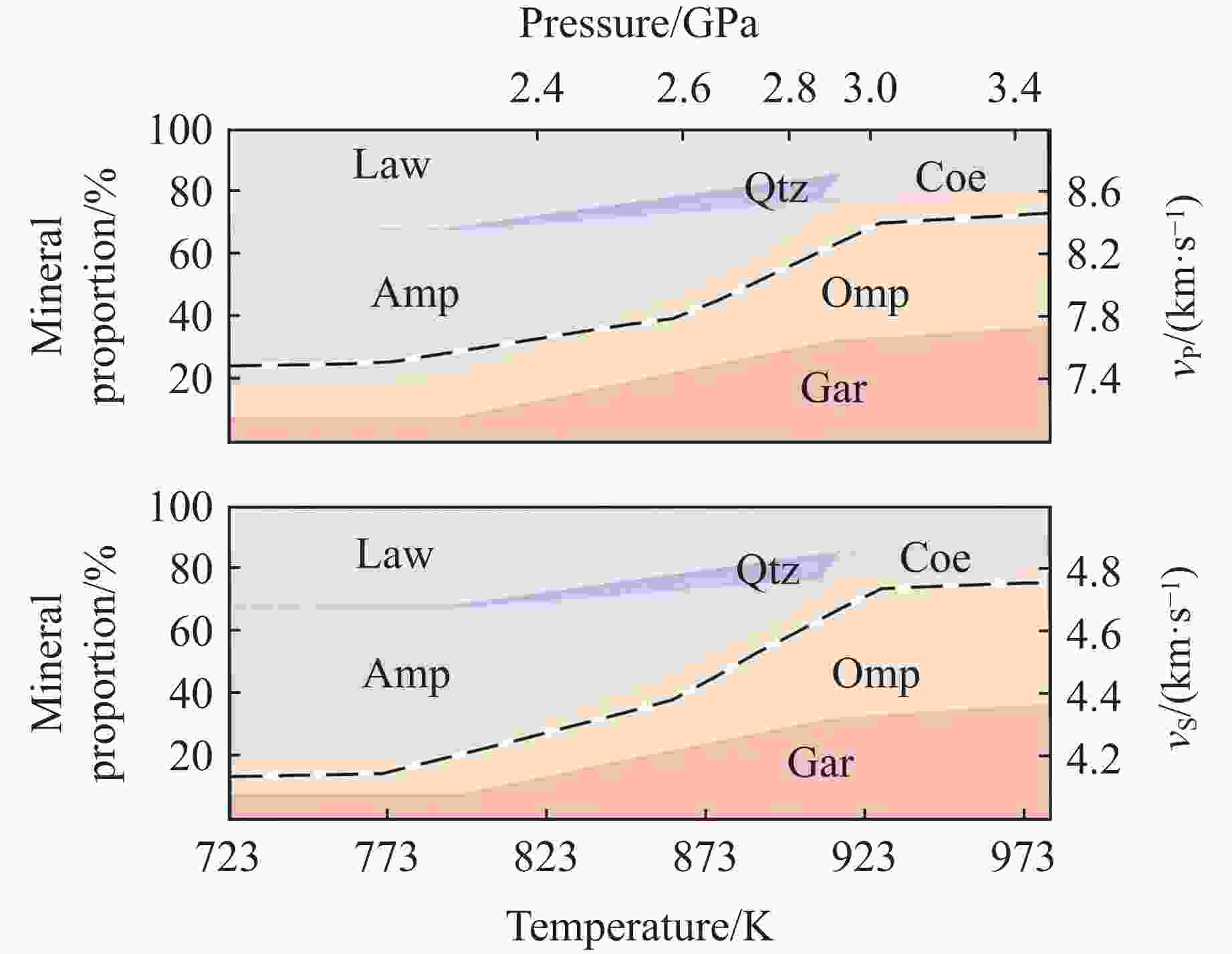
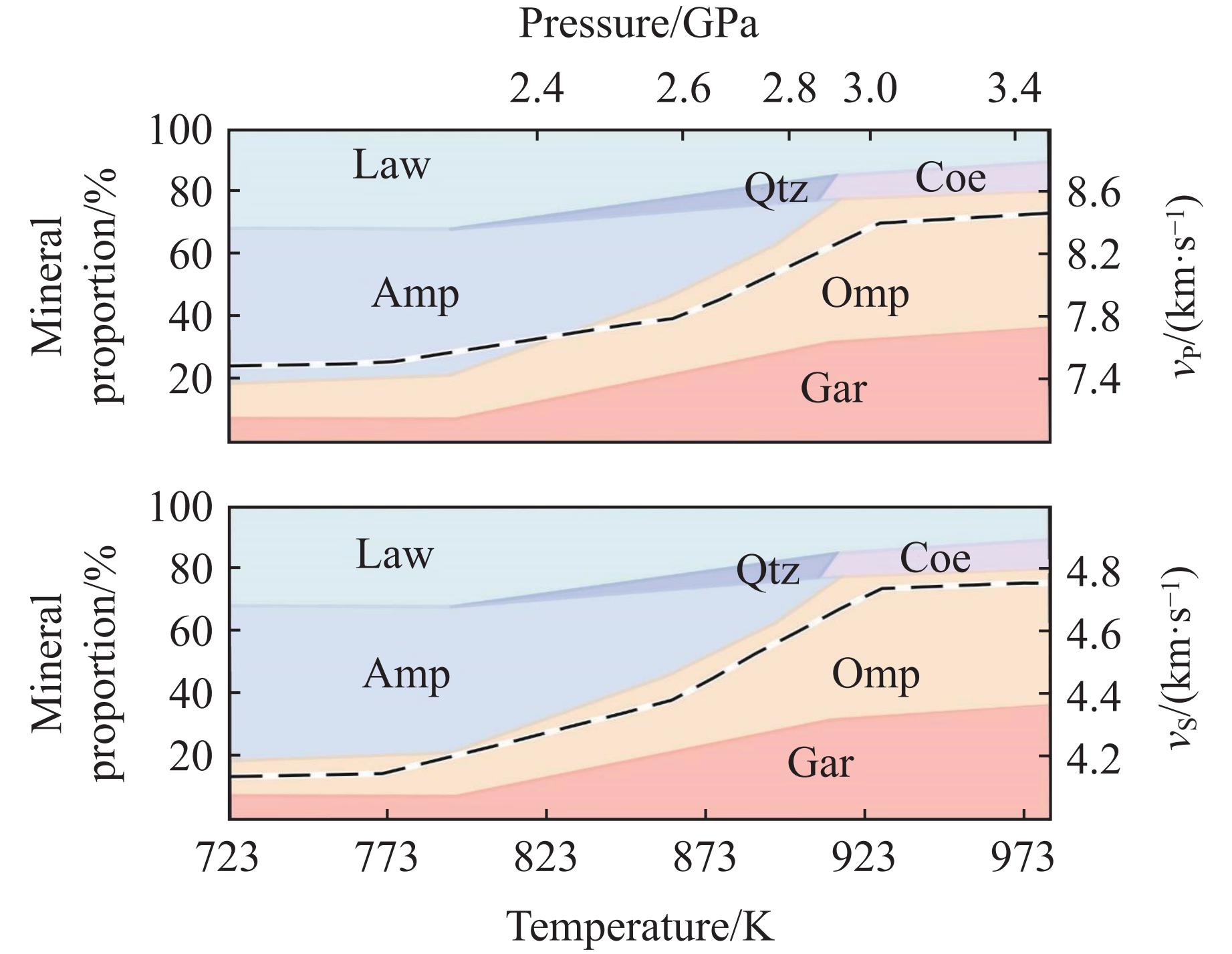
图 8 沿俯冲地热计算的纵波和横波速度剖面(底图为各矿物在相应压力-温度条件下的体积分数,根据Hernández-Uribe等[13]的研究结果修改)
Figure 8. Calculated P- and S-wave velocity profiles along the subduction geotherm (The background shows the volume fractions of each mineral phase under the corresponding pressure-temperature conditions, modified after Hernández-Uribe, et al.[13])
-
[1] SCHMIDT M W, POLI S. Experimentally based water budgets for dehydrating slabs and consequences for arc magma generation [J]. Earth and Planetary Science Letters, 1998, 163(1): 361–379. doi: 10.1016/s0012-821x(98)00142-3 [2] HACKER B R, ABERS G A, PEACOCK S M. Subduction factory 1. theoretical mineralogy, densities, seismic wave speeds, and H2O contents [J]. Journal of Geophysical Research: Solid Earth, 2003, 108(B1): 2029. doi: 10.1029/2001JB001127 [3] OHTANI E, LITASOV K D. The effect of water on mantle phase transitions [J]. Reviews in Mineralogy and Geochemistry, 2006, 62(1): 397–420. doi: 10.2138/rmg.2006.62.17 [4] 谢鸿森, 周文戈, 李玉文, 等. 高温高压下蛇纹岩脱水的弹性特征及其意义 [J]. 地球物理学报, 2000, 43(6): 806–811. doi: 10.3321/j.issn:0001-5733.2000.06.009XIE H S, ZHOU W G, LI Y W, et al. The elastic characteristics of serpentinite dehydration at high temperature-high pressure and its significance [J]. Chinese Journal of Geophysics, 2000, 43(6): 806–811. doi: 10.3321/j.issn:0001-5733.2000.06.009 [5] 郑永飞, 陈仁旭, 徐峥, 等. 俯冲带中的水迁移 [J]. 中国科学: 地球科学, 2016, 46(3): 253–286.ZHENG Y F, CHEN R X, XU Z, et al. The transport of water in subduction zones [J]. Science China Earth Sciences, 2016, 59(4): 651–682. [6] 毛竹, 李新阳. 水对地幔矿物弹性性质的影响及其地球物理意义 [J]. 中国科学: 地球科学, 2016, 46(4): 411–429.MAO Z, LI X Y. Effect of hydration on the elasticity of mantle minerals and its geophysical implications [J]. Science China Earth Sciences, 2016, 59(5): 873–888. [7] 张逸凌, 刘雷, 杜建国. 高温高压下岩石波速研究进展 [J]. 地球物理学进展, 2023, 38(5): 1999–2022. doi: 10.6038/pg2023GG0593ZHANG Y L, LIU L, DU J G. Research progress of rock wave velocity under high temperature and high pressure [J]. Progress in Geophysics, 2023, 38(5): 1999–2022. doi: 10.6038/pg2023GG0593 [8] PAWLEY A R. The pressure and temperature stability limits of lawsonite: implications for H2O recycling in subduction zones [J]. Contributions to Mineralogy and Petrology, 1994, 118(1): 99–108. doi: 10.1007/BF00310614 [9] O’BANNON E, BEAVERS C M, KUNZ M, et al. The high-pressure phase of lawsonite: a single crystal study of a key mantle hydrous phase [J]. Journal of Geophysical Research: Solid Earth, 2017, 122(8): 6294–6305. doi: 10.1002/2017JB014344 [10] TSUJIMORI T, SISSON V, LIOU J, et al. Very-low-temperature record of the subduction process: a review of worldwide lawsonite eclogites [J]. Lithos, 2006, 92(3/4): 609–624. doi: 10.1016/j.lithos.2006.03.054 [11] TSUJIMORI T, ERNST W G. Lawsonite blueschists and lawsonite eclogites as proxies for palaeo-subduction zone processes: a review [J]. Journal of Metamorphic Geology, 2014, 32(5): 437–454. doi: 10.1111/jmg.12057 [12] CHANTEL J, MOOKHERJEE M, FROST D J. The elasticity of lawsonite at high pressure and the origin of low velocity layers in subduction zones [J]. Earth and Planetary Science Letters, 2012, 349/350: 116–125. [13] HERNÁNDEZ-URIBE D, TSUJIMORI T. Progressive lawsonite eclogitization of the oceanic crust: implications for deep mass transfer in subduction zones [J]. Geology, 2023, 51(7): 678–682. doi: 10.1130/G51052.1 [14] DANIEL I, FIQUET G, GILLET P, et al. p-V-T equation of state of lawsonite [J]. Physics and Chemistry of Minerals, 1999, 26(5): 406–414. doi: 10.1007/s002690050201 [15] CHINNERY N, PAWLEY A R, CLARK S M. The equation of state of lawsonite to 7 GPa and 873 K, and calculation of its high pressure stability [J]. American Mineralogist, 2000, 85(7/8): 1001–1008. doi: 10.2138/am-2000-0715 [16] CAI N, INOUE T, KIKEGAWA T. Thermal equation of state of lawsonite up to 10 GPa and 973 K [J]. Journal of Mineralogical and Petrological Sciences, 2015, 110(5): 235–240. doi: 10.2465/jmps.150712 [17] MA J S, CAI N, WANG D J. Elasticity of epidote at high pressure and its implications for the velocity anomaly in subduction zone [J]. Geoscience Frontiers, 2025, 16(1): 101933. doi: 10.1016/j.gsf.2024.101933 [18] LE CLÉAC'H A, GILLET P. IR and Raman spectroscopic study of natural lawsonite [J]. European Journal of Mineralogy, 1990, 2(1): 43–54. doi: 10.1127/ejm/2/1/0043 [19] LIBOWITZKY E, ARMBRUSTER T. Low-temperature phase transitions and role of hydrogen bonds in lawsonite [J]. American Mineralogist, 1995, 80(11/12): 1277–1285. doi: 10.2138/am-1995-11-1217 [20] WANG X B, CHEN T, QI X T, et al. Acoustic travel time gauges for in-situ determination of pressure and temperature in multi-anvil apparatus [J]. Journal of Applied Physics, 2015, 118(6): 065901. doi: 10.1063/1.4928147 [21] COOK R K. Variation of elastic constants and static strains with hydrostatic pressure: a method for calculation from ultrasonic measurements [J]. The Journal of the Acoustical Society of America, 1957, 29(4): 445–449. doi: 10.1121/1.1908922 [22] GONZALEZ-PLATAS J, ALVARO M, NESTOLA F, et al. EosFit7-GUI: a new graphical user interface for equation of state calculations, analyses and teaching [J]. Journal of Applied Crystallography, 2016, 49(4): 1377–1382. doi: 10.1107/S1600576716008050 [23] MILANI S, ANGEL R J, SCANDOLO L, et al. Thermo-elastic behavior of grossular garnet at high pressures and temperatures [J]. American Mineralogist, 2017, 102(4): 851–859. doi: 10.2138/am-2017-5855 [24] BALLARAN T B, ANGEL R J. Equation of state and high-pressure phase transitions in lawsonite [J]. European Journal of Mineralogy, 2003, 15(2): 241–246. doi: 10.1127/0935-1221/2003/0015-0241 [25] DAVIES G F, DZIEWONSKI A M. Homogeneity and constitution of the Earth’s lower mantle and outer core [J]. Physics of the Earth and Planetary Interiors, 1975, 10(4): 336–343. doi: 10.1016/0031-9201(75)90060-6 [26] CHEN P, WANG D J, CAI N, et al. The sound velocity of garnet at high pressure: implications for high velocity anomalies in cold subducting slabs [J]. Tectonophysics, 2023, 865: 230045. doi: 10.1016/j.tecto.2023.230045 [27] ZHANG R, WANG D J, CAI N, et al. Sound velocity of eclogite at high pressures and implications for detecting eclogitization in subduction zones [J]. GSA Bulletin, 2024, 136(5/6): 2019–2028. doi: 10.1130/B37065.1 [28] CHEN T, LIEBERMANN R C, ZOU Y T, et al. Tracking silica in Earth’s upper mantle using new sound velocity data for coesite to 5.8 GPa and 1073 K [J]. Geophysical Research Letters, 2017, 44(15): 7757–7765. doi: 10.1002/2017GL073950[29] WANG J, MAO Z, JIANG F M, et al. Elasticity of single-crystal quartz to 10 GPa [J]. Physics and Chemistry of Minerals, 2015, 42(3): 203–212. doi: 10.1007/s00269-014-0711-z [30] ZHANG J K, WANG D J, CAI N, et al. Elastic properties of amphibole at high pressure: a new explanation of the low velocities anomaly in the mantle wedges [J]. Tectonophysics, 2023, 865: 230044. doi: 10.1016/j.tecto.2023.230044 [31] SCHILLING F R, SINOGEIKIN S V, BASS J D. Single-crystal elastic properties of lawsonite and their variation with temperature [J]. Physics of the Earth and Planetary Interiors, 2003, 136(1/2): 107–118. doi: 10.1016/S0031-9201(03)00024-4 [32] DZIEWONSKI A M, ANDERSON D L. Preliminary reference Earth model [J]. Physics of the Earth and Planetary Interiors, 1981, 25(4): 297–356. doi: 10.1016/0031-9201(81)90046-7 [33] PEACOCK S M, WANG K L. Seismic consequences of warm versus cool subduction metamorphism: examples from southwest and northeast Japan [J]. Science, 1999, 286(5441): 937–939. doi: 10.1126/science.286.5441.937 [34] OKAMOTO K, MARUYAMA S. The high-pressure synthesis of lawsonite in the MORB+H2O system [J]. American Mineralogist, 1999, 84(3): 362–373. doi: 10.2138/am-1999-0320 [35] PEACOCK S M, KEKEN P E V, HOLLOWAY S D, et al. Thermal structure of the Costa Rica-Nicaragua subduction zone [J]. Physics of the Earth and Planetary Interiors, 2005, 149(1/2): 187–200. doi: 10.1016/j.pepi.2004.08.030 [36] HILL R. The elastic behaviour of a crystalline aggregate [J]. Proceedings of the Physical Society. Section A, 1952, 65(5): 349–354. doi: 10.1088/0370-1298/65/5/307 [37] DINC A N, RABBEL W, FLUEH E R, et al. Mantle wedge hydration in Nicaragua from local earthquake tomography [J]. Geophysical Journal International, 2011, 186(1): 99–112. doi: 10.1111/j.1365-246X.2011.05041.x -

 下载:
下载:

计量
- 文章访问数: 882
- HTML全文浏览量: 303
- PDF下载量: 84
