





Effect of Nanocrystalline Grain Size on the Dynamic Structure and Damage of Iron
-
摘要: 晶粒度效应是影响金属材料动态力学性能的重要因素之一。以相变金属铁为研究对象,构建了拓扑结构与取向分布相同的不同纳米晶粒度的铁模型,旨在考察特定晶粒分布状态下的尺寸效应。分子动力学模拟结果表明,不同晶粒度模型在高应变率单轴压缩下均经历了弹性变形、α→ε相变和高压相塑性变形等阶段。在弹性变形阶段,晶界起到了一定的软化层作用,导致细晶模型的应力低于粗晶模型的应力;结构相变发生后,晶界对新相的塑性发展起到阻碍作用,使细晶模型应力高于粗晶模型应力。相变发生时,小晶粒的相变阈值更低,相变后的新相形成层错结构,而在较大晶粒中出现孪晶结构。随着应变增加,在大晶粒中观察到孪晶的消失及层错的重构过程。在高应变率拉伸下,大晶粒中晶界的剪切应变高度局域化,易形成连续剪切带,并优先成为裂纹拓展通道;晶粒细化后,晶界剪切逐渐转变为弥散化模式,有效裂纹拓展路径受到晶界网络的约束。晶界作用的转变导致损伤断裂强度随晶粒尺寸变化呈现出非单调的变化规律。Abstract: Grain size effect is one of the key factors governing the dynamic mechanical response of metallic materials. Phase transformation iron is selected as the model material, and a series of nanocrystalline polycrystals with identical topology and grain orientation distributions but different grain sizes are constructed to investigate size effects under a fixed grain configuration. Molecular dynamics simulations show that, under high strain rate uniaxial compression, all models undergo elastic deformation, α→ε phase transition, and high-pressure phase plastic deformation. During the elastic stage, grain boundaries act as a soft layer, leading to lower stresses in the fine grain models than in the coarse grain model. After the structural phase transition, grain boundaries hinder the plastic development of the new phase, so that the fine grain models exhibit higher stress than the coarse grain models. At the onset of phase transition, the threshold of phase transition of smaller grains is lower, and the transformed phase in fine grains mainly forms stacking fault structures, whereas twinning structures appear in relatively larger grains. With increasing strain, the disappearance of twinning and the reconstruction of stacking faults are observed in large grains. Under high strain rate tension, shear strain of grain boundary in the large grain models is highly localized, readily forming continuous shear bands that serve as preferred paths of crack propagation. After grain refinement, shear strain of grain boundary gradually evolves into a diffuse mode, and the effective paths of crack propagation are constrained by the network of grain boundaries. The change of grain boundary effects leads to a non-monotonic variation of fracture strength with the grain size.
-
Key words:
- dislocation /
- phase transition /
- stacking fault /
- twinning /
- grain boundary /
- high strain rate
-
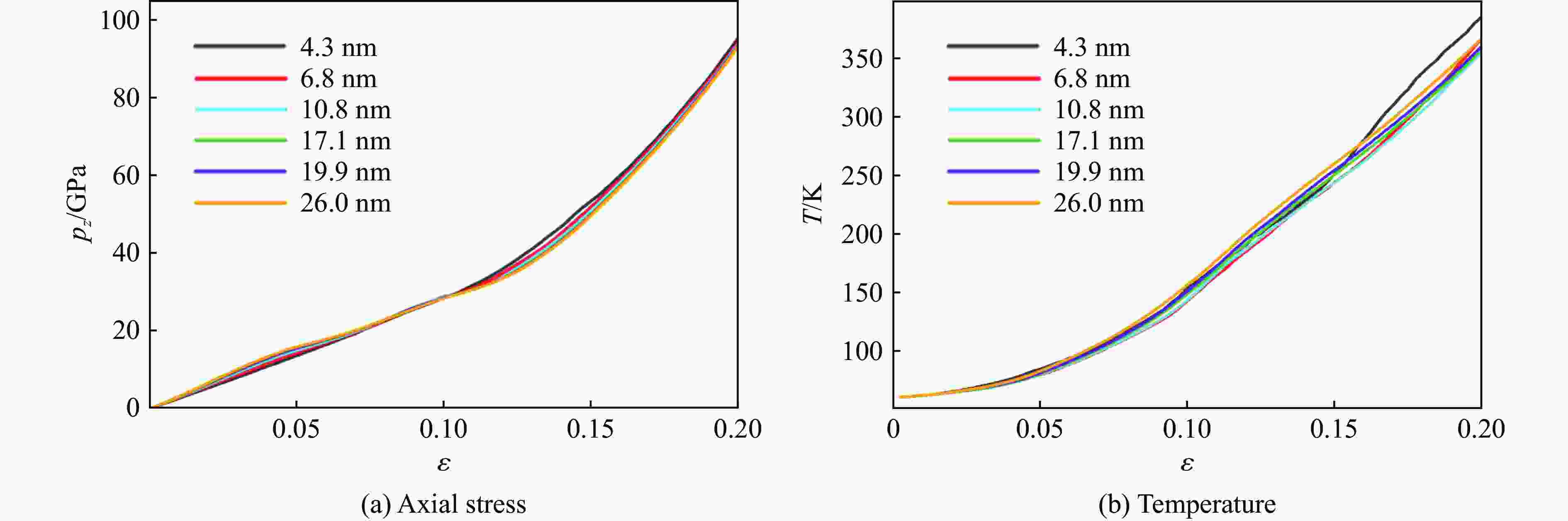
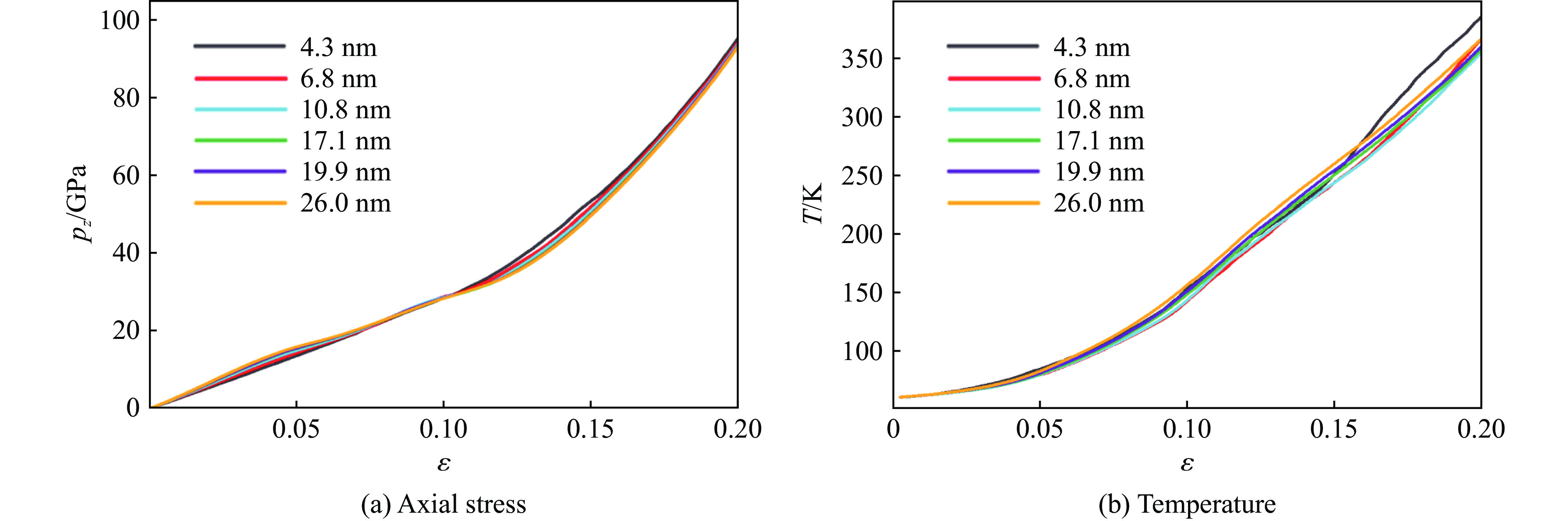
图 2 不同晶粒度下铁的轴向应力pz (a)与体系温度(b)随应变的变化曲线
Figure 2. Curves of axial stress pz (a) and temperature (b) varying with strain for iron at different grain sizes
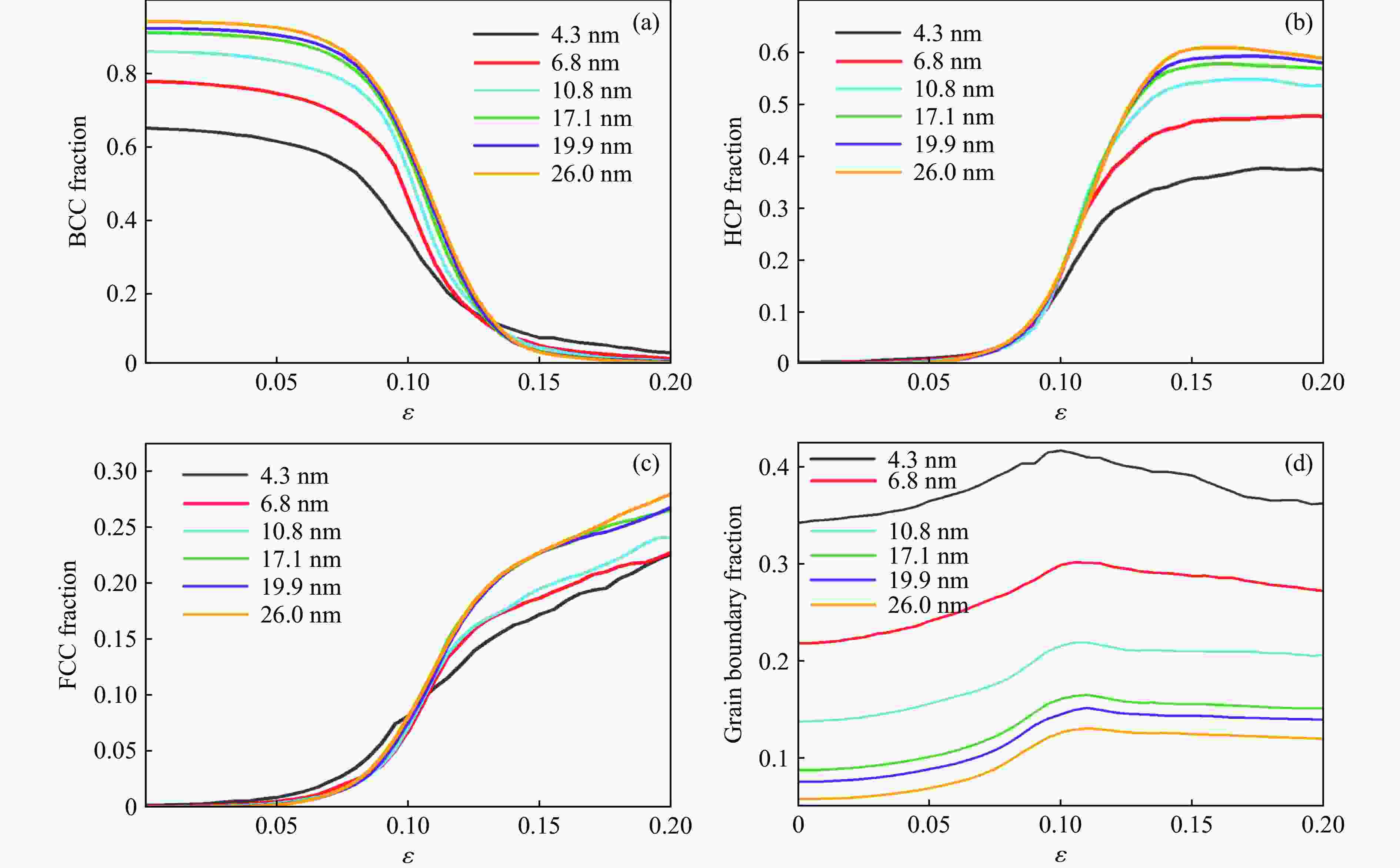
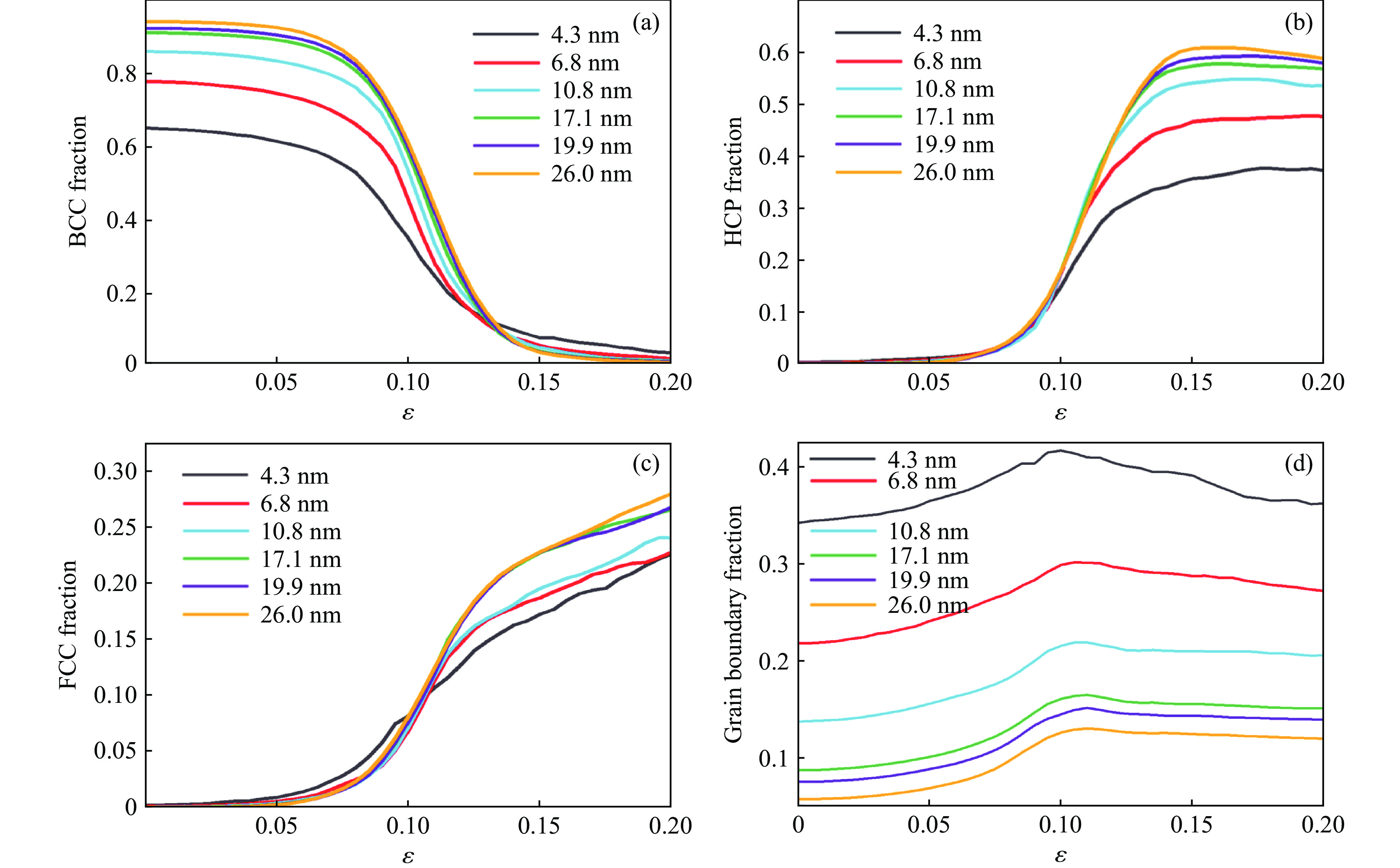
图 3 不同晶粒度下BCC (a)、HCP (b)、FCC (c)和晶界(d)占比随应变的变化关系
Figure 3. Strain-dependent fractions of BCC (a), HCP (b), FCC (c), and grain boundary (d) for different grain sizes
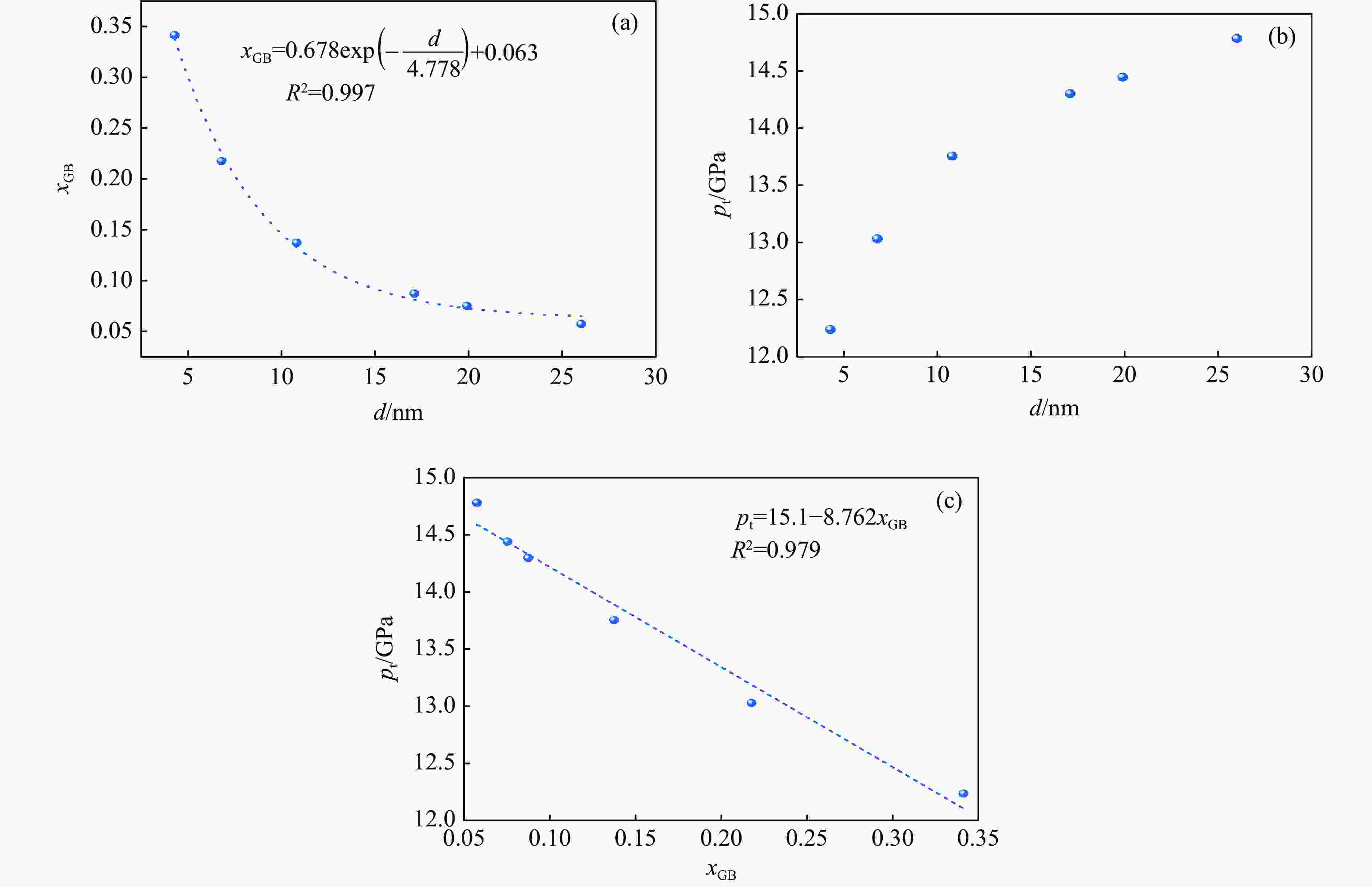
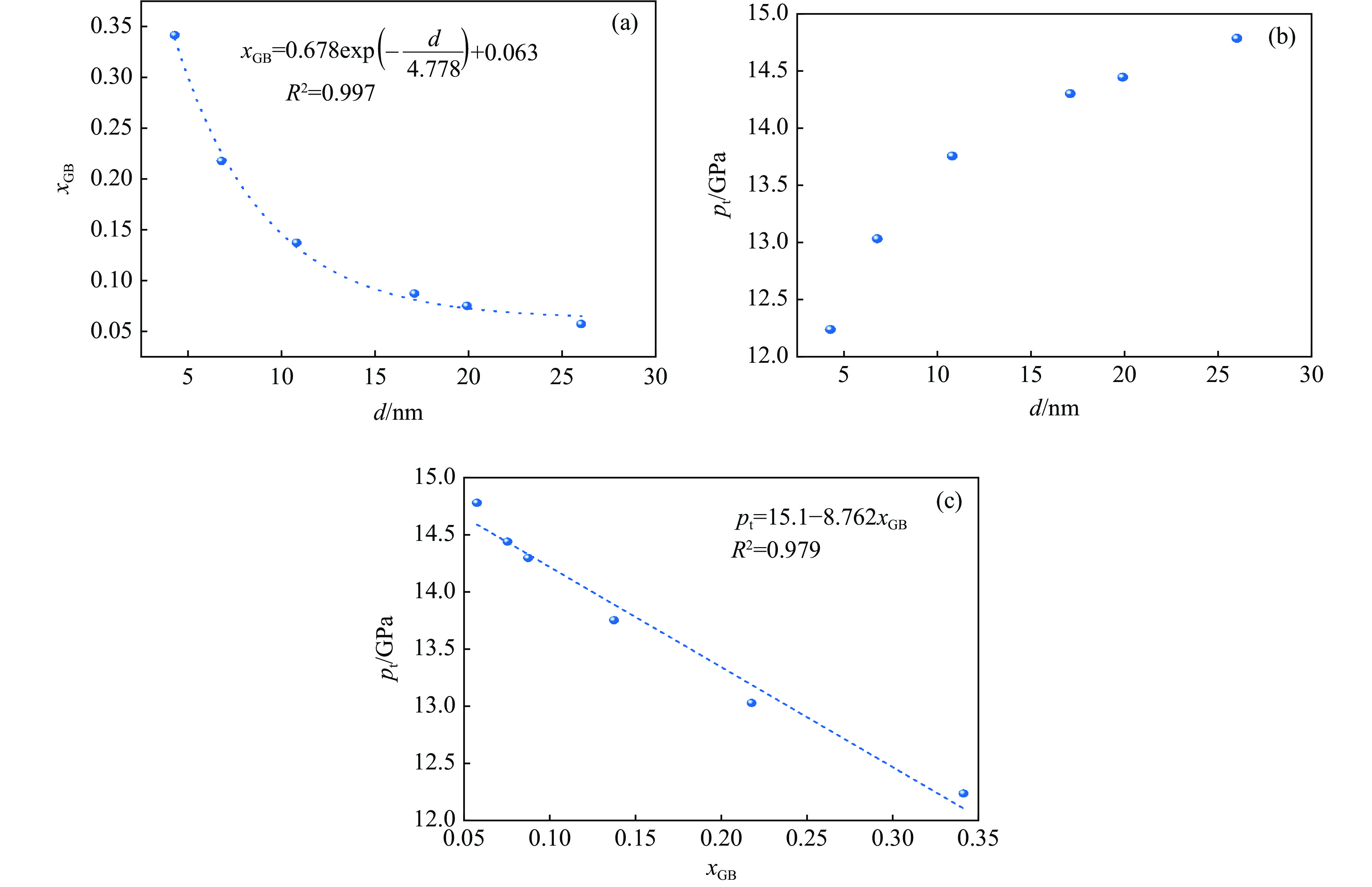
图 4 初始晶界占比(a)和相变阈值(b)随晶粒尺寸的变化关系以及相变阈值与初始晶界占比的关系(c)
Figure 4. Grain-size dependence of the initial grain boundary fraction (a) and the phase-transformation threshold (b), and the relationship between the phase-transformation threshold and the initial grain boundary fraction (c)
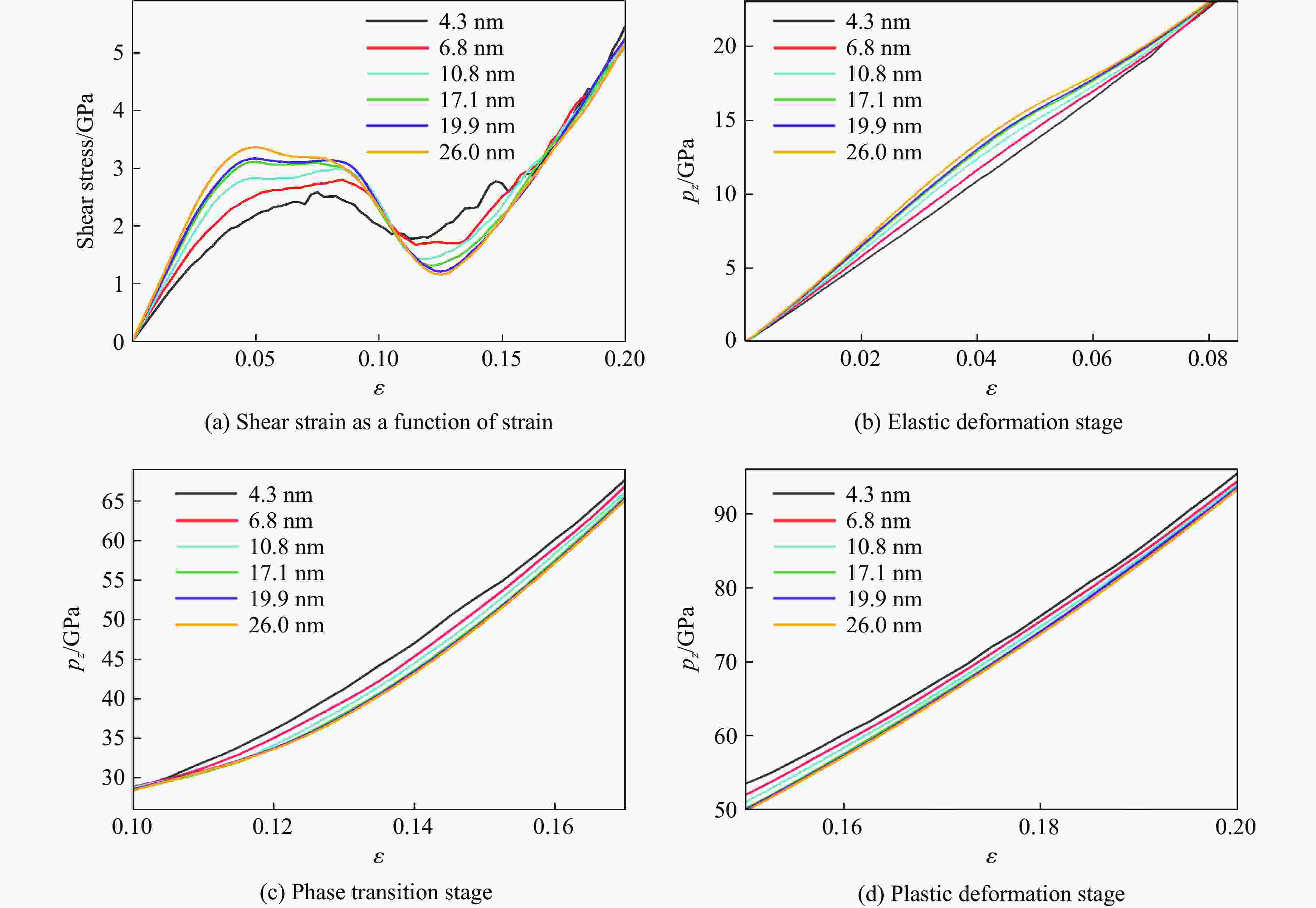
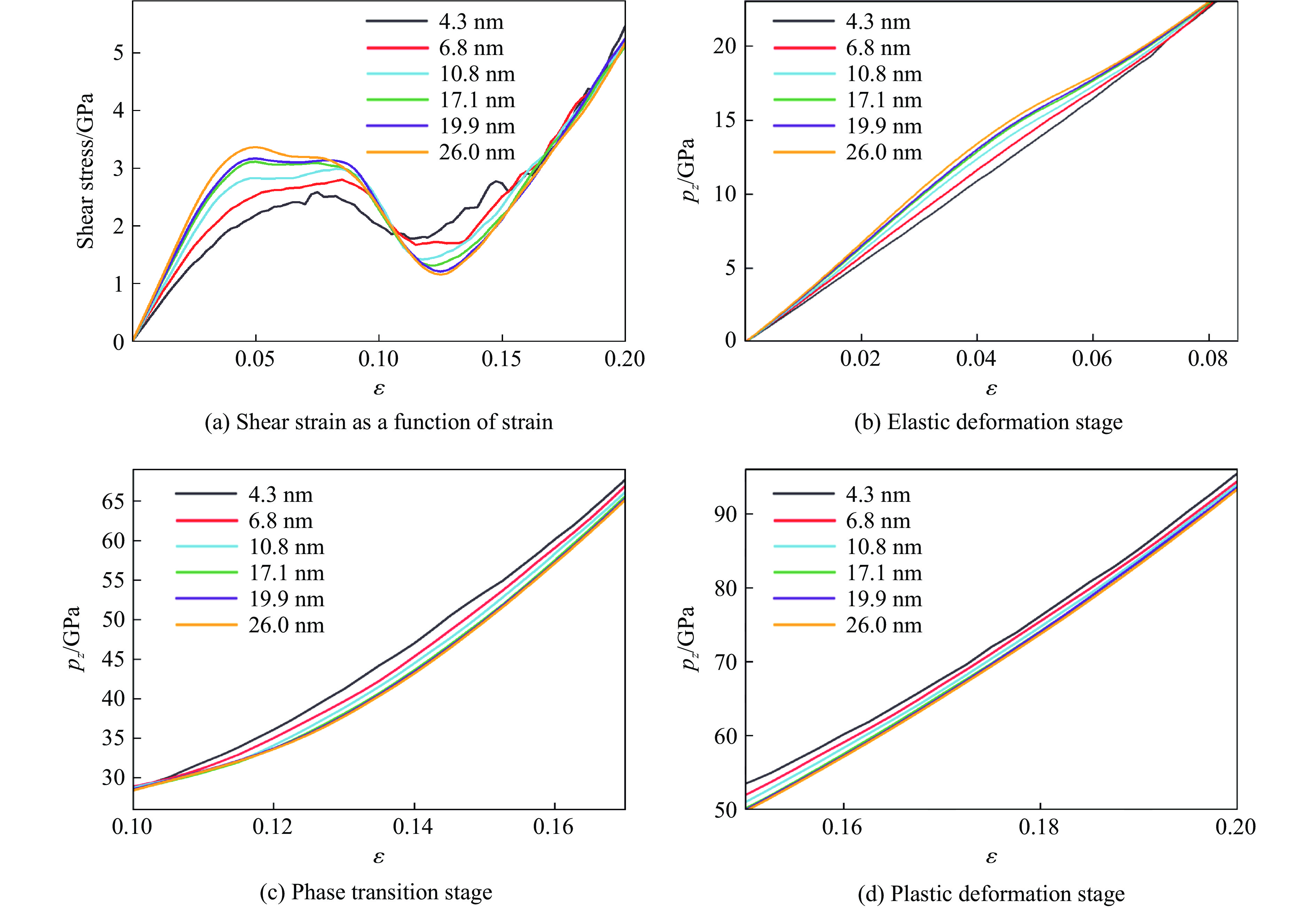
图 5 不同晶粒度下铁的剪应力-应变曲线 (a),以及弹性变形阶段(b)、相变阶段(c)和高压相塑性变形阶段(d)的应力-应变曲线
Figure 5. Shear stress as a function of strain for iron (a), and stress-strain curves for different grain sizes during the elastic deformation stage (b), the phase transition stage (c), and the high-pressure-phase plastic deformation stage (d)
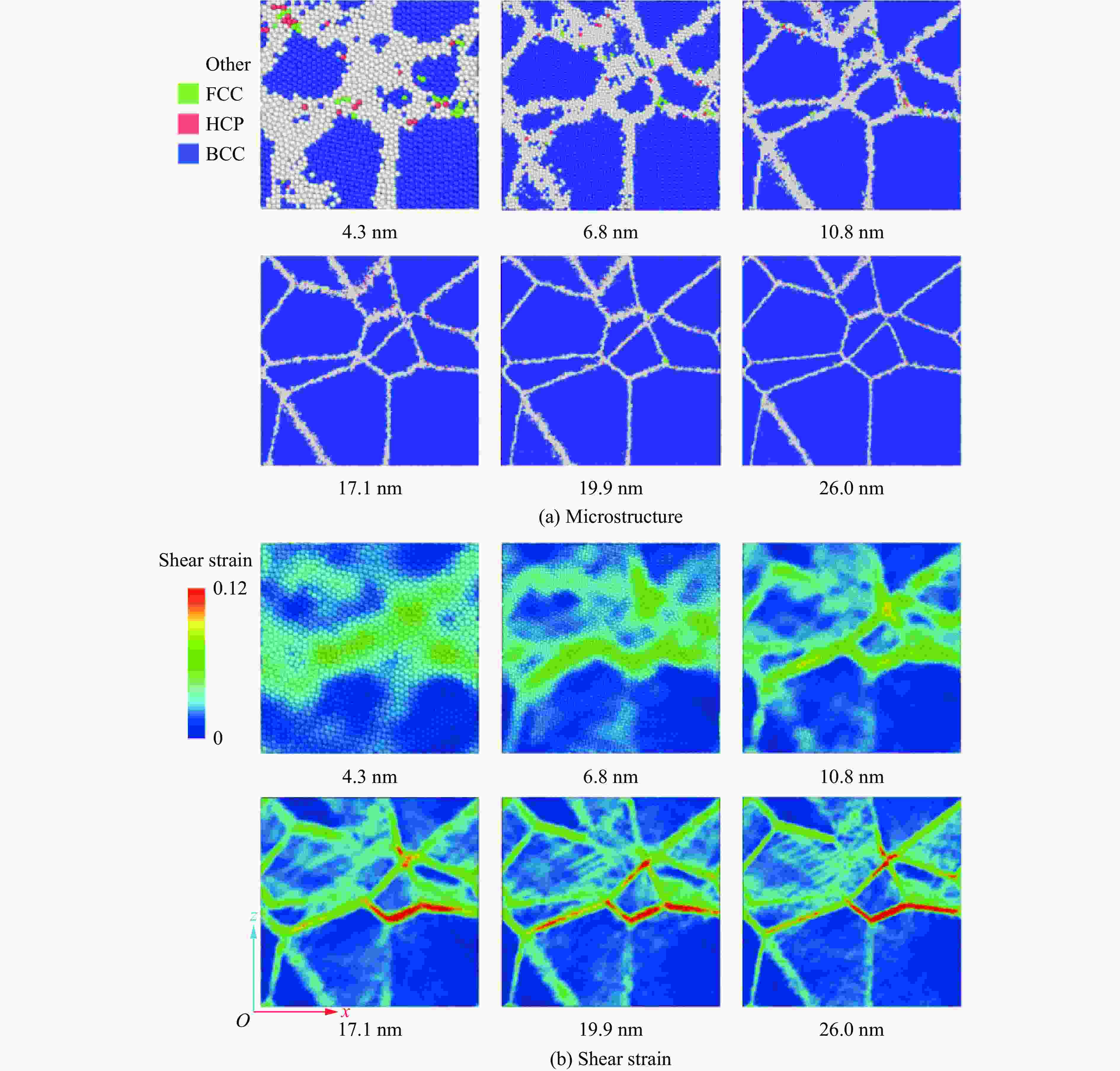
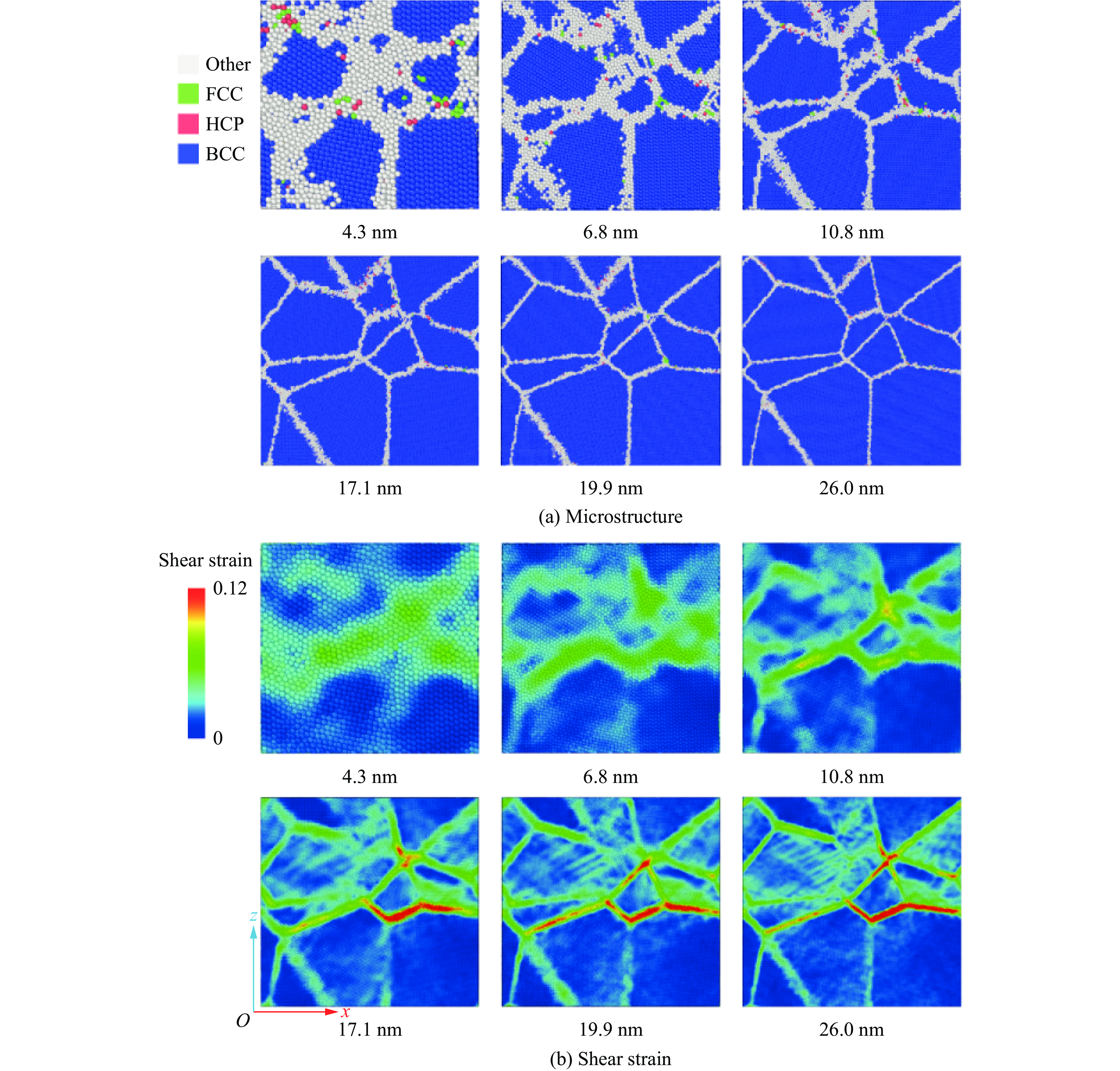
图 6 弹性阶段应变为0.04时不同晶粒的微结构 (a)及对应的剪切应变(b)
Figure 6. Microstructures for various grains (a) and the corresponding shear strain (b) at a strain of 0.04 in the elastic stage
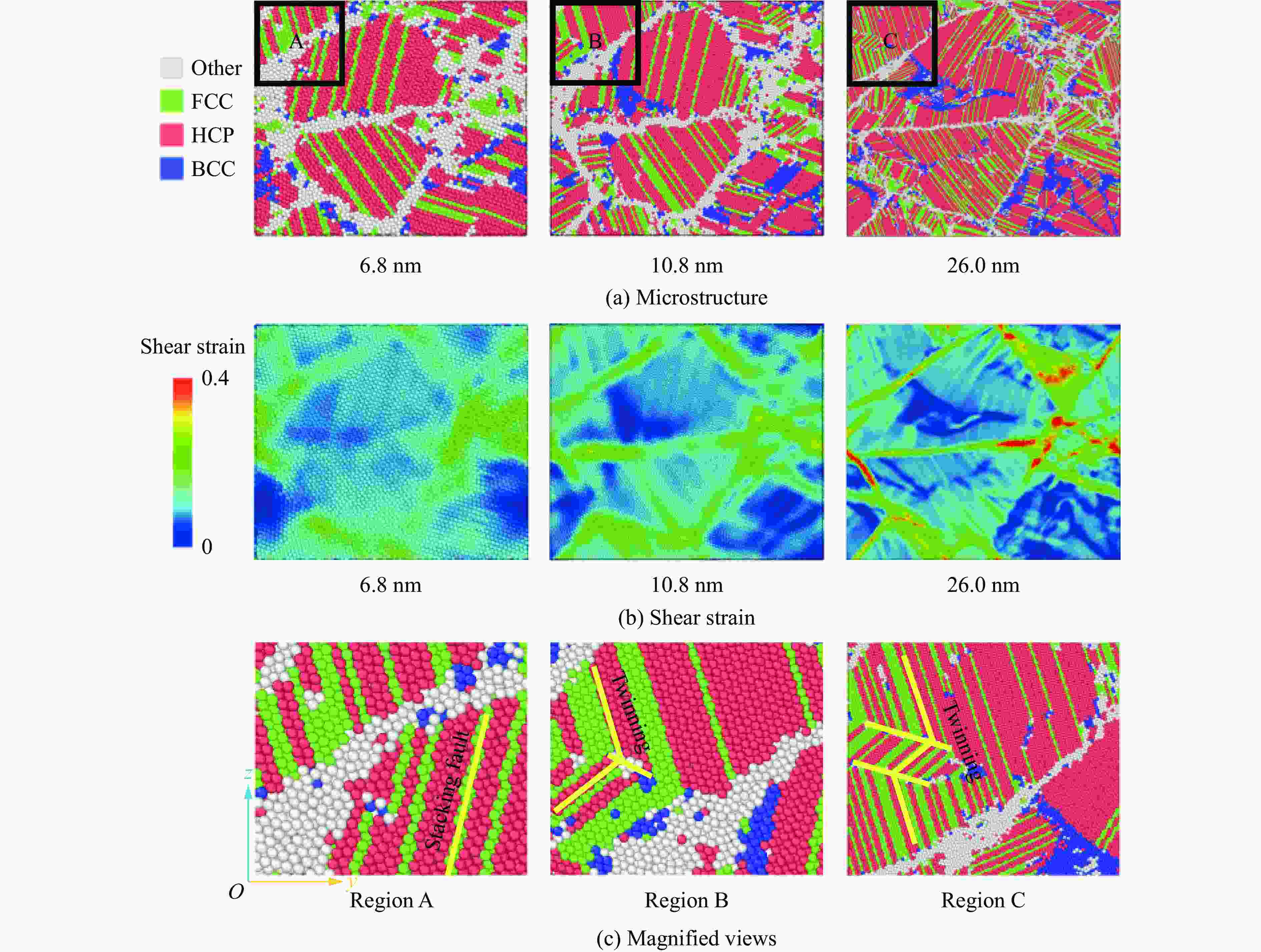
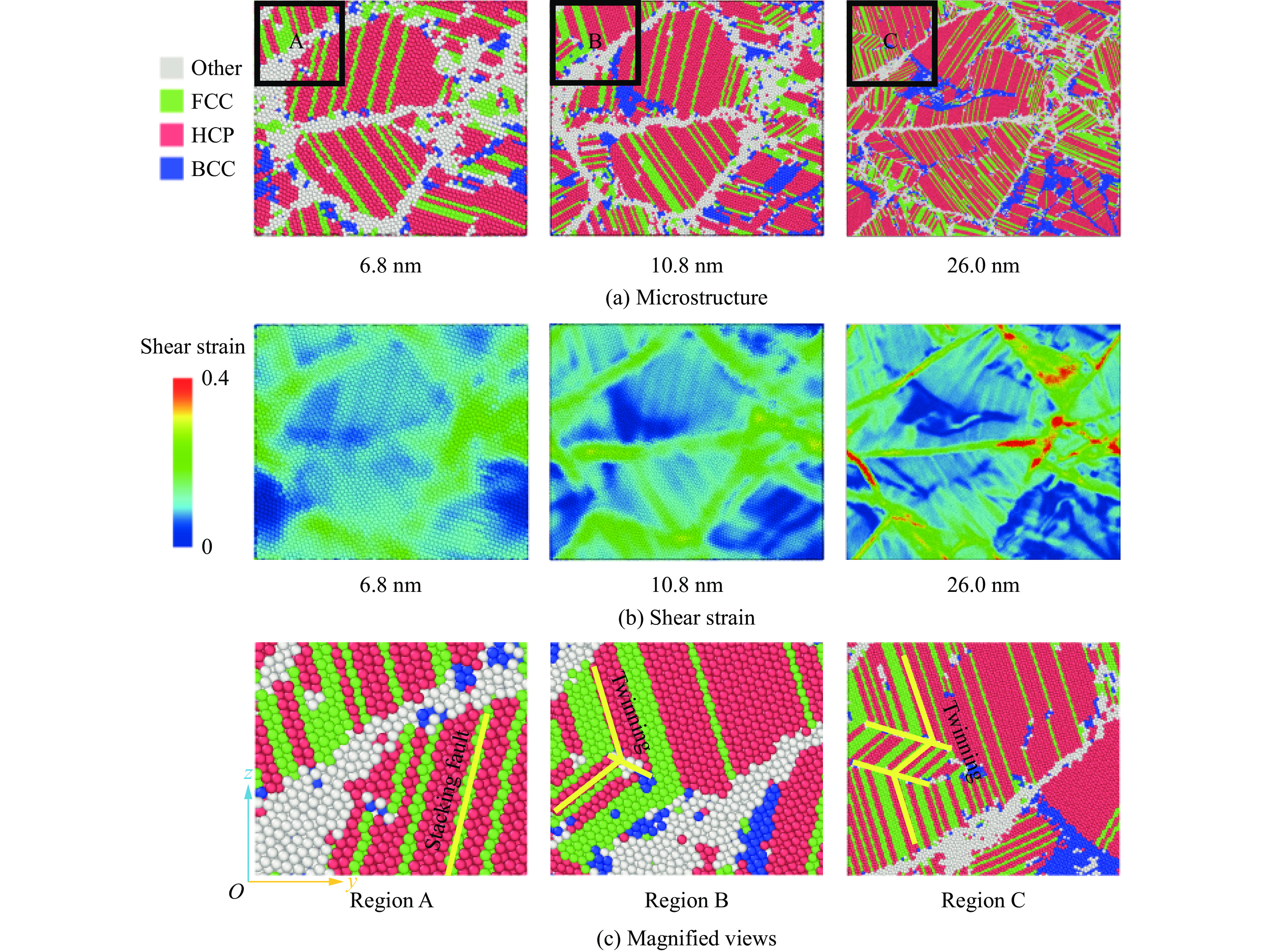
图 7 晶粒度为6.8、10.8和26.0 nm的多晶铁在应变为0.14时的微结构(a)、剪切应变(b)和同一区域的微结构放大图(c)(黄色高亮线是为了标识层错和孪晶结构)
Figure 7. Microstructures (a) and shear strain (b) of polycrystalline Fe with grain sizes of 6.8, 10.8, and 26.0 nm at a strain of 0.14, and magnified views of the same region (c) (The highlighted yellow lines are used to identify stacking faults and twinning.)
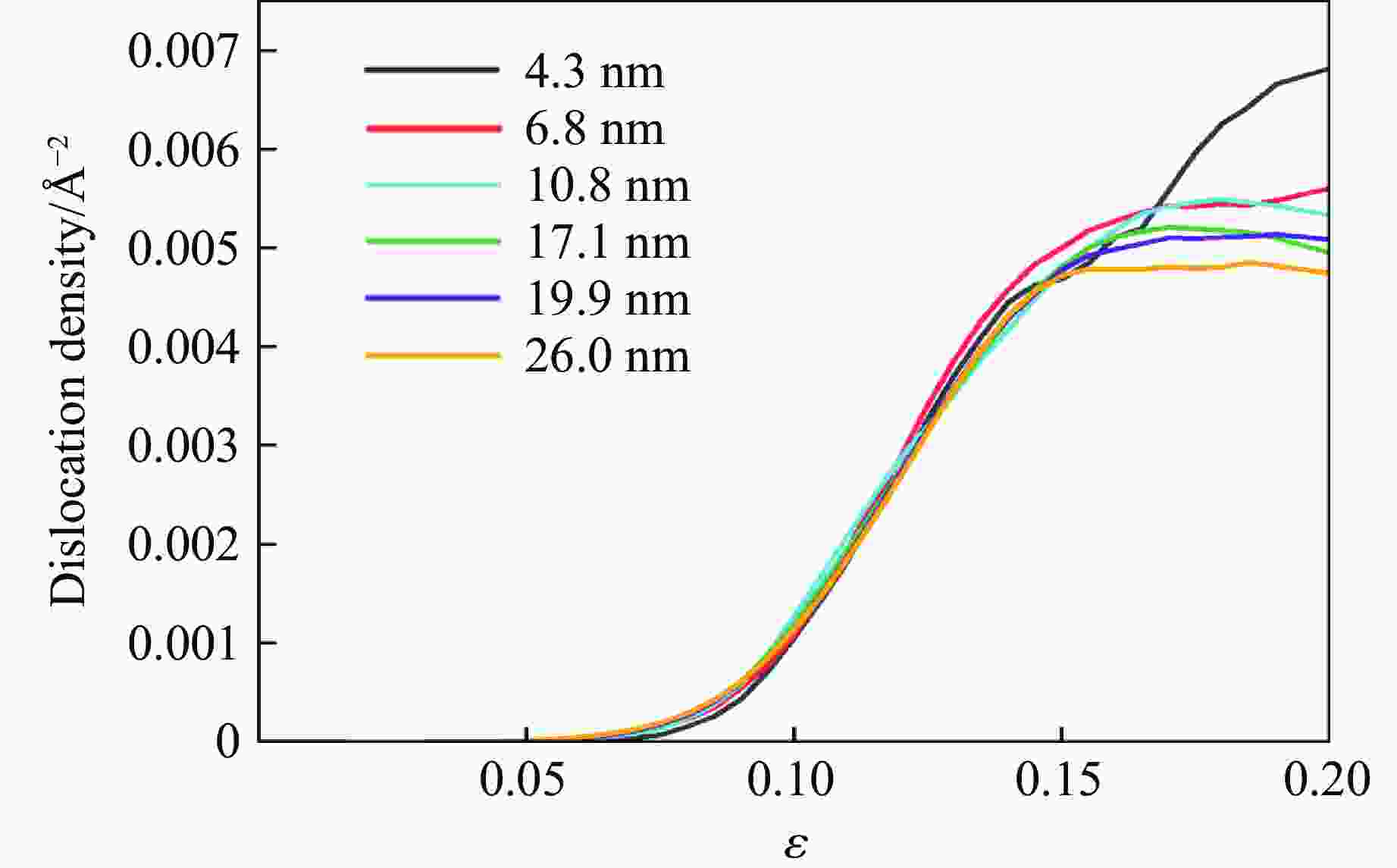
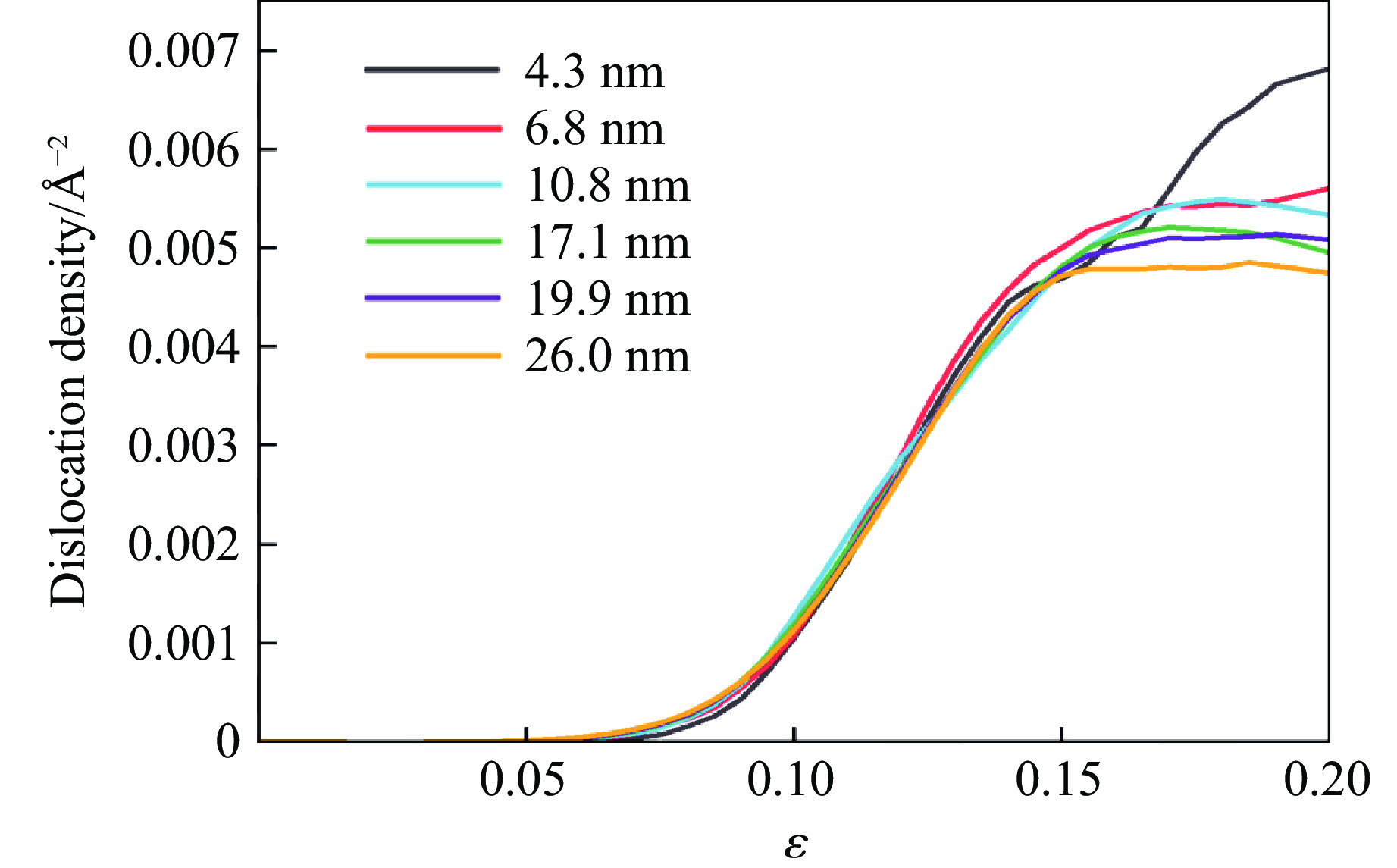
图 8 不同晶粒度下HCP相中的位错密度随应变的变化
Figure 8. Evolution of dislocation density in the HCP phase as a function of strain for different grain sizes
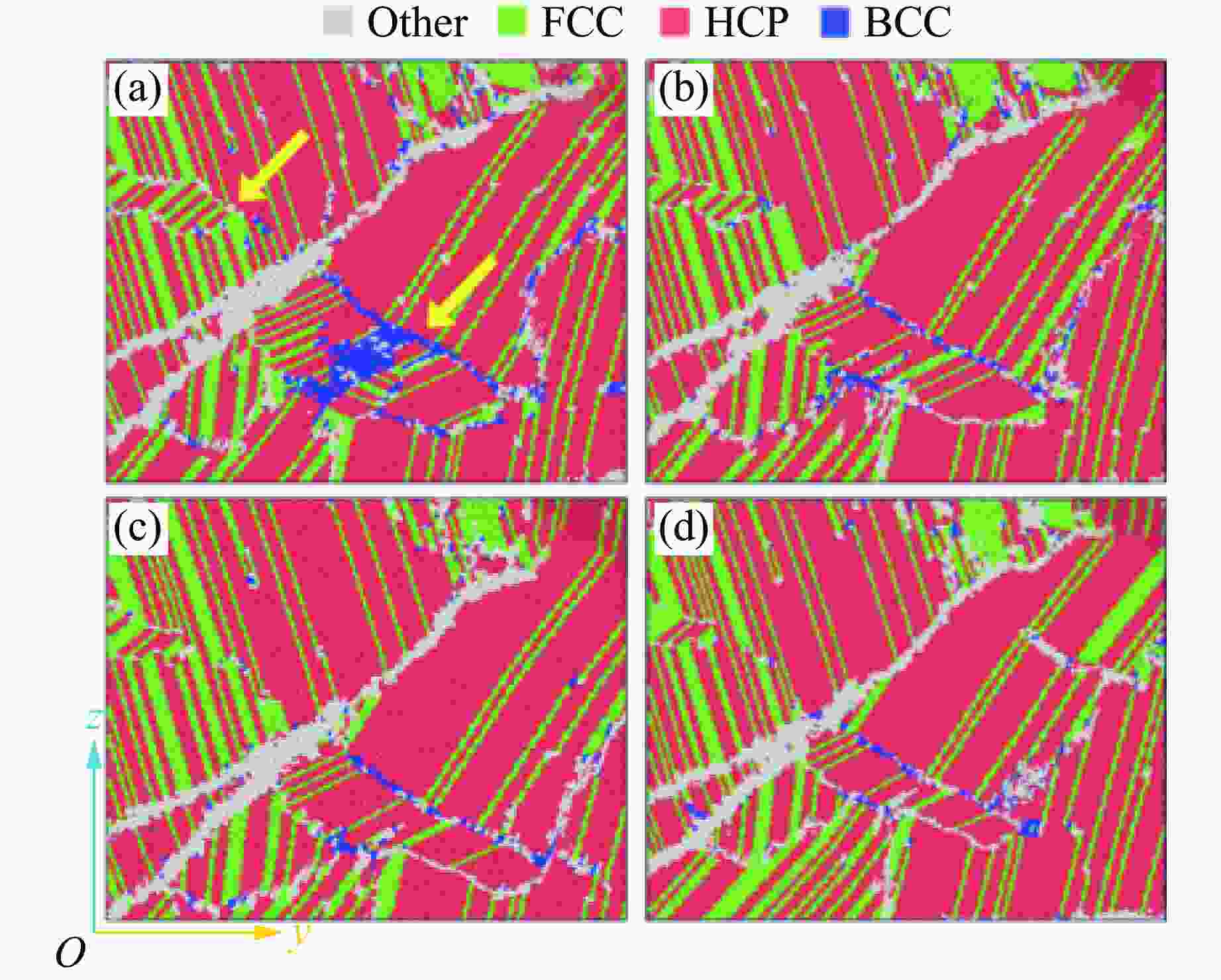
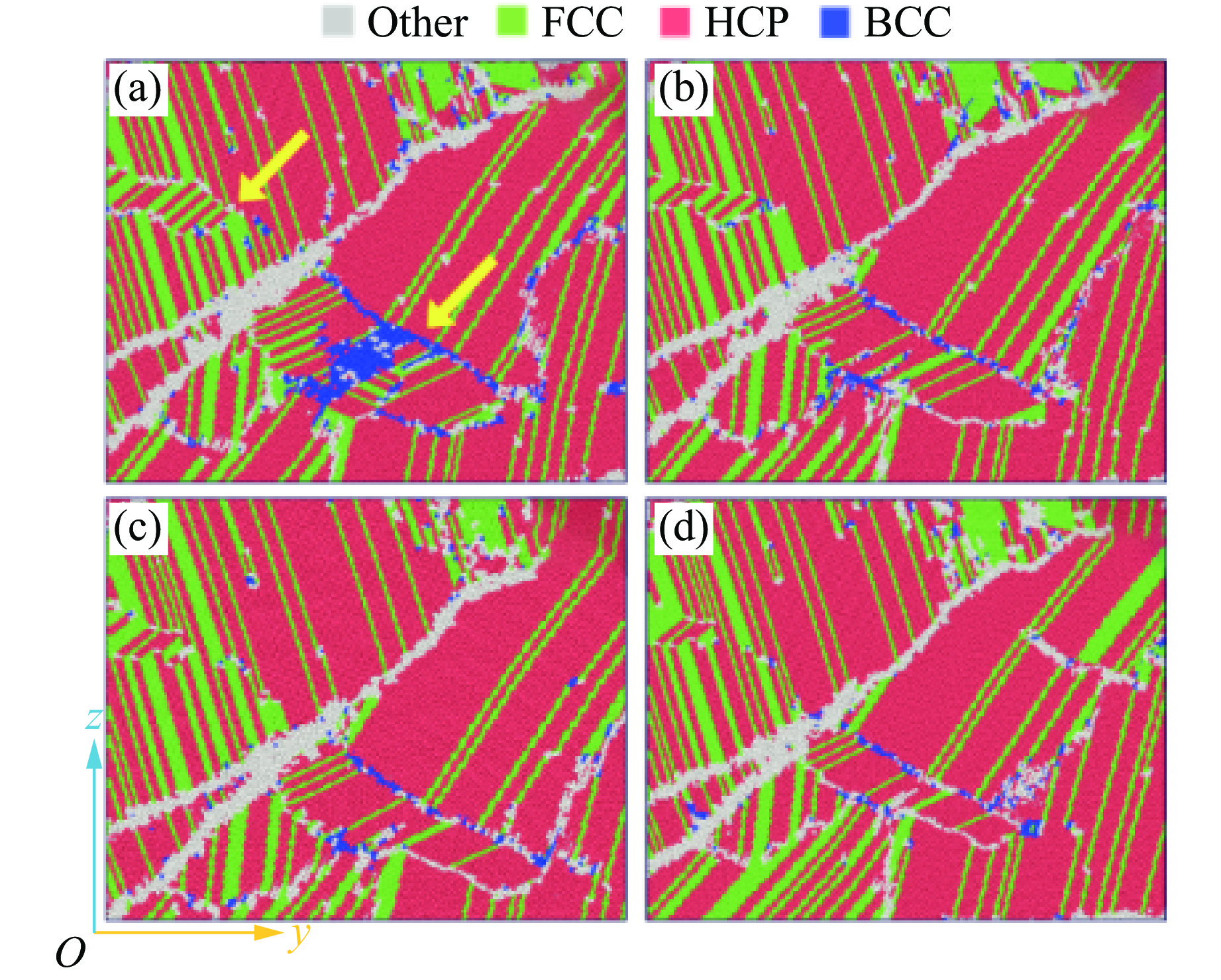
图 9 晶粒度为26.0 nm时在0.15 (a)、0.17 (b)、0.19 (c)、0.20 (d)应变下的去孪晶化过程(箭头所指为孪晶结构)
Figure 9. Detwinning process in the 26.0 nm grain-size system at strains of 0.15 (a), 0.17 (b), 0.19 (c), and 0.20 (d) (Arrows indicate the twin structures.)
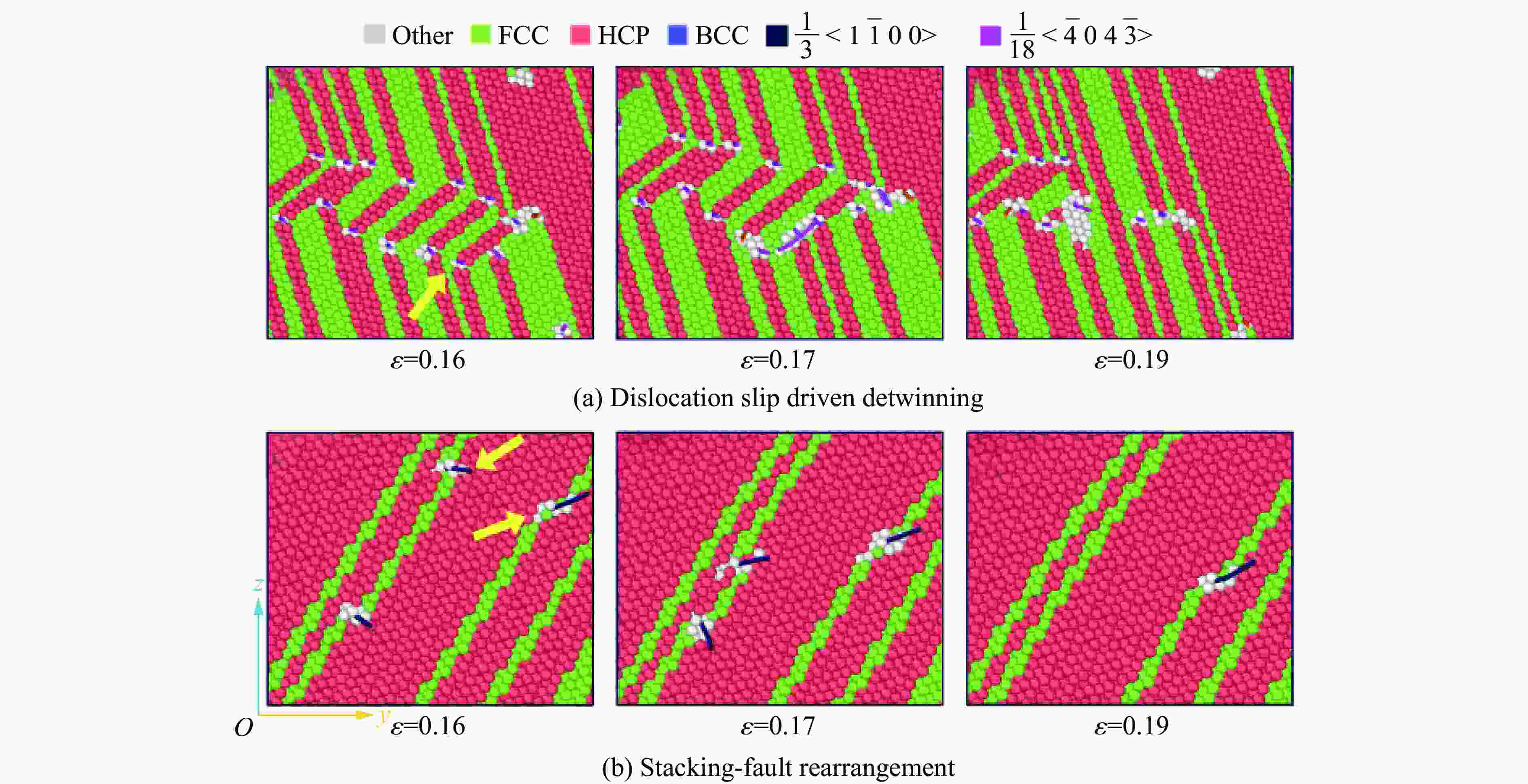
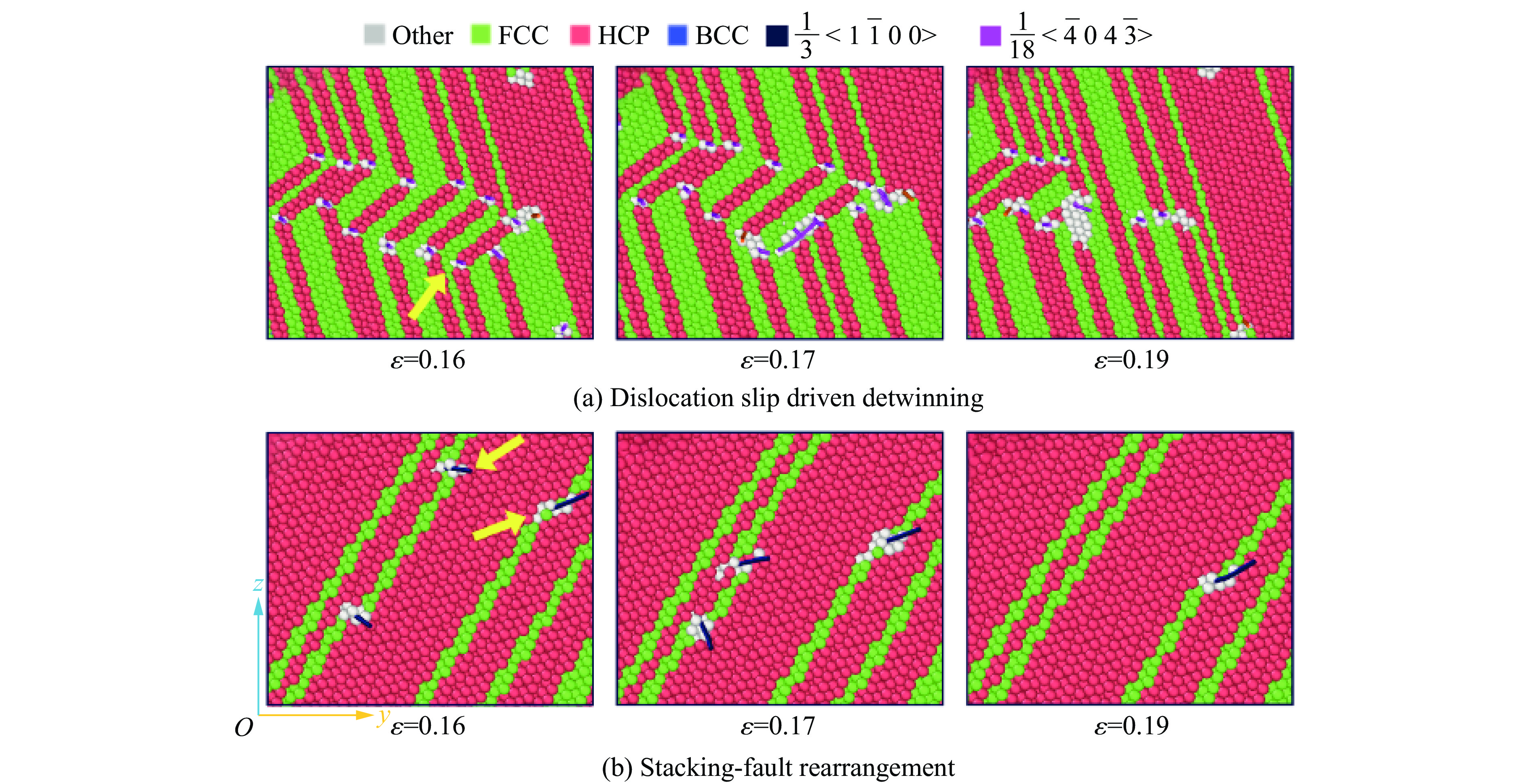
图 10 高应变下位错滑移驱动去孪晶(a)和层错重排(b)过程
Figure 10. Dislocation slip driven detwinning (a) and stacking-fault rearrangement (b) at high strains
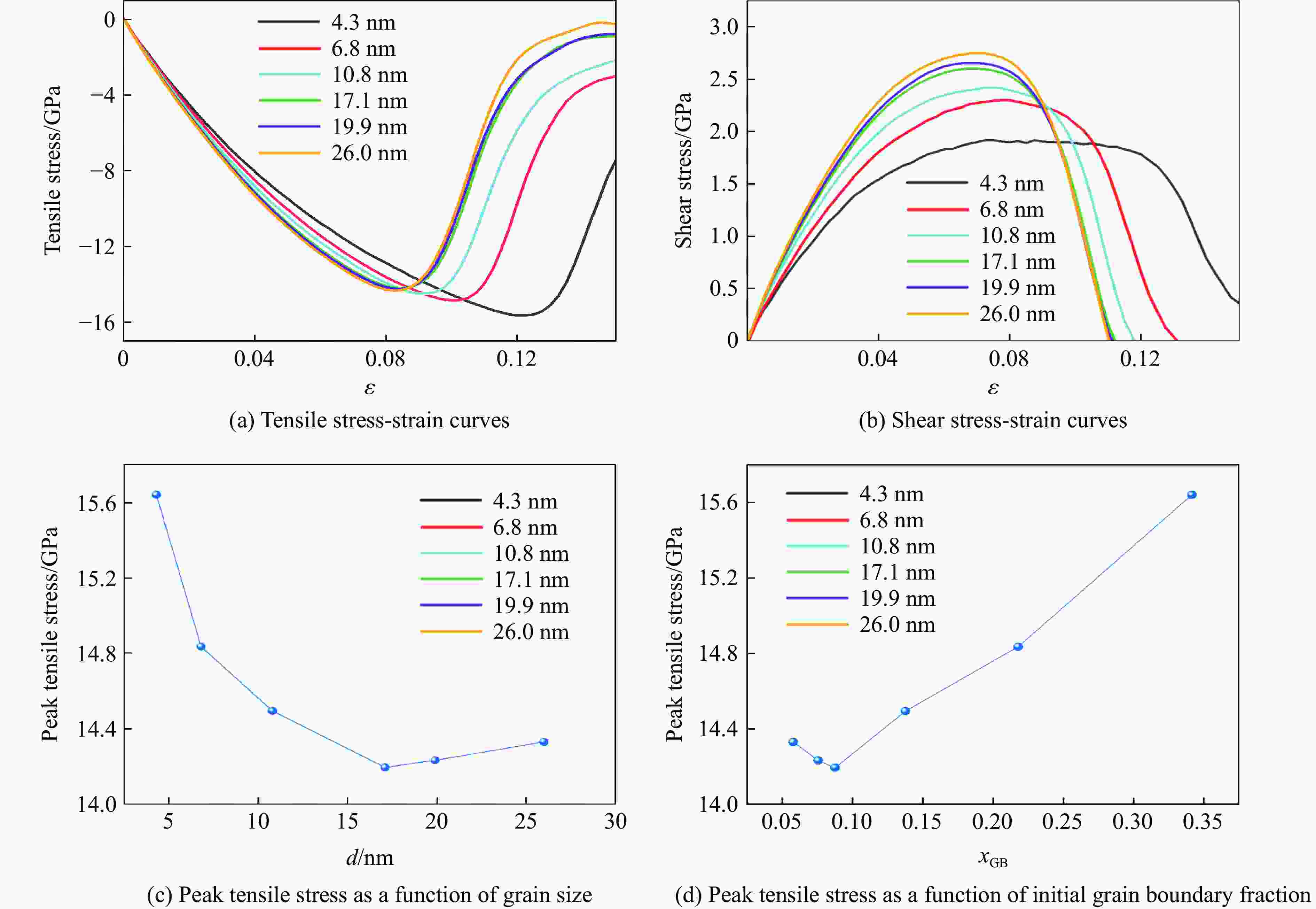
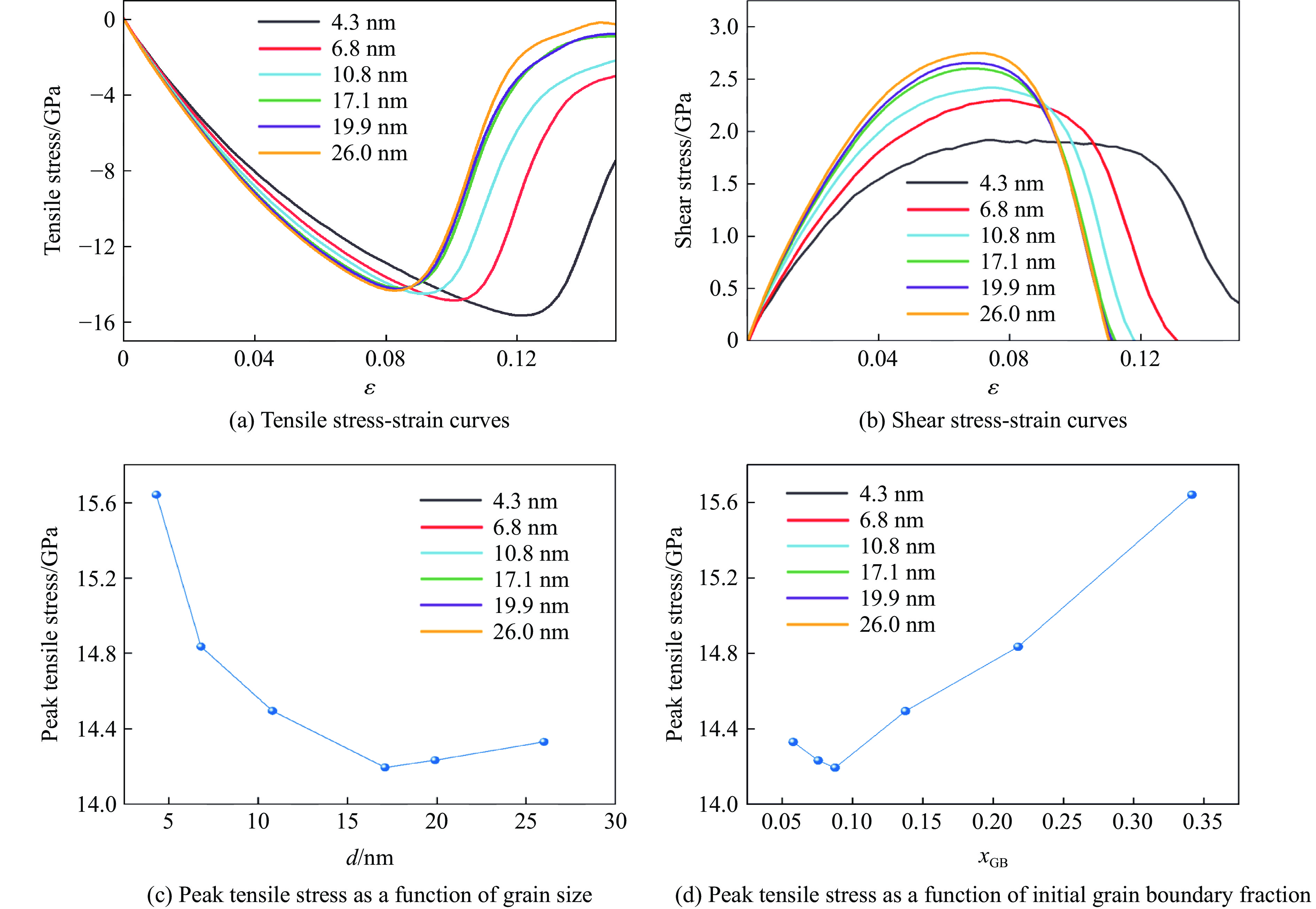
图 11 拉应力-应变关系(a)、剪应力-应变关系(b)、峰值拉应力-晶粒尺寸关系 (c)以及峰值拉应力-初始晶界占比关系 (d)(峰值应力采用绝对值标注,代表断裂强度值)
Figure 11. Tensile stress (a) and shear stress (b) as a function of strain, and variations of the peak tensile stress with grain size (c) and the initial grain boundary fraction (d) (The peak stress is plotted in absolute value, representing the fracture strength.)
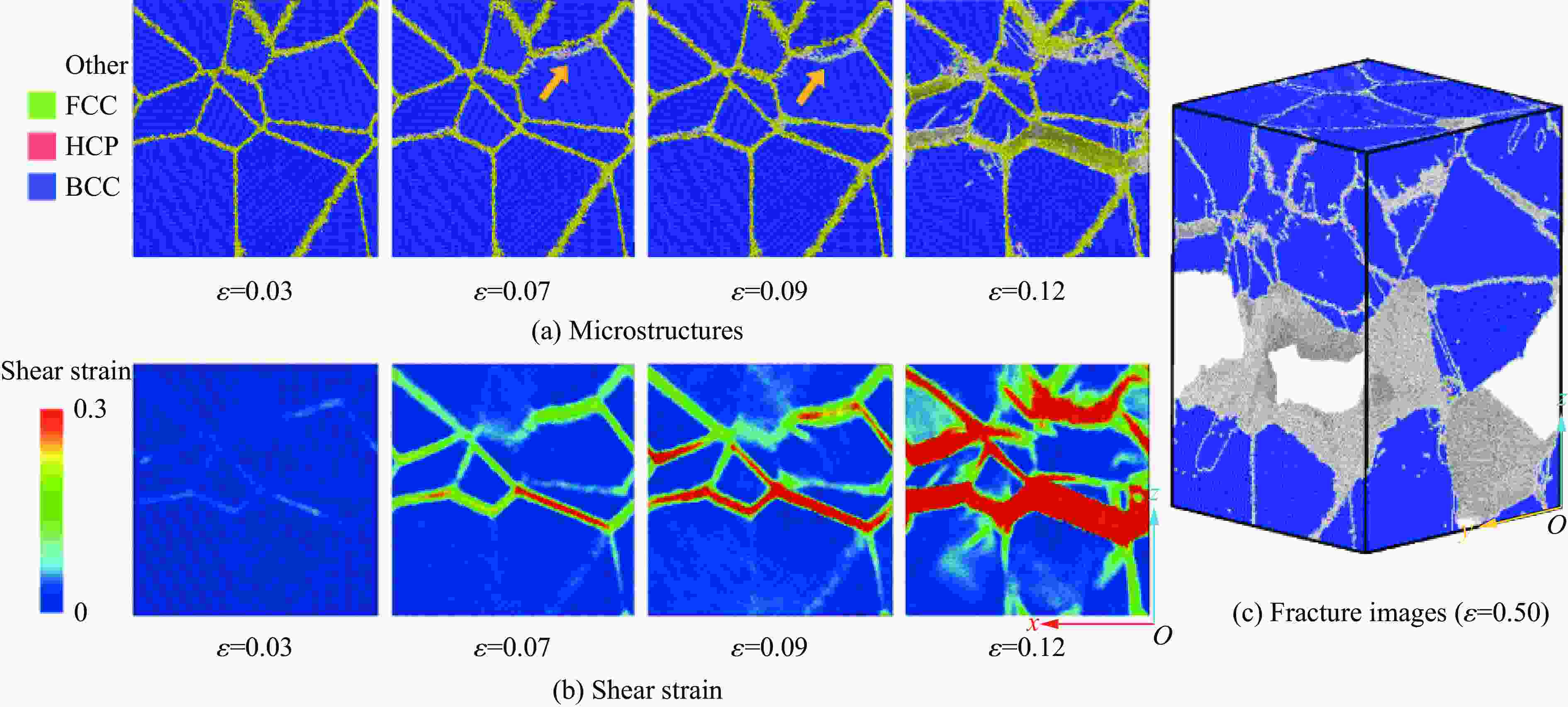
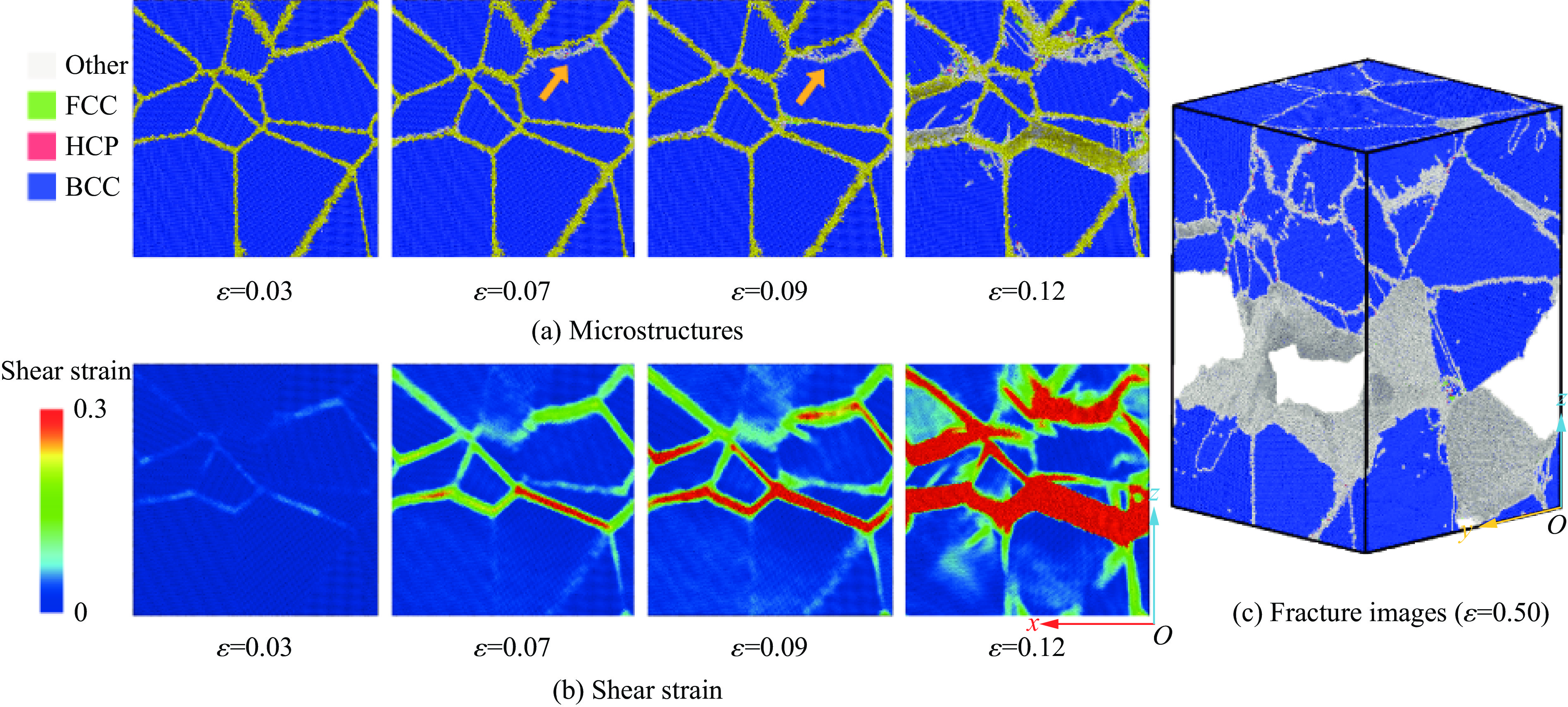
图 12 晶粒尺寸为19.9 nm时不同拉伸应变阶段的微结构(a)、对应的剪切应变(b)以及断裂图像(c)(微结构中黄色原子表示初始晶界原子,橙色箭头代表该处发生了晶界迁移)
Figure 12. Microstructures (a) and corresponding shear strain (b) and fracture images (c) for grain sizes of 19.9 nm at different tensile strain stages (In the microstructure maps, yellow atoms denote initial grain-boundary atoms, and orange arrows indicate grain boundary migration.)
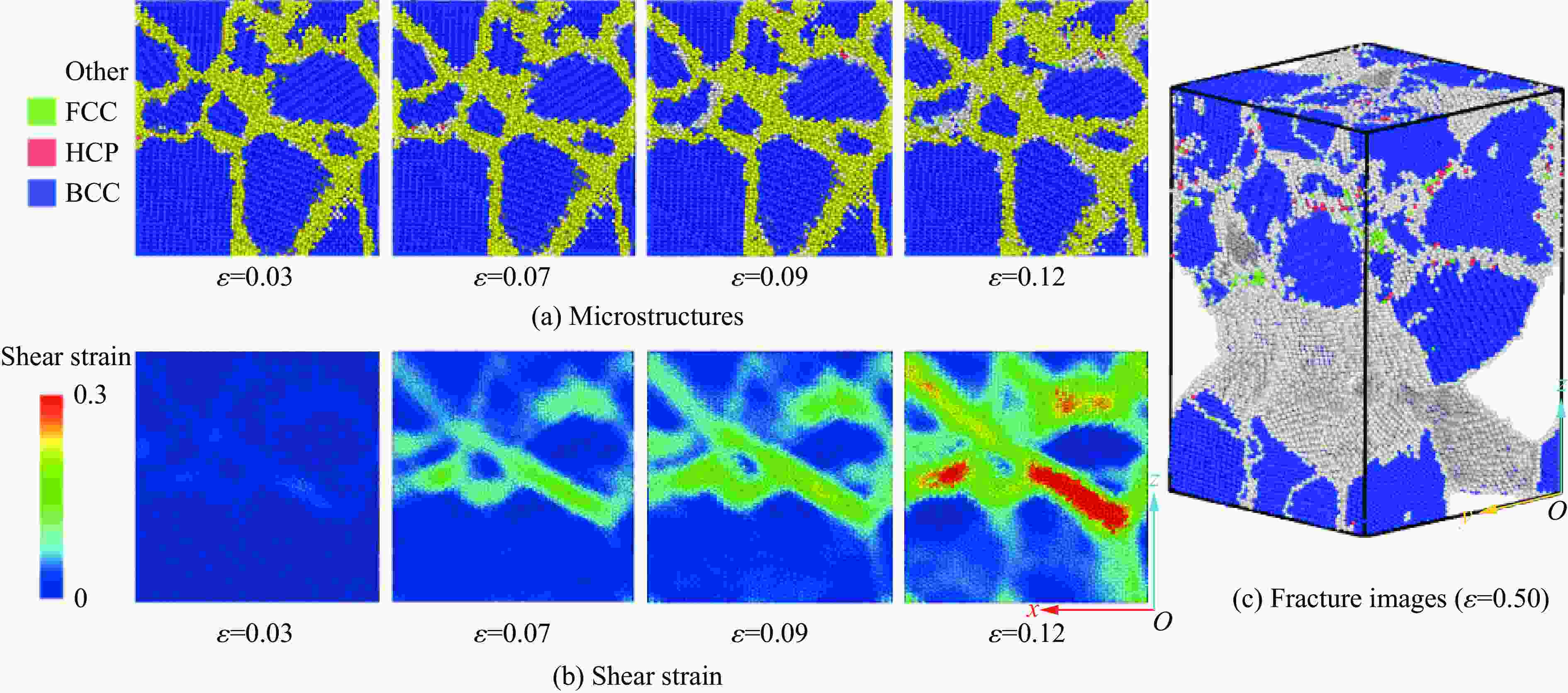
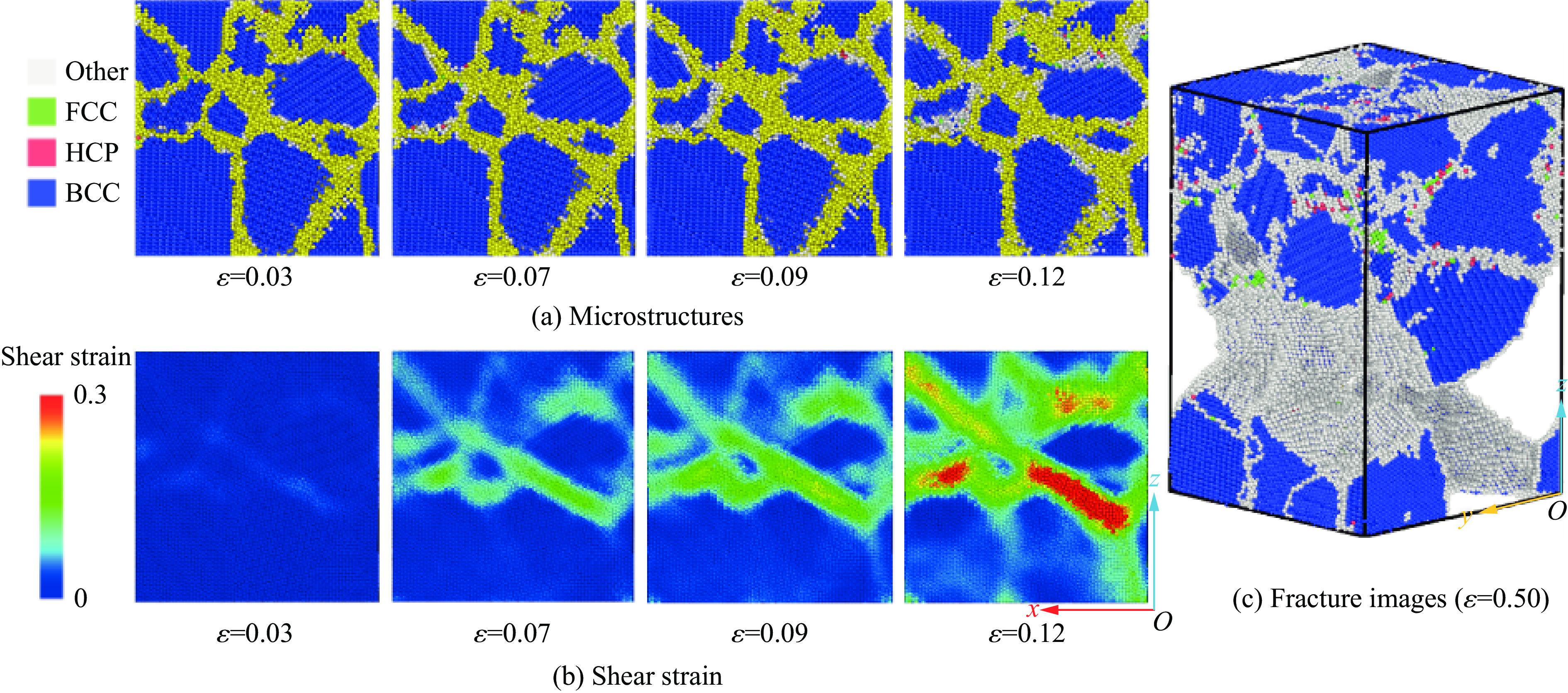
图 13 晶粒尺寸为6.8 nm时不同拉伸应变阶段的微结构(a)、对应的剪切应变(b)以及断裂图像(c)(微结构中黄色原子表示初始晶界原子,橙色箭头代表该处发生了晶界迁移)
Figure 13. Microstructures (a) and corresponding shear strain (b) and fracture images (c) for grain sizes of 6.8 nm at different tensile strain stages (In the microstructure maps, yellow atoms denote initial grain-boundary atoms, and orange arrows indicate grain boundary migration.)
表 1 模型规格参数
Table 1. Model specifications parameters
Model Mean grain size/nm Model side length/mm Number of atoms 1 4.3 9.2 62087 2 6.8 14.7 259384 3 10.8 23.3 1048040 4 17.1 36.9 4201770 5 19.9 42.8 6570883 6 26.0 56.1 14844812 Note: All the models contain 10 grains.  下载: 导出CSV
-
[1] 周鑫. 塑性变形制备纳米金属材料的稳定性研究 [D]. 合肥: 中国科学技术大学, 2019.ZHOU X. Stability of nanograined metals prepared by using plastic deformation [D]. Hefei: University of Science and Technology of China, 2019. [2] AIFANTIS K E, KONSTANTINIDIS A A. Hall-Petch revisited at the nanoscale [J]. Materials Science and Engineering: B, 2009, 163(3): 139–144. doi: 10.1016/j.mseb.2009.05.010 [3] JEON J B, LEE B J, CHANG Y W. Molecular dynamics simulation study of the effect of grain size on the deformation behavior of nanocrystalline body-centered cubic iron [J]. Scripta Materialia, 2011, 64(6): 494–497. doi: 10.1016/j.scriptamat.2010.11.019 [4] YUAN F P. Atomistic simulation study of tensile deformation in bulk nanocrystalline bcc iron [J]. Science China Physics, Mechanics and Astronomy, 2012, 55(9): 1657–1663. doi: 10.1007/s11433-012-4830-6 [5] DUNGRIYAL P, SINGH S P, PRASAD R. Grain size dependency, plasticity and dynamic property evaluation for nano-crystalline BCC-Fe using molecular dynamic simulations [J]. Procedia Engineering, 2017, 173: 1975–1982. doi: 10.1016/j.proeng.2017.02.458 [6] ZHOU X Y, YANG X S, ZHU J H, et al. Atomistic simulation study of the grain-size effect on hydrogen embrittlement of nanograined Fe [J]. International Journal of Hydrogen Energy, 2020, 45(4): 3294–3306. doi: 10.1016/j.ijhydene.2019.11.131 [7] HAN Q F, YI X. High pressure-induced elimination of grain size softening in nanocrystalline metals: grain boundary strengthening overwhelming reduction of intragranular dislocation storage ability [J]. International Journal of Plasticity, 2022, 153: 103261. doi: 10.1016/j.ijplas.2022.103261 [8] BANCROFT D, PETERSON E L, MINSHALL S. Polymorphism of iron at high pressure [J]. Journal of Applied Physics, 1956, 27(3): 291–298. doi: 10.1063/1.1722359 [9] JAMIESON J C, LAWSON A W. X-ray diffraction studies in the 100 kilobar pressure range [J]. Journal of Applied Physics, 1962, 33(3): 776–780. doi: 10.1063/1.1777167 [10] KADAU K, GERMANN T C, LOMDAHL P S, et al. Atomistic simulations of shock-induced transformations and their orientation dependence in bcc Fe single crystals [J]. Physical Review B, 2005, 72(6): 064120. doi: 10.1103/PhysRevB.72.064120 [11] KALANTAR D H, BELAK J F, COLLINS G W, et al. Direct observation of the α-ε transition in shock-compressed iron via nanosecond X-ray diffraction [J]. Physical Review Letters, 2005, 95(7): 075502. doi: 10.1103/PhysRevLett.95.075502 [12] YU J M, SHAO J L, SHU H, et al. Deformation and reverse phase transformation mechanism of high-pressure HCP iron during unloading process [J]. Journal of Applied Physics, 2025, 137(4): 045103. doi: 10.1063/5.0238871 [13] DEWAELE A, DENOUAL C, ANZELLINI S, et al. Mechanism of the α-ε phase transformation in iron [J]. Physical Review B, 2015, 91(17): 174105. doi: 10.1103/PHYSREVB.91.174105 [14] PANG W W, ZHANG P, ZHANG G C, et al. Morphology and growth speed of hcp domains during shock-induced phase transition in iron [J]. Scientific Reports, 2014, 4: 3628. doi: 10.1038/srep03628 [15] POGORELKO V V, MAYER A E. Dynamic tensile fracture of iron: molecular dynamics simulations and micromechanical model based on dislocation plasticity [J]. International Journal of Plasticity, 2023, 167: 103678. doi: 10.1016/j.ijplas.2023.103678 [16] GANDHI V, RAVINDRAN S, RAVICHANDRAN G. Dynamic strength of iron at high pressures and strain rates [J]. Physical Review Letters, 2022, 128(1): 015705. doi: 10.1103/PhysRevLett.128.015705 [17] LUU H T, RAVELO R J, RUDOLPH M, et al. Shock-induced plasticity in nanocrystalline iron: large-scale molecular dynamics simulations [J]. Physical Review B, 2020, 102(2): 020102. doi: 10.1103/PhysRevB.102.020102 [18] AMADOU N, DE RESSÉGUIER T. Phase transformations and plasticity in single-crystal iron from shock compression to spall fracture [J]. Physical Review B, 2023, 108(17): 174109. doi: 10.1103/PhysRevB.108.174109 [19] GUAN X R, QU S J, WANG H, et al. Adiabatic shear localization in metallic materials: review [J]. Materials, 2024, 17(21): 5365. doi: 10.3390/ma17215365 [20] JENTZSCH S, STOCK D, HÄCKER R, et al. Shear band formation with split Hopkinson bar experiments [J]. International Journal of Mechanical Sciences, 2024, 284: 109749. doi: 10.1016/j.ijmecsci.2024.109749 [21] YAN N, LI Z Z, XU Y B, et al. Shear localization in metallic materials at high strain rates [J]. Progress in Materials Science, 2021, 119: 100755. doi: 10.1016/j.pmatsci.2020.100755 [22] SHAO J L, WANG P, ZHANG F G, et al. Hcp/fcc nucleation in bcc iron under different anisotropic compressions at high strain rate: molecular dynamics study [J]. Scientific Reports, 2018, 8(1): 7650. doi: 10.1038/s41598-018-25758-1 [23] GAUTIER R, MOMPIOU F, RENK O, et al. Quantifying grain boundary deformation mechanisms in small-grained metals [J]. Nature, 2025, 648(8093): 327–332. doi: 10.1038/s41586-025-09800-7 [24] WU Y C, SHAO J L. Mdapy: a flexible and efficient analysis software for molecular dynamics simulations [J]. Computer Physics Communications, 2023, 290: 108764. doi: 10.1016/j.cpc.2023.108764 [25] GUNKELMANN N, BRINGA E M, TRAMONTINA D R, et al. Shock waves in polycrystalline iron: plasticity and phase transitions [J]. Physical Review B, 2014, 89(14): 140102. doi: 10.1103/PhysRevB.89.140102 [26] HUNTER A, BEYERLEIN I J. Relationship between monolayer stacking faults and twins in nanocrystals [J]. Acta Materialia, 2015, 88: 207–217. doi: 10.1016/j.actamat.2014.12.045 [27] ZHU Y T, LIAO X Z, WU X L. Deformation twinning in nanocrystalline materials [J]. Progress in Materials Science, 2012, 57(1): 1–62. doi: 10.1016/j.pmatsci.2011.05.001 [28] HUSAIN A, LA P Q, HONGZHENG Y, et al. Molecular dynamics as a means to investigate grain size and strain rate effect on plastic deformation of 316L nanocrystalline stainless-steel [J]. Materials, 2020, 13(14): 3223. doi: 10.3390/ma13143223 [29] MCCORMACK S J, WEN W, PERELOMA E V, et al. On the first direct observation of de-twinning in a twinning-induced plasticity steel [J]. Acta Materialia, 2018, 156: 172–182. doi: 10.1016/j.actamat.2018.06.029 [30] D’HONDT C, DOQUET V, COUZINIÉ J P. Direct monitoring of twinning/detwinning in a TWIP steel under reversed cyclic loading [J]. Materials Science and Engineering: A, 2021, 814: 141250. doi: 10.1016/j.msea.2021.141250 [31] WANG X, WANG J W, HE Y, et al. Unstable twin in body-centered cubic tungsten nanocrystals [J]. Nature Communications, 2020, 11(1): 2497. doi: 10.1038/s41467-020-16349-8 [32] CHANG S Y, HUANG Y C, LIN S Y, et al. In situ study of twin boundary stability in nanotwinned copper pillars under different strain rates [J]. Nanomaterials, 2023, 13(1): 190. doi: 10.3390/nano13010190 [33] ZHAO X, LU C, TIEU A K, et al. Deformation mechanisms in nanotwinned copper by molecular dynamics simulation [J]. Materials Science and Engineering: A, 2017, 687: 343–351. doi: 10.1016/j.msea.2016.12.061 -

 下载:
下载:

计量
- 文章访问数: 1313
- HTML全文浏览量: 933
- PDF下载量: 168
