





Impact Response and Design Optimization of Triangular Corrugated Sandwich Beams: A Machine Learning Approach
-
摘要: 为提高三角形波纹夹芯梁在低速冲击下的性能预测精度与结构设计效率,基于硬参数共享的多任务学习(multi task learning, MTL)框架,构建了一种面向夹芯梁冲击响应的机器学习建模与优化流程。基于有限元模型生成样本数据集,并参考已有实验结果对模型合理性进行校核。在此基础上训练MTL模型,实现了对结构比吸能、上面板最大挠度及初始峰值载荷的同步预测。结果表明,经贝叶斯优化后的MTL模型在50 J冲击能量下表现出较好的预测性能,预测结果与有限元模拟结果吻合较好,测试集中各输出量的决定系数均达到0.989以上,验证了该模型在响应预测与工程优化分析中的有效性和可靠性。参数敏感性分析表明:芯层胞元数量和芯层壁厚对结构刚度的影响最显著,其次为上面板厚度,而下面板厚度的影响相对较小;芯层壁厚在性能提升方面存在一定的饱和阈值。结合非支配排序遗传算法Ⅱ(NSGA-Ⅱ),分别对变形特性、吸能性能及综合性能开展多目标优化分析,获得了满足不同工程设计需求的夹芯梁最优参数构型。Abstract: To enhance the prediction accuracy of low-velocity impact performance and improve the structural design efficiency of triangular corrugated sandwich beams, this paper proposes a machine learning modeling and optimization process for the impact response of sandwich beams based on a hard-parameter-sharing multi-task learning (MTL) framework. A sample dataset is generated using finite element models, and the rationality of the models is validated against existing experimental results. Subsequently, an MTL model is trained to simultaneously predict the structural specific energy absorption (SEA), the maximum deflection of the top panel, and the initial peak load. The results show that the MTL model optimized via Bayesian optimization demonstrates strong predictive performance under a 50 J impact energy condition. The predictions align well with the finite element simulation results, with the coefficient of determination R2 for all output variables in the test set exceeding 0.989, thereby validating the effectiveness and reliability of the model in response prediction and engineering optimization analysis. Parameter sensitivity analysis reveals that the core cell count and core wall thickness have the most significant influence on structural stiffness, followed by the top panel thickness, while the bottom panel thickness has a relatively minor impact. Moreover, the core wall thickness exhibits a certain saturation threshold in terms of performance enhancement. In combination with the non-dominated sorting genetic algorithm Ⅱ (NSGA-Ⅱ), multi-objective optimization analysis are conducted focusing on deformation characteristics, energy absorption performance, and comprehensive performance, and yields optimal parameter configurations that meet different engineering design requirements for sandwich beams.
-
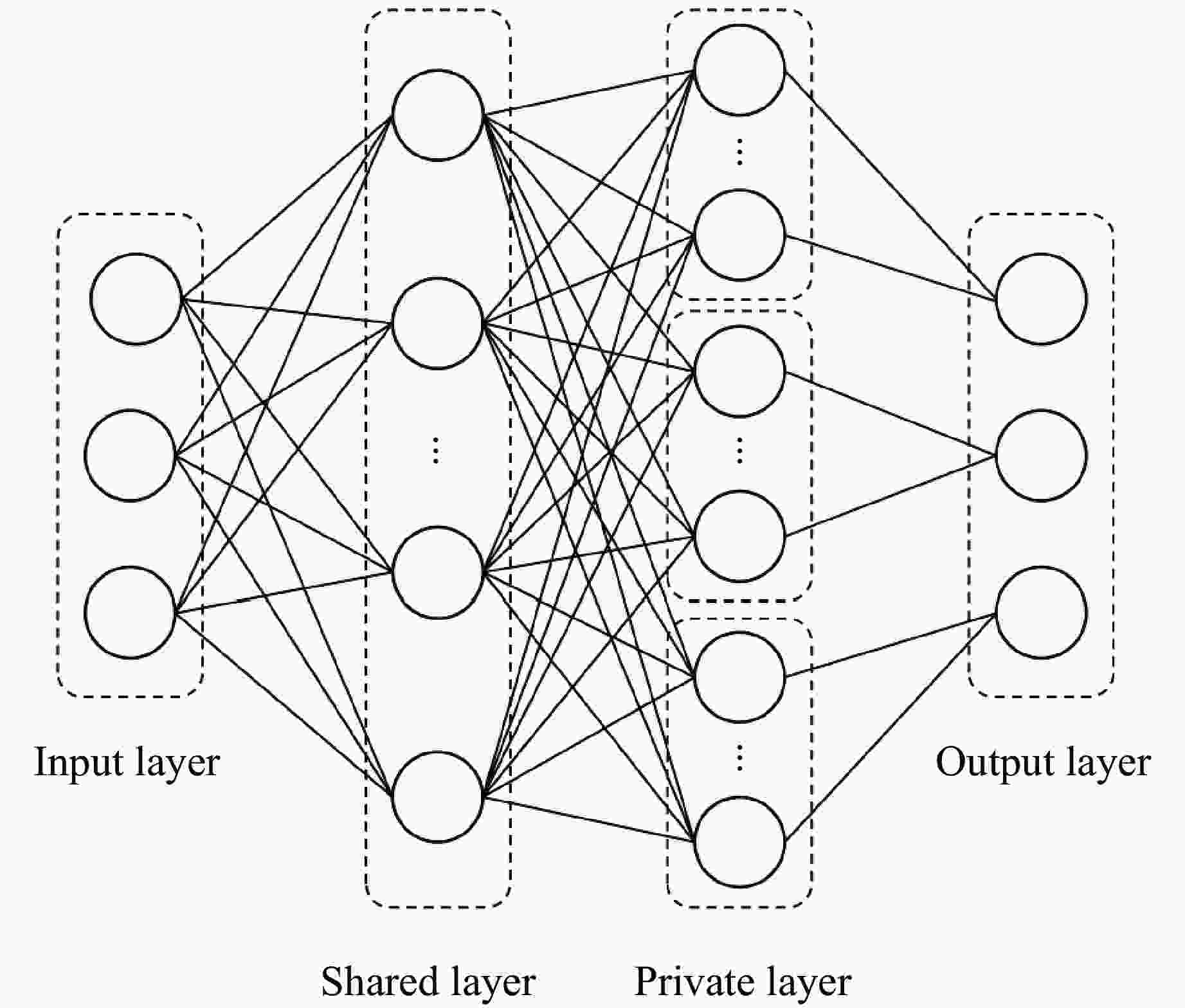
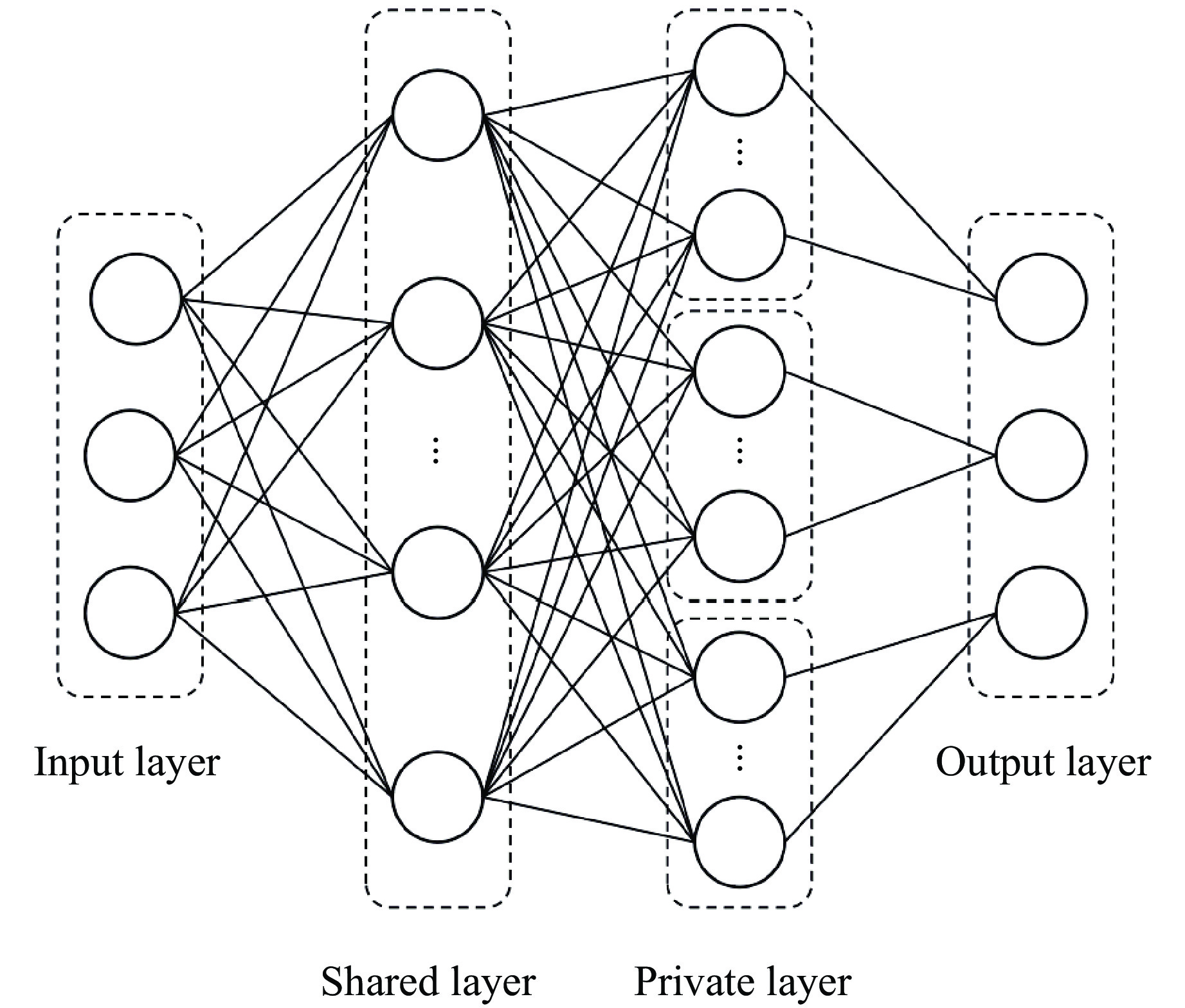
图 3 硬参数共享的多任务学习模型示意图
Figure 3. Schematic diagram of an MTL model with hard parameter sharing
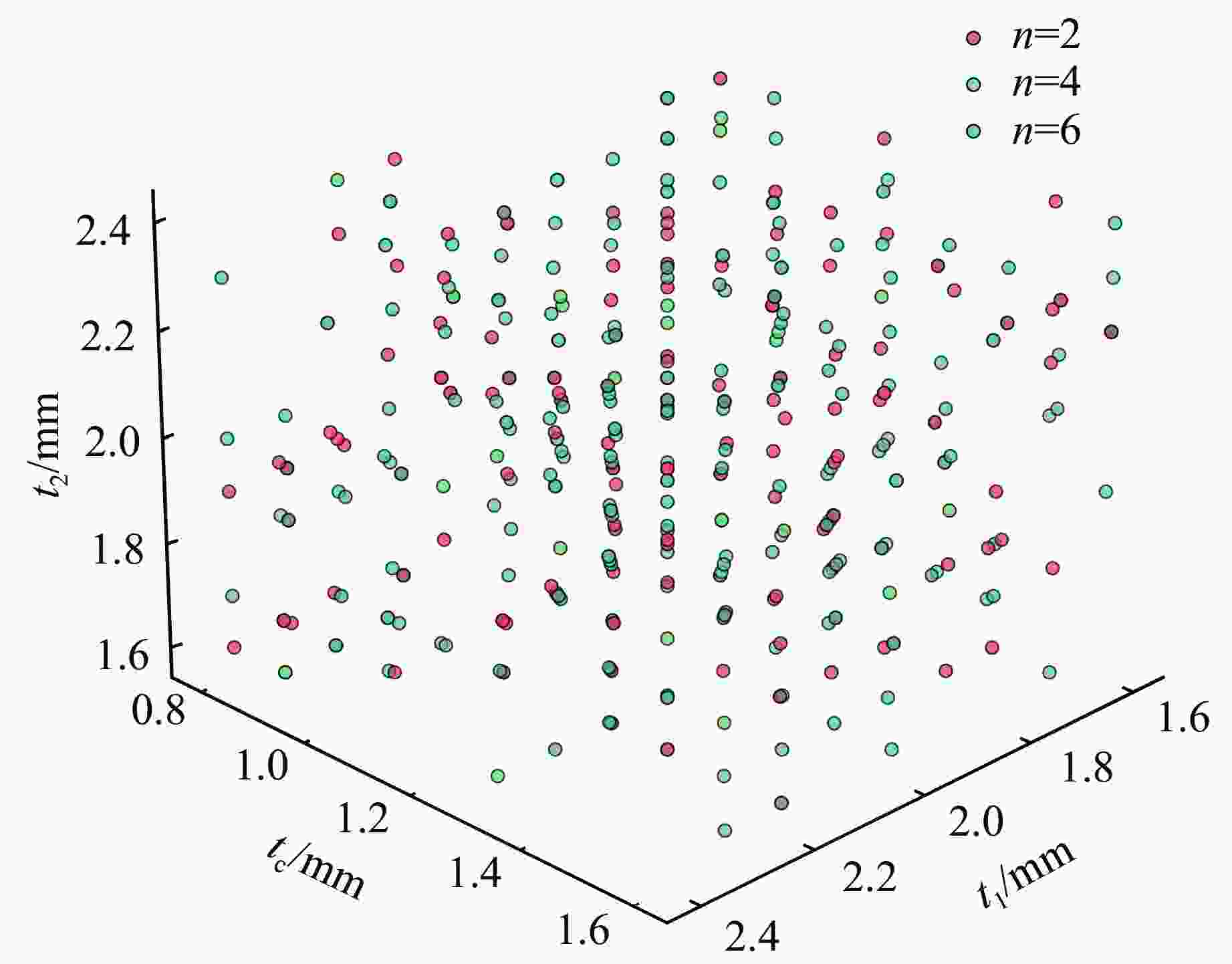
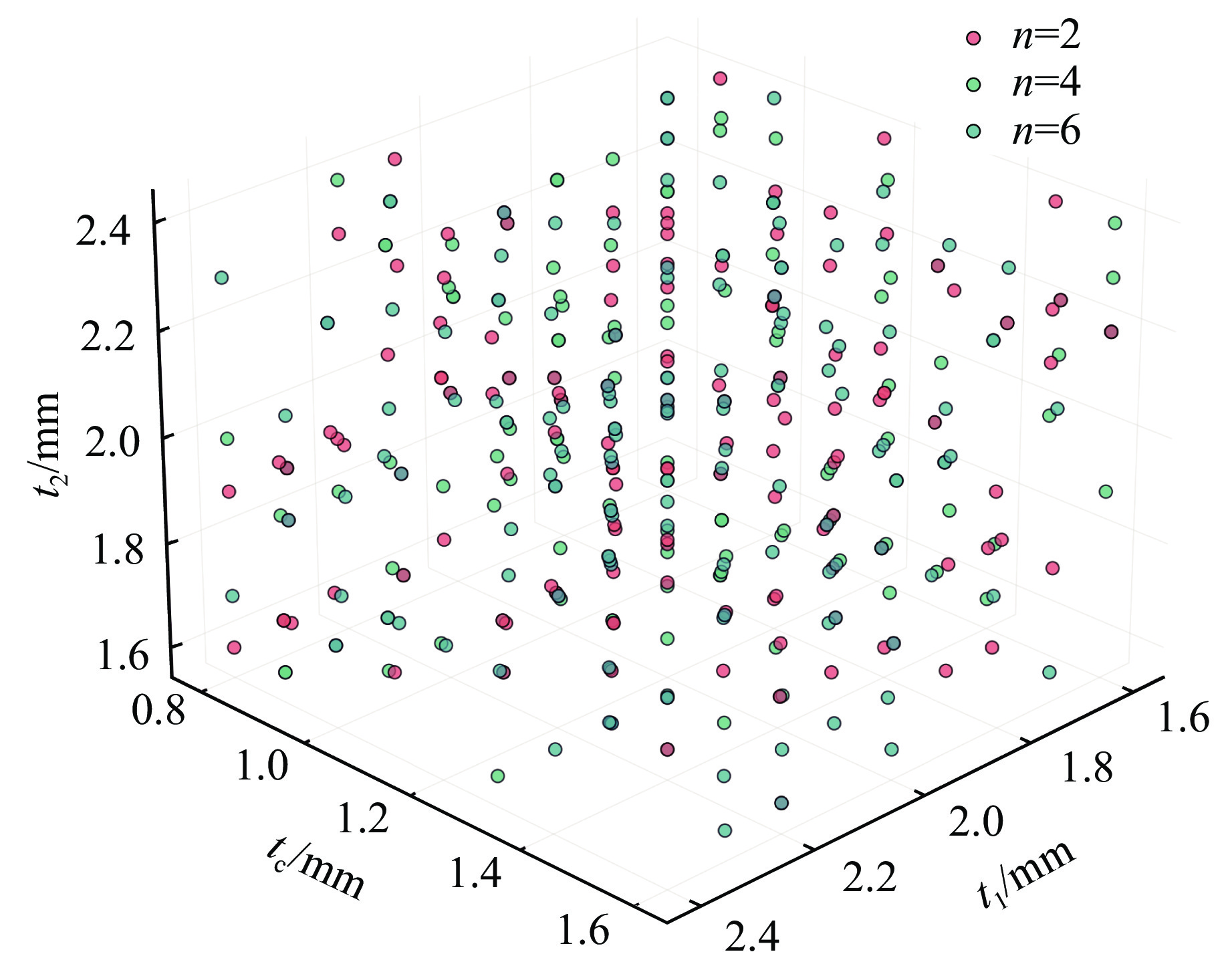
图 6 LHS样本在参数空间中的投影分布
Figure 6. Projection distribution of LHS samples in the parameter space
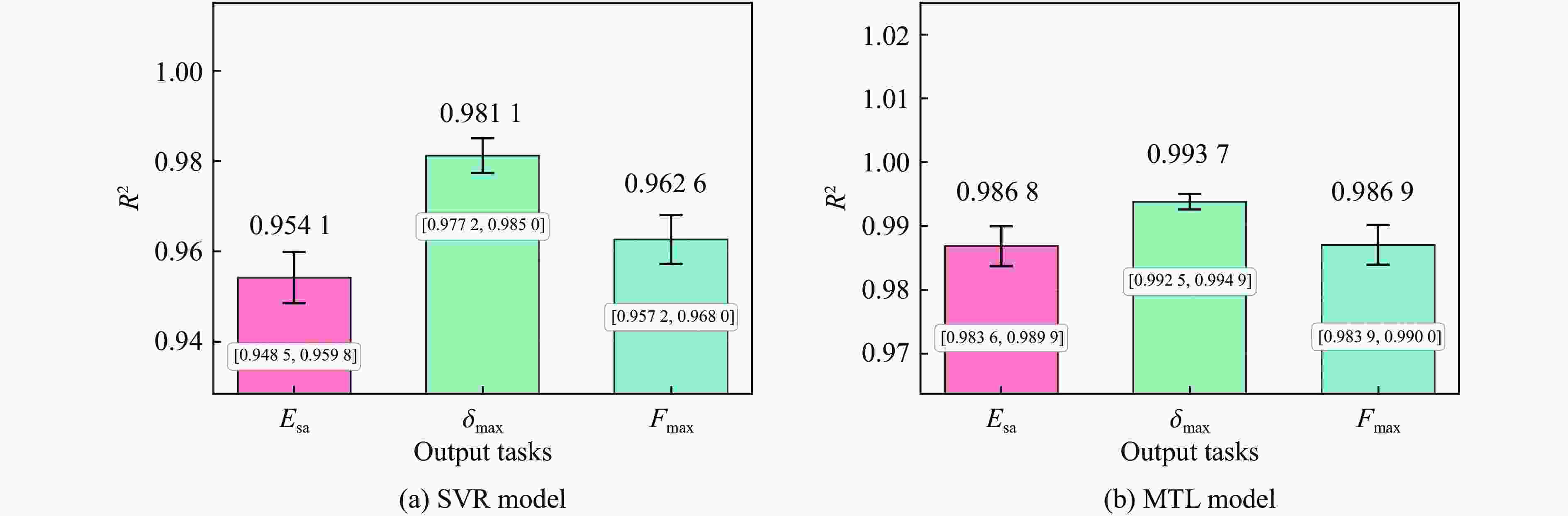
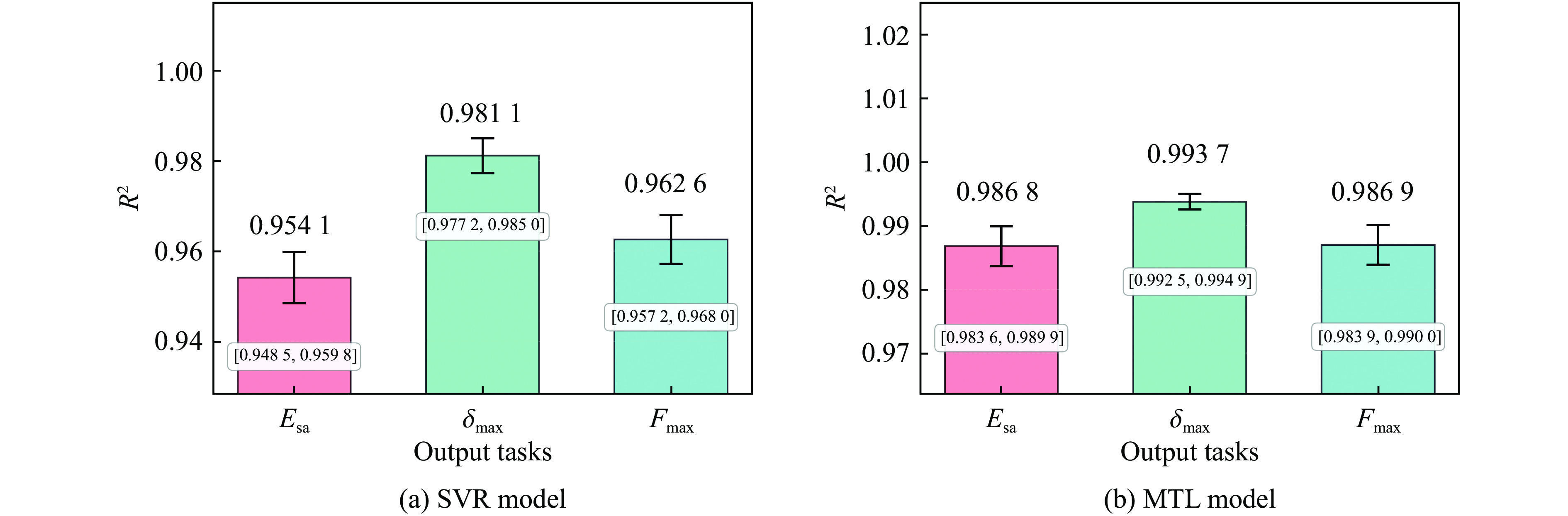
图 7 模型重复训练-测试的稳定性验证与性能对比
Figure 7. Stability verification and performance comparison through repeated training-testing of models
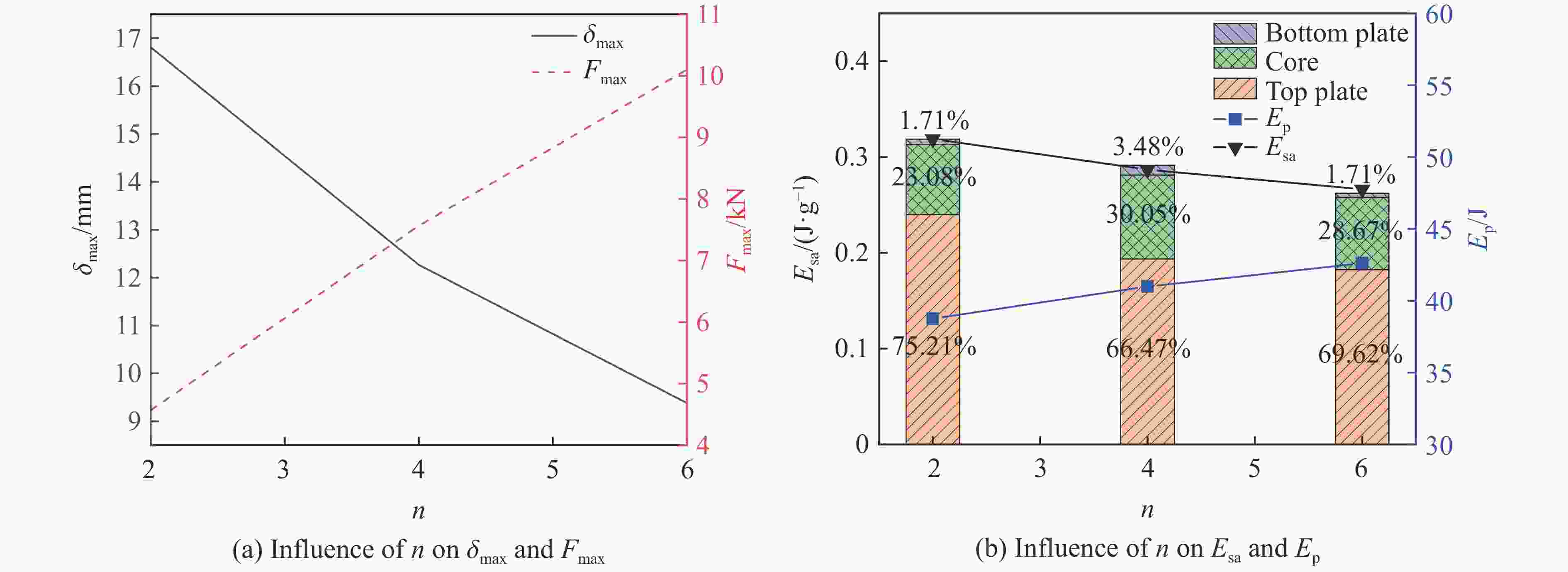
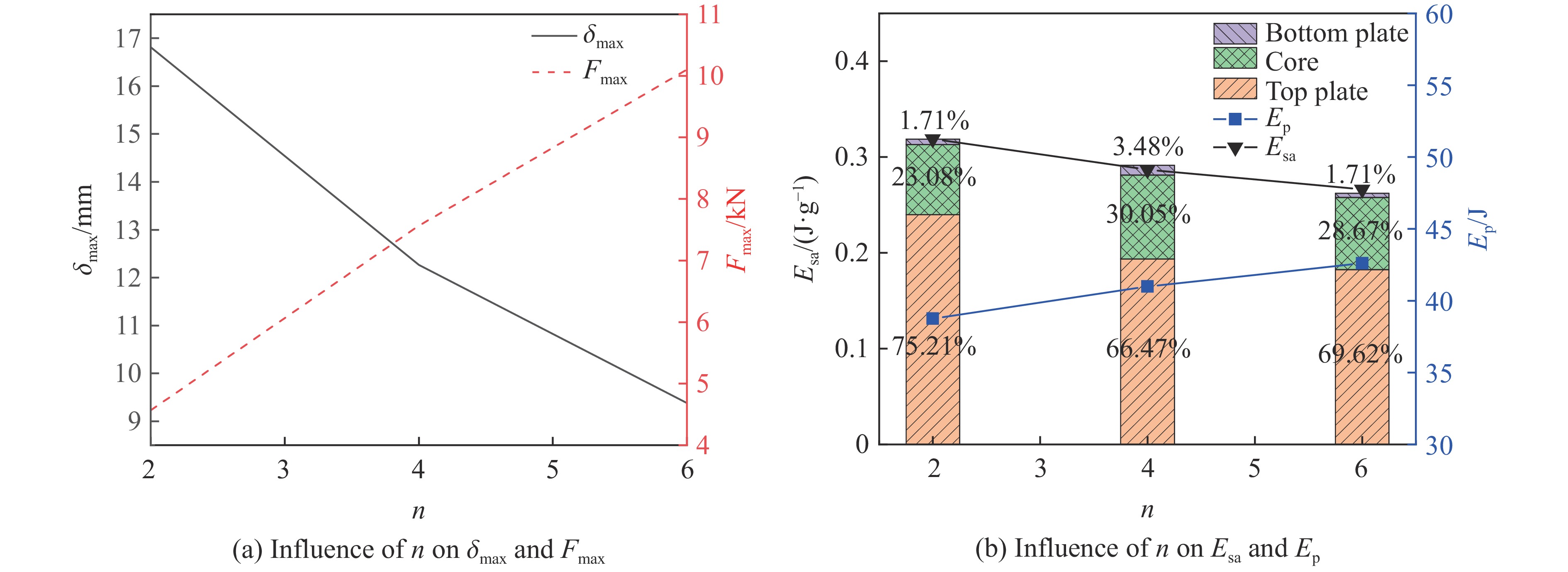
图 9 胞元数量对夹芯梁冲击结构响应的影响
Figure 9. Influence of the core unit cell count on the impact structural response of sandwich beams

图 10 胞元数量对夹芯梁变形模式的影响
Figure 10. Influence of the core unit cell count on the deformation mode of sandwich beams
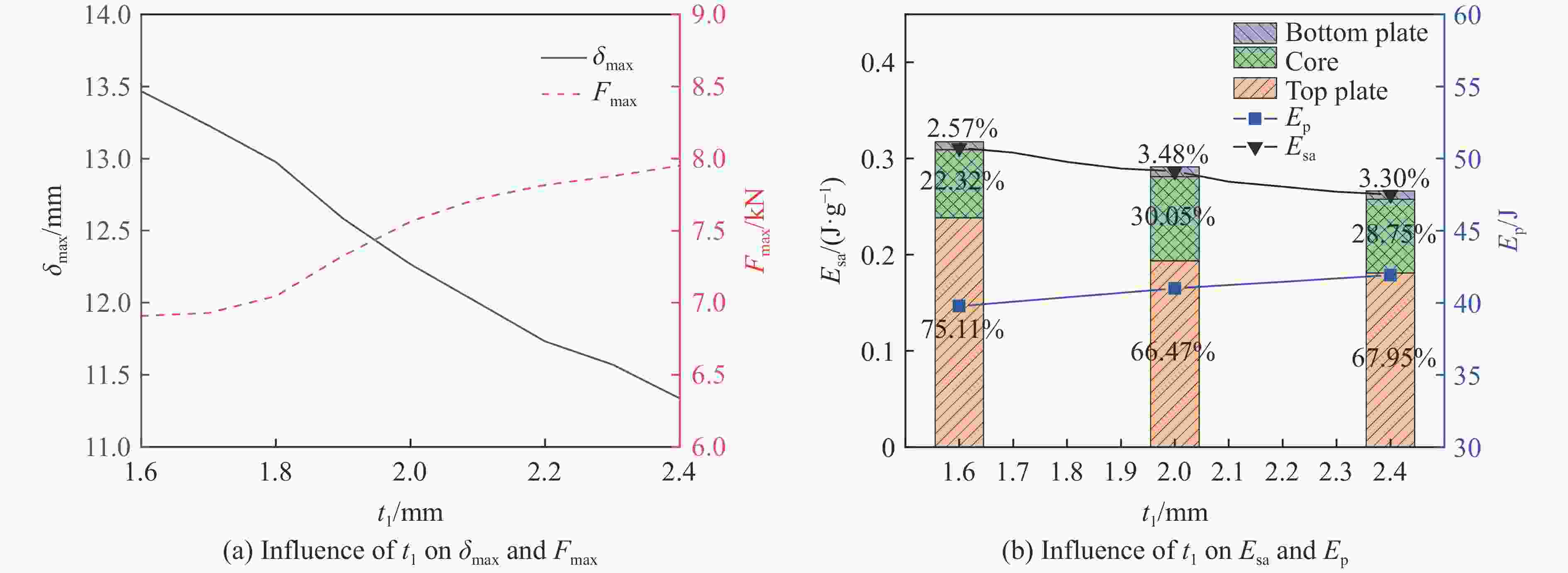
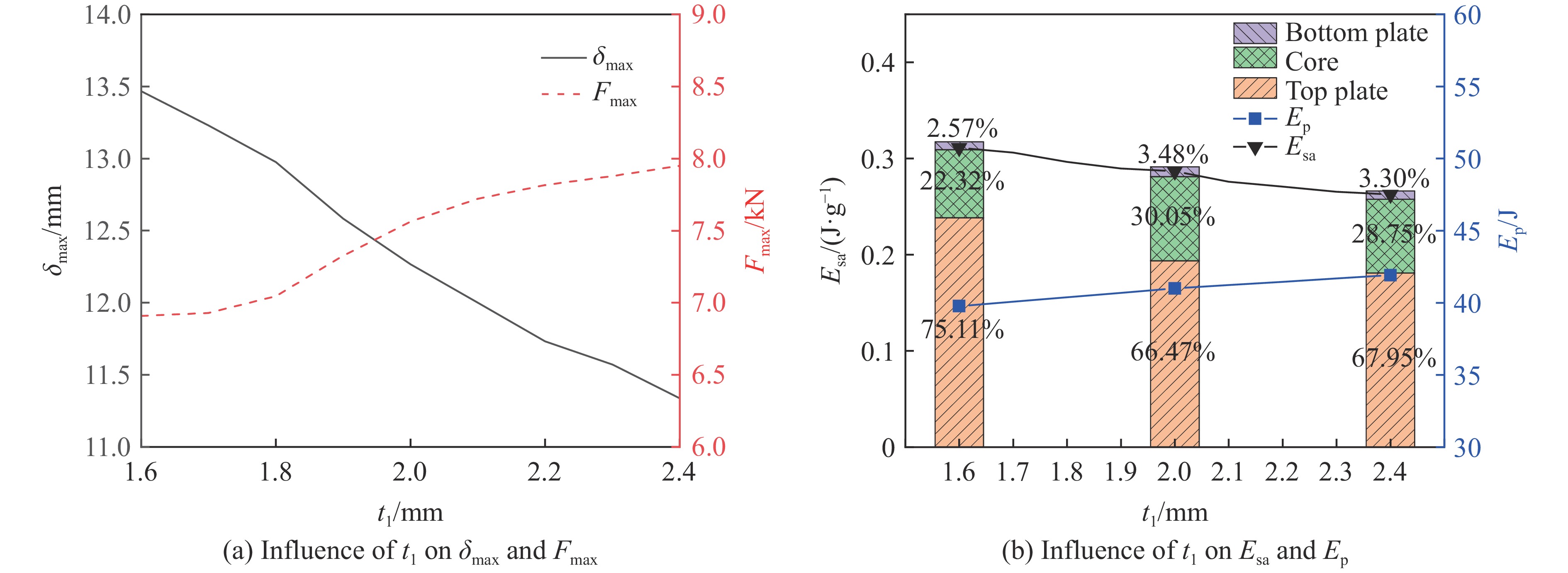
图 11 上面板厚度对夹芯梁冲击结构响应的影响
Figure 11. Influence of top plate thickness on the impact structural response of sandwich beams

图 12 上面板厚度对夹芯梁变形模式的影响
Figure 12. Influence of top plate thickness on the deformation mode of sandwich beams
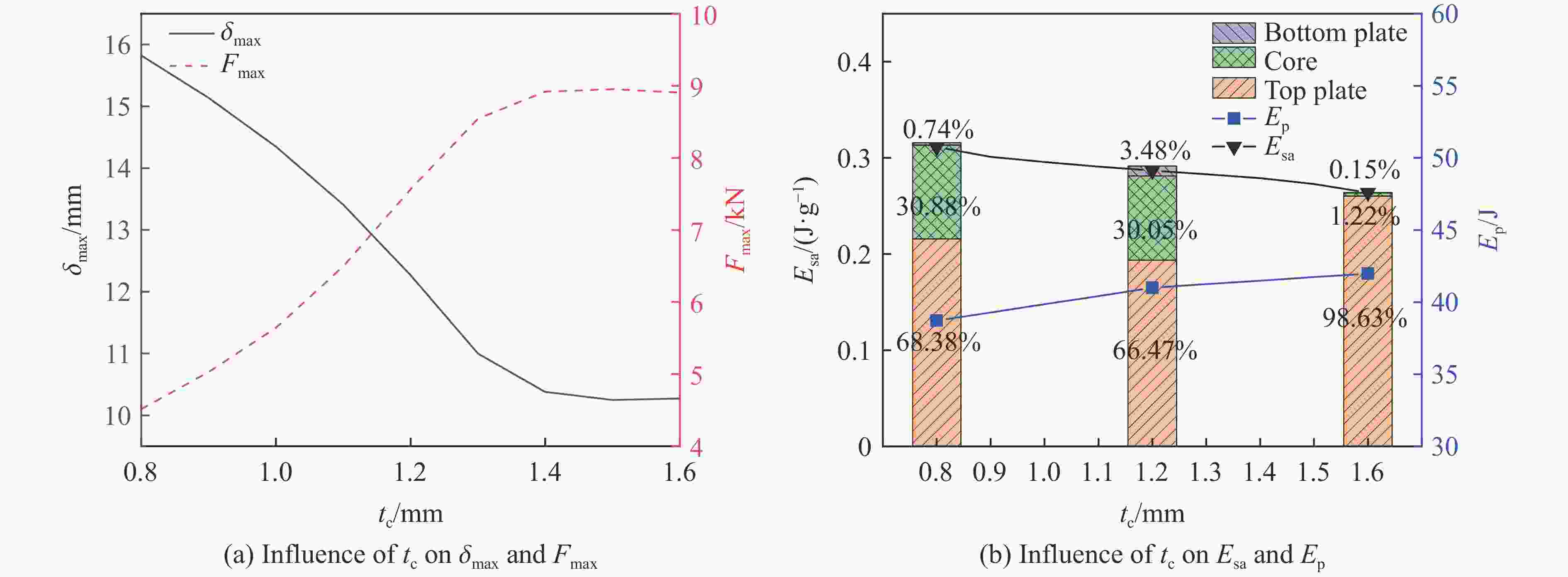
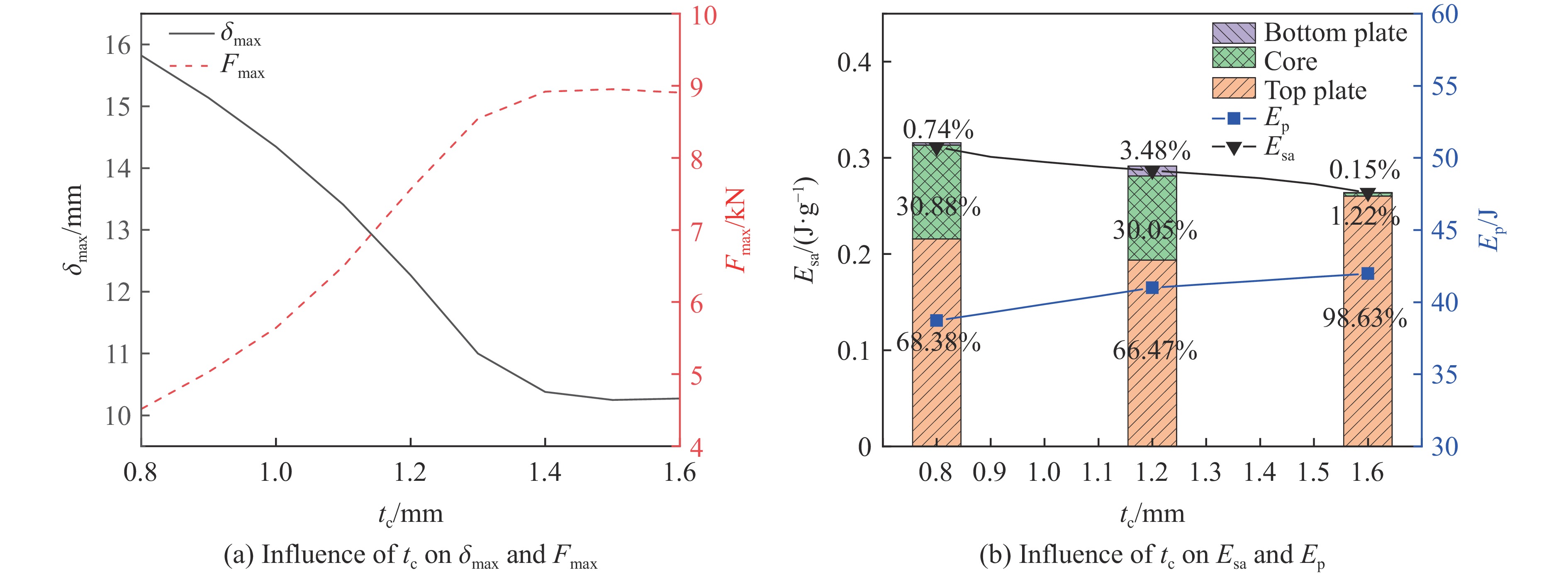
图 13 芯层壁厚对夹芯梁冲击结构响应的影响
Figure 13. Influence of web thickness of the core on the impact structural response of sandwich beams

图 14 芯层厚度对夹芯梁变形模式的影响
Figure 14. Influence of web thickness of the core on the deformation mode of sandwich beams
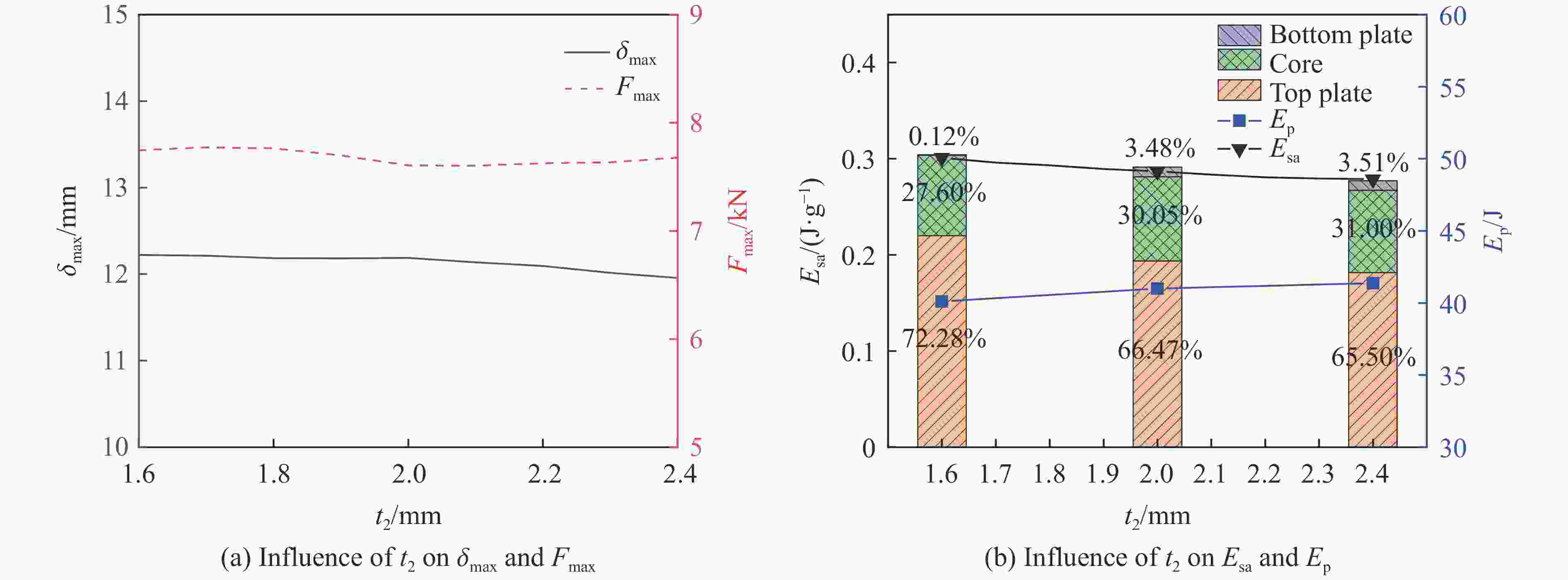
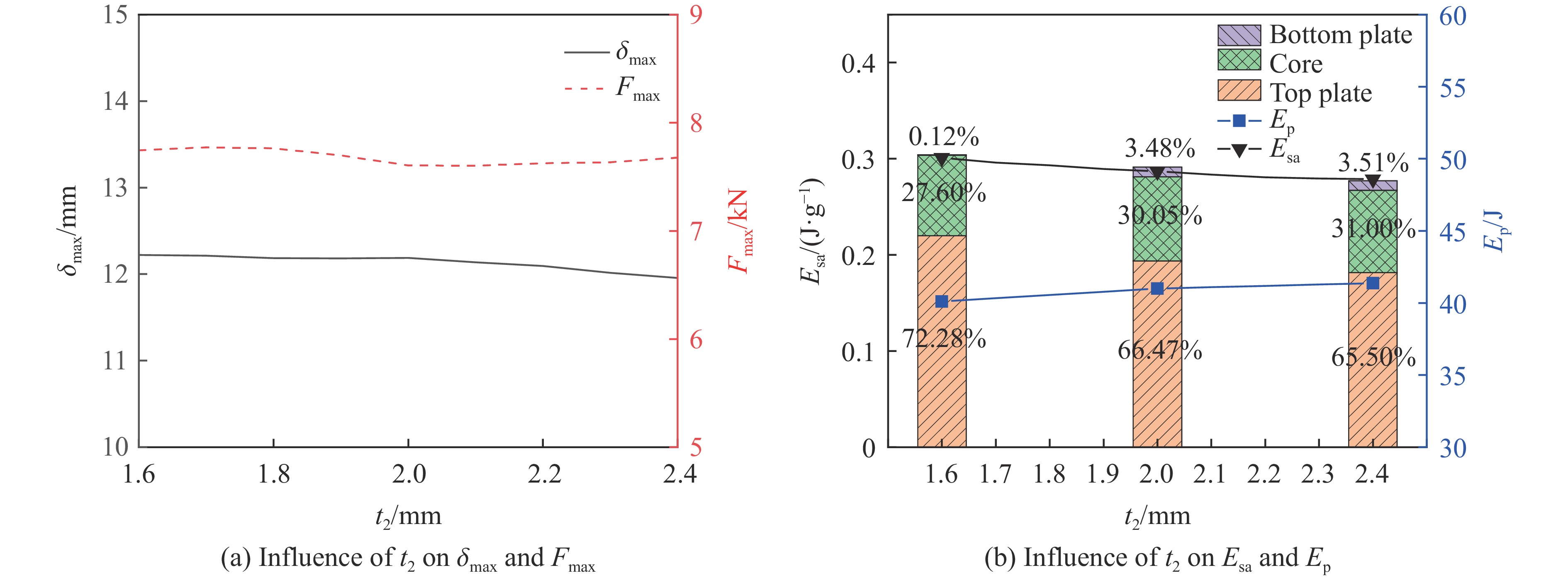
图 15 下面板厚度对夹芯梁冲击结构响应的影响
Figure 15. Influence of bottom plate thickness on the impact structural response of sandwich beams

图 16 下面板厚度对夹芯梁变形模式的影响
Figure 16. Influence of bottom plate thickness on the deformation mode of sandwich beams
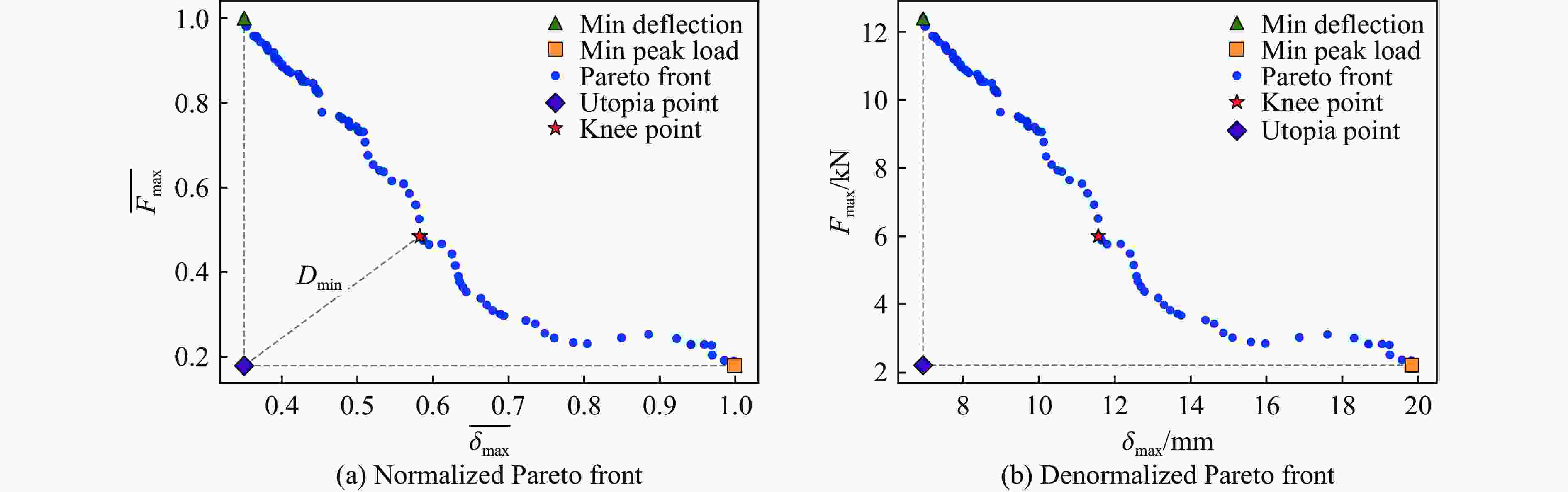
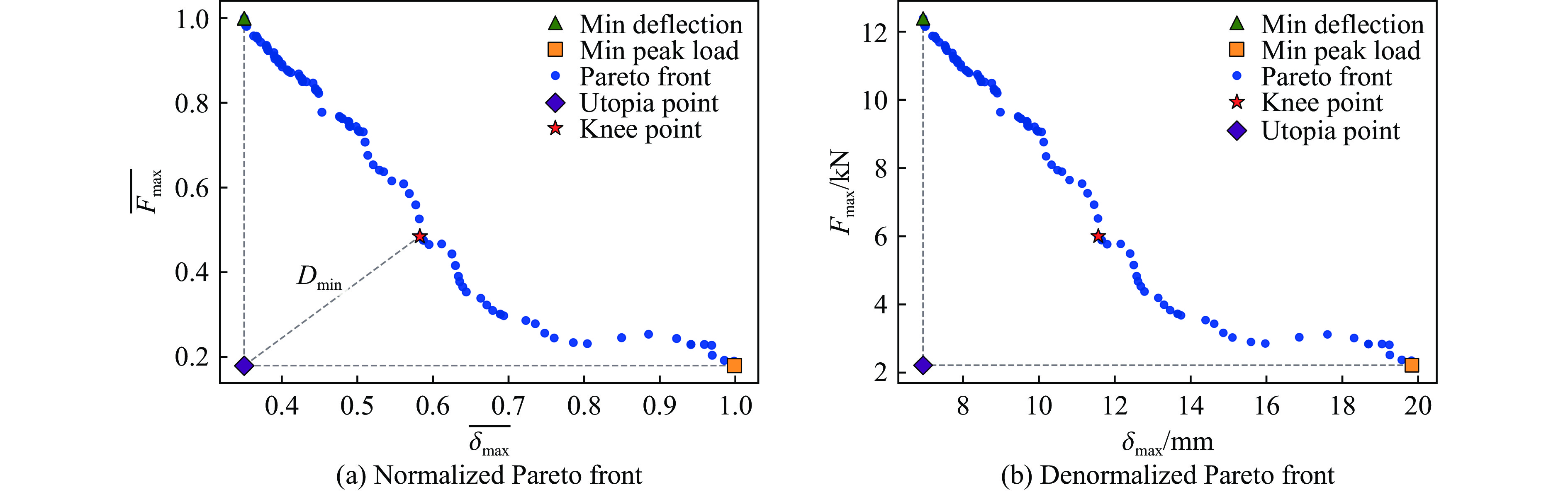
图 17 变形优化的Pareto解集
Figure 17. Pareto optimal solution set for deformation optimization
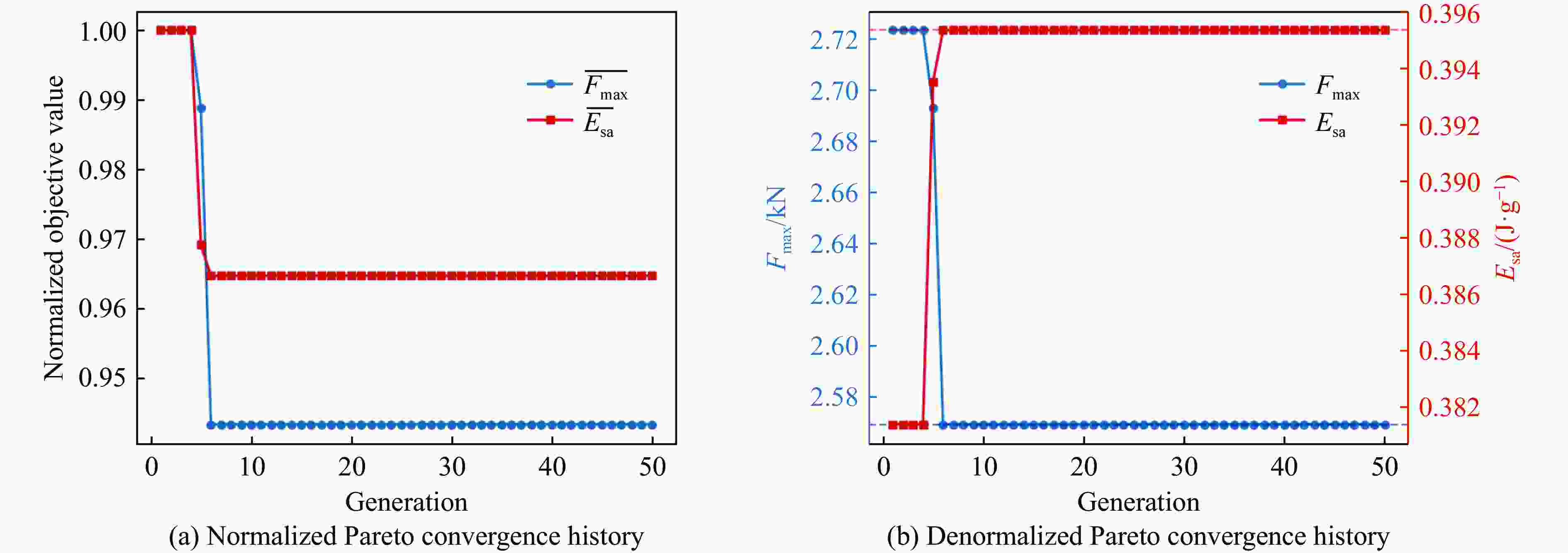
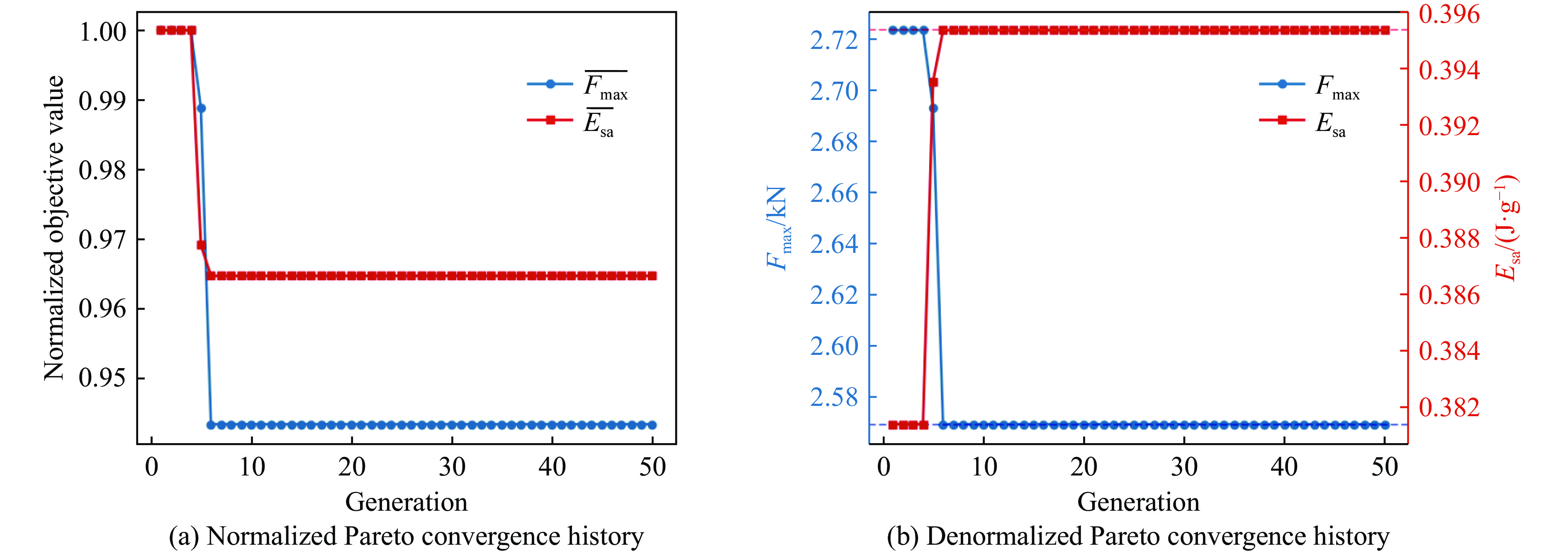
图 18 吸能优化的Pareto迭代图
Figure 18. Pareto iteration plot for energy absorption optimization
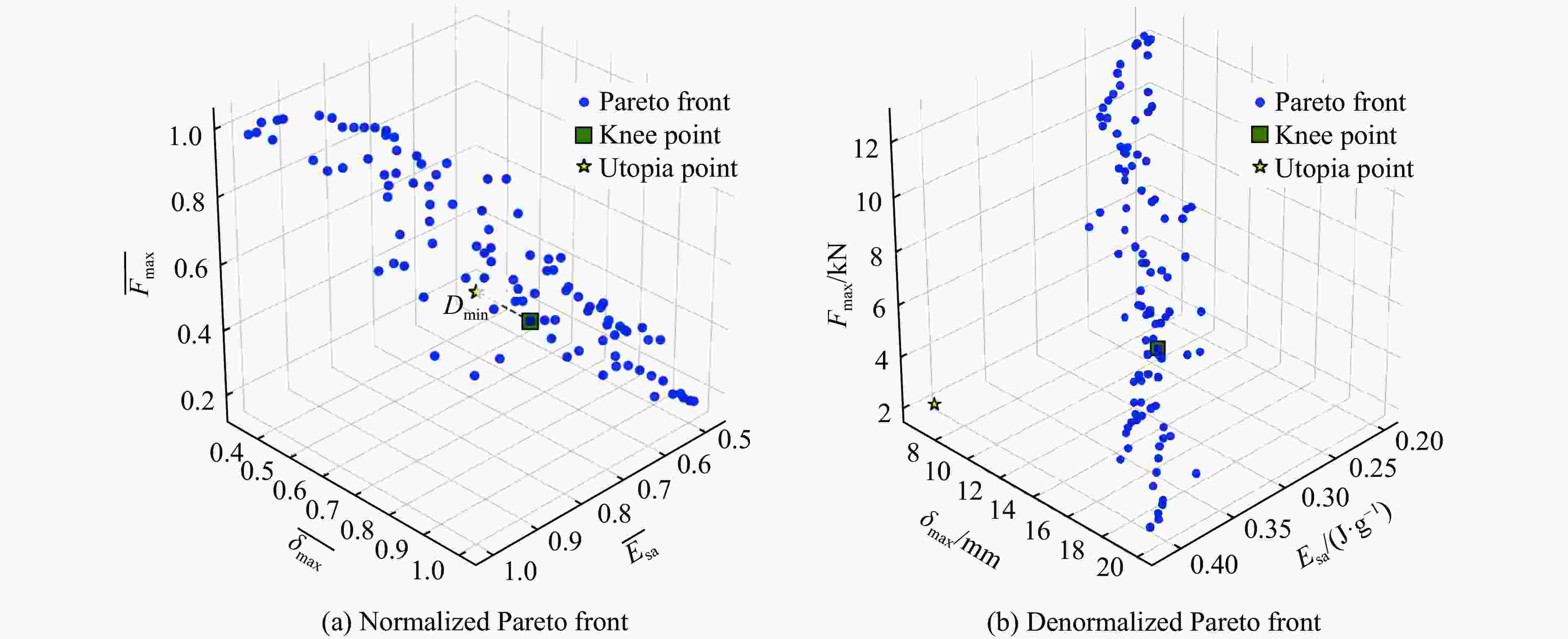
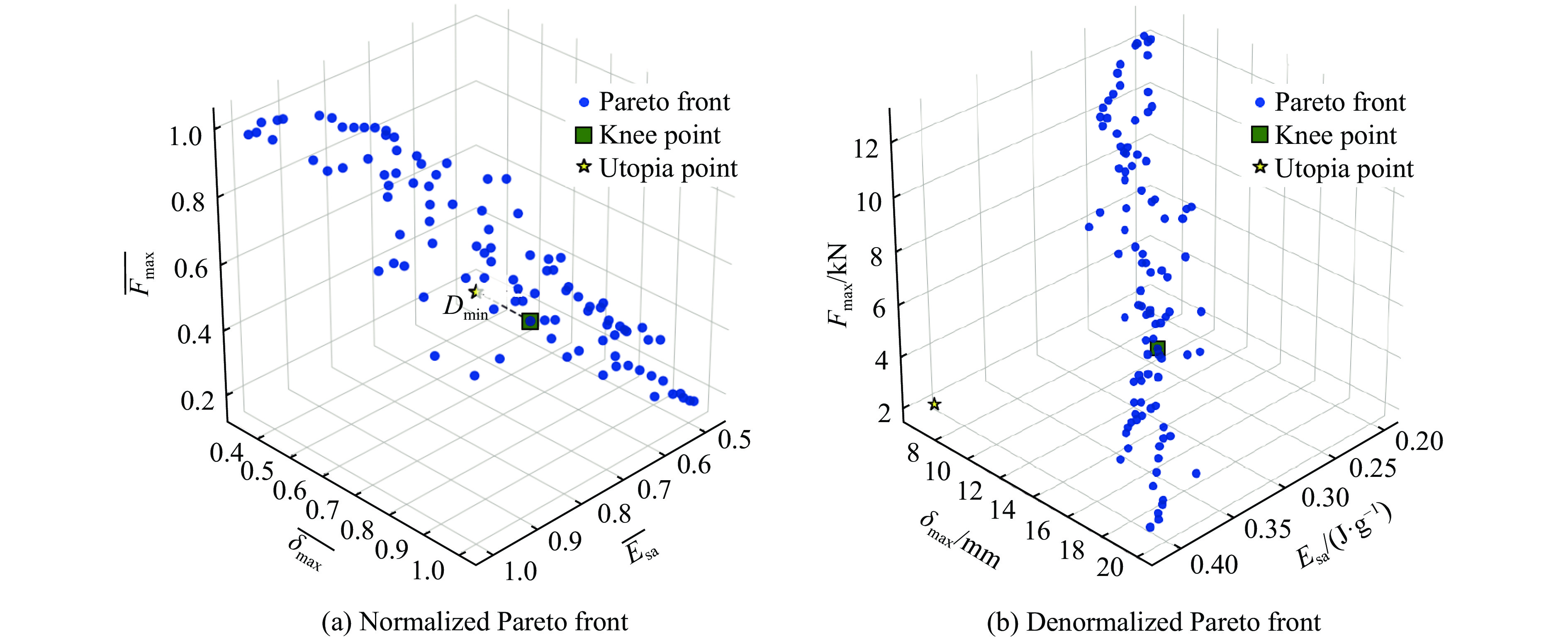
图 19 吸能与变形优化的Pareto解集
Figure 19. Pareto optimal solution set for energy absorption and deformation optimization
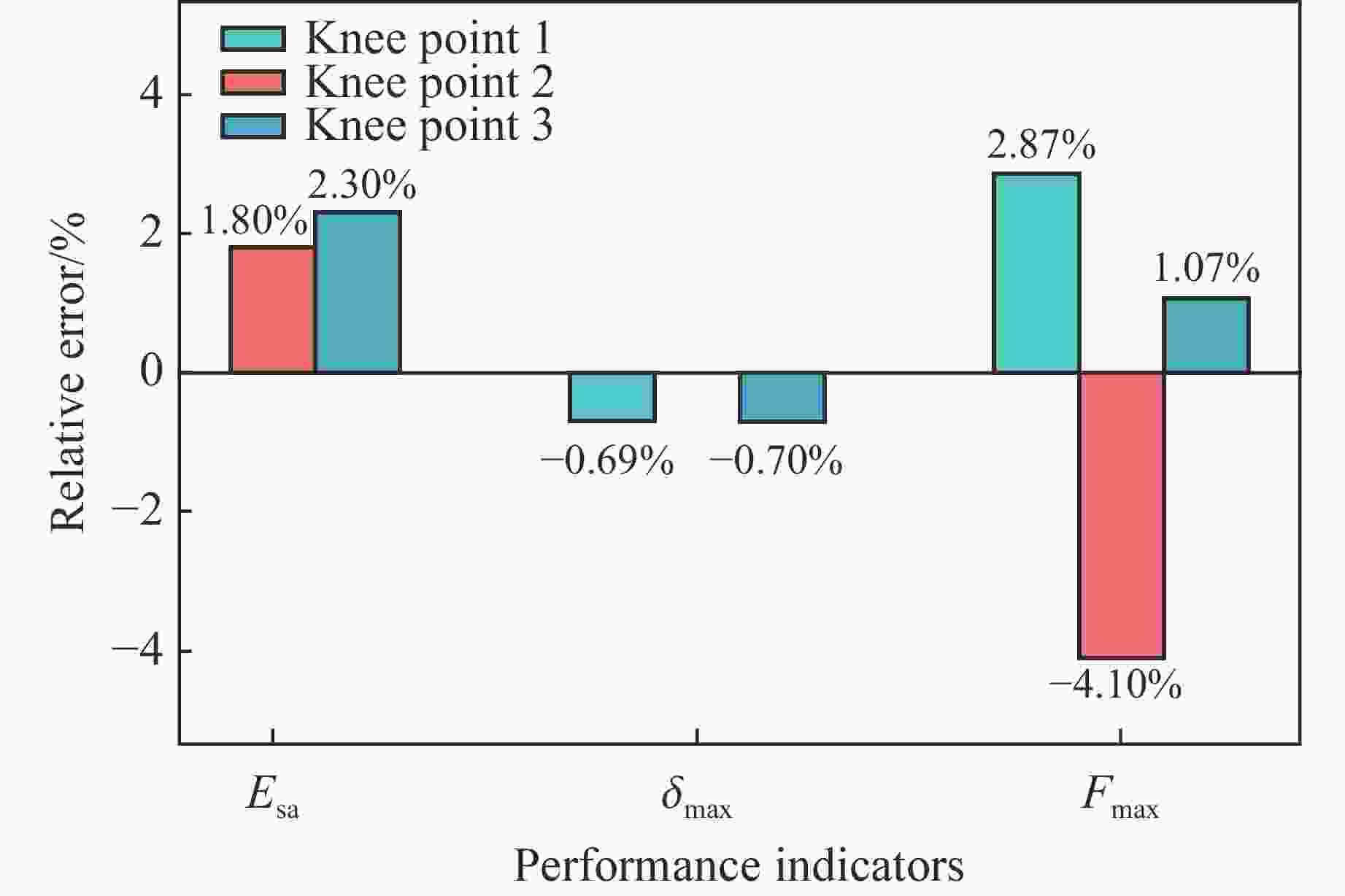
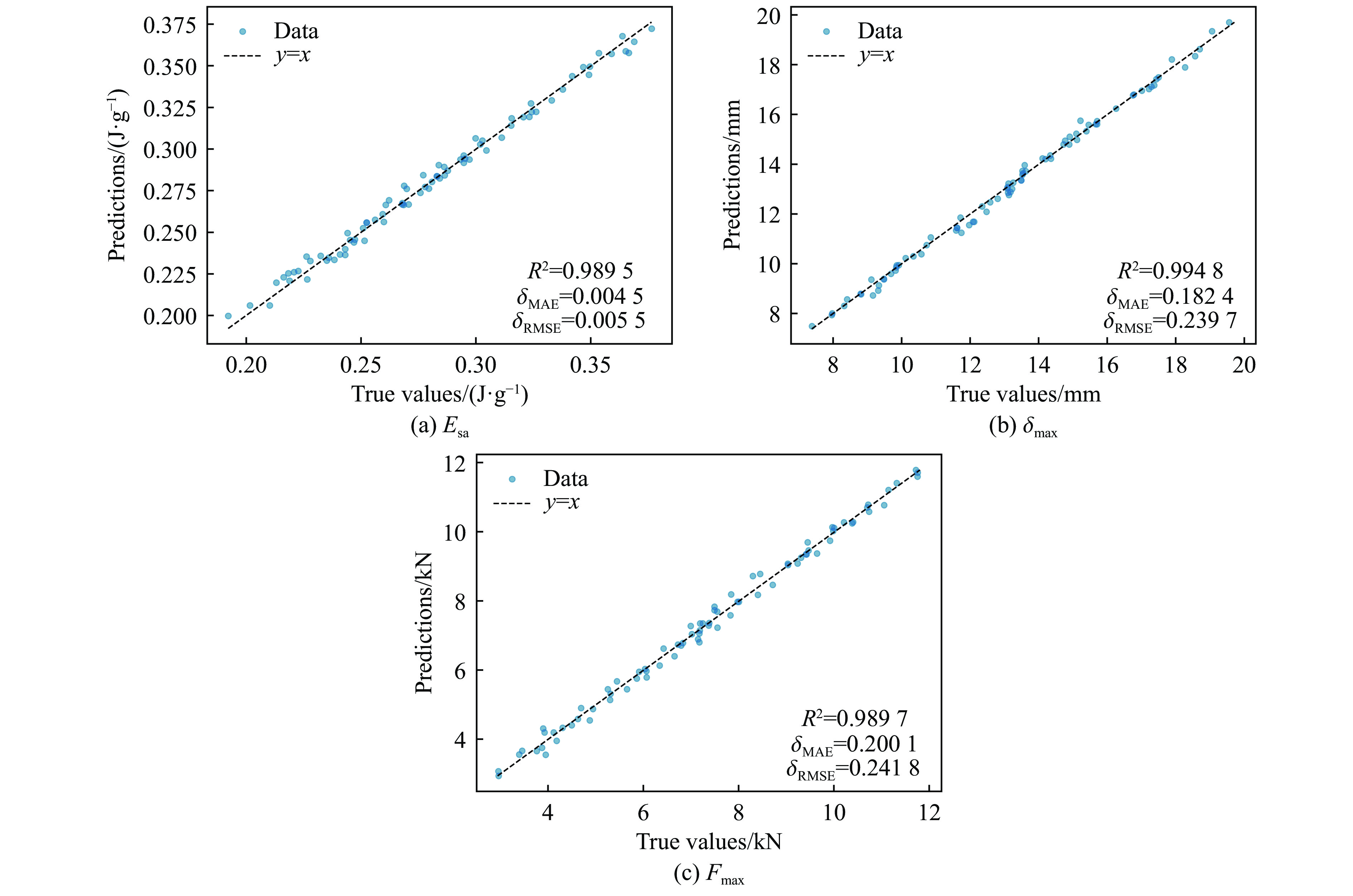
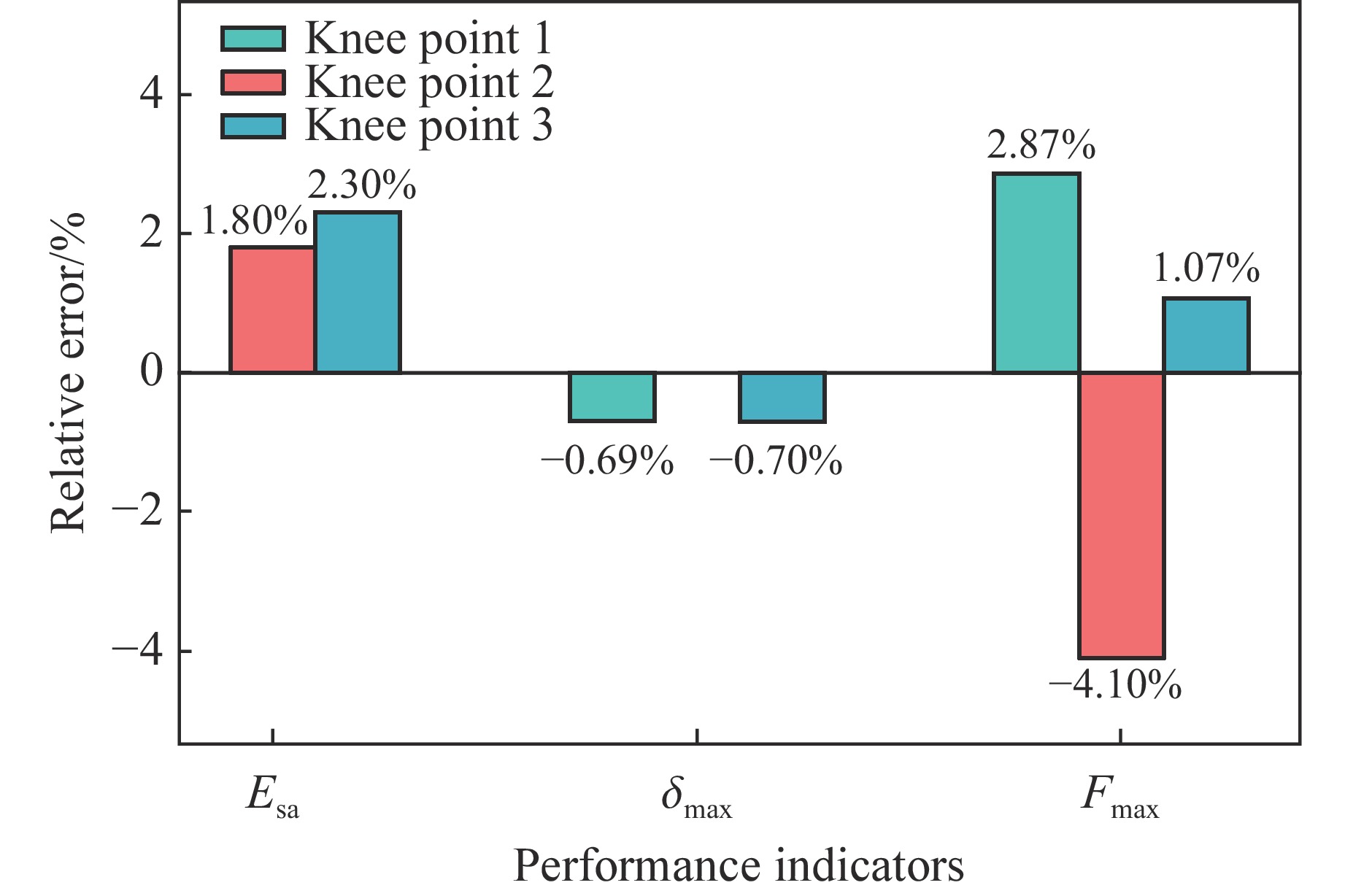
图 20 预测结果与有限元模拟结果之间的误差
Figure 20. Error between prediction and finite element simulation results
Material Density/(g·cm−3) Young’s modulus/GPa Yield stress/MPa Poisson’s ratio A6N01S-T5 2.7 69 181.91 0.33  下载: 导出CSV
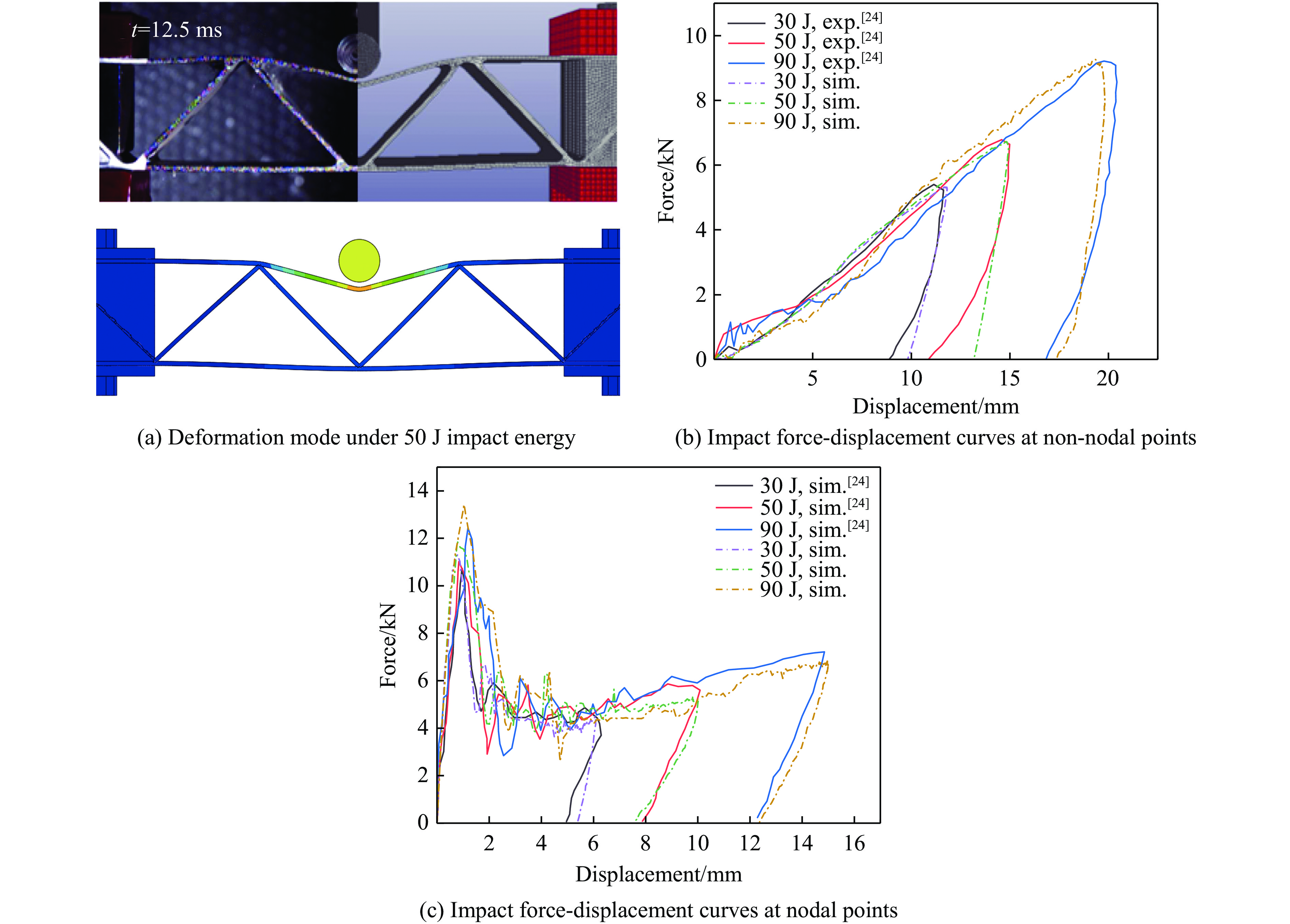
表 2 非节点位置冲击下实验与有限元模拟冲击响应结果对比
Table 2. Comparison of experimental and finite element simulation results for impact response at non-nodal positions
Ei/J Experimental result Simulation result Mean relative
error/%Esa/(J·g−1) δmax/mm Fmax/kN Esa/(J·g−1) δmax/mm Fmax/kN 30 0.201 11.56 5.31 0.208 11.84 5.43 2.72 50 0.290 15.06 6.65 0.292 14.93 6.78 1.17 90 0.530 20.38 9.05 0.522 19.81 9.26 2.21
下载: 导出CSV
表 3 输入特征的取值范围
Table 3. Value range of input features
n t1/mm tc/mm t2/mm ρc/(g·cm−3) 2, 4, 6 1.6−2.4 0.8−1.6 1.6−2.4 0.064−0.276
下载: 导出CSV
表 4 SVR与MTL模型的性能对比
Table 4. Performance comparison between SVR and MTL models
Model Output R² MAE RMSE tt/s tp/s SVR Esa 0.9541 0.0076 0.0101 0.10 0.10 δmax 0.9811 0.3165 0.4015 Fmax 0.9626 0.3593 0.4690 MTL Esa 0.9868 0.0048 0.0059 2.18 0.10 δmax 0.9937 0.2037 0.2791 Fmax 0.9869 0.2385 0.3124
下载: 导出CSV
表 5 变形优化结果与对照组的比较
Table 5. Comparison of deformation optimization results with those of the control group
Method n t1/mm tc/mm t2/mm MTL Simulation δmax/mm Fmax/kN δmax/mm Fmax/kN Knee point 6 2.4 1.0 1.6 11.56 5.38 11.64 5.23 Control group 2 2.0 1.8 2.0 15.06 6.65
下载: 导出CSV
表 6 吸能优化结果与对照组的比较
Table 6. Comparison of energy absorption optimization results with those of the control group
Method n t1/mm tc/mm t2/mm MTL Simulation Esa/(J·g−1) Fmax/kN Esa/(J·g−1) Fmax/kN Knee point 2 1.6 0.8 1.6 0.395 2.57 0.388 2.68 Control group 2 2.0 1.8 2.0 0.297 6.65
下载: 导出CSV
表 7 吸能及变形优化结果与对照组的比较
Table 7. Comparison of energy absorption and deformation optimization results with those of the control group
Method n t1/mm tc/mm t2/mm MTL Simulation Esa/(J·g−1) δmax/mm Fmax/kN Esa/(J·g−1) δmax/mm Fmax/kN Knee point 4 2.3 0.9 1.6 0.311 14.11 4.71 0.304 14.21 4.66 Control group 2 2.0 1.8 2.0 0.297 15.06 6.65
下载: 导出CSV
-
[1] ZHANG D J, ZHAO Z Y, DU S F, et al. Dynamic response of ultralight all-metallic sandwich panel with 3D tube cellular core to shallow-buried explosives [J]. Science China Technological Sciences, 2021, 64(7): 1371–1388. doi: 10.1007/s11431-020-1774-1 [2] LE V T, HA N S, GOO N S. Advanced sandwich structures for thermal protection systems in hypersonic vehicles: a review [J]. Composites Part B: Engineering, 2021, 226: 109301. doi: 10.1016/j.compositesb.2021.109301 [3] WANG J F, SHI C Y, YANG N, et al. Strength, stiffness, and panel peeling strength of carbon fiber-reinforced composite sandwich structures with aluminum honeycomb cores for vehicle body [J]. Composite Structures, 2018, 184: 1189–1196. doi: 10.1016/j.compstruct.2017.10.038 [4] CHAHARDOLI S, ATTAR A A, GHORBANHOSSEINI S, et al. Investigation of the bending and crushing for the light-weight structures used in vehicle’s radiator [J]. Mechanics Based Design of Structures and Machines, 2023, 51(8): 4491–4507. doi: 10.1080/15397734.2021.1967165 [5] SHU C F, ZHAO S Y, HOU S J. Crashworthiness analysis of two-layered corrugated sandwich panels under crushing loading [J]. Thin-Walled Structures, 2018, 133: 42–51. doi: 10.1016/j.tws.2018.09.008 [6] LIU K, ZONG S, LI Y, et al. Structural response of the U-type corrugated core sandwich panel used in ship structures under the lateral quasi-static compression load [J]. Marine Structures, 2022, 84: 103198. doi: 10.1016/j.marstruc.2022.103198 [7] RUBINO V, DESHPANDE V S, FLECK N A. The dynamic response of end-clamped sandwich beams with a Y-frame or corrugated core [J]. International Journal of Impact Engineering, 2008, 35(8): 829–844. doi: 10.1016/j.ijimpeng.2007.10.006 [8] RUBINO V, DESHPANDE V S, FLECK N A. The three-point bending of Y-frame and corrugated core sandwich beams [J]. International Journal of Mechanical Sciences, 2010, 52(3): 485–494. doi: 10.1016/j.ijmecsci.2009.11.009 [9] ST-PIERRE L, DESHPANDE V S, FLECK N A. The low velocity impact response of sandwich beams with a corrugated core or a Y-frame core [J]. International Journal of Mechanical Sciences, 2015, 91: 71–80. doi: 10.1016/j.ijmecsci.2014.02.014 [10] XIA F K, YU T X, DURANDET Y, et al. Triangular corrugated sandwich panels under longitudinal bending [J]. Thin-Walled Structures, 2021, 169: 108359. doi: 10.1016/j.tws.2021.108359 [11] LIU J Z, LI S, GUO J C, et al. Machine learning (ML) based models for predicting the ultimate bending moment resistance of high strength steel welded I-section beam under bending [J]. Thin-Walled Structures, 2023, 191: 111051. doi: 10.1016/j.tws.2023.111051 [12] FORD E, MANEPARAMBIL K, KUMAR A, et al. Transfer (machine) learning approaches coupled with target data augmentation to predict the mechanical properties of concrete [J]. Machine Learning with Applications, 2022, 8: 100271. doi: 10.1016/j.mlwa.2022.100271 [13] YANG L, LIN H, WEI L C, et al. Application of a novel machine learning model for the prediction and optimization of anti-blast performance of sandwich honeycomb blast walls [J]. Ocean Engineering, 2024, 312: 119217. doi: 10.1016/j.oceaneng.2024.119217 [14] FANG X, SHEN H S, WANG H. Three-point bending behaviors of sandwich beams with data-driven 3D auxetic lattice core based on deep learning [J]. Composite Structures, 2025, 354: 118751. doi: 10.1016/j.compstruct.2024.118751 [15] ANDIKA, SANTOSA S P, WIDAGDO D, et al. Design and multi-objective optimization of auxetic sandwich panels for blastworthy structures using machine learning method [J]. Applied Sciences, 2024, 14(23): 10831. doi: 10.3390/app142310831 [16] QIU W J, LIU K, ZONG S, et al. An optimisation method for anti-blast performance of corrugated sandwich plate structure based on neural network and sparrow search algorithm [J]. Ships and Offshore Structures, 2024, 19(8): 1028–1043. doi: 10.1080/17445302.2023.2226488 [17] TEIMOURI A, ALINIA M, KAMARIAN S, et al. Design optimization of additively manufactured sandwich beams through experimentation, machine learning, and imperialist competitive algorithm [J]. Journal of Engineering Design, 2024, 35(3): 320–337. doi: 10.1080/09544828.2024.2309862 [18] MCKAY M D, BECKMAN R J, CONOVER W J. A comparison of three methods for selecting values of input variables in the analysis of output from a computer code [J]. Technometrics, 1979, 21(2): 239–245. doi: 10.2307/1268522 [19] CARUANA R. Multitask learning [J]. Machine Learning, 1997, 28(1): 41–75. doi: 10.1023/A:1007379606734 [20] SNOEK J, LAROCHELLE H, ADAMS R P. Practical bayesian optimization of machine learning algorithms [C]//Proceedings of the 26th International Conference on Neural Information Processing Systems. Lake Tahoe: Curran Associates Inc., 2012: 2951–2959. [21] DEB K, PRATAP A, AGARWAL S, et al. A fast and elitist multiobjective genetic algorithm: NSGA-Ⅱ [J]. IEEE Transactions on Evolutionary Computation, 2002, 6(2): 182–197. doi: 10.1109/4235.996017 [22] JING L, SU X Y, CHEN D, et al. Experimental and numerical study of sandwich beams with layered-gradient foam cores under low-velocity impact [J]. Thin-Walled Structures, 2019, 135: 227–244. doi: 10.1016/j.tws.2018.11.011 [23] LIU Z S, YU Y Y, YANG Z, et al. Dynamic experimental studies of A6N01S-T5 aluminum alloy material and structure for high-speed trains [J]. Acta Mechanica Sinica, 2019, 35(4): 763–772. doi: 10.1007/s10409-018-0830-8 [24] YU Z H, LIU K, ZHOU X F, et al. Low-velocity impact response of aluminum alloy corrugated sandwich beams used for high-speed trains [J]. Thin-Walled Structures, 2023, 183: 110375. doi: 10.1016/j.tws.2022.110375 [25] 荣吉利, 王圣龙, 陈子超, 等. 水下爆炸冲击载荷下波纹夹芯板动态响应及结构优化设计 [J]. 北京理工大学学报, 2024, 44(7): 679–691.RONG J L, WANG S L, CHEN Z C, et al. Dynamic response and structural optimal design of corrugated sandwich panel subjected to underwater explosion impact loads [J]. Transactions of Beijing Institute of Technology, 2024, 44(7): 679–691. [26] 卢传浩, 周宇琦, 曹勇, 等. 新型梯度连续可控夹层板抗冲击性能研究及优化 [J]. 力学学报, 2024, 56(6): 1713–1726. doi: 10.6052/0459-1879-23-569LU C H, ZHOU Y Q, CAO Y, et al. Research and optimization of impact resistance of novel gradient continuous controllable sandwich panels [J]. Chinese Journal of Theoretical and Applied Mechanics, 2024, 56(6): 1713–1726. doi: 10.6052/0459-1879-23-569 -

 下载:
下载:





计量
- 文章访问数: 951
- HTML全文浏览量: 480
- PDF下载量: 85
