





Prediction of Dynamic Mechanical Response of Materials Based on U-Net Model: Influence of Texture Representation Differences
-
摘要: 利用神经网络进行合金性能的预测以及合金微观结构的反向设计已经成为了解合金性能、开发新型合金的一种新兴手段。织构是合金变形过程中微结构演化的重要影响因素,通常采用无空间关联的离散晶粒取向欧拉角、考虑代表性体积单元(representative volume element, RVE)空间-取向耦合欧拉角、极图/反极图等形式描述。选取何种形式的织构表示方式作为神经网络模型的输入能够发挥模型的最优性能还需进一步验证。为此,以改进后的U-Net模型为主体架构,对比了使用离散欧拉角、空间欧拉角、极图3种织构表示方法作为神经网络模型输入对模型性能的影响。采用训练完成的3种神经网络模型分别对测试集中的样本进行预测,结果表明,使用极图作为织构表示方法时获得了最优的效果。除此以外,利用训练好的神经网络模型,采用在输出层添加一维卷积的改进方法,预测了合金的宏观应力-应变曲线。相比于传统只使用全连接的方法,该改进显著提高了应力-应变曲线的预测精度。Abstract: The utilization of neural networks for the prediction of alloy properties and the inverse design of alloy microstructures has emerged as a novel approach in the industry for understanding material performance and developing new alloys. Texture acts as a critical factor influencing microstructural evolution during alloy deformation. It is typically characterized by spatially uncorrelated discrete grain orientation Euler angles, spatial-orientation coupled Euler angles within a representative volume element (RVE), or pole figures/inverse pole figures. However, identifying which texture representation method serves as the optimal input to maximize the performance of neural network models requires further investigation. Consequently, employing a modified U-Net model as the backbone architecture, this study evaluates and compares the impact of three texture representation methods, including discrete Euler angles, spatial Euler angles, and pole figures, as model inputs on the overall performance of the neural network. The three trained neural network models were individually deployed to predict samples within the test set. The results demonstrate that employing pole figures as the texture representation method yields the optimal performance. Furthermore, the trained neural network models were utilized to predict the macroscopic stress-strain curves of the alloys by incorporating a one-dimensional (1D) convolutional layer at the output stage. Compared to traditional methods relying solely on fully connected layers, this modification significantly enhances the prediction accuracy of the stress-strain curves.
-
Key words:
- neural network /
- texture /
- dynamic stress-strain curve /
- U-Net model
-
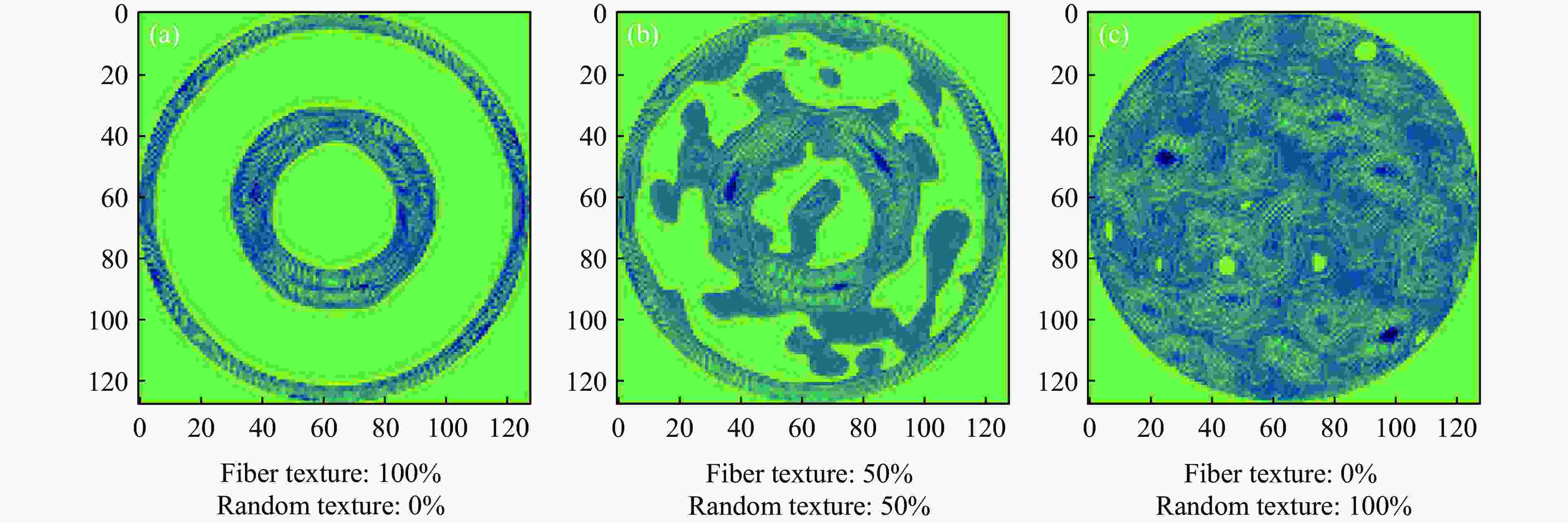
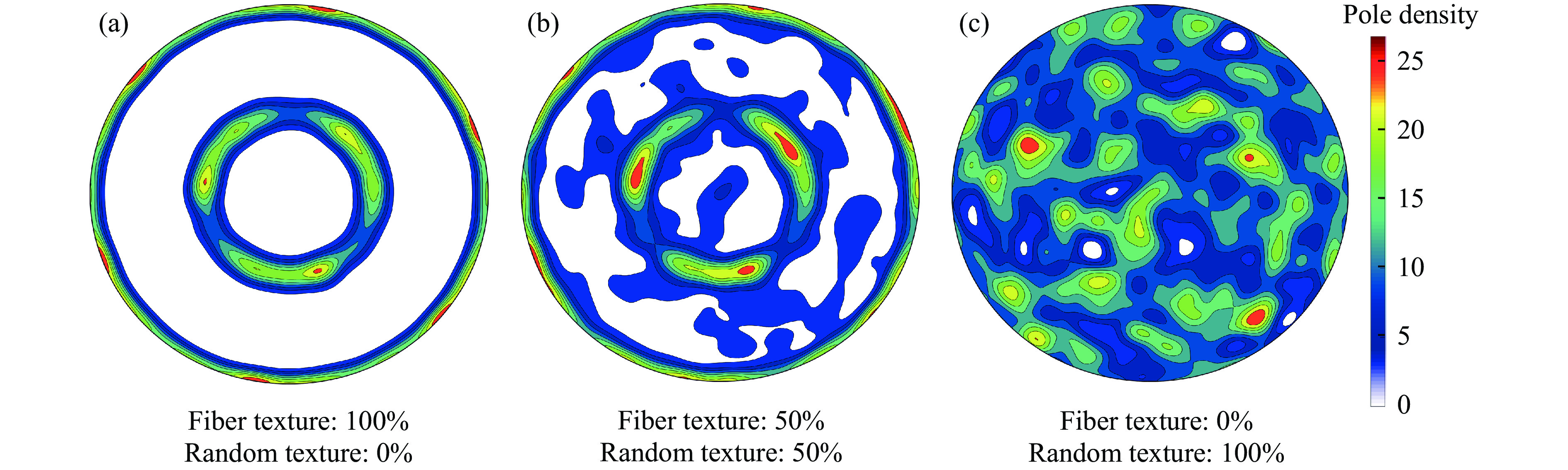
图 3 初始极图潜空间特征图的第1个通道可视化表示
Figure 3. Visualization of the first channel of the latent space feature map of the initial extreme map
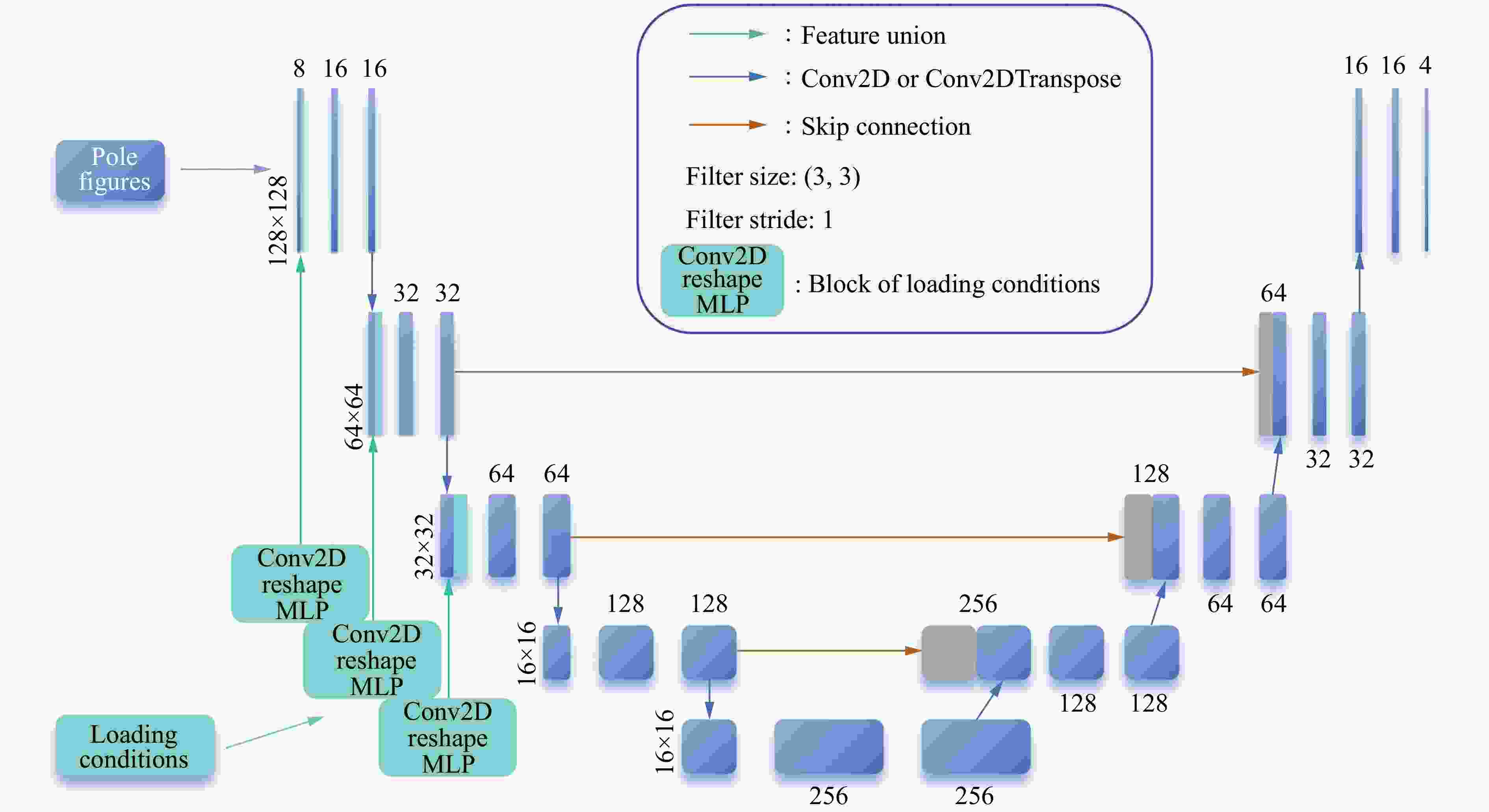
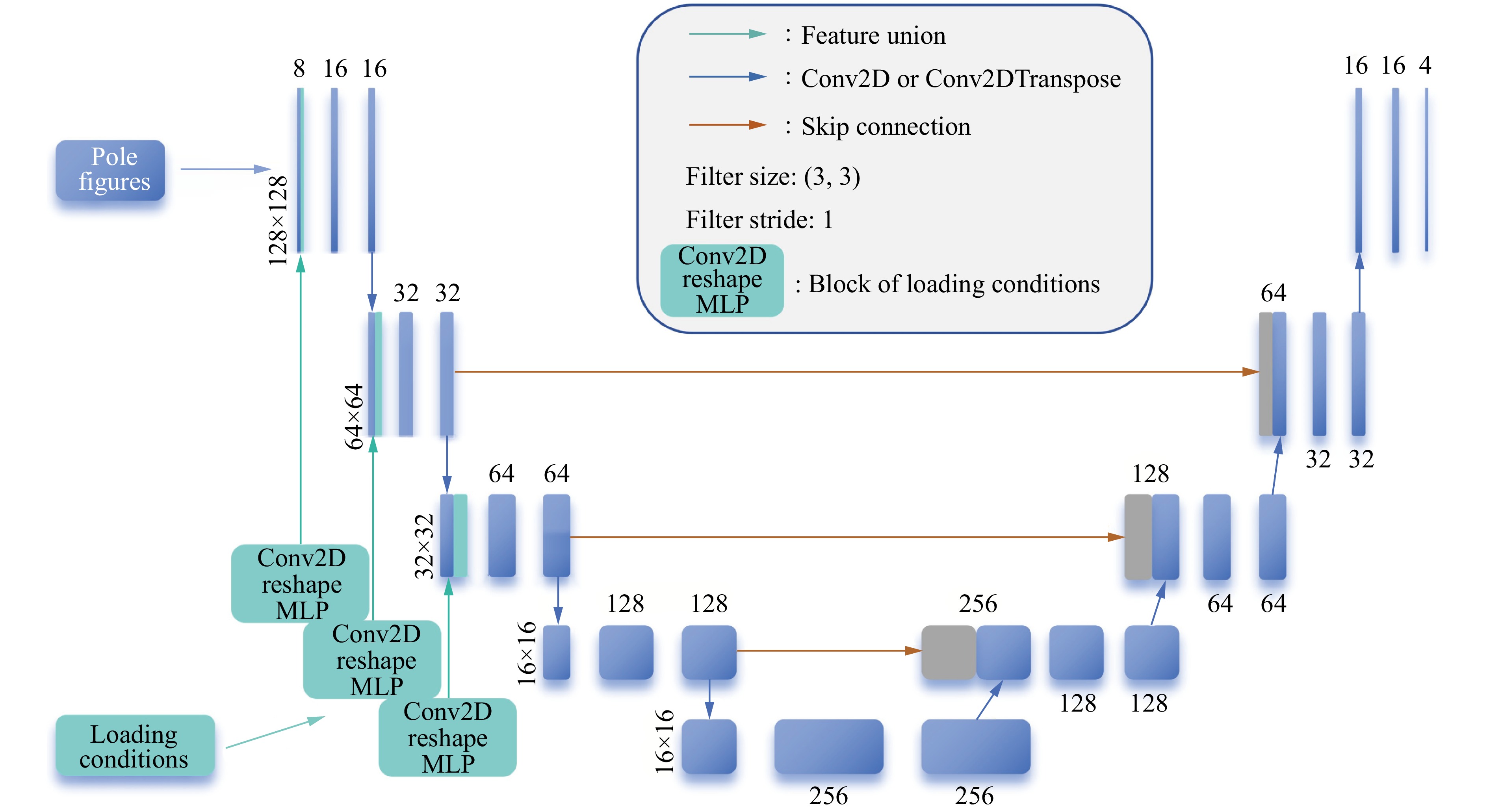
图 5 U-Net模型主体架构(以使用极图为例进行说明)
Figure 5. Main architecture diagram of the U-Net model (illustrated by using the polar graph as an example)
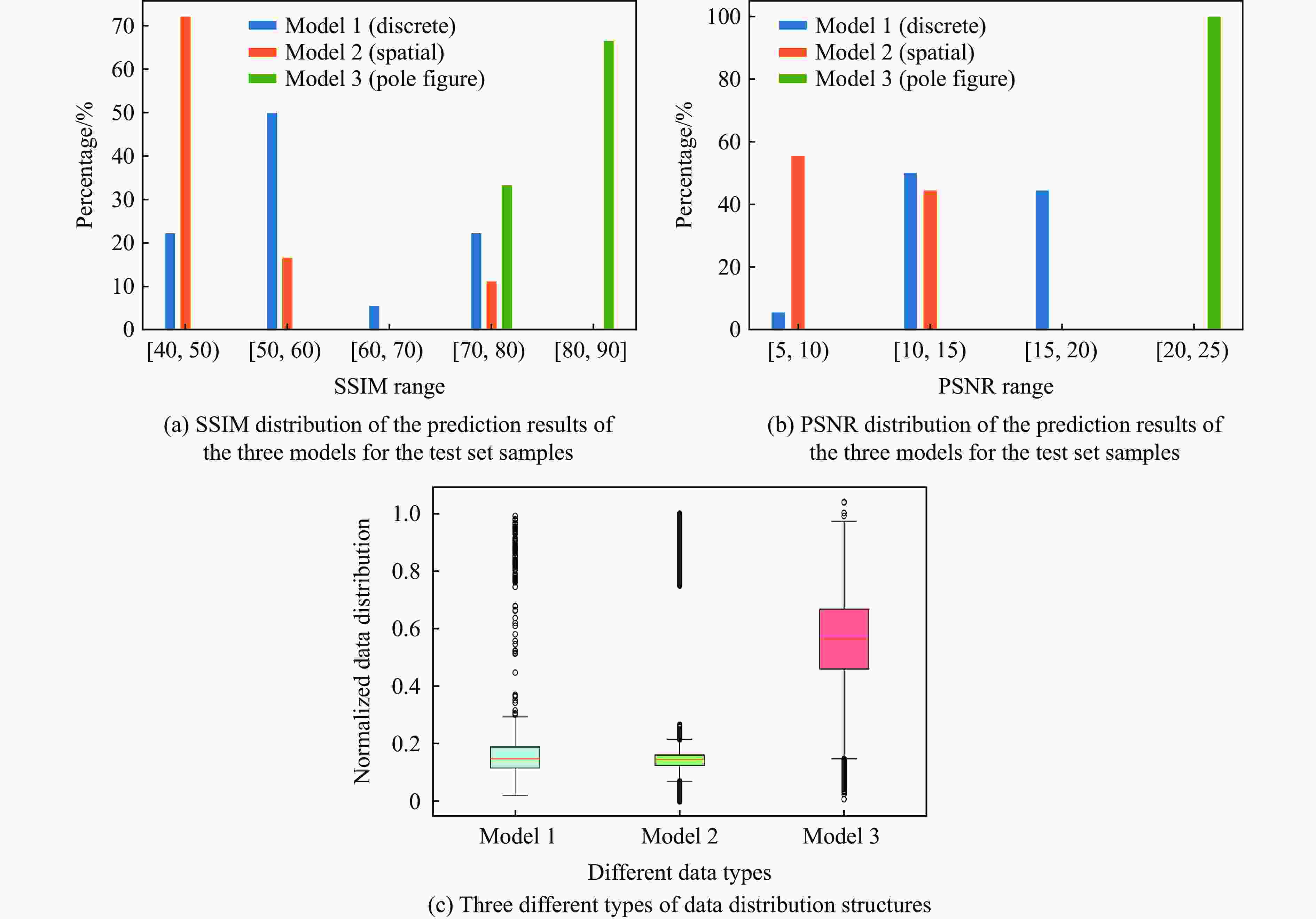
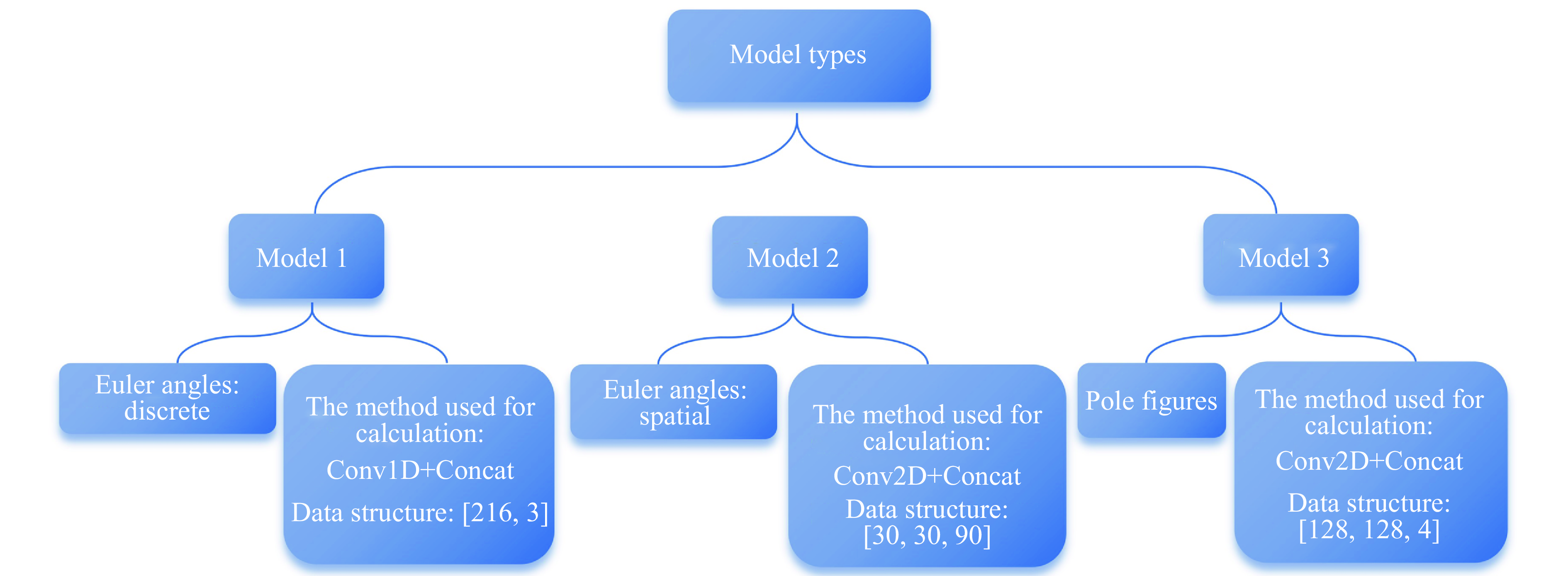
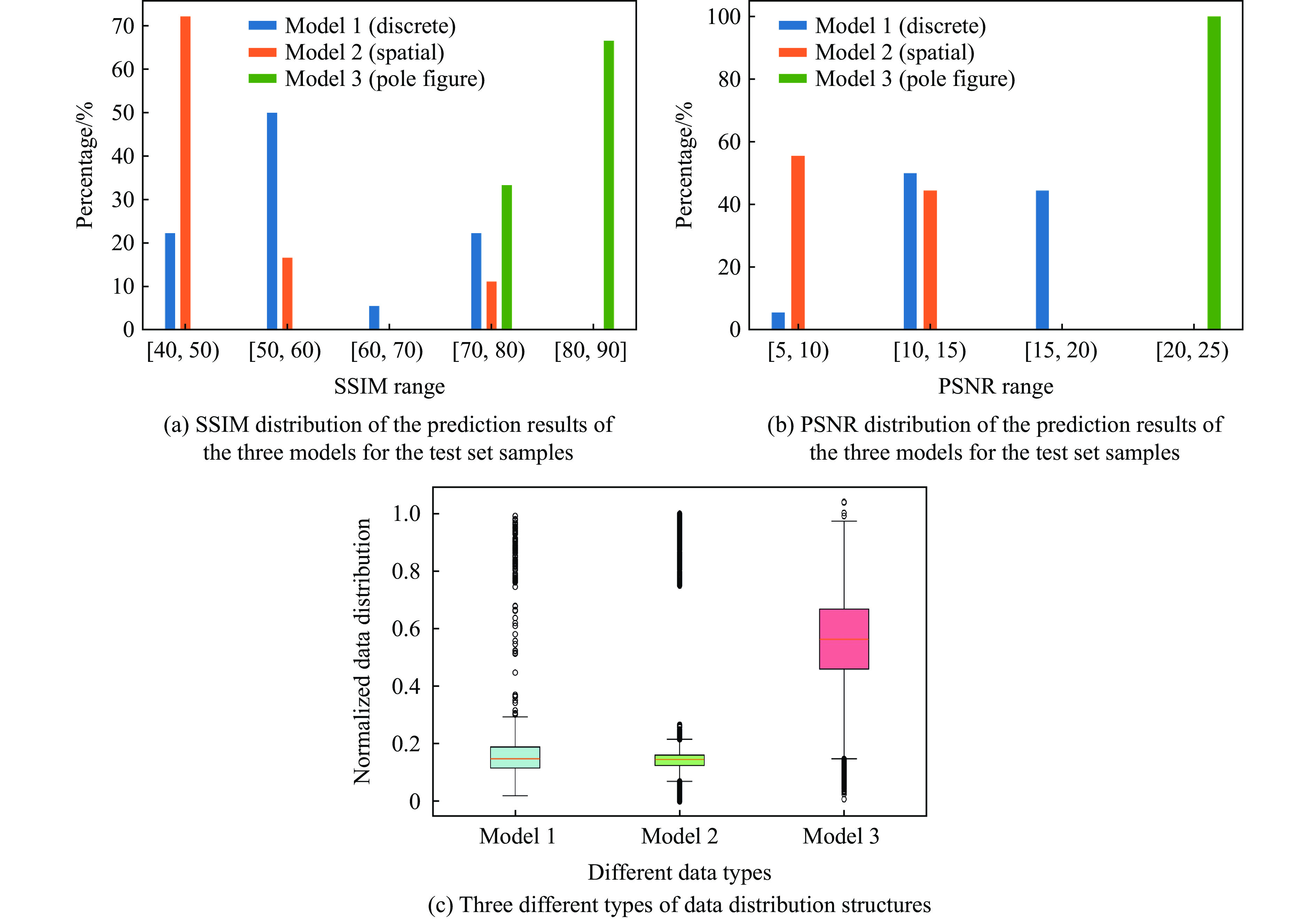
图 6 3种模型对测试集样本预测结果的(a) SSIM分布和(b) PSNR分布,(c) 3种不同类型的数据分布结构
Figure 6. (a) SSIM and (b) PSNR distribution of the prediction results of the three models for the test set samples; (c) three different types of data distribution structures
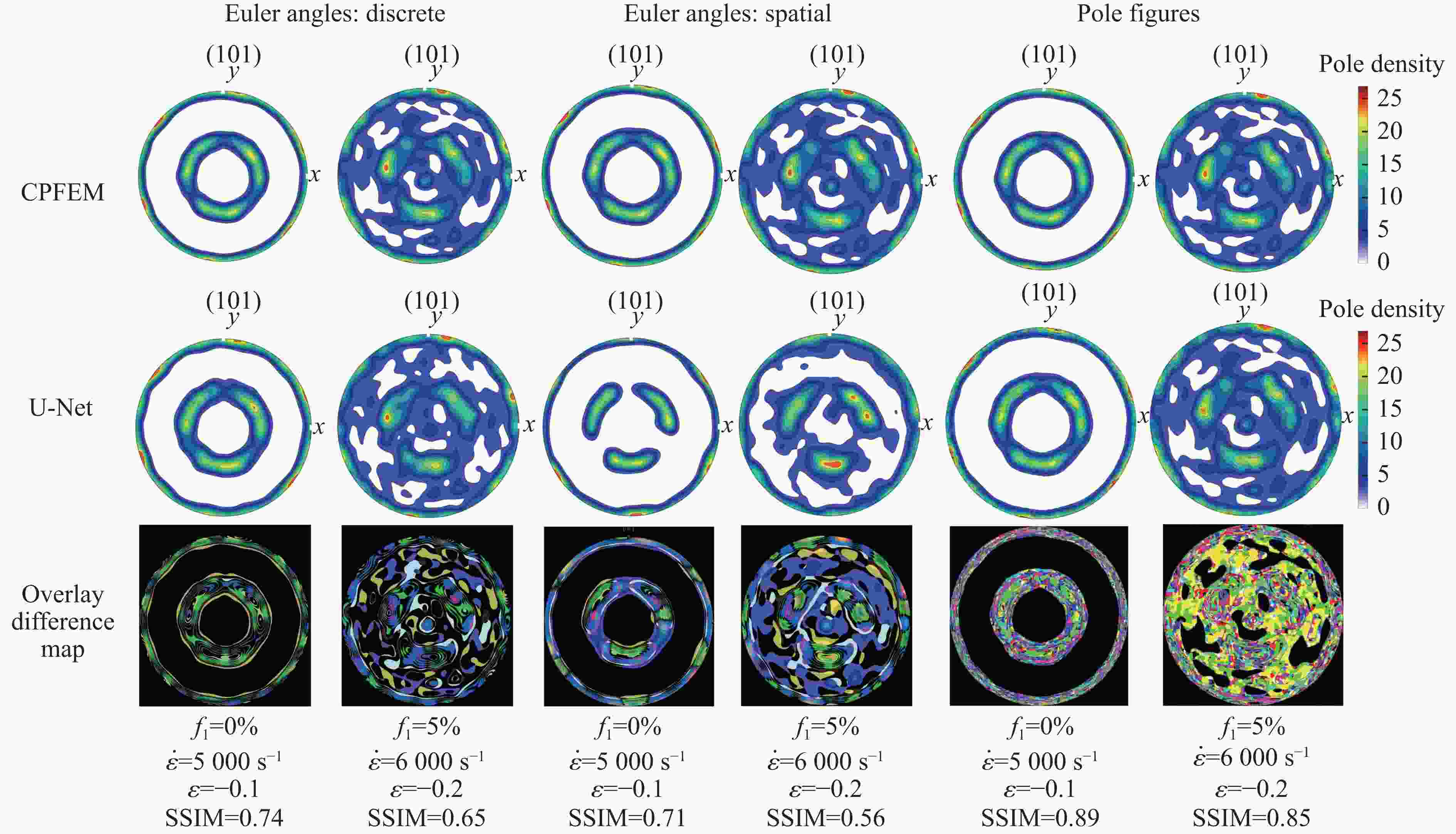
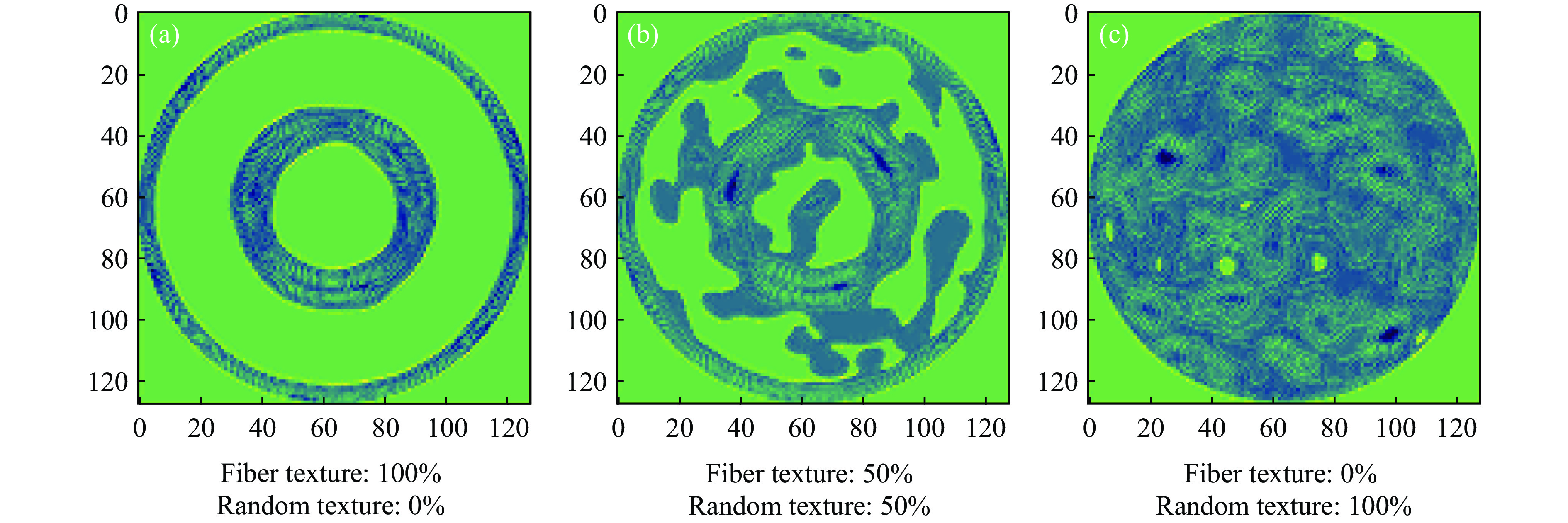
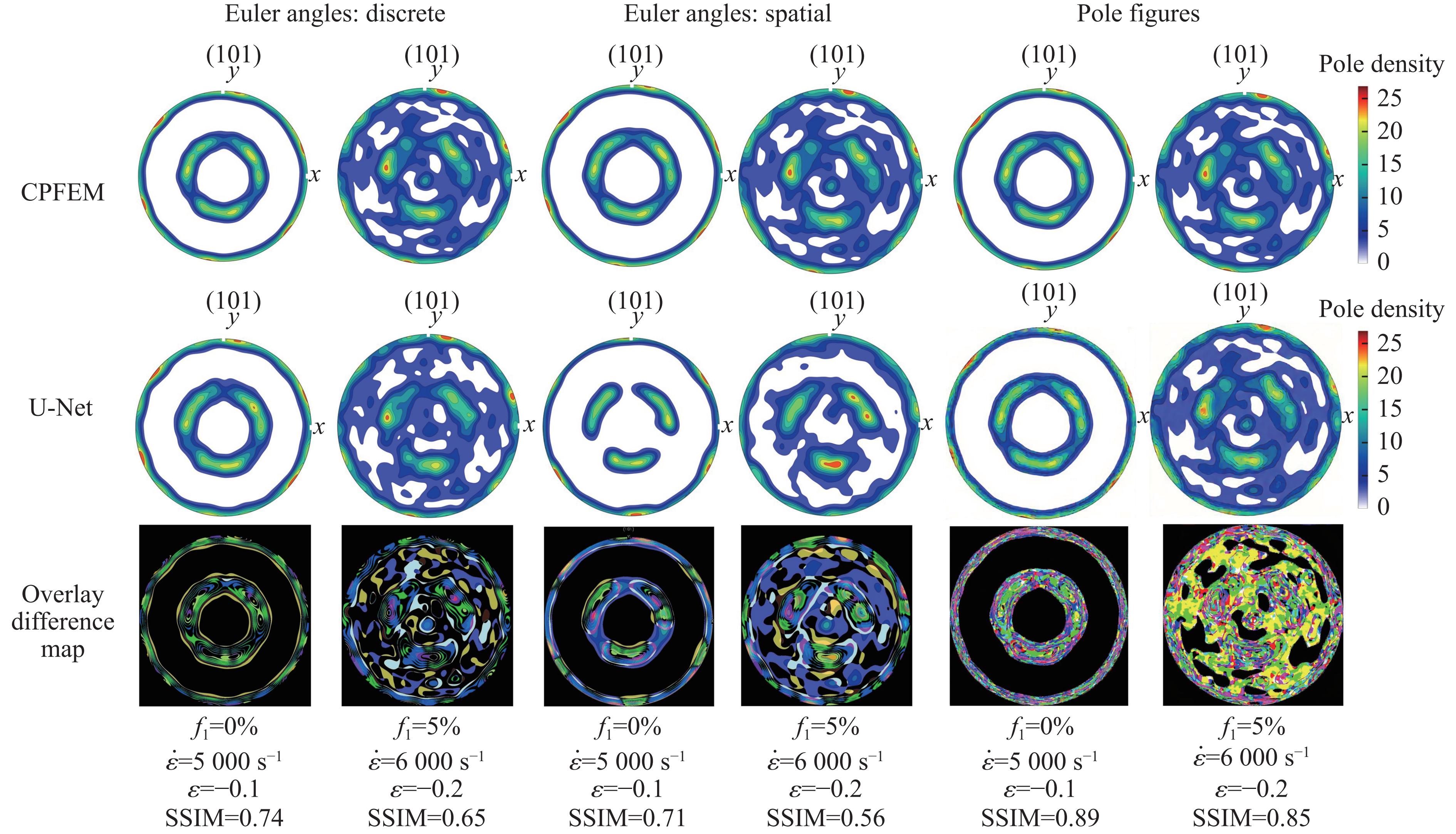
图 7 采用不同织构表达形式作为神经网络模型输入时的预测结果
Figure 7. Prediction results obtained by using different texture expression forms as the input of the neural network model
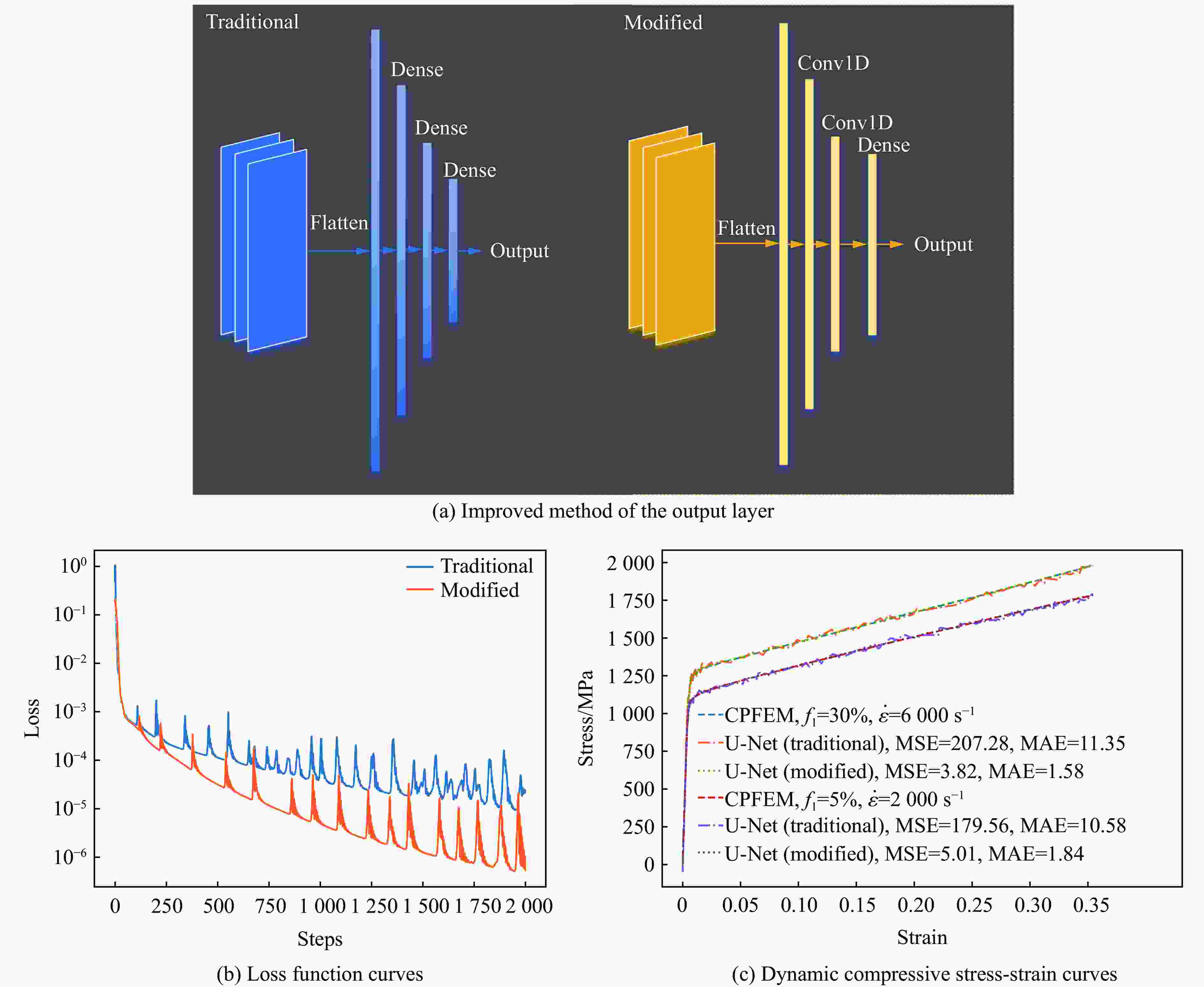
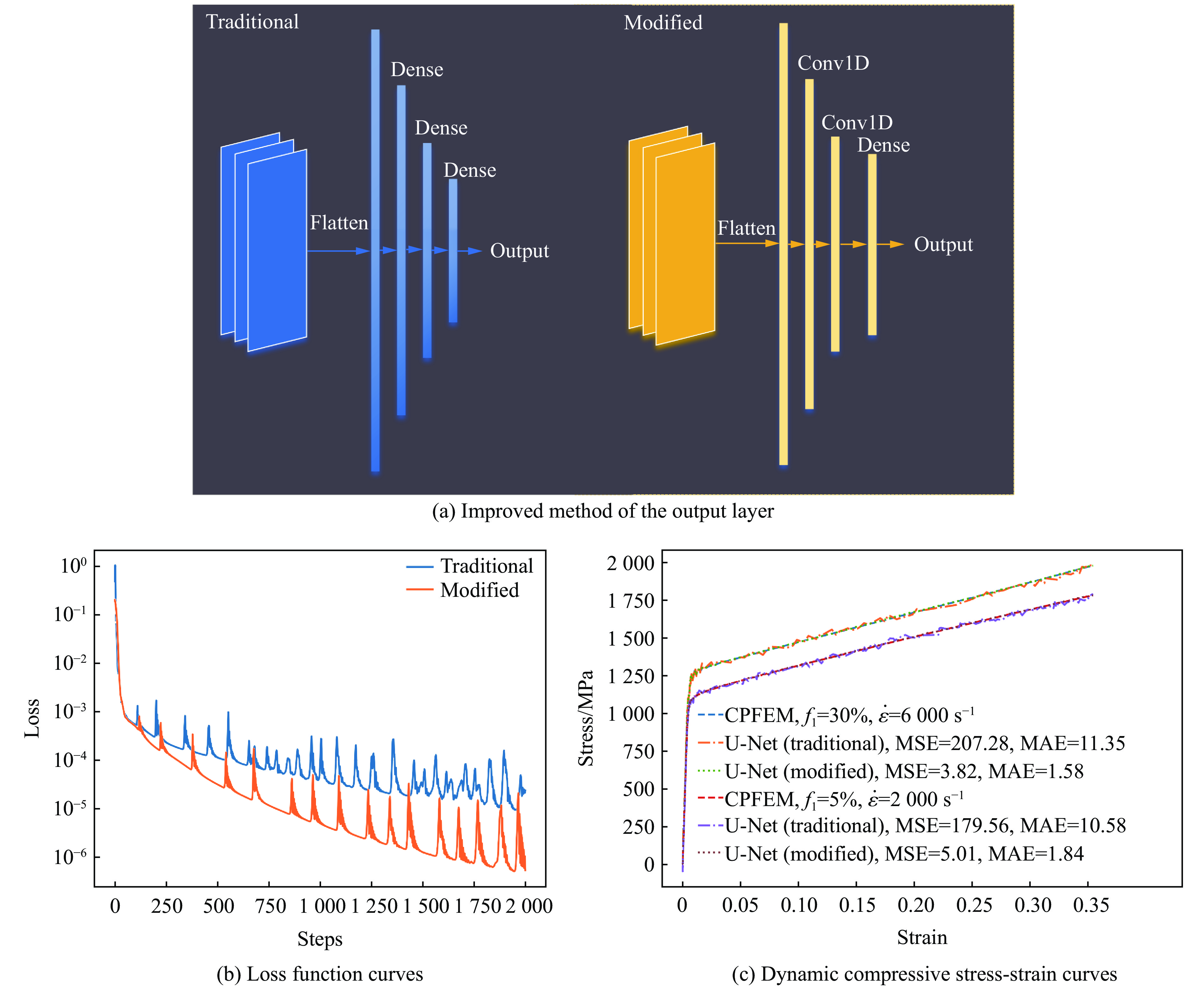
图 8 (a) 输出层的改进方法,(b) 损失函数曲线,(c) 动态压缩应力-应变曲线
Figure 8. (a) Improved method of the output layer; (b) loss function curves; (c) dynamic compressive stress-strain curves
表 1 CPFEM模型的本构参数
Table 1. Constitutive parameters of CPFEM model
$ C_{11}^{\text{matrix}} $/GPa $ C_{44}^{\text{matrix}} $/GPa $ C_{12}^{\text{matrix}} $/GPa $ \dot{{\gamma }_{0}} $/s−1 $ C_{11}^{1} $/GPa $ C_{44}^{1} $/GPa $ C_{12}^{1} $/GPa 245 142 156 0.001 477 137 198 $ h_{0}^{\text{matrix}} $/MPa $ \tau _{0}^{\text{matrix}} $/MPa $ \tau _{\text{s}}^{\text{matrix}} $/MPa m $ h_{0}^{1} $/MPa $ \tau _{0}^{1} $/MPa $ \tau _{\text{s}}^{1} $/MPa 51 92.7 215 10 51 183 1150 $ \gamma_{\mathrm{AP}{{\mathrm{B}}_{2}}} $/(J·m−2) $ \gamma_{\mathrm{AP}{{\mathrm{B}}_{3}}} $/(J·m−2) $ {\mu }_{2} $/GPa $ {\mu }_{3} $/GPa $ {\beta }_{\mathrm{loop}} $ $ {r}_{2} $/nm $ {f}_{3} $ 0.5 0.5 299 299 0.143 500 0.1 $ {b}_{2} $/nm $ {b}_{3} $/nm $ {\alpha }_{\mathrm{shear}} $ r3/nm $ {f}_{2} $ 0.43 0.43 0.0008 50 0.1 Note: Numerals 1, 2, and 3 in superscripts and subscripts designate precipitates of Grades 1, 2, and 3, respectively.  下载: 导出CSV
-
[1] 杨亚玉, 范婉婉, 刘红艳, 等. 不同晶粒取向的304不锈钢箔带介观尺度轧制变形 [J]. 锻压技术, 2025, 50(5): 188–196. doi: 10.13330/j.issn.1000-3940.2025.05.023YANG Y Y, FAN W W, LIU H Y, et al. Mesoscale rolling deformation of 304 stainless steel foil with different grain orientations [J]. Forging & Stamping Technology, 2025, 50(5): 188–196. doi: 10.13330/j.issn.1000-3940.2025.05.023 [2] 赵宏伟. 基于CPFEM的镍基合金力学性能及织构演化行为研究 [D]. 太原: 太原科技大学, 2024.ZHAO H W. Study on the mechanical properties and texture evolution behavior of nickel-based alloys based on CPFEM [D]. Taiyuan: Taiyuan University of Science & Technology, 2024. [3] 郑战光, 周滋, 孙腾, 等. 晶粒取向对过载下疲劳裂尖塑性区的影响 [J]. 塑性工程学报, 2023, 30(11): 194–202. doi: 10.3969/j.issn.1007-2012.2023.11.024ZHENG Z G, ZHOU Z, SUN T, et al. Effect of grain orientation on plastic zone of fatigue crack tip under overload [J]. Journal of Plasticity Engineering, 2023, 30(11): 194–202. doi: 10.3969/j.issn.1007-2012.2023.11.024 [4] GRAFF S, BROCKS W, STEGLICH D. Yielding of magnesium: from single crystal to polycrystalline aggregates [J]. International Journal of Plasticity, 2007, 23(12): 1957–1978. doi: 10.1016/j.ijplas.2007.07.009 [5] PRIDDY M W, PAULSON N H, KALIDINDI S R, et al. Strategies for rapid parametric assessment of microstructure-sensitive fatigue for HCP polycrystals [J]. International Journal of Fatigue, 2017, 104: 231–242. doi: 10.1016/j.ijfatigue.2017.07.015 [6] YUAN M F, PARADISO S, MEREDIG B, et al. Machine learning-based reduce order crystal plasticity modeling for ICME applications [J]. Integrating Materials and Manufacturing Innovation, 2018, 7(4): 214–230. doi: 10.1007/s40192-018-0123-x [7] REZAEI M J, SEDIGHI M, POLETTI M C, et al. Crystallographic texture prediction of torsioned aluminum wire using hybrid of machine learning and multi-scale crystal plasticity [J]. Materials Characterization, 2025, 224: 115000. doi: 10.1016/j.matchar.2025.115000 [8] IBRAGIMOVA O, BRAHME A, MUHAMMAD W, et al. A new ANN based crystal plasticity model for FCC materials and its application to non-monotonic strain paths [J]. International Journal of Plasticity, 2021, 144: 103059. doi: 10.1016/j.ijplas.2021.103059 [9] IBRAGIMOVA O, BRAHME A, MUHAMMAD W, et al. A convolutional neural network based crystal plasticity finite element framework to predict localised deformation in metals [J]. International Journal of Plasticity, 2022, 157: 103374. doi: 10.1016/j.ijplas.2022.103374 [10] FLÁVIO P G M, MUNIZ L R C, DOCA T. ANN strategies for the stress-strain analysis of metallic materials: modeling, database, supervised learning, validation and performance analysis [J]. Finite Elements in Analysis and Design, 2024, 230: 104097. doi: 10.1016/j.finel.2023.104097 [11] LIU Q Y, WU D Z. Machine learning and feature representation approaches to predict stress-strain curves of additively manufactured metamaterials with varying structure and process parameters [J]. Materials & Design, 2024, 241: 112932. doi: 10.1016/j.matdes.2024.112932 [12] MILAD R, HEGAZY H, ZHANG J S, et al. Estimating the stress distribution within MERO joint using (FEM-ANN) hybrid technique [J]. Journal of Computational Science, 2024, 79: 102294. doi: 10.1016/j.jocs.2024.102294 [13] HUANG Y G. A user-material subroutine incroporating single crystal plasticity in the ABAQUS finite element program [M]. Cambridge: Harvard University, 1991. [14] HUTCHINSON J W. Bounds and self-consistent estimates for creep of polycrystalline materials [J]. Proceedings of the Royal Society of London A. Mathematical and Physical Sciences, 1976, 348(1652): 101–127. doi: 10.1098/rspa.1976.0027 [15] LU P, JIN X C, LI P, et al. Crystal plasticity constitutive model and thermodynamics informed creep-fatigue life prediction model for Ni-based single crystal superalloy [J]. International Journal of Fatigue, 2023, 176: 107829. doi: 10.1016/j.ijfatigue.2023.107829 [16] GYPEN L A, DERUYTTERE A. Multi-component solid solution hardening: part 1 proposed model [J]. Journal of Materials Science, 1977, 12(5): 1028–1033. doi: 10.1007/BF00540987 [17] EGHTESAD A, KNEZEVIC M. A full-field crystal plasticity model including the effects of precipitates: application to monotonic, load reversal, and low-cycle fatigue behavior of Inconel 718 [J]. Materials Science and Engineering: A, 2021, 803: 140478. doi: 10.1016/j.msea.2020.140478 [18] ZHAO W T, WANG Q, ZHAO D, et al. Numerical and experimental investigation of the dynamic mechanical behavior of precipitation-strengthed NiCoCrSi0.3C0.048 medium-entropy alloy [J]. Journal of Materials Research and Technology, 2024, 30: 5826–5841. doi: 10.1016/j.jmrt.2024.04.245 [19] ALI U, MUHAMMAD W, BRAHME A, et al. Application of artificial neural networks in micromechanics for polycrystalline metals [J]. International Journal of Plasticity, 2019, 120: 205–219. doi: 10.1016/j.ijplas.2019.05.001 [20] BENIWAL A, DADHICH R, ALANKAR A. Deep learning based predictive modeling for structure-property linkages [J]. Materialia, 2019, 8: 100435. doi: 10.1016/j.mtla.2019.100435 [21] RAMACHANDRAN P, ZOPH B, LE Q V. Searching for activation functions [C]//6th International Conference on Learning Representations. Vancouver: OpenReview. net, 2018. [22] MENG C L, HE Y T, SONG Y, et al. SDEdit: guided image synthesis and editing with stochastic differential equations [C]//10th International Conference on Learning Representations. Vancouver: OpenReview. net, 2022. -

 下载:
下载:

计量
- 文章访问数: 708
- HTML全文浏览量: 307
- PDF下载量: 77
