





Influence of Pressing Technique Parameters on Microstructures and Mechanical Properties of Polymer Bonded Energetic Materials
-
摘要: 粉末压制技术是制备高聚物黏结炸药(polymer bonded explosives,PBX)的常用手段,其工艺参数对成型PBX材料的微观结构和力学性能具有重要影响。系统地探讨了制备工艺参数对成型药柱微细观结构及其压缩力学性能的影响。首先,采用不同的压制参数,包括压制速率、孔隙率、温度和颗粒级配,制备了6种圆柱形PBX样品,通过扫描电子显微镜和计算机断层扫描获取了样品的初始微细观结构信息。然后,在宽应变率范围内(
0.0003 ~7000 s−1)对PBX样品开展了一维应力压缩实验,获取其应力-应变响应,并基于ZWT本构模型构建了PBX样品的率相关非线性本构模型。最后,对准静态压缩后的回收样品进行扫描电镜表征,观察和分析其变形和损伤机制(晶内/晶间断裂和界面脱黏)。研究结果系统地揭示了PBX材料的“压制工艺参数-微观结构特征-宏观力学性能”三者之间的映射关系与规律,为PBX材料的构效关系研究提供了丰富的结构特征和力学响应数据,构建了非线性力学本构模型,对PBX材料的生产工艺优化和力学性能评估具有指导意义。Abstract: Powder compaction is the most widely used technology to fabricate polymer bonded explosives (PBX), and its parameters significantly influence the structures and mechanical properties of the final products. By conducting characterizations and experiments, this work performs a systematical study on the effects of compaction parameters. Cylindrical PBX samples are prepared with distinct fabrication parameters, including pressing rate, porosity factor, temperature and granular composition. Their initial micro-structures are obtained by scanning electron microscopy (SEM) and computer tomography (CT). The samples are tested with uniaxial compression experiments under strain rates varying from0.0003 s−1 to7000 s−1 to obtain the stress-strain responses. A rate-dependent nonlinear constitutive response model is established based on ZWT constitutive model, describing the mechanical response of the PBX samples. The recycled samples subjected to quasi-static compression are examined via SEM, and the deformation/damage mechanisms are revealed (intra-granular/inter-granular fractures and interfacial debonding). This work reveals the relations between the preparation parameters, material micro-structures and compressive properties. It provides abundant data of micro-structural characteristics and mechanical properties and proposes an efficient non-linear constitutive model for the PBX. The investigation is valuable for fabrication optimization and mechanical performance assessment of PBX. -

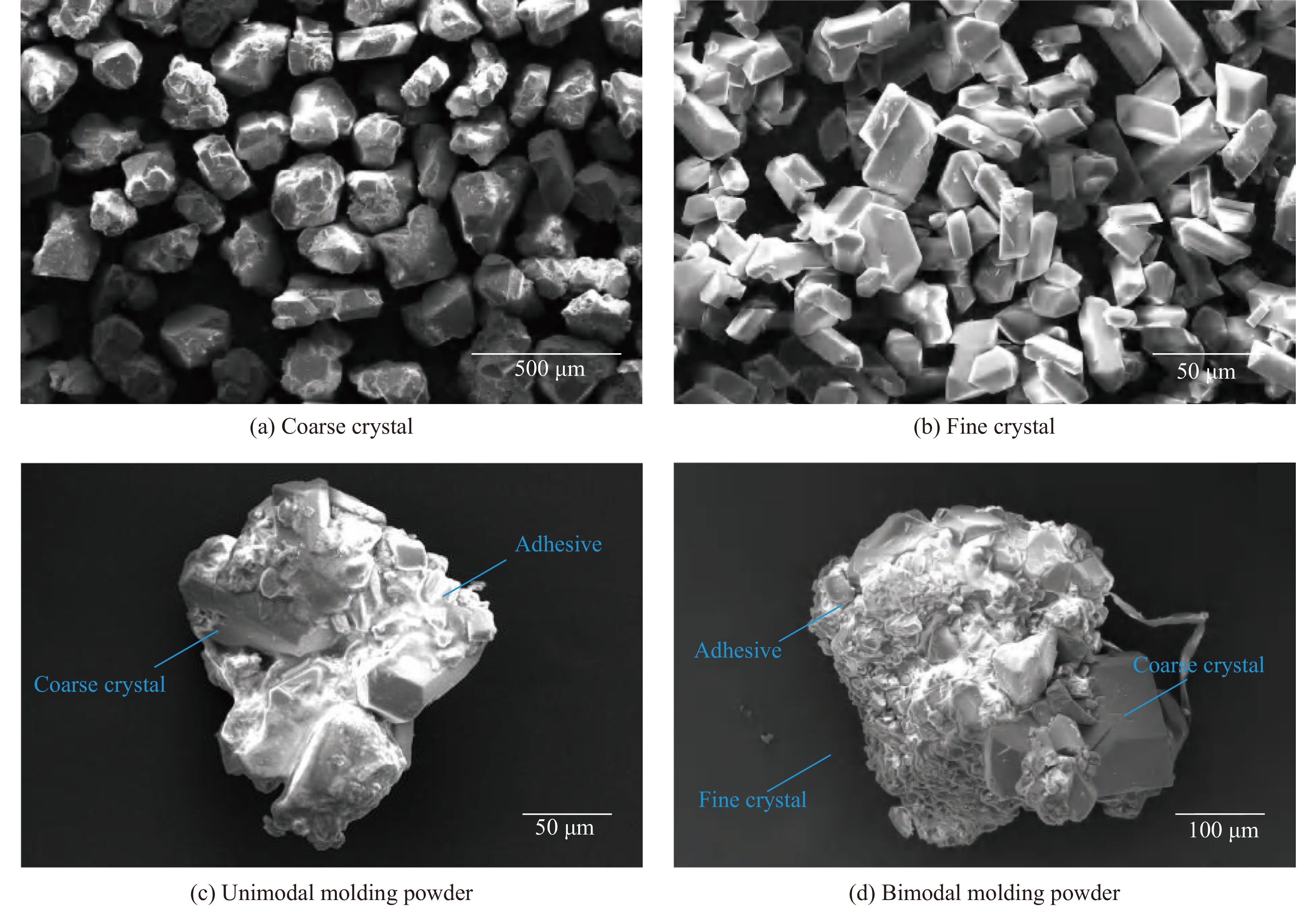
图 4 用于压装的HMX晶体及PBX造型粉的微观形貌
Figure 4. Micro-morphological characterizations of the HMX crystals and the PBX molding powders for pressing process

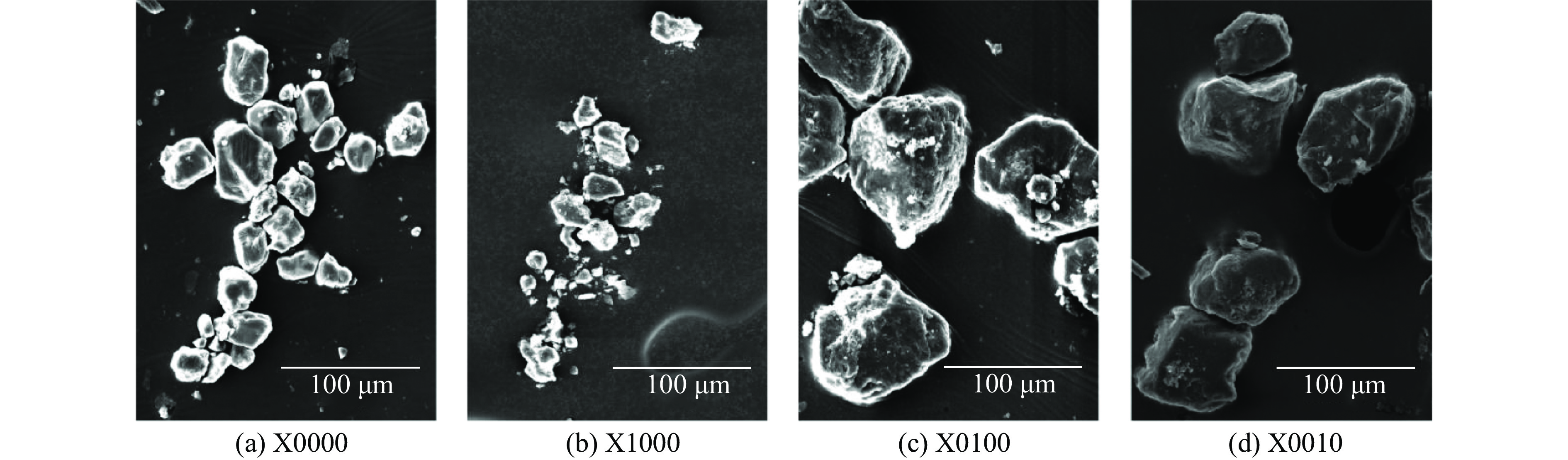
图 5 不同工艺参数压制后PBX样品中HMX晶体的微观形貌
Figure 5. Crystal morphology of the PBX pressed with different process parameters

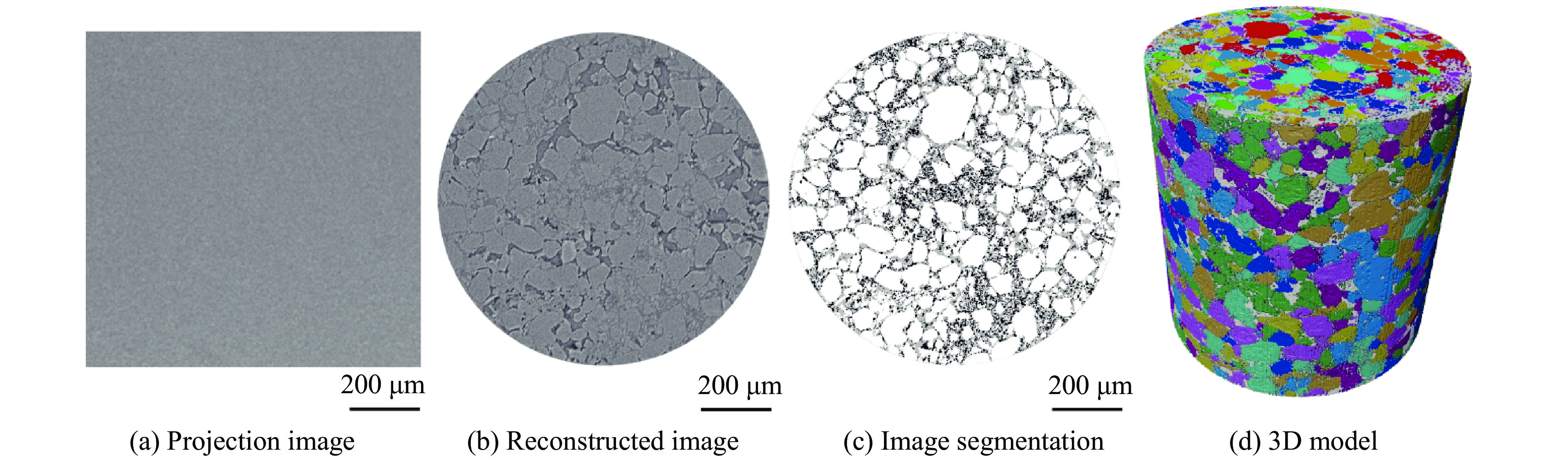
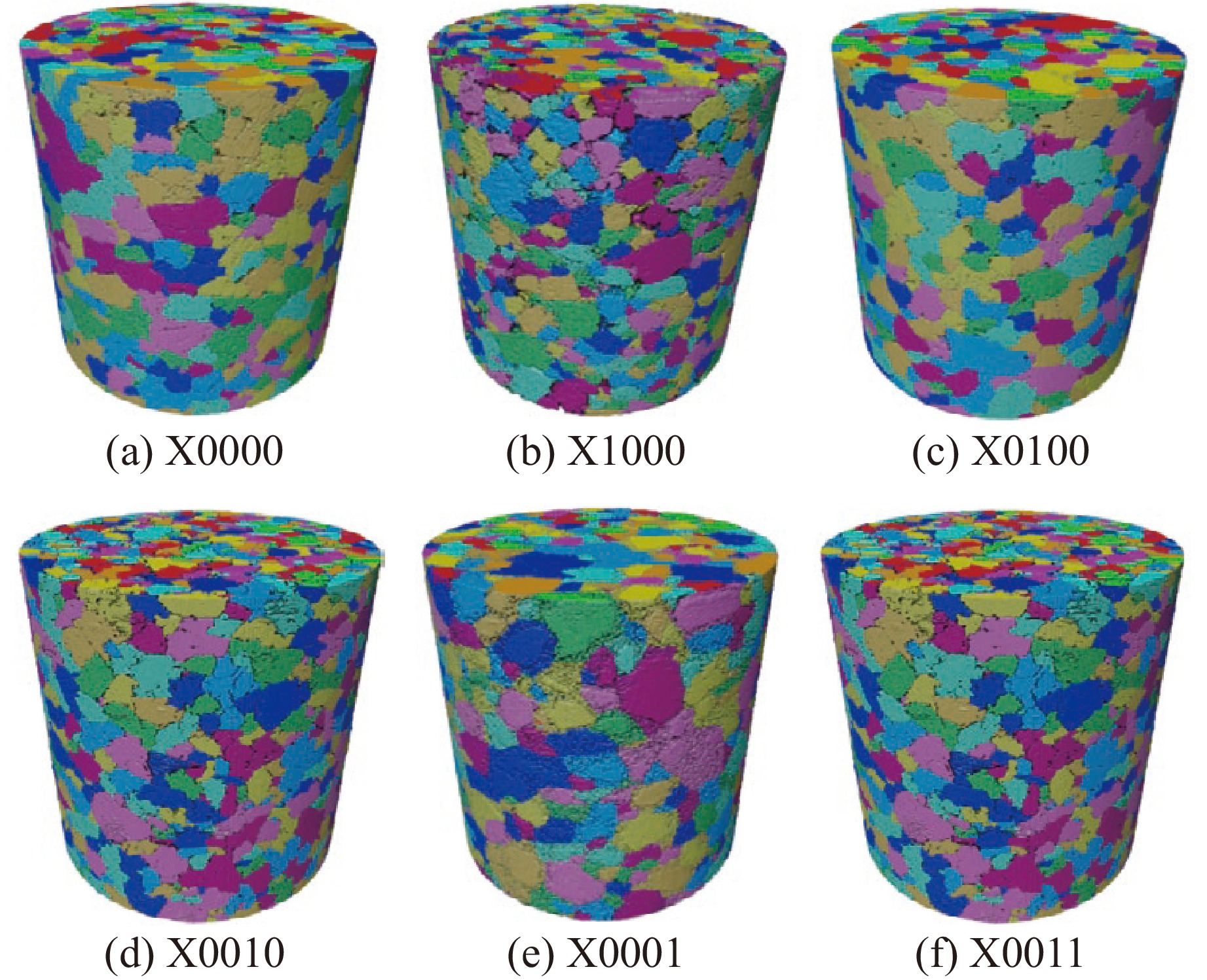
图 8 不同工艺参数压制成型的PBX样品的微细观结构3D重构结果
Figure 8. 3D microstructure reconstructions of the PBX samples formed by different pressing parameters

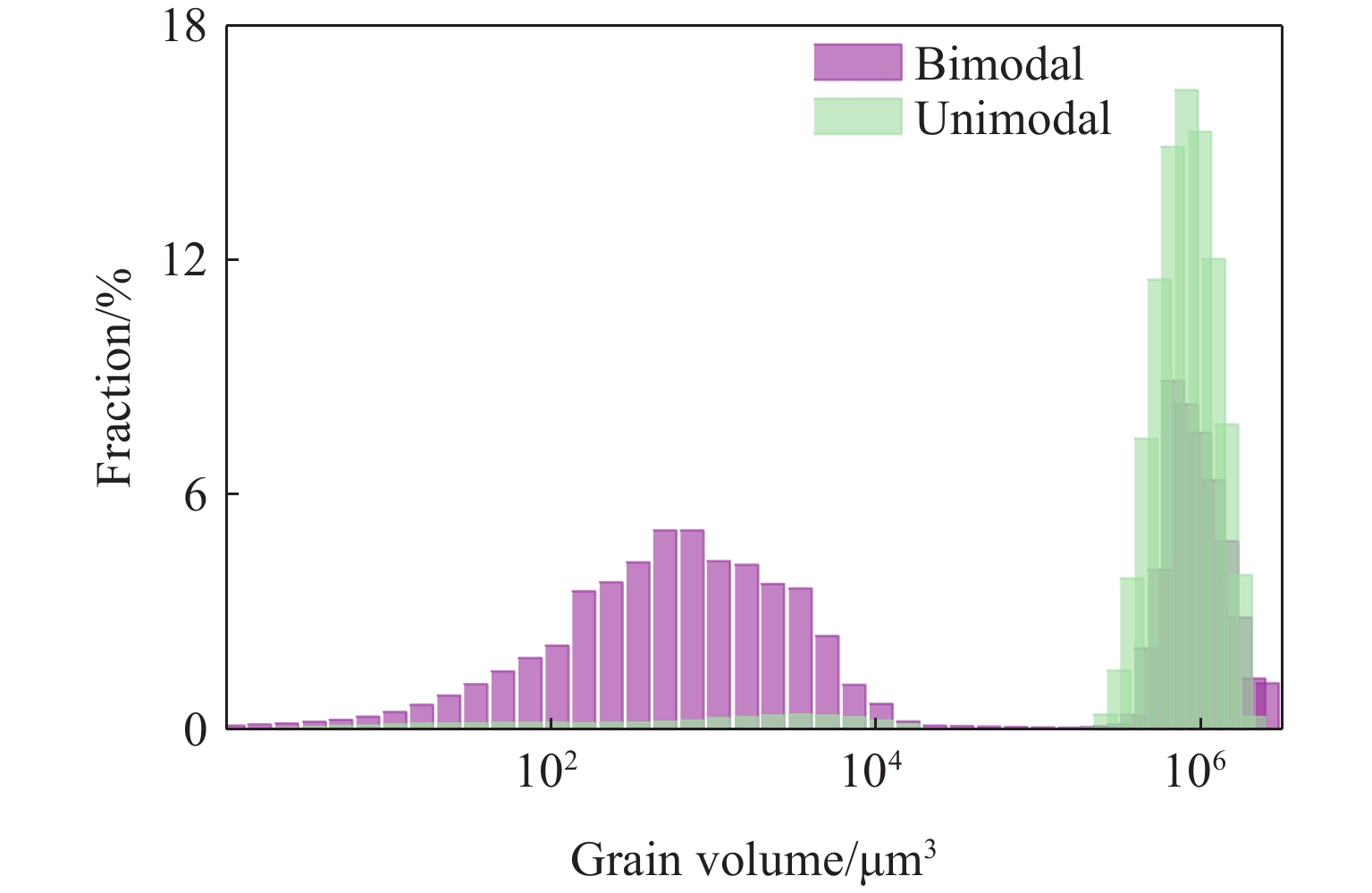
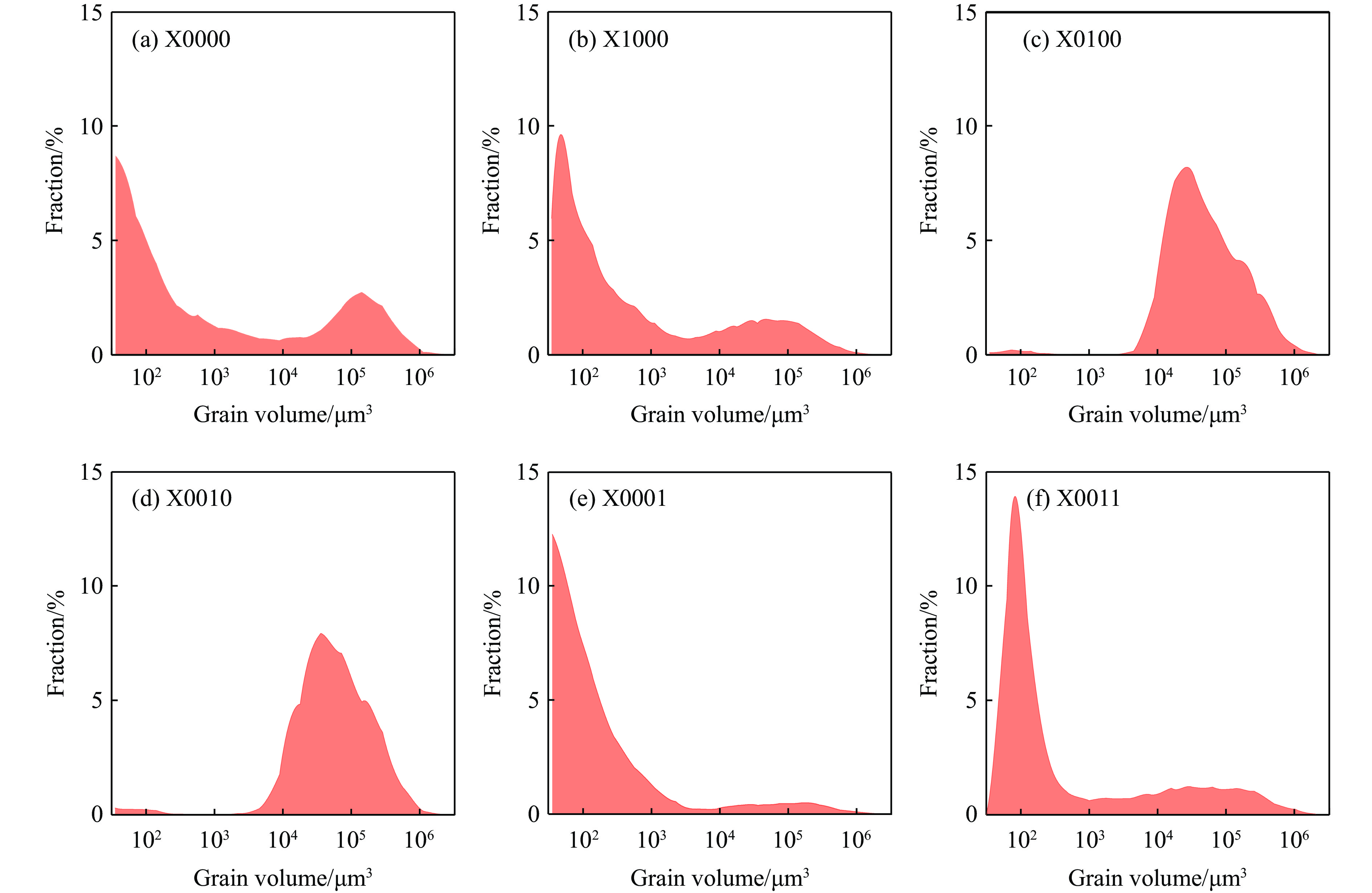
图 9 初始PBX样品中HMX晶粒的体积分布
Figure 9. Volume distribution for the HMX particles in the initial PBX samples

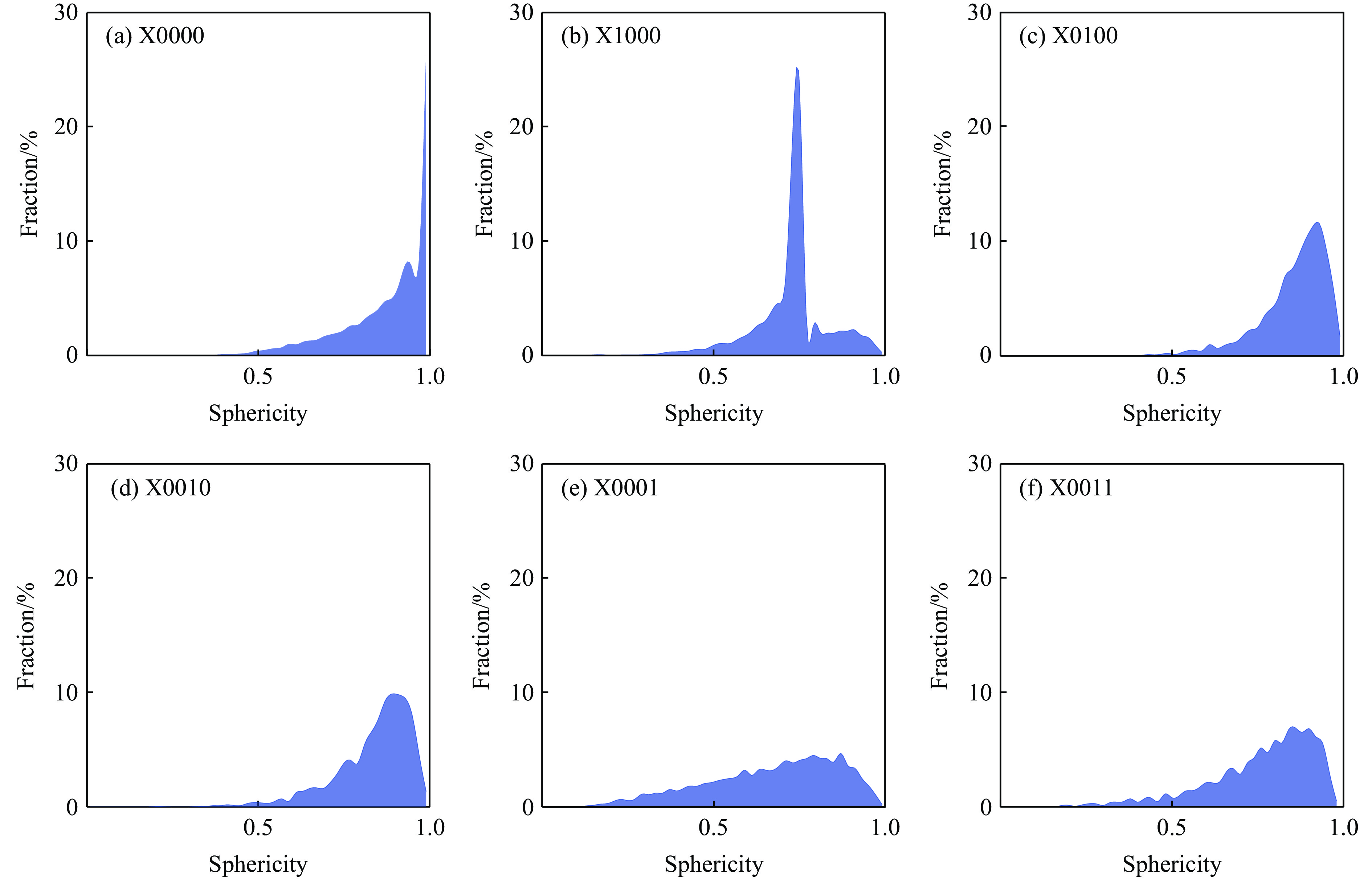
图 10 初始PBX样品中HMX晶粒的球形度分布
Figure 10. Sphericity distribution for the HMX particles in the initial PBX samples

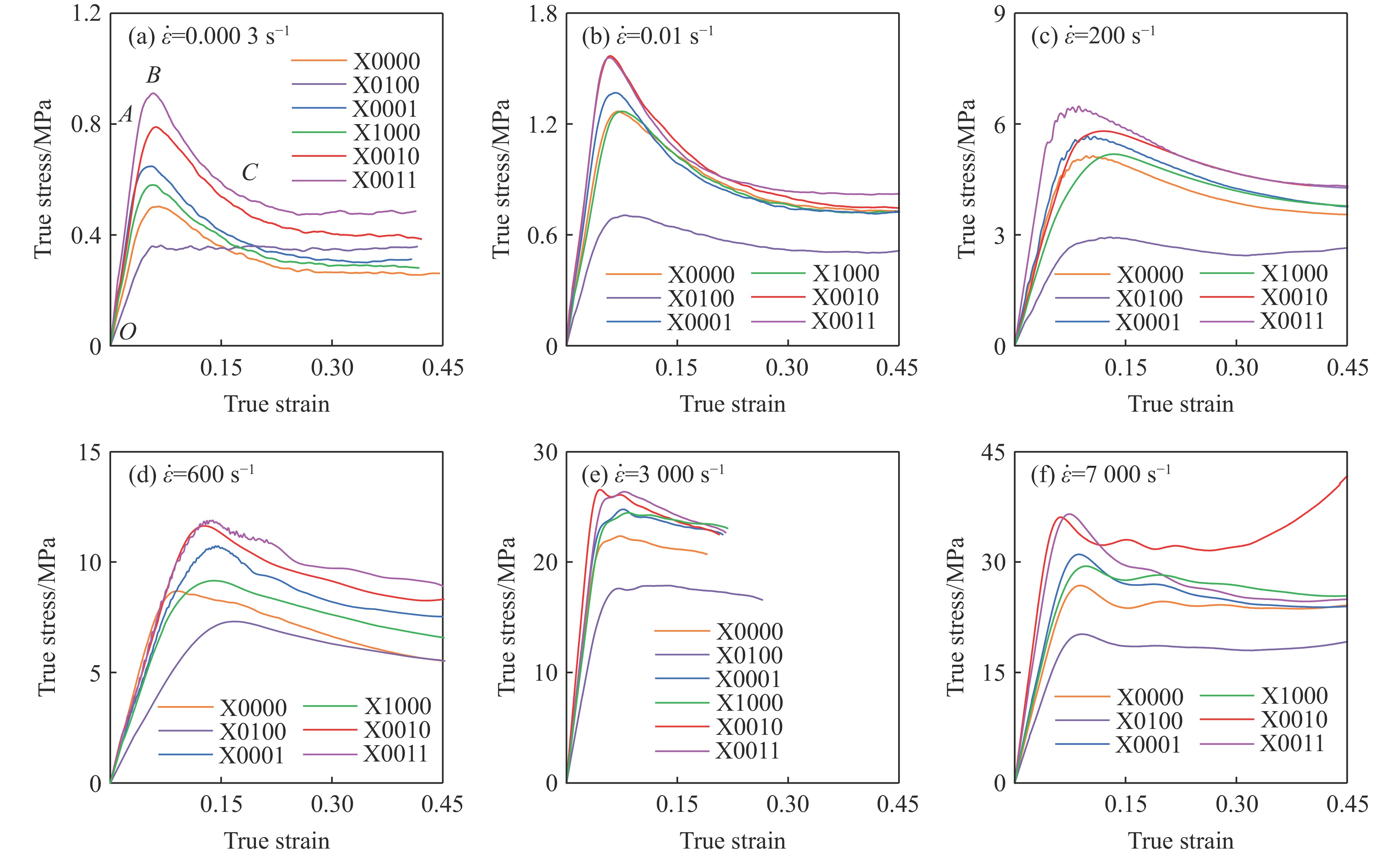
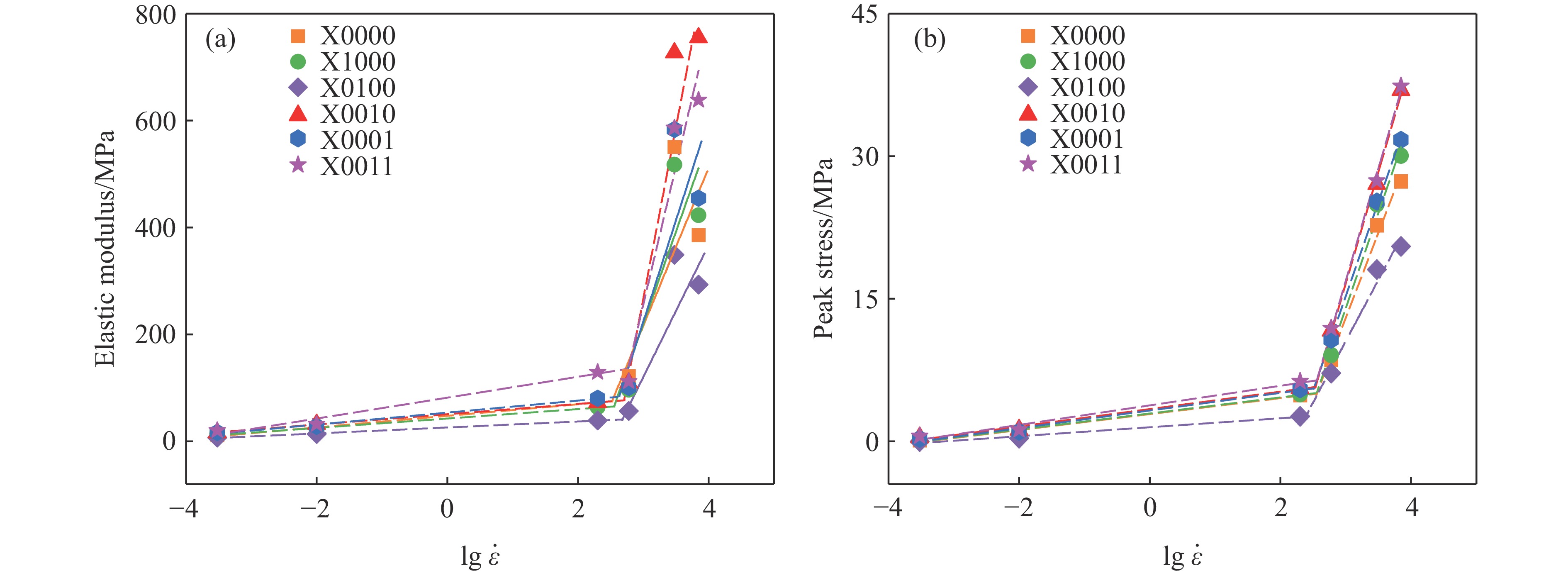
图 12 应变率对PBX样品压缩力学性能的影响
Figure 12. Effects of strain rate on compressive mechanical properties of the PBX specimens

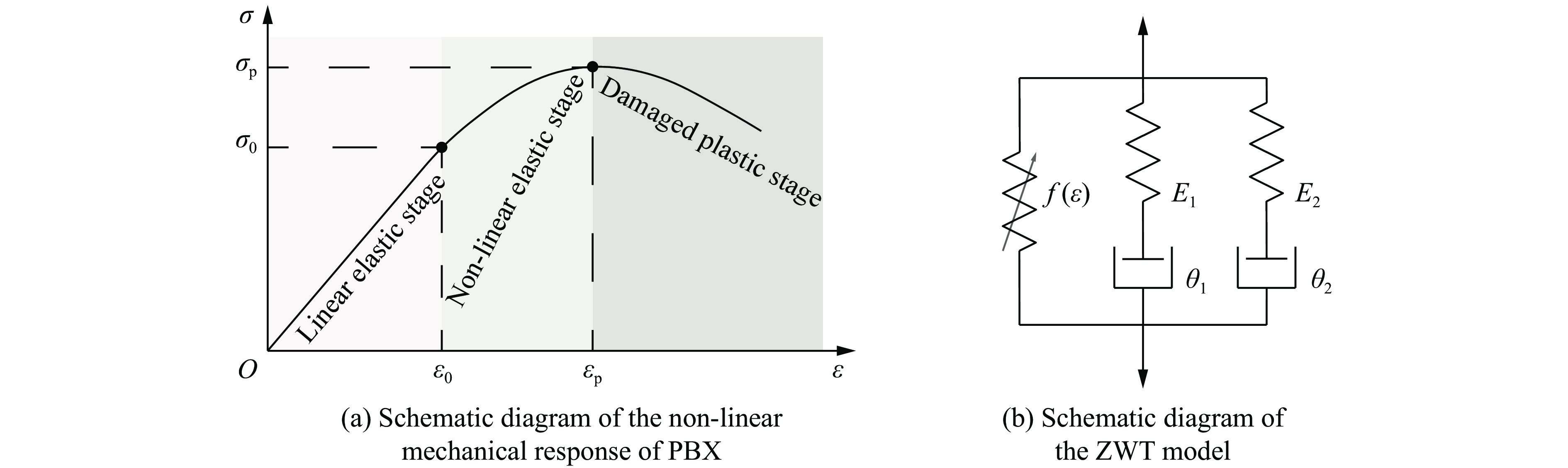
图 13 PBX材料的非线性弹性本构模型示意图
Figure 13. Schematic diagram of the non-linear elastic constitutive model of the PBX materials

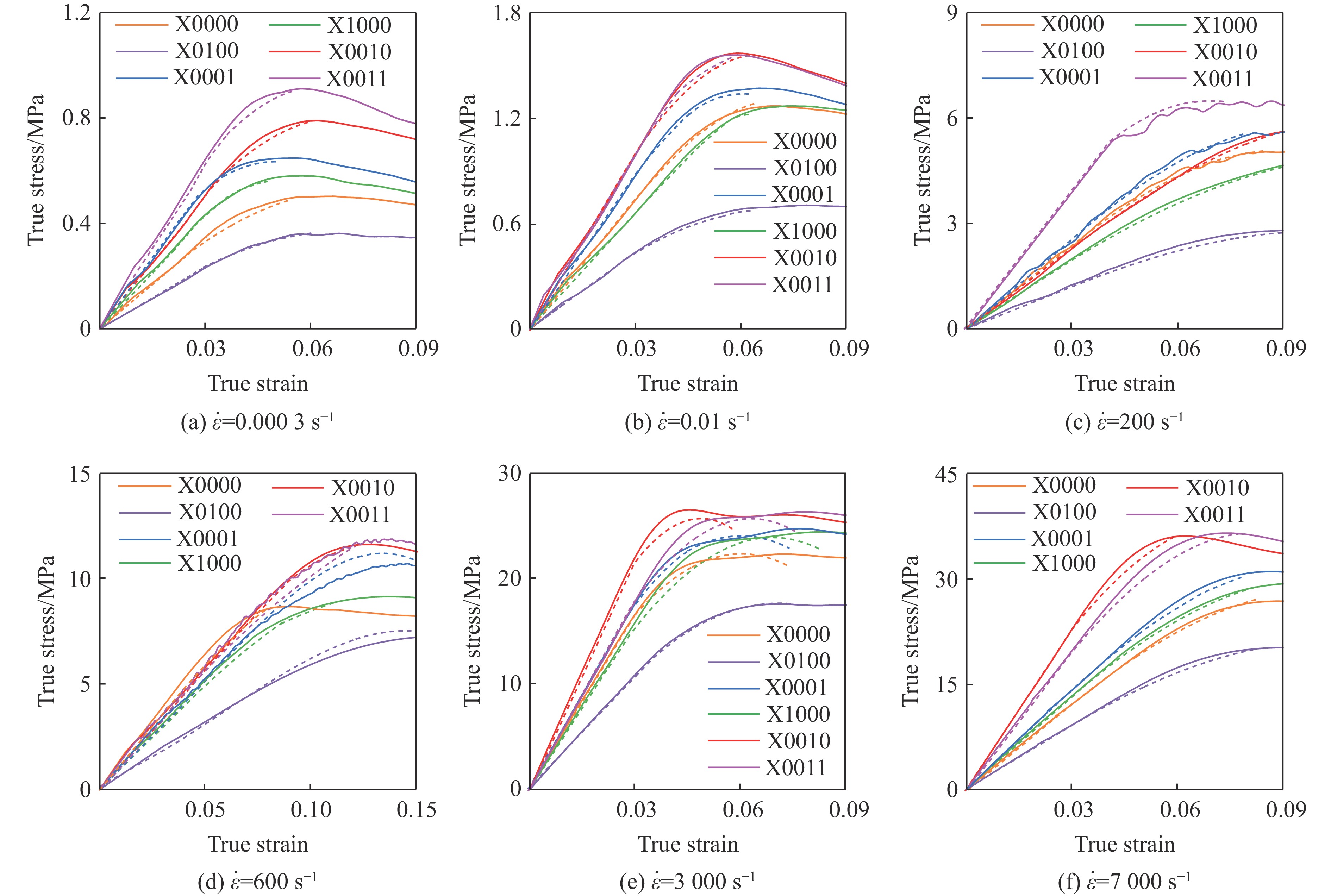
图 14 不同应变率加载下PBX样品的力学响应(实线代表实验结果,虚线代表拟合结果)
Figure 14. Mechanical responses of the PBX samples under different strain rates (solid line: experiment; dashed line: fitting.)

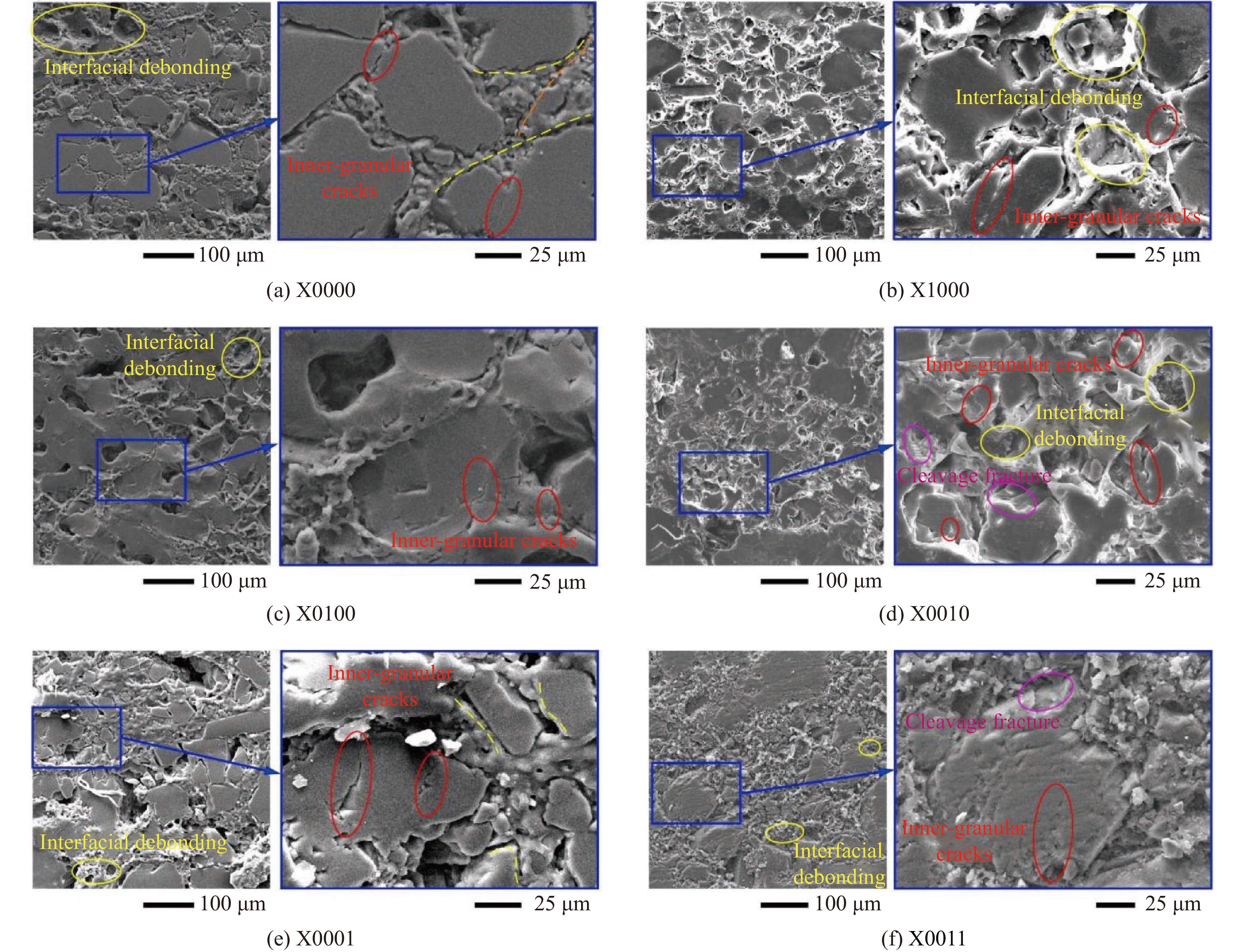
图 15 准静态压缩加载(应变率为
0.0003 s−1,工程压缩应变为40%)后6种PBX样品截面的SEM成像Figure 15. SEM images on cross-sections of the six PBX samples subjected to a loading with strain rate of
0.0003 s−1表 1 PBX样品制备过程中所用化学试剂的相关信息
Table 1. Detailed information of the chemical reagents used for fabricating PBX samples
Reagent Chemical formula Purity grade Density/(g·cm−3) Source HMX C4H8N8O8 Technically reagent 1.91 Gansu Yinguang Chemical Industry Group Co., Ltd. DMSO C2H6OS Analytically reagent 1.10 Chengdu Chron Chemicals Co., Ltd. EA C4H8O2 Analytically reagent 0.90 Chengdu Chron Chemicals Co., Ltd. PE CnH2n+2 (n≥5) Analytically reagent 0.77 Chengdu Chron Chemicals Co., Ltd. BR (C4H6)n Technically reagent 0.91 Shandong Yousuo Chemical Technology Co., Ltd.  下载: 导出CSV
表 2 6种PBX药柱样品的编号及对应的制备工艺和微观结构特征
Table 2. Codes, corresponding parameters and microstructural characteristics of the six PBX samples
Sample Compaction rate/(mm·s−1) Porosity/% Temperature/℃ Granular composition dav/μm X0000 4 1.5 25 Unimodal 25.57 X1000 40 1.5 25 Unimodal 50.59 X0100 4 10 25 Unimodal 17.16 X0010 4 1.5 60 Unimodal 51.22 X0001 4 1.5 25 Bimodal 7.76 X0011 4 1.5 60 Bimodal 14.79
下载: 导出CSV
表 3 6类PBX药柱样品的本构模型拟合参数
Table 3. Fitted parameters of the constitutive model for the six PBX samples
Sample m n u v k1 k2 w X0000 −1.76 −1.15 6.62 0.90 1.28 24.63 0.30 X1000 −1.67 −1.09 14.32 0.91 0.77 21.07 0.24 X0100 −0.84 −0.58 0.91 1.54 0.98 29.95 0.61 X0010 −0.61 0.54 2.49 1.68 0.77 31.74 0.29 X0001 −2.80 −1.80 19.80 0.76 0.79 19.40 0.22 X0011 −3.09 −1.49 15.13 0.51 0.80 18.98 0.32
下载: 导出CSV
-
[1] KANG G, NING Y J, CHEN P W. Meso-scale failure simulation of polymer bonded explosive with initial defects by the numerical manifold method [J]. Computational Materials Science, 2020, 173: 109425. doi: 10.1016/j.commatsci.2019.109425 [2] 曾升, 游国强, 温彤, 等. 高聚物粘结炸药压制成型工艺实验研究综述 [J]. 兵工自动化, 2024, 43(8): 86–92. doi: 10.7690/bgzdh.2024.08.018ZENG S, YOU G Q, WEN T, et al. Review of experimental research on PBX pressing process [J]. Ordnance Industry Automation, 2024, 43(8): 86–92. doi: 10.7690/bgzdh.2024.08.018 [3] MANNER V W, YEAGER J D, PATTERSON B M, et al. In situ imaging during compression of plastic bonded explosives for damage modeling [J]. Materials, 2017, 10(6): 638. doi: 10.3390/ma10060638 [4] 贾宏选, 张瑞琪, 闫华, 等. 浅析高聚物黏结炸药(PBX)制备工艺 [C]//第6届含能材料与钝感弹药技术学术研讨会论文集. 成都, 2014: 111–114.JIA H X, ZHANG R Q, YAN H, et al. A brief analysis of the preparation process of polymer bonded explosives (PBX) [C]//Proceedings of the 6th Academic Seminar on Energetic Materials and Insensitive Munitions Technology. Chengdu, 2014: 111–114. [5] 席鹏, 孙培培, 郑亚峰, 等. 典型浇注PBX炸药的准静态压缩力学行为 [J]. 爆破器材, 2021, 50(2): 41–44, 49. doi: 10.3969/j.issn.1001-8352.2021.02.008XI P, SUN P P, ZHENG Y F, et al. Mechanical behaviors of typical casting-PBX explosives under quasi-static compression [J]. Explosive Materials, 2021, 50(2): 41–44, 49. doi: 10.3969/j.issn.1001-8352.2021.02.008 [6] 李思涵. 浇注型高填充复合材料的制备及压缩变形行为研究 [D]. 北京: 北京化工大学, 2024.LI S H. Research on preparation and compression deformation behavior of casting type high-filled composite [D]. Beijing: Beijing University of Chemical Technology, 2024. [7] 金浩博. 粒度及粒度级配对HMX基浇注PBX炸药的性能影响研究 [D]. 太原: 中北大学, 2016.JIN H B. The influence of the particle size and the gradation of the base explosive on the HMX based PBX [D]. Taiyuan: North University of China, 2016. [8] 方健, 胡桥, 刘玥, 等. PBX型炸药3D打印喷射理论与仿真分析 [J]. 水下无人系统学报, 2018, 26(2): 140–145. doi: 10.11993/j.issn.2096-3920.2018.02.007FANG J, HU Q, LIU Y, et al. 3D printing injection theory and simulation analysis of PBX explosive [J]. Journal of Unmanned Undersea Systems, 2018, 26(2): 140–145. doi: 10.11993/j.issn.2096-3920.2018.02.007 [9] GUO C, CUI H, REN H, et al. Experimental investigation of quasi-static compressive properties of polymer-bonded explosives (PBX) based on UV-curing 3D printing [J]. Propellants, Explosives, Pyrotechnics, 2024, 49(12): e202400090. doi: 10.1002/prep.202400090 [10] BURNSIDE N J, SON S F, ASAY B W, et al. Particle characterization of pressed granular HMX [J]. AIP Conference Proceedings, 1998, 429(1): 571–574. doi: 10.1063/1.55665 [11] 姚奎光, 王淑娟, 樊星, 等. 不同机械约束下压装PBX炸药反应演化行为 [J]. 兵工学报, 2022, 43(8): 1772–1778. doi: 10.12382/bgxb.2021.0445YAO K G, WANG S J, FAN X, et al. Reaction evolution behaviors of pressed plastic-bonded explosive (PBX) under different mechanical confinement conditions [J]. Acta Armamentarii, 2022, 43(8): 1772–1778. doi: 10.12382/bgxb.2021.0445 [12] 田佳宁. RDX基压装PBX力学性能与成型质量影响规律研究 [D]. 沈阳: 沈阳理工大学, 2024.TIAN J N. Study on the influence law of mechanical properties and molding quality of RDX-based pressed PBX [D]. Shenyang: Shenyang Ligong University, 2024. [13] 郭虎, 罗景润, 谢朝阳. PBX细观损伤特征及表征方法研究综述 [J]. 四川兵工学报, 2012, 33(1): 125–129. doi: 10.3969/j.issn.1006-0707.2012.01.041GUO H, LUO J R, XIE C Y. Review on mesoscopic damage characteristics and characterization methods of PBX [J]. Journal of Sichuan Ordnance, 2012, 33(1): 125–129. doi: 10.3969/j.issn.1006-0707.2012.01.041 [14] HANDLEY C A, LAMBOURN B D, WHITWORTH N J, et al. Understanding the shock and detonation response of high explosives at the continuum and meso scales [J]. Applied Physics Reviews, 2018, 5(1): 011303. doi: 10.1063/1.5005997 [15] ZHANG W B, HUANG H, TIAN Y, et al. Characterization of RDX-based thermosetting plastic-bonded explosive by cone-beam microfocus computed tomography [J]. Journal of Energetic Materials, 2012, 30(3): 196–208. doi: 10.1080/07370652.2011.552899 [16] 孙海涛, 詹梅, 樊晓光, 等. 高性能高聚物黏结炸药压制成型研究进展与展望 [J]. 中国机械工程, 2024, 35(1): 160–180. doi: 10.3969/j.issn.1004-132X.2024.01.016SUN H T, ZHAN M, FAN X G, et al. Research progresses and prospects of compression molding of high-performance PBX [J]. China Mechanical Engineering, 2024, 35(1): 160–180. doi: 10.3969/j.issn.1004-132X.2024.01.016 [17] 王竟成. 高聚物粘结炸药力学性能的细观预测方法 [D]. 绵阳: 中国工程物理研究院, 2018.WANG J C. Study on the micromechanical methods to predict the mechanical property of polymer bonded explosives [D]. Mianyang: China Academy of Engineering Physics, 2018. [18] 涂小珍, 韦兴文, 王培, 等. 成型密度对高聚物粘结炸药拉伸力学性能影响分析 [C]//第2届全国危险物质与安全应急技术研讨会论文集. 成都: 中国工程物理研究院化工材料研究所, 2013: 328–329.TU X Z, WEI X W, WANG P, et al. Analysis of the effect of molding density on the tensile mechanical properties of polymer bonded explosives [C]//The 2nd National Conference on Hazardous Materials and Safety Emergency Technology. Chengdu: Institute of Chemical Materials, China Academy of Engineering Physics, 2013: 328–329. [19] 杨昆, 吴艳青, 金朋刚, 等. 典型压装与浇注PBX炸药缝隙挤压损伤-点火响应 [J]. 含能材料, 2020, 28(10): 975–983. doi: 10.11943/CJEM2020170YANG K, WU Y Q, JIN P G, et al. Damage-ignition simulation for typical pressed and casted PBX under crack-extruded loading [J]. Chinese Journal of Energetic Materials, 2020, 28(10): 975–983. doi: 10.11943/CJEM2020170 [20] SPRINGER H K, TARVER C M, BASTEA S. Effects of high shock pressures and pore morphology on hot spot mechanisms in HMX [J]. AIP Conference Proceedings, 2017, 1793(1): 080002. doi: 10.1063/1.4971608 [21] 朱敏, 邵照群, 黄璜, 等. 高聚物粘接炸药失效机理与寿命评估研究综述 [J]. 科学技术与工程, 2022, 22(2): 455–462. doi: 10.3969/j.issn.1671-1815.2022.02.003ZHU M, SHAO Z Q, HUANG H, et al. Review on failure mechanism and life evaluation of polymer bonded explosive [J]. Science Technology and Engineering, 2022, 22(2): 455–462. doi: 10.3969/j.issn.1671-1815.2022.02.003 [22] 岳晓媛, 张会锁, 黄鸿鑫, 等. 压药工艺参数对成型药柱质量的影响研究 [J]. 兵工自动化, 2021, 40(1): 84–87, 96. doi: 10.7690/bgzdh.2021.01.019YUE X Y, ZHANG H S, HUANG H X, et al. Study on influence of explosive pressing technique parameter on quality of press-forming grain [J]. Ordnance Industry Automation, 2021, 40(1): 84–87, 96. doi: 10.7690/bgzdh.2021.01.019 [23] 刘玉存, 王作山, 吕春玲, 等. 黑索今粒度及粒度级配对高分子粘结炸药冲击波感度的影响 [J]. 兵工学报, 2005, 26(1): 126–128. doi: 10.3321/j.issn:1000-1093.2005.01.028LIU Y C, WANG Z S, LYU C L, et al. Influence of particle size and gradation of RDX on the shock sensitivity of a polymer bonded explosive [J]. Acta Armamentarii, 2005, 26(1): 126–128. doi: 10.3321/j.issn:1000-1093.2005.01.028 [24] 严启龙, 聂福德, 杨志剑. 高聚物粘结炸药及其性能 [M]. 北京: 国防工业出版社, 2020.YAN Q L, NIE F D, YANG Z J. Polymer bonded explosives and their properties [M]. Beijing: National Defense Industry Press, 2020. [25] SKIDMORE C B, PHILLIPS D S, HOWE P M, et al. The evolution of microstructural changes in pressed HMX explosives [C]//Proceedings of the 11th International Detonation Symposium. Snowmass, Colorado, 1998: 556–564. [26] OLINGER B. Compacting plastic-bonded explosive molding powders to dense solids: LA-14173 [R]. Los Alamos: Los Alamos National Laboratory, 2005. [27] THOMPSON D G, OLINGER B, DELUCA R. The effect of pressing parameters on the mechanical properties of plastic bonded explosives [J]. Propellants, Explosives, Pyrotechnics, 2005, 30(6): 391–396. doi: 10.1002/prep.200500030 [28] YEAGER J D, LUO S N, JENSEN B J, et al. High-speed synchrotron X-ray phase contrast imaging for analysis of low-Z composite microstructure [J]. Composites Part A: Applied Science and Manufacturing, 2012, 43(6): 885–892. doi: 10.1016/j.compositesa.2012.01.013 [29] YEAGER J D, KUETTNER L A, DUQUE A L, et al. Microcomputed X-ray tomographic imaging and image processing for microstructural characterization of explosives [J]. Materials, 2020, 13(20): 4517. doi: 10.3390/ma13204517 [30] 梁华琼, 周旭辉, 唐常良, 等. HMX钢模压制的微观结构演变研究 [J]. 含能材料, 2008, 16(2): 188–190. doi: 10.3969/j.issn.1006-9941.2008.02.018LIANG H Q, ZHOU X H, TANG C L, et al. Microstructural evolution of HMX during pressing [J]. Chinese Journal of Energetic Materials, 2008, 16(2): 188–190. doi: 10.3969/j.issn.1006-9941.2008.02.018 [31] 梁华琼, 雍炼, 唐常良, 等. 压制过程中PBX炸药颗粒的破碎及损伤 [J]. 火炸药学报, 2010, 33(1): 27–30. doi: 10.3969/j.issn.1007-7812.2010.01.007LIANG H Q, YONG L, TANG C L, et al. Crack and damage of PBX during pressing [J]. Chinese Journal of Explosives & Propellants, 2010, 33(1): 27–30. doi: 10.3969/j.issn.1007-7812.2010.01.007 [32] 庞海燕, 李明, 温茂萍, 等. 温度对PBX炸药压制的作用 [J]. 兵器材料科学与工程, 2011, 34(1): 21–23. doi: 10.3969/j.issn.1004-244X.2011.01.006PANG H Y, LI M, WEN M P, et al. Effects of compaction temperature on pressing of PBX [J]. Ordnance Material Science and Engineering, 2011, 34(1): 21–23. doi: 10.3969/j.issn.1004-244X.2011.01.006 [33] 周忠彬, 高金霞, 刘龑龙, 等. 成型温度对PBX药柱力学性能及破坏形式的影响研究 [J]. 火工品, 2022(6): 56–59. doi: 10.3969/j.issn.1003-1480.2022.06.012ZHOU Z B, GAO J X, LIU Y L, et al. Effect of molding temperature on mechanical properties and failure modes of PBX grain [J]. Initiators & Pyrotechnics, 2022(6): 56–59. doi: 10.3969/j.issn.1003-1480.2022.06.012 [34] 何海龙, 张亚军, 金志明, 等. 压制参数对PBX模拟材料成型质量的影响 [J]. 塑料, 2025, 54(2): 63–68.HE H L, ZHANG Y J, JIN Z M, et al. Influence of pressing parameters on the molding quality of PBX simulated materials [J]. Plastics, 2025, 54(2): 63–68. [35] 刘佳辉. 高品质HMX在压装PBX中的晶体损伤研究 [D]. 绵阳: 中国工程物理研究院, 2012.LIU J H. Research on crystal damage of high-quality HMX in pressing PBX [D]. Mianyang: China Academy of Engineering Physics, 2012. [36] 刘佳辉, 曾诚成, 郑胜军, 等. HMX基高聚物粘结炸药界面增强的粒径效应 [J]. 含能材料, 2024, 32(10): 1091–1098. doi: 10.11943/CJEM2024013LIU J H, ZENG C C, ZHENG S J, et al. Effect of particle size on interface enhancement of HMX-based polymer bonded explosives [J]. Chinese Journal of Energetic Materials, 2024, 32(10): 1091–1098. doi: 10.11943/CJEM2024013 [37] 温茂萍, 唐维, 董平, 等. 粘结剂含量对热压TATB基PBX残余应力的影响 [J]. 含能材料, 2017, 25(8): 661–666. doi: 10.11943/j.issn.1006-9941.2017.08.008WEN M P, TANG W, DONG P, et al. Effect of binder content on residual stress of thermally compacted TATB based PBX [J]. Chinese Journal of Energetic Materials, 2017, 25(8): 661–666. doi: 10.11943/j.issn.1006-9941.2017.08.008 [38] 詹春红, 屈延阳, 王军, 等. HMX颗粒特性对PBX炸药包覆及成型的影响 [J]. 火工品, 2019(3): 58–60. doi: 10.3969/j.issn.1003-1480.2019.03.015ZHAN C H, QU Y Y, WANG J, et al. Effect of HMX particle characteristics on PBX explosive coating and molding [J]. Initiators & Pyrotechnics, 2019(3): 58–60. doi: 10.3969/j.issn.1003-1480.2019.03.015 [39] 柴涛, 张景林. HMX粒度、粒度级配对混合传爆药性能影响的研究 [J]. 中国安全科学学报, 2000, 10(3): 71–74. doi: 10.3969/j.issn.1003-3033.2000.03.015CHAI T, ZHANG J L. Effects of particle size and gradation of HMX on the shock sensitivity and the output of explosive compositions based on HMX [J]. China Safety Science Journal, 2000, 10(3): 71–74. doi: 10.3969/j.issn.1003-3033.2000.03.015 [40] 柴涛, 张景林. 主体炸药超细粒度级配对混合传爆药压药密度的影响研究 [J]. 火炸药学报, 2002, 25(4): 71–72. doi: 10.3969/j.issn.1007-7812.2002.04.027CHAI T, ZHANG J L. Effect of particle gradation of HMX on the compressibility of a typical booster explosive [J]. Chinese Journal of Explosives & Propellants, 2002, 25(4): 71–72. doi: 10.3969/j.issn.1007-7812.2002.04.027 [41] 金浩博, 徐文铮, 颜信飞, 等. 粒度级配对HMX基浇注PBX性能的影响 [J]. 火工品, 2016(1): 45–48. doi: 10.3969/j.issn.1003-1480.2016.01.012JIN H B, XU W Z, YAN X F, et al. The influence of particle graduation on the property of cast HMX-based PBX [J]. Initiators & Pyrotechnics, 2016(1): 45–48. doi: 10.3969/j.issn.1003-1480.2016.01.012 [42] 杨存丰, 田勇, 张伟斌, 等. 基于X射线显微CT的PBX热冲击损伤特征 [J]. 含能材料, 2022, 30(9): 959–965. doi: 10.11943/CJEM2021247YANG C F, TIAN Y, ZHANG W B, et al. Thermal shock damage characteristics of polymer bonded explosive based on X-ray micro-computed tomography [J]. Chinese Journal of Energetic Materials, 2022, 30(9): 959–965. doi: 10.11943/CJEM2021247 [43] 赵东, 屈可朋, 胡雪垚, 等. 密度对含铝PBX炸药动态压缩力学行为及点火特性的影响研究 [J]. 火工品, 2025(3): 33–40. doi: 10.3969/j.issn.1003-1480.2025.03.006ZHAO D, QU K P, HU X Y, et al. Study on the effect of density on dynamic compression mechanical behavior and ignition characteristics of aluminized PBX explosive [J]. Initiators & Pyrotechnics, 2025(3): 33–40. doi: 10.3969/j.issn.1003-1480.2025.03.006 [44] 李俊玲, 王硕, 傅华, 等. SHPB实验加载方式对PBX炸药力学响应的影响研究 [J]. 含能材料, 2019, 27(10): 824–829. doi: 10.11943/CJEM2019154LI J L, WANG S, FU H, et al. Investigation into the influences of SHPB loading ways on the mechanical response of PBX [J]. Chinese Journal of Energetic Materials, 2019, 27(10): 824–829. doi: 10.11943/CJEM2019154 [45] 李思涵, 王克俭, 牛余雷, 等. 浇注PBX替代材料的准静态压缩力学行为及本构模型标定 [J]. 含能材料, 2024, 32(4): 397–407. doi: 10.11943/CJEM2023209LI S H, WANG K J, NIU Y L, et al. Quasi-static compression mechanical behavior and constitutive model calibration of casting PBX substitute materials [J]. Chinese Journal of Energetic Materials, 2024, 32(4): 397–407. doi: 10.11943/CJEM2023209 [46] DUAN H Z, WU Y Q, YANG K, et al. Numerical simulation of drop weight impact sensitivity evaluation criteria for pressed PBXs [J]. Defence Technology, 2023, 19: 76–90. doi: 10.1016/j.dt.2022.01.013 [47] CHEN W N, SONG B. Split Hopkinson (Kolsky) bar: design, testing and applications [M]. New York: Springer, 2011. [48] 任秀秀, 赵省向, 方伟, 等. 3种CL-20/粘结剂PBX体系摩擦特性研究 [J]. 火工品, 2020(4): 26–29. doi: 10.3969/j.issn.1003-1480.2020.04.008REN X X, ZHAO S X, FANG W, et al. Study on friction properties of three CL-20/binder PBX system [J]. Initiators & Pyrotechnics, 2020(4): 26–29. doi: 10.3969/j.issn.1003-1480.2020.04.008 [49] ELBAN W L, CHIARITO M A. Quasi-static compaction study of coarse HMX explosive [J]. Powder Technology, 1986, 46(2/3): 181–193. doi: 10.1016/0032-5910(86)80025-0 [50] LV L L, ZHANG W B, PAN X D, et al. PBX micro defect characterization by using deep learning and image processing of micro CT images [J]. Energetic Materials Frontiers, 2025, 6(2): 177–188. doi: 10.1016/j.enmf.2025.02.002 [51] 许盼盼, 陈华, 解社娟, 等. PBX代用材料损伤演化原位CT研究 [J]. 含能材料, 2018, 26(10): 888–895. doi: 10.11943/CJEM2018109XU P P, CHEN H, XIE S J, et al. Damage evolution behavior of PBX substitute material using in-situ CT [J]. Chinese Journal of Energetic Materials, 2018, 26(10): 888–895. doi: 10.11943/CJEM2018109 [52] 李俊玲. PBX炸药装药的力学性能及损伤破坏研究 [D]. 长沙: 国防科学技术大学, 2012.LI J L. Study on PBX’s mechanical behavior and damage feature [D]. Changsha: National University of Defense Technology, 2012. [53] 李明, 张珏, 李敬明, 等. 高聚物粘结炸药压缩破坏的细观力学实验研究 [J]. 含能材料, 2005, 13(2): 79–83. doi: 10.3969/j.issn.1006-9941.2005.02.003LI M, ZHANG J, LI J M, et al. Experimental investigation to the damage localization of PBX mechanical failure at mesoscale [J]. Energetic Materials, 2005, 13(2): 79–83. doi: 10.3969/j.issn.1006-9941.2005.02.003 [54] KLISIŃSKI M, MRÓZ Z. Description of inelastic deformation and degradation of concrete [J]. International Journal of Solids and Structures, 1988, 24(4): 391–416. doi: 10.1016/0020-7683(88)90070-4 [55] SARIKAYA A, ERKMEN R E. A plastic-damage model for concrete under compression [J]. International Journal of Mechanical Sciences, 2019, 150: 584–593. doi: 10.1016/j.ijmecsci.2018.10.042 [56] NIU Z P, LU S H. Prediction of compressibility and mechanical properties of porous structures based on Gibson-Ashby model [J]. International Core Journal of Engineering, 2023, 9(8): 42–47. doi: 10.6919/ICJE.202308_9(8).0008 [57] 徐永江. 不同载荷工况下的沥青混合料力链传递及细观变形演化机制研究 [D]. 哈尔滨: 哈尔滨工业大学, 2023.XU Y J. Study on mechanism of force chain transfer and meso-deformation evolution of asphalt mixture under different load conditions [D]. Harbin: Harbin Institute of Technology, 2023. [58] TANG M F, PANG H Y, LAN L G, et al. Constitutive behavior of RDX-based PBX with loading-history and loading-rate effects [J]. Chinese Journal of Energetic Materials, 2016, 24(9): 832–837. doi: 10.11943/j.issn.1006-9941.2016.09.002 [59] 邓永兴, 陆晓霞, 李磊, 等. 颗粒尺寸对微米级铝粉动态响应的影响 [J]. 兵器装备工程学报, 2022, 43(5): 172–177, 184. doi: 10.11809/bqzbgcxb2022.05.028DENG Y X, LU X X, LI L, et al. Effect of grain size on dynamic response of micron aluminum powder [J]. Journal of Ordnance Equipment Engineering, 2022, 43(5): 172–177, 184. doi: 10.11809/bqzbgcxb2022.05.028 [60] YAVARI A, MARSDEN J E, ORTIZ M. On spatial and material covariant balance laws in elasticity [J]. Journal of Mathematical Physics, 2006, 47(4): 042903. doi: 10.1063/1.2190827 [61] 王礼立, 余同希, 李永池. 冲击动力学进展 [M]. 合肥: 中国科学技术大学出版社, 1992.WANG L L, YU T X, LI Y C. Progress in impact dynamics [M]. Hefei: University of Science and Technology of China Press, 1992. [62] 罗景润. PBX的损伤、断裂及本构关系研究 [D]. 绵阳: 中国工程物理研究院, 2001.LUO J R. Study on damage, fracture and constitutive relation of PBX [D]. Mianyang: China Academy of Engineering Physics, 2001. [63] LEMAITRE J. A course on damage mechanics [M]. 2nd ed. Berlin, Heidelberg: Springer, 1996. [64] 敬仕明. PBX有效力学性能及本构关系研究 [D]. 绵阳: 中国工程物理研究院, 2009.JING S M. Study on effective mechanical properties and constitutive relations of PBX [D]. Mianyang: China Academy of Engineering Physics, 2009. [65] LI S W, BIAN Y L, CAI Y, et al. Structure, mechanical properties, and finite-element modeling of an Al particle/resin composite [J]. Composites Science and Technology, 2025, 261: 111043. doi: 10.1016/j.compscitech.2025.111043 [66] LIU Z Y, BIAN Y L, CAI Y, et al. High-speed penetration of ultra-high molecular weight polyethylene plates: experiments and modeling [J]. European Journal of Mechanics–A/Solids, 2026, 115: 105783. doi: 10.1016/j.euromechsol.2025.105783 [67] YUAN J C, WANG Z K, SHANG Y L, et al. Compression behavior of a resin/alumina interpenetrating phase composite [J]. International Journal of Mechanical Sciences, 2025, 297/298: 110347. [68] LAI G D, SANG L P, BIAN Y L, et al. Interfacial debonding and cracking in a solid propellant composite under uniaxial tension: an in situ synchrotron X-ray tomography study [J]. Composites Science and Technology, 2024, 256: 110743. doi: 10.1016/j.compscitech.2024.110743 [69] LAI G D, NIU H, LI K, et al. Deformation and damage of an Al/PTFE composite under uniaxial compression: an in situ synchrotron X-ray tomography study [J]. Materials Today Communications, 2025, 47: 112790. doi: 10.1016/j.mtcomm.2025.112790 [70] HUGHES G M, SMITH G, CROCKER A G, et al. An examination of the linkage of cleavage cracks at grain boundaries [J]. Materials Science and Technology, 2005, 21(11): 1268–1274. doi: 10.1179/174328405x69542 -

 下载:
下载:


计量
- 文章访问数: 923
- HTML全文浏览量: 469
- PDF下载量: 102
