





Dynamic Plastic Deformation Mechanism of 301 Stainless Steel at Low Temperatures
-
摘要: 深空探测面临极端温度与复杂高速运行环境的挑战,对材料的低温抗冲击性能提出了更高要求。通过发展真空液氦环境下的低温霍普金森杆冲击实验装置,实现了材料在超低温条件下的动态加载,研究了2种轧制工艺的301不锈钢在低温(30~298 K)与高应变率(4 000~5 000 s–1)耦合作用下的动态力学响应。研究结果表明:2种材料的屈服强度均表现出显著的温度负相关和应变率正相关特性,单向轧制样品在77 K环境下呈现出反常的韧性增强现象;单向轧制工艺诱导产生较高含量的马氏体相,从而赋予材料更高的强度。微观结构表征结果指出,宏观力学行为的异常源于变形机制的竞争,常温条件下试样主要呈现以韧窝为主导的韧性断裂机制,而低温条件下则转变为以准解理断裂为主导的脆性断裂模式。在此基础上,采用Johnson-Cook本构模型对其力学性能进行拟合,结果具有较好的一致性。本研究为极端低温冲击环境下金属材料的动态强韧化设计提供了重要的实验方法和理论支撑。Abstract: Deep space exploration faces challenges from extreme temperatures and complex high-speed operating environments, placing higher demands on the low-temperature impact resistance of materials. In this study, a low-temperature Hopkinson bar impact experimental device was developed to achieve dynamic loading of materials under ultra-low temperature conditions within a vacuum liquid helium environment. The dynamic mechanical response of 301 stainless steel produced by two rolling processes was investigated under the combined effects of low temperature (30–298 K) and high strain rates (
4000 –5000 s−1). Experimental results show that the yield strength of both materials exhibits a significant negative correlation with temperature and a positive correlation with strain rate. The unidirectionally rolled samples displayed an anomalous increase in toughness at 77 K. The study indicates that the unidirectional rolling process induces a higher content of martensitic phase, thereby endowing the material with greater strength. Microstructural characterization results reveal that the anomalies in macroscopic mechanical behavior stem from the competition of deformation mechanisms. At room temperature, the samples mainly exhibit a toughness fracture mechanism, dominated by ductile dimples, whereas at low temperatures, they transition to a brittle fracture mode, dominated by quasi-cleavage. Based on this, the Johnson-Cook constitutive model was used to fit the mechanical properties, demonstrating good consistency with the experimental results. This research provides important experimental methods and theoretical support for the dynamic strength and toughness design of metallic materials under extreme low-temperature impact conditions.-
Key words:
- impact loading /
- low temperature /
- strain rate /
- adiabatic shear /
- fracture mode
-
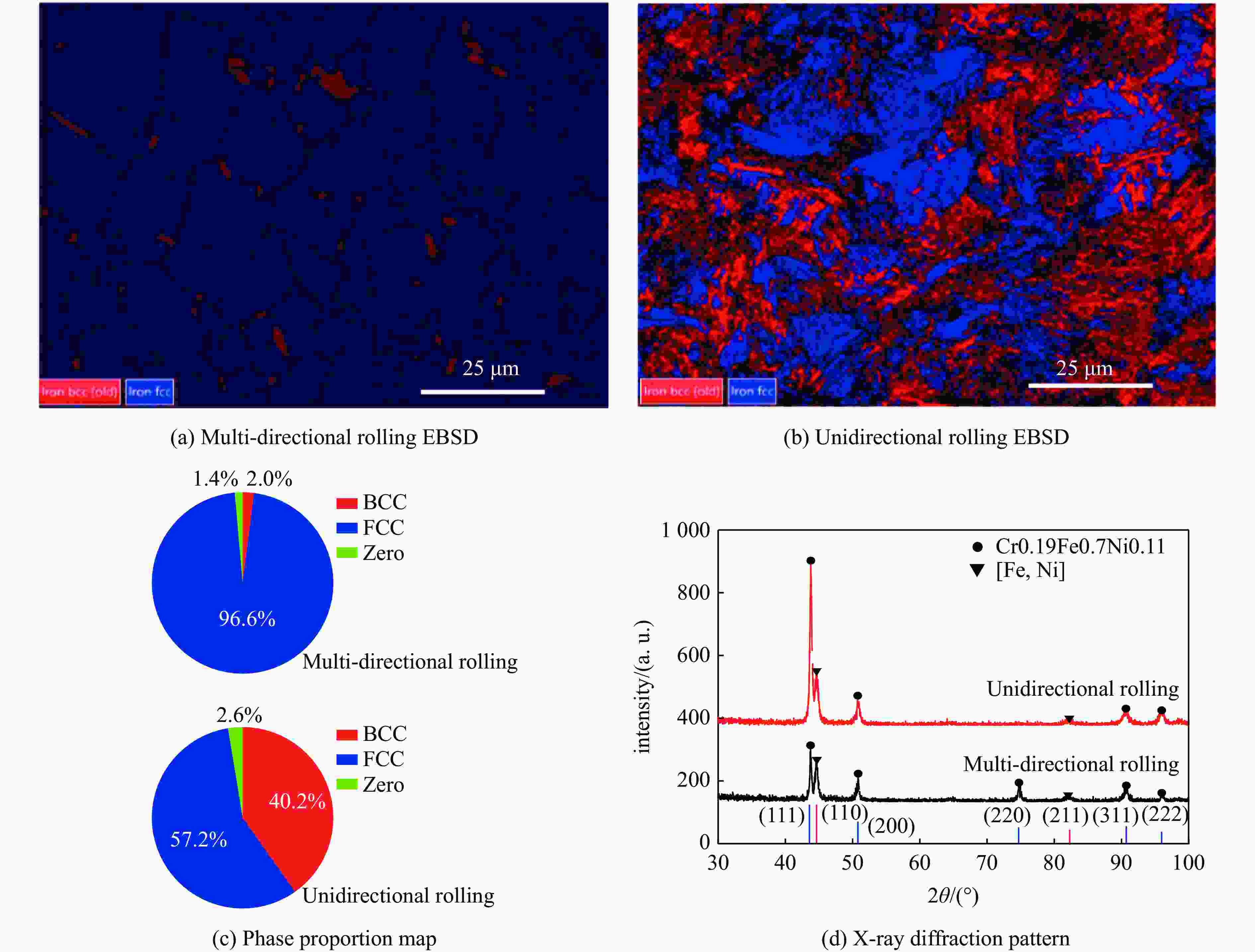
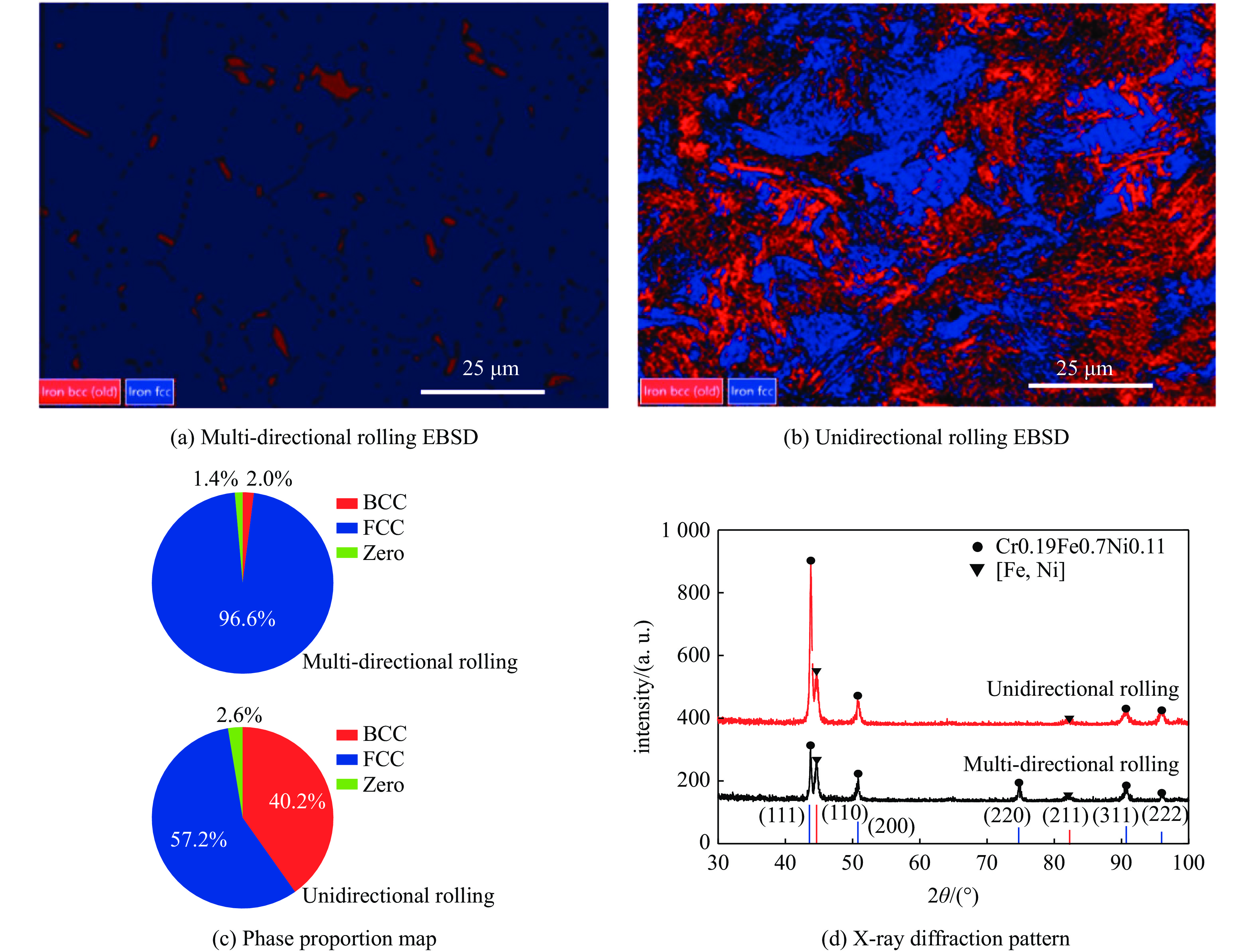
图 1 多向轧制样品与单向轧制样品的EBSD及XRD谱
Figure 1. EBSD and XRD pattens of multi-direction rolling samples and unidirectional rolling samples
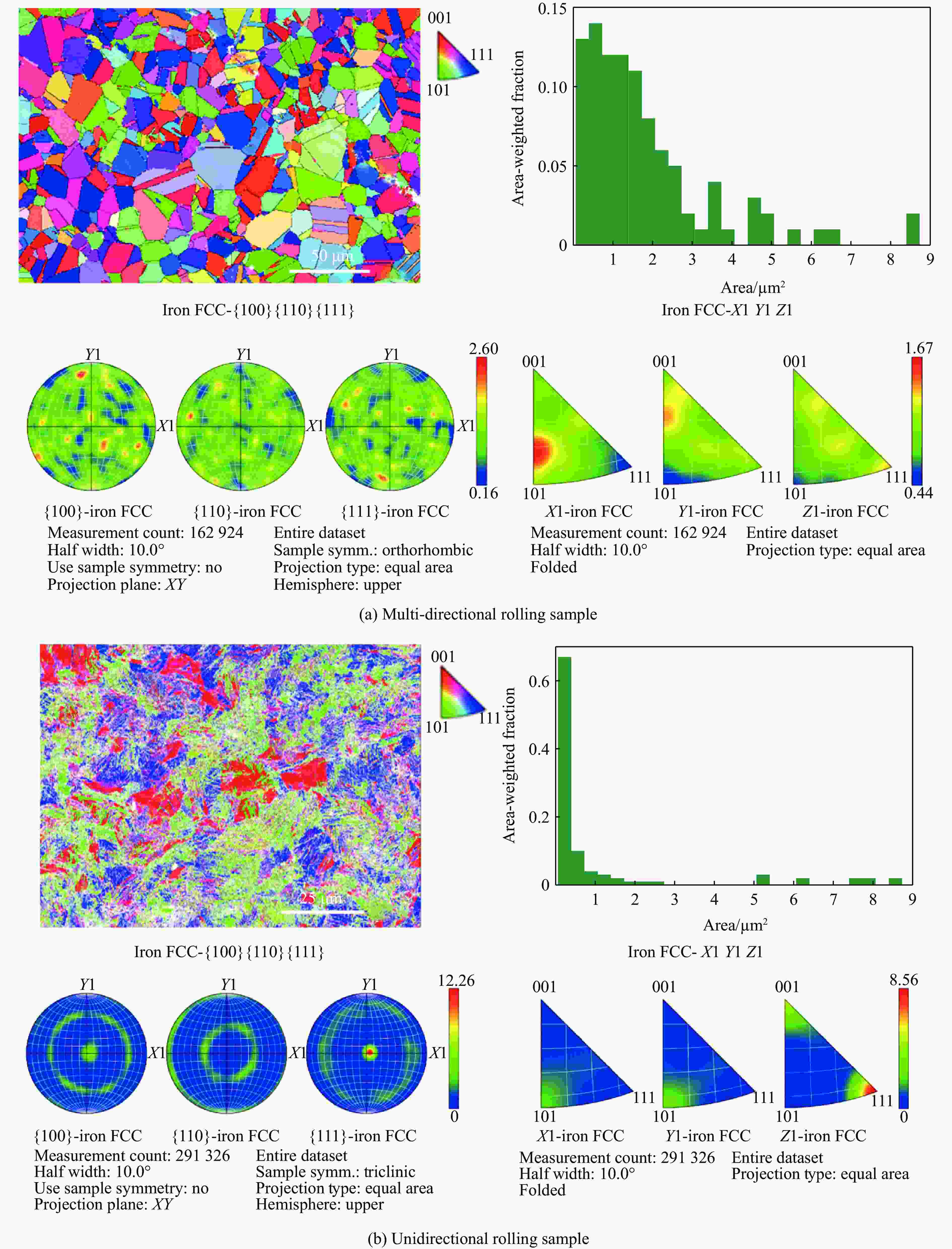
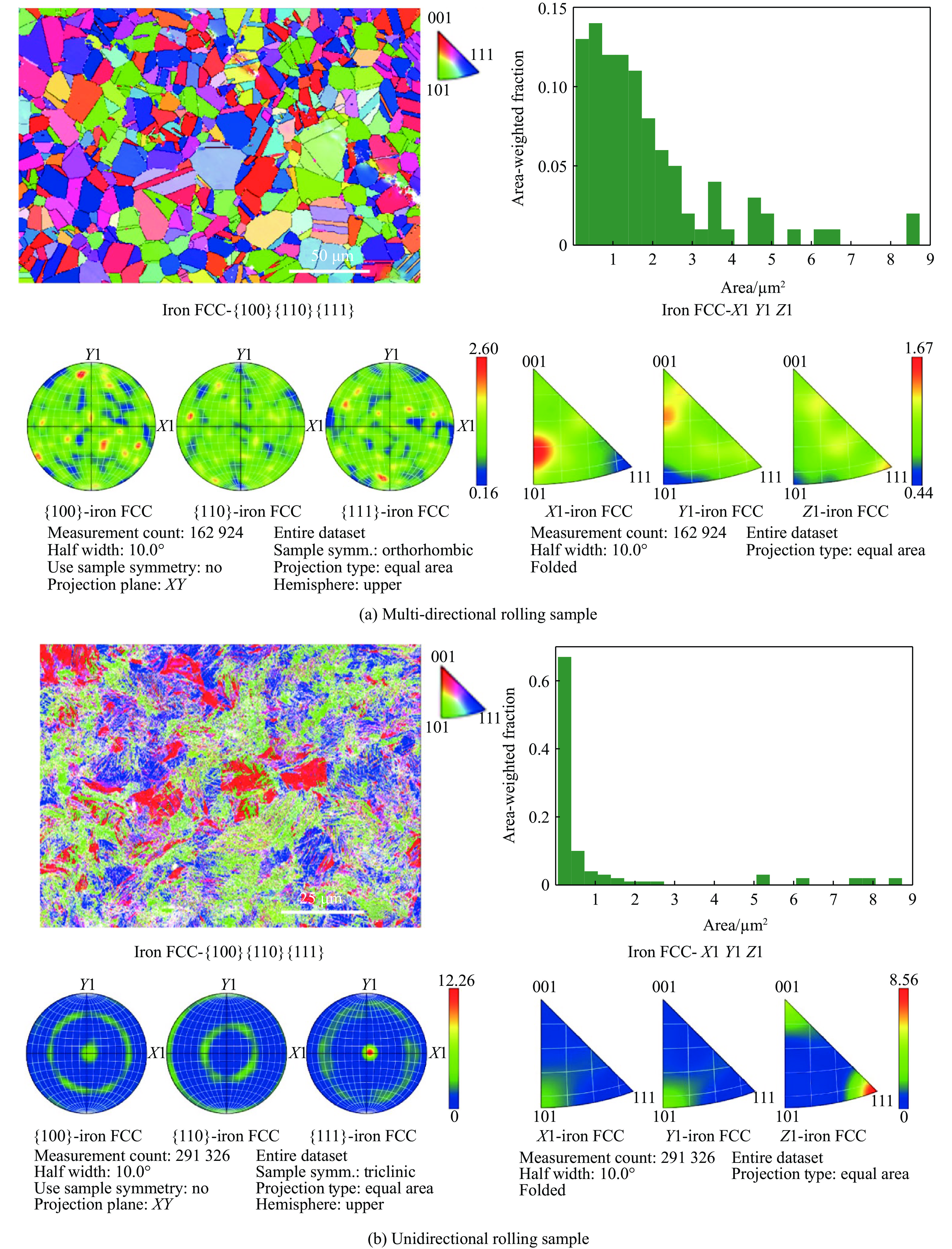
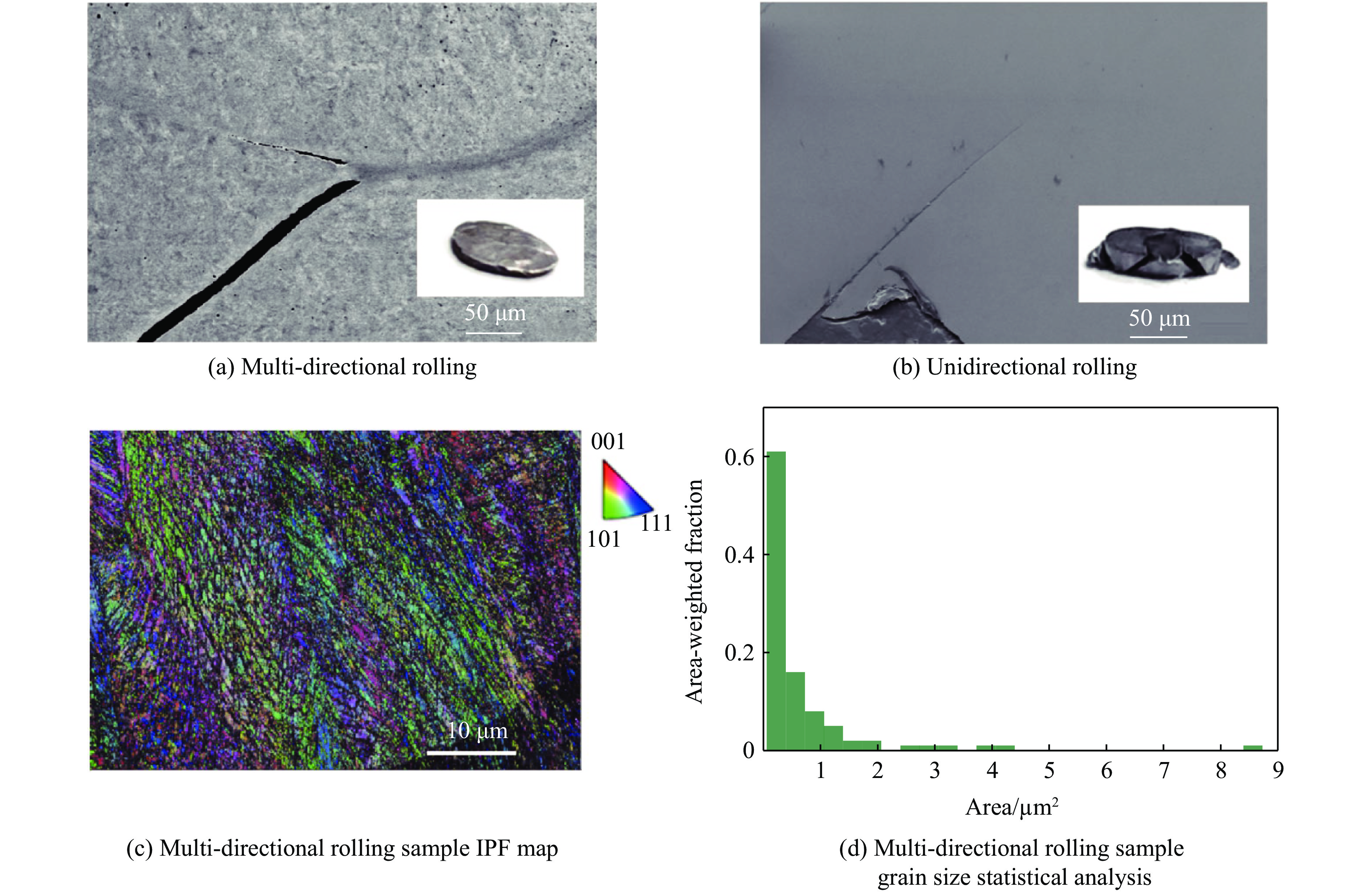
图 2 多向轧制样品与单向轧制样品的取向成像图、晶粒尺寸统计、极图及反极图
Figure 2. Orientation imaging maps, grain size distribution, pole figures, and inverse pole figures of multi-directional sample and unidirectional rolling sample
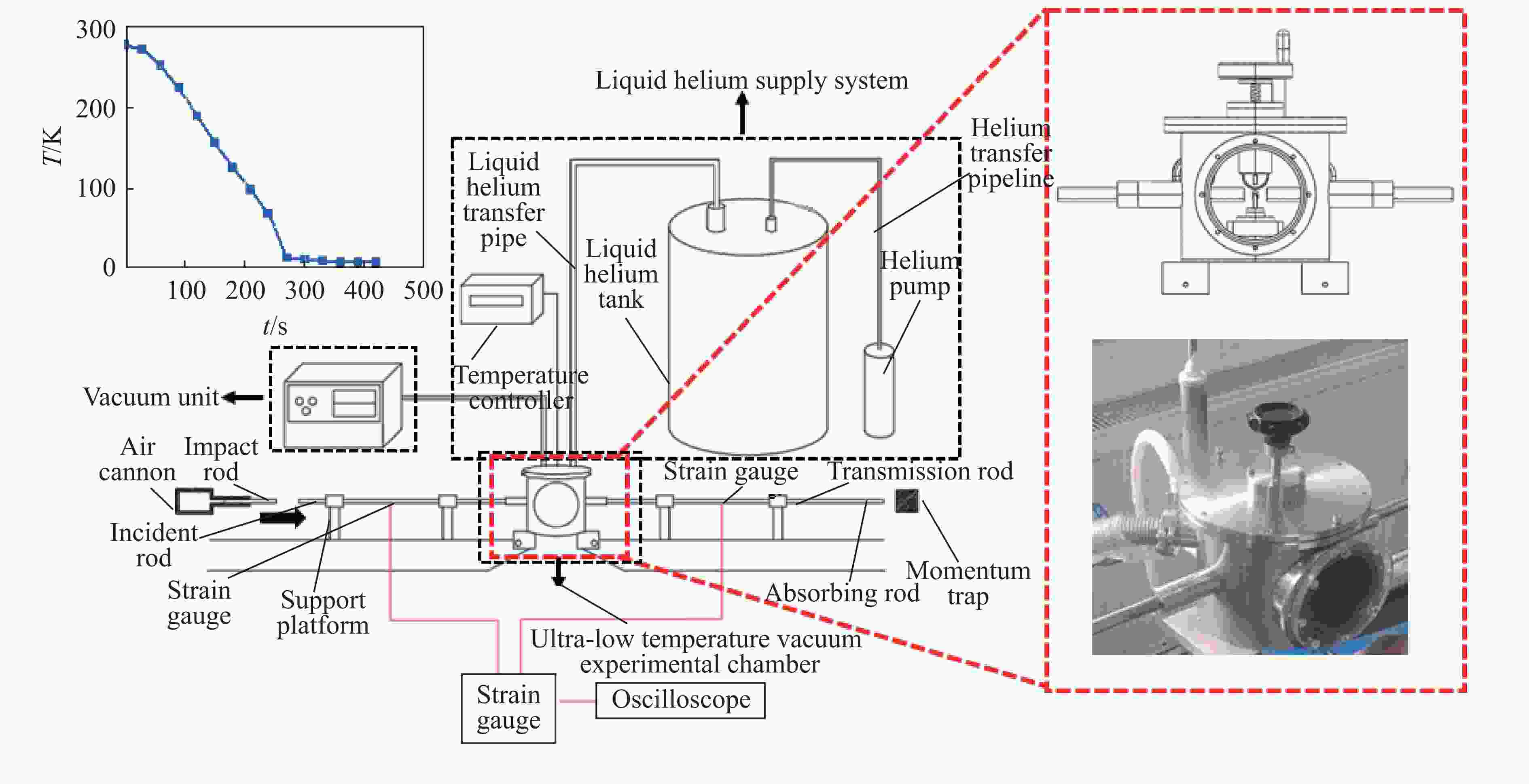
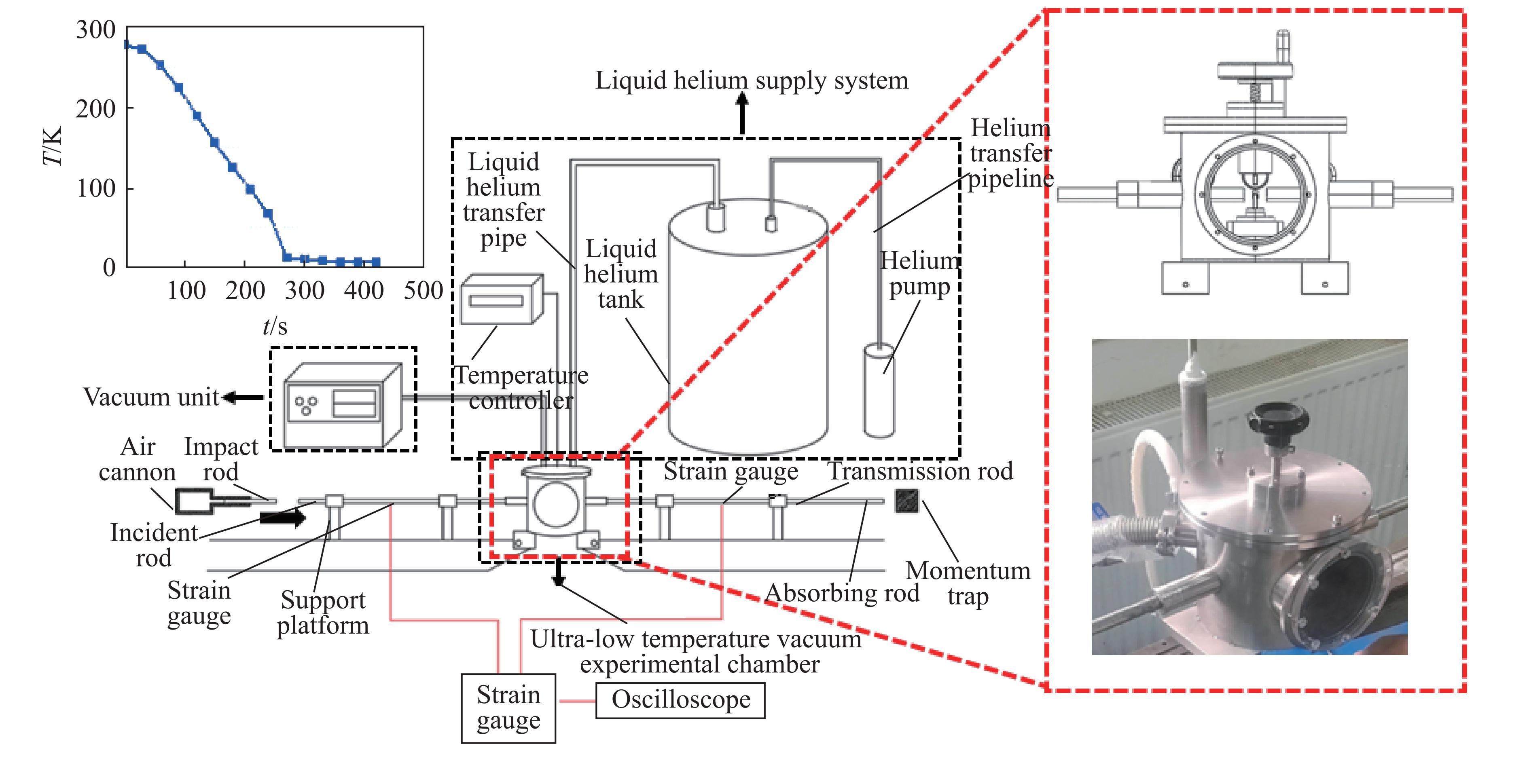
图 3 基于真空下的液氦超低温冲击系统
Figure 3. Vacuum-operated cryogenic liquid helium impact testing system
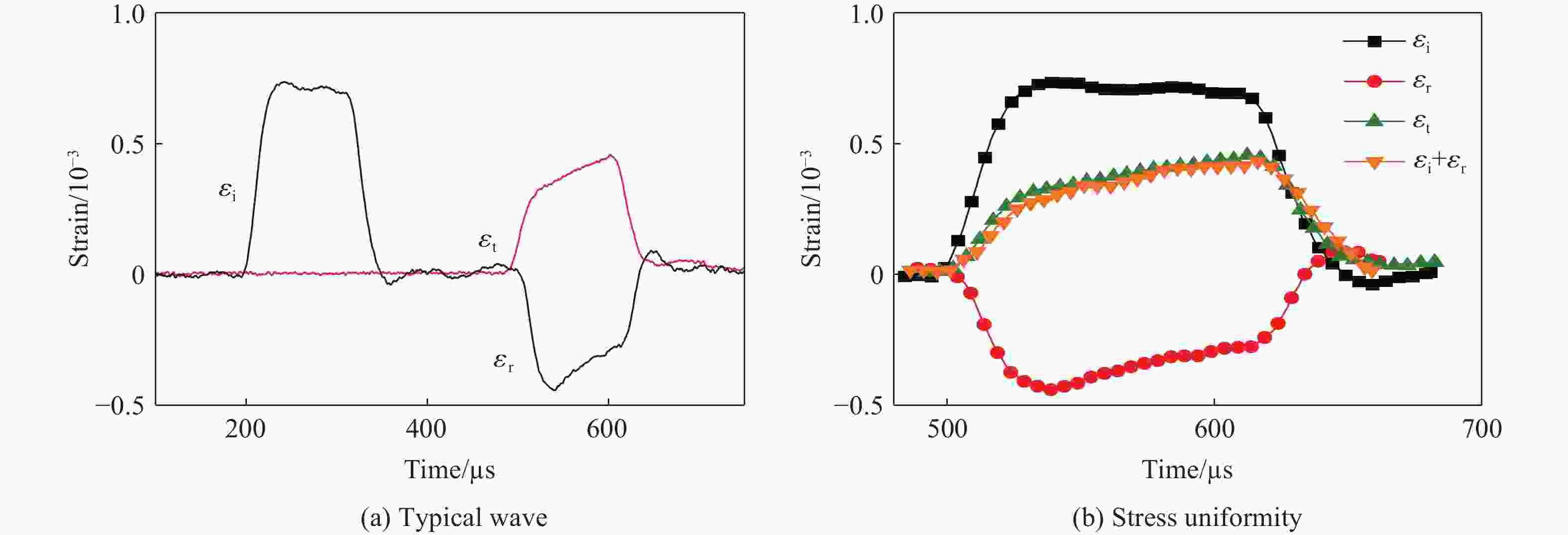
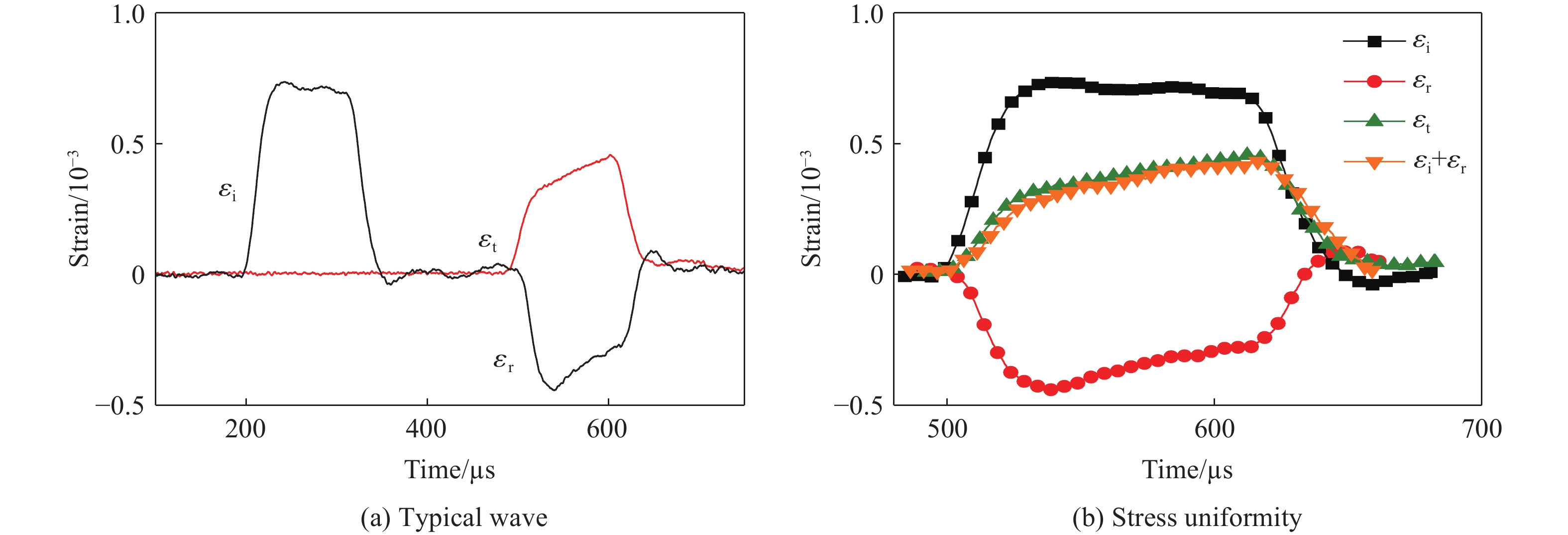
图 4 典型波形(298 K,$ \dot{\varepsilon } $=5 000 s–1)
Figure 4. Typical wave (298 K,$ \dot{\varepsilon } $=5 000 s–1)
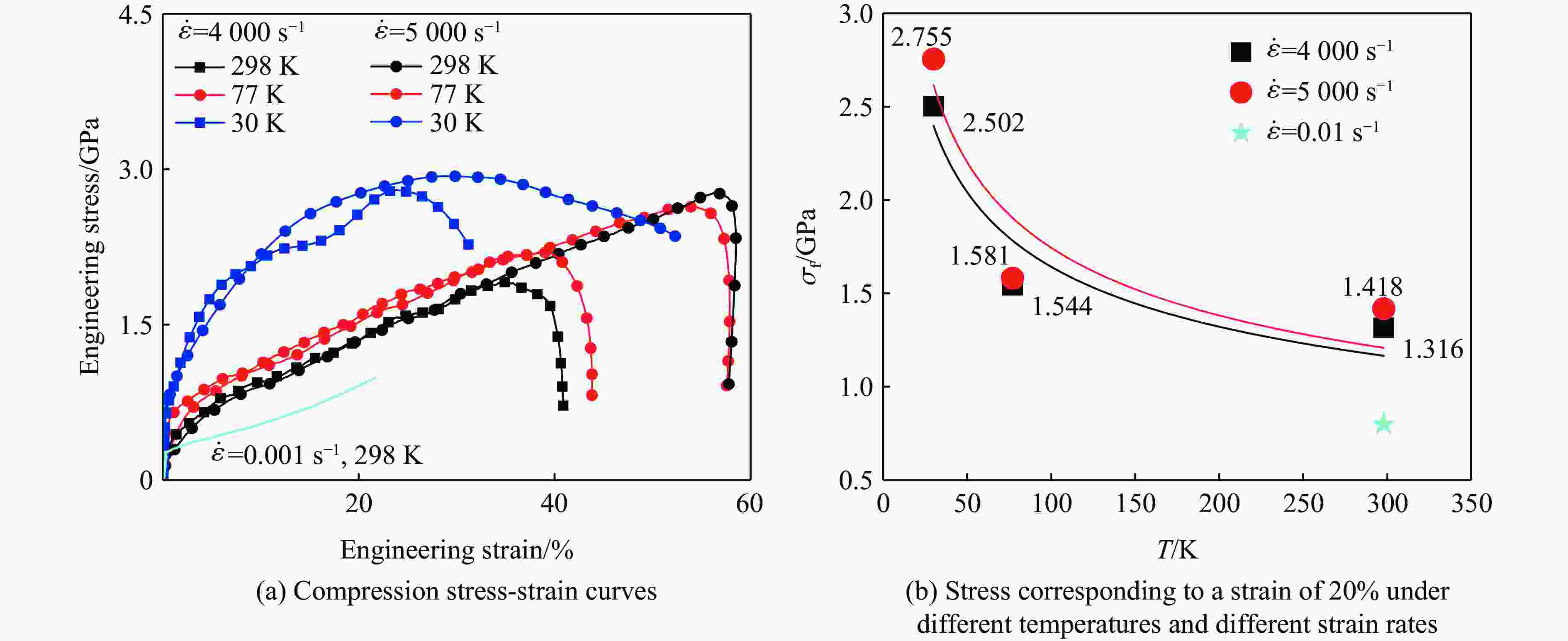
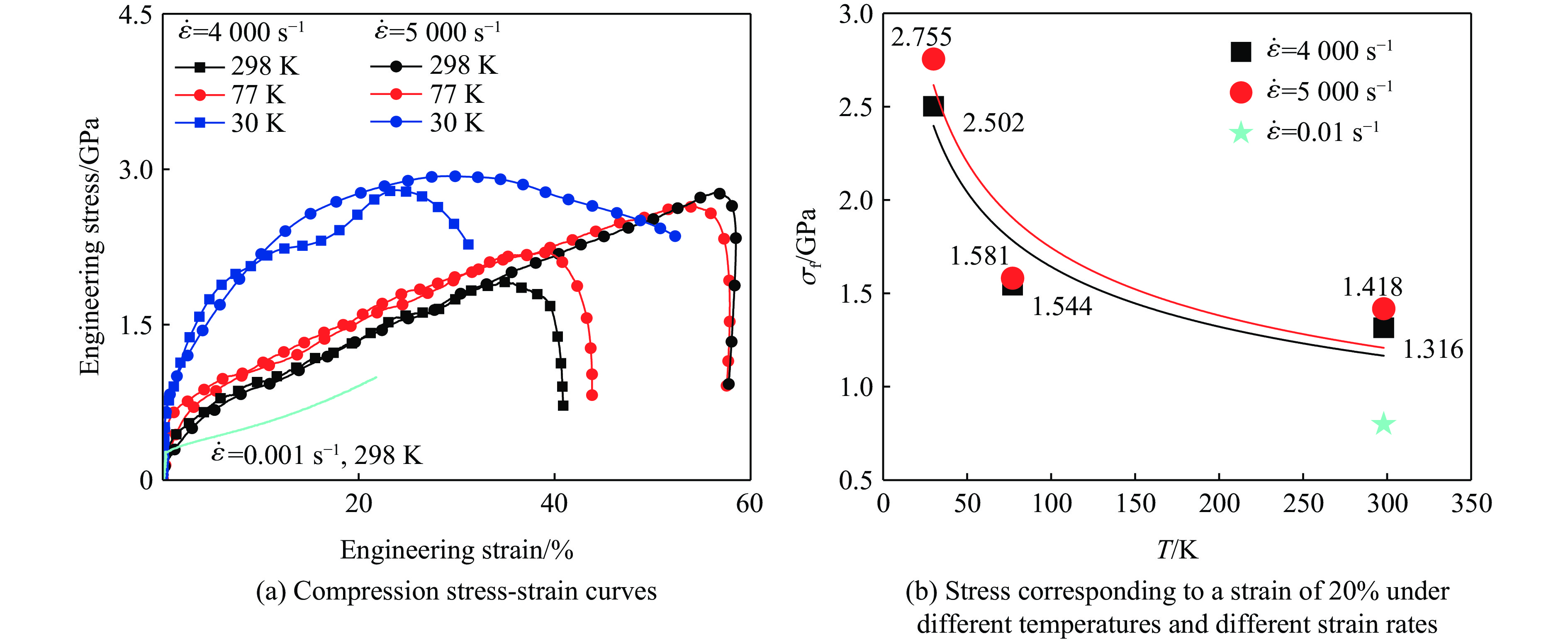
图 5 多向轧制样品在不同应变率和不同温度下的应力-应变
Figure 5. Stress-strain of multi-directional rolling samples at different strain rates and different temperatures
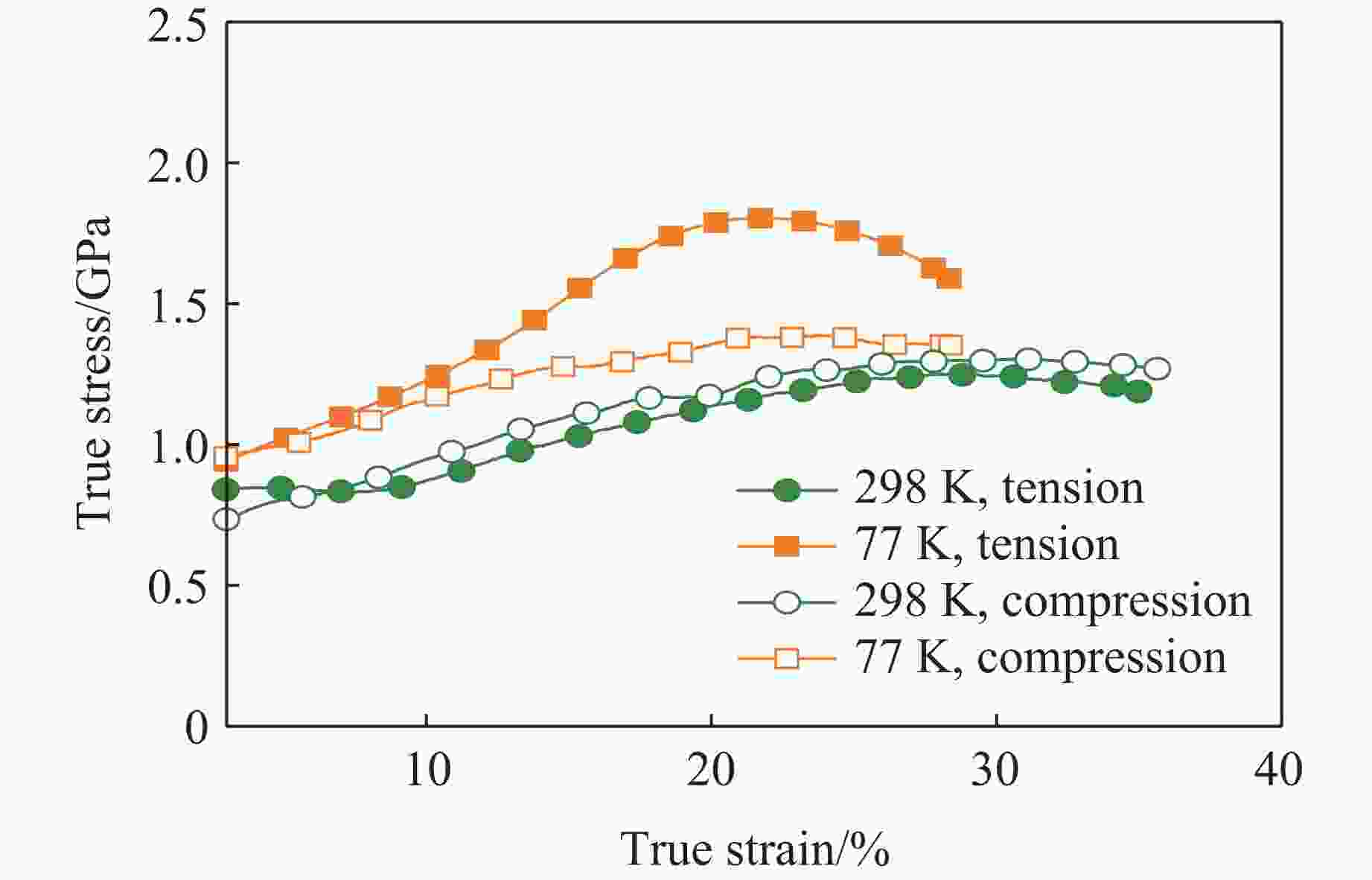
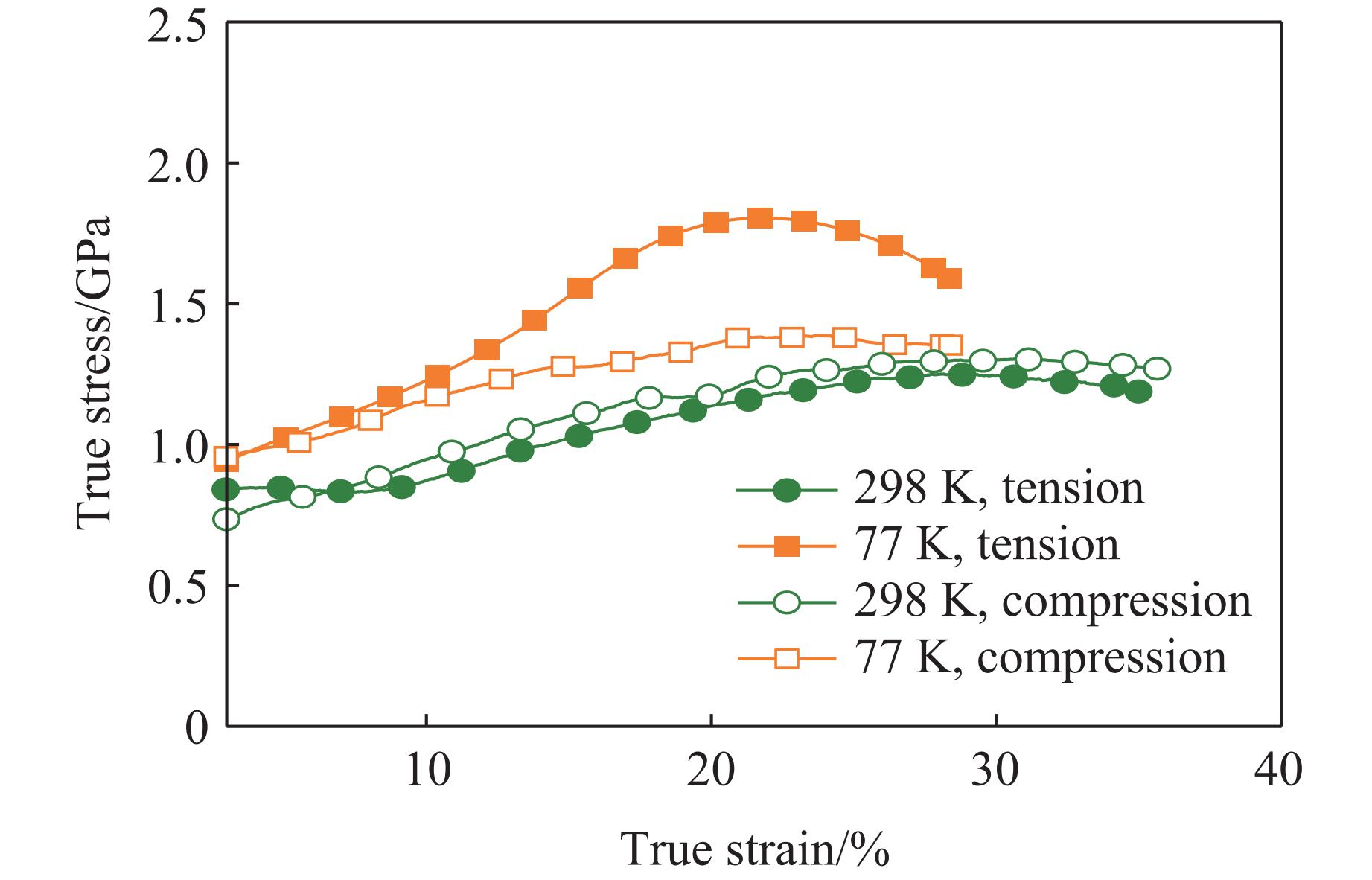
图 6 多向轧制样品的拉压对称性($ \dot{\varepsilon } $=5 000 s–1)
Figure 6. Tensile and compressive symmetry of multi-directional rolling samples ($ \dot{\varepsilon } $=5 000 s–1)
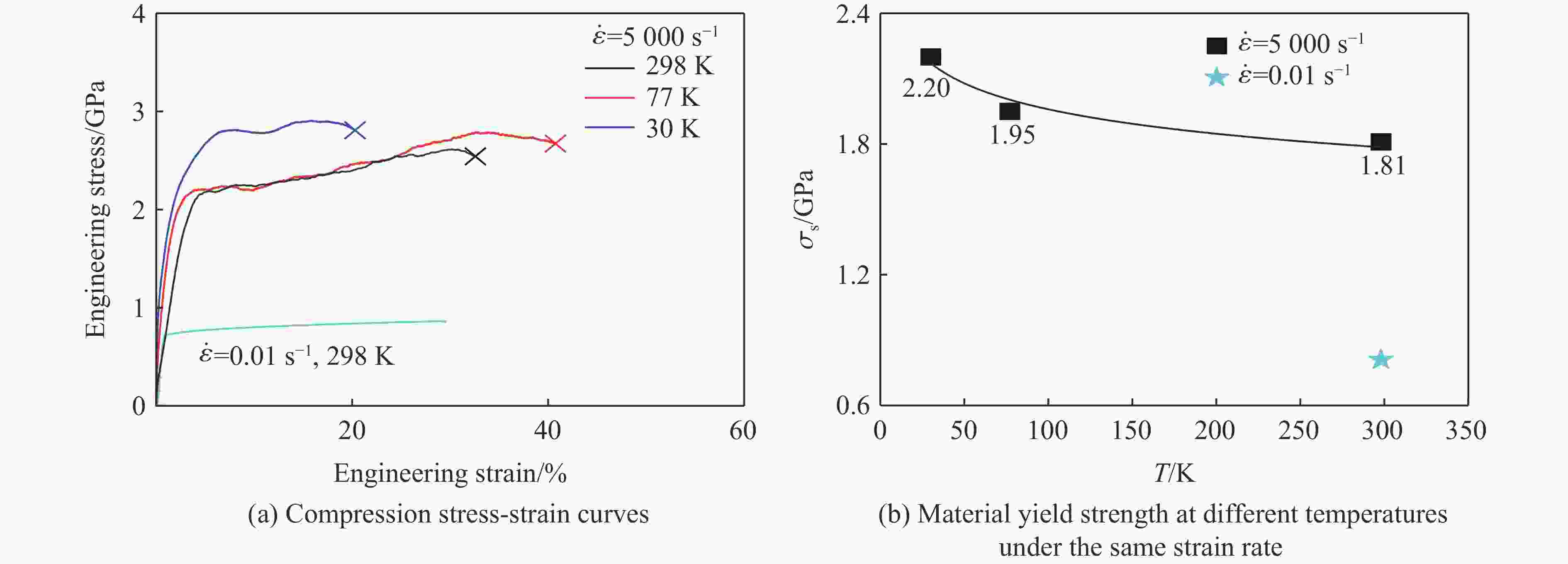
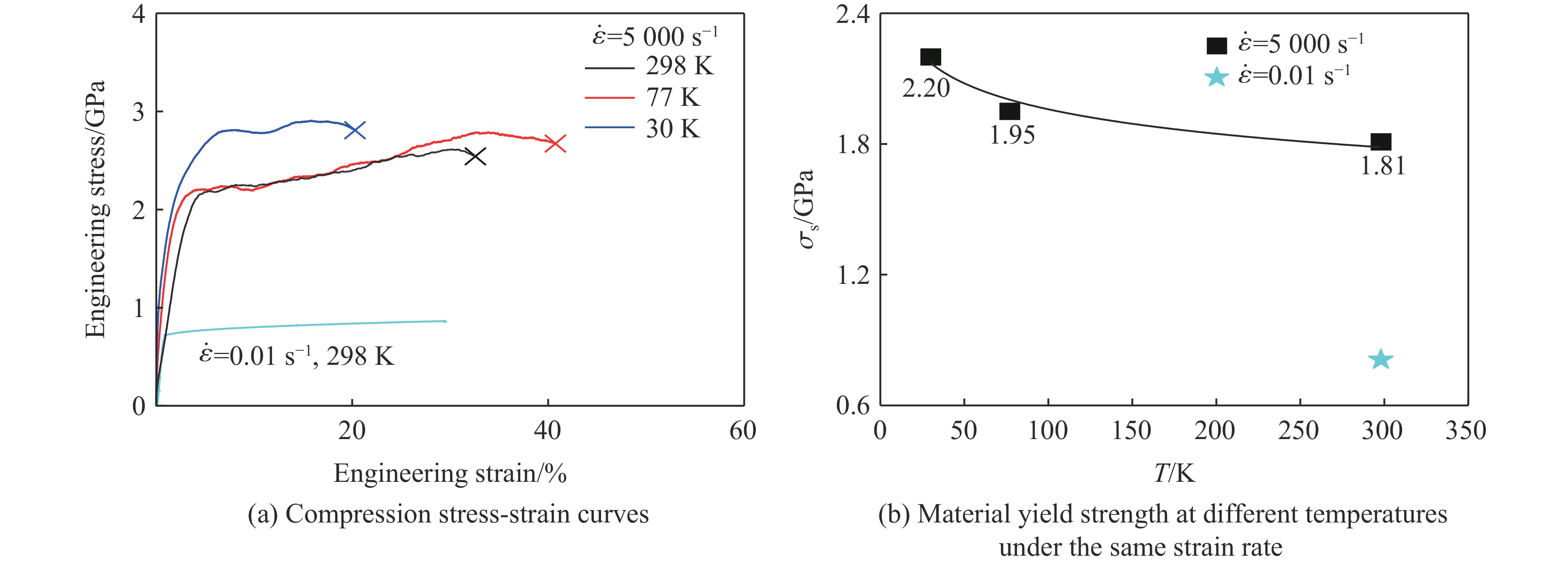
图 7 单向轧制样品在不同应变率和不同温度下的应力-应变
Figure 7. Stress-strain of unidirectionally rolling samples under different strain rates and temperatures
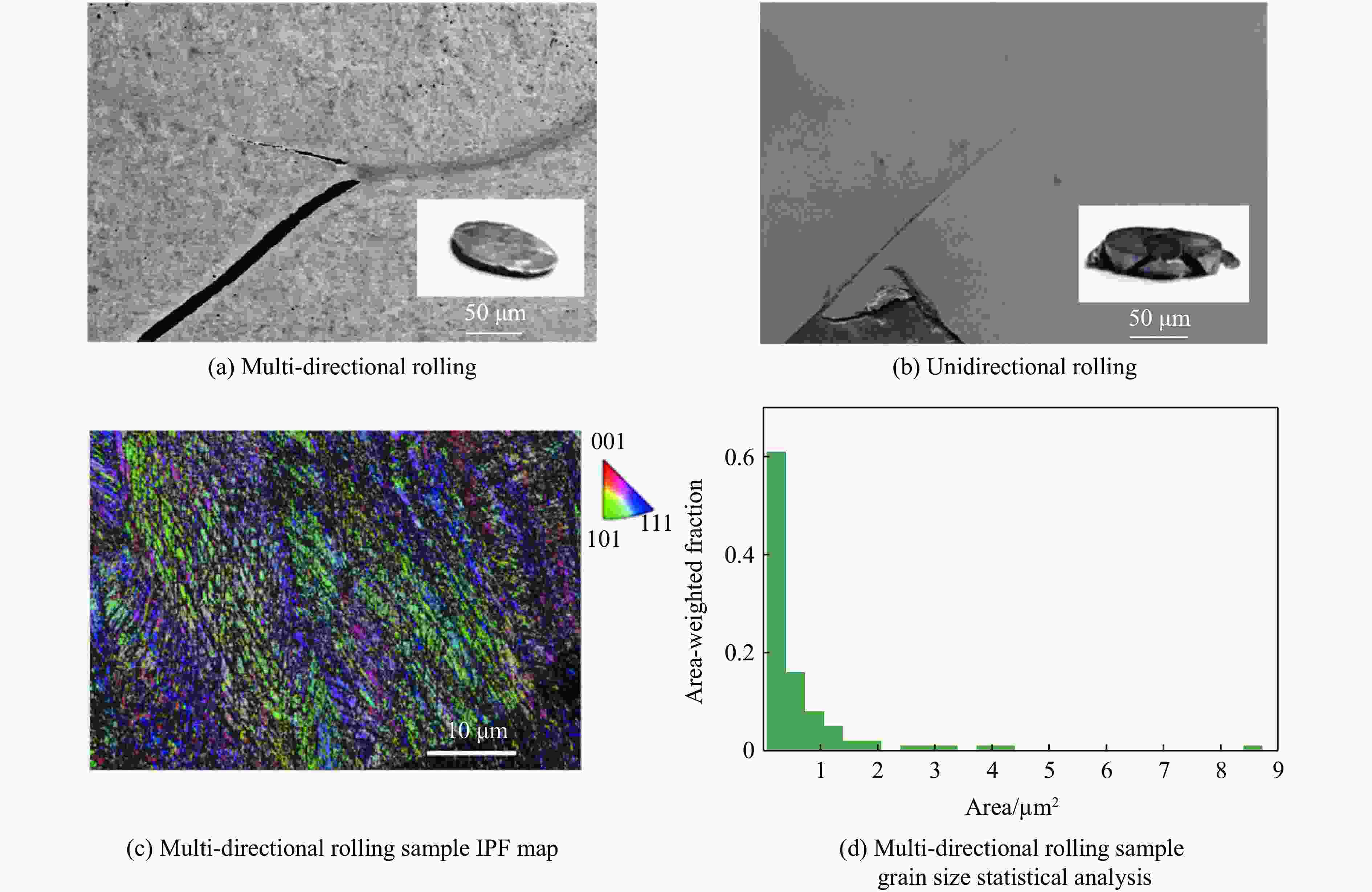
图 8 多向轧制样品与单向轧制样品压缩后的表面表征(298 K、$ \dot{\varepsilon } $=5 000 s–1)和多向轧制样品的EBSD分析
Figure 8. Surface characterization of multi-directional rolling and unidirectional rolling samples after compression and and EBSD analysis of unidirectional rolling samples (298 K,$ \dot{\varepsilon } $=5 000 s–1)
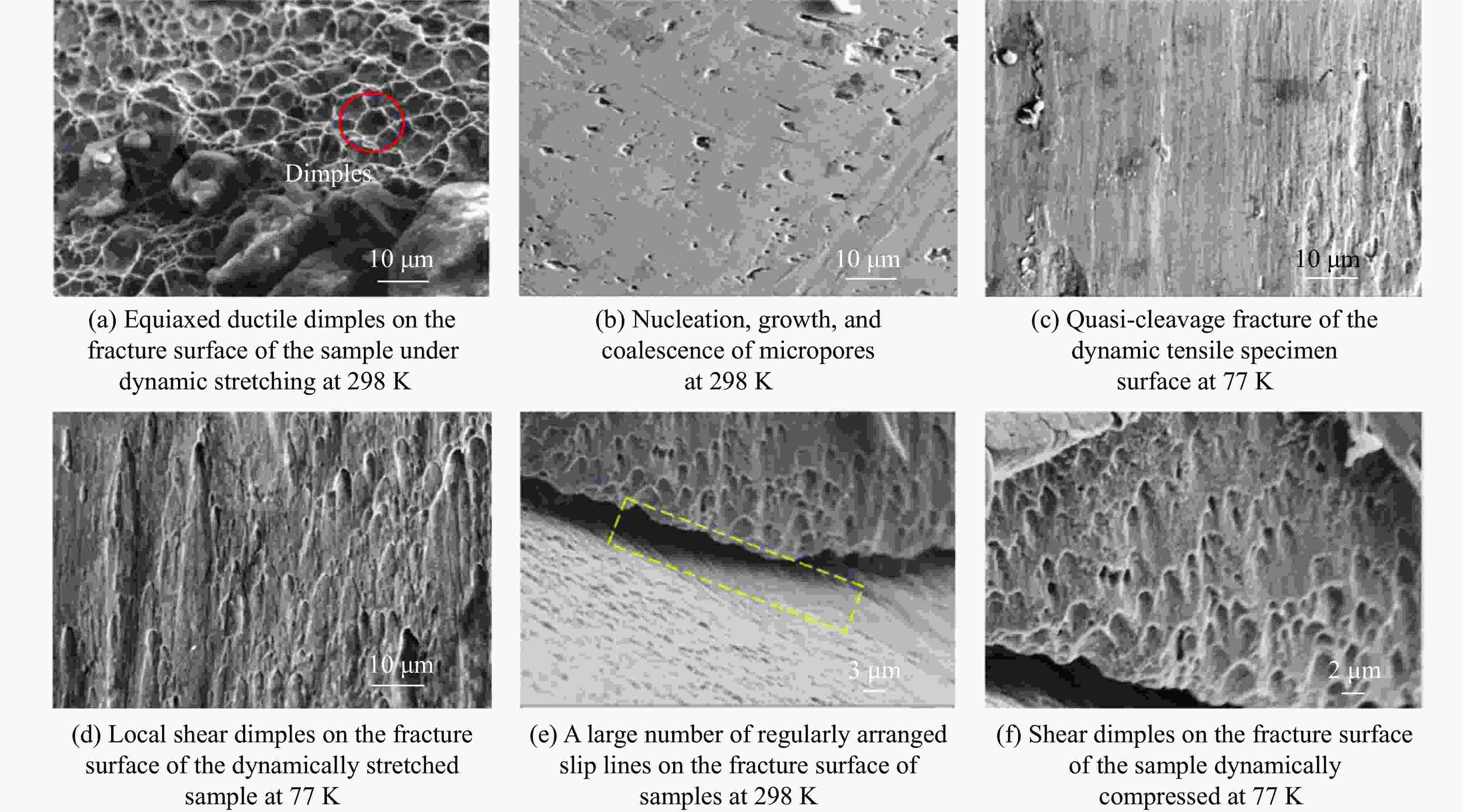
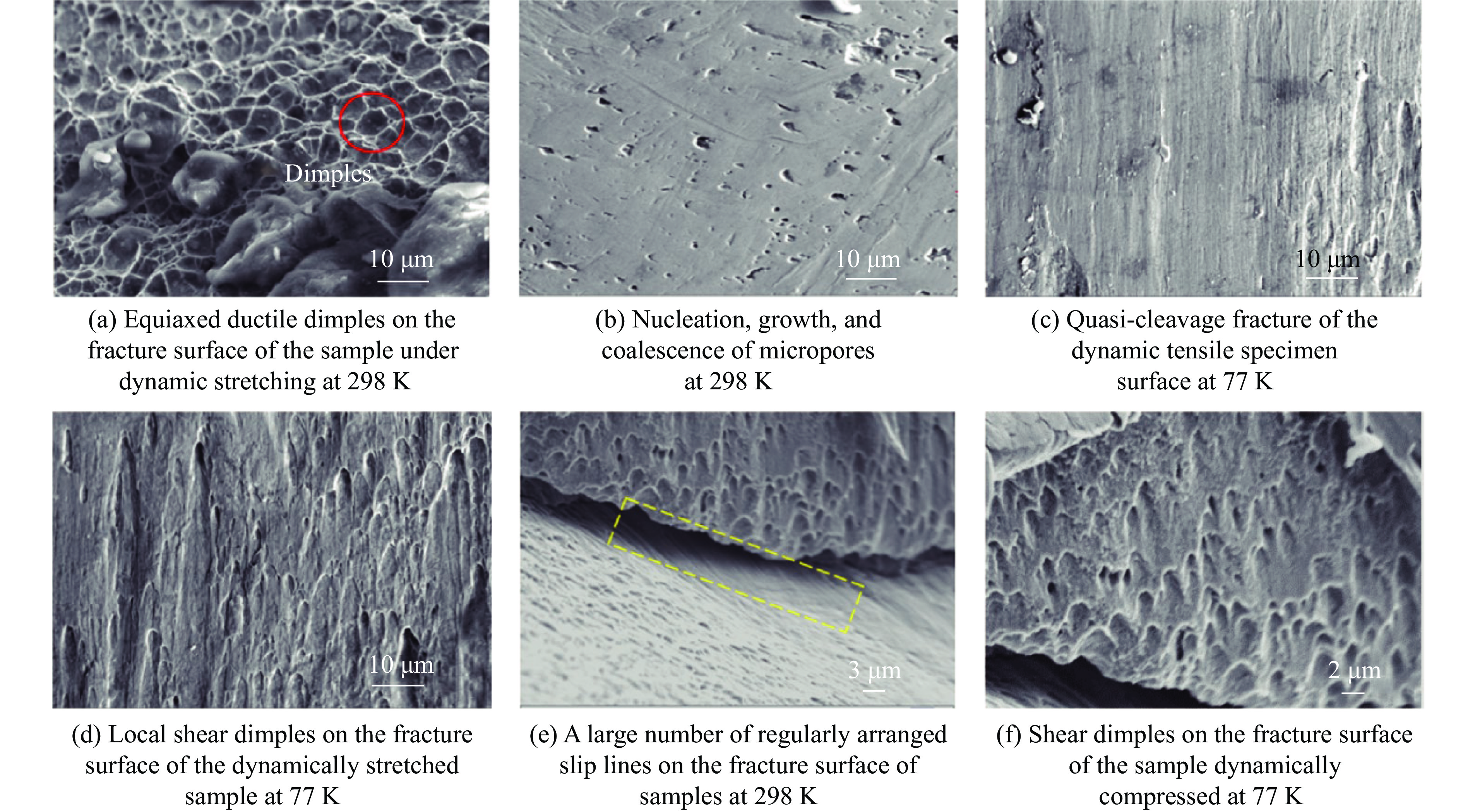
图 9 拉压实验后多向轧制样品截面的SEM表征($ \dot{\varepsilon } $=5 000 s–1)
Figure 9. SEM characterization of the cross-section of multiaxial rolling samples after tensile and compressive experiments ($ \dot{\varepsilon } $=5 000 s–1)
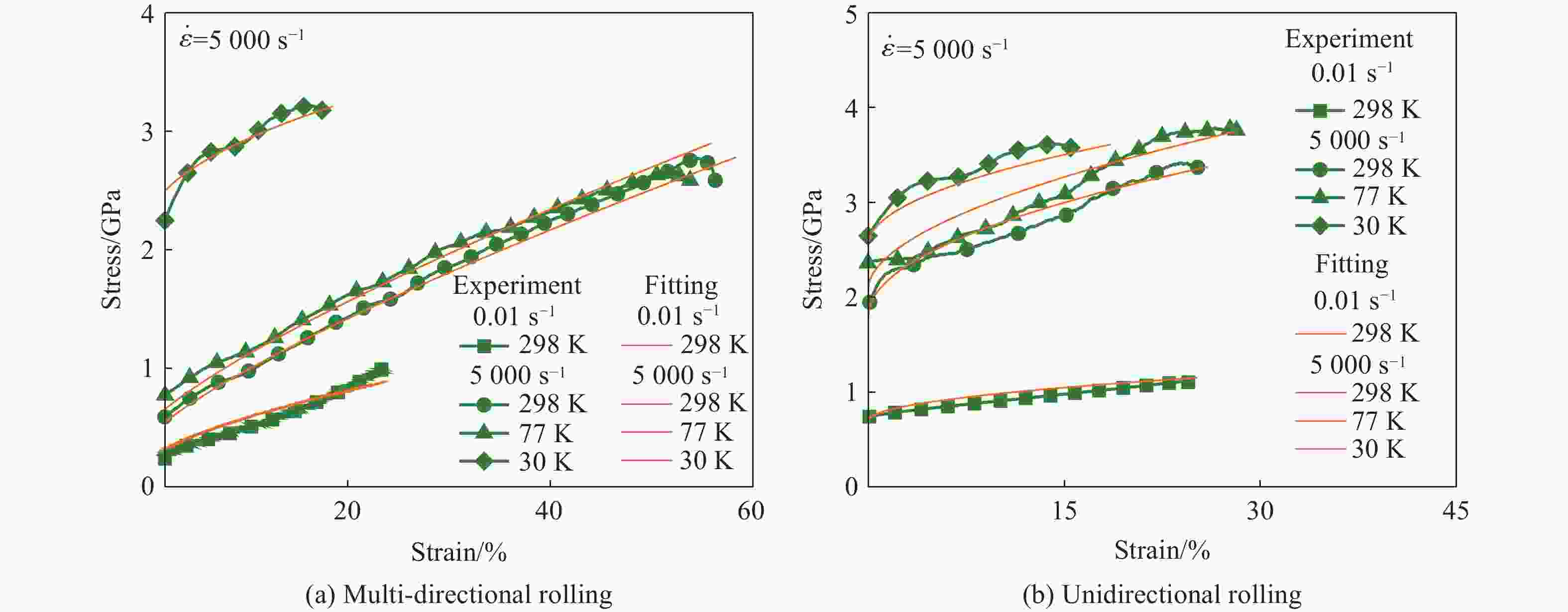
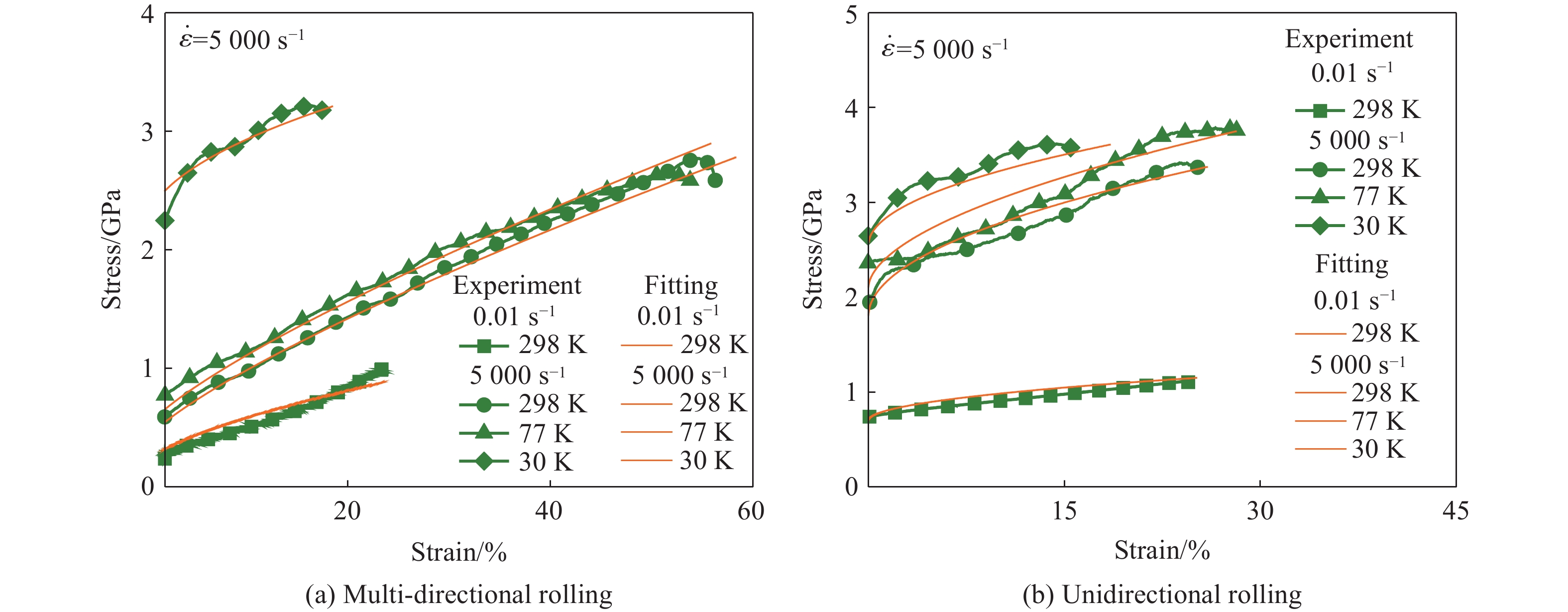
图 10 J-C模型拟合的应力-应变曲线与实验结果的对比
Figure 10. Comparison between the stress-strain curve fitted by the J-C model and experimental results
表 1 J-C本构模型参数
Table 1. Parameters of the J-C constitutive model
Rolling method A/GPa B/GPa n C m Multidirectional rolling 3.10 21 0.78 0.07 1.02 Unidirectional rolling 7.00 8 0.50 0.13 1.05  下载: 导出CSV
-
[1] GUPTA A, JIAN W R, XU S Z, et al. On the deformation behavior of CoCrNi medium entropy alloys: unraveling mechanistic competition [J]. International Journal of Plasticity, 2022, 159: 103442. doi: 10.1016/j.ijplas.2022.103442 [2] ZHANG T W, MA S G, ZHAO D, et al. Simultaneous enhancement of strength and ductility in a NiCoCrFe high-entropy alloy upon dynamic tension: micromechanism and constitutive modeling [J]. International Journal of Plasticity, 2020, 124: 226–246. doi: 10.1016/j.ijplas.2019.08.013 [3] GALINDO-NAVA E I, RIVERA-DÍAZ-DEL-CASTILLO P E J. Understanding martensite and twin formation in austenitic steels: a model describing TRIP and TWIP effects [J]. Acta Materialia, 2017, 128: 120–134. doi: 10.1016/j.actamat.2017.02.004 [4] HOMAYOUNFARD M, GANJIANI M. A large deformation constitutive model for plastic strain-induced phase transformation of stainless steels at cryogenic temperatures [J]. International Journal of Plasticity, 2022, 156: 103344. doi: 10.1016/j.ijplas.2022.103344 [5] BAI C Y, TU J, YANG L Y, et al. Synergistic enhancement of strength-ductility through multi-phase heterogeneous structure induced by SiC particle addition in CoCrFeNi high entropy alloy [J]. Materials Science and Engineering: A, 2025, 924: 147753. doi: 10.1016/j.msea.2024.147753 [6] SHI Z L, LIU Y Z, ZHANG H R, et al. Synergistic strength-ductility enhancement of CoCrFeNi high-entropy alloys with regulated Co/Cr atomic ratios [J]. Materials Science and Engineering: A, 2024, 912: 146995. doi: 10.1016/j.msea.2024.146995 [7] BLAKEY-MILNER B, GRADL P, SNEDDEN G, et al. Metal additive manufacturing in aerospace: a review [J]. Materials & Design, 2021, 209: 110008. doi: 10.1016/j.matdes.2021.110008 [8] WAKAI E, TAKAYA S, MATSUI Y, et al. Irradiation damages of structural materials under different irradiation environments [J]. Journal of Nuclear Materials, 2021, 543: 152503. doi: 10.1016/j.jnucmat.2020.152503 [9] MEYERS M A, XU Y B, XUE Q, et al. Microstructural evolution in adiabatic shear localization in stainless steel [J]. Acta Materialia, 2003, 51(5): 1307–1325. doi: 10.1016/S1359-6454(02)00526-8 [10] YUAN F P, BIAN X D, JIANG P, et al. Dynamic shear response and evolution mechanisms of adiabatic shear band in an ultrafine-grained austenite-ferrite duplex steel [J]. Mechanics of Materials, 2015, 89: 47–58. doi: 10.1016/j.mechmat.2015.06.004 [11] WANG P F, YANG J L, SUN G Z, et al. Twist induced plasticity and failure mechanism of helical carbon nanotube fibers under different strain rates [J]. International Journal of Plasticity, 2018, 110: 74–94. doi: 10.1016/j.ijplas.2018.06.007 [12] 乔良, 张先锋, 何勇, 等. 颗粒金属材料冲击压缩细观数值模拟 [J]. 高压物理学报, 2013, 27(6): 863–871. doi: 10.11858/gywlxb.2013.06.011QIAO L, ZHANG X F, HE Y, et al. Meso-scale numerical simulation of the shock compression of particle metal materials [J]. Chinese Journal of High Pressure Physics, 2013, 27(6): 863–871. doi: 10.11858/gywlxb.2013.06.011 [13] SCHREIBER D K, SCHWAIGER R, HEILMAIER M, et al. Materials properties characterization in the most extreme environments [J]. MRS Bulletin, 2022, 47(11): 1128–1142. doi: 10.1557/s43577-022-00441-z [14] WANG K Y, CHENG Z J, LIU C Y, et al. Deformation behavior and strengthening mechanisms of high-entropy alloys under high strain rate across wide temperature ranges [J]. International Journal of Plasticity, 2025, 189: 104321. doi: 10.1016/j.ijplas.2025.104321 [15] YIN P, ZHANG W, YANG Q F, et al. A unified life prediction model for 316L austenitic stainless steel under isothermal, thermomechanical fatigue and creep-thermomechanical fatigue loadings [J]. Engineering Fracture Mechanics, 2025, 319: 111037. doi: 10.1016/j.engfracmech.2025.111037 [16] 韩小平, 张元冲, 李华, 等. 含能材料在低温条件下冲击压缩力学性能的实验研究 [J]. 爆炸与冲击, 1995, 15(4): 343–349.HAN X P, ZHANG Y C, LI H, et al. Experimental study of impact compressive properties of energetic materials [J]. Explosion and Shock Waves, 1995, 15(4): 343–349. [17] LIU M, WANG P F, LU G X, et al. Deformation-activated recrystallization twin: new twinning path in pure aluminum enabled by cryogenic and rapid compression [J]. iScience, 2022, 25(5): 104248. doi: 10.1016/j.isci.2022.104248 [18] SCHRÖDER C, VOLKOVA O, WENDLER M. Influence of strain rate on the tensile properties of metastable austenitic stainless CrNi and CrMnNi spring steels [J]. Materials Science and Engineering: A, 2022, 850: 143507. doi: 10.1016/j.msea.2022.143507 [19] ISAKOV M, MAY M, HIERMAIER S, et al. A model for the strain rate dependent plasticity of a metastable austenitic stainless steel [J]. Materials & Design, 2016, 106: 258–272. doi: 10.1016/j.matdes.2016.05.067 [20] DATTA K, DELHEZ R, BRONSVELD P M, et al. A low-temperature study to examine the role of ε-martensite during strain-induced transformations in metastable austenitic stainless steels [J]. Acta Materialia, 2009, 57(11): 3321–3326. doi: 10.1016/j.actamat.2009.03.039 [21] 陈美多, 张祥林, 袁良柱, 等. 岩石界面的动态剪切扩散行为 [J]. 爆炸与冲击, 2024, 44(8): 081422. doi: 10.11883/bzycj-2023-0469CHEN D M, ZHANG X L, YUAN L Z, et al. Dynamic shear diffusion behavior at rock interfaces [J]. Explosion and Shock Waves, 2024, 44(8): 081422. doi: 10.11883/bzycj-2023-0469 [22] 高维廷, 朱哲明, 朱伟, 等. 动荷载下岩石裂纹动态扩展行为实验研究综述 [J]. 爆炸与冲击, 2023, 43(8): 081101. doi: 10.11883/bzycj-2022-0526GAO W T, ZHU Z M, ZHU W, et al. Experimental studies on crack propagation behaviors of rock materials under dynamic loads: a review [J]. Explosion and Shock Waves, 2023, 43(8): 081101. doi: 10.11883/bzycj-2022-0526 [23] 黄敏, 朱本浩, 肖革胜, 等. 极低温区循环载荷作用下Nb3Sn复合超导体的变形损伤及其应变率效应数值模拟 [J]. 高压物理学报, 2024, 38(2): 024201. doi: 10.11858/gywlxb.20230755HUANG M, ZHU B H, XIAO G S, et al. Simulation on deformation damage and strain rate effect of Nb3Sn composite superconductors under cycling load at extreme low temperature [J]. Chinese Journal of High Pressure Physics, 2024, 38(2): 024201. doi: 10.11858/gywlxb.20230755 [24] 刘福生, 芶清泉, 经福谦. 液态氦冲击压缩性理论计算 [J]. 高压物理学报, 1995, 9(2): 112–116. doi: 10.11858/gywlxb.1995.02.005LIU F S, GOU Q Q, JING F Q. Theoretical calculation for the hugoniot curves of liquid helium [J]. Chinese Journal of High Pressure Physics, 1995, 9(2): 112–116. doi: 10.11858/gywlxb.1995.02.005 [25] XU S L, SHAN J F, ZHANG L, et al. Dynamic compression behaviors of concrete under true triaxial confinement: an experimental technique [J]. Mechanics of Materials, 2020, 140: 103220. doi: 10.1016/j.mechmat.2019.103220 [26] GERLACH R, KETTENBEIL C, PETRINIC N. A new split Hopkinson tensile bar design [J]. International Journal of Impact Engineering, 2012, 50: 63–67. doi: 10.1016/j.ijimpeng.2012.08.004 [27] SINGH D, KUMAR V, NANDAL V, et al. Investigating microstructure dynamics and strain rate sensitivity in gradient nanostructured AISI 304L stainless steel: TEM and nanoindentation insights [J]. Materials Today Communications, 2024, 41: 110386. doi: 10.1016/j.mtcomm.2024.110386 [28] HUANG Y F, XIONG Y N, LI P, et al. Atomistic studies of shock-induced plasticity and phase transition in iron-based single crystal with edge dislocation [J]. International Journal of Plasticity, 2019, 114: 215–226. doi: 10.1016/j.ijplas.2018.11.004 [29] WANG H, WANG Y, YU A, et al. Effects of material orientation and degree of deformation on the tension-compression asymmetry of AA2024-T4 [J]. Experimental Mechanics, 2025, 65(2): 255–268. doi: 10.1007/s11340-025-01147-4 [30] TAN C W, XU S N, WANG L, et al. Effect of temperature on mechanical behavior of AZ31 magnesium alloy [J]. Transactions of Nonferrous Metals Society of China, 2007, 17(1): 41–45. doi: 10.1016/S1003-6326(07)60045-4 [31] MURAKAMI T, TODA H, KOBAYASHI T. Effects of temperature and loading rate on fracture toughness [J]. Key Engineering Materials, 2005, 297: 2397–2402. doi: 10.4028/www.scientific.net/KEM.297-300.2397 [32] 张永新, 范昌增, 许泽建, 等. 球墨铸铁在低温及冲击载荷下的韧脆转变行为 [J]. 爆炸与冲击, 2025, 45(8): 083103. doi: 10.11883/bzycj-2024-0002ZHANG Y X, FAN C Z, XU Z J, et al. Ductile-brittle transition behaviors of nodular cast iron under low temperature and impact loading [J]. Explosion and Shock Waves, 2025, 45(8): 083103. doi: 10.11883/bzycj-2024-0002 [33] WANG P F, JIANG H B, XU S L, et al. Dynamic plastic instability of ring-shaped aluminum alloy with different interface behaviors [J]. International Journal of Impact Engineering, 2021, 155: 103898. doi: 10.1016/j.ijimpeng.2021.103898 [34] LI H F, DUAN Q Q, ZHANG P, et al. The quantitative relationship between fracture toughness and impact toughness in high-strength steels [J]. Engineering Fracture Mechanics, 2019, 211: 362–370. doi: 10.1016/j.engfracmech.2019.03.003 -

 下载:
下载:

计量
- 文章访问数: 1398
- HTML全文浏览量: 470
- PDF下载量: 108
