





Analysis of High-Strain-Rate Deformation Induced Degradation of Critical Properties in Nb3Sn Superconductors
-
摘要: Nb3Sn超导材料因其优异的超导性能,被广泛应用于粒子加速器的超导谐振腔、核聚变以及高能物理领域的超导磁体装置中。在失超和快速励磁等极端工况下,超导材料常承受高应变率的动态载荷,进而引发复杂的电磁-热-力多场耦合效应,最终导致其超导临界性能发生不可逆退化。为此,基于分子动力学模拟结果,以连续介质力学和超导物理理论为框架,研究了高应变率拉伸条件下Nb3Sn复合超导体的弹塑性力学行为、塑性功热耗散引起的绝热温升以及损伤演化对超导临界性能的影响。基于弹塑性变形解耦理论,将变形分解为弹性和塑性两部分,定量分析了Nb基体塑性功热耗散引起的温升演变规律,并基于密度泛函理论分析了绝热温升与变形损伤对Nb3Sn复合超导体临界性能的影响。研究结果表明:低温高应变率拉伸条件下,Nb基体的塑性变形主要由全位错滑移主导,而Nb3Sn涂层由于其A15晶体结构的本征脆性,发生脆性断裂。温升主要源于塑性功的热转化,随着塑性应变的累积,温度随之升高。力-热耦合效应显著加剧超导临界性能退化;变形损伤主要表现为非晶化和裂纹扩展,引发电子结构的不可逆转变,进而导致超导临界性能的退化。研究结果有助于理解高应变率作用下Nb3Sn复合超导体的变形-温升-性能退化关联机制,对超导腔与磁体的优化设计具有理论指导意义。Abstract: Nb3Sn superconductors are vital for advanced applications like particle accelerators and fusion devices, yet their performance degrades irreversibly under the high-strain-rate dynamic loads encountered during quench or fast excitation. This study integrates molecular dynamics simulations, continuum mechanics, and density functional theory to unravel the underlying multiphysics coupling mechanisms. We probe the elastoplastic response, adiabatic heating from plastic work, and damage evolution in Nb3Sn composites under high-strain-rate tension. Our analysis reveals that at cryogenic temperatures, the niobium matrix deforms via full-dislocation slip, whereas the brittle Nb3Sn coating fractures. The associated temperature rise, driven by plastic work dissipation and accumulating with strain, synergizes with deformation-induced damage (amorphization and cracking) to severely degrade superconducting properties. These damage mechanisms cause irreversible electronic structure changes, directly impairing super-conductivity. These findings establish a deformation-thermal-damage correlation mechanism, providing a theoretical foundation for the design of resilient superconducting devices.
-
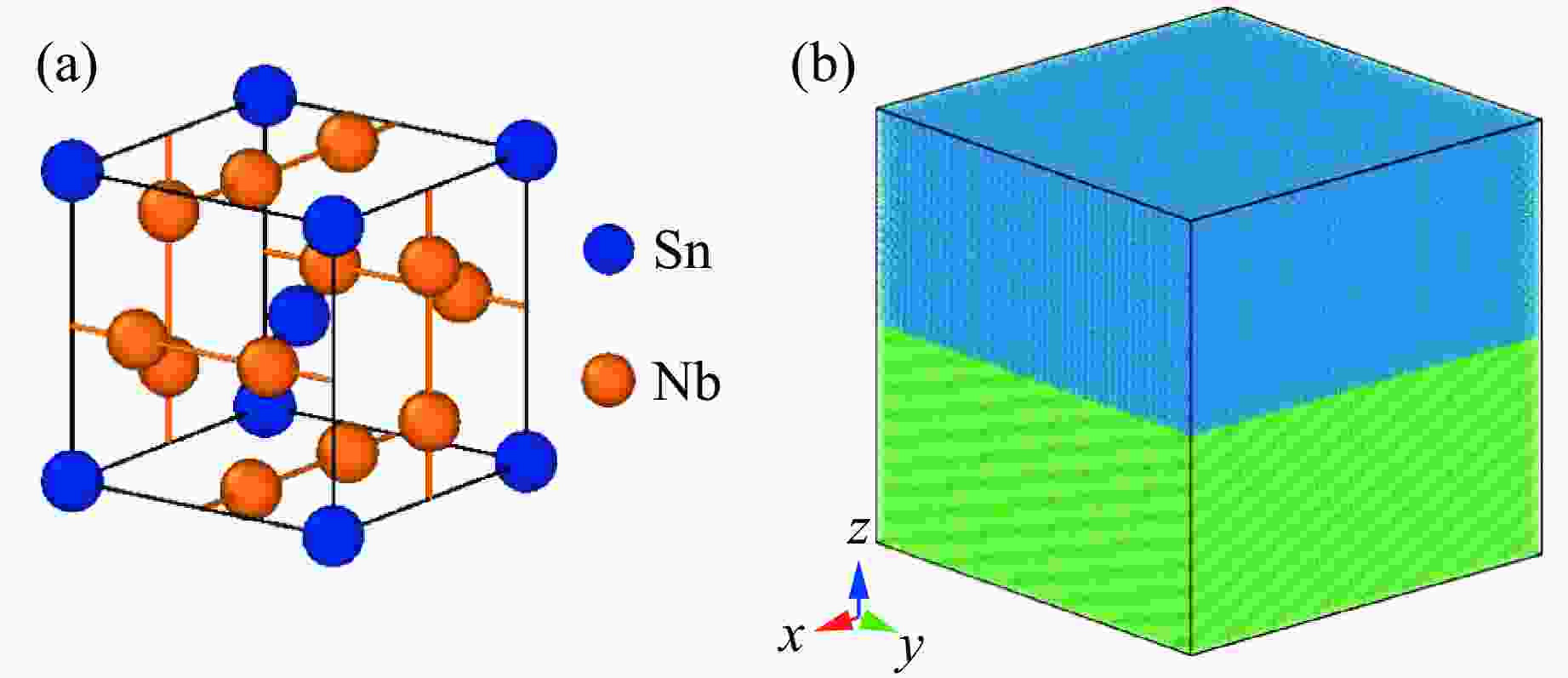
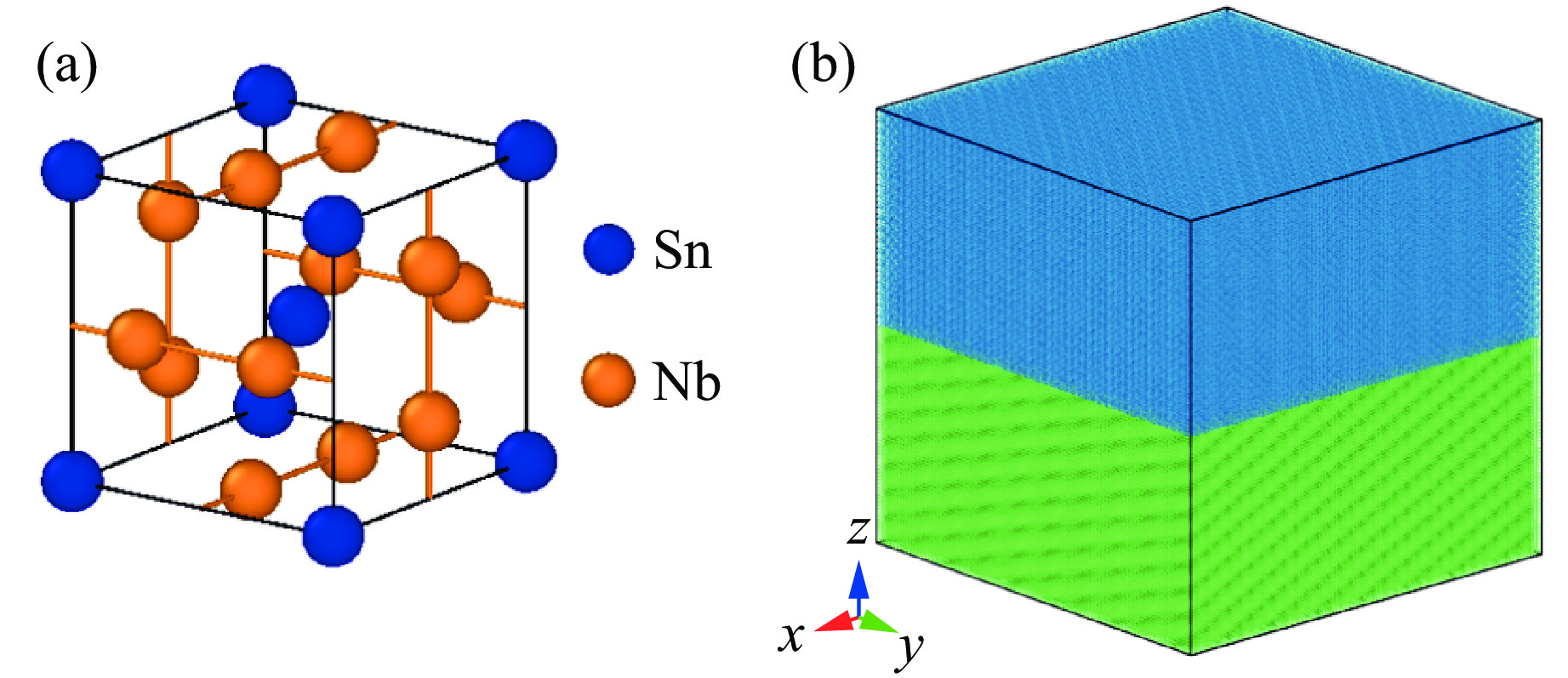
图 1 (a) Nb3Sn晶体结构,(b) Nb3Sn-Nb单晶复合膜基结构模型
Figure 1. (a) Crystal structure of Nb3Sn; (b) Nb3Sn-Nb single-crystal composite film/substrate model

图 3 高应变率作用下Nb3Sn复合超导中的损伤与裂纹
Figure 3. Damage and cracking in Nb3Sn composite superconductors under high-strain-rate deformation
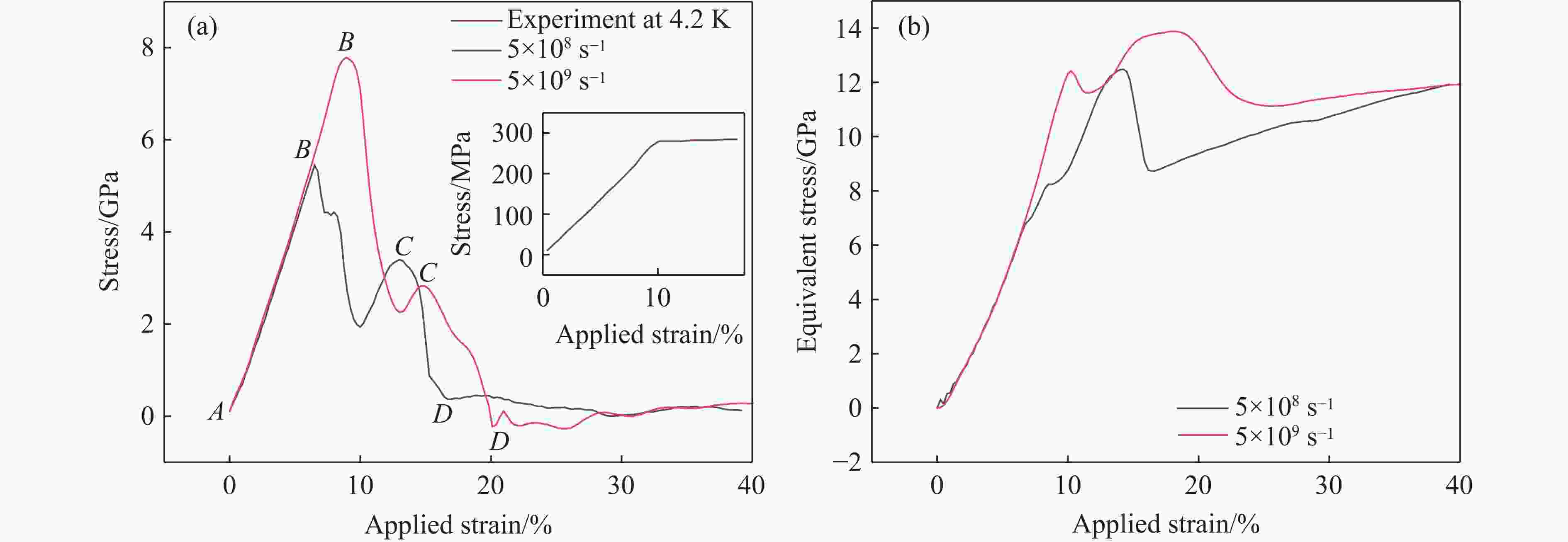
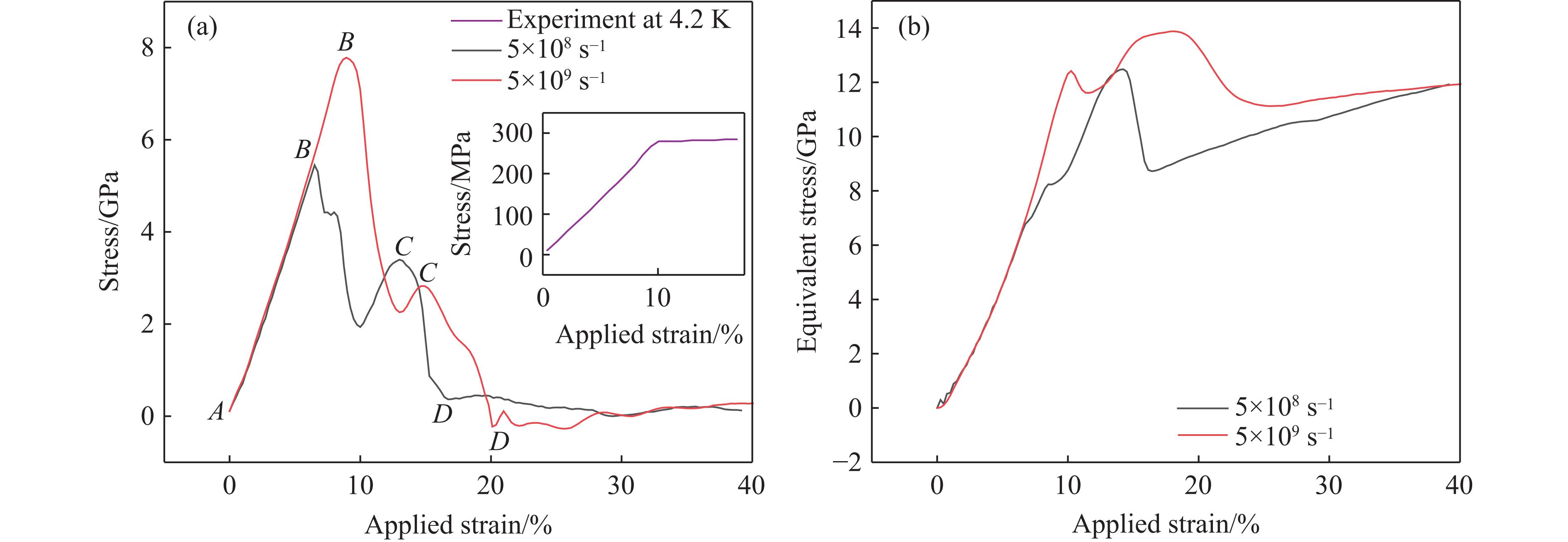
图 4 (a)沿拉伸方向的应力-应变曲线,(b)等效应力-应变曲线
Figure 4. (a) Stress-strain curves under uniaxial tension; (b) equivalent stress-strain curves
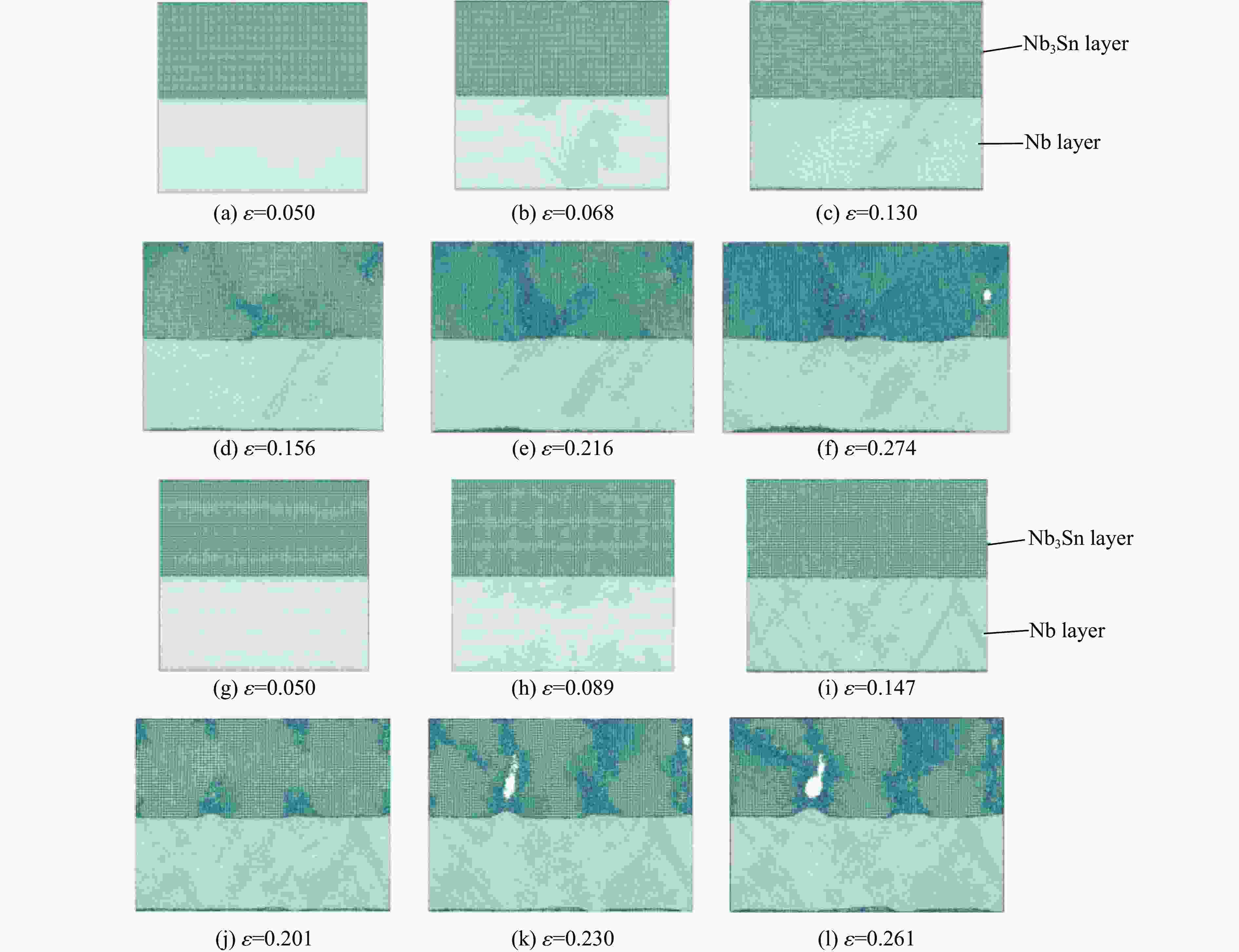
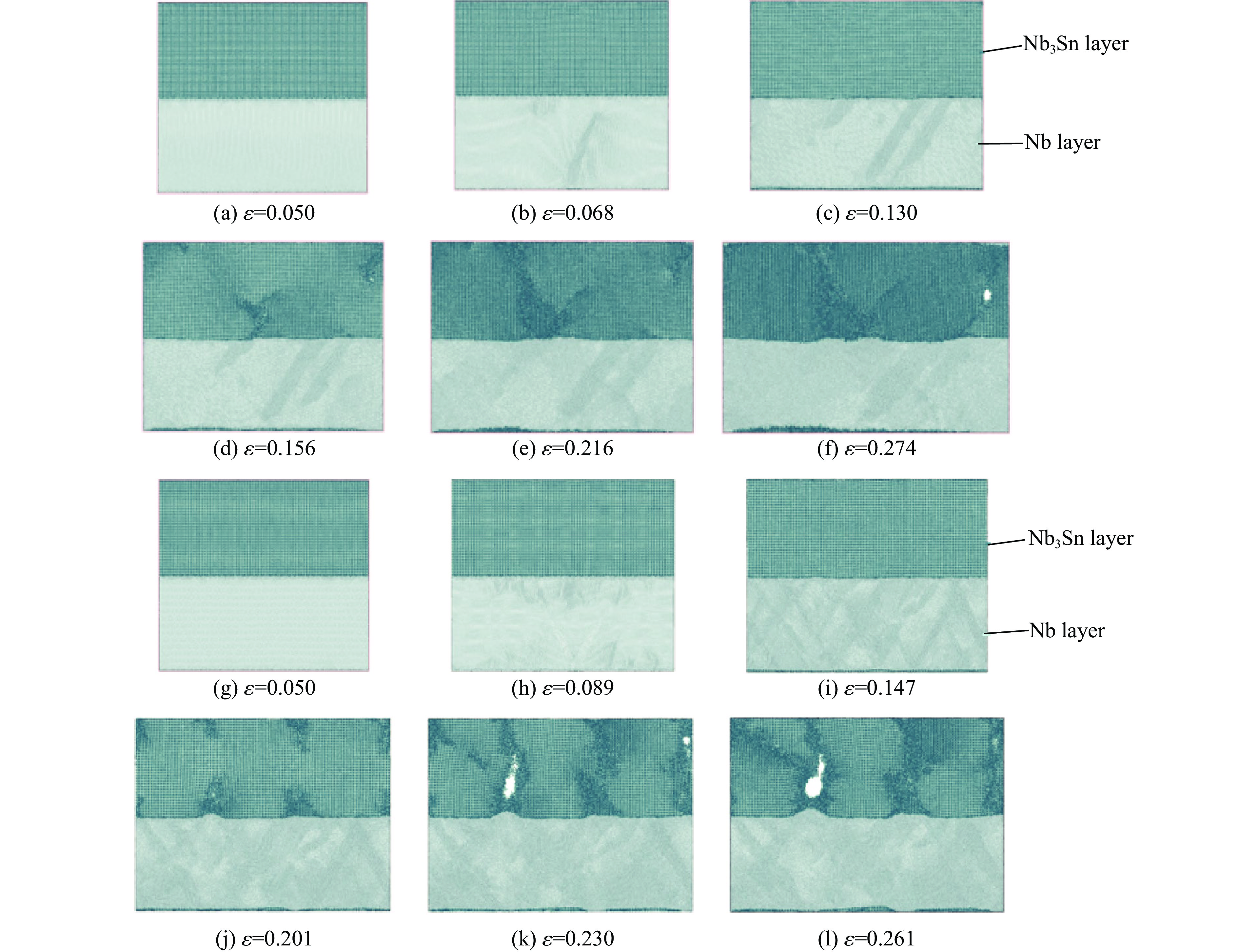
图 5 Nb3Sn复合超导体原子尺度应变分布:(a)~(f) 应变率为5×10⁸ s–1时的变形演化,(g)~(l) 应变率为5×10⁹ s–1时的变形演化
Figure 5. Atomic-scale strain distribution in Nb3Sn composite superconductors: (a)–(f) deformation evolution at a strain rate of 5×10⁸ s–1; (g)–(l) deformation evolution at a strain rate of 5×10⁹ s–1
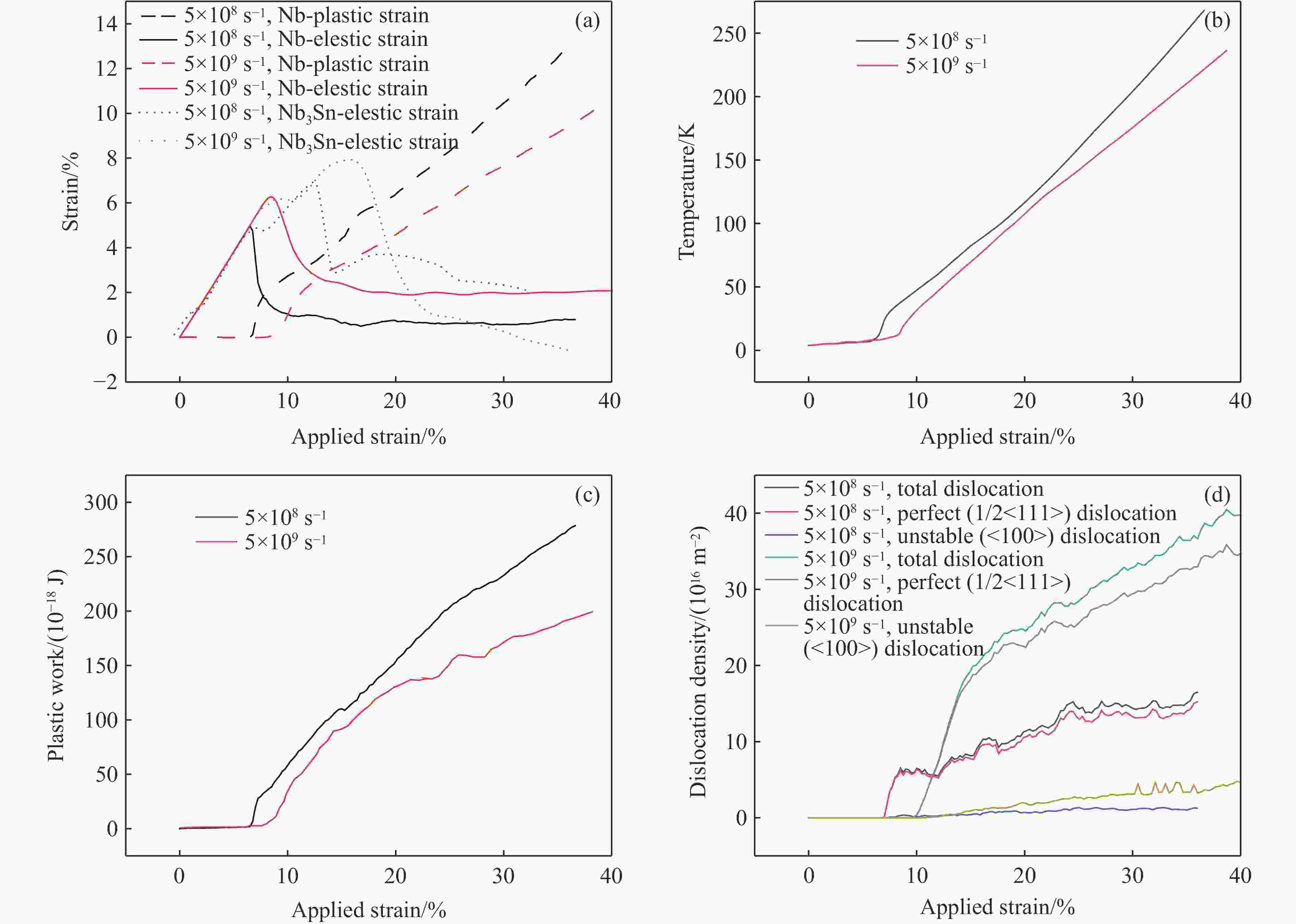
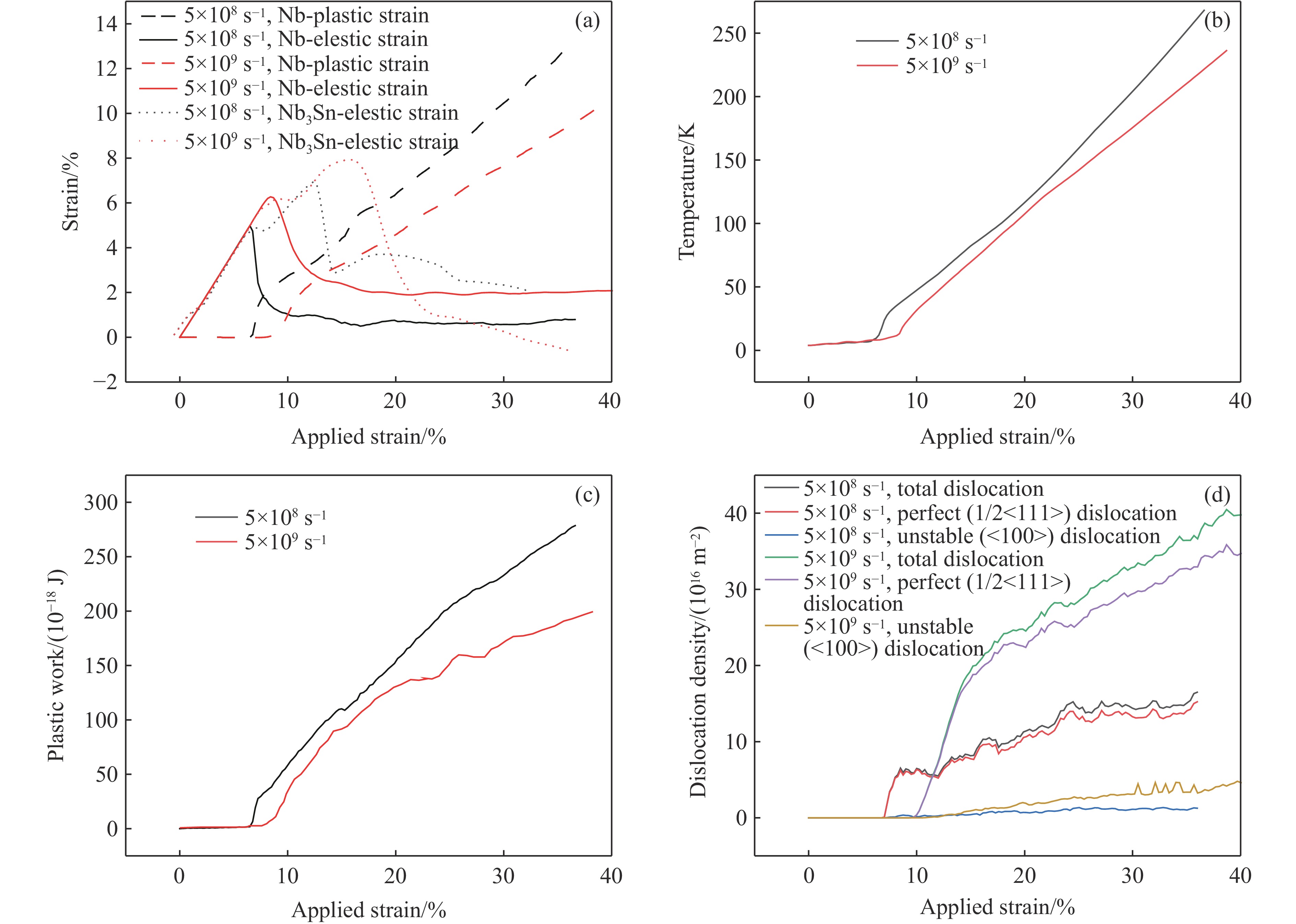
图 6 (a) Nb基体弹塑性变形与涂层弹性变形的演化,(b) 温度随施加应变的演化,(c) 塑性功随施加应变的累积,(d) 位错密度随施加应变的演化
Figure 6. (a) Evolution of elastic-plastic deformation in the niobium substrate and evolution of elastic deformation in the coating; (b) temperature response to applied strain; (c) accumulation of plastic work with applied strain; (d) evolution of dislocation density as a function of applied strain
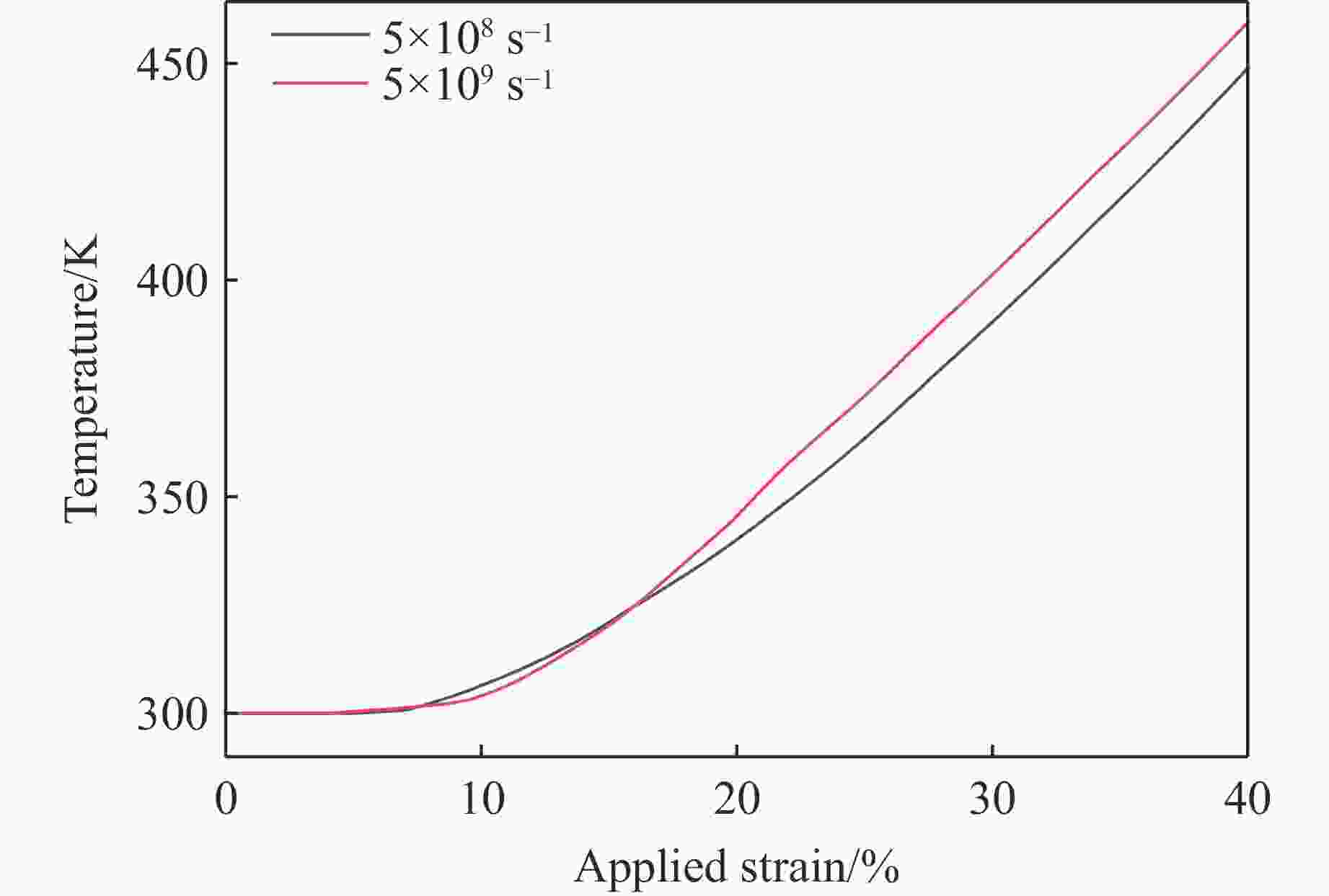
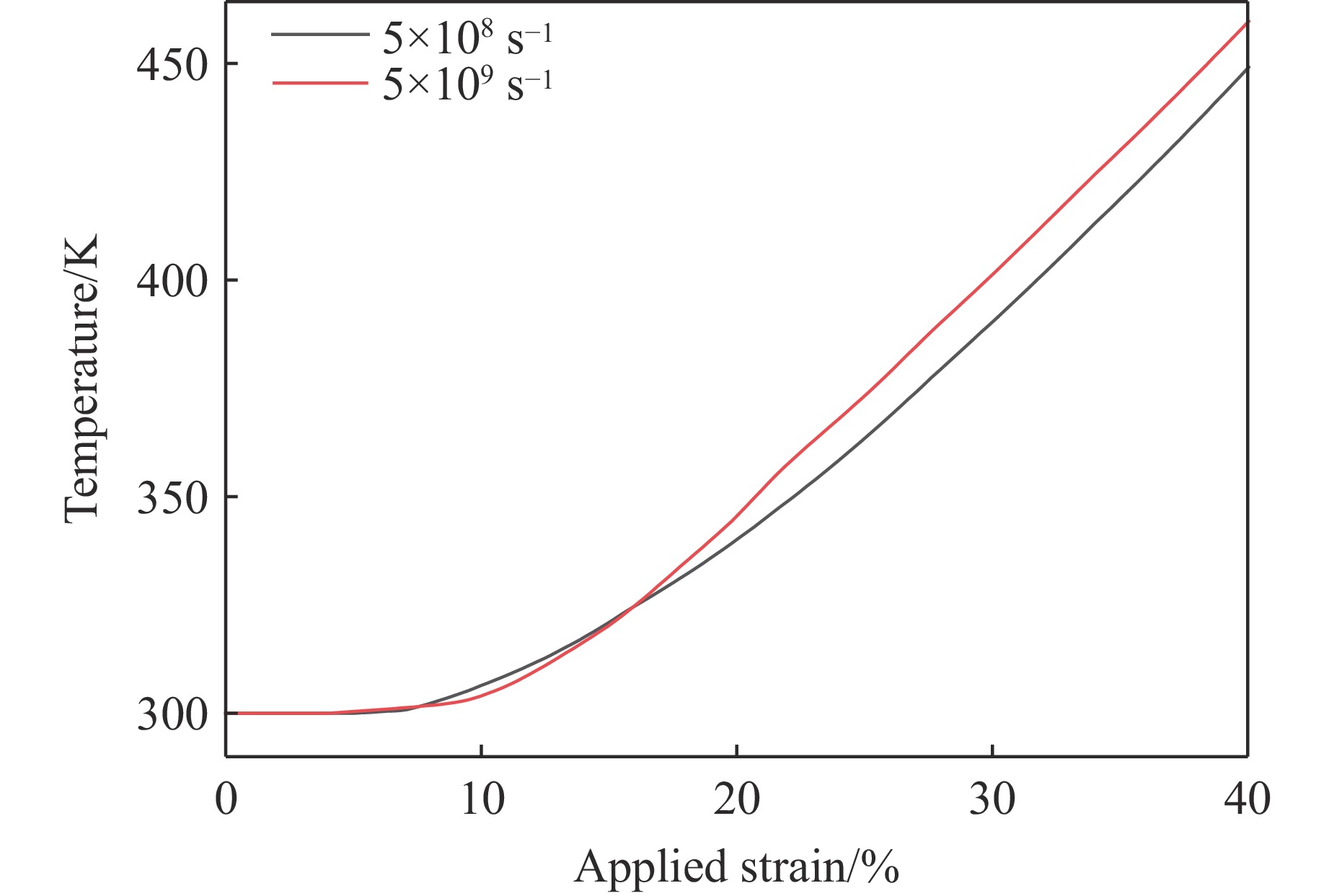
图 7 室温环境中温度随施加应变的演化
Figure 7. Temperature evolution as a function of applied strain at room temperature
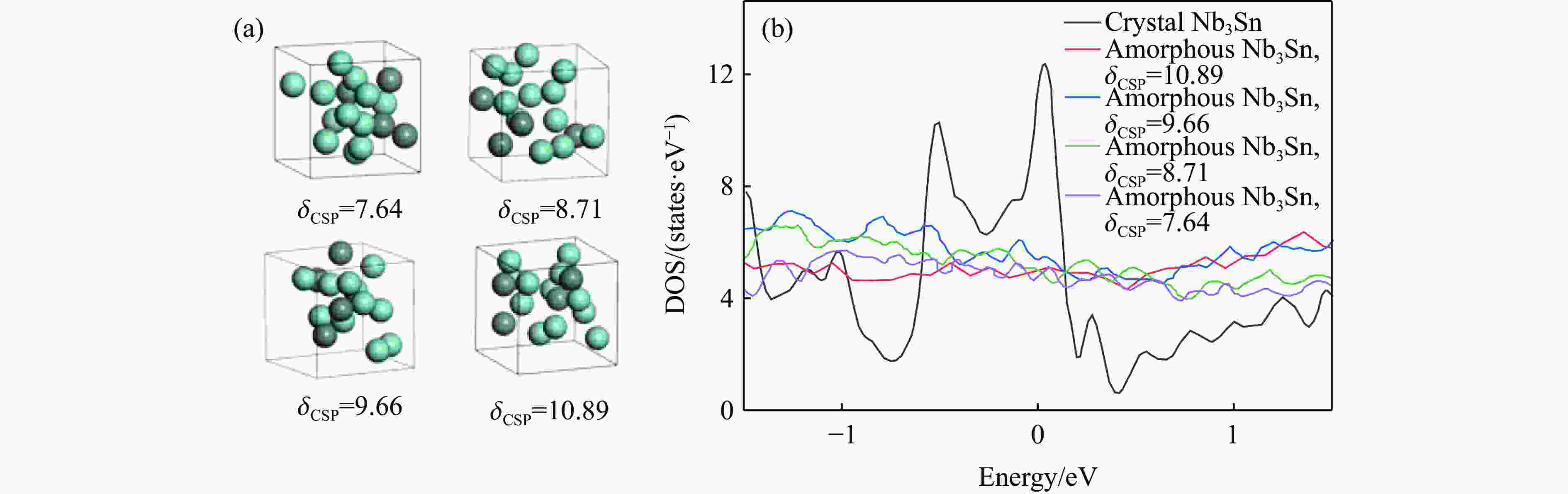
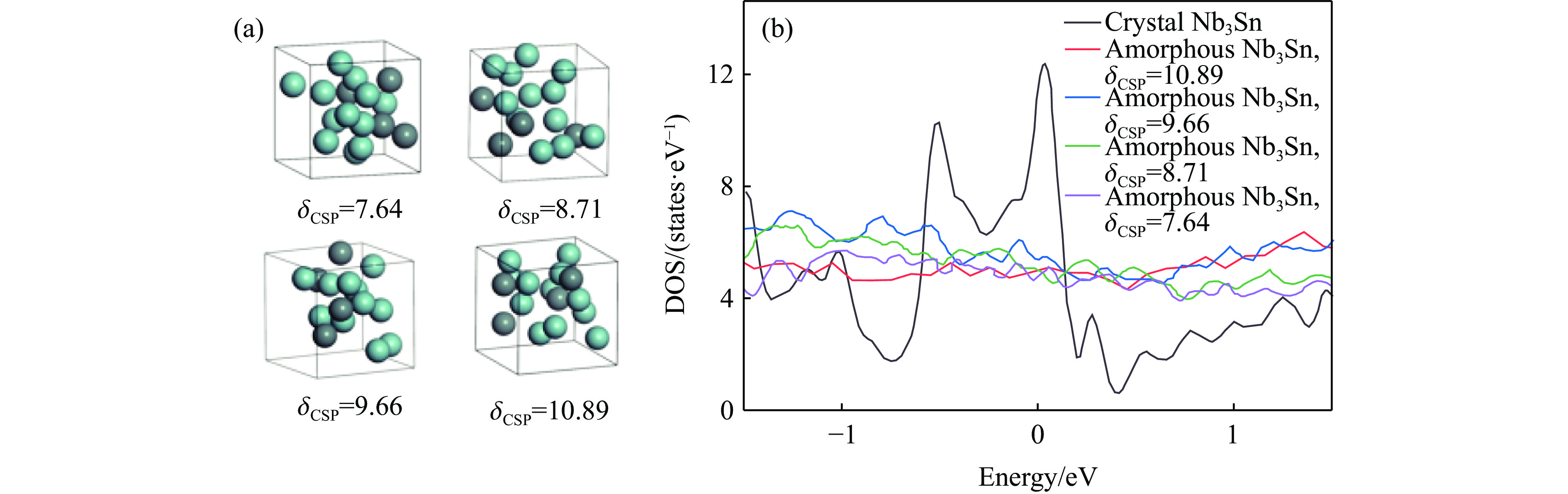
图 8 (a) 变形损伤区域不同原子位型的非晶态Nb3Sn,(b) 非晶态Nb3Sn的电子态密度曲线
Figure 8. (a) Amorphous Nb3Sn atomic configurations within the deformation-induced damage zone; (b) density of states of amorphous Nb3Sn.
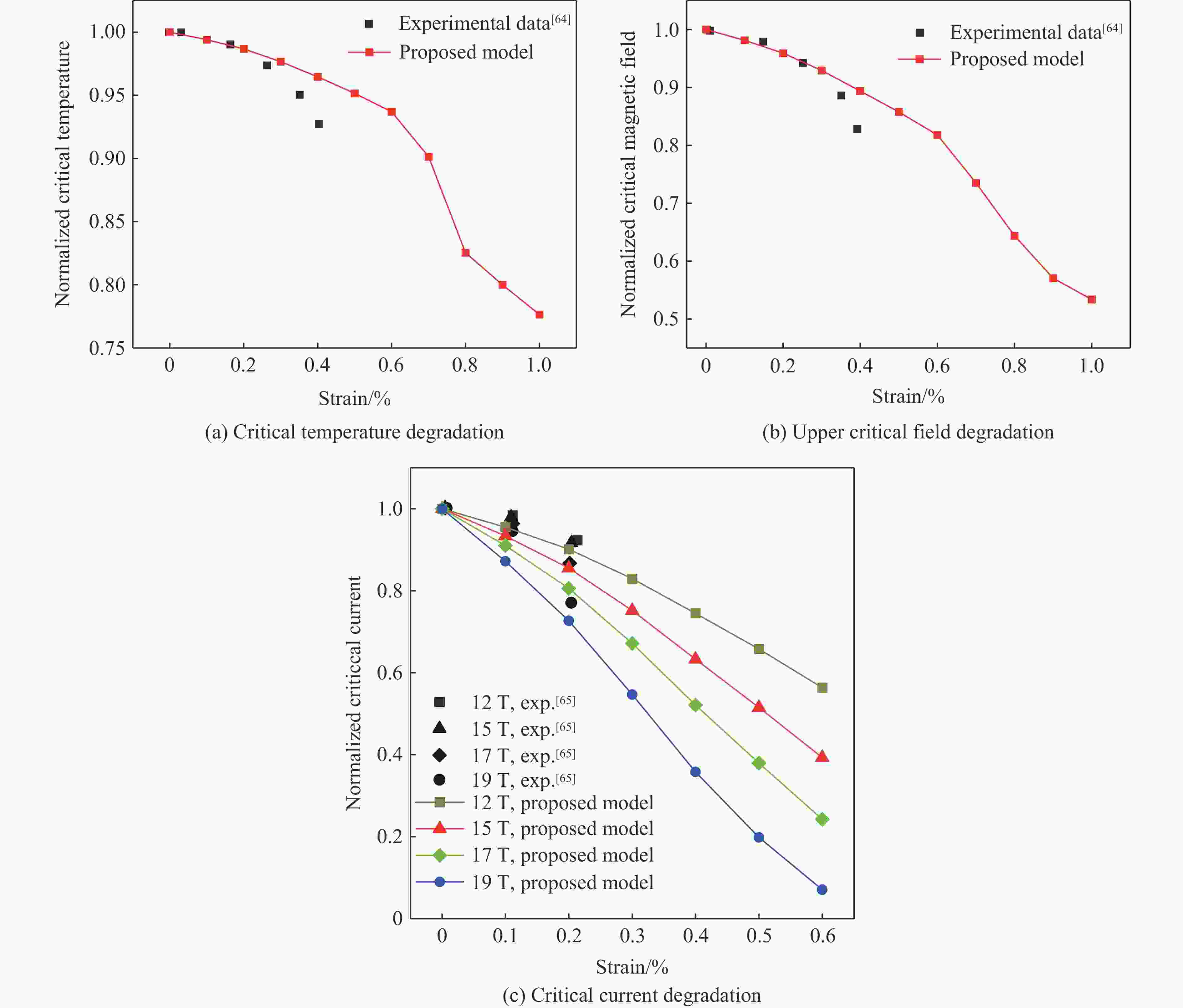
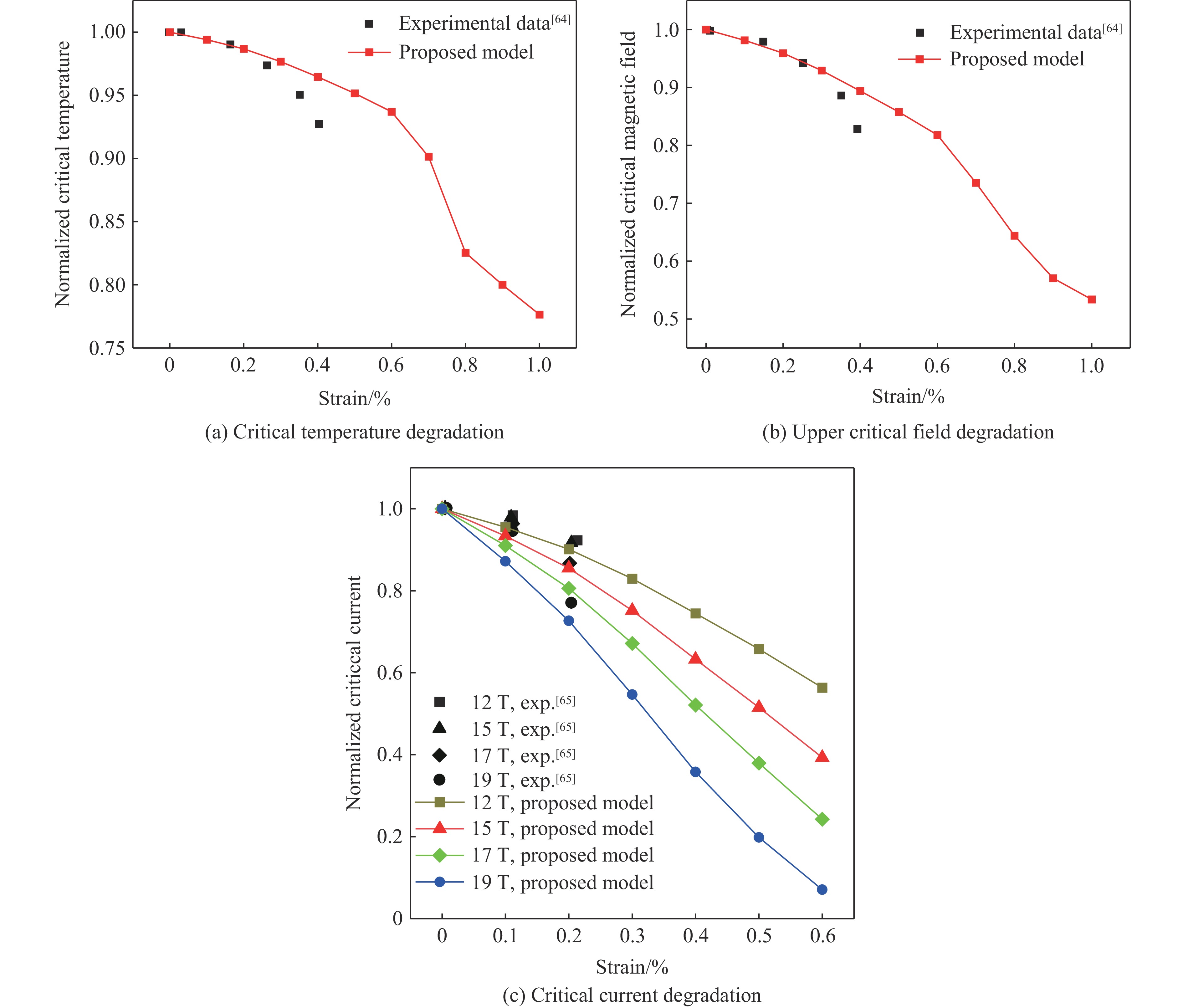
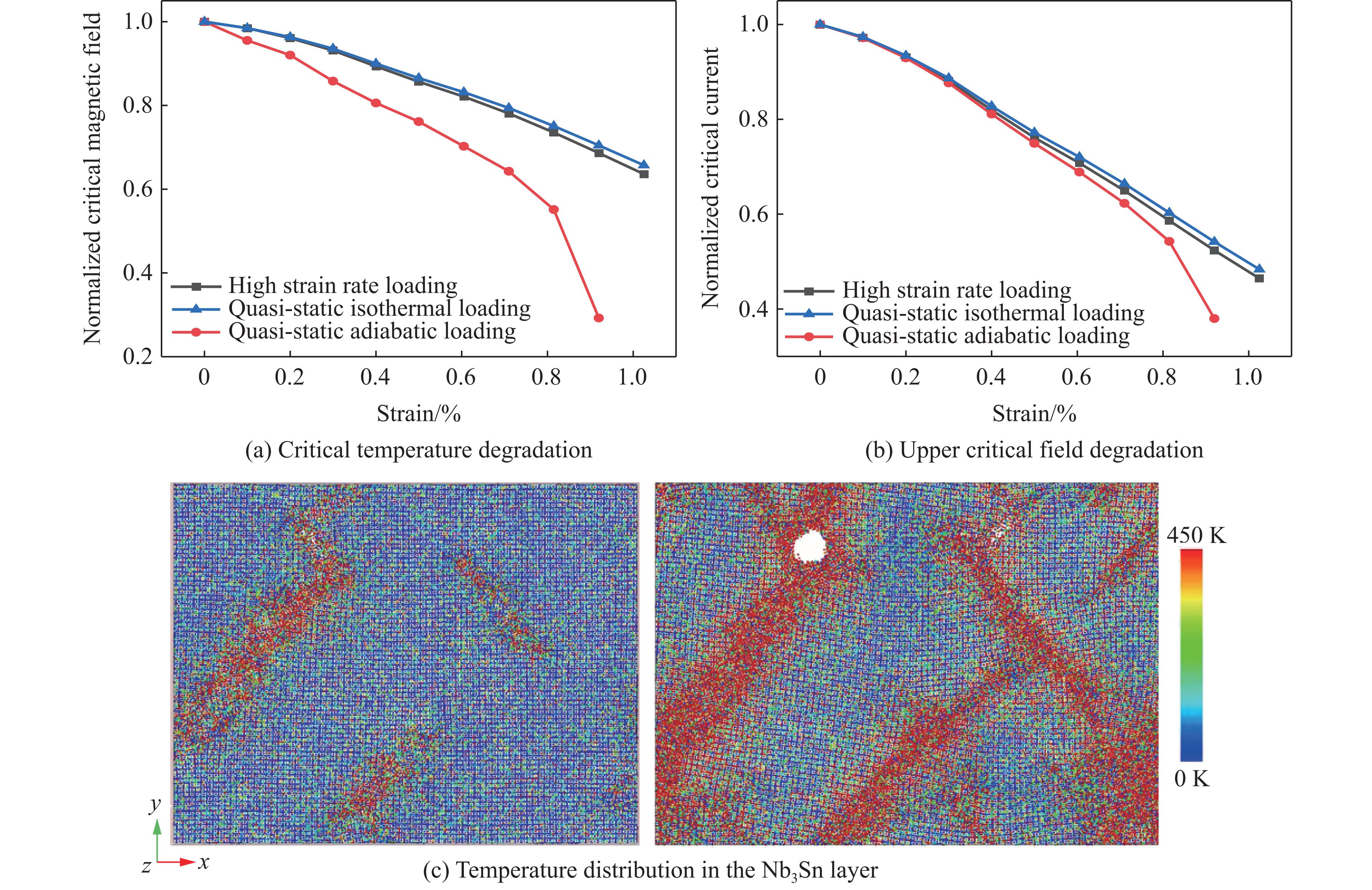
图 9 准静态等温加载条件下Nb3Sn复合超导体临界性能变化
Figure 9. Evolution of the critical properties in Nb3Sn composite superconductors under quasi-static isothermal loading
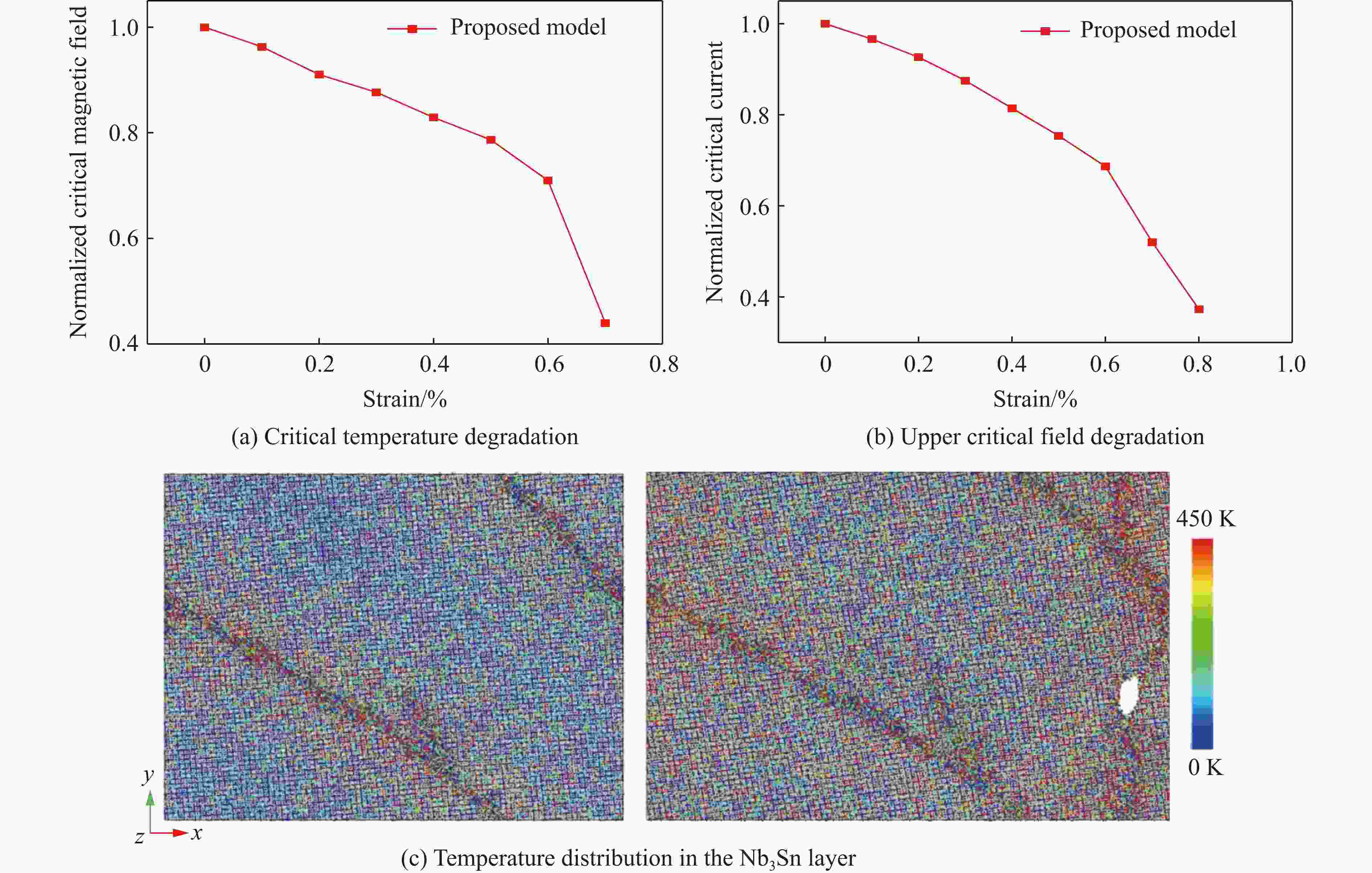
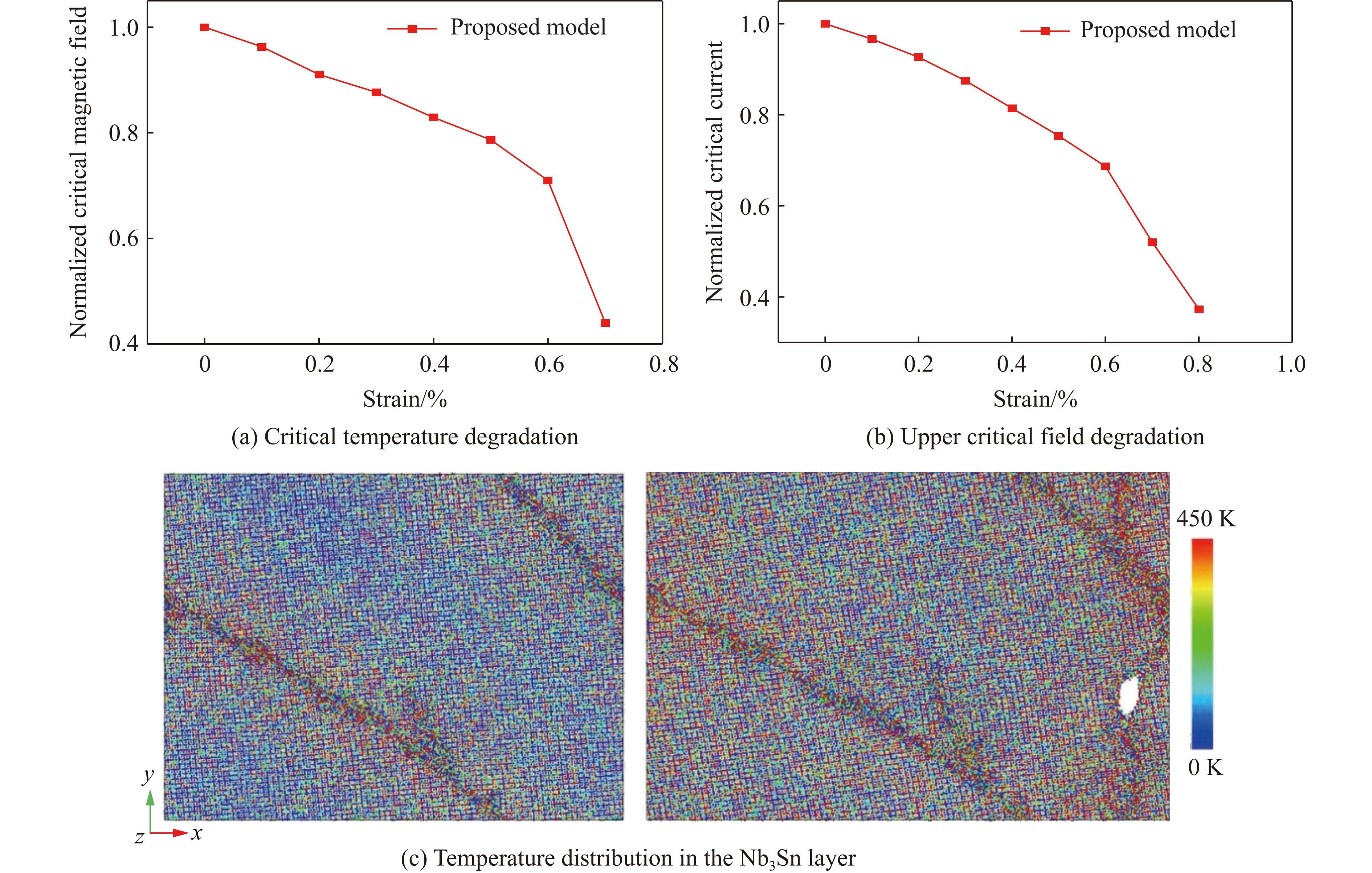
图 10 准静态绝热加载条件下Nb3Sn复合超导体临界性能变化
Figure 10. Evolution of the critical properties in Nb3Sn composite superconductors under quasi-static adiabatic loading
-
[1] POSEN S, HALL D L. Nb3Sn superconducting radiofrequency cavities: fabrication, results, properties, and prospects [J]. Superconductor Science and Technology, 2017, 30(3): 033004. doi: 10.1088/1361-6668/30/3/033004 [2] SCANLAN R M. Conductor development for high energy physics-plans and status of the US program [J]. IEEE Transactions on Applied Superconductivity, 2001, 11(1): 2150–2155. doi: 10.1109/77.920283 [3] STEIN S R. Space applications of superconductivity: resonators for high stability oscillators and other applications [J]. Cryogenics, 1980, 20(7): 363–371. doi: 10.1016/S0011-2275(80)80046-4 [4] ARTOOS K, ANDRES L, CALAGA R, et al. Status of the HL-LHC crab cavity tuner [C]//Proceedings of the 19th International Conference on RF Superconductivity. Dresden: JACoW Publishing, 2019: 646–651. [5] RATHORE M, JAIN V K, SINGH K K, et al. Estimation of Lorentz force detuning and its compensation on 650 MHz βg=0.92 single cell SCRF cavity [J]. Engineering Research Express, 2021, 3(2): 025025. doi: 10.1088/2631-8695/abfdf7 [6] QIU F, ZHU Z L, MA J Y, et al. An approach to characterize Lorentz force transfer function for superconducting cavities [J]. Nuclear Instruments and Methods in Physics Research Section A: Accelerators, Spectrometers, Detectors and Associated Equipment, 2021, 1012: 165633. doi: 10.1016/j.nima.2021.165633 [7] POSEN S, LIEPE M. Mechanical optimization of superconducting cavities in continuous wave operation [J]. Physical Review Special Accelerators and Beams, 2012, 15(2): 022002. doi: 10.1103/physrevstab.15.022002 [8] 郑晓静. 关于极端力学 [J]. 力学学报, 2019, 51(4): 1266–1272. doi: 10.6052/0459-1879-19-189ZHENG X J. Extreme mechanics [J]. Chinese Journal of Theoretical and Applied Mechanics, 2019, 51(4): 1266–1272. doi: 10.6052/0459-1879-19-189 [9] TAKAO T, ITO T, UMEKAWA K, et al. Degradation and reversibility of critical current due to transverse compressive stress in Ta-reinforced Nb3Sn superconducting strand [J]. IEEE Transactions on Applied Superconductivity, 2005, 15(2): 3446–3449. doi: 10.1109/TASC.2005.849053 [10] KITAGUCHI H, KIMURA S, SHIMONOSONO T, et al. Critical currents of Nb3Sn wire subject to applied transverse stress [J]. IEEE Transactions on Applied Superconductivity, 2005, 15(2): 3454–3457. doi: 10.1109/TASC.2005.849056 [11] CHEGGOUR N, EKIN J W, GOODRICH L F. Critical-current measurements on an ITER Nb3Sn strand: effect of axial tensile strain [J]. IEEE Transactions on Applied Superconductivity, 2007, 17(2): 1366–1369. doi: 10.1109/TASC.2007.897819 [12] 蒋华伟. 应变对Nb3Sn股线临界特性退化影响 [J]. 稀有金属材料与工程, 2015, 44(6): 1423–1426.JIANG H W. Effect of strain on critical properties degradation of Nb3Sn strand [J]. Rare Metal Materials and Engineering, 2015, 44(6): 1423–1426. [13] SUGIMOTO M, TSUBOUCHI H, ENDOH S, et al. Critical current characterization under pure bending strains of pre-bent Cu-Nb/Nb3Sn strands for practical react-and-wind process [J]. IEEE Transactions on Applied Superconductivity, 2016, 26(3): 1–5. doi: 10.1109/tasc.2016.2529418 [14] REN Z, GAMPERLE L, FETE A, et al. Evolution of T2 resistivity and superconductivity in Nb3Sn under pressure [J]. Physical Review B, 2017, 95(18): 184503. doi: 10.1103/physrevb.95.184503 [15] 岳动华, 张兴义, 周又和. 国际热核聚变实验堆用管内电缆导体力学行为研究进展 [J]. 科学通报, 2018, 63(4): 396–414. doi: 10.1360/N972017-00937YUE D H, ZHANG X Y, ZHOU Y H. Research progress on the mechanical behavior of the cable in conduit conductor for the international thermonuclear experimental reactor project [J]. Chinese Science Bulletin, 2018, 63(4): 396–414. doi: 10.1360/N972017-00937 [16] GUILLÉN-HERNÁNDEZ T, ARTOOS K, CALAGA R, et al. Numerical calculation of the Lorentz force detuning and the pressure sensitivity for the HL-LHC crab cavity [J]. Journal of Physics: Conference Series, 2024, 2687: 082005. doi: 10.1088/1742-6596/2687/8/082005 [17] 张猛. 高频腔中二次电子倍增效应的研究 [D]. 上海: 中国科学院上海应用物理研究所, 2009.ZHANG M. Study of the secondary electron multiplication effect in high-frequency cavities [D]. Shanghai: Shanghai Institute of Applied Physics, Chinese Academy of Sciences, 2009. [18] PADAMSEE H. 50 years of success for SRF accelerators—a review [J]. Superconductor Science and Technology, 2017, 30(5): 053003. doi: 10.1088/1361-6668/aa6376 [19] MIYAZAKI A. Basics of RF superconductivity and Nb material [EB/OL]. Tutorial program on SRF2021. East Lansing, MI, USA, 2021: 23–25. [20] IMBASCIATI L, BAUER P, AMBROSIO G, et al. Study of the effects of high temperatures during quenches on the performance of a small Nb3Sn racetrack magnet [J]. Superconductor Science and Technology, 2004, 17(5): S389–S393. doi: 10.1088/0953-2048/17/5/060 [21] BERMUDEZ S I, AUCHMANN B, BAJAS H, et al. Quench protection studies of the 11-T Nb3Sn dipole for the LHC upgrade [J]. IEEE Transactions on Applied Superconductivity, 2016, 26(4): 4701605. doi: 10.1109/TASC.2016.2536653 [22] BERMUDEZ S I, MANGIAROTTI F, WILLERING G, et al. Quench protection study of a 11 T Nb3Sn model dipole for the high luminosity LHC [J]. IEEE Transactions on Applied Superconductivity, 2019, 29(5): 4701005. doi: 10.1109/TASC.2019.2897275 [23] 杨绪佳, 何宇新, 张鑫, 等. Nb3Sn高场复合超导体临界性能力学变形效应的多尺度模拟 [J]. 力学学报, 2022, 54(3): 719–731. doi: 10.6052/0459-1879-21-491YANG X J, HE Y X, ZHANG X, et al. Multiscale simulation of mechanical deformation effects on critical properties of Nb3Sn high field composite superconductors [J]. Chinese Journal of Theoretical and Applied Mechanics, 2022, 54(3): 719–731. doi: 10.6052/0459-1879-21-491 [24] CIOVATI G, ANLAGE S M, GUREVICH A V. Imaging of the surface resistance of an SRF cavity by low-temperature laser scanning microscopy [J]. IEEE Transactions on Applied Superconductivity, 2013, 23(3): 3500506. doi: 10.1109/TASC.2012.2233253 [25] HALL D L, LIEPE M, PORTER R D, et al. Cavity quench studies in Nb3Sn using temperature mapping and surface analysis of cavity cut-outs [C]//Proceedings of the 18th International Conference on RF Superconductivity. Lanzhou: JACoW Publishing, 2017: 840–844. [26] BOTTURA L, BORDINI B. JC (B, T, ε) parameterization for the ITER Nb3Sn production [J]. IEEE Transactions on Applied Superconductivity, 2009, 19(3): 1521–1524. doi: 10.1109/TASC.2009.2018278 [27] MARKIEWICZ W D. Invariant temperature and field strain functions for Nb3Sn composite superconductors [J]. Cryogenics, 2006, 46(12): 846–863. doi: 10.1016/j.cryogenics.2006.07.007 [28] QIAO L, ZHANG X, DING H, et al. An intrinsic model for strain tensor effects on the density of states in A15 Nb3Sn [J]. Cryogenics, 2019, 97: 50–54. doi: 10.1016/j.cryogenics.2018.11.002 [29] YANG X M, XIAO G S, ZHANG S B, et al. Crack propagation effects on the critical temperature degradation of superconducting Nb3Sn single crystal [J]. Engineering Fracture Mechanics, 2024, 305: 110195. doi: 10.1016/j.engfracmech.2024.110195 [30] DONG S, JING Z, YONG H D, et al. A theoretical model for characterizing the internal contact of the CICC strands under axial strain [J]. Acta Mechanica Solida Sinica, 2016, 29(5): 455–467. doi: 10.1016/S0894-9166(16)30264-6 [31] JING Z, ZHANG Y. Micromechanical modelling on the elastoplastic damage and irreversible critical current degradation of the twisted multi-filamentary Nb3Sn superconducting strand [J]. Acta Mechanica Sinica, 2024, 40(4): 723661. doi: 10.1007/s10409-024-23611-x [32] ZHU B H, XIAO G S, YANG L, et al. Insights on grain boundary effects on crack formation and propagation in Nb3Sn coatings at low temperature and high strain rates: a molecular dynamics simulation study [J]. Superconductor Science and Technology, 2023, 36(12): 125012. doi: 10.1088/1361-6668/ad06c5 [33] THOMPSON A P, AKTULGA H M, BERGER R, et al. LAMMPS—a flexible simulation tool for particle-based materials modeling at the atomic, meso, and continuum scales [J]. Computer Physics Communications, 2022, 271: 108171. doi: 10.1016/j.cpc.2021.108171 [34] ZHANG Y, ASHCRAFT R, MENDELEV M I, et al. Experimental and molecular dynamics simulation study of structure of liquid and amorphous Ni62Nb38 alloy [J]. The Journal of Chemical Physics, 2016, 145(20): 204505. doi: 10.1063/1.4968212 [35] CHUDINOV V G, GOGOLIN V P, GOSHCHITSKII B N, et al. Simulation of collision cascades in intermetallic Nb3Sn compounds [J]. Physica Status Solidi (A), 1981, 67(1): 61–67. doi: 10.1002/pssa.2210670103 [36] STUKOWSKI A. Visualization and analysis of atomistic simulation data with OVITO—the open visualization tool [J]. Modelling and Simulation in Materials Science and Engineering, 2010, 18(1): 015012. doi: 10.1088/0965-0393/18/1/015012 [37] STUKOWSKI A, BULATOV V V, ARSENLIS A. Automated identification and indexing of dislocations in crystal interfaces [J]. Modelling and Simulation in Materials Science and Engineering, 2012, 20(8): 085007. doi: 10.1088/0965-0393/20/8/085007 [38] GULLETT P M, HORSTEMEYER M F, BASKES M I, et al. A deformation gradient tensor and strain tensors for atomistic simulations [J]. Modelling and Simulation in Materials Science and Engineering, 2008, 16(1): 015001. doi: 10.1088/0965-0393/16/1/015001 [39] STUKOWSKI A, ARSENLIS A. On the elastic-plastic decomposition of crystal deformation at the atomic scale [J]. Modelling and Simulation in Materials Science and Engineering, 2012, 20(3): 035012. doi: 10.1088/0965-0393/20/3/035012 [40] SHIMIZU F, OGATA S, LI J. Theory of shear banding in metallic glasses and molecular dynamics calculations [J]. Materials Transactions, 2007, 48(11): 2923–2927. doi: 10.2320/matertrans.MJ200769 [41] LI J, SHIMIZU F. Least-square atomic strain [EB/OL]. 2005-06-12. http://li.mit.edu/Archive/Graphics/A/annotate_atomic_strain/Doc/main.pdf. [42] FALK M L, LANGER J S. Dynamics of viscoplastic deformation in amorphous solids [J]. Physical Review E, 1998, 57(6): 7192–7205. doi: 10.1103/PhysRevE.57.7192 [43] LEE E H. Elastic-plastic deformation at finite strains [J]. Journal of Applied Mechanics, 1969, 36(1): 27. doi: 10.21236/AD0678483 [44] XIONG Q L, LI Z H, SHIMADA T, et al. Atomistic investigation on the conversion of plastic work to heat in high-rate shear deformation [J]. International Journal of Plasticity, 2022, 149: 103158. doi: 10.1016/j.ijplas.2021.103158 [45] PAN Z, XU F, MATHAUDHU S N, et al. Microstructural evolution and mechanical properties of niobium processed by equal channel angular extrusion up to 24 passes [J]. Acta Materialia, 2012, 60(5): 2310–2323. doi: 10.1016/j.actamat.2011.12.019 [46] TAYLOR G I, QUINNEY H. The latent energy remaining in a metal after cold working [J]. Proceedings of the Royal Society of London. Series A, Containing Papers of a Mathematical and Physical Character, 1934, 143(849): 307–326. doi: 10.1098/rspa.1934.0004 [47] MAKI K. The magnetic properties of superconducting alloys [J]. Physics Physique Fizika, 1964, 1(2): 127–143. [48] DE GENNES P G. Superconductivity of metals and alloys [M]. New York: Elsevier, 1966. [49] DE GENNES P G. Behavior of dirty superconductors in high magnetic fields [J]. Physik der Kondensierten Materie, 1964, 3(2): 79–90. doi: 10.1007/bf02422354 [50] NÖLSCHER C, SAEMANN-ISCHENKO G. Superconductivity and crystal and electronic structures in hydrogenated and disordered Nb3Ge and Nb3Sn layers with A15 structure [J]. Physical Review B, 1985, 32(3): 1519–1531. doi: 10.1103/PhysRevB.32.1519 [51] PARKS R D. Superconductivity [M]. New York: CRC Press, 1969. [52] 何宇新, 乔力, 石震天, 等. 静水压作用下Nb3Sn多晶体超导临界温度退化的耦合模型 [J]. 固体力学学报, 2020, 41(4): 334–342. doi: 10.19636/j.cnki.cjsm42-1250/o3.2020.005HE Y X, QIAO L, SHI Z T, et al. A coupling model for hydrostatic pressure-induced critical temperature degradation of Nb3Sn polycrystalline superconductors [J]. Chinese Journal of Solid Mechanics, 2020, 41(4): 334–342. doi: 10.19636/j.cnki.cjsm42-1250/o3.2020.005 [53] KELCHNER C L, PLIMPTON S J, HAMILTON J C. Dislocation nucleation and defect structure during surface indentation [J]. Physical Review B, 1998, 58(17): 11085–11088. doi: 10.1103/PhysRevB.58.11085 [54] LIU Z R, ZHANG R F. AACSD: an atomistic analyzer for crystal structure and defects [J]. Computer Physics Communications, 2018, 222: 229–239. doi: 10.1016/j.cpc.2017.07.026 [55] BLÖCHL P E. Projector augmented-wave method [J]. Physical Review B, 1994, 50(24): 17953–17979. doi: 10.1103/PhysRevB.50.17953 [56] PERDEW J P, BURKE K, WANG Y. Generalized gradient approximation for the exchange-correlation hole of a many-electron system [J]. Physical Review B, 1996, 54(23): 16533–16539. doi: 10.1103/PhysRevB.54.16533 [57] SUN H, XU Z T, ZHANG D. First-principles calculations to investigate doping effects on electrical conductivity and interfacial contact resistance of TiO2 [J]. Applied Surface Science, 2023, 614: 156202. doi: 10.1016/j.apsusc.2022.156202 [58] LEE J, POSEN S, MAO Z G, et al. Atomic-scale analyses of Nb3Sn on Nb prepared by vapor diffusion for superconducting radiofrequency cavity applications: a correlative study [J]. Superconductor Science and Technology, 2019, 32(2): 024001. doi: 10.1088/1361-6668/aaf268 [59] JASIAK K, GRONOSTAJSKI Z, JABLOŃSKA M B. Experimental and numerical determination of the temperature of TWIP steel during dynamic tensile testing [J]. Journal of Materials Research and Technology, 2024, 28: 856–864. doi: 10.1016/j.jmrt.2023.12.056 [60] TANG J, HE M C, QIAO Y F, et al. Dynamic tensile behavior and constitutive model of a novel high-strength and high-toughness plate steel [J]. Engineering Failure Analysis, 2024, 163: 108449. doi: 10.1016/j.engfailanal.2024.108449 [61] CHEN S, LI W B, WANG X M, et al. Comparative study of the dynamic deformation of pure molybdenum at high strain rates and high temperatures [J]. Materials, 2021, 14(17): 4847. doi: 10.3390/ma14174847 [62] WEI Z. Atomistic modeling of plastic deformation in BCC niobium nanowire under bending [J]. Materials Today Communications, 2024, 38: 108366. doi: 10.1016/j.mtcomm.2024.108366 [63] WANG Q N, WANG J W, LI J X, et al. Consecutive crystallographic reorientations and superplasticity in body-centered cubic niobium nanowires [J]. Science Advances, 2018, 4(7): eaas8850. doi: 10.1126/sciadv.aas8850 [64] TAYLOR D M J, HAMPSHIRE D P. The scaling law for the strain dependence of the critical current density in Nb3Sn superconducting wires [J]. Superconductor Science and Technology, 2005, 18(12): S241–S252. doi: 10.1088/0953-2048/18/12/005 [65] MONDONICO G, SEEBER B, SENATORE C, et al. Improvement of electromechanical properties of an ITER internal tin Nb3Sn wire [J]. Journal of Applied Physics, 2010, 108(9): 093906. doi: 10.1063/1.3499649 -

 下载:
下载:


计量
- 文章访问数: 1535
- HTML全文浏览量: 501
- PDF下载量: 105
