





Reaction Evolution Characteristics of Ignited DNAN-Based Explosive Charges with Pre-cracks
-
摘要: 为探究裂纹及其间隙对2,4-二硝基苯甲醚(DNAN)基含铝炸药机械热点形成后反应传播特性的影响规律,制备了含不同初始裂纹的炸药药柱,采用基于发射药燃烧加载方式的炸药点火试验装置,模拟了炸药的反应传播过程,获取了加载过程和炸药反应过程的压力变化曲线以及试验后的炸药形貌特征,结合数值模拟,分析了不同预制裂纹的炸药药柱在相同药量发射药燃烧加载下的应力场分布特征。结果表明:无裂纹或无间隙“一”字裂纹工况下,药柱残骸完整,加载压力达到峰值后迅速下降,未发生反应,热点区域位于底部;含1 mm间隙裂纹工况下,药柱发生断裂并出现局部低速反应,压力衰减过程缓慢。其中,“一”字裂纹工况的热点区域转移至侧表面,而“十”字裂纹工况形成侧表面与底部的双重热点区域,反应程度进一步提升。结果表明,预制裂纹可改变应力分布并扩展热点区域,进而显著影响炸药的反应进程。Abstract: To investigate the influence of cracks and gaps on the reaction evolution characteristics of aluminum-containing DNAN-based explosives after the formation of mechanical induced hotspots, explosive charge samples with different initial cracks were fabricated. An explosive impact ignition device based on gun propellant combustion loading was designed. The evolution process following the ignition of explosives was simulated. Pressure changes and post-test morphological features of the explosives were recorded. Numerical simulations were conducted to analyze the stress field and reaction distribution of explosive charges with different initial cracks under the same loading conditions. The results indicate that the crack-free and single-line crack explosive charge with no gap debris remained intact, and pressure dropped rapidly after the peak with no reaction occurred, and the hot spot region was located at the bottom. While for the single-line crack explosive charge with 1 mm gap, the explosive charge fractured and exhibited local low-order reactions, with a slow pressure decay process. Among these, the hot spot region of the single-line crack explosive shifted to the side surface, while the cross-line crack explosive formed dual hot spot regions on both the side surface and bottom, further enhancing the reaction intensity. This demonstrates that pre-cracks significantly influence the explosive reaction process by altering stress distribution and expanding hot spot regions.
-
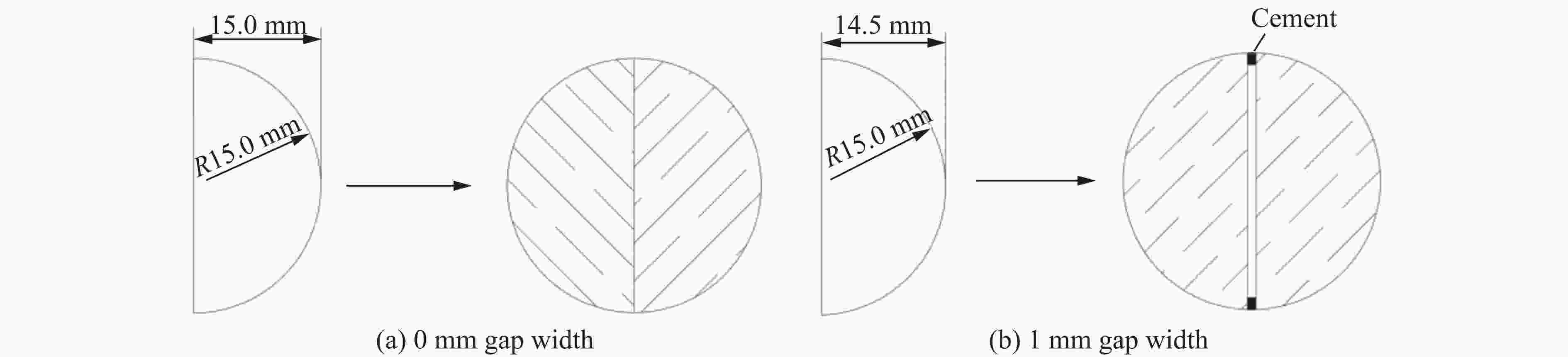
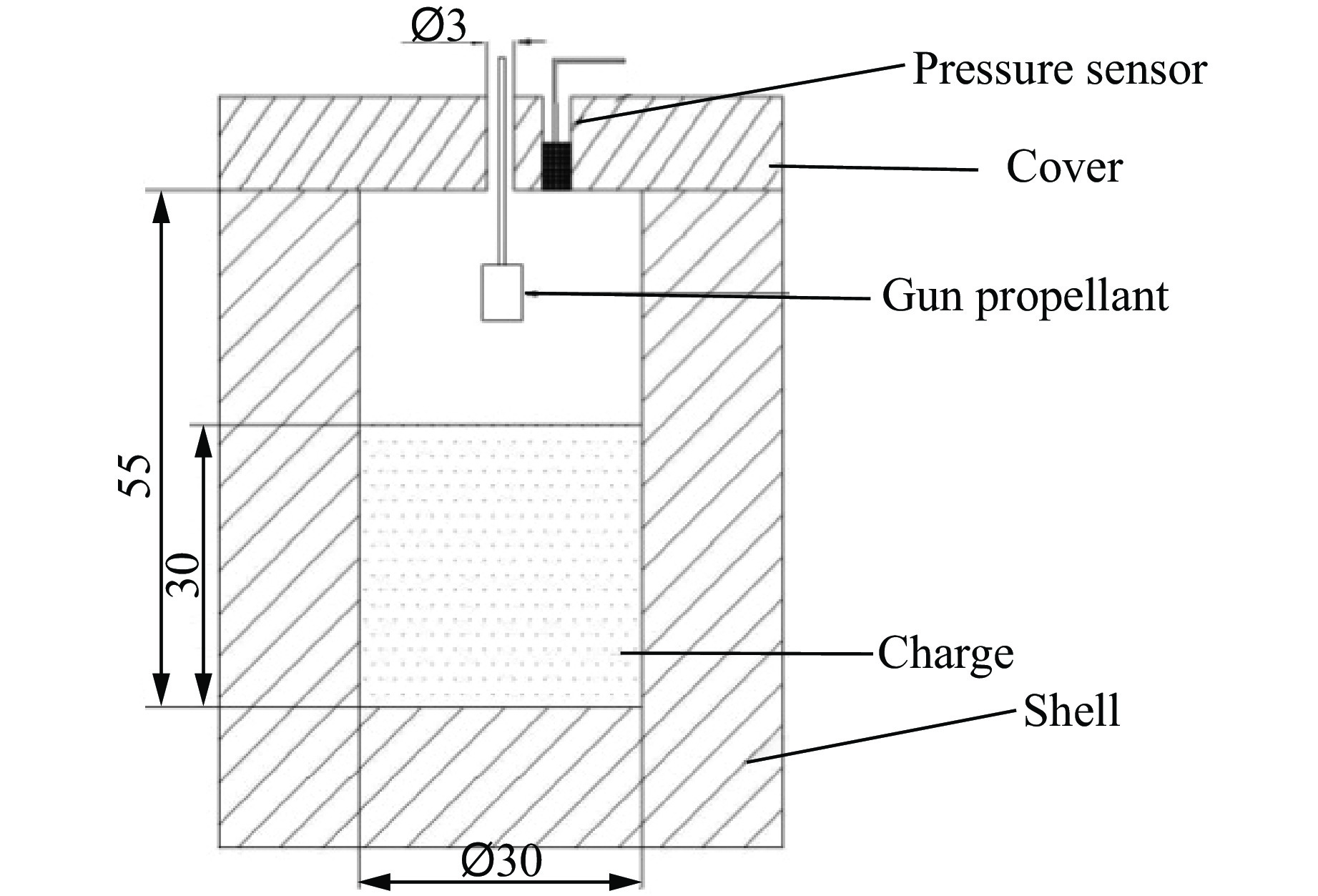
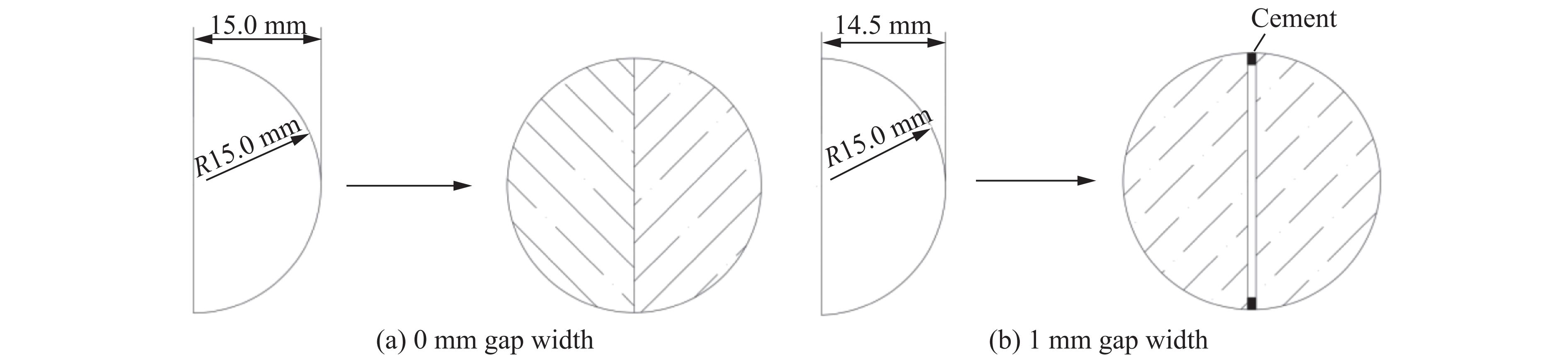
图 1 “一”字裂纹药柱结构示意图
Figure 1. Schematic diagram of the single-line crack explosive column
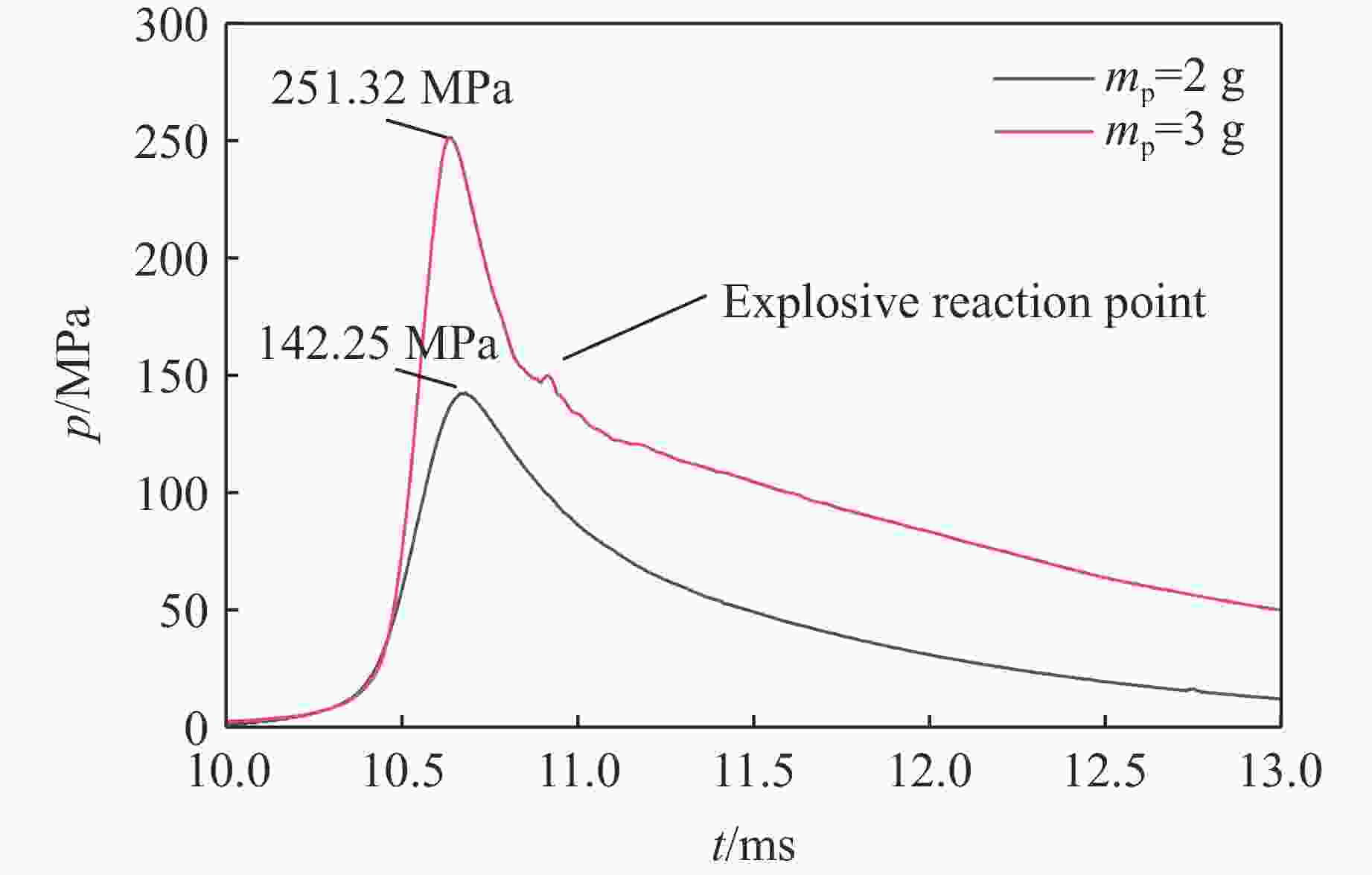
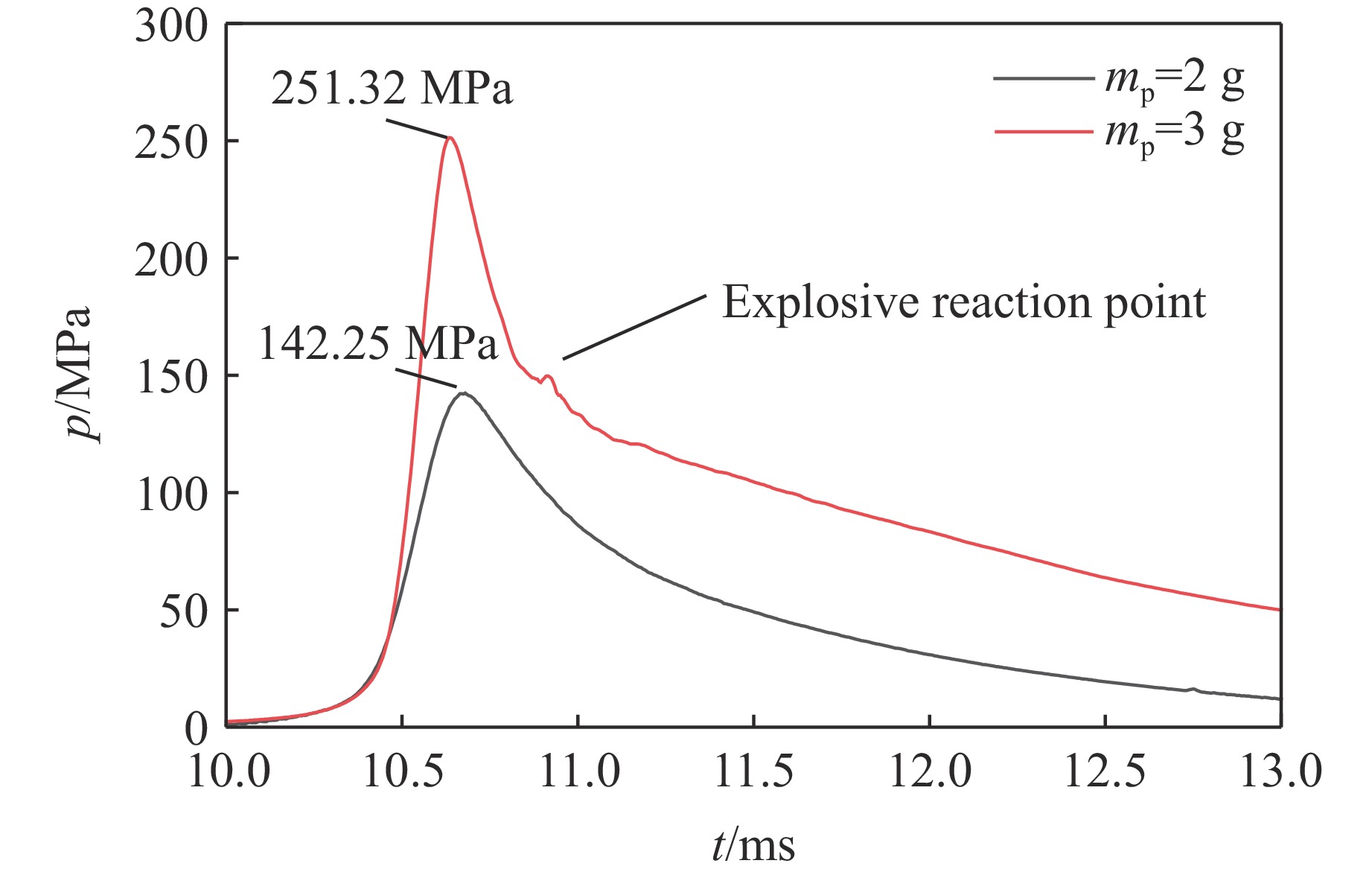
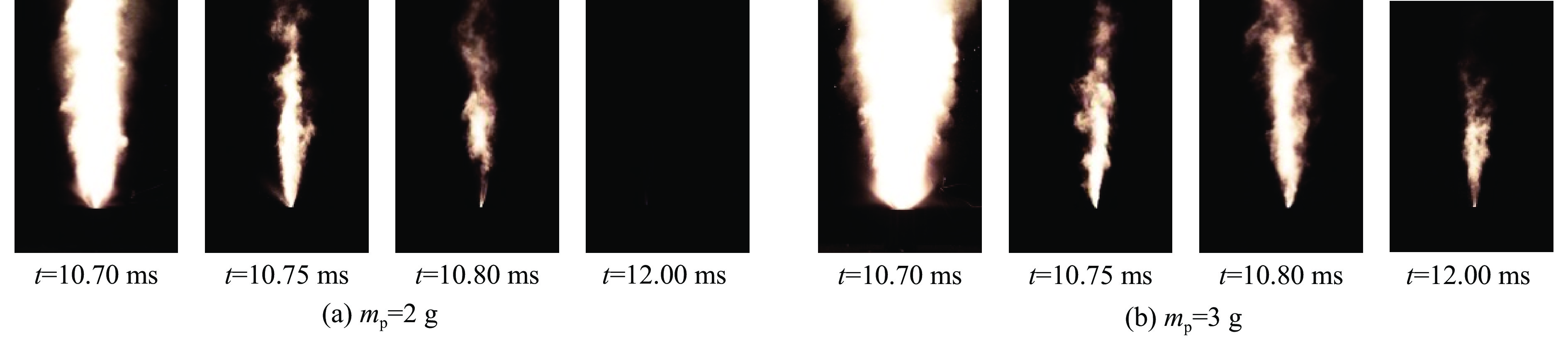
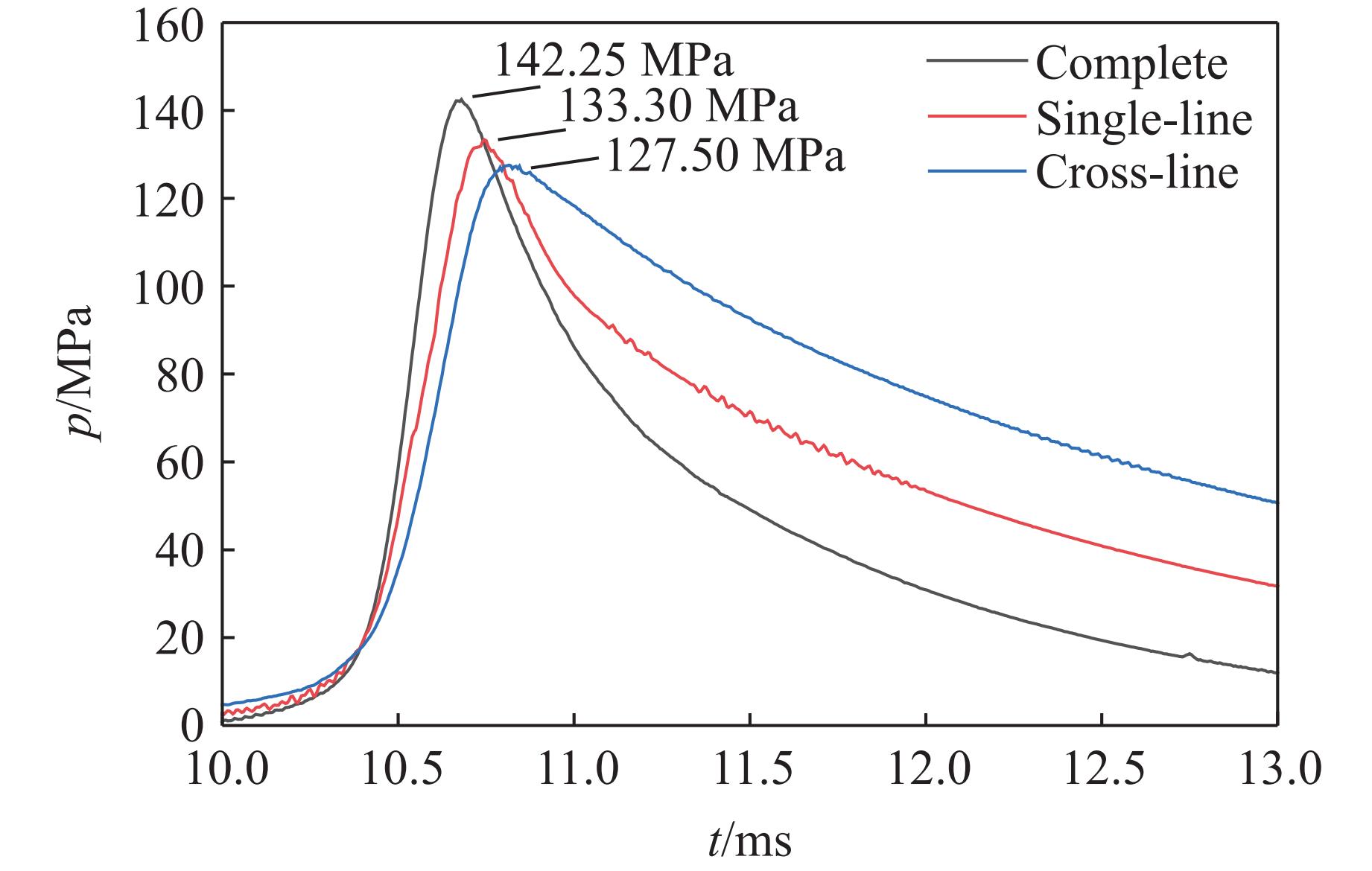
图 3 炸药无裂纹工况下发射药量对压力曲线的影响
Figure 3. Influence of propellant charge mass on pressure curve of crack-free explosive
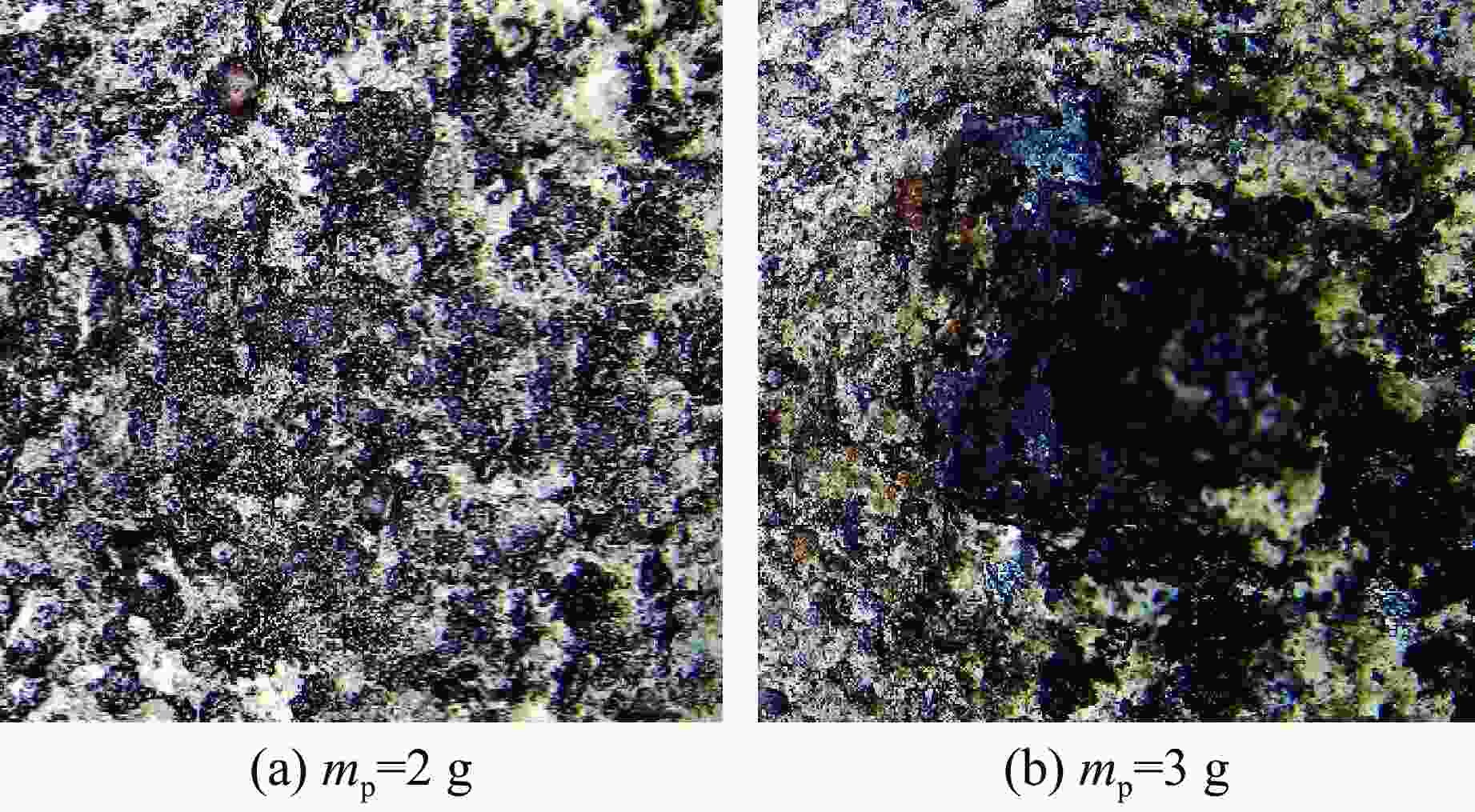
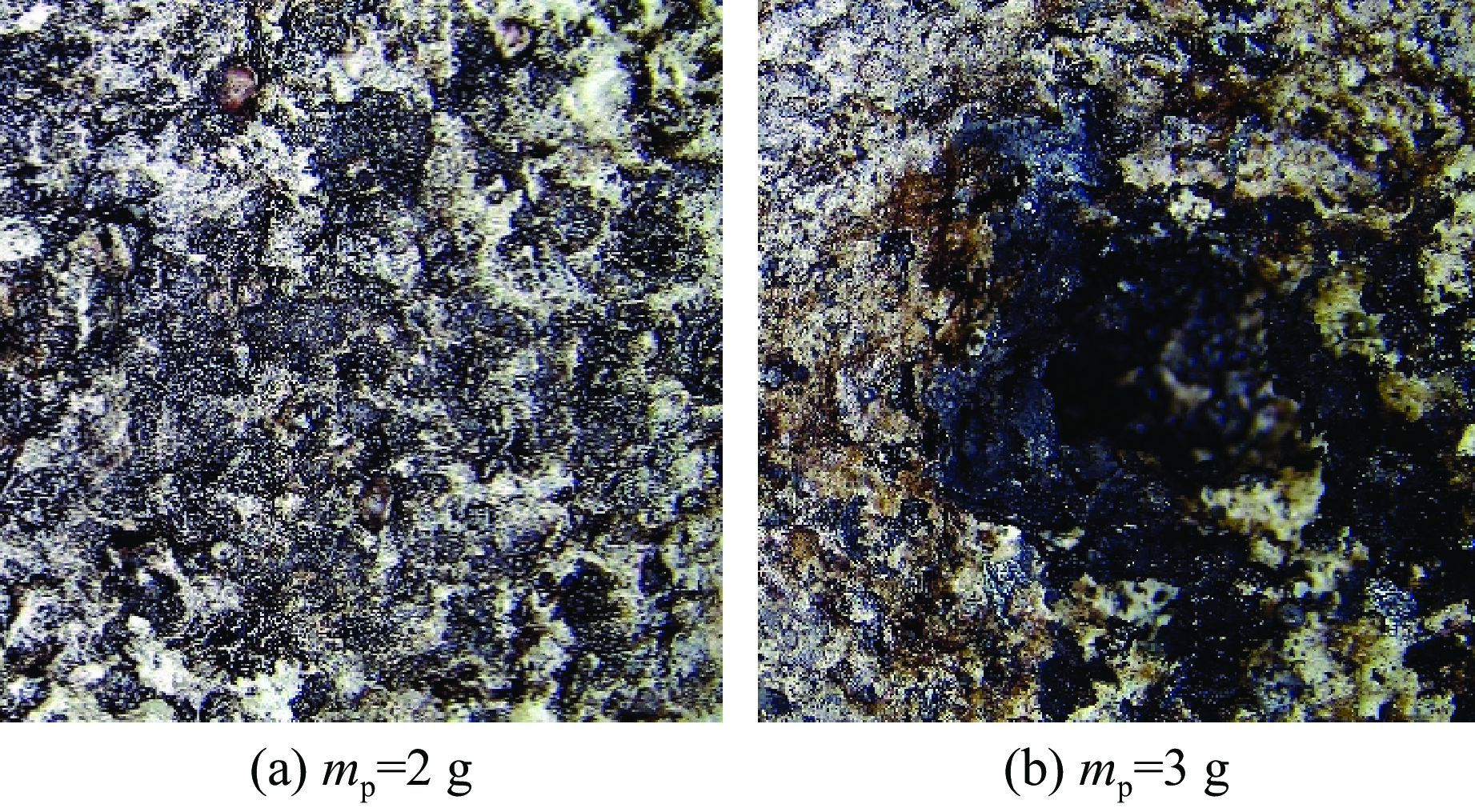
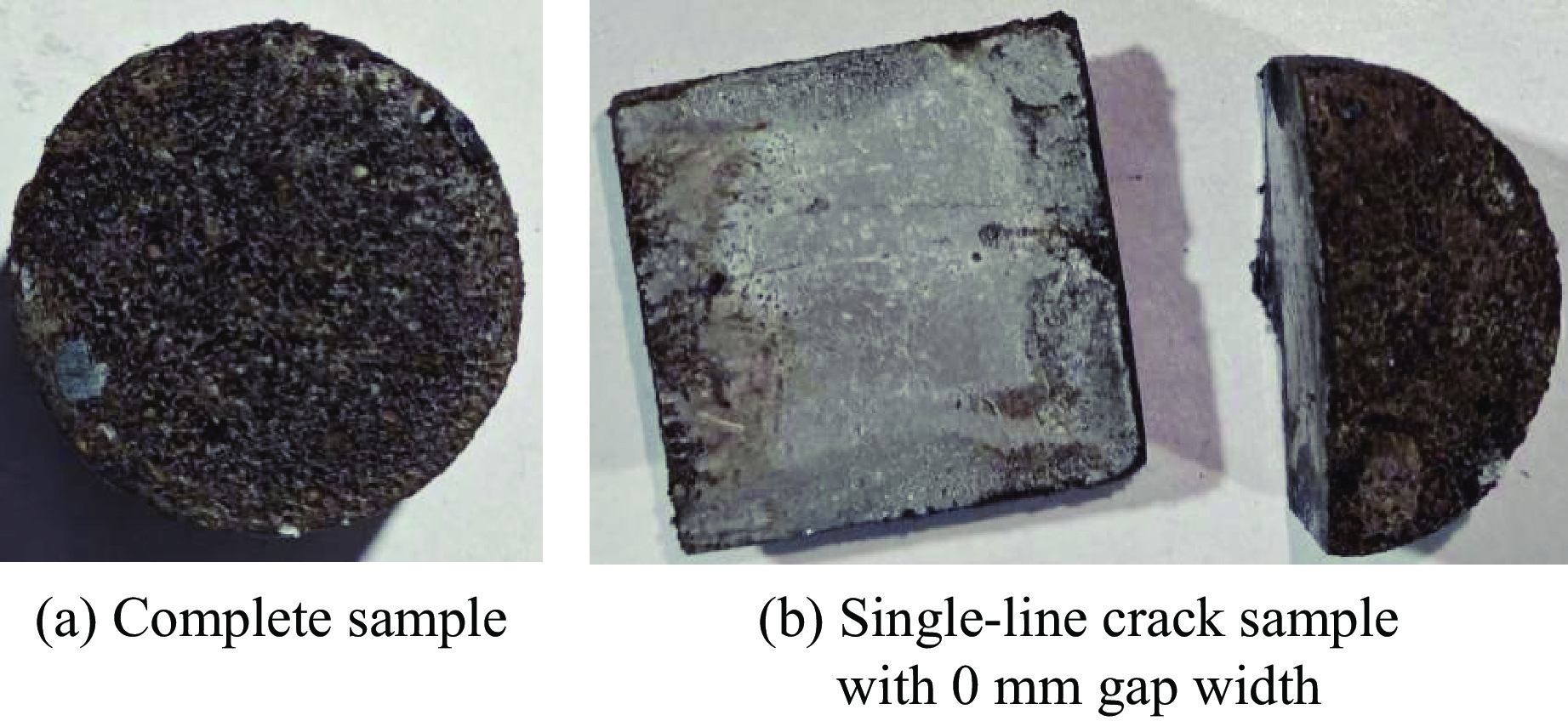
图 5 无裂纹炸药药柱的残骸放大图像
Figure 5. Close-up view of the debris from the crack-free explosive columns
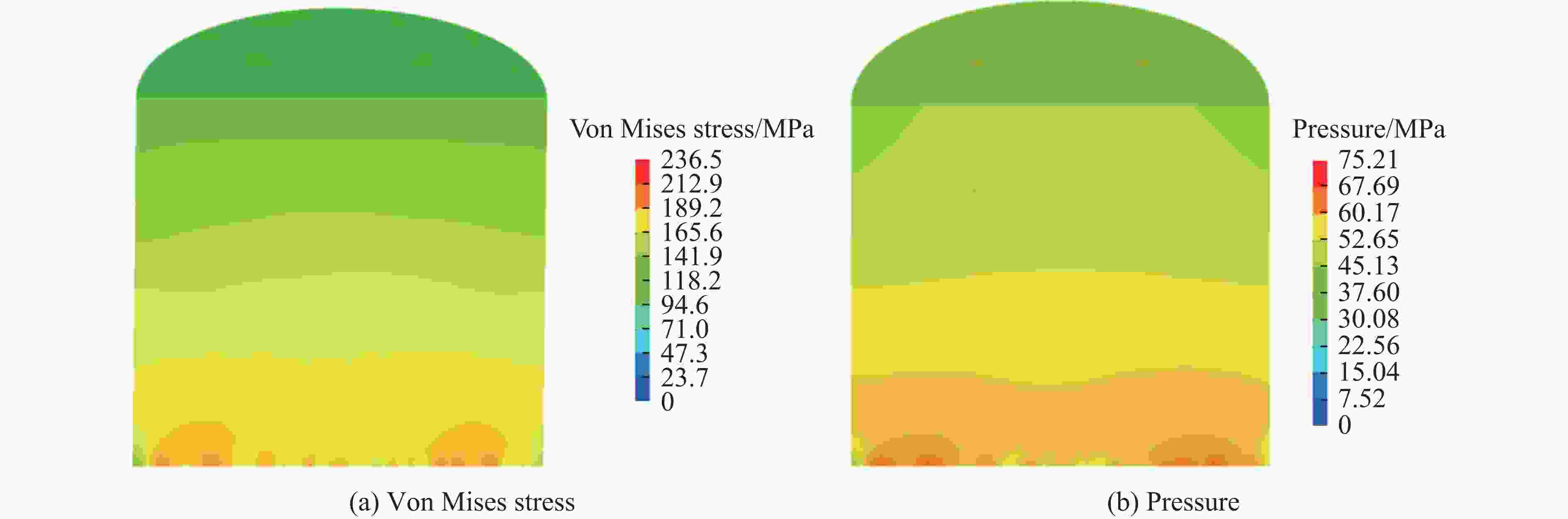
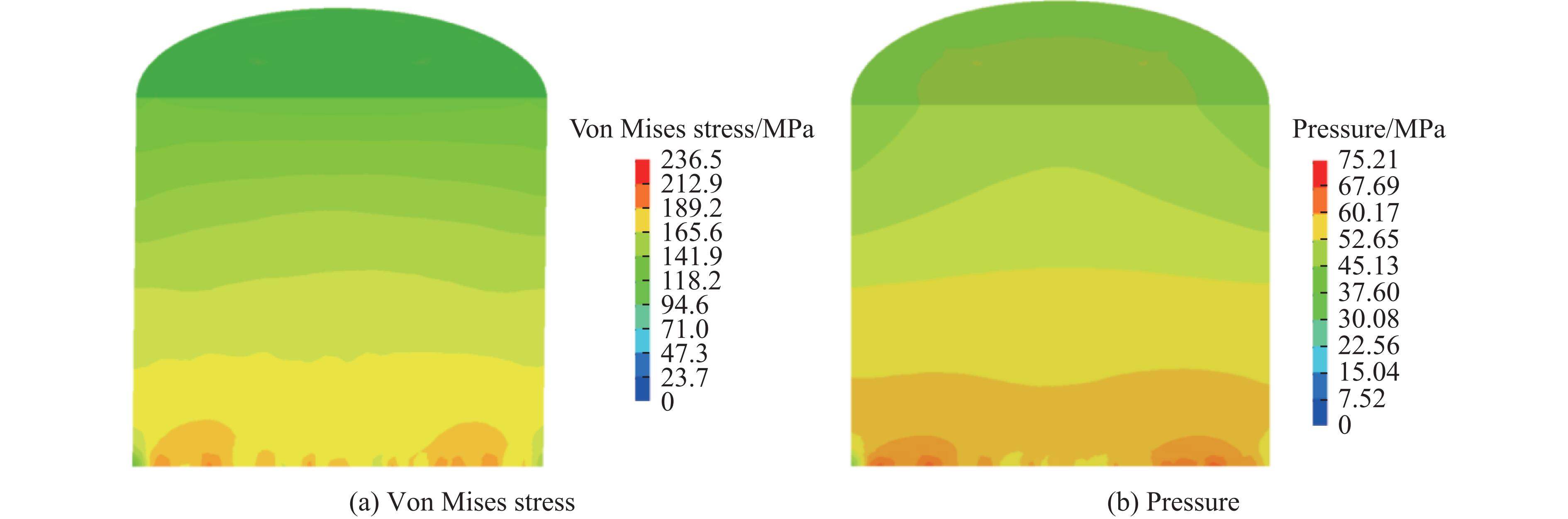
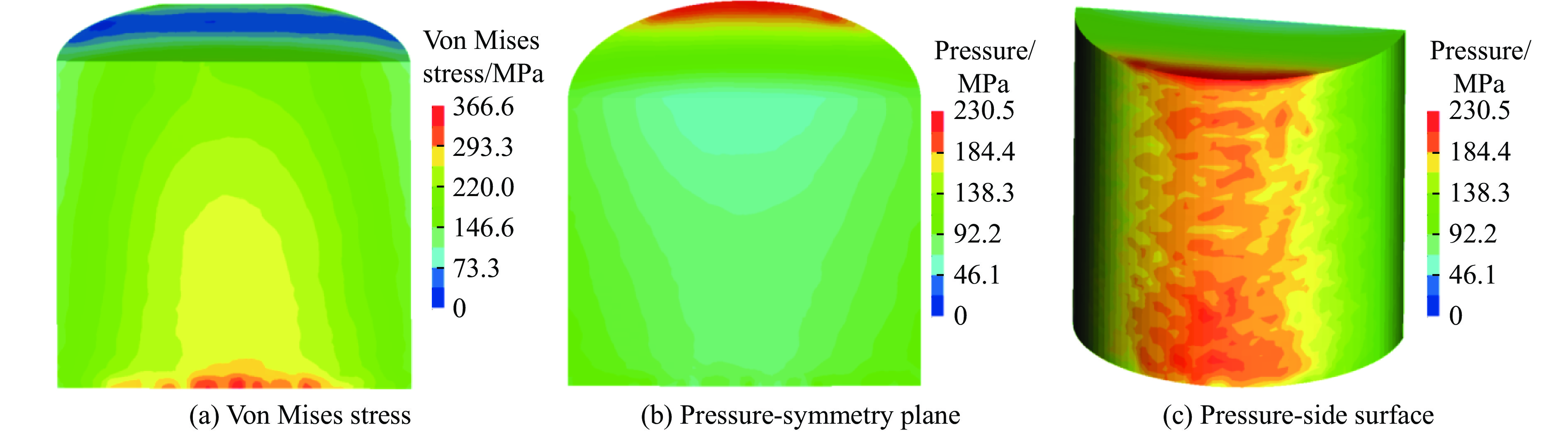
图 8 10.80 ms时刻无间隙“一”字裂纹药柱的应力云图
Figure 8. Stress contour of single-line crack explosive column with no gap at 10.80 ms
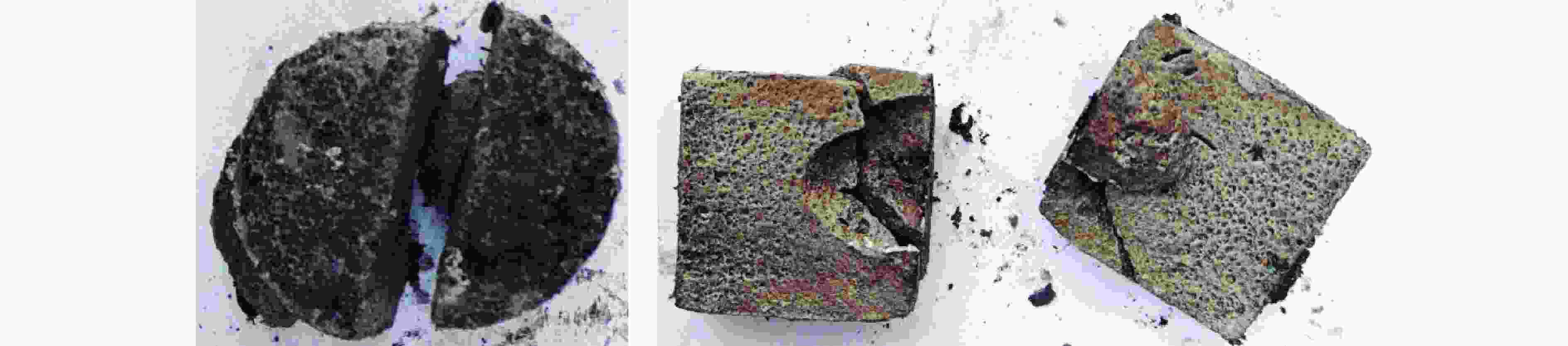
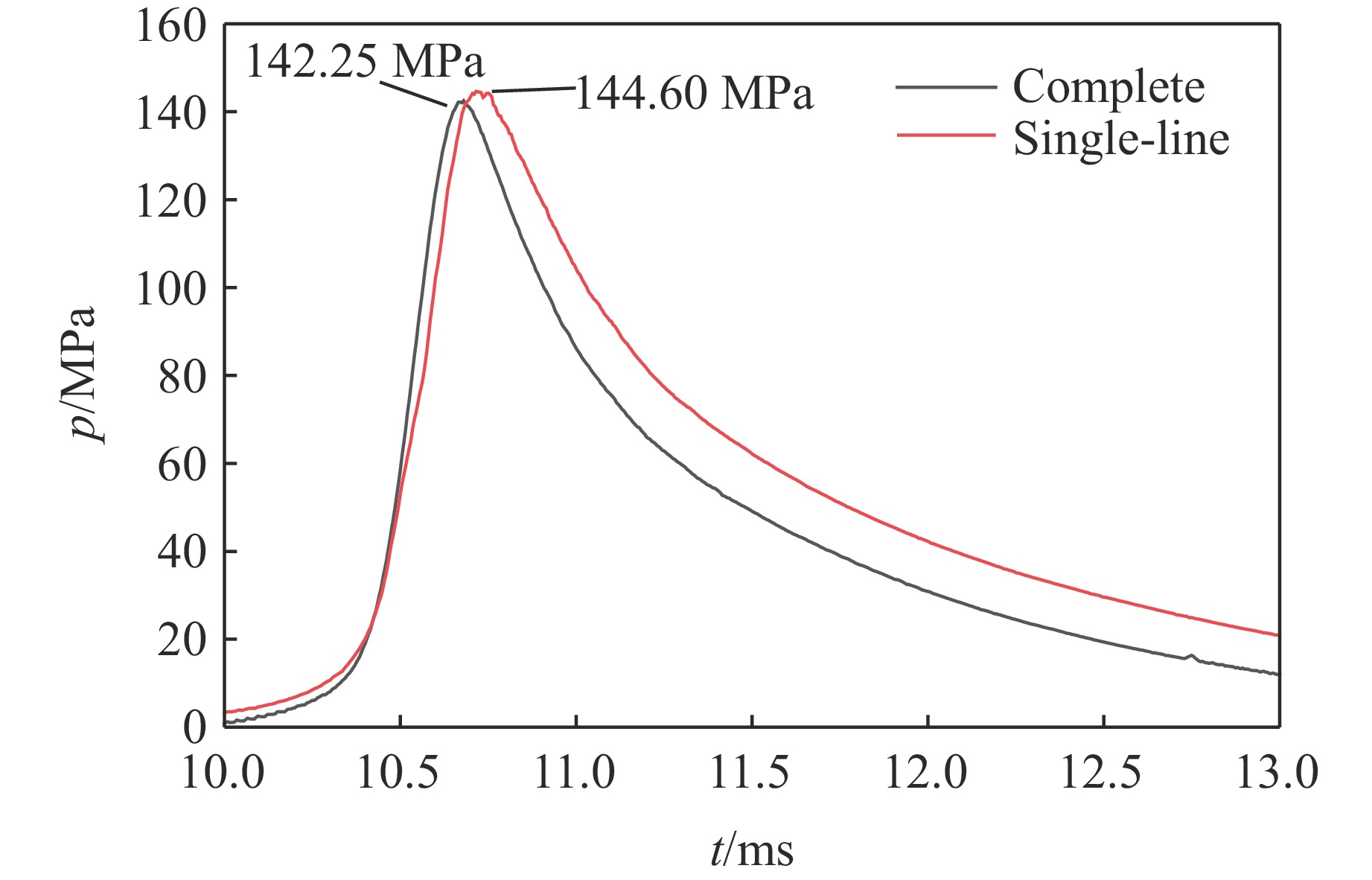
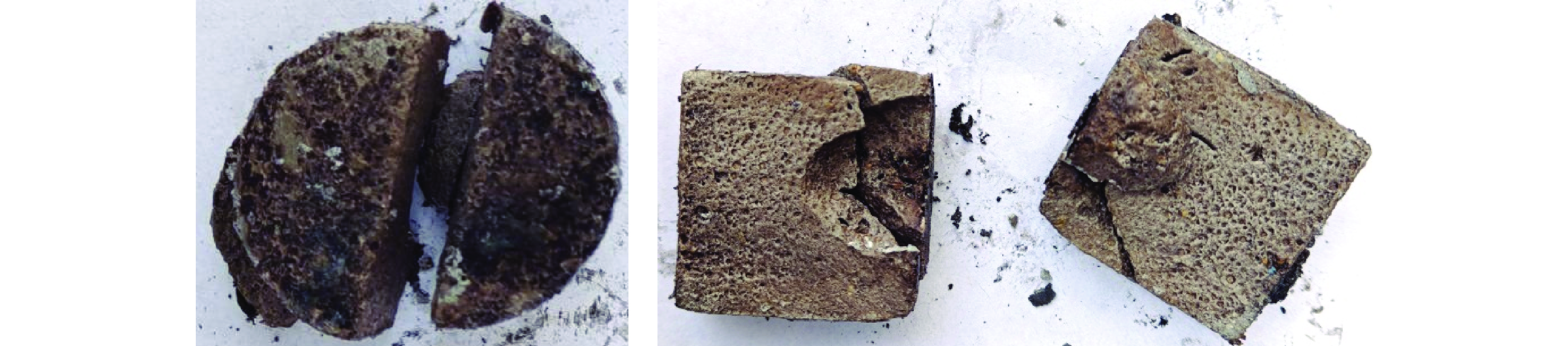
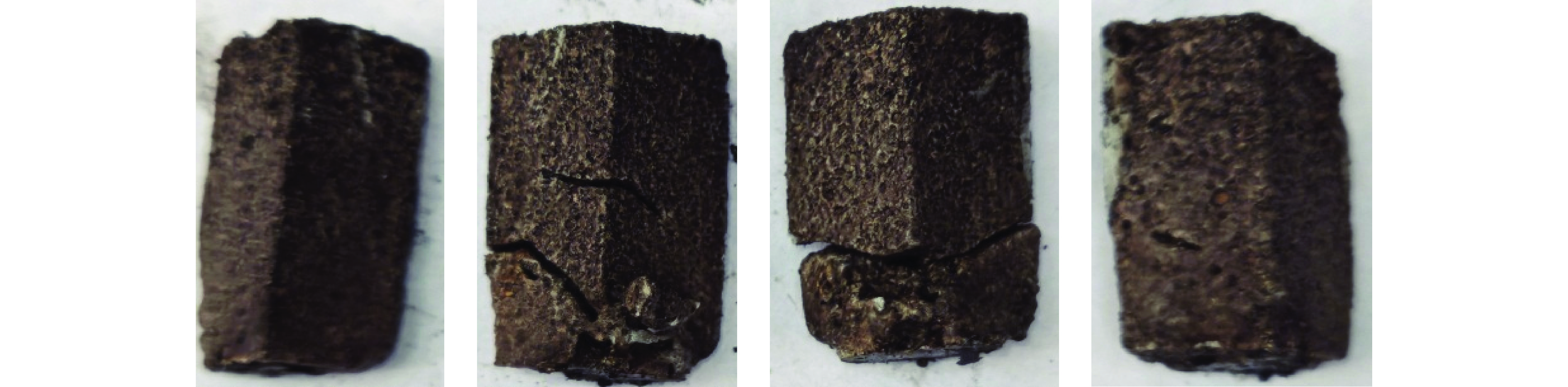
图 10 有间隙“一”字裂纹炸药反应后的残骸图像
Figure 10. Debris images of the reacted single-line crack explosives with gap
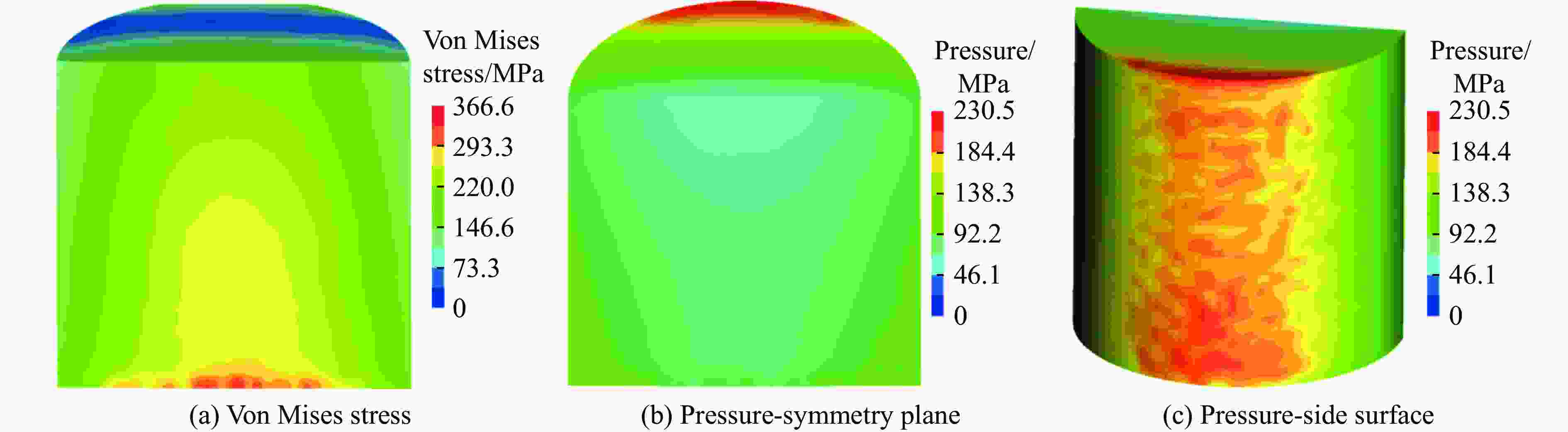
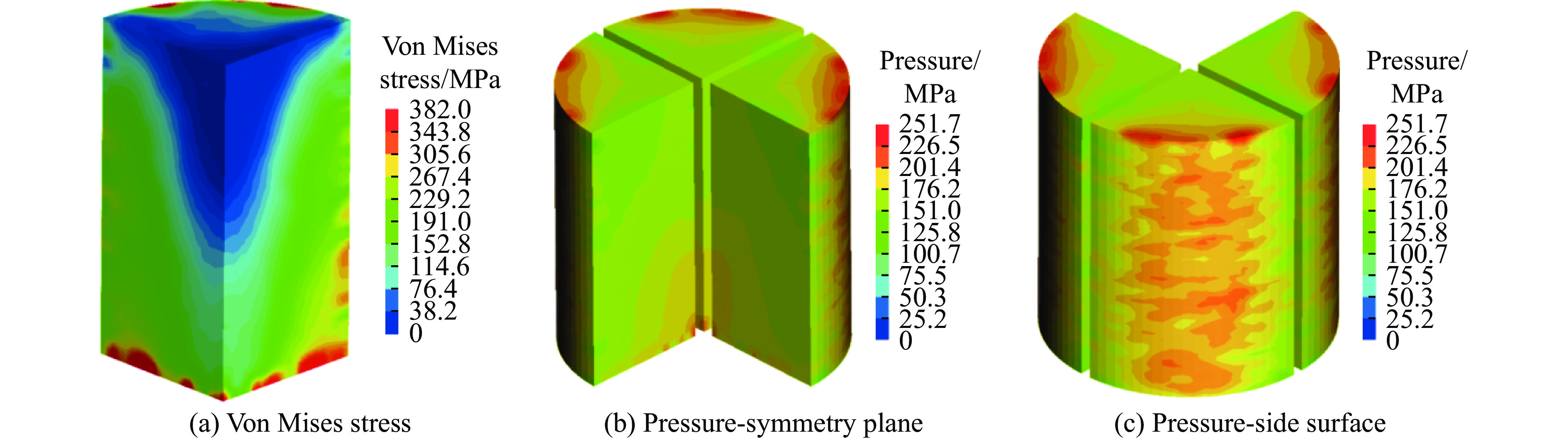
图 11 10.80 ms时刻有间隙“一”字裂纹药柱的应力云图
Figure 11. Stress contour of single-line crack explosives with gap at 10.80 ms
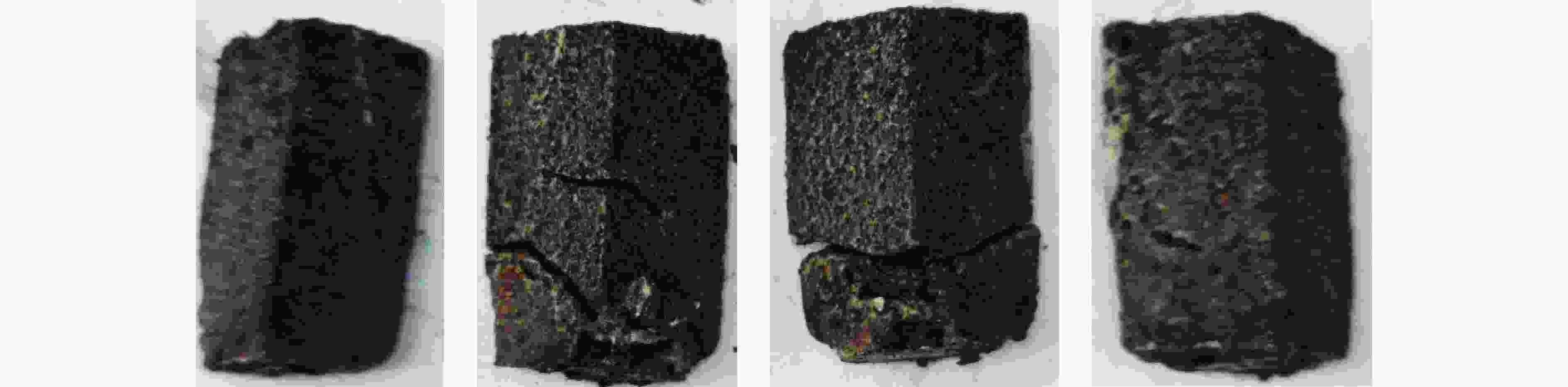
图 12 有间隙“十”字裂纹炸药发生反应后的残骸图像
Figure 12. Debris images of the reacted cross-line crack explosives with gap
-
[1] JIA Z R, LU F X, WANG H Y. Multi-stage attack weapon target allocation method based on defense area analysis [J]. Journal of Systems Engineering and Electronics, 2020, 31(3): 539–550. doi: 10.23919/JSEE.2020.000033 [2] XU S X, ZHANG W W, CAI Y, et al. Study on anti-penetration performance of Kevlar reinforced honeycomb liquid-filled cabin on warship: experimental verification and numerical analysis [J]. Ocean Engineering, 2023, 283: 114959. doi: 10.1016/j.oceaneng.2023.114959 [3] LI H, ZONG S Z, XIONG X Y. The influence of penetration angle on anti-penetration performance and reverse penetration ricochet phenomenon of UHMWPE laminates [J]. International Journal of Impact Engineering, 2023, 182: 104780. doi: 10.1016/j.ijimpeng.2023.104780 [4] DAI X G, HUANG Q, HUANG F L, et al. The development of a confined impact test for evaluating the safety of polymer-bonded explosives during warhead penetration [J]. Propellants, Explosives, Pyrotechnics, 2015, 40(5): 665–673. doi: 10.1002/prep.201400256 [5] 赵东, 屈可朋, 胡雪垚, 等. DNAN基熔铸炸药的动态力学行为及点火特性 [J]. 高压物理学报, 2025, 39(5): 054101. doi: 10.11858/gywlxb.20240936ZHAO D, QU K P, HU X Y, et al. Dynamic mechanical behavior and ignition characteristics of DNAN-based melt-cast explosives [J]. Chinese Journal of High Pressure Physics, 2025, 39(5): 054101. doi: 10.11858/gywlxb.20240936 [6] 王昕捷, 王心宇, 丁凯, 等. 低速撞击下PBX炸药黏弹塑性细观损伤点火模型研究 [J]. 北京理工大学学报, 2024, 44(2): 123–134. doi: 10.15918/j.tbit1001-0645.2023.041WANG X J, WANG X Y, DING K, et al. Viscoelastic plastic meso-damage ignition model study of polymer bonded explosive under low velocity impact [J]. Transactions of Beijing Institute of Technology, 2024, 44(2): 123–134. doi: 10.15918/j.tbit1001-0645.2023.041 [7] 聂少云, 薛鹏伊, 代晓淦. 模拟多层穿靶过程装药安全性评价方法 [J]. 火炸药学报, 2020, 43(5): 537–542. doi: 10.14077/j.issn.1007-7812.201907015NIE S Y, XUE P Y, DAI X G. Method of evaluating the safety of charging in a multi-layer penetration process [J]. Chinese Journal of Explosives & Propellants, 2020, 43(5): 537–542. doi: 10.14077/j.issn.1007-7812.201907015 [8] 高金霞, 赵卫刚, 郑腾. 侵彻战斗部装药抗过载技术研究 [J]. 火工品, 2008(4): 4–7. doi: 10.3969/j.issn.1003-1480.2008.04.002GAO J X, ZHAO W G, ZHENG T. Study on the anti-overloading technique for penetrating warhead charge [J]. Initiators & Pyrotechnics, 2008(4): 4–7. doi: 10.3969/j.issn.1003-1480.2008.04.002 [9] 张萌昭, 周涛, 郭洪福, 等. 侵彻多层间隔靶板装药损伤特性研究 [J]. 兵器装备工程学报, 2021, 42(12): 92–97. doi: 10.11809/bqzbgcxb2021.12.013ZHANG M Z, ZHOU T, GUO H F, et al. Experimental study of charge damage in multi-layer target penetration process [J]. Journal of Ordnance Equipment Engineering, 2021, 42(12): 92–97. doi: 10.11809/bqzbgcxb2021.12.013 [10] 刘睿, 韩勇, 代晓淦, 等. 初始裂纹对高聚物粘结炸药低速撞击点火影响数值模拟研究 [J]. 含能材料, 2019, 27(10): 812–818. doi: 10.11943/CJEM2019152LIU R, HAN Y, DAI X G, et al. Numerical simulation on the influence of the initial crack on polymer bonded explosive ignition under low velocity impact [J]. Chinese Journal of Energetic Materials, 2019, 27(10): 812–818. doi: 10.11943/CJEM2019152 [11] 孙宝平, 段卓平, 刘彦, 等. 破片撞击损伤装药点火数值模拟 [J]. 含能材料, 2019, 27(3): 178–183. doi: 10.11943/CJEM2018198SUN B P, DUAN Z P, LIU Y, et al. Numerical simulation on damaged charge ignition by fragment impact [J]. Chinese Journal of Energetic Materials, 2019, 27(3): 178–183. doi: 10.11943/CJEM2018198 [12] 王一鸣, 刘睿, 陈鹏万, 等. 损伤累积下PBX炸药低速撞击点火行为的数值模拟 [J]. 火炸药学报, 2023, 46(5): 456–464. doi: 10.14077/j.issn.1007-7812.202301009WANG Y M, LIU R, CHEN P W, et al. Numerical simulation on low-velocity impact ignition behavior of PBXs with damage accumulation [J]. Chinese Journal of Explosives & Propellants, 2023, 46(5): 456–464. doi: 10.14077/j.issn.1007-7812.202301009 [13] 尚海林, 杨洁, 胡秋实, 等. 炸药裂缝中的对流燃烧现象实验研究 [J]. 兵工学报, 2019, 40(1): 99–106. doi: 10.3969/j.issn.1000-1093.2019.01.012SHANG H L, YANG J, HU Q S, et al. Experimental research on convective burning in explosive cracks [J]. Acta Armamentarii, 2019, 40(1): 99–106. doi: 10.3969/j.issn.1000-1093.2019.01.012 [14] 张小兵. 枪炮内弹道学 [M]. 北京: 北京理工大学出版社, 2014: 97–98.ZHANG X B. Interior ballistics of guns [M]. Beijing: Beijing Institute of Technology Press, 2014: 97–98. [15] XIE R Z, ZHANG A M, LI S M. Fluid compressibility related to migration on bubble dynamics [J]. Physics of Fluids, 2025, 37(1): 013318. doi: 10.1063/5.0249071 [16] CHANG S C. The method of space-time conservation element and solution element—a new approach for solving the Navier-Stokes and Euler equations [J]. Journal of Computational Physics, 1995, 119(2): 295–324. doi: 10.1006/jcph.1995.1137 [17] YANG Y, DUAN Z P, ZHANG L S, et al. Measurements of reaction zone and determination of the equation of state parameters of DNAN-based melt-cast aluminized explosive [J]. Journal of Energetic Materials, 2022, 38(2): 240–251. doi: 10.1080/07370652.2019.1679280 -

 下载:
下载:

计量
- 文章访问数: 1410
- HTML全文浏览量: 737
- PDF下载量: 78
